25 piastres 1954
Market Prices
21 salesAbout This Note
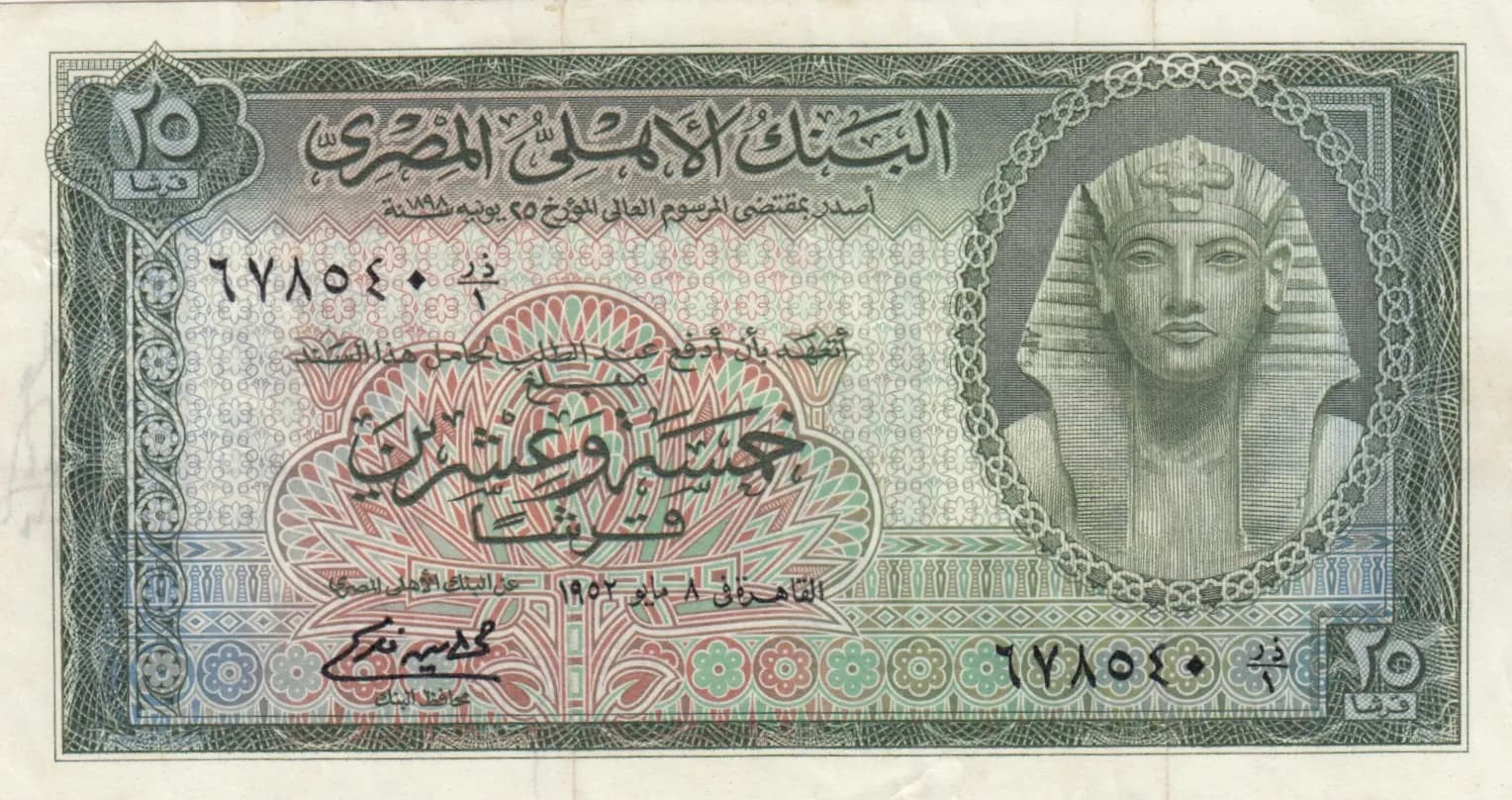
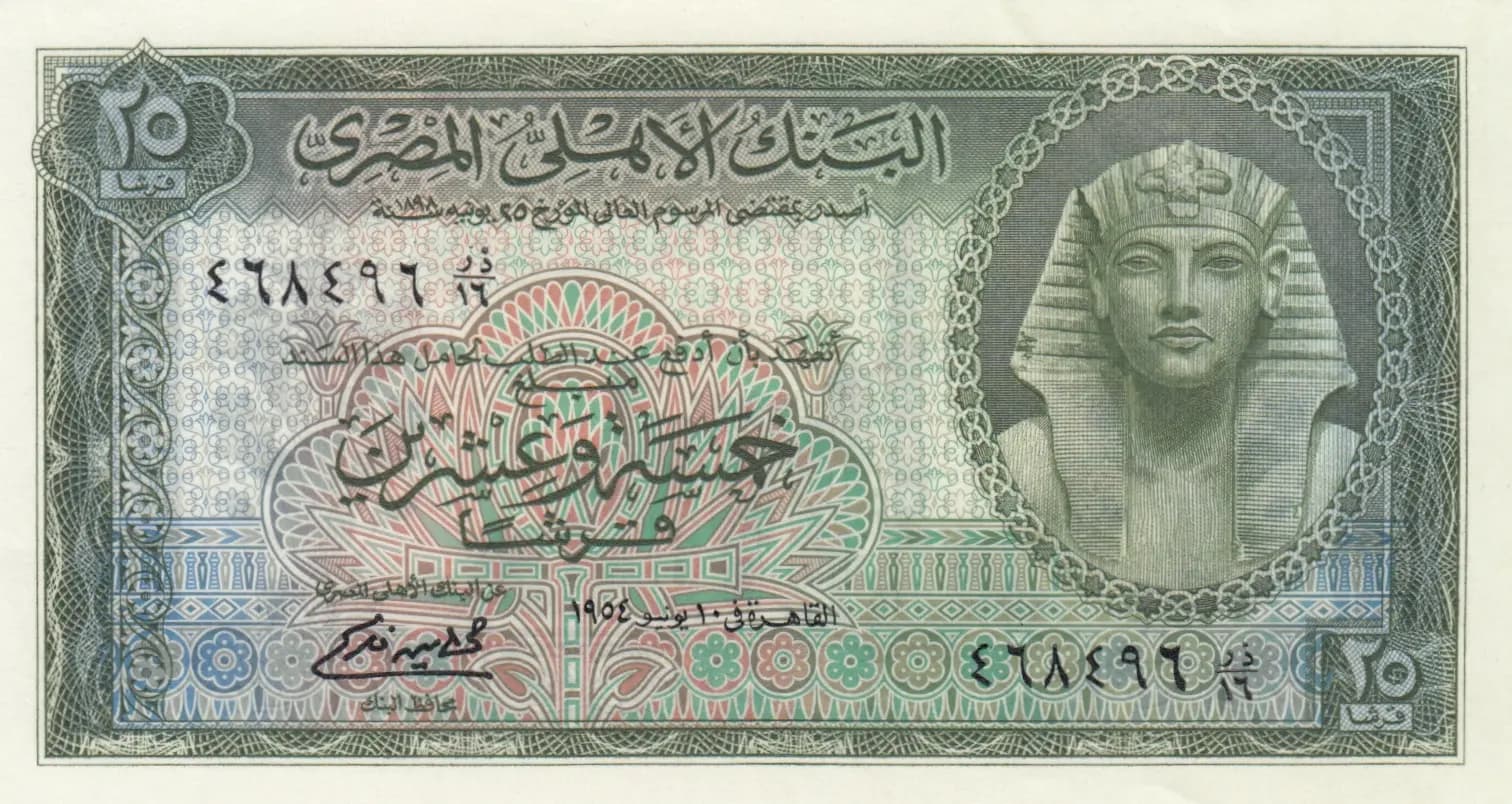
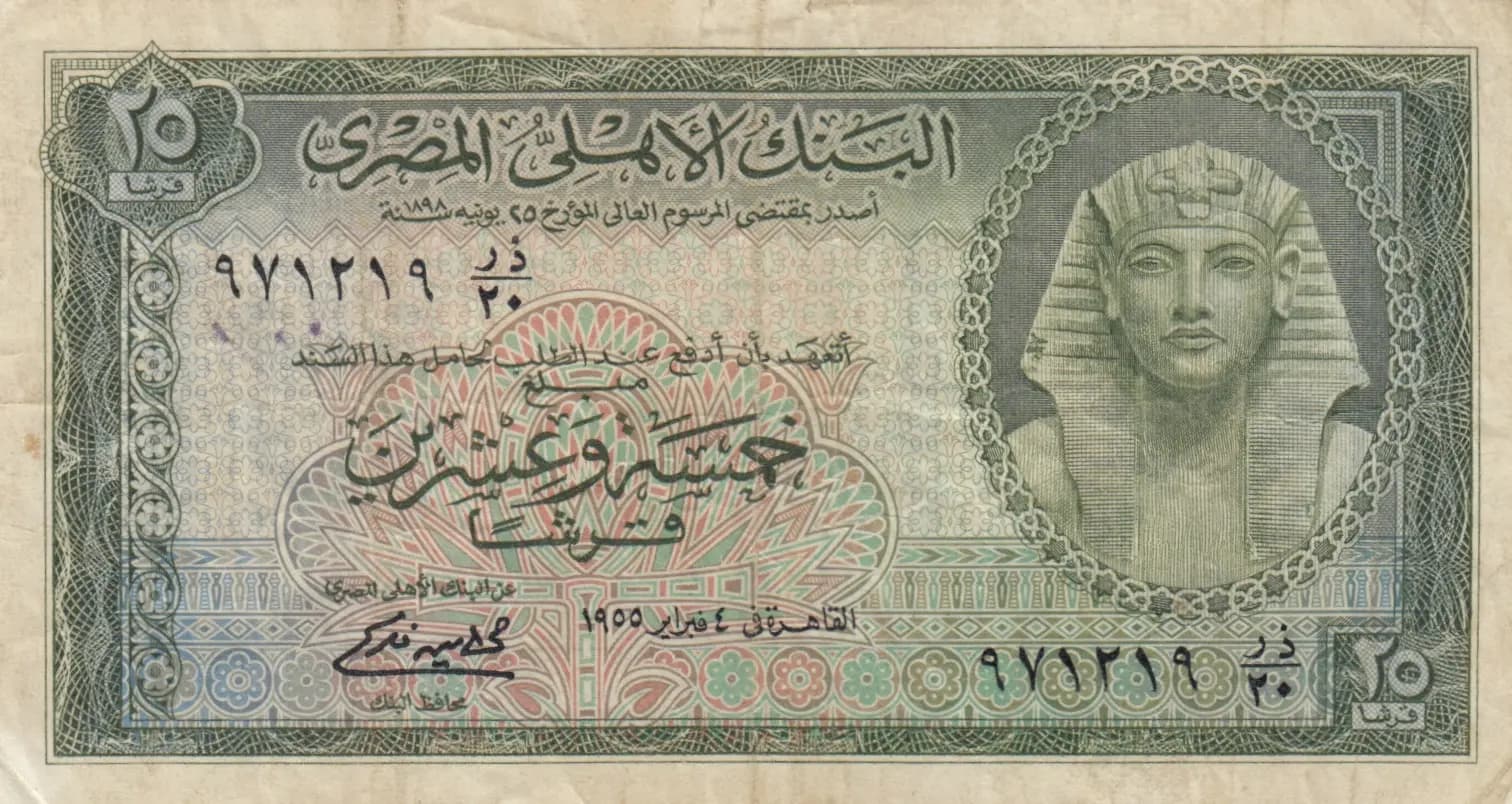
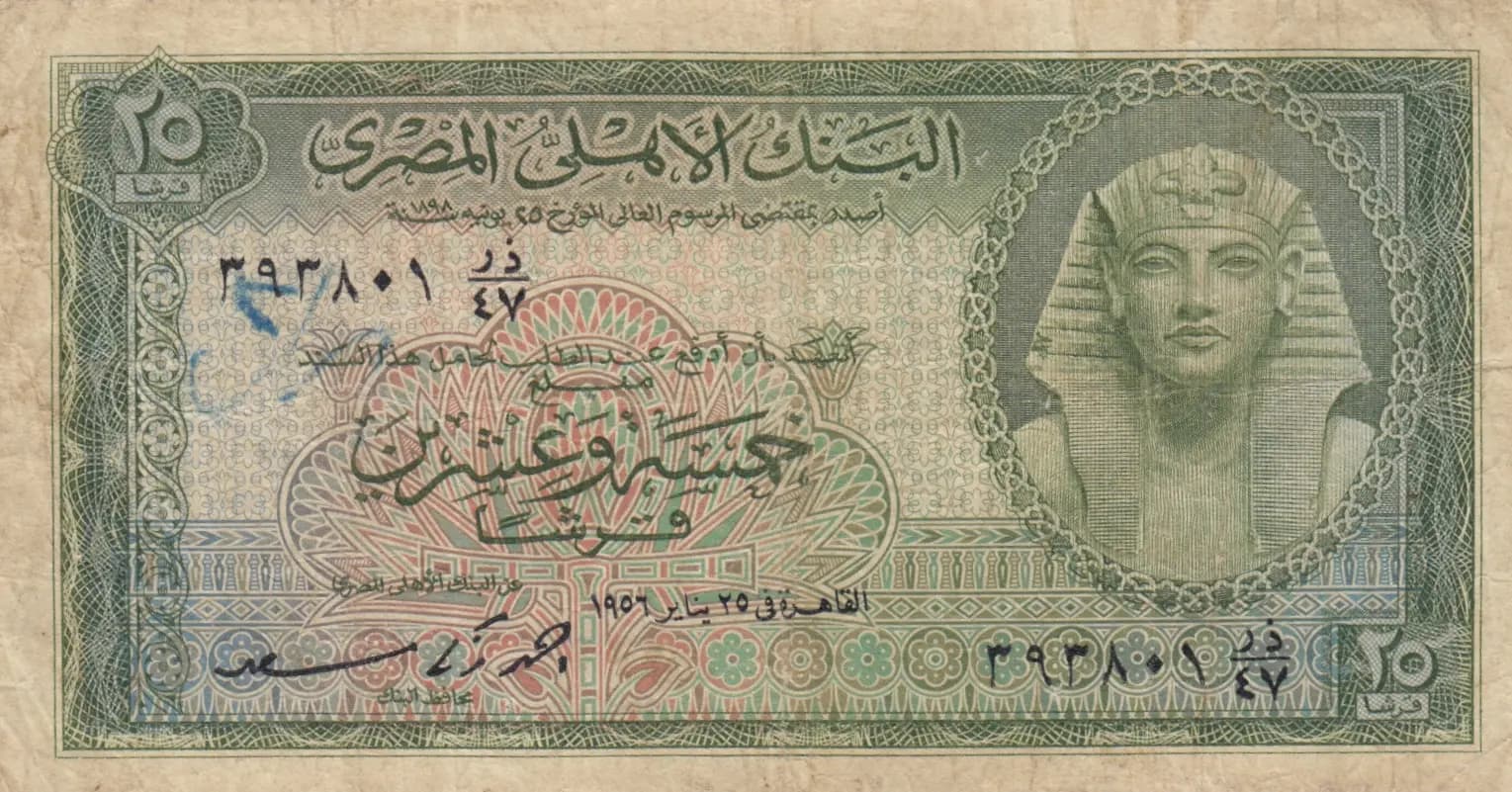
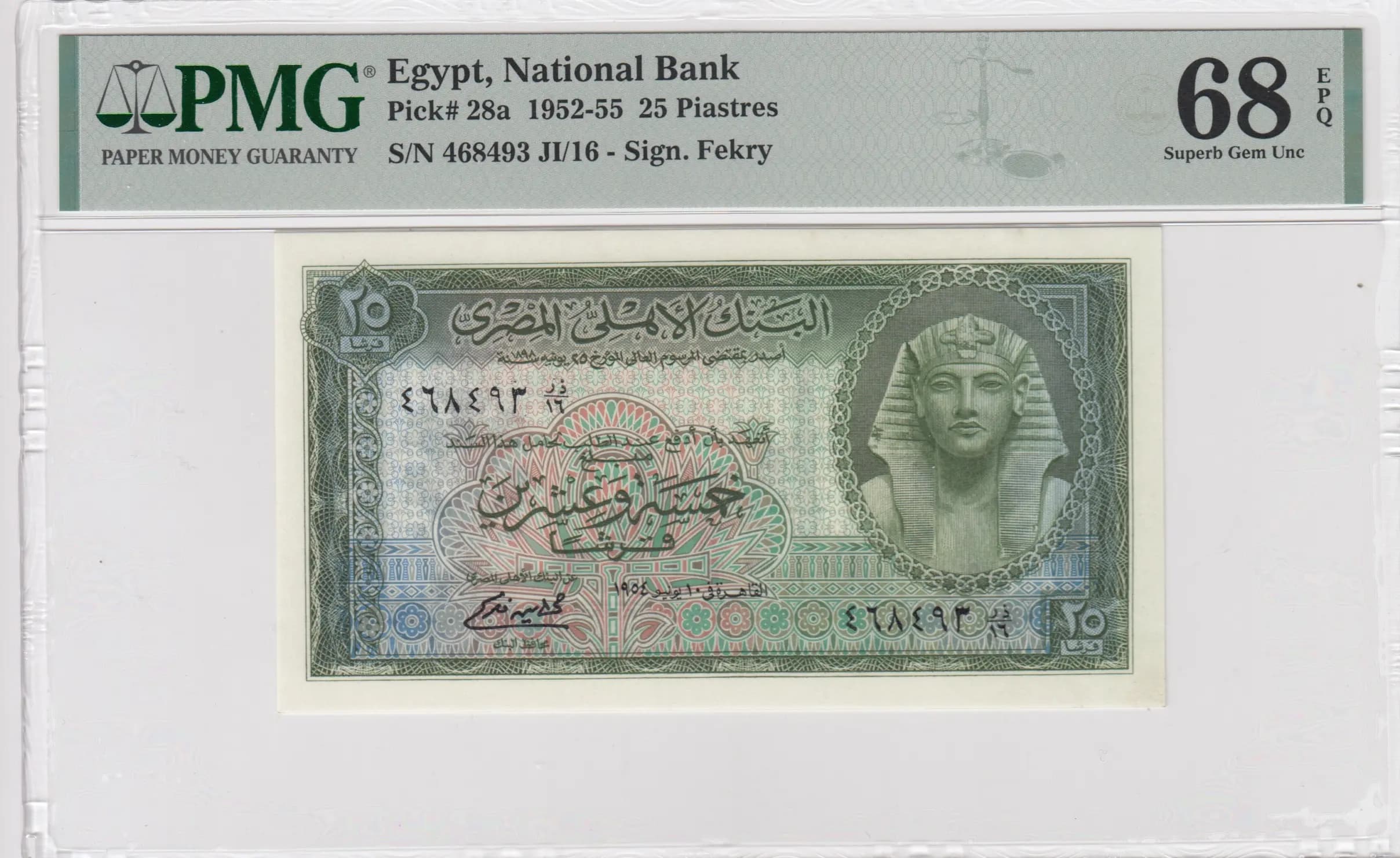
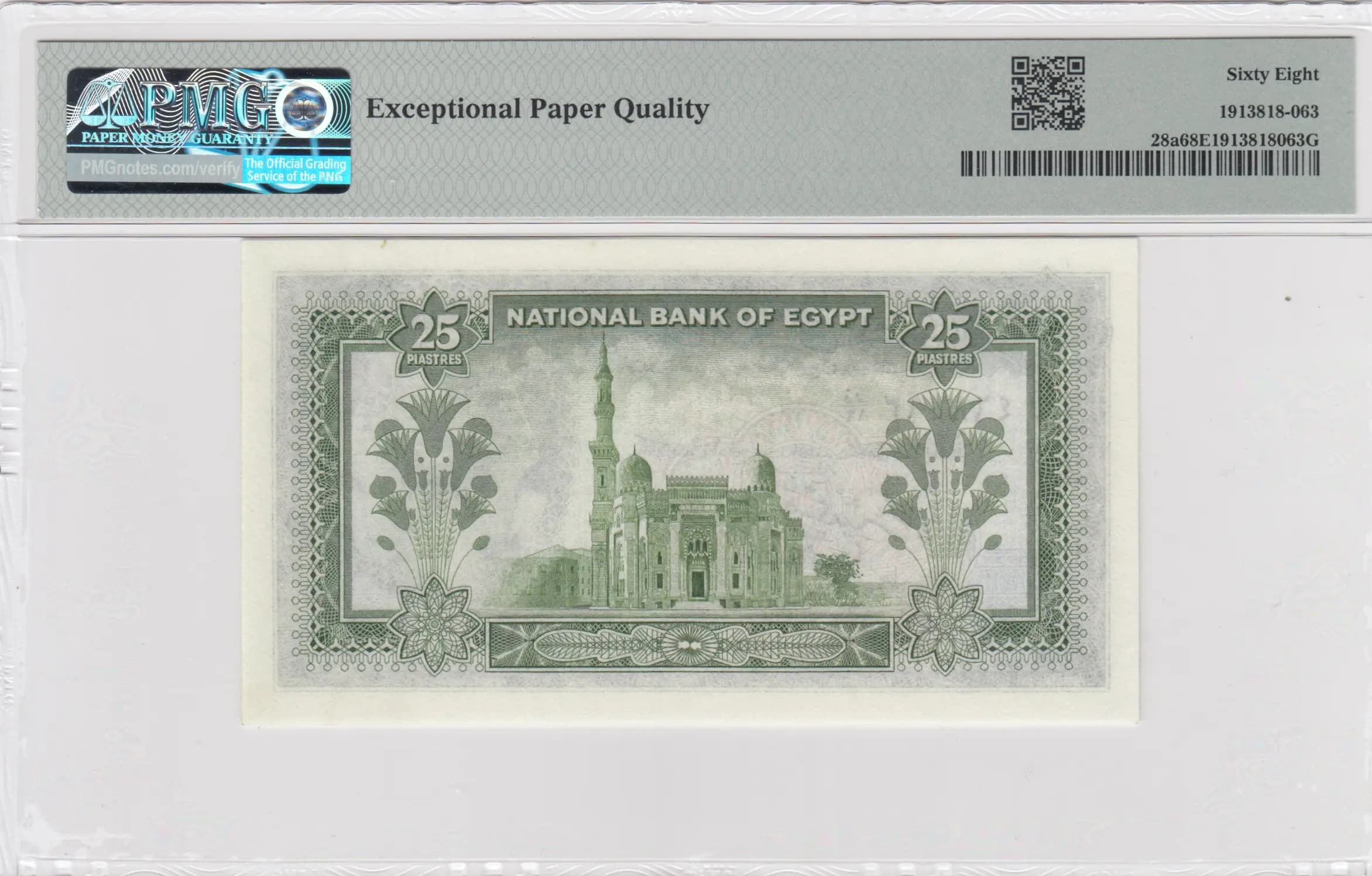
This is an exceptional PMG 68 EPQ example of Egypt's 1954 25 Piastres note (Pick-28), featuring a striking portrait of Tutankhamen in traditional nemes headdress on the obverse and a detailed rendering of the Al-Hakim Mosque on the reverse. The note displays pristine paper quality with no visible wear, creasing, or stains, representing a high-grade specimen from the early post-monarchical period of Egyptian currency. With recent comparable sales of PMG 67 examples reaching $181.50, this Superb Gem Uncirculated note represents a desirable collectible from Egypt's nationalist era.
Common. While PMG 68 EPQ represents an exceptional condition grade (only the finest surviving examples), the 25 Piastres note from the 1952-1957 series was a regular circulation issue with substantial print runs. Market evidence from multiple eBay sales over the past decade shows consistent availability across various grades, from damaged pieces at $2-11 to high-grade examples at $30-181. The denomination and series were not commemorative, short-lived, or subject to recall. The PMG 68 grade itself is uncommon for this note type, but the underlying note is common in the broader numismatic market.
Issued during the early years of the National Bank of Egypt's post-1952 Revolution currency reforms, this note commemorates ancient Egyptian civilization through the Tutankhamen portrait while simultaneously featuring modern Islamic architecture (the Al-Hakim Mosque in Alexandria). The design reflects Egypt's dual identity during this transitional period—honoring pharaonic heritage while embracing the Islamic and Arab nationalist character of the newly reorganized state under Nasser's regime.
The obverse features a profile portrait of Pharaoh Tutankhamen wearing the traditional nemes headdress, positioned prominently on the right side of the note. The design incorporates ornate guilloche patterns and elaborate border work in green and blue tones. The reverse showcases the Al-Hakim Mosque (also known as the Mosque of al-Hakim bi-Amr Allah) in Alexandria, the architectural centerpiece, flanked by stylized palm frond decorative elements on both sides. Geometric and floral ornamental patterns frame the base, with starred emblems in the corners. The color scheme transitions from predominantly green on both sides with cream and off-white backgrounds, creating a harmonious classical aesthetic typical of mid-20th century Arab currency design.
Front: Arabic text 'البنك الأهلي المصري' (National Bank of Egypt) with Arabic numeral denomination '٢٥' (25); English serial number portion '468493' with series designation 'JI/16' and signature of 'Fekry'. Back: English text 'NATIONAL BANK OF EGYPT' at top with bilingual denomination designation '25 PIASTRES' in boxes on left and right sides.
Intaglio (engraved) printing, evidenced by the intricate guilloche patterns, fine line work detail, and the raised tactile quality characteristic of banknote security printing. The complex architectural detailing and portrait engraving are consistent with Swiss or British security printers who produced Egyptian currency during this period. The depth and precision of the decorative borders and security features indicate professional central bank-commissioned production.
This specimen exhibits the signature of Fekry and series designation 'JI/16' with serial number 468493. The Pick-28 designation encompasses the standard 25 Piastres type; PMG population data indicates a variant P-28s exists (likely a specimen or special printing), distinguishing this as the regular circulation issue. The 1954 dating falls within the broader 1952-1957 issue period. Collectors should note variations in signature authorities and series designations across the print run, though all represent the same Pick-28 catalog entry.