10 pound 1976
Market Prices
28 salesAbout This Note
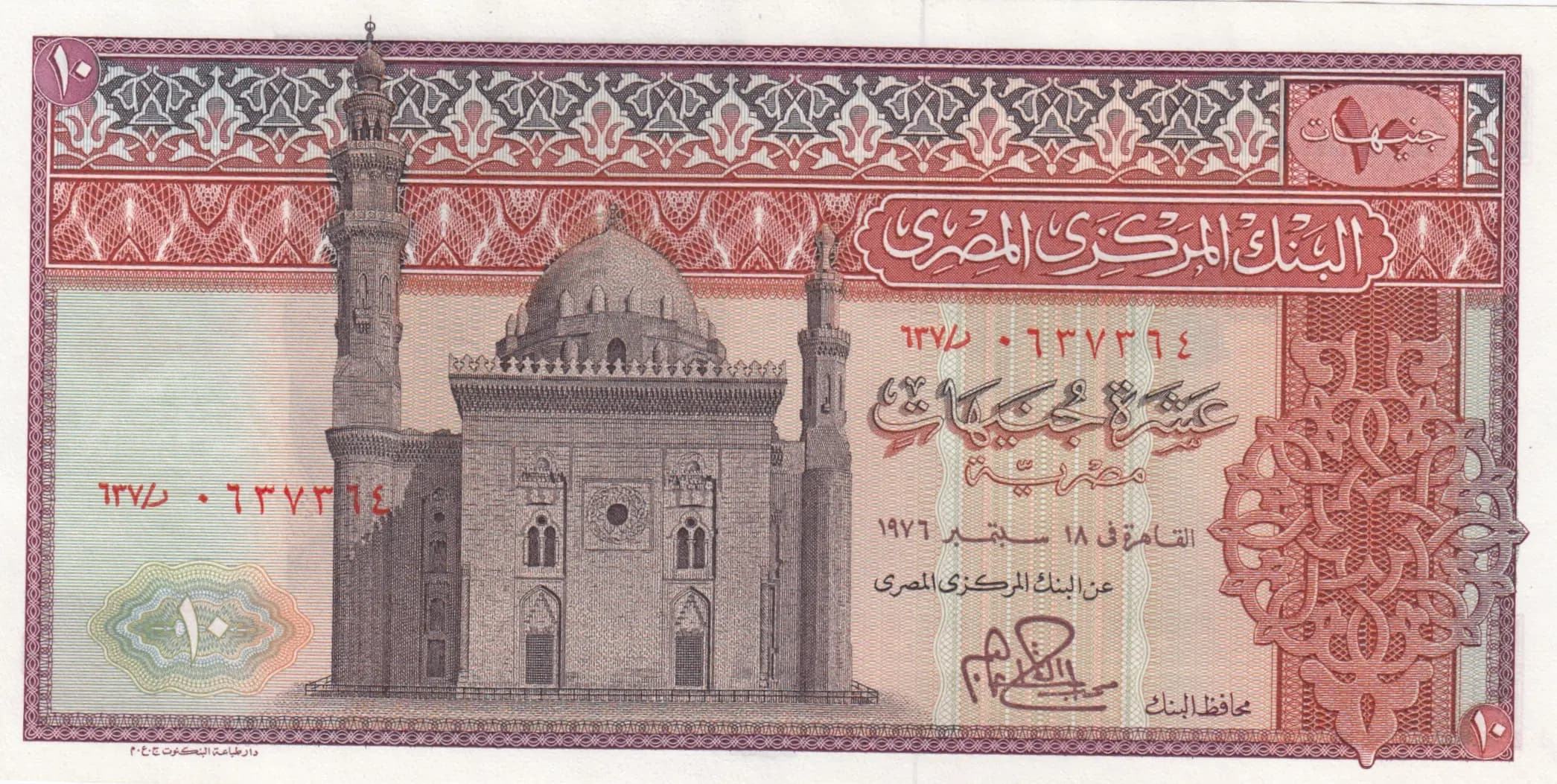
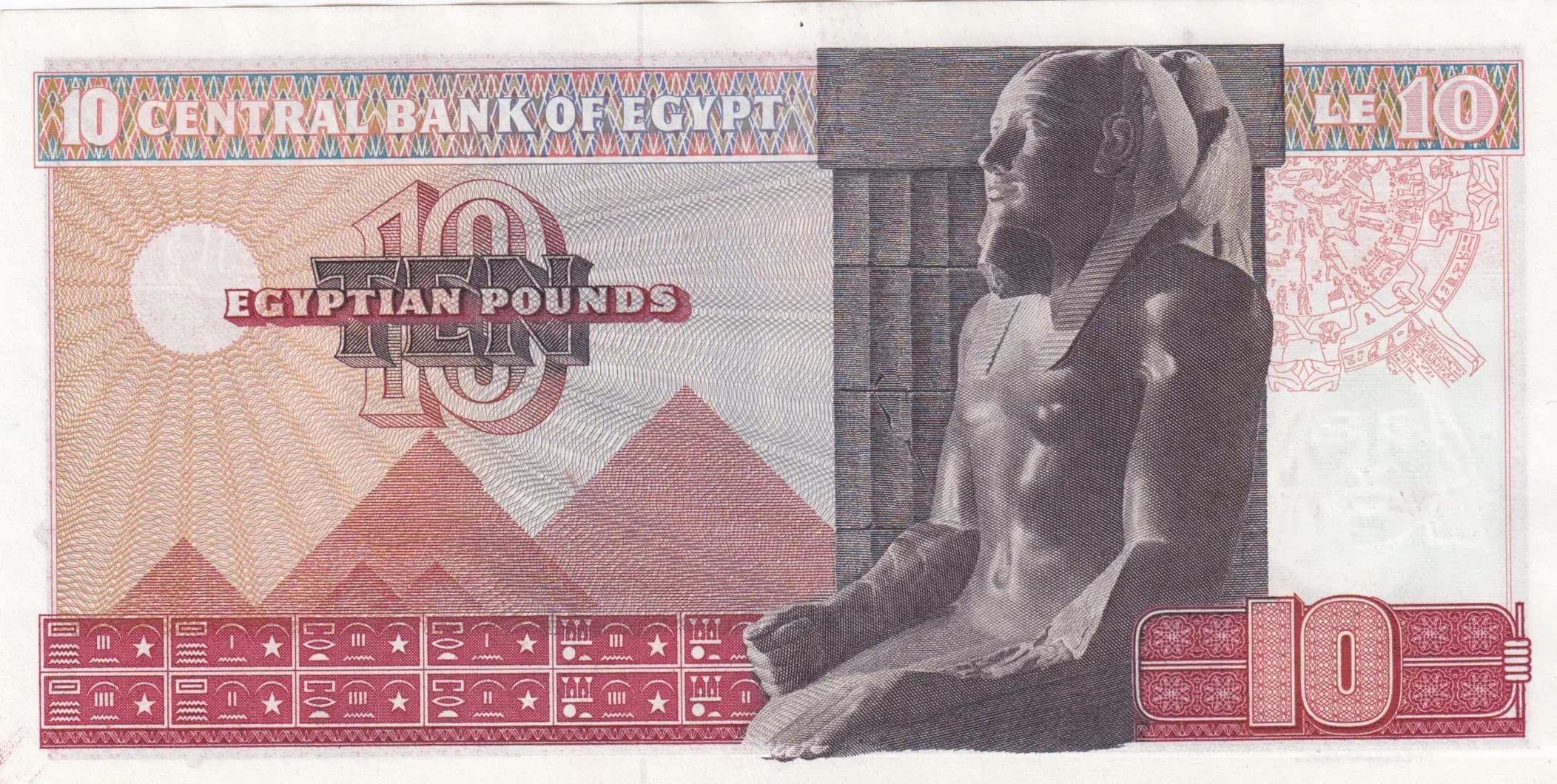
This is a stunning example of the Egyptian 10 Pound note from the 1976 issue period (Pick-46c), presented in AU (About Uncirculated) condition with virtually no signs of wear or handling. The note features vibrant red-brown and multicolor printing with crisp, well-defined engraving throughout, particularly evident in the intricate geometric borders and the detailed portraiture on the reverse. The Sultan Hassan Mosque on the obverse and the pharaonic statue with pyramids on the reverse showcase Egypt's rich cultural and historical heritage in exceptional preservation.
Common. The eBay price tracking data shows numerous sales of this note type across various grades, with examples regularly selling between $5-$52 depending on grading level (PMG 64-67 range typically $20-$40). The 1969-1978 series was a standard circulation issue with large print runs, and AU examples remain readily available in the market. The consistent supply and moderate pricing across multiple transactions over several years indicate this is a widely collected, common date in this series.
Issued during Egypt's period of modernization and nation-building following the 1973 Yom Kippur War, this banknote series (1969-1978) celebrates Egypt's pharaonic legacy while affirming contemporary national identity under the Central Bank of Egypt's authority. The deliberate pairing of Islamic architectural heritage (Sultan Hassan Mosque, Cairo's most prominent medieval mosque) with ancient Egyptian iconography (the pharaonic statue and pyramids) reflects the nation's bridge between its Islamic present and pharaonic past, serving as powerful symbols of Egyptian continuity and cultural pride.
The obverse features the magnificent Sultan Hassan Mosque in Cairo, one of the finest examples of Mamluk architecture, positioned at left-center in detailed gray-black engraving against a red-pink background with elaborate geometric and floral border patterns. The reverse displays a pharaonic statue (likely representing a New Kingdom pharaoh, possibly Chephren as referenced in catalog data) seated in traditional Egyptian pose, rendered as a photographic engraving in black and white on the right side, with a landscape view of the Great Pyramids in reddish-pink tones on the left. Both sides are framed with ornamental borders featuring repeated geometric motifs and star patterns characteristic of Islamic design traditions, reflecting Egypt's dual cultural heritage.
Front side: 'البنك المركزى المصرى' (Central Bank of Egypt), 'عشرة جنيهات' (Ten Pounds), '١٣٧٢ - ١٣٧٦' (Hijri dates 1372-1376, corresponding to approximately 1952-1957 CE, or more accurately reflecting the Islamic calendar span of the series), 'محافظ البنك' (Bank Governor). Back side: 'CENTRAL BANK OF EGYPT' (English), 'EGYPTIAN POUNDS' (English), multiple instances of the numeral '10' in both Western and Arabic numerals.
This banknote was produced using advanced intaglio engraving (recess printing) combined with multi-color offset lithography, a standard technique for currency of this era. The fine-line details visible in the mosque's architectural elements, the pharaonic statue's portraiture, and the intricate guilloche security borders throughout demonstrate skilled traditional engraving work. The Egyptian pound notes of this period were typically printed by the Central Bank of Egypt's own security printing facilities or contracted security printers; the Pick-46c series shows characteristics consistent with 1970s-era Central Bank of Egypt production standards.
This note is cataloged as Pick-46c, indicating it is a variant within the P-46 base Pick number for the 10 Egyptian Pound series. The 'c' designation typically denotes a specific date or signature variety within the 1969-1978 issue period. The visual analysis indicates this particular specimen bears serial numbers in red text and shows the characteristic design features of the mid-1970s printing period. Further variety identification would require examination of the specific signatures of the Bank Governor and other officials whose names appear on the note, as well as the precise serial number prefix codes, which are standard variety markers for this series.