1 pound 1951
Market Prices
6 salesAbout This Note
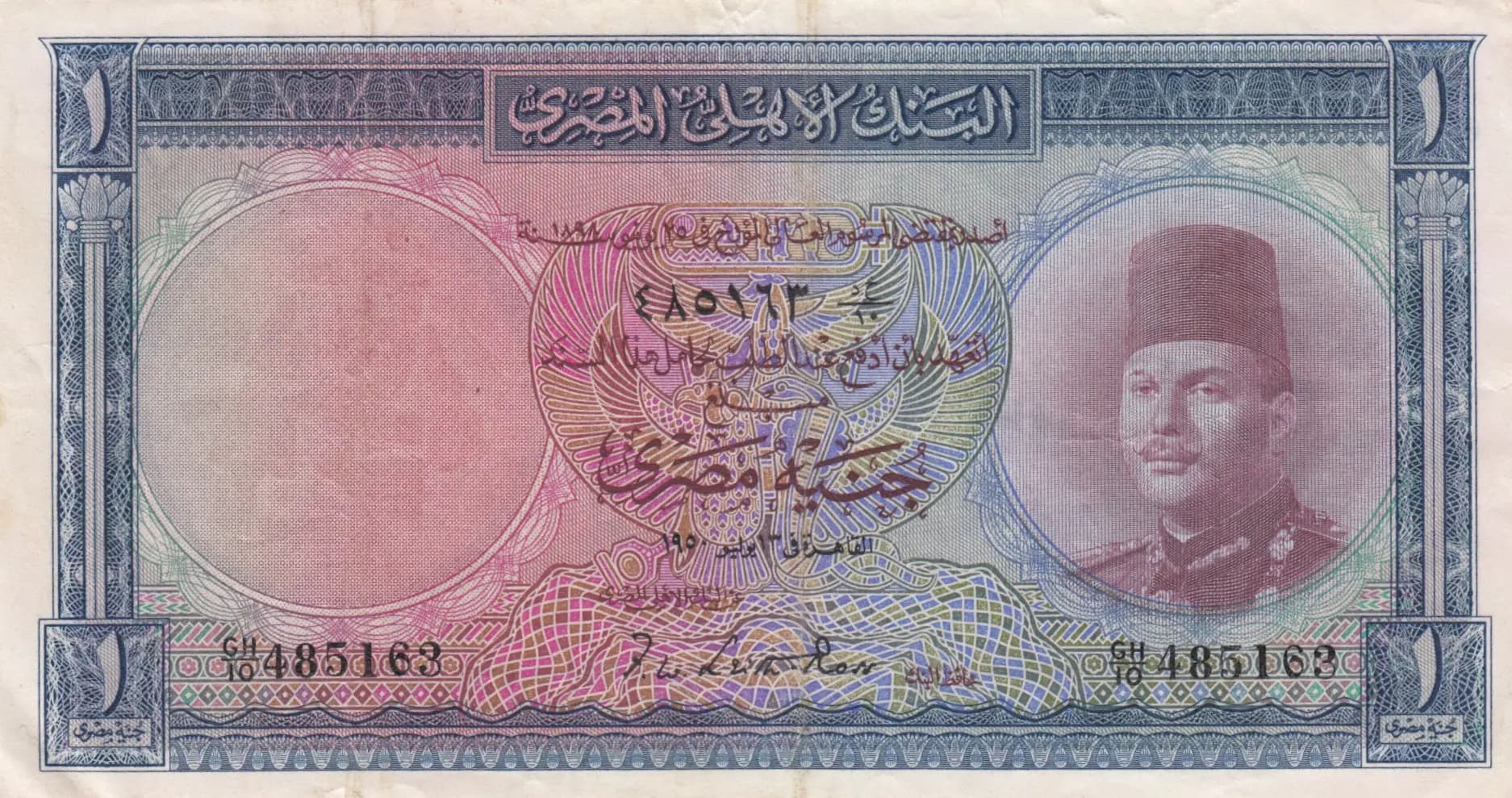
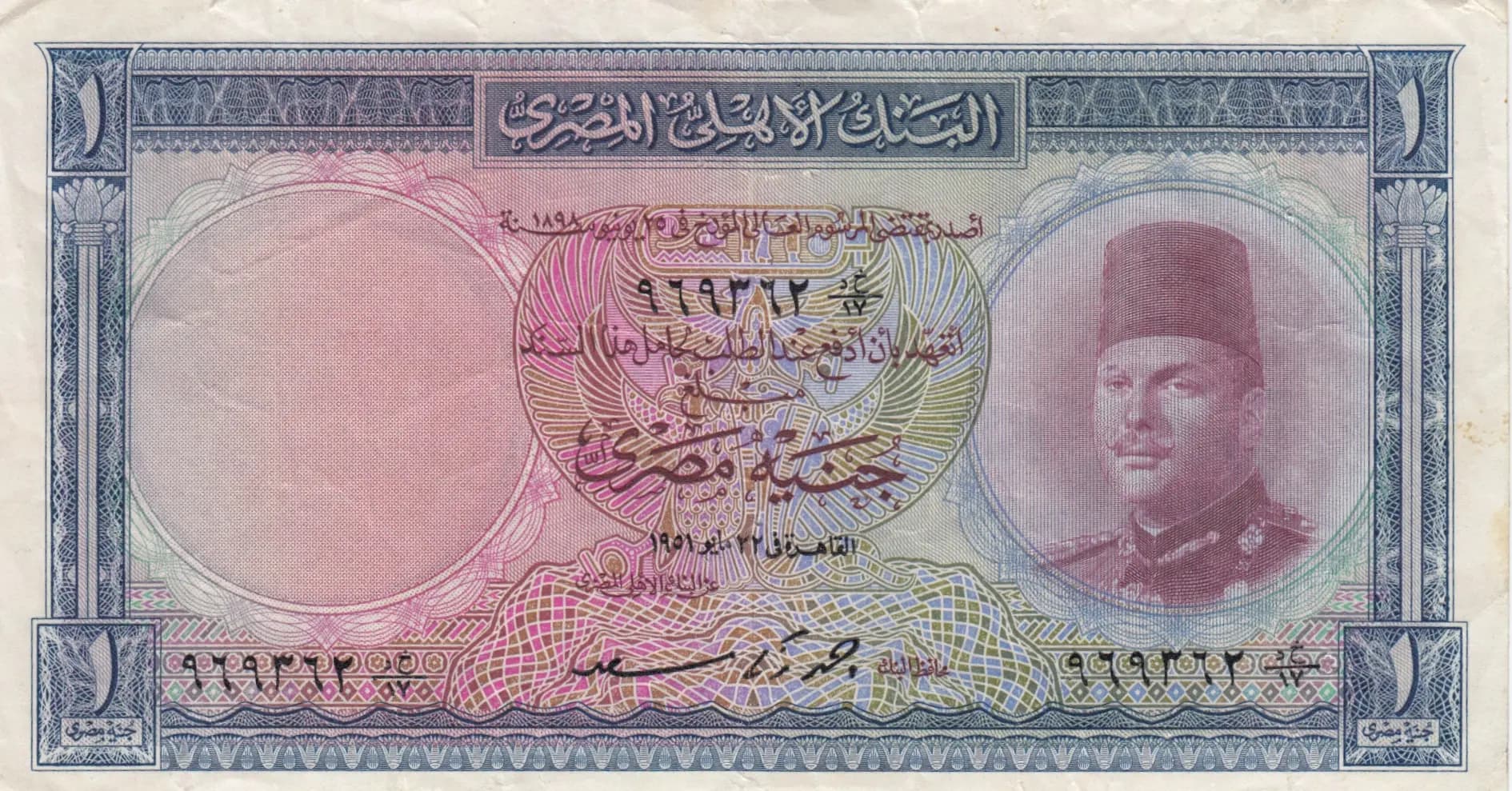
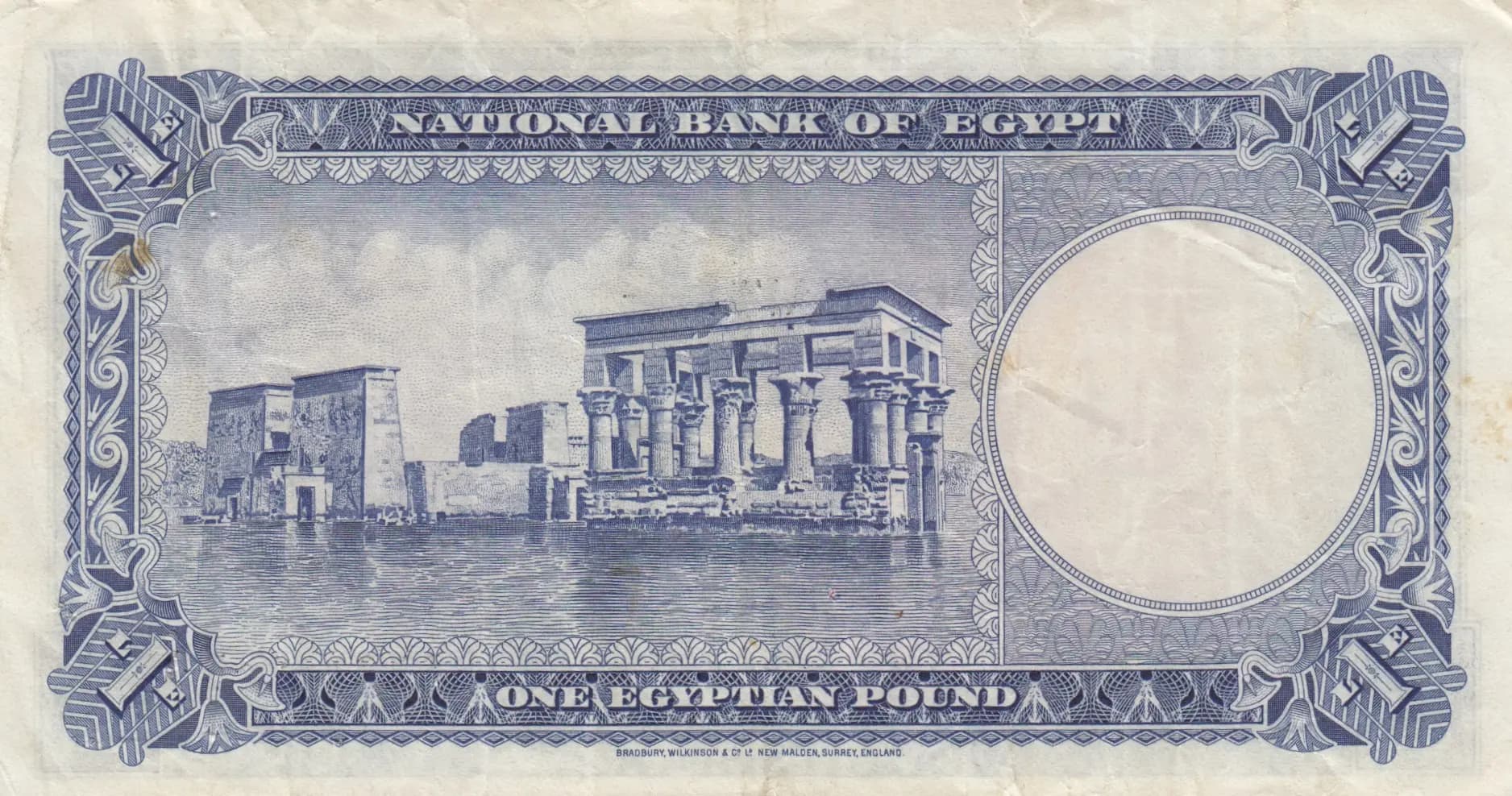
This is a 1951 Egyptian pound note from the National Bank of Egypt, catalogued as Pick P-24b, in Fine (F) condition. The obverse features a striking portrait of King Farouk I in military uniform and red fez rendered in blue and pink tones, while the reverse displays an architectural scene of an ancient Egyptian temple complex (identified as Philae temple) in blue monochrome. The note shows expected wear for a circulated historical banknote from this era, with visible creases and aged patina, but maintains clear legibility of all design elements and inscriptions.
Common. The eBay price data provided shows multiple sales ranging from $26 to $59.99 for circulated VF specimens, with a 2016 F-grade sale at $49, indicating healthy supply and consistent demand at modest price points. The 2016 catalogue values show F-grade at approximately $20-30 range (estimated from VG $20 and VF $100 progression), with this note's market performance aligned to common circulated notes of this period. The 1950-1952 issue range suggests a standard circulation run for the National Bank of Egypt with no known emergency circumstances, recalls, or short-run characteristics that would elevate scarcity.
Issued during the reign of King Farouk I (1936-1952), this note was produced just one year before the Egyptian Revolution of 1952, which would overthrow the monarchy and end Farouk's reign. The obverse portrait of the young king in military dress represents the final period of monarchical rule in Egypt. The reverse depicts the Temple of Philae, one of Egypt's most iconic ancient monuments, reflecting the nation's cultural pride and connection to its pharaonic heritage during a period of significant political transformation.
The obverse features King Farouk I positioned in profile at right, depicted in his role as commander-in-chief in full military regalia with a distinctive red fez, set against ornate decorative borders featuring floral and geometric patterns in pink, blue, green, and yellow. The center of the note is dominated by an intricate oval medallion with elaborate Arabic calligraphy and ornamental designs. The reverse displays the Temple of Philae with its characteristic colonnade and pylons reflected in the waters of the Nile, rendered in fine blue engraving. The entire note is framed with elaborate decorative borders incorporating repeating geometric and floral motifs in the corners.
Front: 'البنك الاهلي المصري' (Al-Bank Al-Ahli Al-Masri / National Bank of Egypt) in decorative Arabic cartouche at top, with handwritten official signatures in the lower portion. Back: 'NATIONAL BANK OF EGYPT' and 'ONE EGYPTIAN POUND' in English capitals, with printer attribution reading 'BRADBURY WILKINSON & CO LTD NEW MALDEN SURREY ENGLAND' at the bottom.
Intaglio engraving and printing by Bradbury Wilkinson & Co Ltd, New Malden, Surrey, England—one of the world's premier security printers during the mid-20th century. The visual analysis confirms the characteristic fine line work, high relief impression, and intricate micro-level detail patterns that are hallmarks of Bradbury Wilkinson's banknote production, serving as both aesthetic and anti-counterfeiting measures.
Catalogued as Pick P-24b, one of three known varieties for the 1 Egyptian Pound issue of this period (P-24a with Sphinx watermark, P-24b, and P-24c). The visual analysis notes an Arabic serial number consistent with the standard issue. Without direct examination of the watermark, serial number prefix, or signature variants visible in the physical inspection, the specific variety designation as P-24b is confirmed from the catalog data provided. The date shown on the obverse is noted as 1951-22.5.1951 in the reference data, indicating May 22, 1951 issue date.