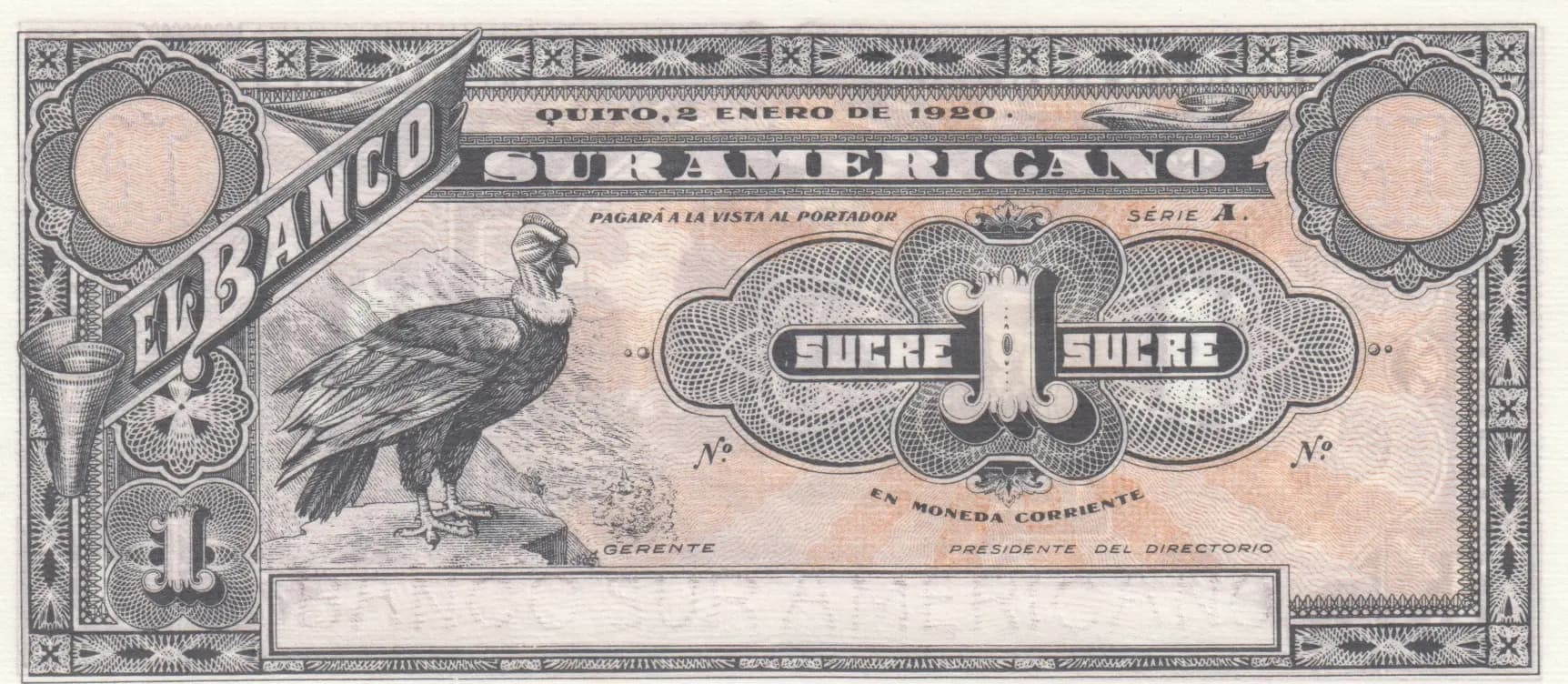
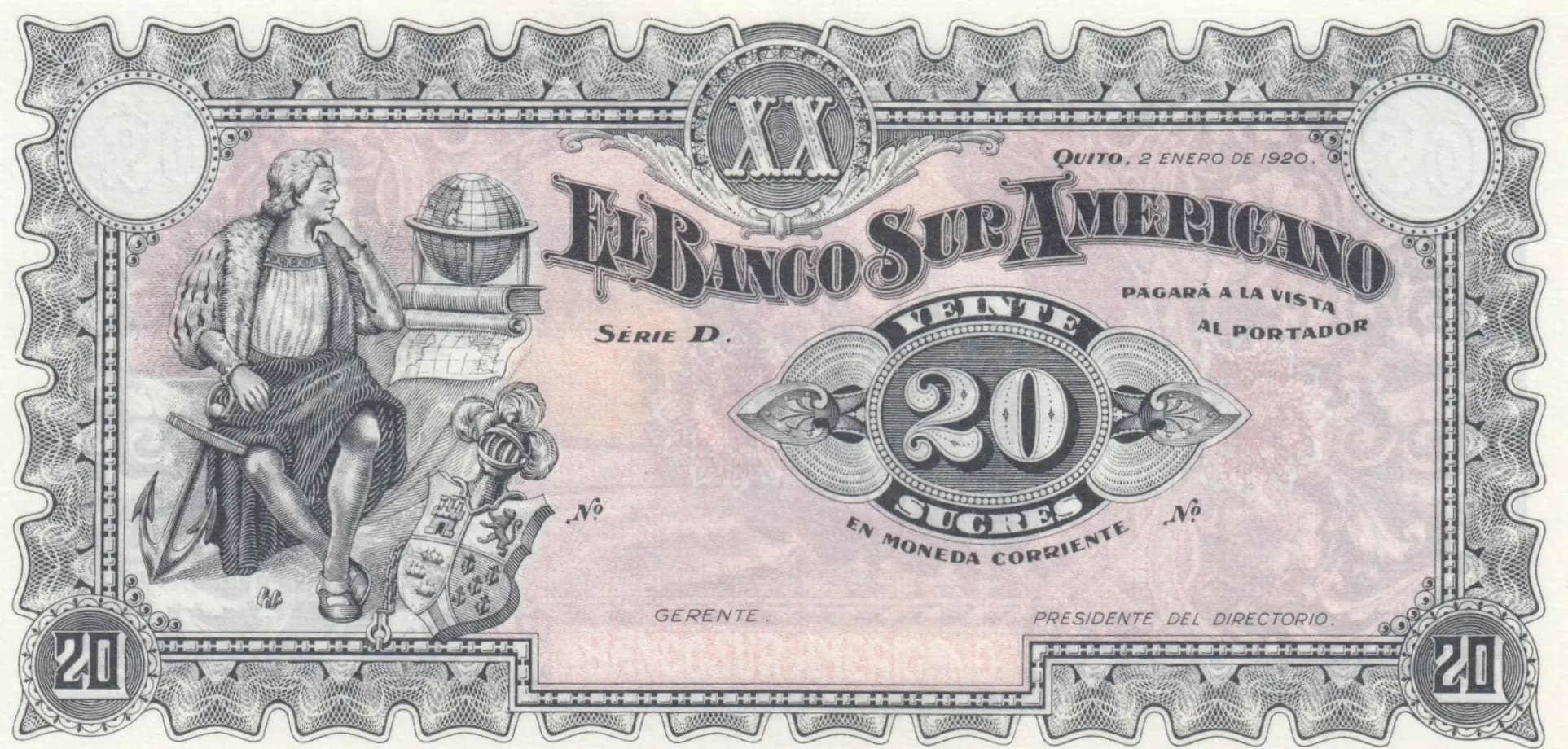
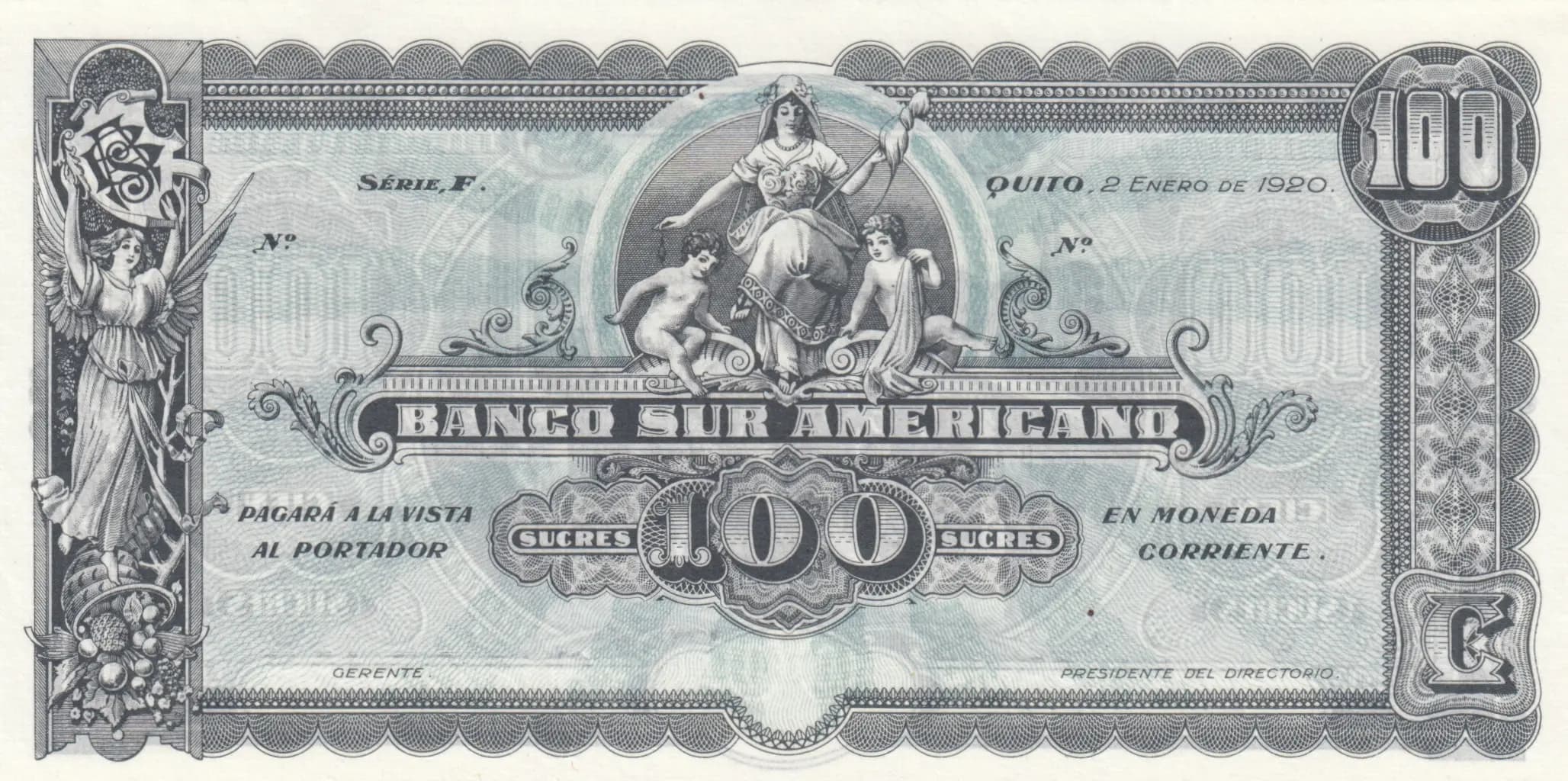
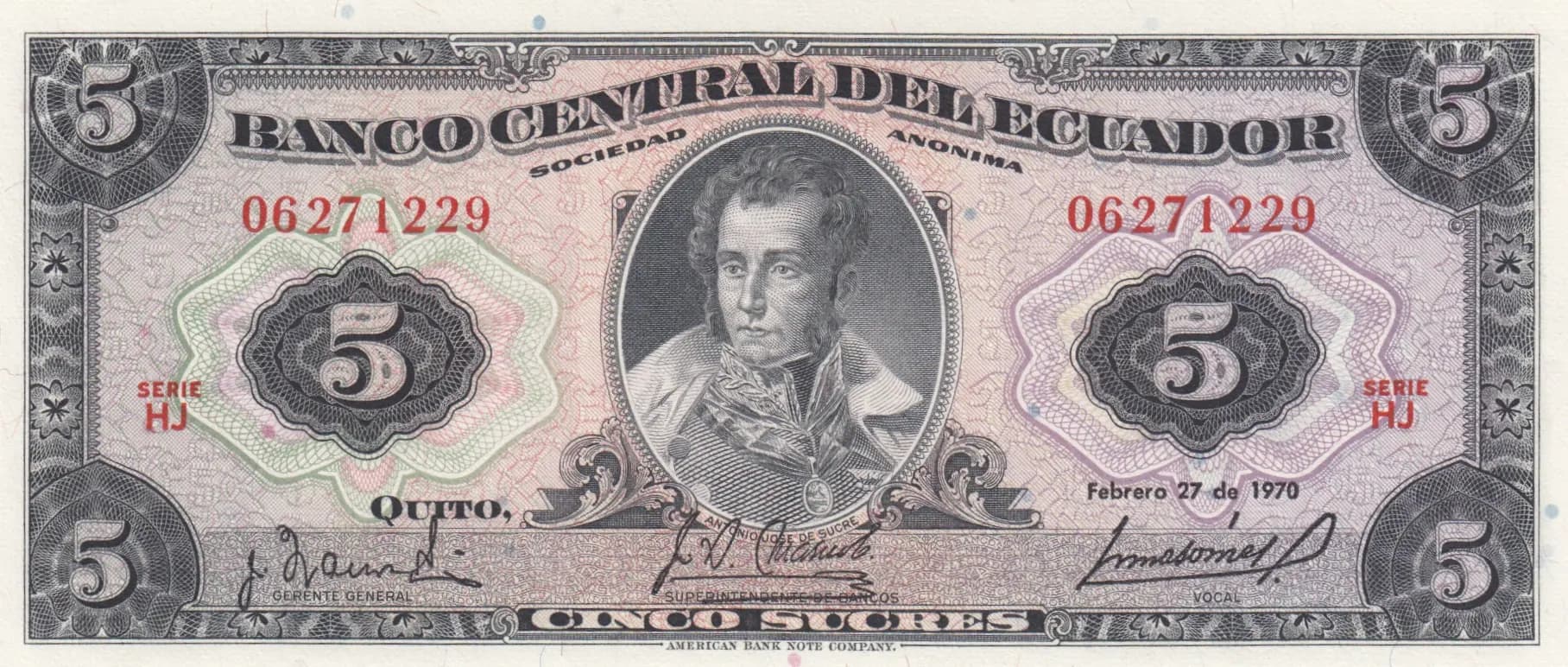
5 sucres 1920
Market Prices
About This Note
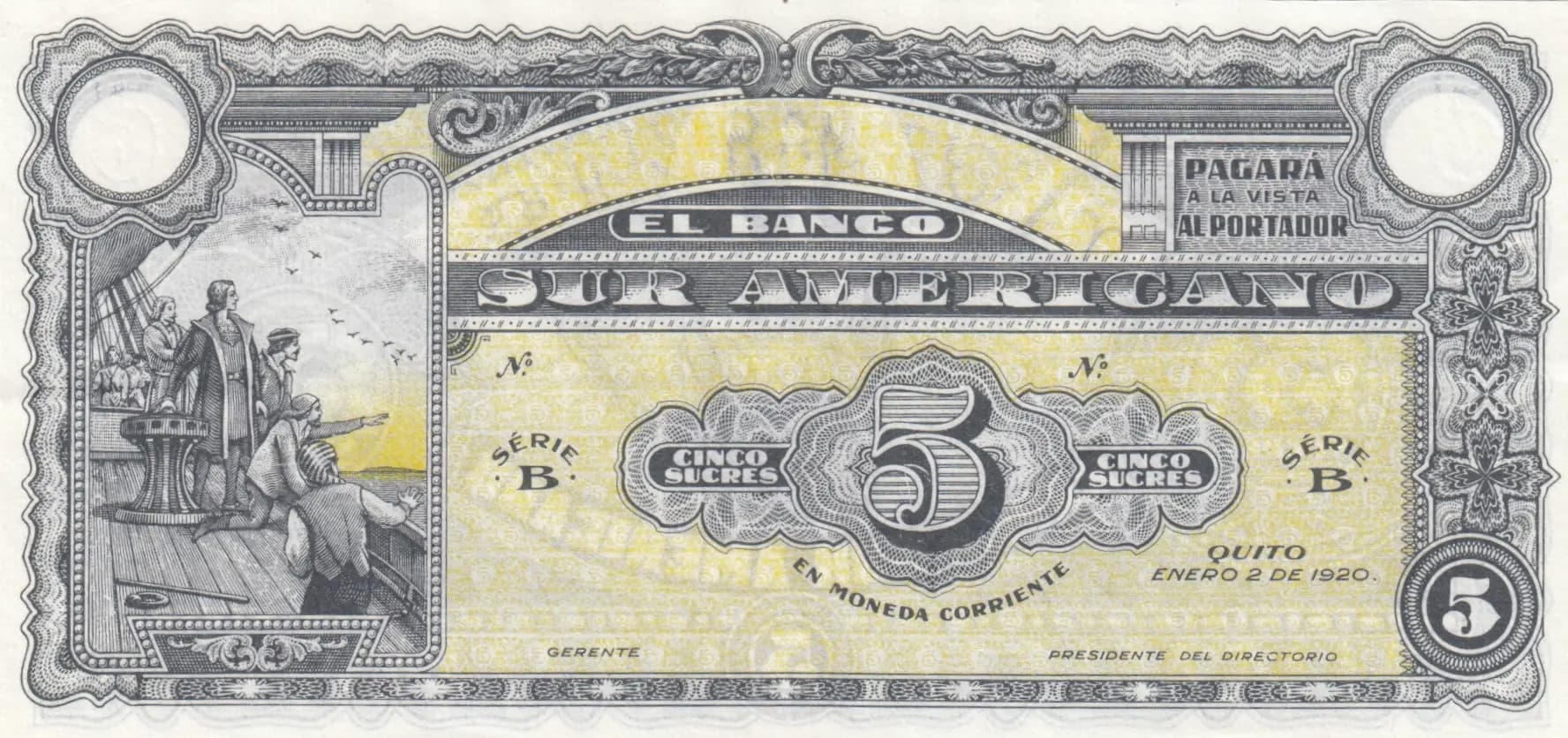
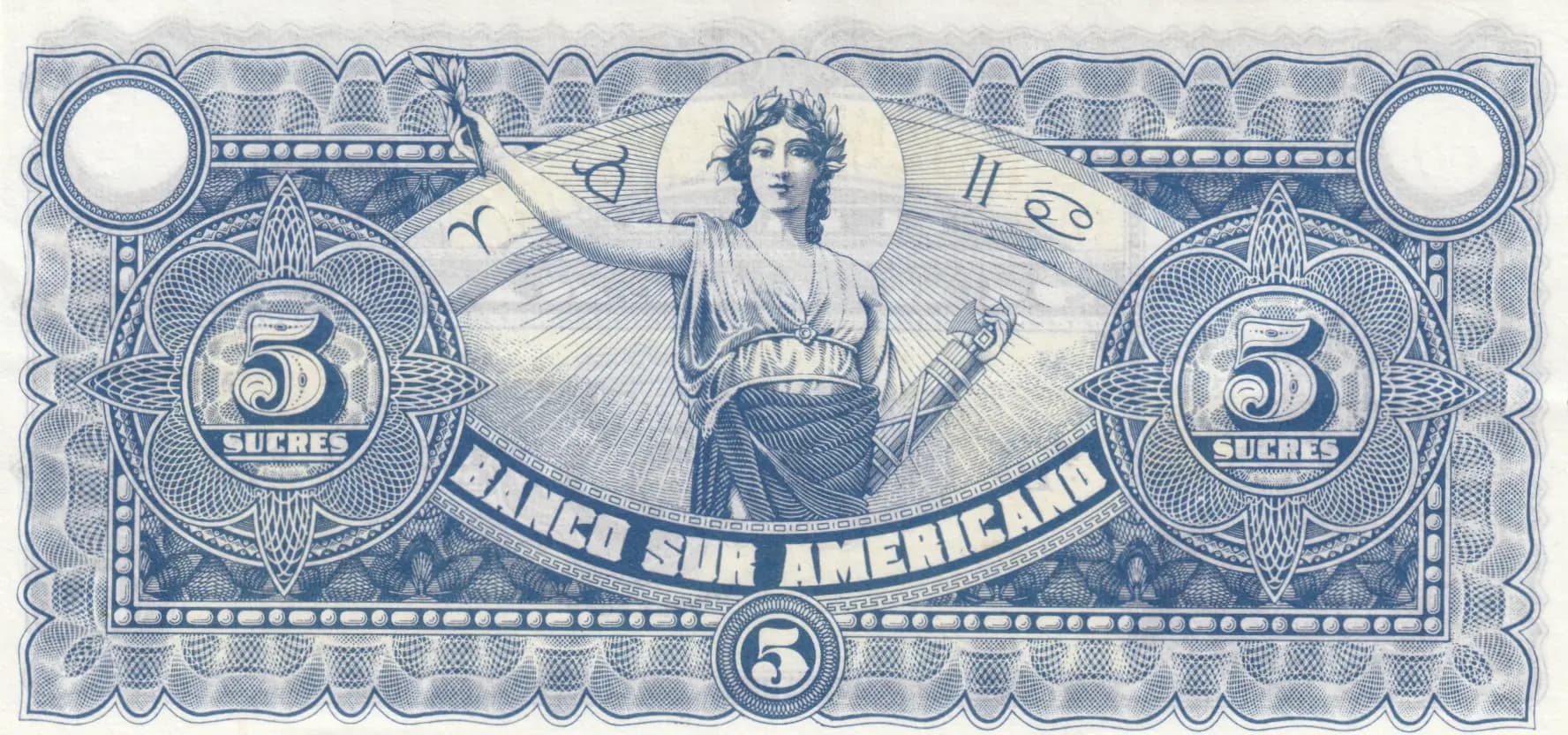
This is an exceptional example of a 1920 El Banco Sur Americano 5 sucres remainder banknote in UNC condition, featuring striking yellow and blue color schemes with exceptional engraved detail. The note showcases a maritime scene with Columbus on the obverse and an allegorical winged female figure on the reverse, both executed in fine line-work characteristic of early 20th-century currency design. As a remainder note without serial numbers or signatures, this represents an interesting piece of Ecuadorian financial history, with the January 2, 1920 date and Quito imprint providing valuable historical documentation.
Common. While this is a remainder banknote without serial numbers or signatures (which sometimes elevates collector interest), the eBay market data shows consistent pricing in the $16.69–$50.00 range for UNC examples, with the majority clustered between $18.95–$29.99. This pricing pattern is consistent with common notes. The existence of multiple UNC sales at modest prices indicates adequate supply. Remainder notes from defunct regional banks were often produced in substantial quantities and frequently survived in collections, keeping them common despite their historical interest.
El Banco Sur Americano was a private Ecuadorian bank operating in the early 20th century during a period of monetary experimentation in Ecuador. The Columbus imagery on the obverse reflects the pan-American themes popular in Latin American banking of this era, celebrating hemispheric discovery and commerce. The allegorical Liberty figure with fasces on the reverse symbolizes the progressive ideals and legal authority that the bank sought to convey, typical of how financial institutions projected stability and virtue during Ecuador's republican period.
The obverse features a maritime historical scene depicting Christopher Columbus and his crew on deck sighting land, rendered in black engraving on a yellow/cream underprint with elaborate ornamental frames in the corners. The composition emphasizes classical maritime themes with sailors and dock workers in period dress, with architectural elements suggesting ships or colonial structures in the background. The reverse showcases a central allegorical female figure representing Liberty or Justice, depicted with wings and a radiant halo or crown, holding what appears to be a torch or fasces staff—symbols of legal authority and enlightenment. Both sides are framed by ornate circular medallions containing the denomination, with elaborate geometric and floral border patterns throughout, executed in blue tones on the reverse. The denomination panels appear as large circular frames on both left and right margins of the back.
FRONT SIDE: El Banco Sur Americano (The South American Bank) / Cinco Sucres (Five Sucres) / Serie B (Series B) / En Moneda Corriente (In Current Currency) / Quito (Quito) / Enero 2 de 1920 (January 2, 1920) / Gerente (Manager) / Presidente del Directorio (President of the Board) / Pagará a la Vista al Portador (Will Pay on Demand to Bearer). BACK SIDE: 5 Sucres / Banco Sur Americano (South American Bank).
This note was produced using fine line steel engraving, the standard security printing technique for banknotes of this era. The intricate detail visible in the Columbus scene, the allegorical figure, and the elaborate geometric borders are characteristic of high-quality intaglio printing. The multiple color applications (yellow underprint on obverse, blue base on reverse with black overprinting) indicate separate printing runs, typical of early 20th-century currency production by established security printers serving Latin American central and private banks.
This note is identified as Pick catalog number P-S252r, where the 'r' designates it as a remainder banknote. The visual analysis confirms the absence of serial numbers and signature lines, consistent with remainder status. The 'Serie B' marking visible on the obverse indicates this is from Series B of the issue. No overprints, date variations, or signature varieties are present given the remainder nature of the printing. The January 2, 1920 date and Quito imprint are consistent with the cataloged issue date and location.