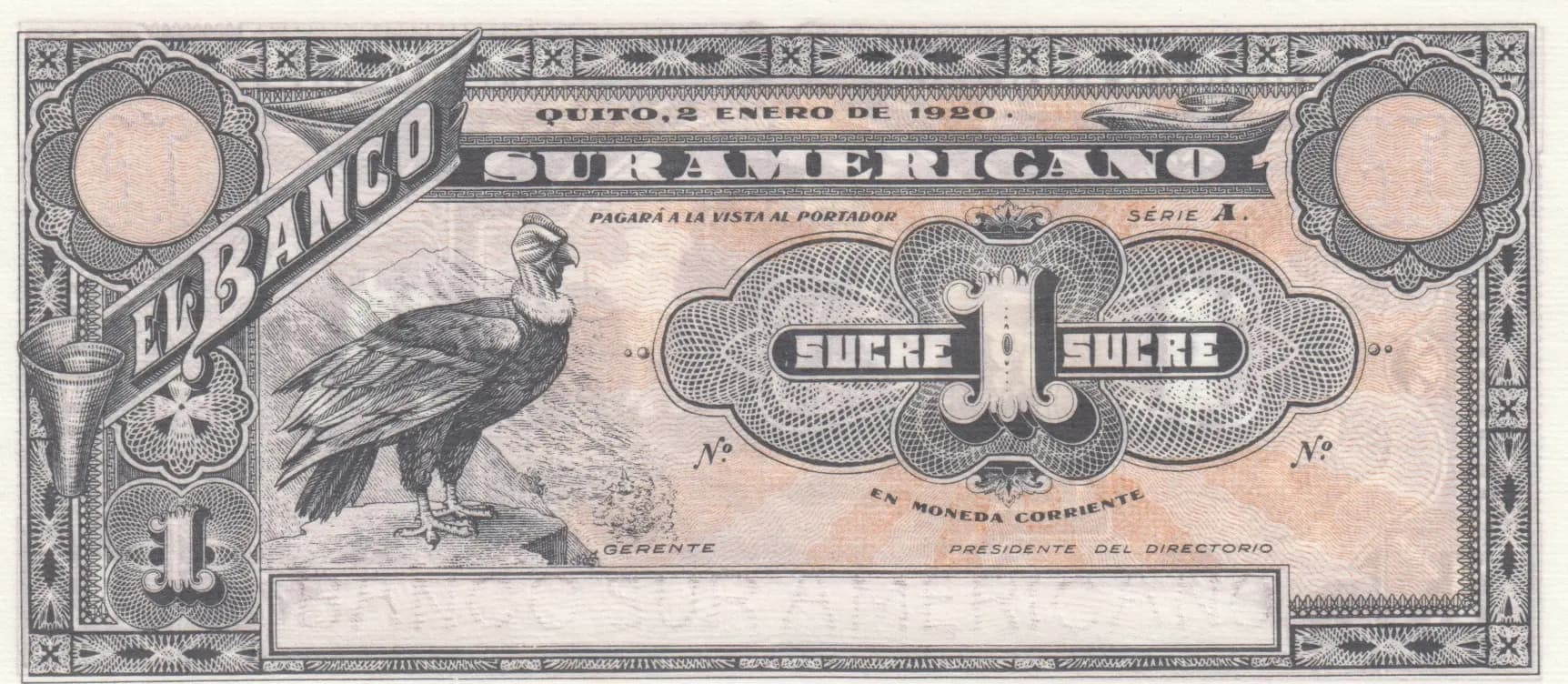
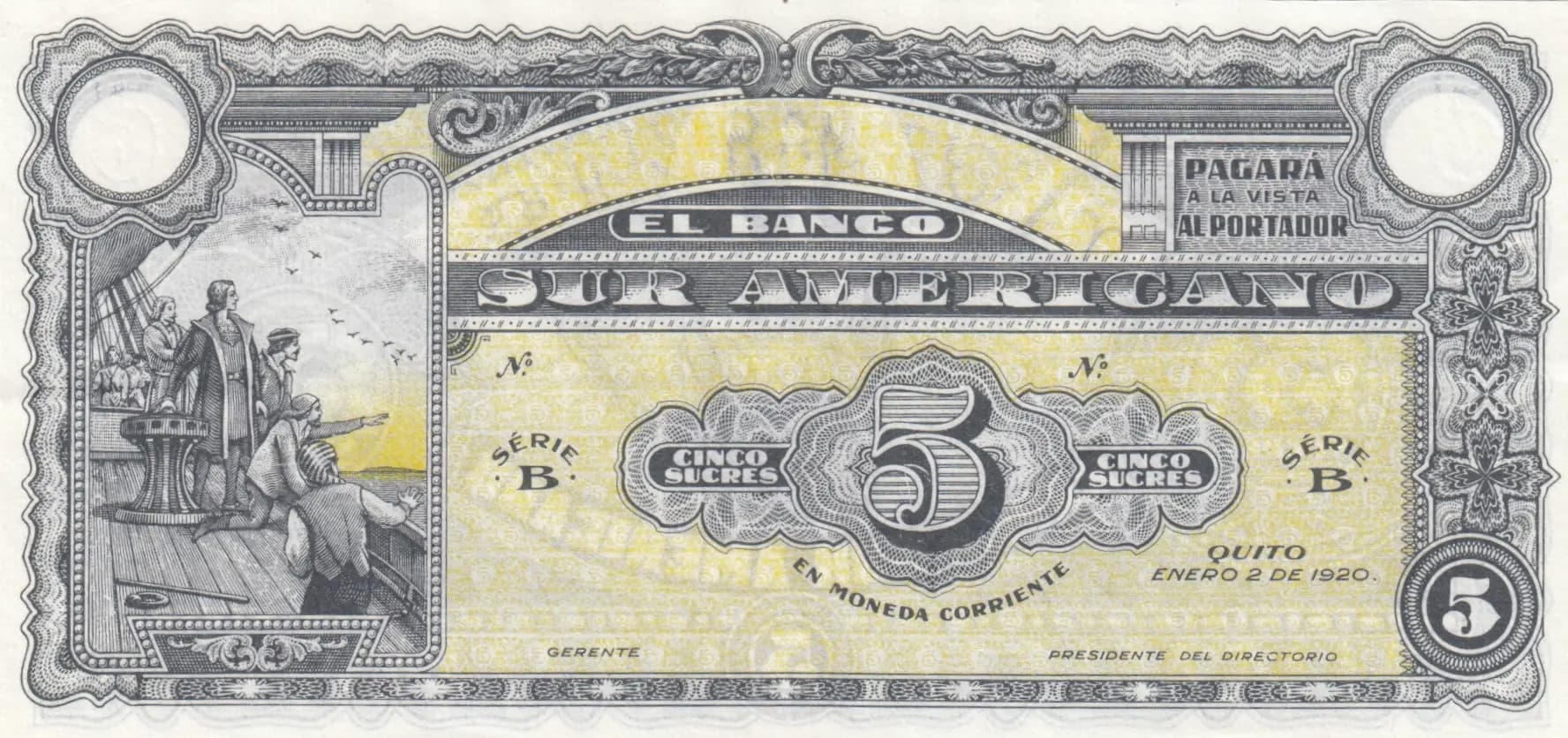
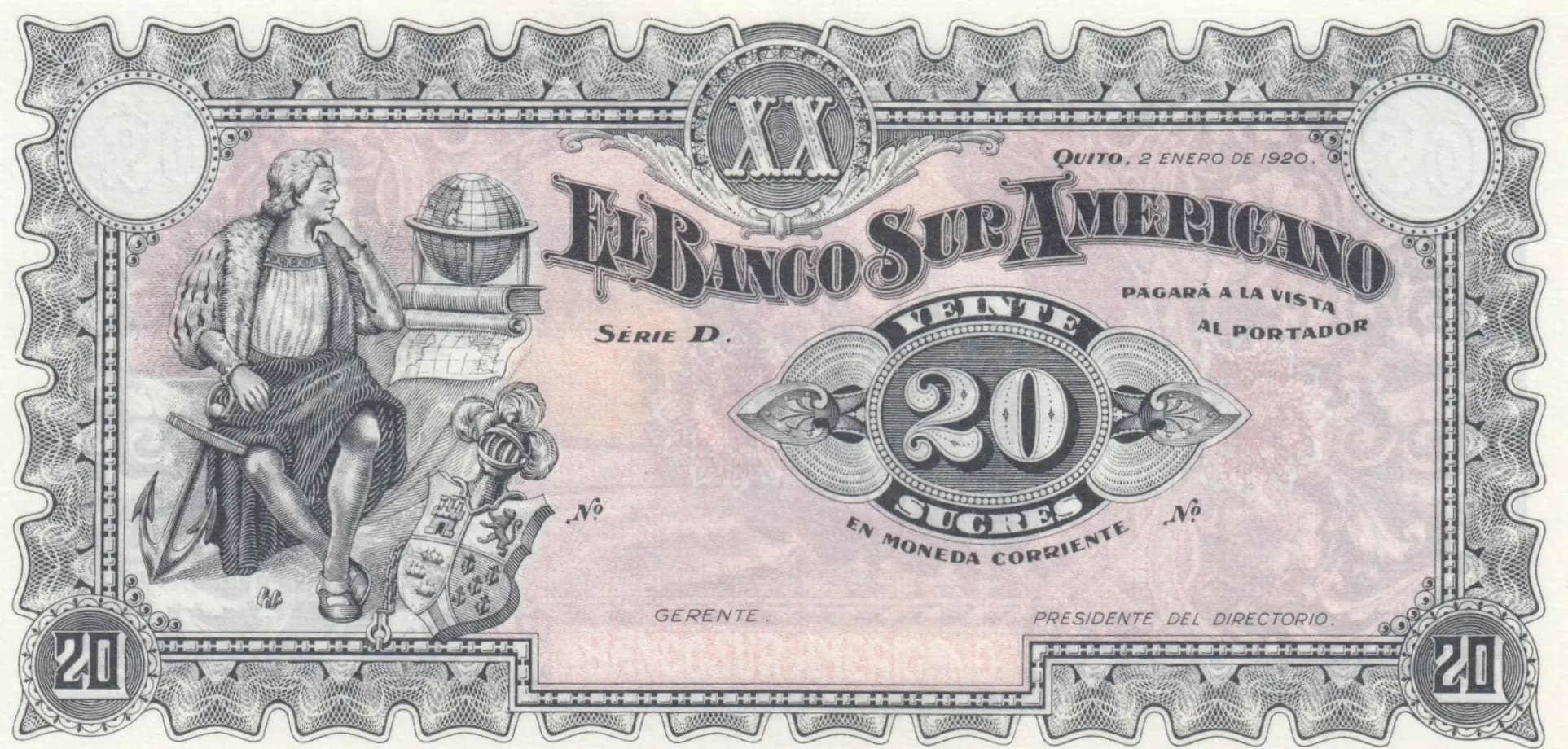
100 sucres 1920
Market Prices
About This Note
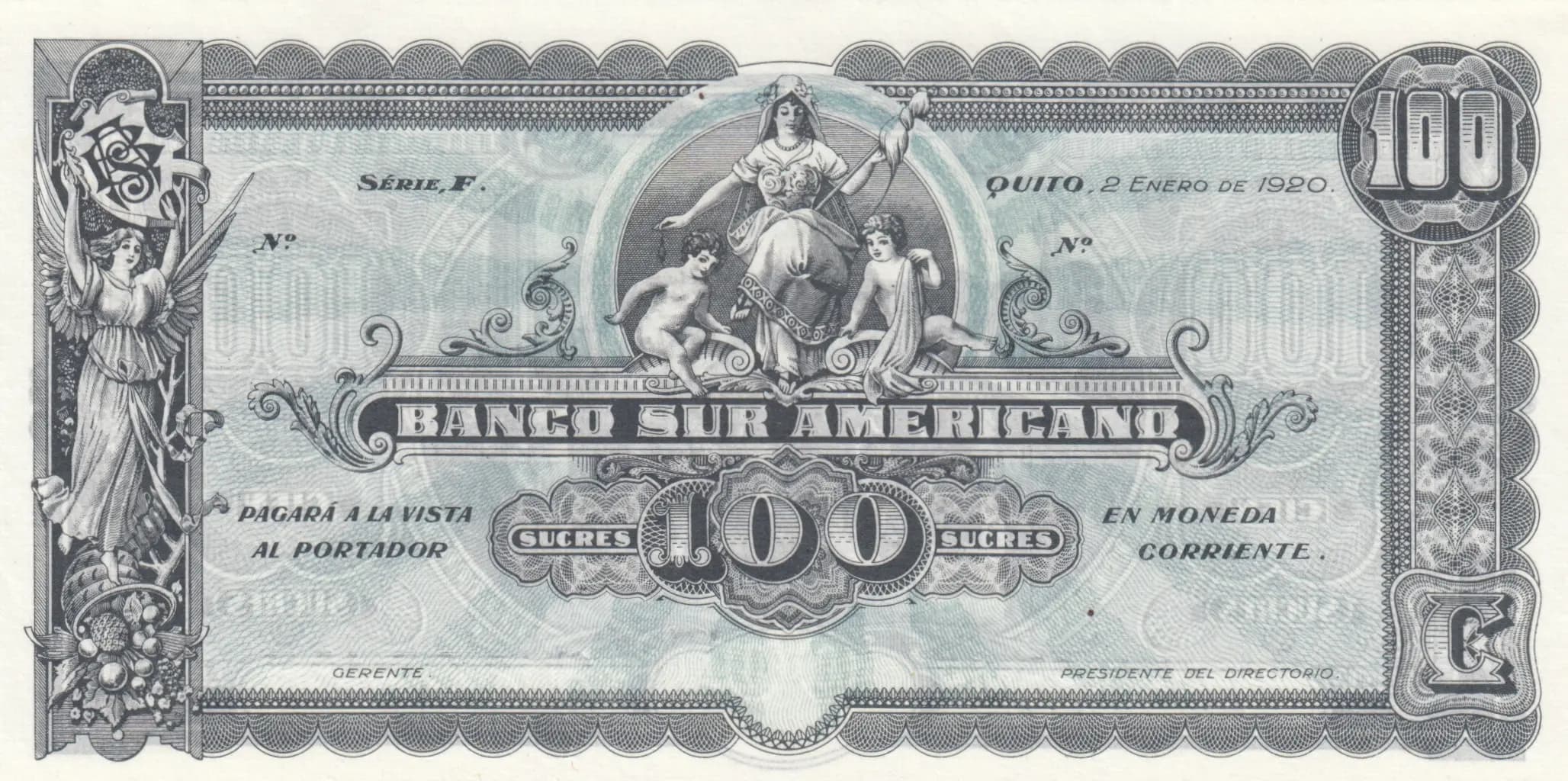
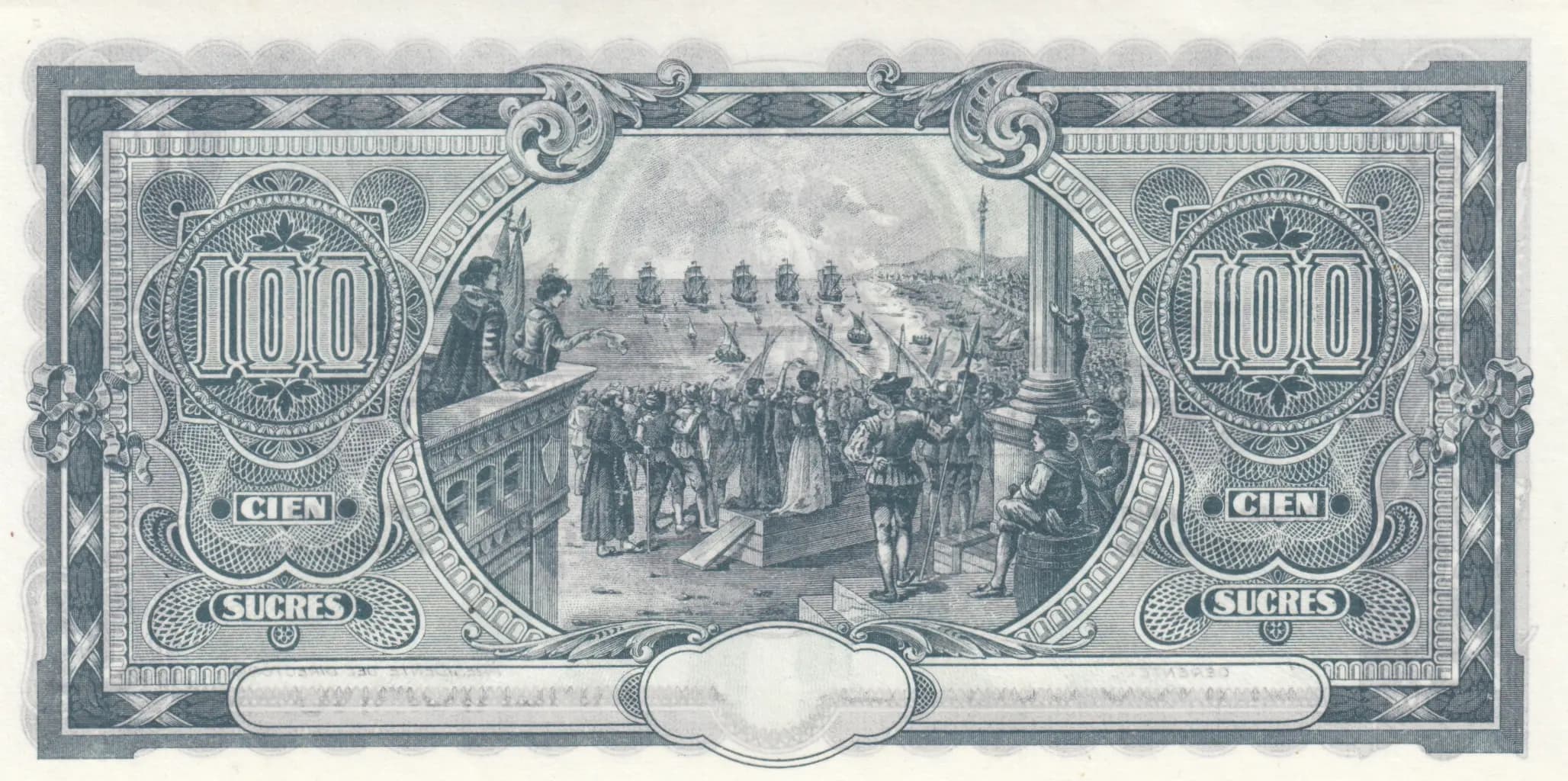
This is an exceptional uncirculated specimen of Ecuador's 100 Sucres note from 1920, issued by El Banco Sur Americano on January 2, 1920. The note showcases outstanding engraving quality with an allegorical female figure seated with a palm frond on the obverse, flanked by cherubs and a winged classical figure, while the reverse depicts a historically significant colonial-era harbor scene with multiple sailing vessels, fortified structures, and gathered crowds. The pristine condition with sharp detail throughout and absence of any wear, creases, or stains makes this a desirable example for collectors of early Ecuadorian currency and remainder banknotes.
Common. Despite being cataloged as a remainder banknote (an issue type that can sometimes indicate scarcity), the eBay price tracking data shows this note in UNC condition routinely selling between $16.69 and $50.00 USD, with most sales clustering in the $18.95-$23.99 range. This pricing pattern, combined with multiple UNC specimens appearing in the secondary market, indicates robust availability. Remainder banknotes, while historically interesting, were often produced in substantial quantities and survived in better condition precisely because they were never circulated, contributing to their relative commonness today.
El Banco Sur Americano (South American Bank) issued this note during a period of significant economic development in Ecuador following the establishment of the sucre as the national currency in 1884. The reverse depicts a colonial-era harbor scene with multiple sailing vessels and a fortified structure, likely commemorating Ecuador's maritime heritage and the importance of international trade to the nation's economy during the early 20th century. This remainder banknote represents a fascinating artifact of Ecuador's banking history, issued just four years after the 1916 banking reform that restructured the country's financial institutions.
The obverse features a classical allegorical composition representing Liberty or Justice seated centrally, adorned with a headpiece and holding a palm frond symbolizing peace and victory. She is flanked by two cherubs (putti) in a symmetrical arrangement, with an additional winged female figure in classical drapery positioned on the left margin, possibly representing Minerva or another classical virtue. The reverse depicts a historically significant colonial-era harbor scene set in what appears to be an Ecuadorian port, showing multiple sailing vessels (approximately 6-7 ships) anchored in a bay with a fortified structure or fortress on the left shore, mountains in the background, and substantial crowds of figures gathered on the shoreline—likely representing the welcoming of returning vessels or a significant maritime event. The entire design is framed by elaborate baroque-style ornamental borders featuring intricate geometric and floral patterns, with the denomination prominently displayed in ornate circular frames on both sides.
FRONT SIDE: 'BANCO SUR AMERICANO' (South American Bank); 'SERIE F' (Series F); 'QUITO, 2 ENERO DE 1920' (Quito, January 2, 1920); '100' and 'SUCRES' (One hundred sucres); 'PAGARÁ A LA VISTA AL PORTADOR' (Will be paid to bearer on sight); 'EN MONEDA CORRIENTE' (In current currency); 'GERENTE' (Manager); 'PRESIDENTE DEL DIRECTORIO' (President of the Board); 'N°' (Number). BACK SIDE: '100' (One hundred); 'CIEN' (One hundred); 'SUCRES' (Sucres).
This note was produced using high-quality intaglio (copperplate) engraving, evidenced by the fine line work, intricate stippling and crosshatching visible throughout, complex geometric pattern backgrounds, and the sharp detail preservation in the allegorical vignettes and historical scene. The multi-layered ornamental borders, detailed serif typography, and the dimensional quality of the imagery are characteristic of security-printed banknotes from this era. The specific printer for this El Banco Sur Americano emission is not definitively identified in available catalogs, though Ecuadorian notes of this period were often produced by established European security printers such as Waterlow & Sons or De La Rue.
This specimen is Series F, dated Quito, January 2, 1920, and represents one variant cataloged under Pick P-S254 (PMG records one variant for this base Pick number). The specific variety would be further differentiated by the series designation (F), signature combinations of the Gerente and Presidente del Directorio, and serial number prefix. The visual analysis shows no overprints, countermarks, or other distinguishing marks that would indicate a specialized sub-variety. Serial number examination would be required to distinguish this note from other Series F specimens of the same date and issue.