20 sucres 1920
Market Prices
1 saleAbout This Note
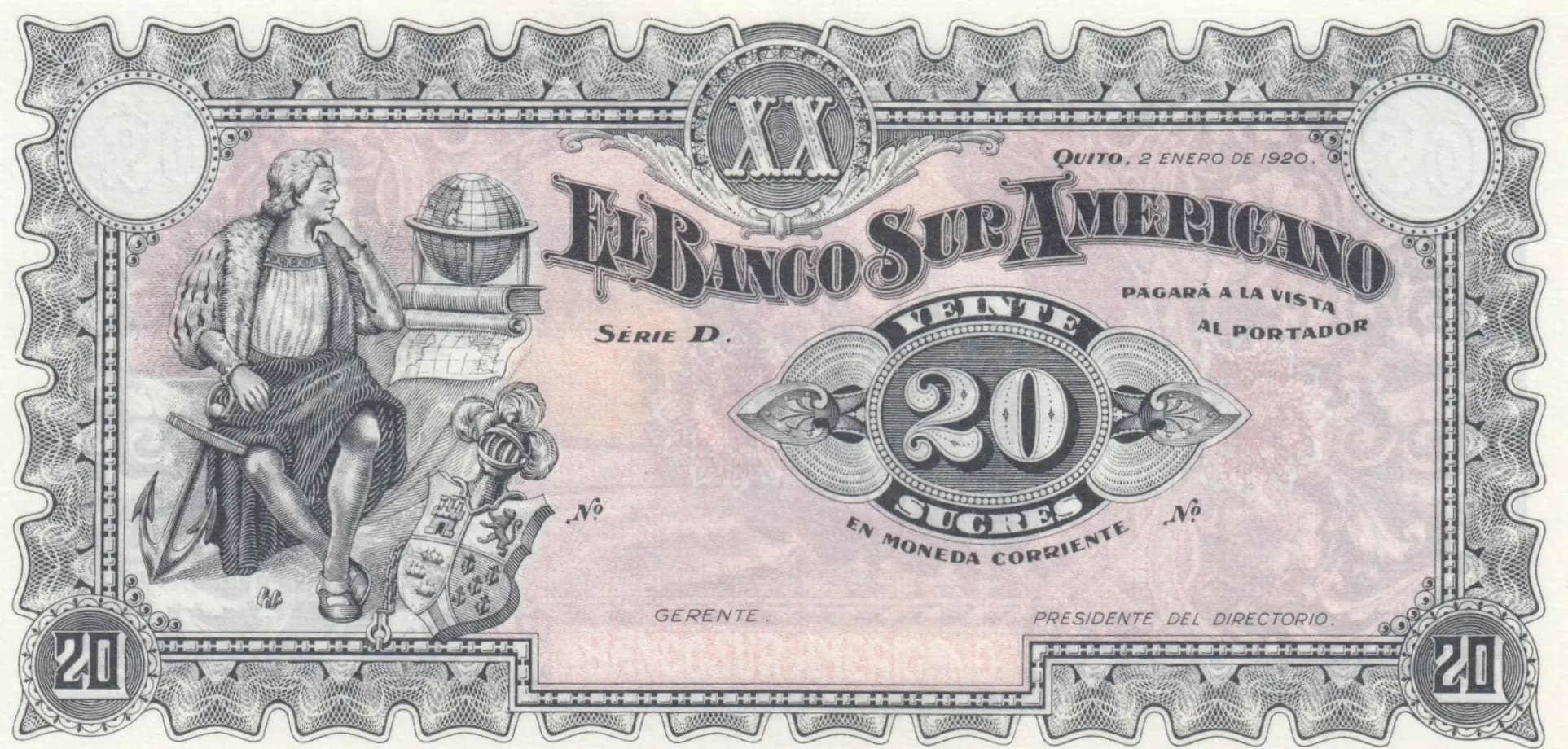
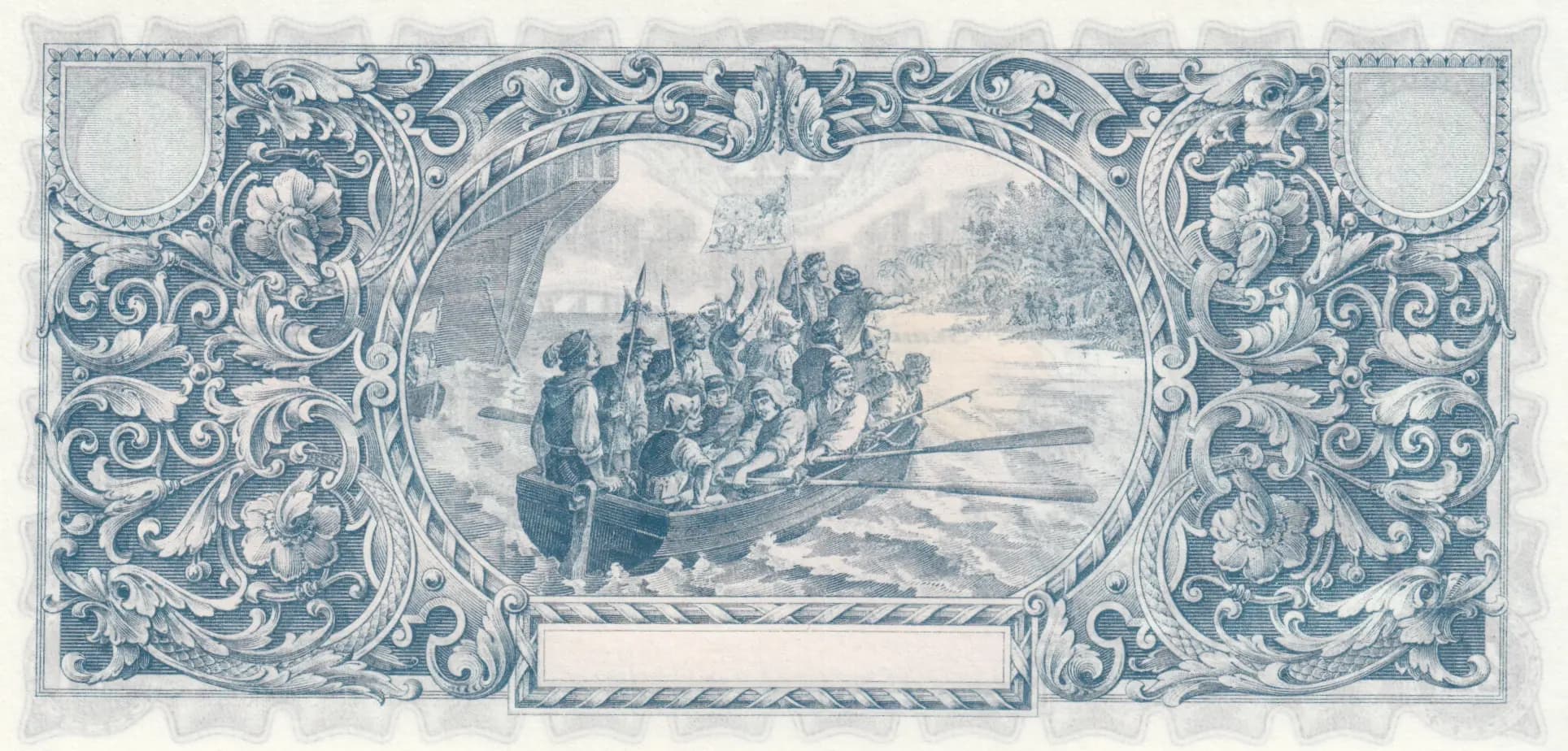
This is a striking 1920 remainder banknote from El Banco Sur Americano of Ecuador, featuring a pink underprint with an elegant winged allegorical female figure representing science or learning seated with a globe on the obverse. The reverse displays a historical scene in blue tones depicting indigenous or colonial-era figures in a boat, likely representing an exploration or navigation theme connected to Ecuador's maritime heritage. Despite showing age-appropriate foxing and discoloration consistent with over a century of existence, the note remains in UNC condition with crisp, legible engraving and no significant tears or creases.
Common. This is a remainder banknote without serial numbers or signatures, indicating it was never placed into circulation and represents excess stock. The eBay market data showing a UNC specimen selling for $24.50 in June 2024 (despite 20 bids) confirms these notes are readily available and affordable in the collector market. Remainder notes from regional Latin American banks of this era, while interesting historically, typically have substantial surviving quantities. No indication exists of a small print run or rarity status for Pick S253a.
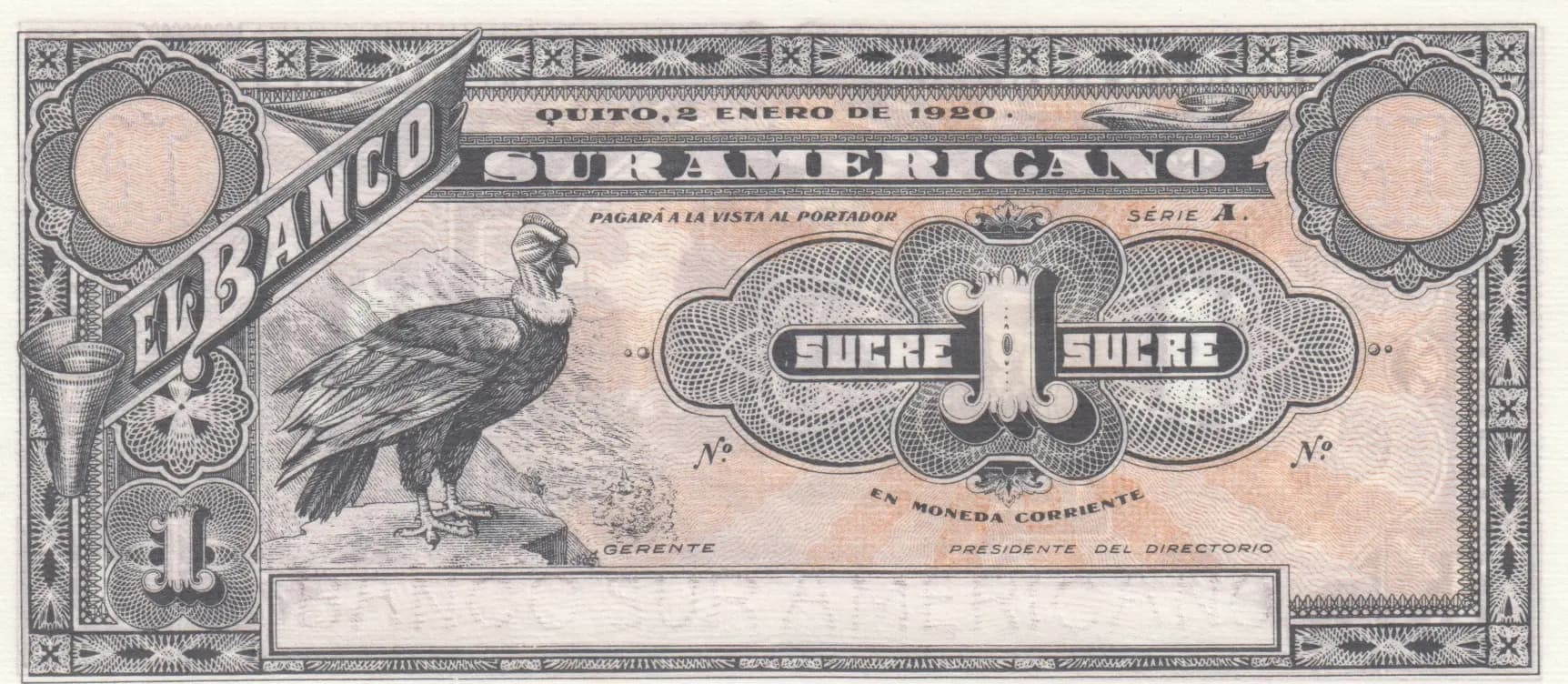
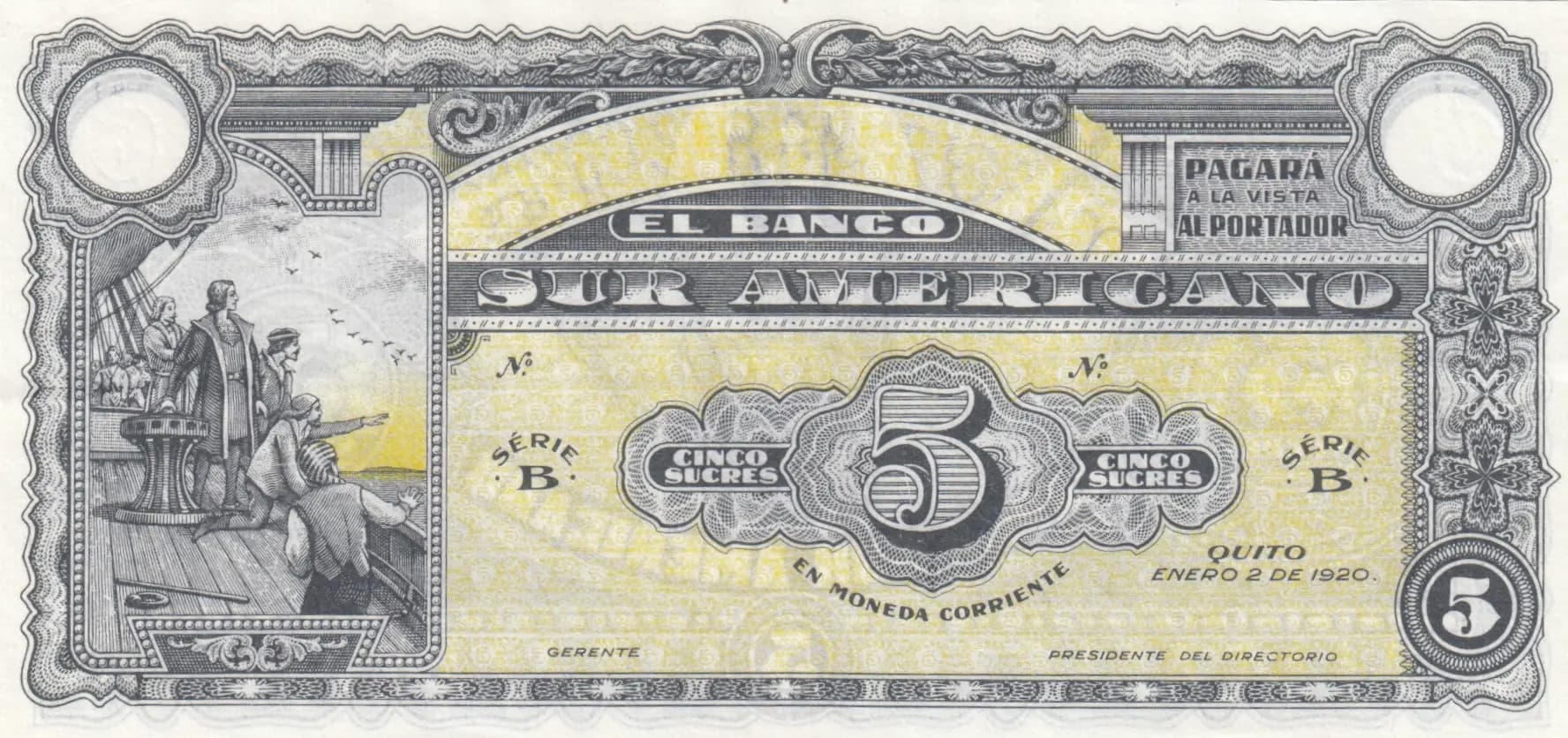
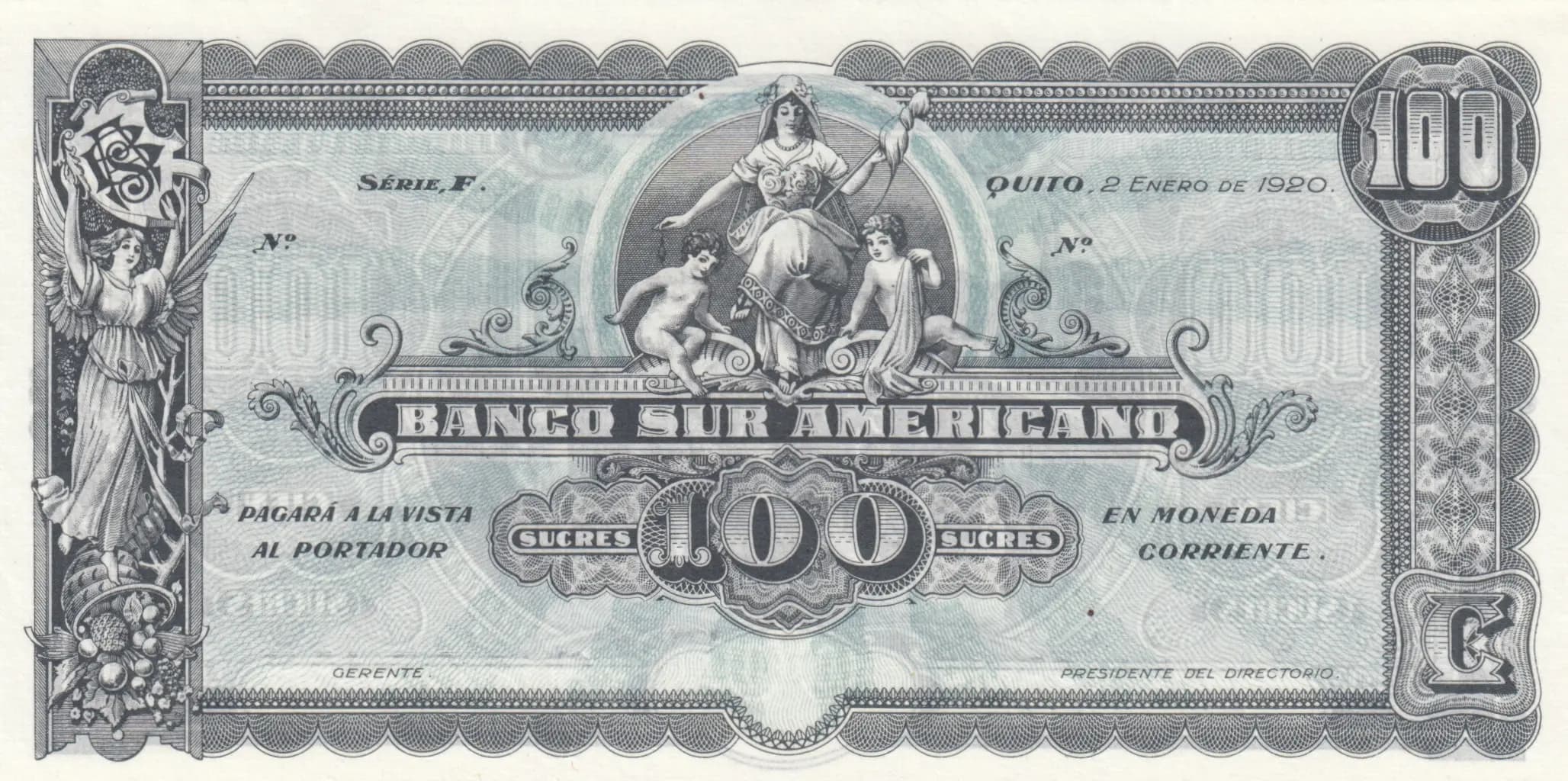
El Banco Sur Americano issued this denomination during Ecuador's early 20th-century banking period, when regional banks competed with the nascent central banking system. The allegorical imagery of science with a globe and the maritime scene on the reverse reflect Ecuador's economic focus on trade and exploration during this era. The January 2, 1920 date places this note during a period of economic development and modernization in Ecuador, before the country's banking system underwent significant consolidation.
The obverse features a classical allegorical representation of Science or Learning (Minerva-type figure) in classical Greco-Roman dress with wings, seated and contemplating a terrestrial globe—a common motif in banking iconography symbolizing knowledge, commerce, and global trade. The figure is surrounded by heraldic shields, scrollwork, and ornamental devices typical of high-security banknote design. The ornate border incorporates geometric and floral patterns in black against the pink underprint. The reverse depicts what appears to be a historical expedition scene with indigenous or colonial-era boatmen navigating tropical waters, framed by elaborate classical scrollwork and cartouche elements in blue, suggesting themes of exploration and navigation central to Ecuador's history. The XX medallion at top center is a stylistic design element rather than a specific portrait.
FRONT SIDE: 'BANCO SUB-AMERICANO' (Sub-American Bank) | 'SERIE D' (Series D) | 'VEINTE SUCRES' (Twenty Sucres) | '20' (Denomination numeral) | 'EN MONEDA CORRIENTE' (In current currency) | 'PAGARÁ A LA VISTA AL PORTADOR' (Will pay to bearer on demand) | 'QUITO, 2 ENERO DE 1920' (Quito, January 2, 1920) | 'GERENTE' (Manager) | 'PRESIDENTE DEL DIRECTORIO' (President of the Board). BACK SIDE: No visible text inscriptions; design elements only.
Intaglio engraving (recess printing), evidenced by the fine line work, intricate scrollwork, precise borders, and the characteristic depth and clarity of the engraved imagery visible throughout both sides. The security printer for this specific issue is not identified in available catalog data, but the quality of execution and design complexity are consistent with work by the leading security printers of the era serving Latin American banks.
This is cataloged as Pick S253a (the 'a' designation may indicate it is the remainder variant as opposed to a circulated issue variant S253). The note is identified as 'SERIE D' on the obverse. As a remainder banknote, it lacks serial numbers and signatures, which is the defining characteristic distinguishing this from any issued circulation varieties. No date variations or significant overprint differences are noted for this Pick number.