1 sucre 1920
Market Prices
5 salesAbout This Note
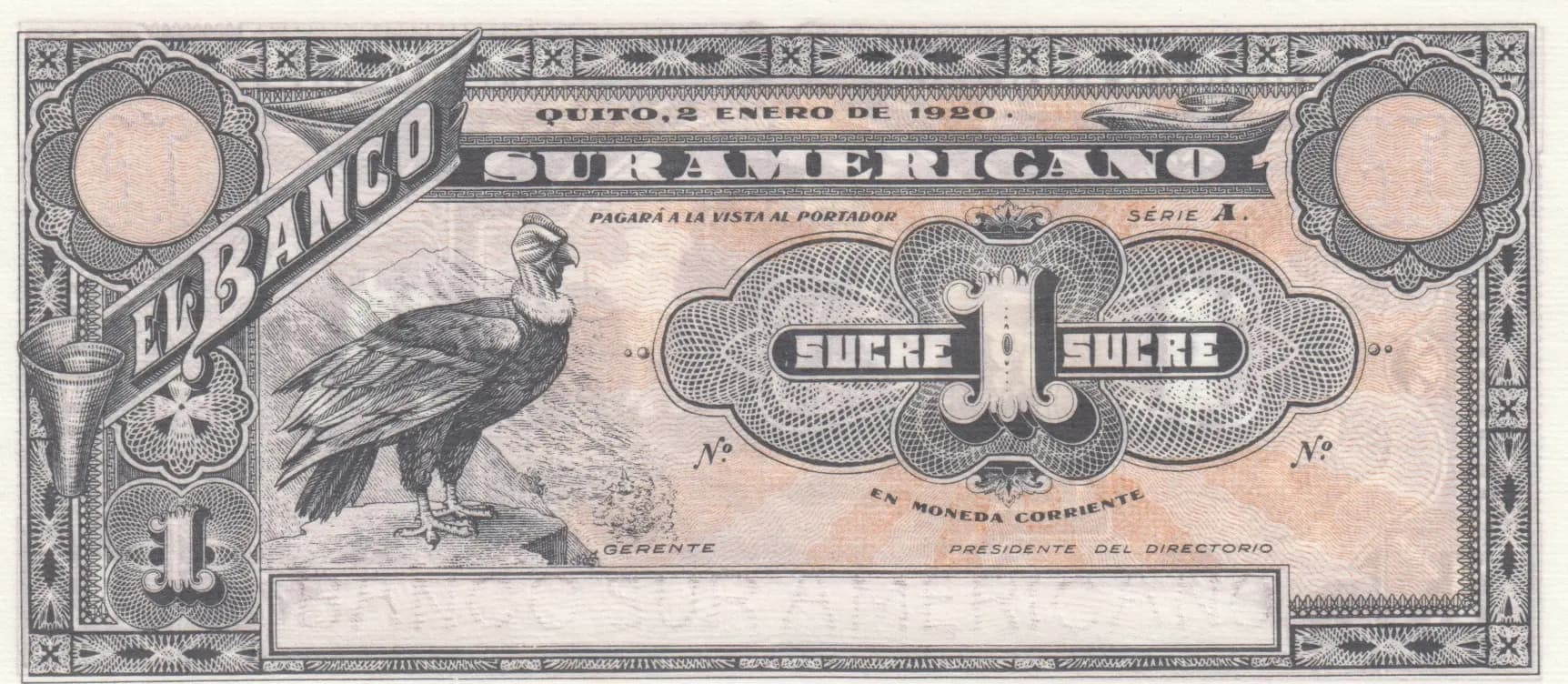
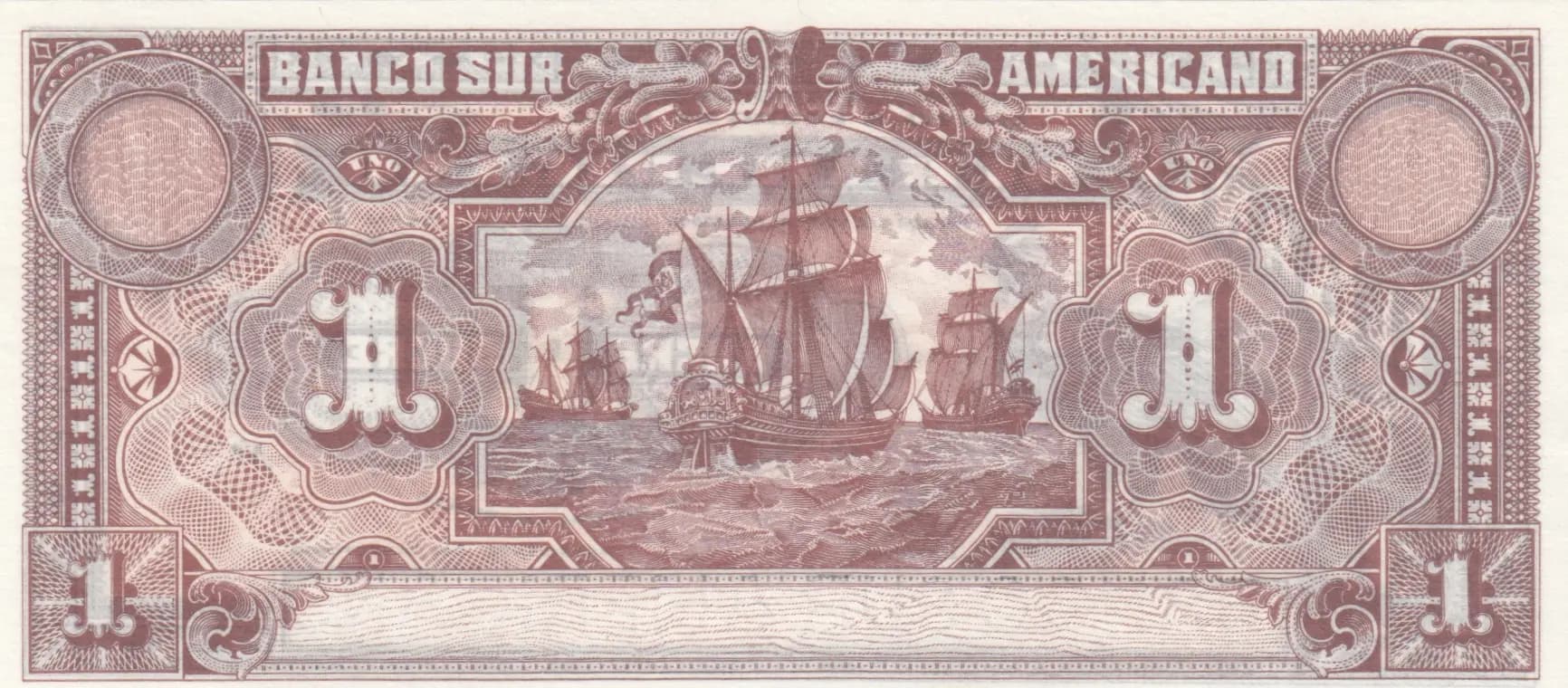
This is an exceptional UNC example of the 1920 Ecuador 1 Sucre remainder banknote issued by El Banco Suramericano, featuring a striking design with a detailed condor engraving on the obverse and a colonial-era maritime scene on the reverse. The note exhibits pristine condition with sharp engraving detail throughout, no visible wear or handling marks, and showcases the elaborate baroque-style ornamental design characteristic of early 20th-century Ecuadorian currency. As a remainder banknote without serial numbers or signatures, this piece is particularly desirable to collectors of South American numismatics and represents an important artifact from Ecuador's pre-sucre banking history.
Common. Secondary market eBay data shows multiple recent sales ranging from $4.03 to $11.99 across various grades (VF through UNC), with this UNC example selling for $11.99 in June 2024. The consistent availability and modest pricing indicate healthy collector demand but abundant supply. PMG population data shows only 1 cataloged variant for P-S251r, but the low absolute value and steady market presence across multiple grades confirms this is a commonly encountered remainder note rather than a scarce issue.
El Banco Suramericano was a private bank operating in Ecuador during the early 20th century, a period when multiple institutions issued currency under the sucre standard established following Ecuador's currency reforms. The maritime vignette on the reverse—depicting colonial-era sailing ships—reflects Ecuador's historical connection to maritime trade and Spanish colonial heritage, while the condor on the obverse symbolizes the nation's Andean geography and sovereignty. The January 2, 1920 date and 'PAGARÁ A LA VISTA AL PORTADOR' (payable on sight to bearer) text reflect the promissory nature of private bank notes during this pre-Central Bank era in Ecuador.
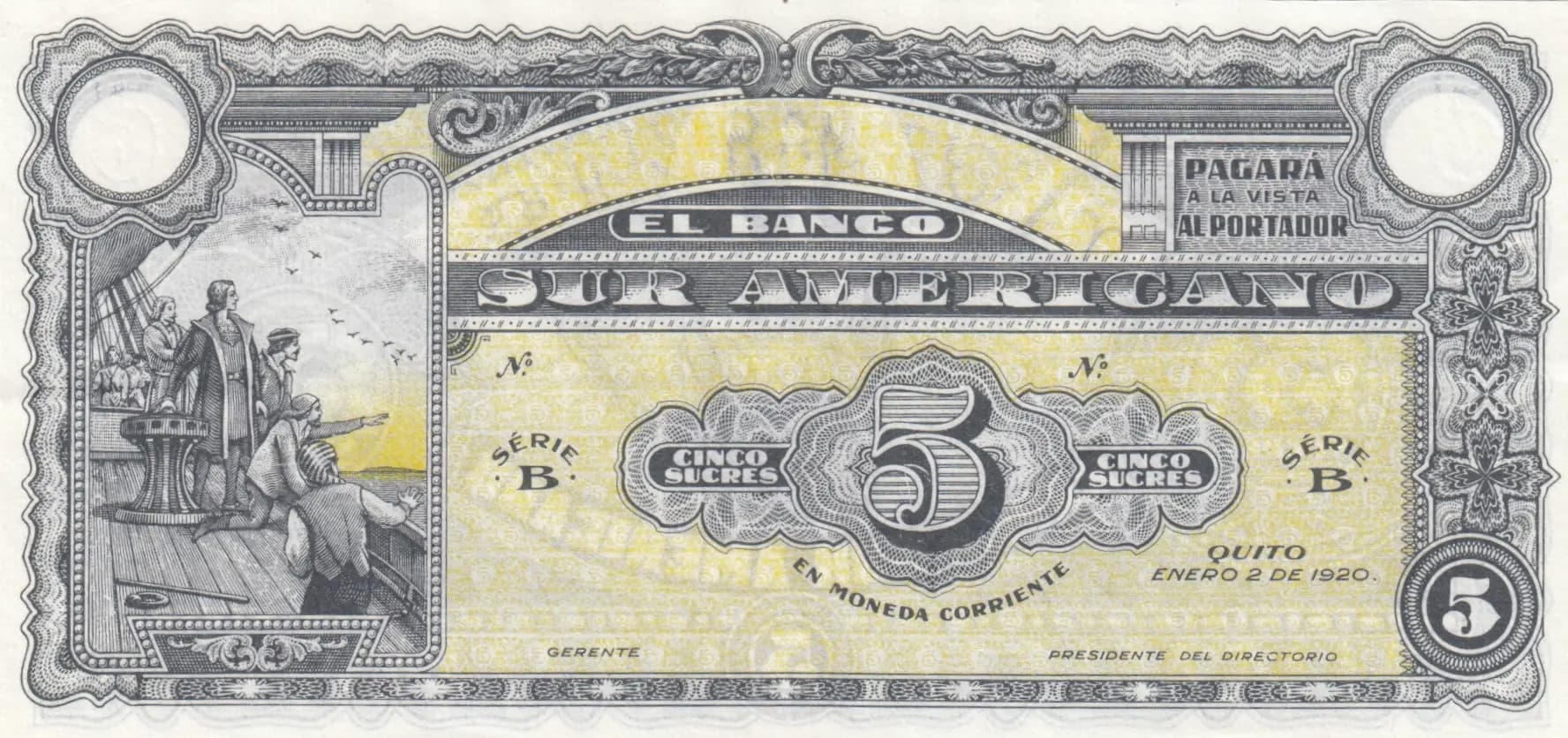
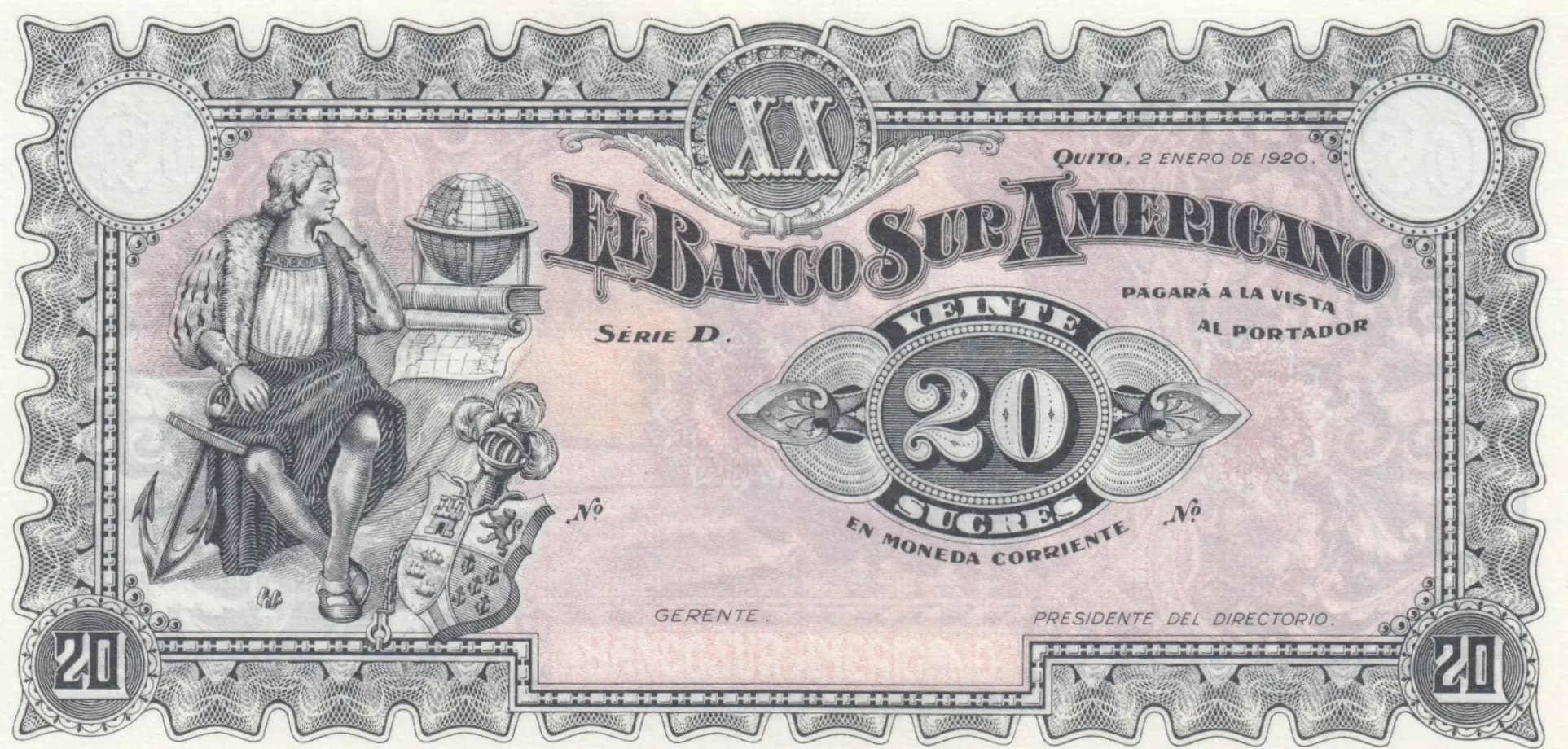
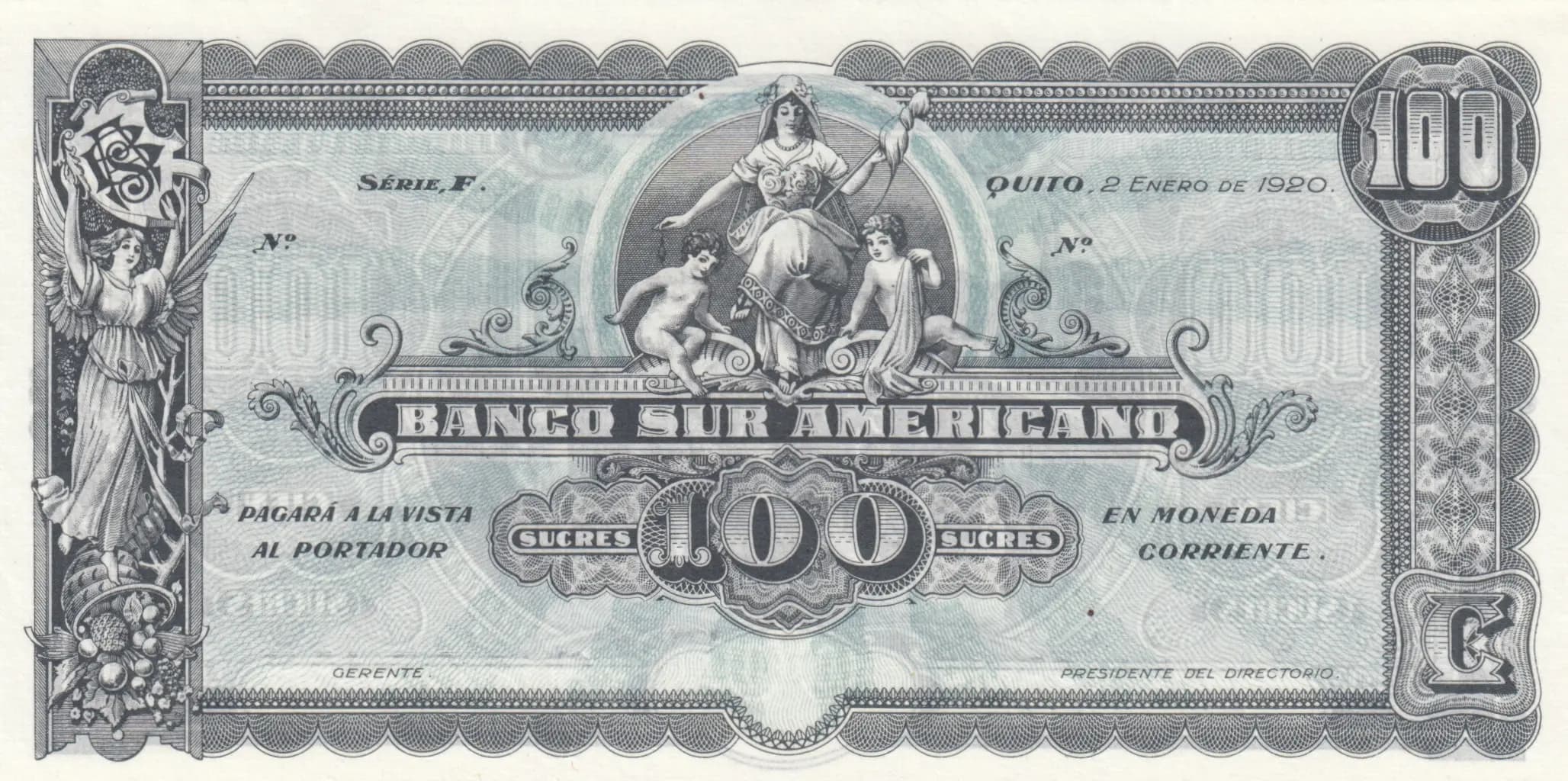
The obverse features an ornate baroque-style frame with elaborate floral and geometric decorative borders in black engraving on a beige/tan underprint. The dominant design element is a detailed left-facing condor (Andean eagle) rendered in fine engraving style, positioned at the left side of the note. Empty circular medallion frames in the top left and right corners were intended for portrait spaces but remain blank on this remainder note. The reverse displays a striking maritime vignette at center showing multiple colonial-era sailing vessels with full rigging on choppy seas, rendered in fine engraving within baroque ornamental framing. Empty circular medallions appear in similar top corner positions, with decorative denomination frames occupying the bottom corners. The color scheme contrasts beige/tan with black on the obverse against burgundy/mauve tones on the reverse, both with cream/off-white highlights.
FRONT SIDE: 'BANCO SURAMERICANO' (South American Bank) / 'SUCRE 1 SUCRE' (Sucre 1 Sucre - denomination) / 'QUITO, 2 ENERO DE 1920' (Quito, January 2, 1920) / 'EN MONEDA CORRIENTE' (In current currency) / 'PAGARÁ A LA VISTA AL PORTADOR' (Will pay on sight to the bearer) / 'SERIE A' (Series A) / 'GERENTE' (Manager) / 'PRESIDENTE DEL DIRECTORIO' (President of the Board). BACK SIDE: 'BANCO SURAMERICANO' (South American Bank) / '1' (denomination numeral).
Intaglio engraving (steel or copper plate engraving), the standard security printing method for banknotes of this era. The intricate decorative borders, fine line work throughout the design, detailed condor vignette, and complex maritime scene all exhibit characteristics of high-quality intaglio production. The multiple color printing (distinct obverse and reverse color schemes) suggests multi-plate printing processes typical of European security printers contracted for South American banknotes in the 1920s.
This note is cataloged as P-S251r, identified as a remainder banknote issue without serial numbers or authorized signatures, characteristic of unissued bank note remainders from this period. The 'SERIE A' designation appears on the obverse. The visual analysis confirms the absence of serial numbers and signature lines, consistent with remainder status. No other varieties (different dates, series, or signatures) are apparent in this example, and the PMG population report indicates only a single variant exists for this Pick number.