5 shillings 1949
Market Prices
6 salesAbout This Note
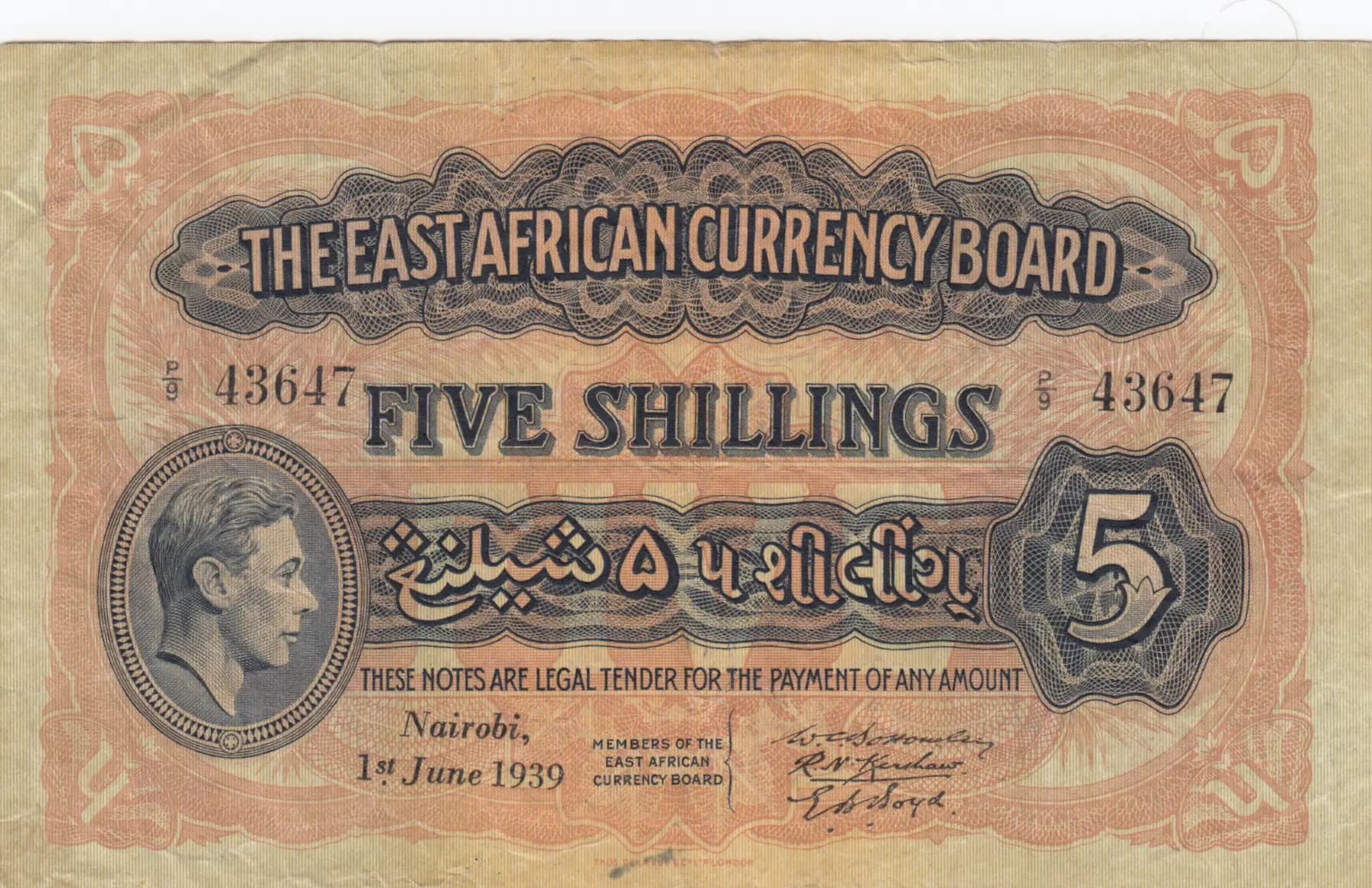
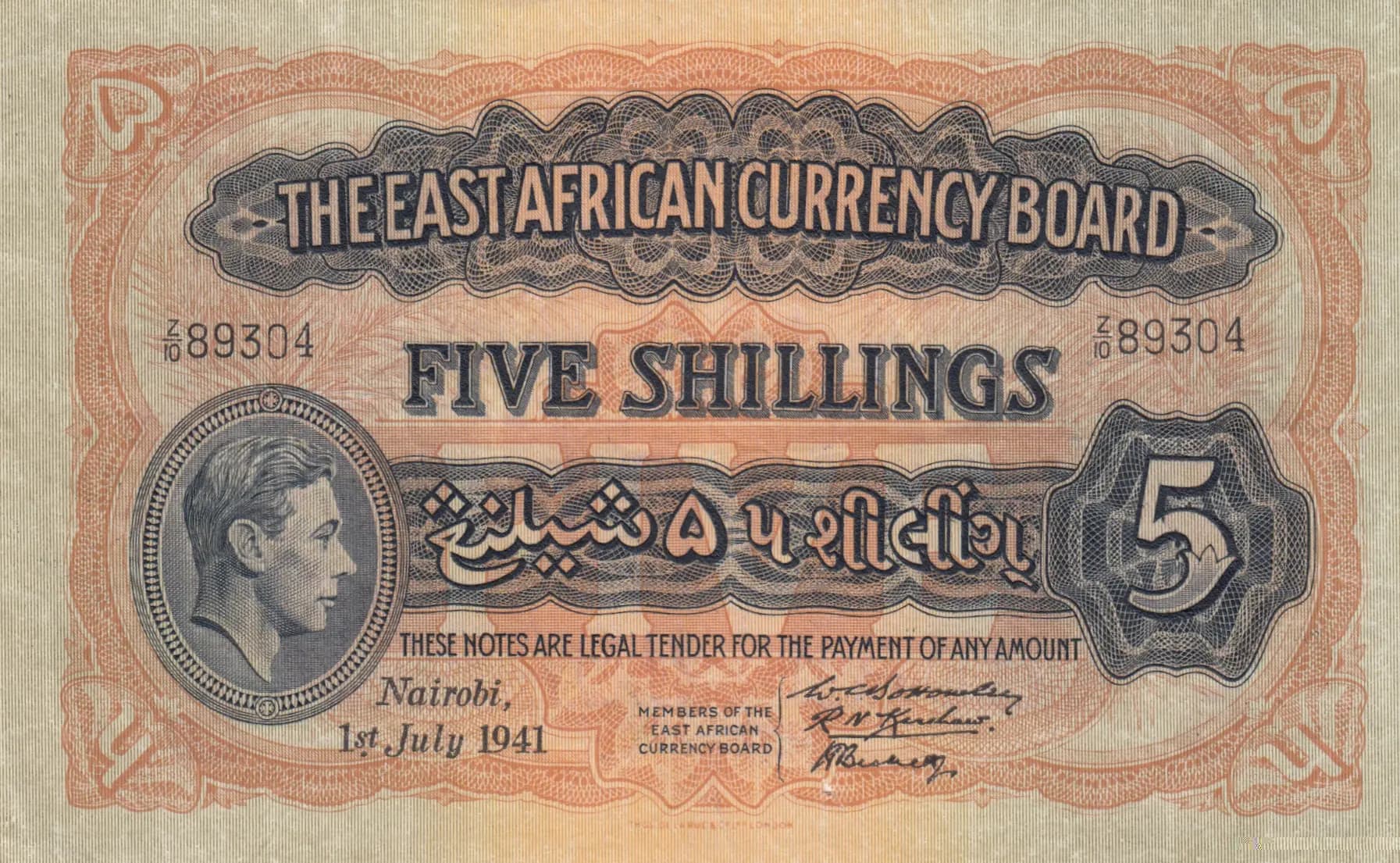
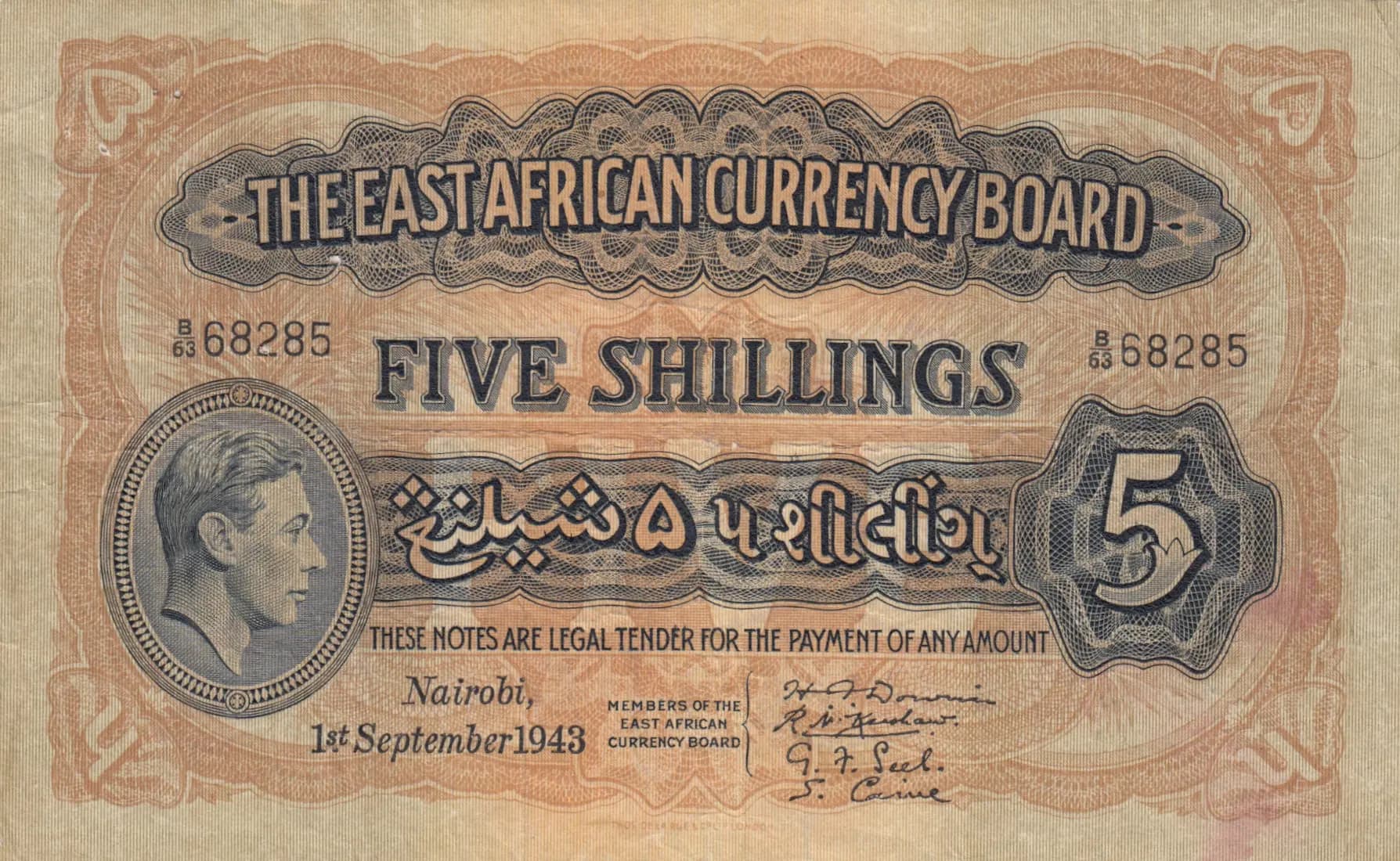
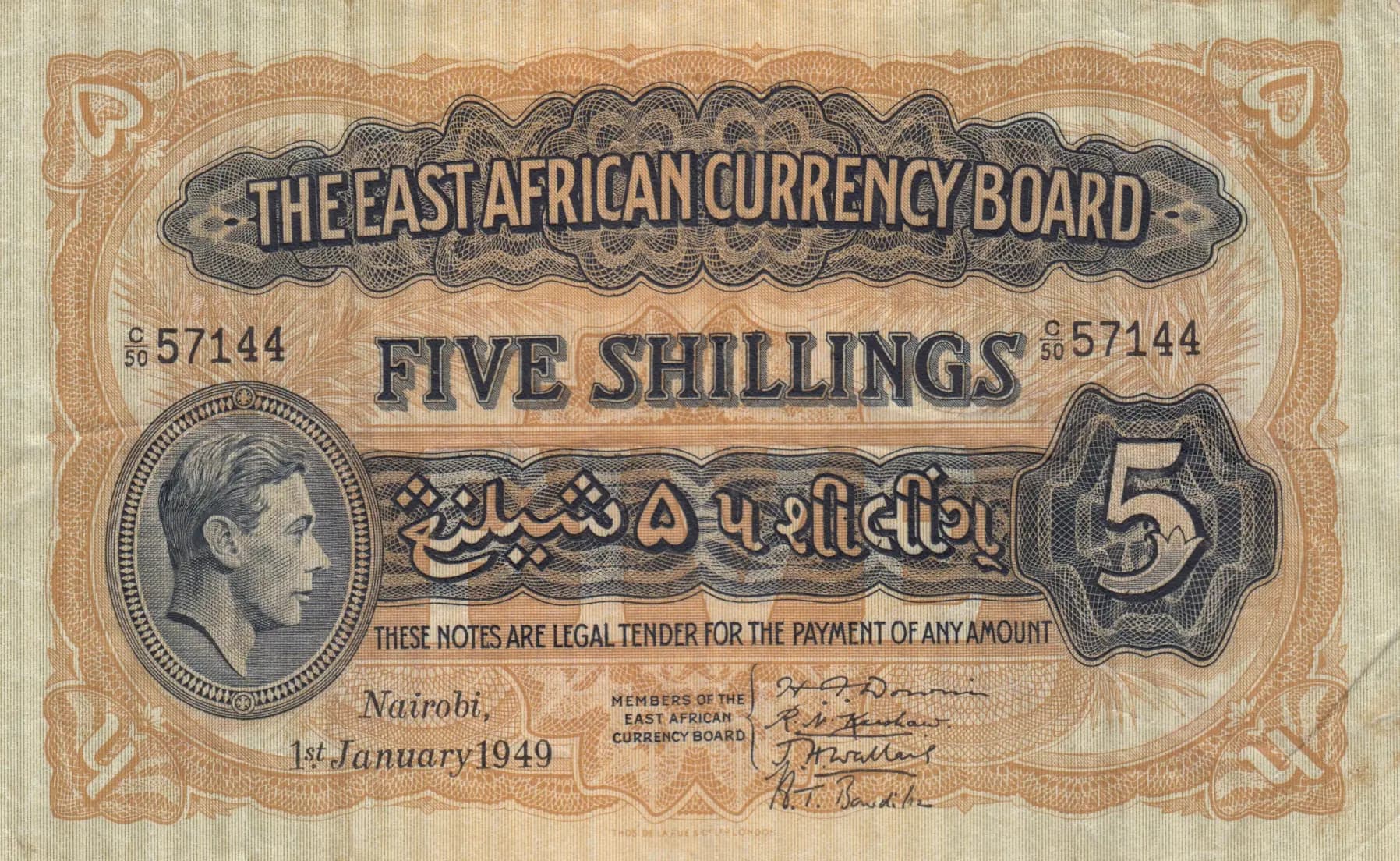
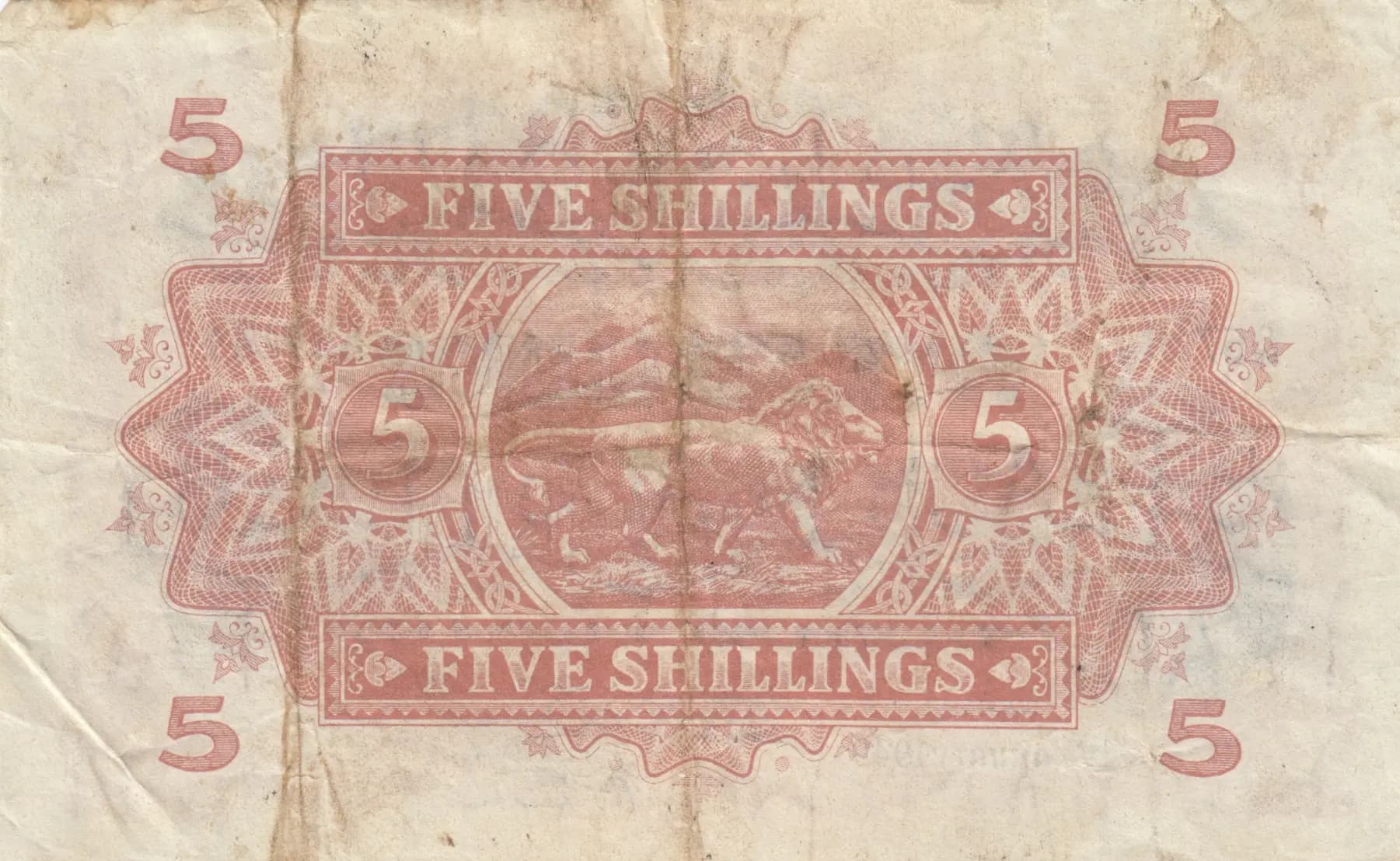
This is an East African Currency Board 5 Shillings note dated 1st January 1949, graded in Fine condition and printed by Thomas de la Rue. The note displays the characteristic tan/beige obverse with a right-facing portrait of King George VI in a circular medallion and the pink/rose reverse featuring a central vignette of an elephant in a natural landscape. The note exhibits moderate circulation wear with visible creasing, foxing, and age-related discoloration typical of a banknote that has been in use for over 70 years, making it an appealing example of East African colonial currency.
Common. The eBay price data consistently shows this note in Fine condition selling between $21.55 and $52, with recent sales at modest prices ($52 in May 2024, $21.55 in September 2022). The 2016 catalog value for Fine condition was $6, and current market prices remain modest and readily available. The African Currency Board issued notes in significant quantities across its operational period (1943-1952), and the P-28b variety appears in the PMG population report with multiple variants cataloged, indicating reasonable availability. The combination of steady but moderate pricing and the accessibility of examples on the secondary market confirms this as a common note rather than a scarce or rare issue.
Issued during the final years of the British colonial period in East Africa, this 1949 note represents the African Currency Board's monetary authority before East African independence. The portrait of King George VI on the obverse reflects the colonial era's formal ties to the British Crown, while the elephant vignette on the reverse symbolizes East Africa's natural heritage and fauna. The note was printed by Thomas de la Rue, the prominent security printer, and remained in circulation until the Currency Board's dissolution in 1952, making this an important transitional piece of East African numismatic history.
The obverse features a formal portrait of King George VI facing right, presented within an ornate circular medallion positioned on the left side of the note. The design employs intricate geometric and floral border patterns in brown and black on a tan/cream background, with the denomination and issuing authority prominently displayed in the center. The reverse showcases a detailed landscape vignette centered on the note, depicting an African elephant within its natural habitat with vegetation and terrain, rendered in fine engraving. Large decorative '5' numerals appear in circular frames at all four corners, with 'FIVE SHILLINGS' repeated at the top and bottom in ornamental cartouches. The overall design reflects the high-quality craftsmanship typical of Thomas de la Rue's security printing work.
Front side: 'THE EAST AFRICAN CURRENCY BOARD' (issuing authority); 'FIVE SHILLINGS' (denomination); 'THESE NOTES ARE LEGAL TENDER FOR THE PAYMENT OF ANY AMOUNT' (legal tender statement); 'Nairobi, 1st January 1949' (place and date of issue); 'MEMBERS OF THE EAST AFRICAN CURRENCY BOARD' (signature block identification); Serial number: C/50 57144. Arabic inscription: 'شلن خمسة' (Five Shillings). Back side: 'FIVE SHILLINGS' appears at top and bottom in ornamental frames; denomination numeral '5' appears in all four corners.
Intaglio engraving (line engraving), as evidenced by the fine detailed line work, intricate border patterns, complex geometric designs, and the detailed vignette engraving visible throughout both sides. The note was printed by Thomas de la Rue, London, a premier British security printer known for high-quality banknote production. The fine line backgrounds, ornamental patterns, and detailed portraiture are characteristic of intaglio engraving, which was the standard security printing method for banknotes of this era.
This note is cataloged as Pick 28b, representing a specific variant of the 5 Shillings denomination issued by the East African Currency Board. According to PMG population data, there are at least four recognized variants for this base Pick number: P-28A, P-28a, P-28b (this note), and P-28s, suggesting variations in signature combinations, date variations, or serial number formats. The visual analysis identifies this as a Nairobi-issued note dated 1st January 1949 with serial number C/50 57144 and three board member signatures. The presence of the date '1st January 1949' and the specific serial number prefix 'C/50' are distinguishing features of this variant, though the exact signature combinations would require comparison with the Pick catalog's detailed variety listings to confirm the precise sub-variety designation.