5 shillings 1939
Market Prices
6 salesAbout This Note
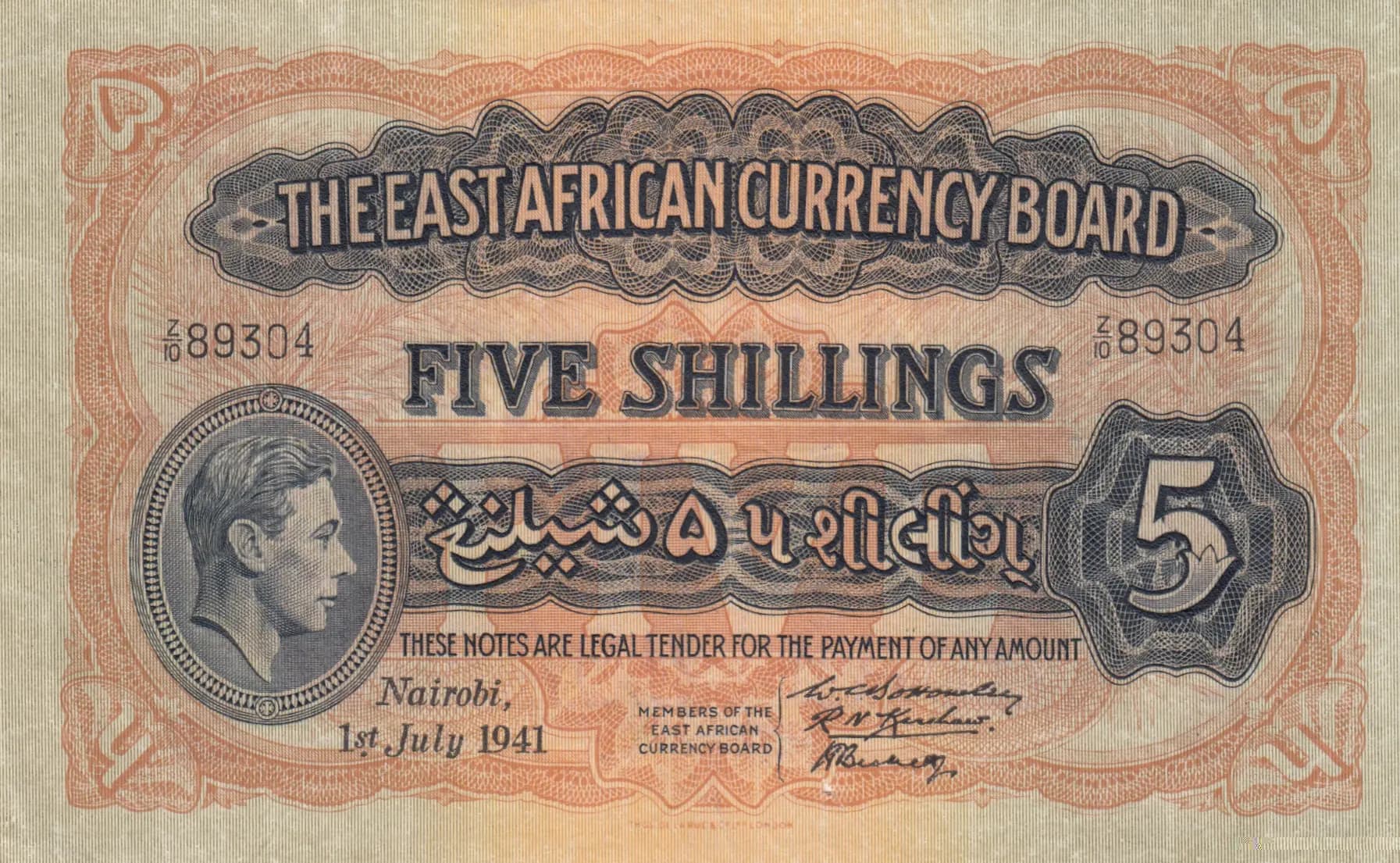
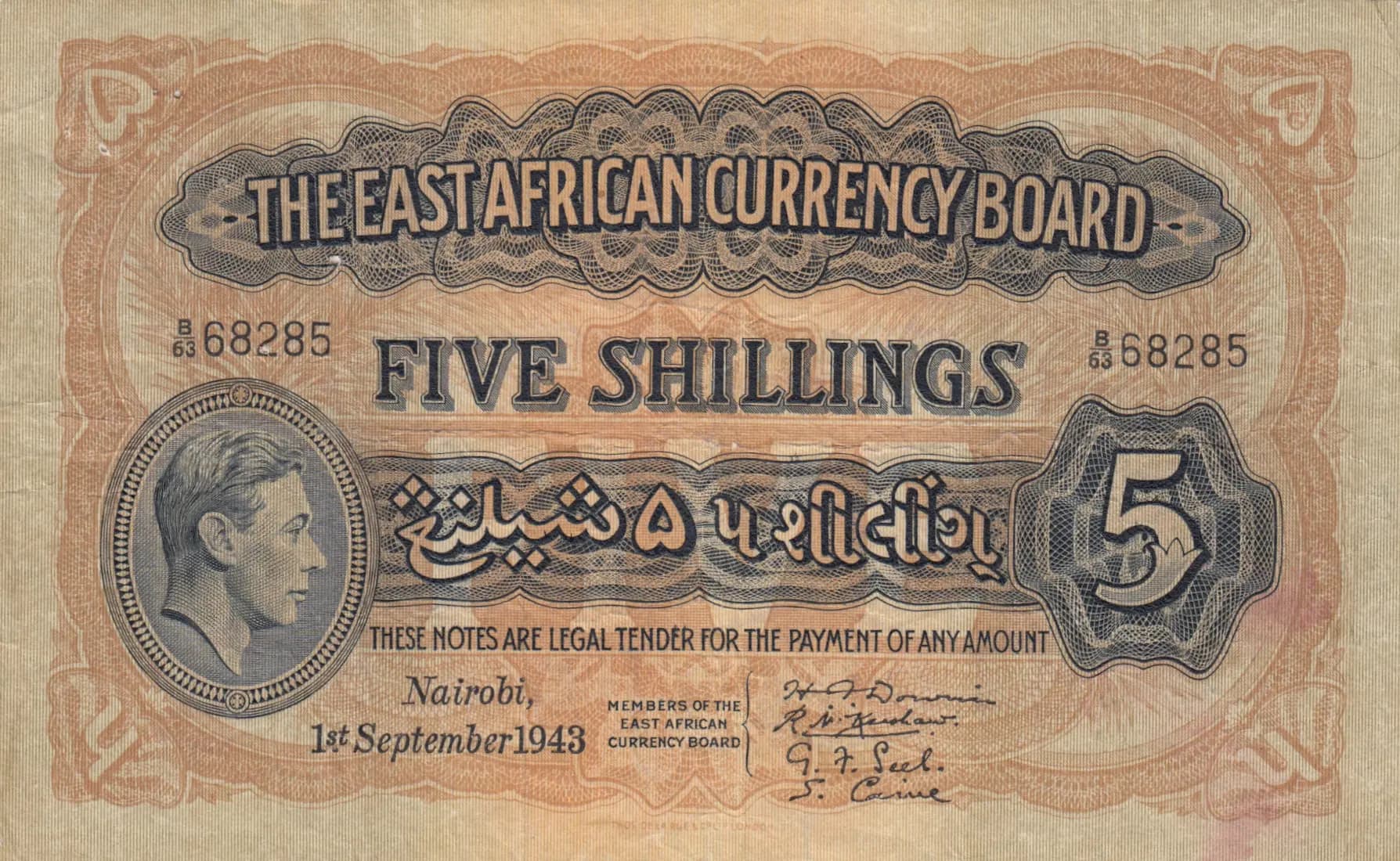
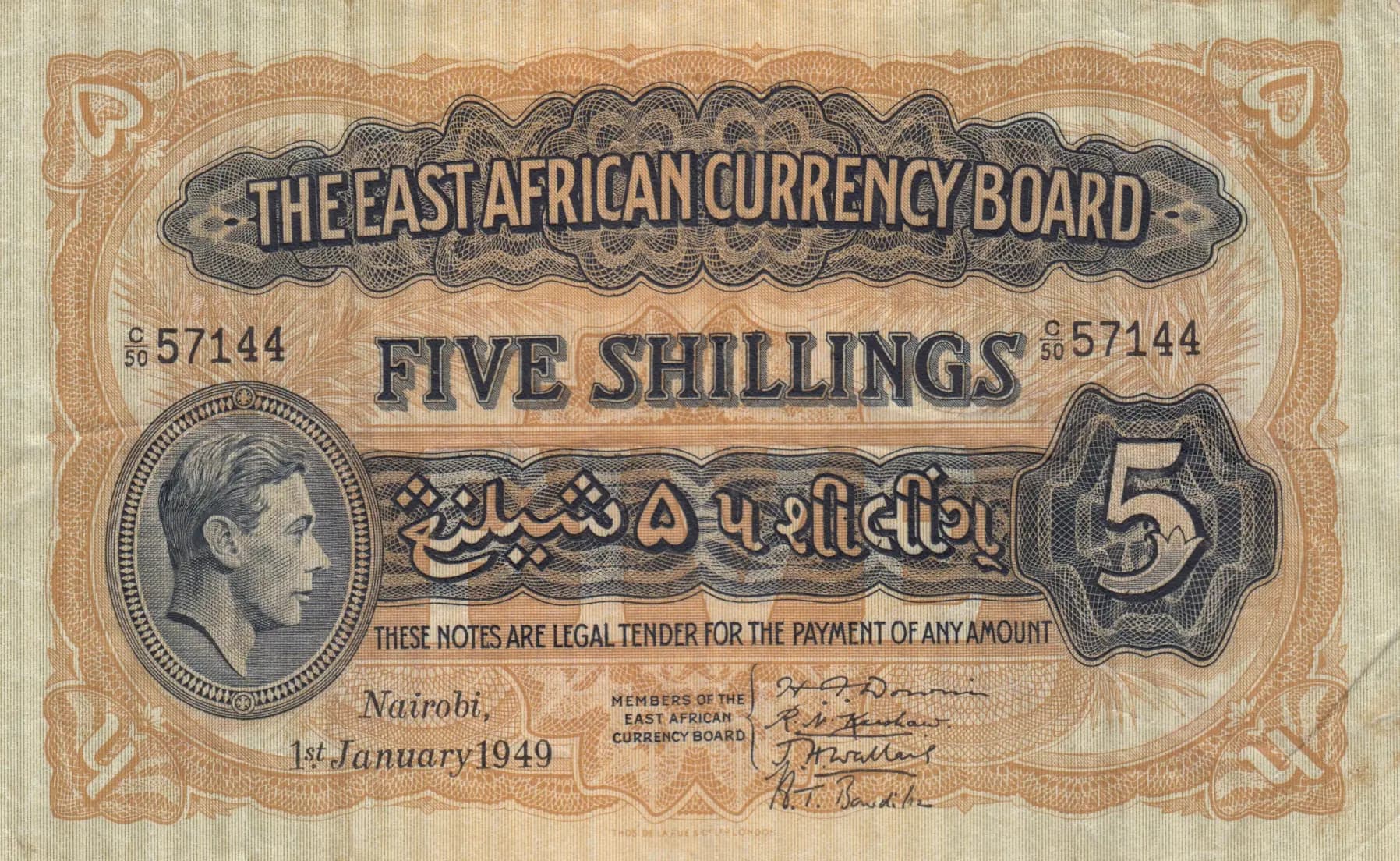
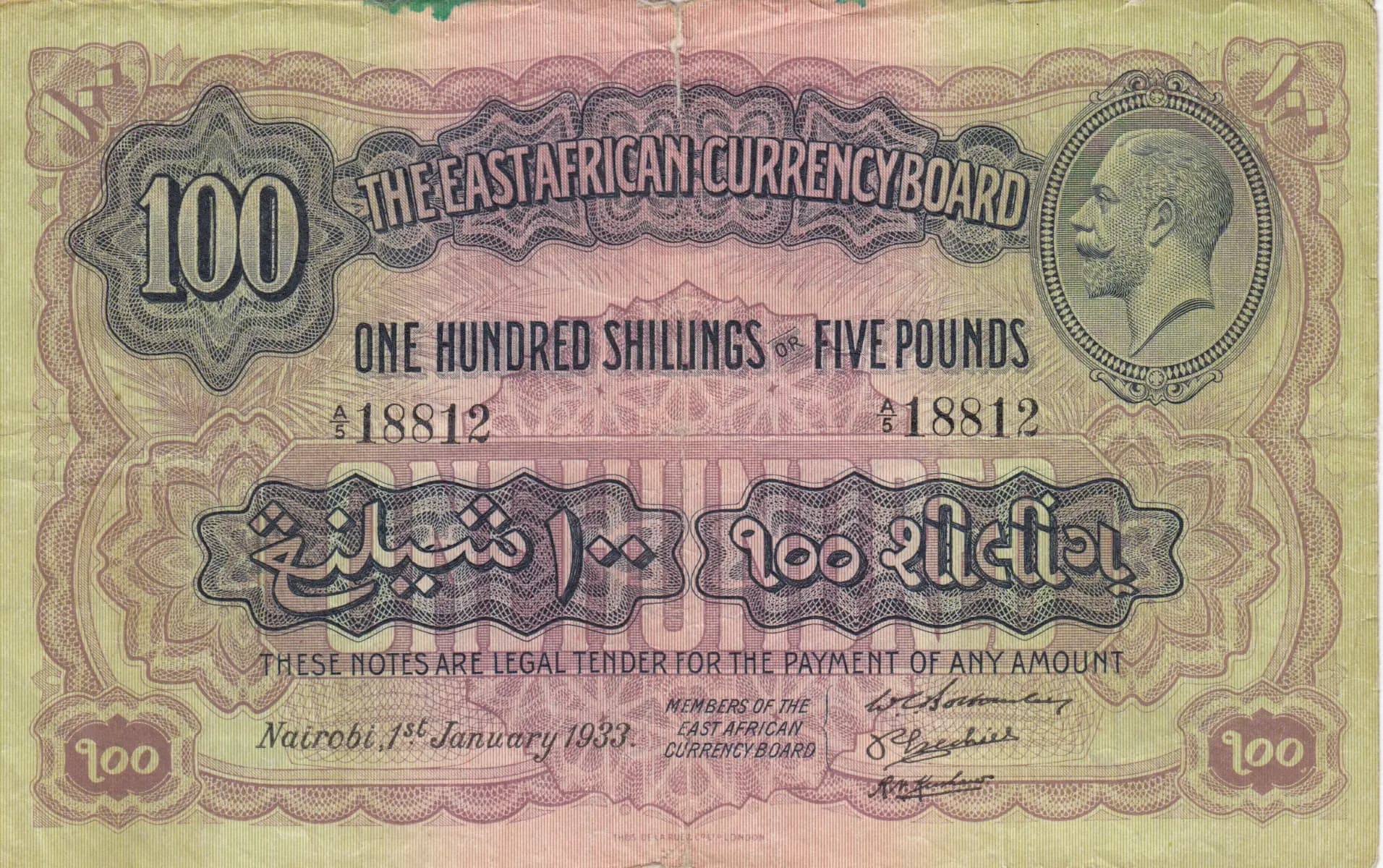
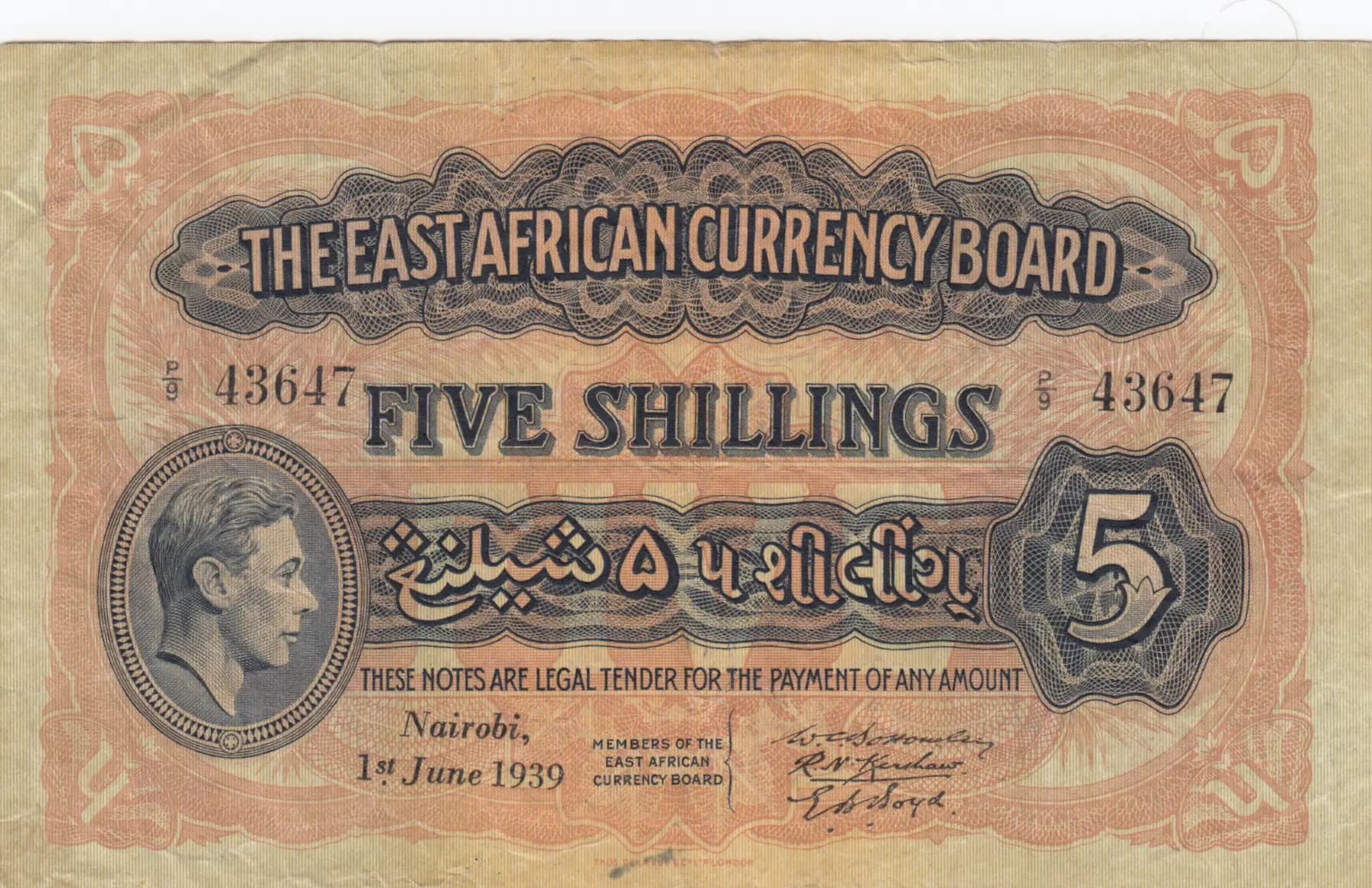
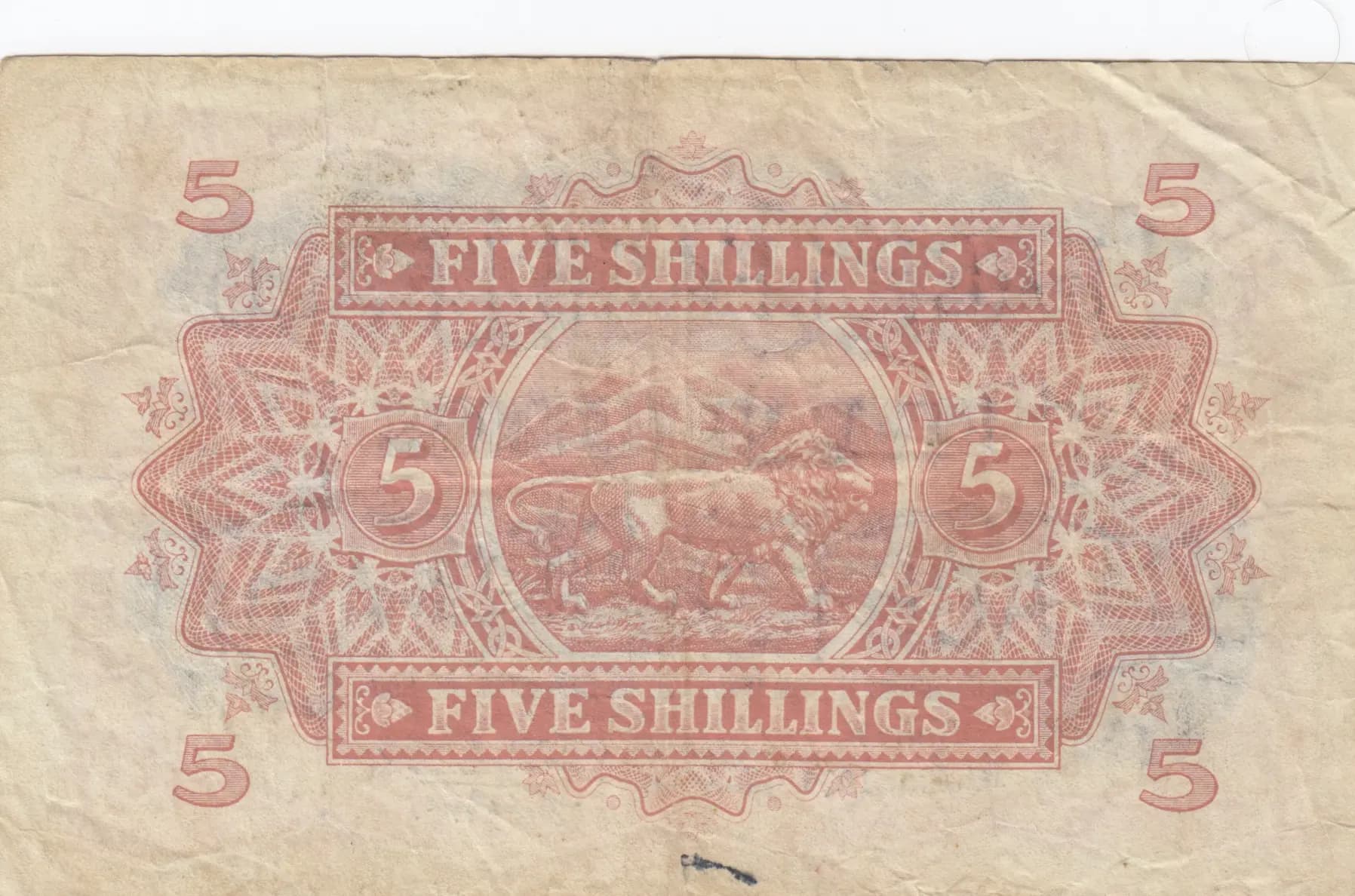
This is an East African Currency Board 5 Shillings note dated 1st June 1939, issued in Nairobi and printed by Thomas de la Rue. The note exhibits Fair condition with visible creasing, fold marks, yellowing, and foxing consistent with circulation wear from over 80 years of age. The obverse features a portrait of King George VI in a circular medallion on the left, ornate red and black decorative borders with intricate engraving, Arabic script translation, and a shield-shaped denomination indicator, while the reverse displays a striking savanna landscape vignette with wildlife in an ornamental oval frame, exemplifying the colonial-era design aesthetic of East African currency.
Common. The eBay market data shows consistent sales of F-graded examples in the $40-57 range, with VF examples around $20, indicating this is an actively traded, readily available note. The East African Currency Board operated from 1938-1952 with substantial print runs across multiple denominations and date varieties. The 1939 issue date is among the earlier dates but not uniquely scarce. Catalog values (2016) list F-grade at approximately $7-40 range depending on variety, and the consistent auction activity confirms this note circulates regularly in the collector market without premium pricing associated with scarcity.
Issued during the final years of King George VI's reign and the pre-independence era of East Africa, this note represents the Currency Board system established to serve Kenya, Uganda, and Tanganyika under British colonial administration. The bilingual English-Arabic inscriptions reflect the multi-ethnic and multi-lingual nature of East African territories, while the savanna landscape vignette on the reverse symbolizes the region's natural wealth and identity. The 1939 date places this note at a pivotal moment—issued just as World War II began in Europe, affecting colonial economies and the subsequent trajectory toward African independence in the 1960s.
The obverse (front) features a formal colonial-era design with King George VI depicted in right-facing profile within a circular medallion on the left side, rendered in fine engraved detail. The central ornamental cartouche with scalloped edges contains the issuing authority name in an ornate frame typical of de la Rue's prestige banknote work. A shield-shaped emblem on the right displays the large numeral '5'. The reverse (back) showcases a detailed landscape vignette of East African wildlife—appearing to depict cattle or buffalo in savanna grassland—enclosed within an ornamental oval frame with decorative border scrollwork. The entire note employs fine-line cross-hatching, engraved borders with leaf and scroll patterns, and symmetrical corner numerals characteristic of high-security currency design from the 1930s-40s period.
OBVERSE: 'THE EAST AFRICAN CURRENCY BOARD' (top center, English); 'FIVE SHILLINGS' (center, English); 'شلنات خمسة' (center, Arabic translation: 'Five Shillings'); 'THESE NOTES ARE LEGAL TENDER FOR THE PAYMENT OF ANY AMOUNT' (English legal tender clause); 'Nairobi, 1st June 1939' (location and issue date); 'MEMBERS OF THE EAST AFRICAN CURRENCY BOARD' (signature authority line); Serial number '43647' (left and right sides). REVERSE: 'FIVE SHILLINGS' (top and bottom banners, English); Denomination numeral '5' (in circular frames, all four corners).
Steel engraving and intaglio printing, executed by Thomas de la Rue, London, the renowned security printer. The visual evidence of fine cross-hatching, detailed line work throughout, intricate medallion engraving, and the ornate border patterns all confirm traditional intaglio methodology. The sharp definition of the landscape vignette and portrait, combined with the depth of the engraved lines visible in the aged paper, are hallmarks of de la Rue's high-security currency printing standards of this era.
This is catalogued as Pick 28a (P-28a), one of four catalogued variants for the 5 Shillings denomination. The PMG Population Report identifies P-28A, P-28a, P-28b, and P-28s as distinct varieties, primarily differentiated by signature combinations, serial number styles, and date variations within the 1938-1952 issue range. The observed serial number '43647' and the 1st June 1939 date correspond to the P-28a variety. Variants exist with differing signature authorities and potential serial number prefix variations (Indian style vs. standard), though the visual analysis shows Indian-style serial number placement consistent with this catalogued variety.