5 shillings 1943
Market Prices
6 salesAbout This Note
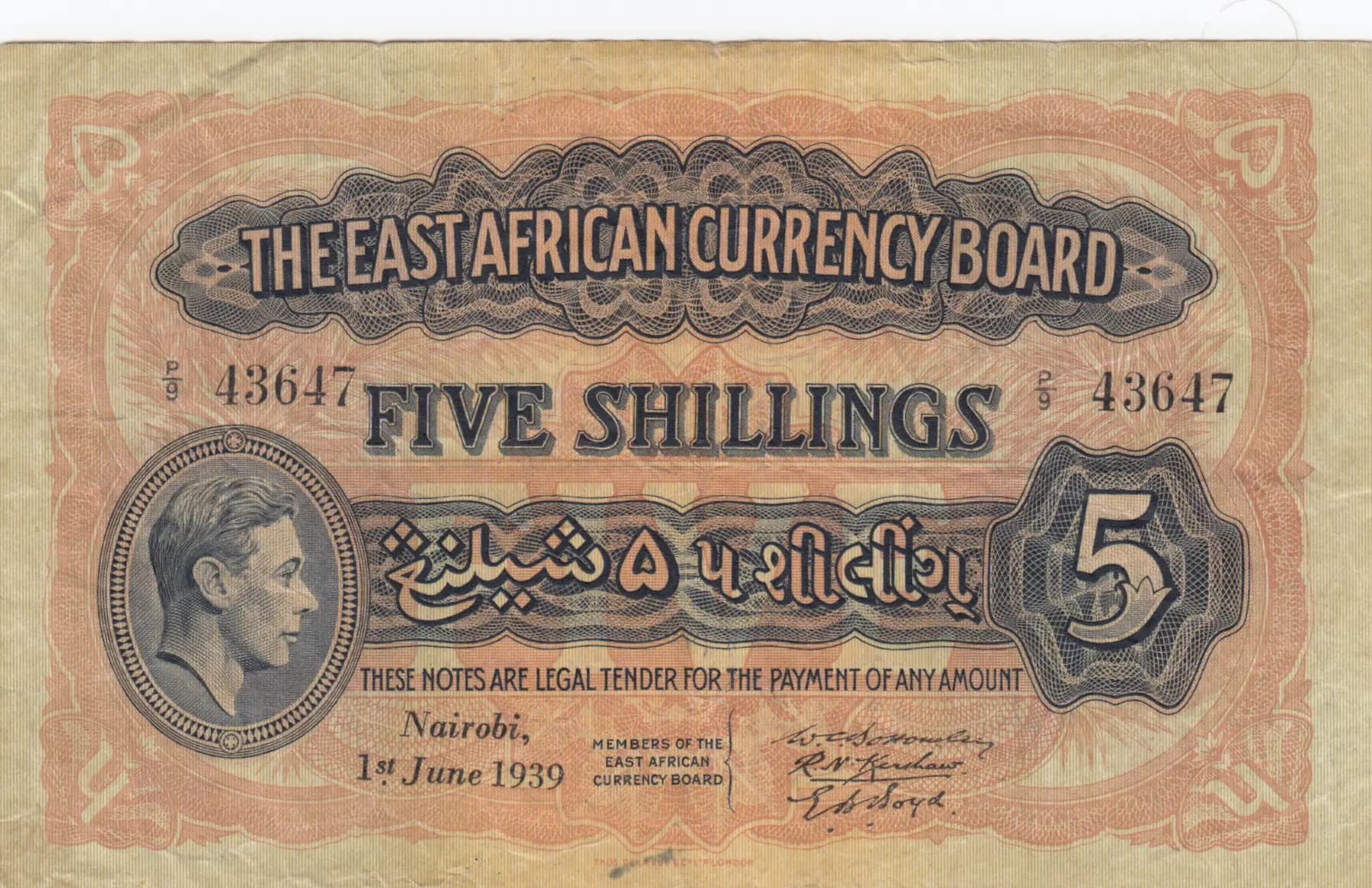
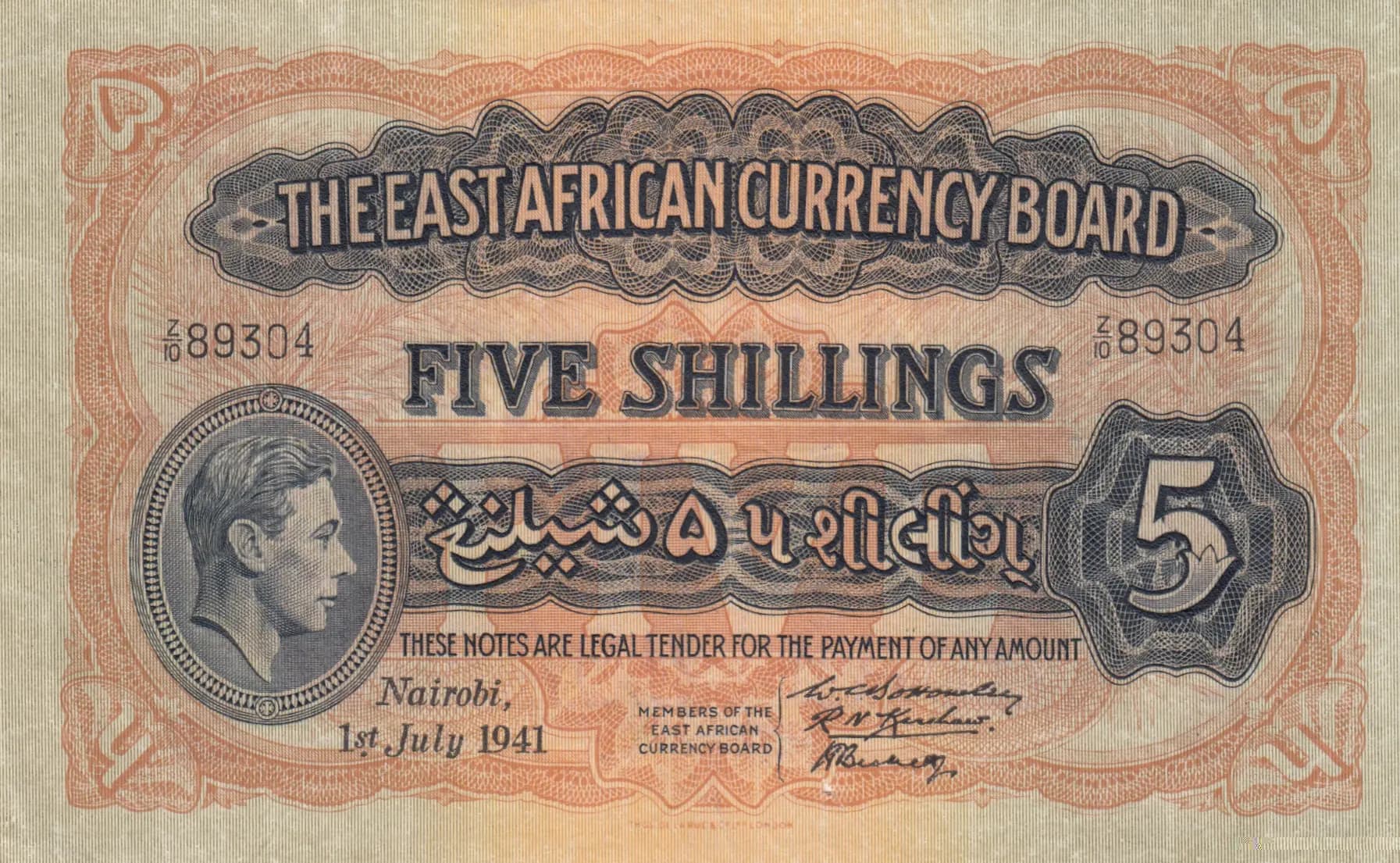
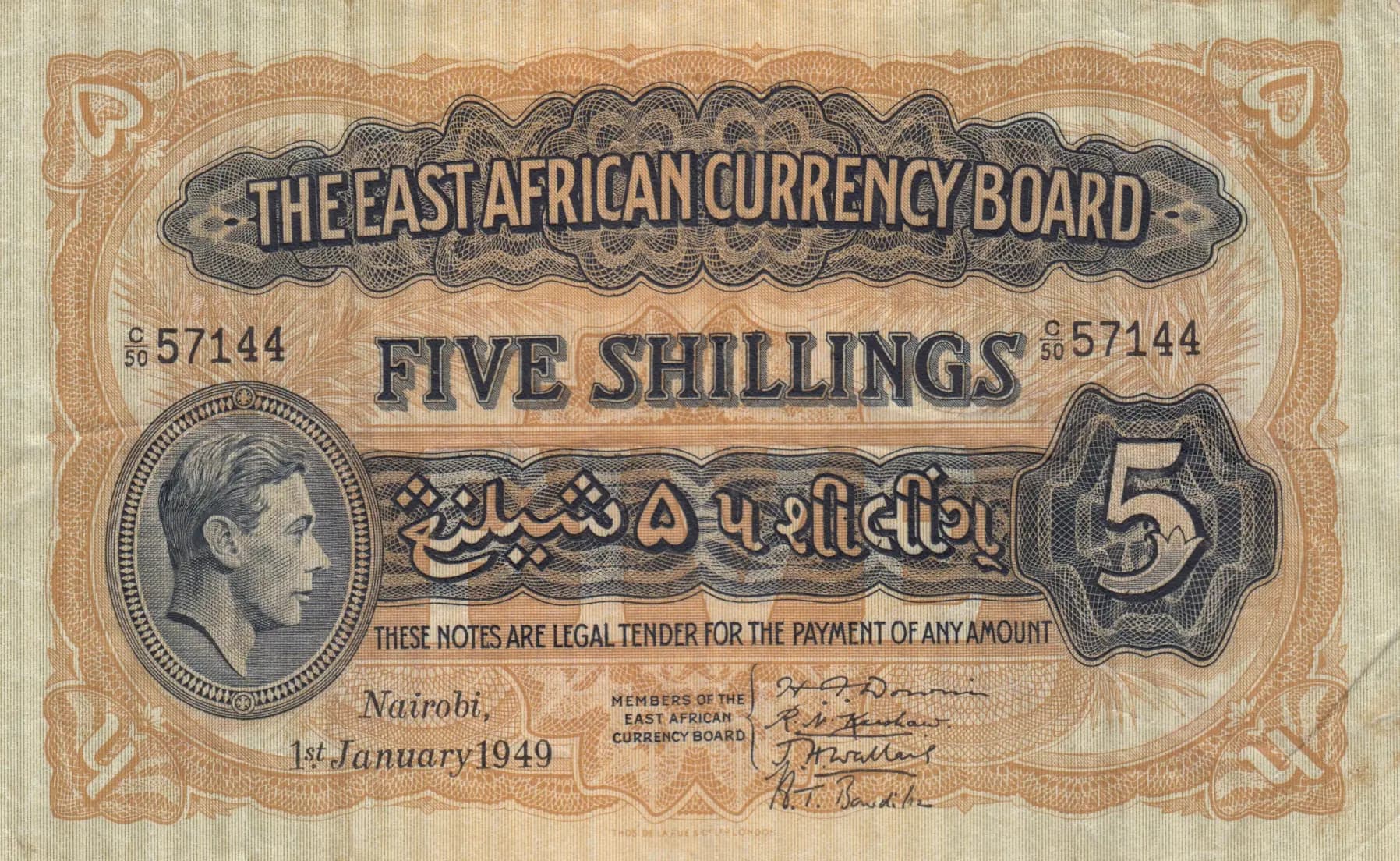
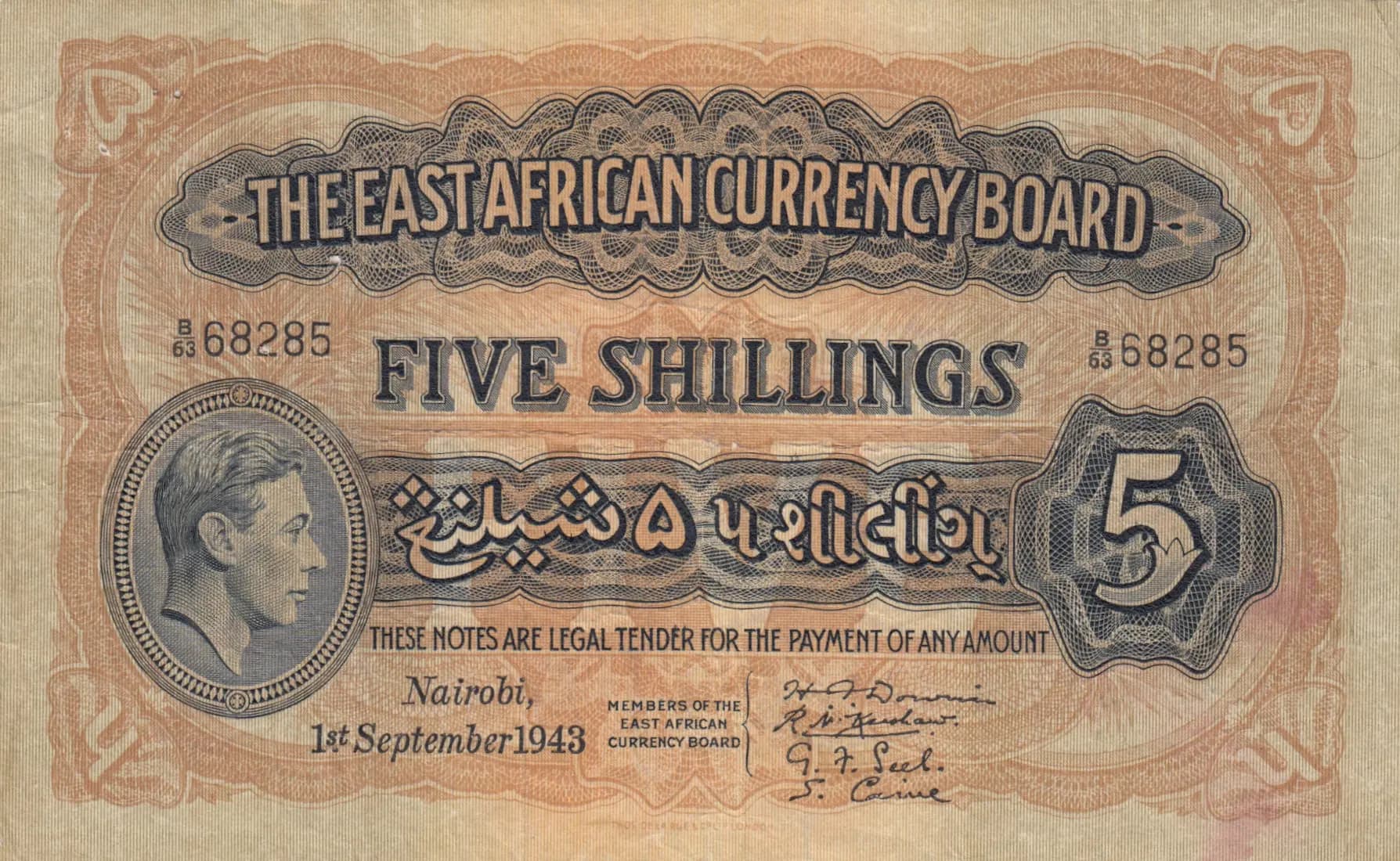
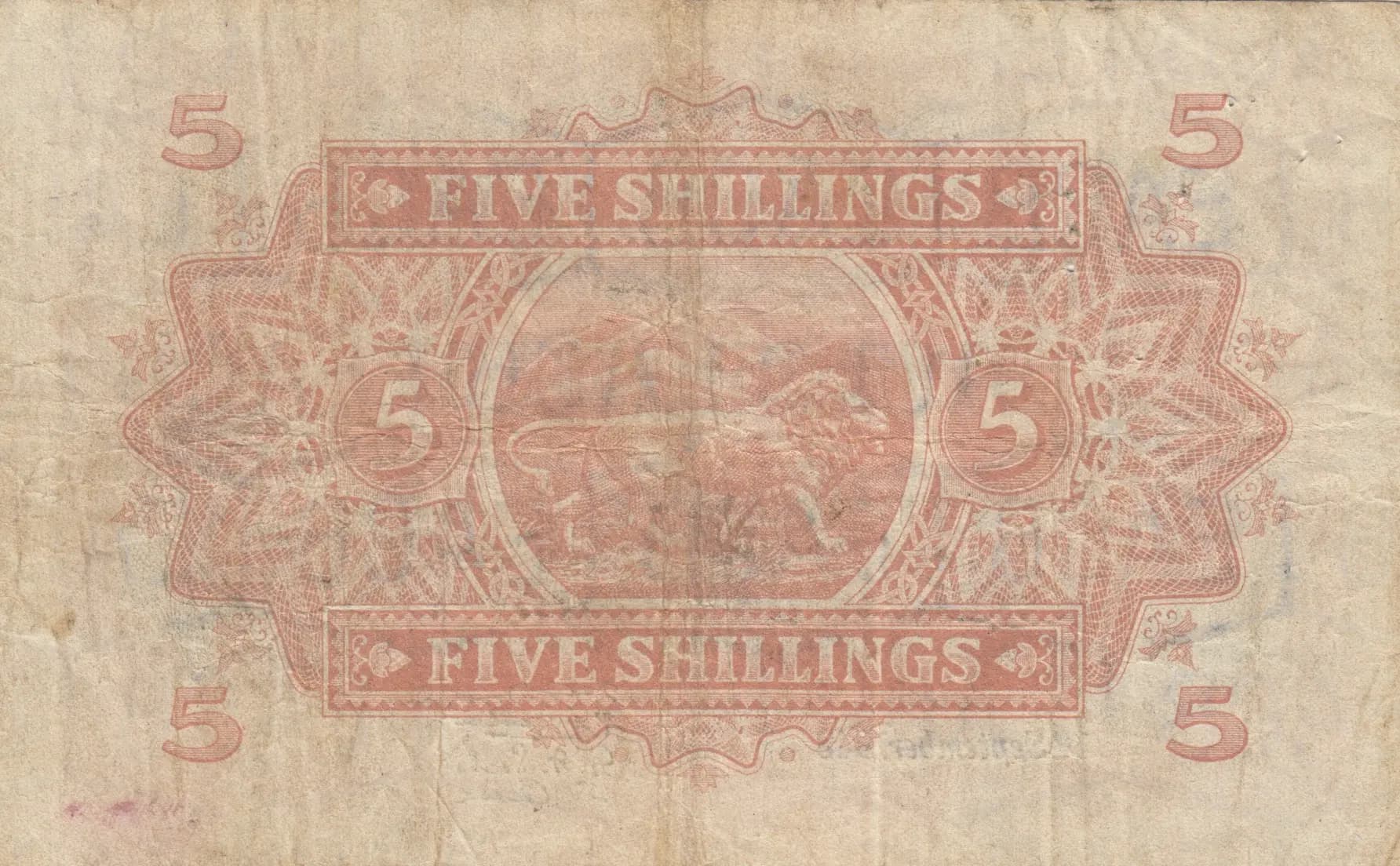
This is an East African Currency Board 5 Shillings note from 1943 (Pick P-28b), graded in Fine (F) condition. The note displays the characteristic beige and brown color scheme with King George VI's portrait on the obverse and a detailed lion vignette on the reverse. Despite showing its age with visible creasing, foxing, and yellowing consistent with 75+ years of circulation, the note retains good structural integrity and legibility of all inscriptions and design elements.
Common. While this note is from the 1943-1952 issue period, the eBay market data shows consistent sales in the $21-$52 range for Fine condition examples, with 2016 catalogue values of $6 (VG) to $40 (VF), indicating solid collector demand but substantial supply. The East African Currency Board operated for over a decade with large print runs to serve three territories, and P-28b examples appear regularly in the market. No evidence of restricted print runs, recalls, or short-lived variants suggests this is a standard circulation issue.
Issued during World War II by the East African Currency Board (established to provide unified currency for British East African territories), this 1948-dated note represents the monetary system serving Kenya, Uganda, and Tanganyika under British colonial rule. The portrait of King George VI underscores the political sovereignty of the period, while the lion vignette on the reverse symbolizes the African landscape and fauna central to the region's identity and the British colonial narrative of the era.
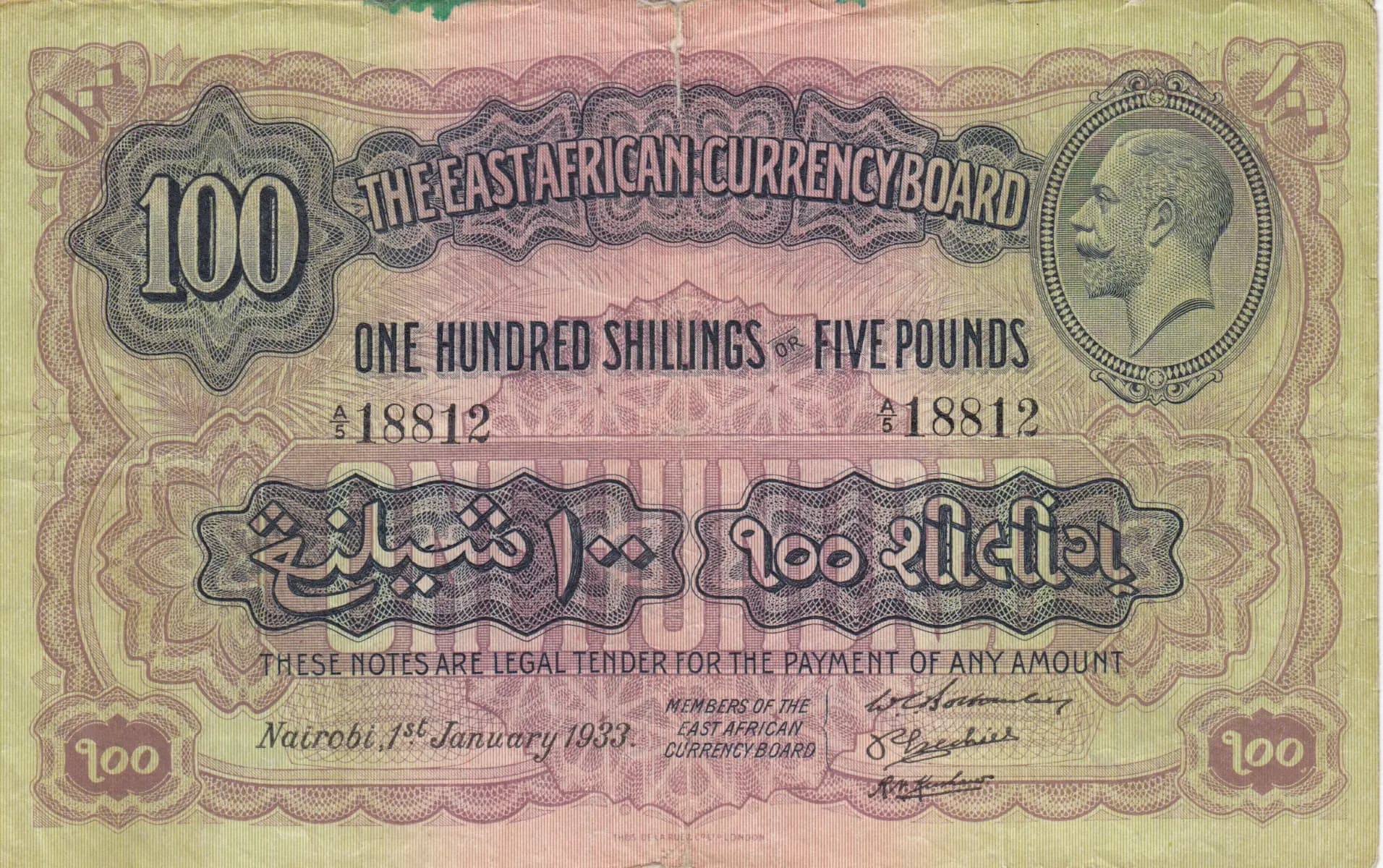
The obverse features a formal portrait of King George VI rendered in grayscale within a circular medallion frame positioned on the left side, characteristic of British colonial currency design. The center displays the denomination 'FIVE SHILLINGS' in large text within an elaborate scalloped frame, with a shield-shaped design element containing the numeral 5 on the right. The reverse presents a centered circular vignette depicting an African lion in a naturalistic landscape setting, surrounded by ornate decorative borders with scalloped edges and floral/geometric corner ornaments. The entire design is executed with intricate engraved line patterns and complex guilloche work providing security features. The color scheme combines a cream/beige base with brown and reddish-brown tones typical of Thomas de la Rue printing from this period.
FRONT: 'THE EAST AFRICAN CURRENCY BOARD' (issuing authority); 'FIVE SHILLINGS' (denomination in English); 'پنج شلنگ' (denomination in Urdu/Persian, meaning 'Five Shillings'); 'THESE NOTES ARE LEGAL TENDER FOR THE PAYMENT OF ANY AMOUNT' (legal tender declaration); 'Nairobi,' (place of issue); '1st September 1948' (date of issue); 'MEMBERS OF THE EAST AFRICAN CURRENCY BOARD' (governance reference); Serial number 'B 68285'; Printer designation '63'; Three handwritten official signatures. BACK: 'FIVE SHILLINGS' (denomination repeated); '5' (numerical denomination in corner cartouches).
Intaglio engraving (line engraving and recess printing) produced by Thomas de la Rue, London, the premier British security printer of the era. The visual analysis reveals the characteristic deep, intricate line work, complex guilloche patterns, and detailed vignette engraving typical of intaglio security printing. The presence of multiple color separations (blue-black on brown underprint on front, reddish-brown on back) indicates sequential printing passes on a single printing press.
This note is identified as Pick P-28b, dated 1st September 1948, issued from Nairobi, with serial number B 68285. The PMG population report indicates four catalogued variants for this base Pick number (P-28A, P-28a, P-28b, and P-28s), suggesting signature or serial number varieties exist within the 1943-1952 date range. The visual analysis shows three handwritten signatures and an Indian-style serial number prefix (B), which distinguishes this from earlier variants. The '63' printer designation visible on the note likely indicates a specific print run or series. Further research would be required to determine whether this specific signature combination or serial series constitutes a recognized catalogued variety.