20 shillings 1955
Market Prices
19 salesAbout This Note
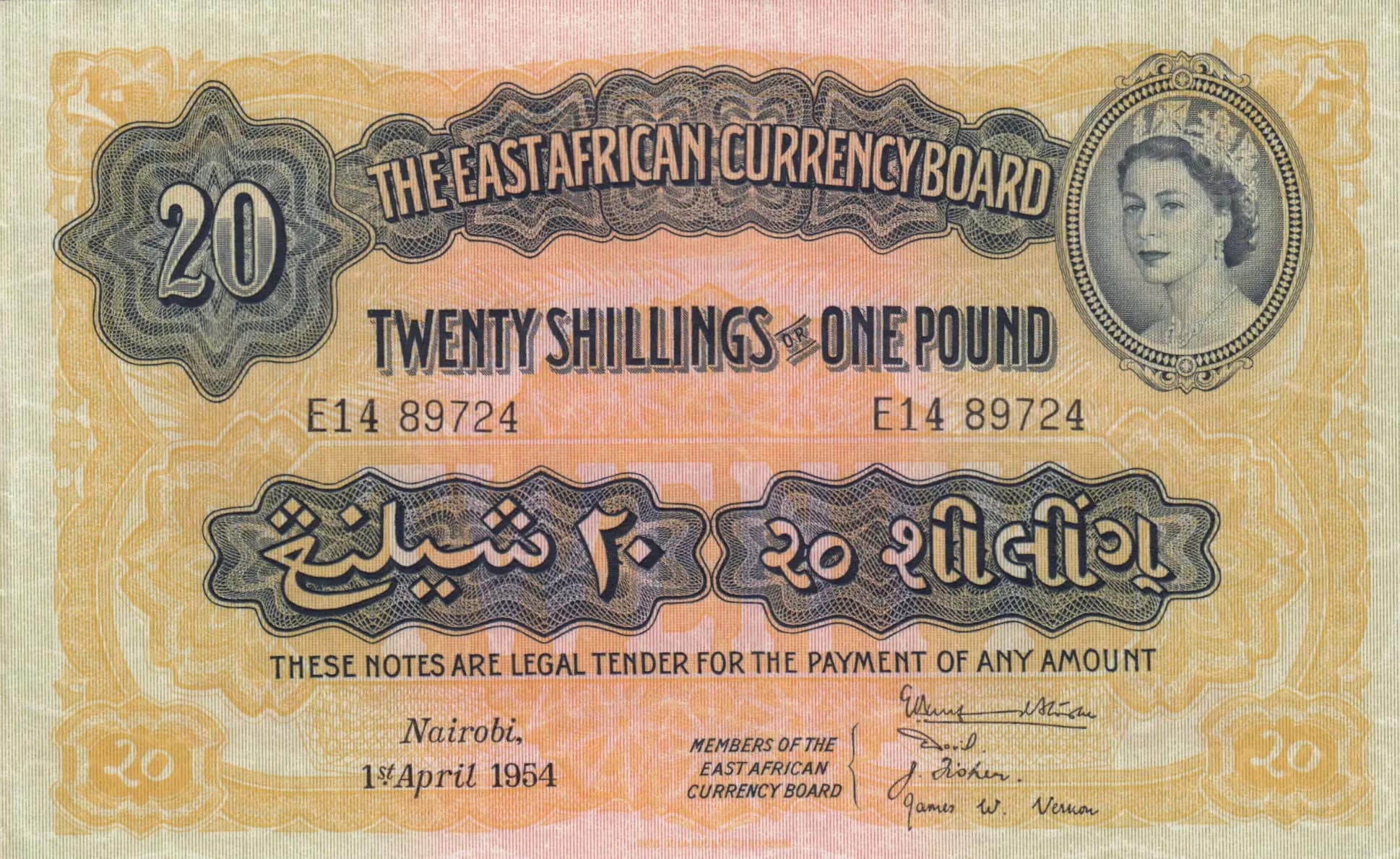
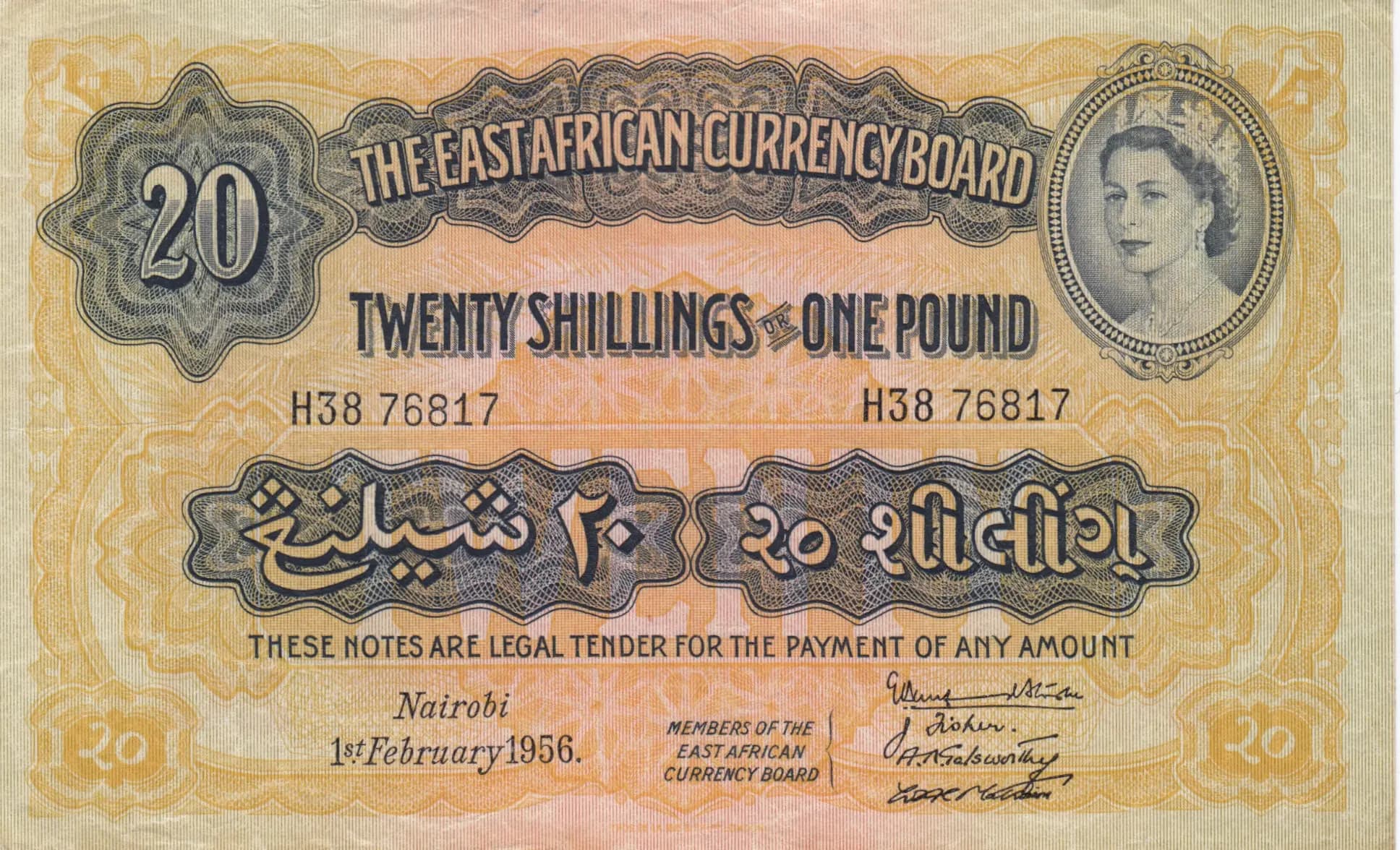
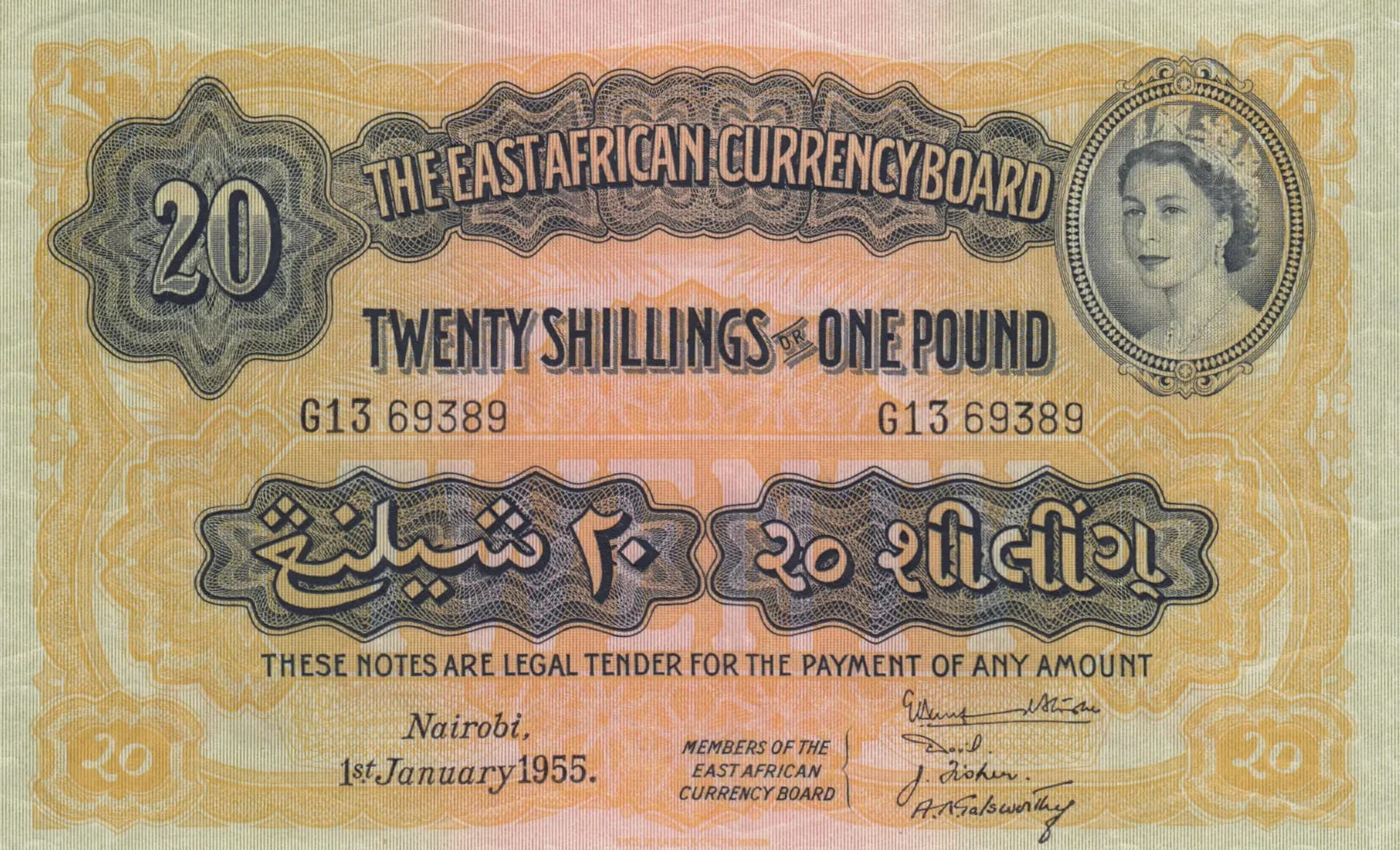
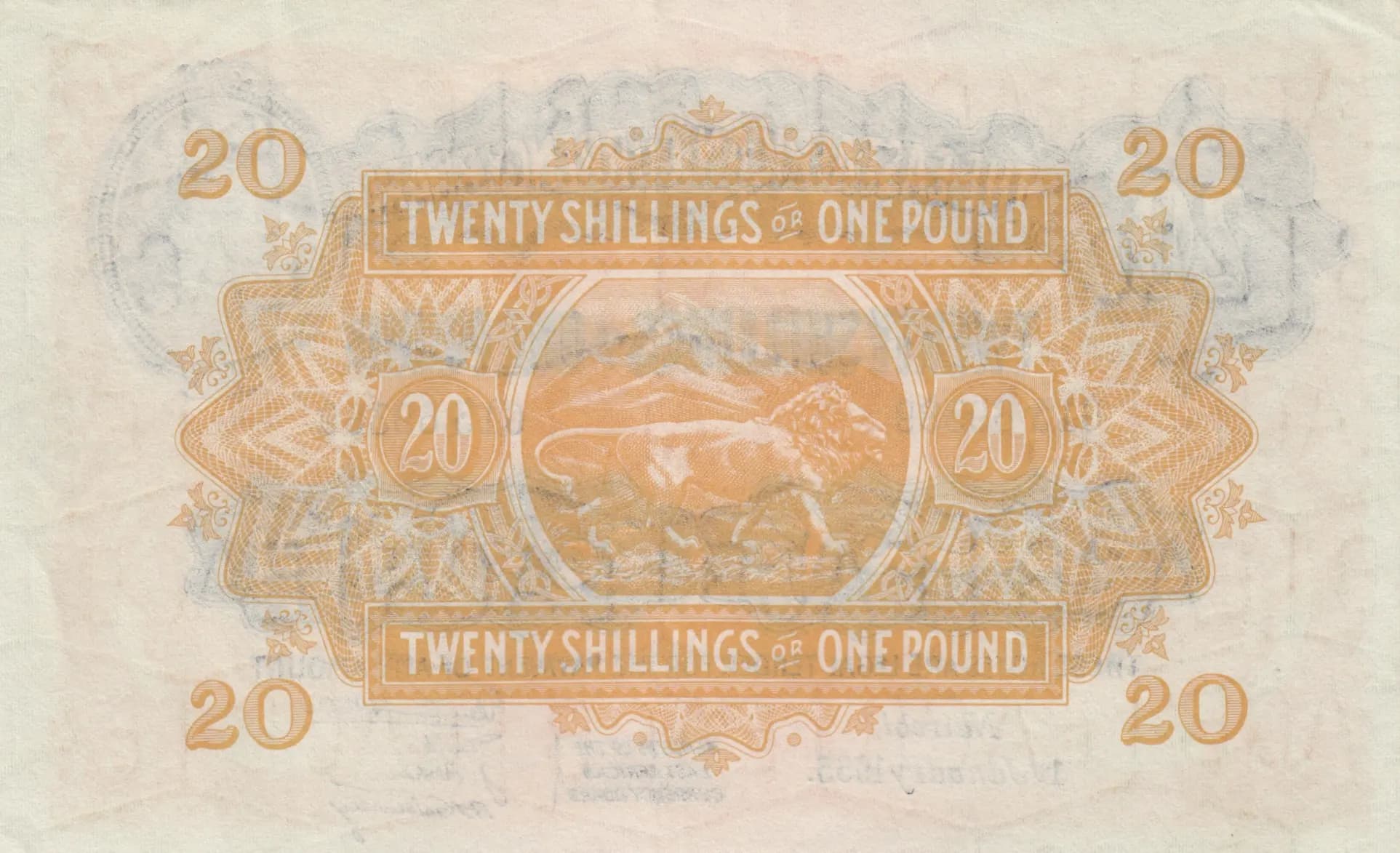
This East African Currency Board 20 Shillings note from 1955 presents an attractive example of mid-20th century East African currency featuring Queen Elizabeth II in an ornate circular portrait frame on the obverse and a magnificently engraved lion vignette on the reverse. The note displays the yellow-tan and cream color scheme typical of this issue with visible age-related patina and light foxing consistent with VF condition; the engraving remains crisp and the design elements are clearly legible despite decades of circulation.
Common. Secondary market data from realbanknotes.com indicates consistent sales activity with VF examples selling for $68–$140 range historically, well below collector premium thresholds. PMG grading population reports show this as a standard catalogue entry with established variants. The East African Currency Board issued substantial quantities of this denomination across its member territories (1953–1956), and surviving examples are readily available in the collector market. Print run numbers and circulation patterns indicate this was a standard working currency issue, not a limited or commemorative release.
Issued by the East African Currency Board during the height of British colonial administration in East Africa, this 1955 note reflects the region's monetary union spanning Kenya, Uganda, and Tanganyika. The prominent portrait of Queen Elizabeth II, whose reign had begun just two years prior, symbolized Commonwealth authority and imperial continuity, while the lion depicted on the reverse represented the strength and wildlife heritage of East Africa—imagery that would persist in regional currencies even after independence.
The obverse features Her Majesty Queen Elizabeth II rendered in fine engraved profile, positioned within an elaborate circular medallion frame on the right side, a standard iconographic element of Commonwealth currency of the 1950s. The denomination '20' is displayed prominently within an ornate star-burst cartouche on the left, with the text arranged around decorative flourishes and scalloped borders. The reverse showcases a meticulously engraved standing lion in profile, a symbol of East African wildlife and authority, contained within an ornate rectangular frame and surrounded by elaborate corner ornaments at each corner of the note. The overall design employs a yellow-tan base with cream tones and orange-brown engraved areas, creating visual depth through traditional banknote engraving techniques.
Front side: 'THE EAST AFRICAN CURRENCY BOARD' (issuing authority); 'TWENTY SHILLINGS OR ONE POUND' (denomination equivalence); 'THESE NOTES ARE LEGAL TENDER FOR THE PAYMENT OF ANY AMOUNT' (legal tender declaration); 'Nairobi, 1st January 1955' (issue location and date); 'MEMBERS OF THE EAST AFRICAN CURRENCY BOARD' (governing body reference); Serial number: '613 69389' (appears twice); Handwritten signatures (authorization by board officials). Back side: '20' (denomination, appears in all four corners); 'TWENTY SHILLINGS & ONE POUND' (denomination statement, appears top and bottom).
Intaglio engraving (line engraving and steel plate printing), executed by Thomas de la Rue & Company Limited of London, the premier British security printer of the era. The complex engraved patterns, fine-line decorative elements, detailed portrait work, and intricate vignettes are characteristic of the intaglio process, which provided security through the difficulty of replicating the precise depth and quality of line work. The multiple decorative borders, scrollwork, and fine hatching visible in both the portrait frame and lion vignette confirm professional security printing standards of the mid-1950s.
This note is identified as Pick-35, Nairobi printing. The visual analysis confirms the 1st January 1955 date, consistent with the issue date range of 1953–1956 catalogued for this Pick number. Signature varieties are noted in reference sources, though the specific signatures on this example are not clearly legible in the images provided. Serial number prefix '613' is visible, which may indicate a particular printing sequence or sheet position. The PMG population report indicates one catalogued variant for this base Pick number, suggesting signature differences are the primary distinguishing characteristic among surviving examples.