1 shilling 1943
Market Prices
17 salesAbout This Note
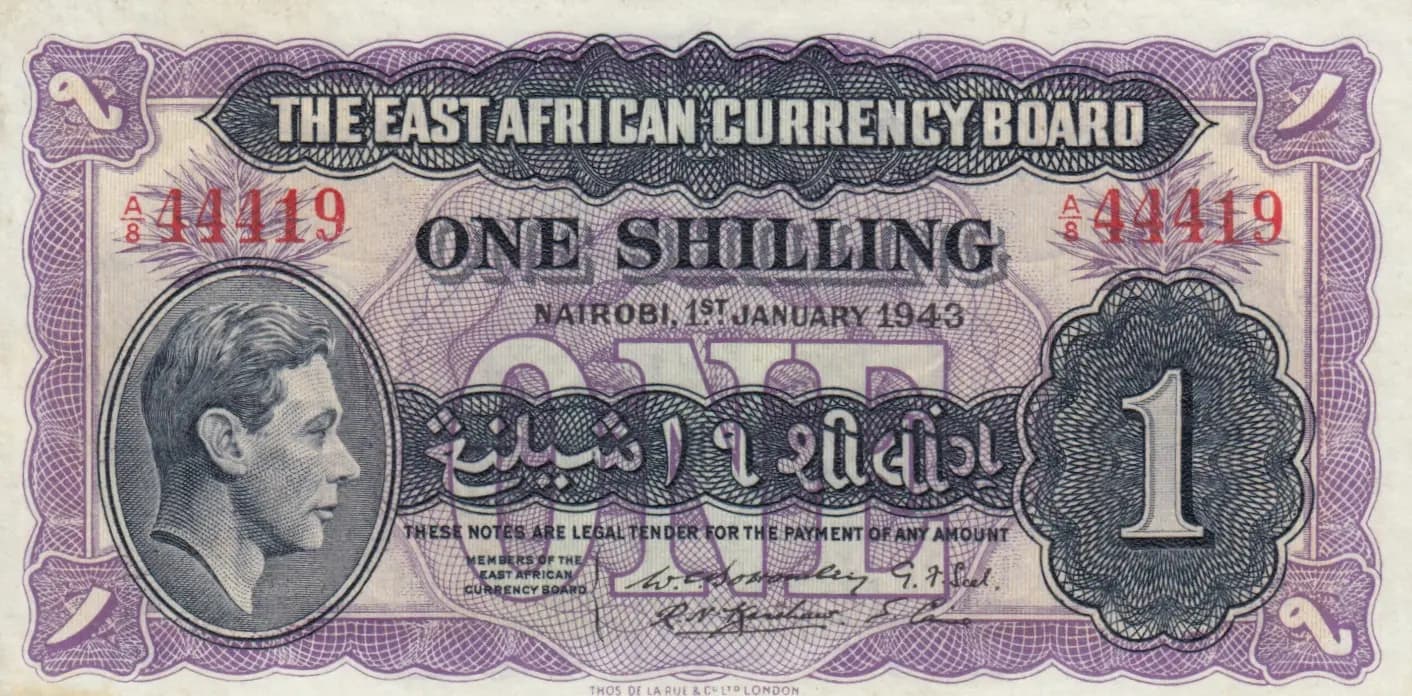
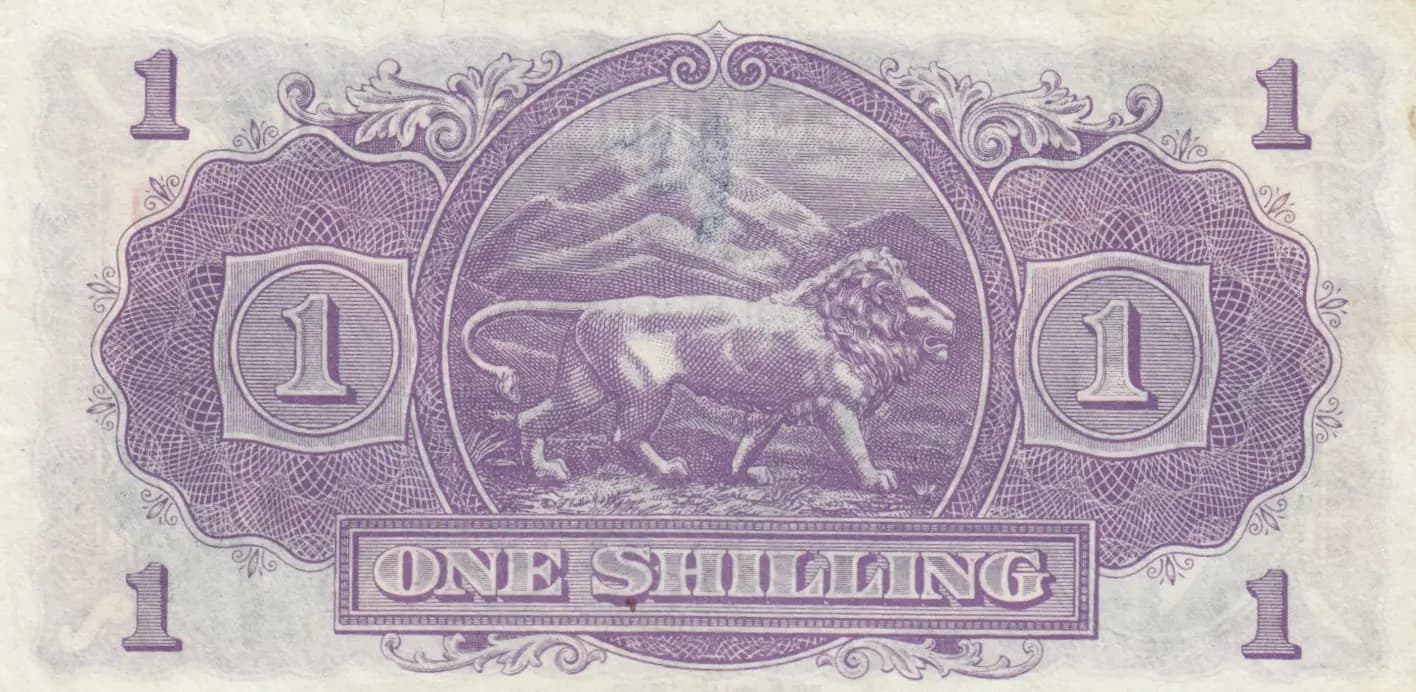
This is an exceptional example of the 1943 East African Currency Board 1 Shilling note (Pick P-27), graded UNC and displaying pristine condition with crisp printing and vibrant purple and black coloring. The note features an elegant portrait of King George VI on the obverse and a striking central lion vignette on the reverse, both executed in the finest line-engraving tradition. As one of the earliest issues from the East African Currency Board and printed by the prestigious Thomas de la Rue & Company, this note represents an important piece of East African monetary history in exceptional preservation.
Common. Despite being an early issue from 1943, this denomination and pick number has a robust circulation history across East African territories. eBay market data shows consistent trading of VF examples at $20-57 over the past decade, with UNC examples catalogued at $90 (2016 values). The PMG population report indicates only 1 variant for Pick P-27, suggesting the note was produced in substantial quantities. Historical records indicate the East African Currency Board maintained regular production runs to support commerce across multiple territories, making this note readily available to collectors.
Issued on January 1, 1943, during World War II, this note represents the East African Currency Board's early coinage operations in Nairobi, establishing unified currency across the East African territories under British administration. The portrait of King George VI reinforces the British colonial administrative structure of the period, while the lion symbolizes the strength and sovereignty of the East African region. This 1943 date marks a foundational moment in East African financial independence, as the Currency Board was established to manage currency for Kenya, Uganda, Tanganyika, and other territories in the region.
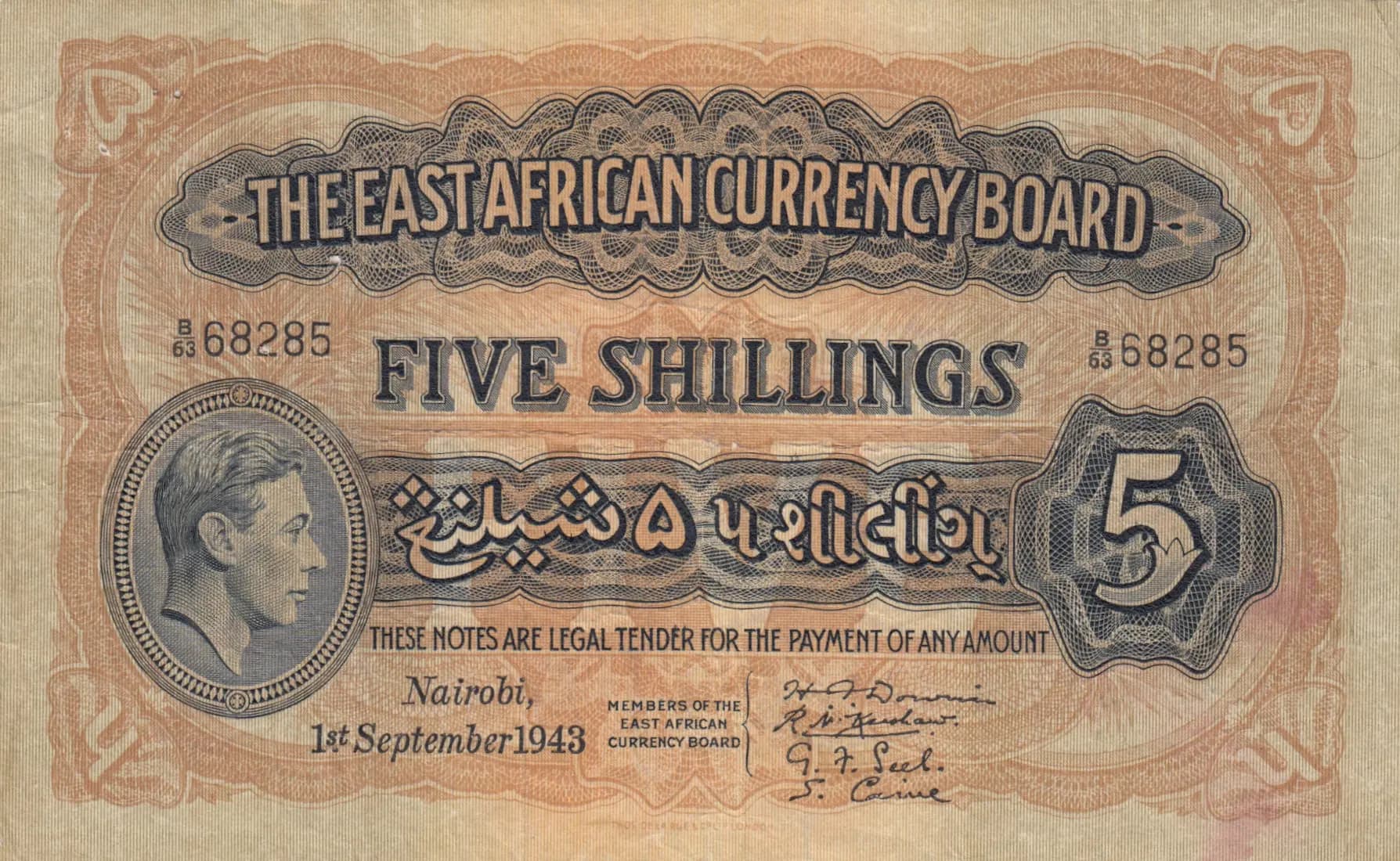
The obverse features King George VI rendered in classical profile within an oval engraved frame on the left side, a formal representation befitting the British Commonwealth context. The center and right portions display ornate decorative borders with geometric and floral motifs characteristic of high-security currency design. The denomination '1' is prominently featured within a decorative circular emblem on the right. The reverse presents a majestic lion in profile walking left to right, enclosed in a circular frame and set against a mountain landscape background—the lion being a traditional symbol of African strength and sovereignty. Corner numerals '1' appear in all four corners within separate decorative square frames. The overall design demonstrates the exceptional craftsmanship of Thomas de la Rue & Company, with elaborate cross-hatching, fine line work, and multi-layered ornamental designs throughout.
FRONT SIDE: 'THE EAST AFRICAN CURRENCY BOARD' (issuing authority); 'ONE SHILLING' (denomination); 'NAIROBI, 1ST JANUARY 1943' (place and date of issue); 'THESE NOTES ARE LEGAL TENDER FOR THE PAYMENT OF ANY AMOUNT' (legal tender declaration); 'MEMBER OF THE EAST AFRICAN CURRENCY BOARD' (institutional designation); 'THOS DE LA RUE & Co LTD LONDON' (printer attribution); Serial number 'A/8 414119' (appears twice, top left and right). Swahili text appears in center in stylized script (specific translation unclear from visual analysis). BACK SIDE: '1' (numeral denomination, repeated in all four corners); 'ONE SHILLING' (denomination in English).
Intaglio line engraving (raised line printing), characteristic of security currency production. Executed by Thomas de la Rue & Company Limited of London, one of the world's premier security printers. The visual analysis confirms the presence of fine cross-hatching, intricate line work, detailed portraiture, and complex geometric and landscape engraving—all hallmarks of the intaglio process. The crisp, sharp detail visible in both the portrait and the lion vignette, combined with the sophisticated ornamental work, demonstrates the highest standards of currency engraving from this period.
Serial number prefix 'A/8' is observed on this example (A/8 414119). Known varieties for Pick P-27 include different signature combinations and serial number prefixes reflecting different production batches and issuing periods. The 'A' series prefix is consistent with early Nairobi production. PMG has catalogued 1 variant for this Pick number; without additional signature or date variants confirmed in the catalog data, this note appears to represent the standard variety of the 1943 issue.