20 shillings 1954
Market Prices
19 salesAbout This Note
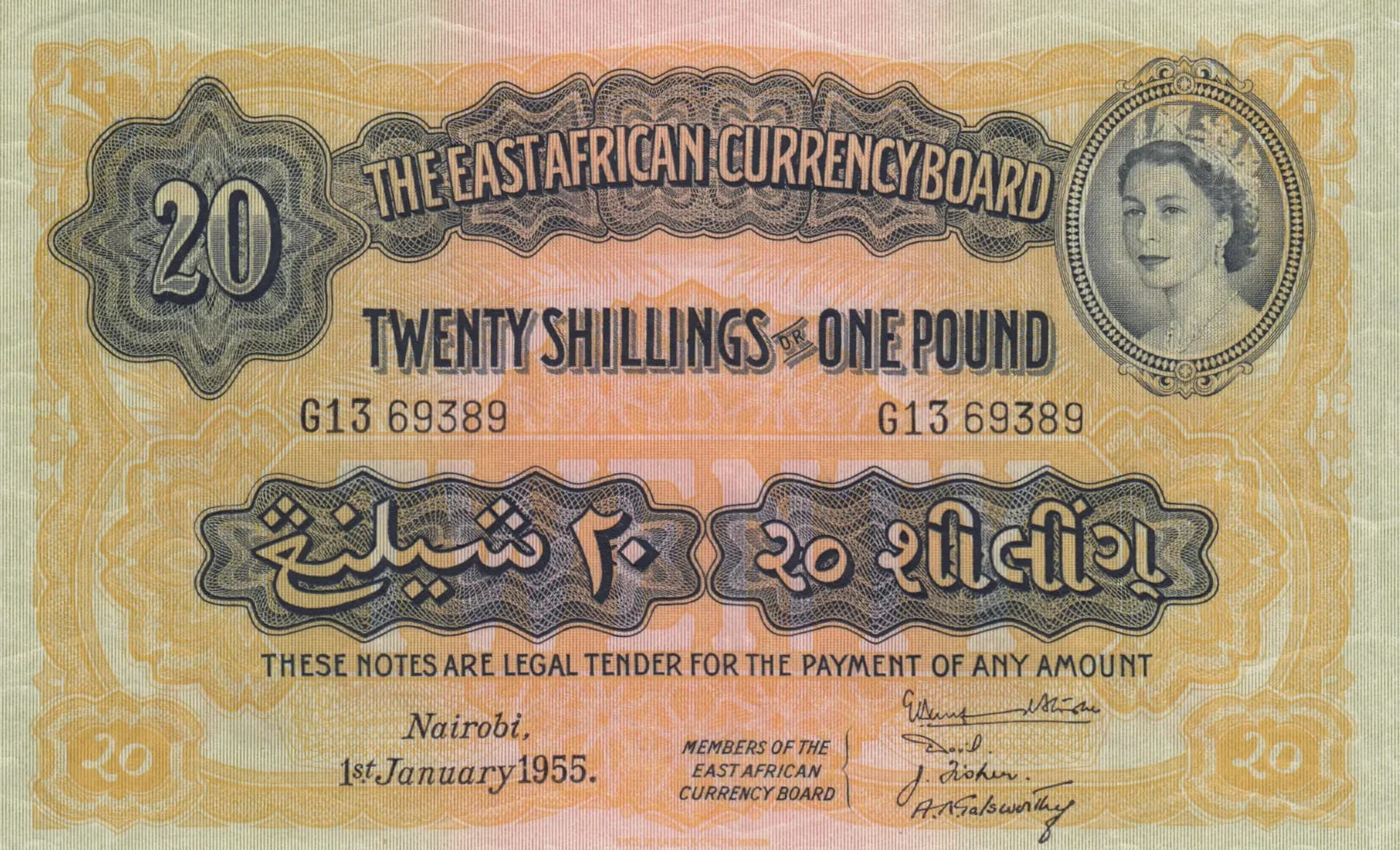
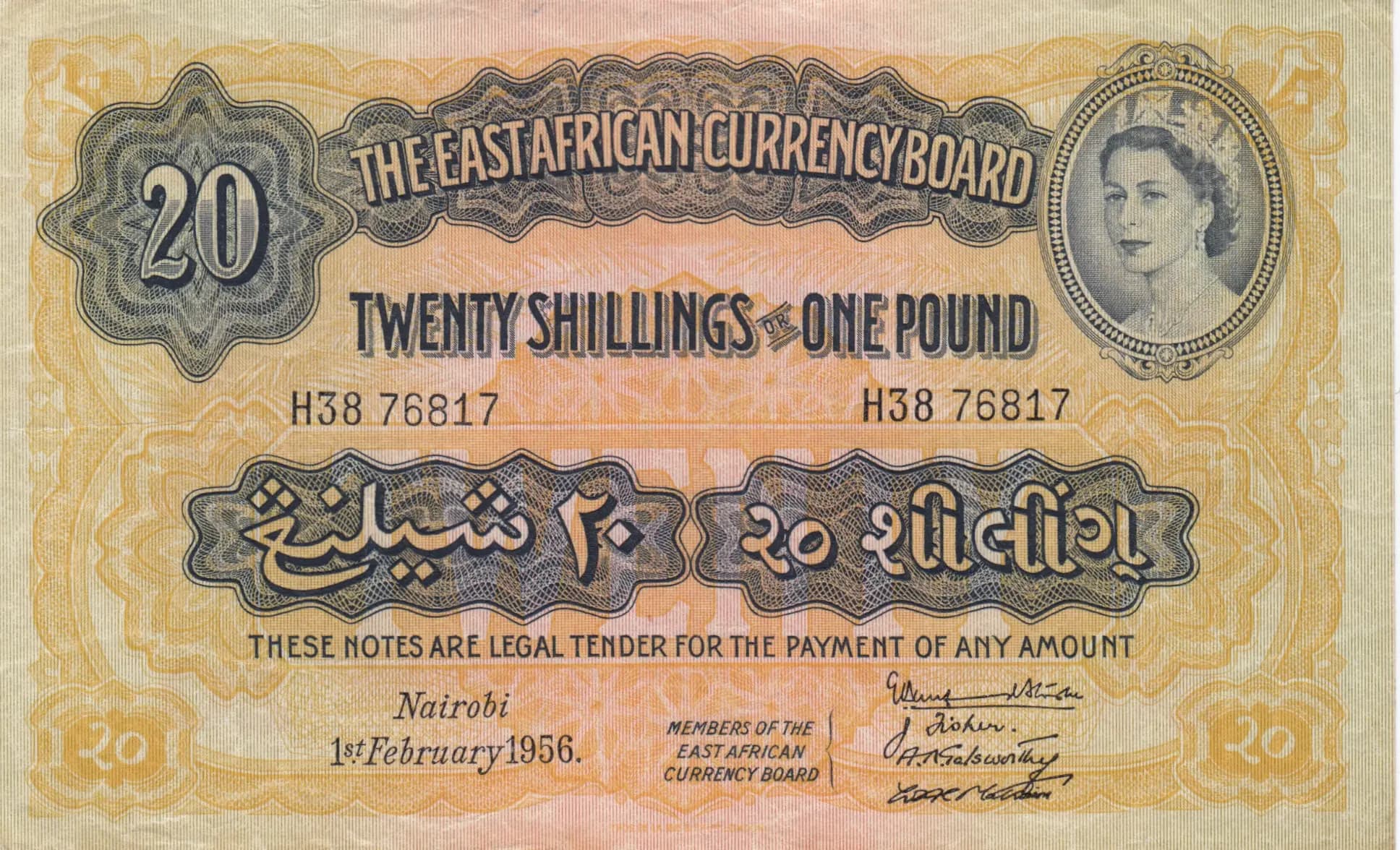
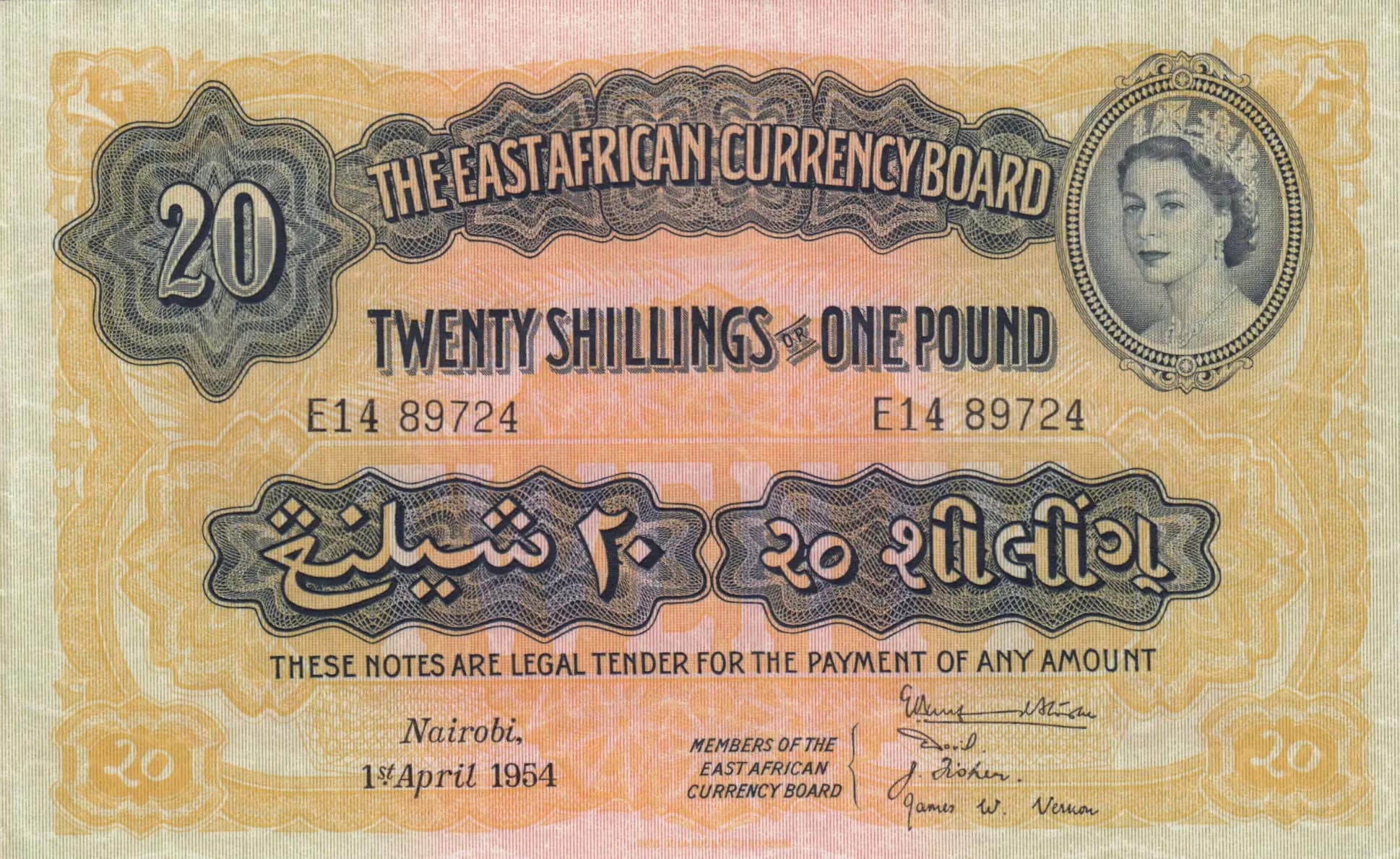
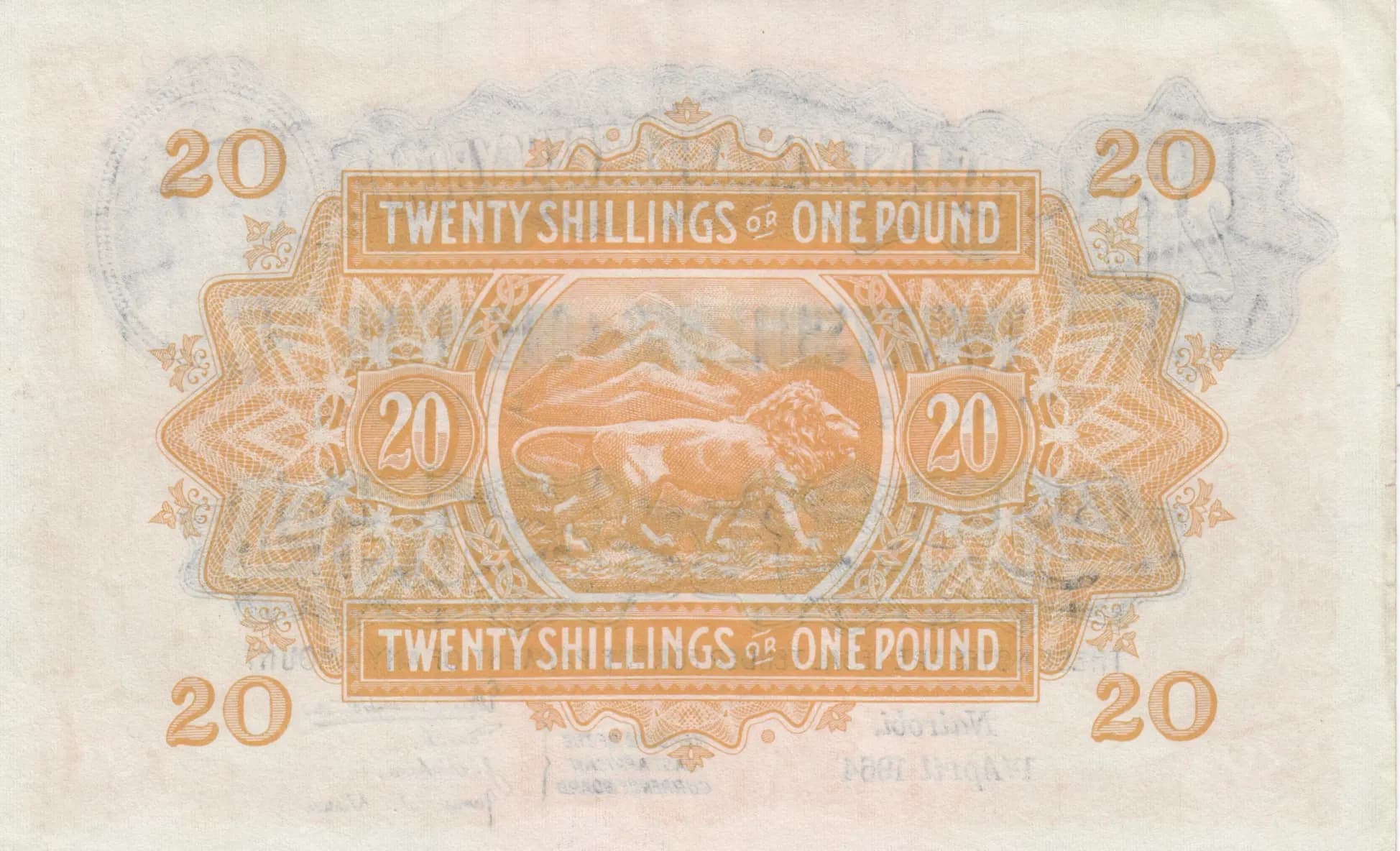
This is an East African Currency Board 20 Shillings note from 1954, printed by Thomas de la Rue in excellent condition with EF grading. The note features a striking portrait of Queen Elizabeth II in profile on the obverse within an ornamental circular frame, complemented by a magnificent lion vignette on the reverse set against a savanna landscape. The orange, tan, and dark brown color scheme remains vibrant despite age-related foxing and minor handling marks, and the note's multilingual inscriptions in English, Arabic, and Hindi reflect the cosmopolitan nature of East African currency circulation during the 1950s.
Common. This note was part of a regular series issued between 1953 and 1956 by the East African Currency Board and circulated widely throughout Kenya, Uganda, and Tanganyika. The eBay market data shows consistent availability with multiple sales across various grades, with EF-graded examples selling in the $200-300 range historically, and even lower grades finding ready buyers. The print run was substantial for the three territories served, and survival rates remain healthy. No evidence of limited mintage, recall, or scarcity for this Pick number exists.
This banknote was issued by the East African Currency Board during the twilight of British colonial rule in East Africa, with the April 1954 date marking a transitional period as Kenya, Uganda, and Tanganyika moved toward independence. The prominence of Queen Elizabeth II's portrait reflects the Commonwealth status of these territories, while the lion vignette symbolizes the region's renowned wildlife and natural heritage. The inclusion of Arabic and Hindi inscriptions demonstrates the significant Muslim and Indian populations whose commercial and financial influence shaped East African economic life during this era.
The obverse features a left-facing profile portrait of Queen Elizabeth II rendered in fine engraved detail, positioned within an ornate circular decorative frame on the right side of the note. The denomination is prominently displayed in a distinctive star-burst shape on the left. The reverse showcases a detailed wildlife vignette of an African lion in its natural savanna habitat with distant mountains or hills forming the background landscape, symbolizing the region's famous fauna. Both sides employ ornamental wavy-line borders and geometric patterns characteristic of Thomas de la Rue's classical banknote design aesthetic. The color palette of orange, tan, dark brown, and cream reflects the standard security printing of the era, with the warmth of these tones creating visual harmony across both sides.
FRONT SIDE: 'The East African Currency Board' (issuing authority); 'Twenty Shillings of One Pound' (denomination statement); 'E14 89724' (serial number); 'These notes are legal tender for the payment of any amount' (legal tender declaration); 'Nairobi' (place of issue); '1st April, 1954' (issue date); 'Members of the East African Currency Board' (institutional reference); 'شيلينج ٢٠' in Arabic script = 'Twenty Shillings'; 'शिलिंग २०' in Devanagari script = 'Twenty Shillings'. BACK SIDE: 'Twenty Shillings of One Pound' (denomination statement, repeated at top and bottom); '20' (denomination numerals in all four corners).
Intaglio engraving (recess printing) by Thomas de la Rue, London, the premier British security printer of the period. The fine detail visible in the portrait, the intricate ornamental borders, and the complex wildlife vignette all demonstrate the hallmark precision of intaglio work. The crisp registration between colors and the depth of the engraved lines confirm traditional multi-color intaglio printing methodology typical of high-security currency production in the 1950s.
The observed serial number 'E14 89724' indicates an E-series note from the 1953-1956 issuance. PMG records show one main catalogued variant for P-35 (Nairobi issue). The note exhibits the standard signature varieties typical of the series, with different officials signing during the extended issuance period. The specific April 1, 1954 date on this example places it early in the series' production run. No overprints, color varieties, or error characteristics are apparent from the visual analysis; this represents the standard design and printing variety for this Pick number.