20 shillings 1960
Market Prices
7 salesAbout This Note
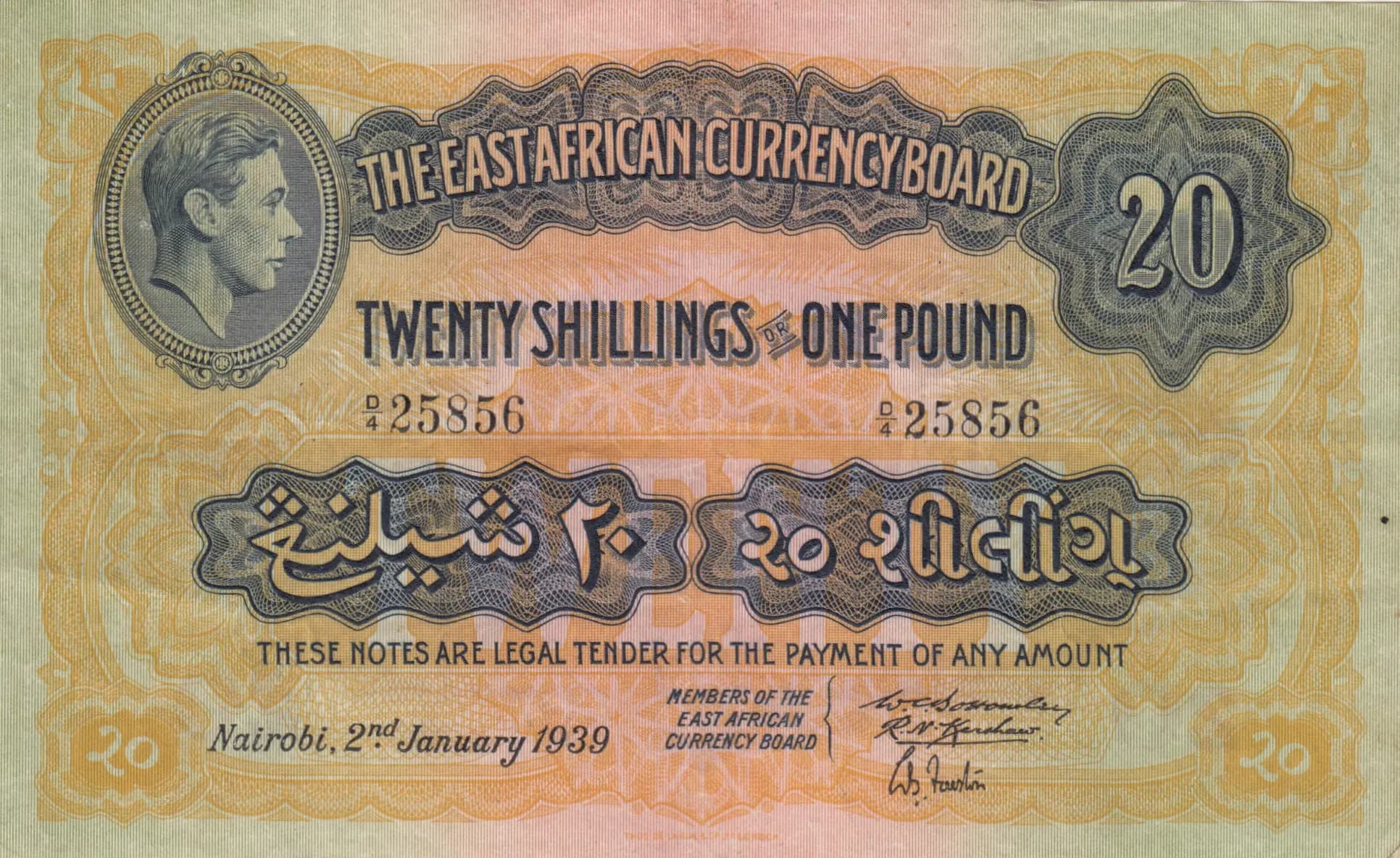
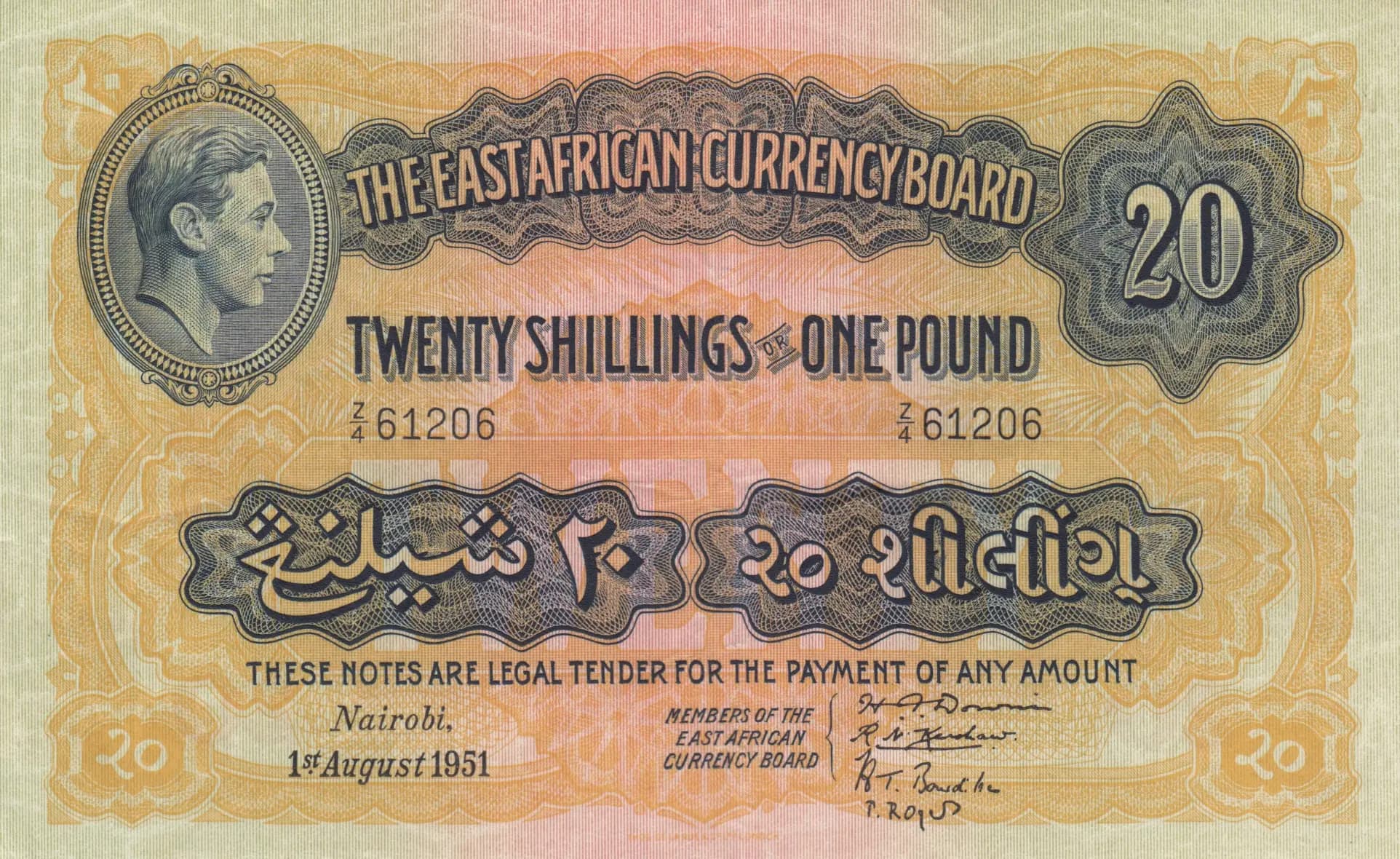
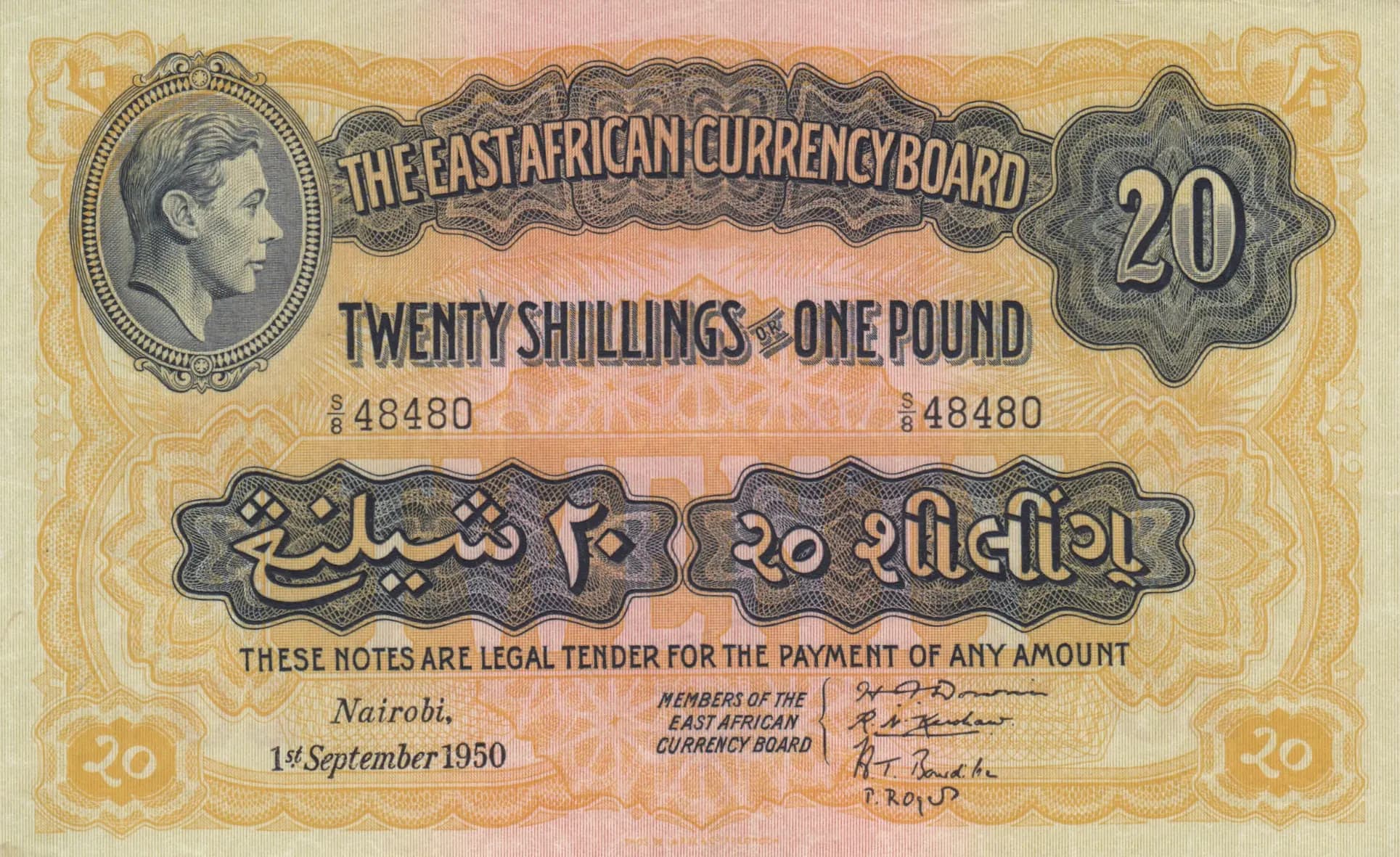
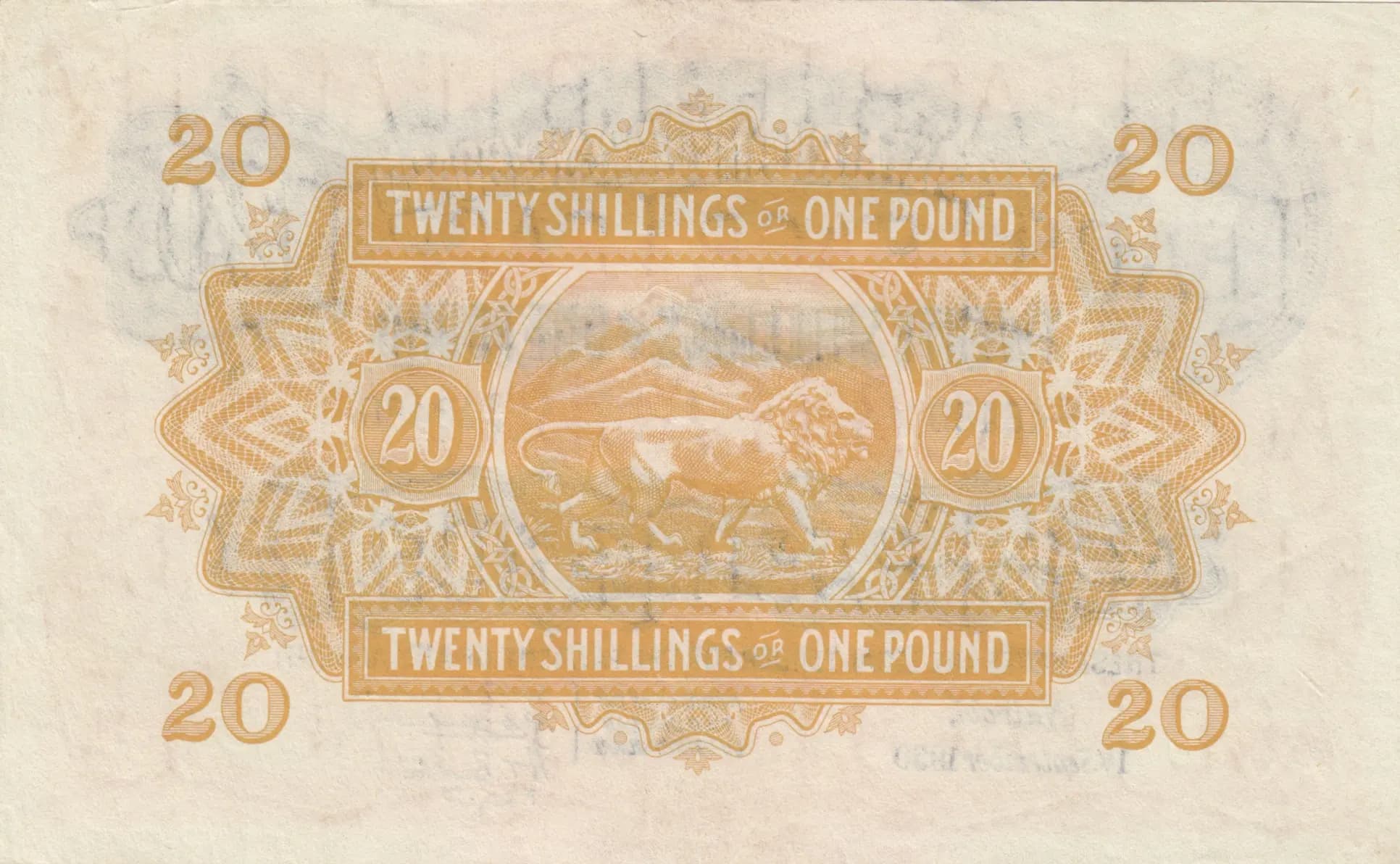
This is an East African Currency Board 20 Shillings (1 Pound) note from 1950, Pick P-30b, graded AU. The note features King George VI in an ornate circular frame on the obverse, with a striking lion and mountainous landscape vignette on the reverse. Despite the AU grade, the note exhibits moderate aging with visible foxing and creasing throughout, consistent with a note that has circulated, though the ornate engraving remains well-preserved and the color scheme of gold/tan and pink/salmon tones is still evident.
Common. This note is a regular issue of the East African Currency Board with substantial print runs during the 1943-1952 period. Market data from realbanknotes.com shows consistent availability with eBay sold prices ranging from $72 to $260 depending on condition grade and grading company. The AU-grade examples regularly appear on the market without premium pricing, and the 2016 catalogue value for UNC is listed at $450, indicating healthy supply at all grade levels. The PMG population report confirms multiple variants (P-30A, P-30a, P-30b) are in circulation among collectors, further evidencing common availability.
Issued by the East African Currency Board on 1st September 1950 from Nairobi, this note represents the final years of British colonial currency administration in East Africa before independence movements transformed the region. The portrait of King George VI and the heraldic lion imagery reflect the British imperial framework that governed East African monetary policy during the late colonial period. The multilingual inscriptions in both English and Arabic underscore the cosmopolitan character of East African commerce and the region's diverse trading networks during this transitional era.
The obverse features a formal portrait of King George VI in right profile, enclosed within an ornate circular medallion frame with scalloped edges and elaborate gilt ornamentation. The design employs a two-tone color scheme of gold/tan as the primary field with pink/salmon secondary tones. Decorative borders frame the note with diamond-shaped geometric ornaments positioned in the corners, and the denomination is displayed in a large scalloped-edge circular badge on the right side bearing the numeral '20'. The reverse showcases a detailed engraved vignette of an African lion in its natural habitat with mountainous terrain and volcanic peaks in the background, framed within an oval ornamental border. Large denomination numerals '20' appear in all four corners, with the entire reverse rendered in warm gold and tan tones. The design reflects Thomas de la Rue's mastery of intaglio engraving, with fine line work and color gradation creating depth throughout.
FRONT: 'THE EAST AFRICAN CURRENCY BOARD' (issuing authority); 'TWENTY SHILLINGS ONE POUND' (denomination statement); 'S/8 48480' (serial number, repeated); 'THESE NOTES ARE LEGAL TENDER FOR THE PAYMENT OF ANY AMOUNT' (legal tender declaration); 'Nairobi.' (place of issue); '1st September 1950' (date of issue); 'MEMBERS OF THE EAST AFRICAN CURRENCY BOARD' (institutional reference); Arabic: 'شيلينج عشرون' (Twenty Shillings) and 'علامة واحدة' (One Pound); Multiple official signatures present. BACK: 'TWENTY SHILLINGS OR ONE POUND' (denomination, stated twice); '20' (denomination numerals in all four corners).
Intaglio engraving (steel plate engraving) by Thomas de la Rue & Company, London. The fine line work, intricate border patterns, color gradients, and the precision of the serial number placement all indicate traditional intaglio/recess printing combined with color lithography for the background underprint. The security features include the complexity of the engraved design itself, serial number repetition, and the difficulty of reproducing the fine detail work.
This note is identified as Pick P-30b, the Nairobi-printed variety, as confirmed by the 'Nairobi.' inscription visible on the obverse and the PMG population report designation. The date of 1st September 1950 places this within the later-stage printings of this design (Pick catalog references the 1943-1952 series). The serial number 'S/8 48480' with the 'S/8' prefix indicates a specific printing batch from the Nairobi location. Related varieties include P-30A (earlier printing with different serial numbering) and P-30a (also Nairobi-printed). The presence of four official signatures and the absence of an overprint distinguish this from earlier 1939 and 1942 dated variants.