100 shillings 1961
Market Prices
About This Note
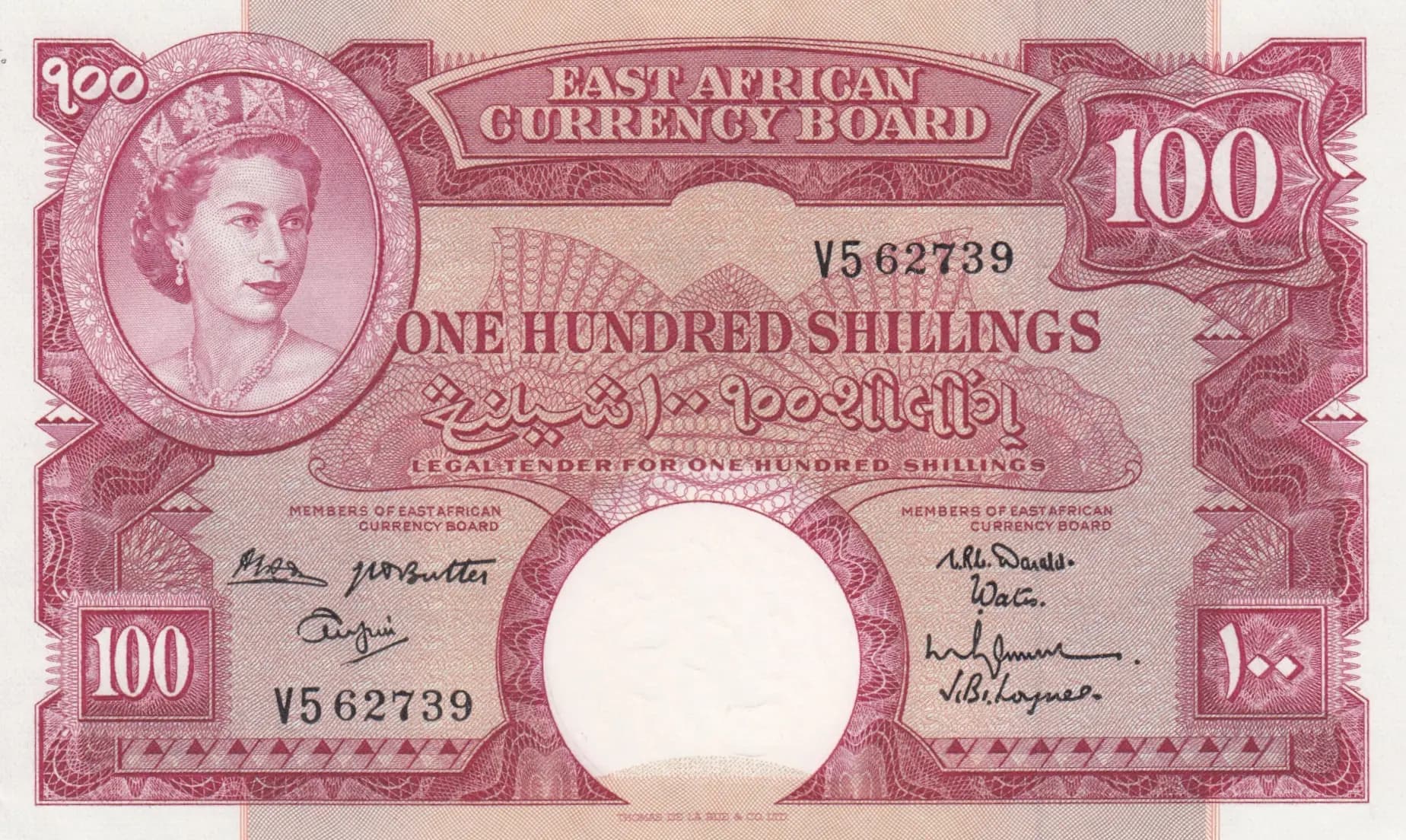
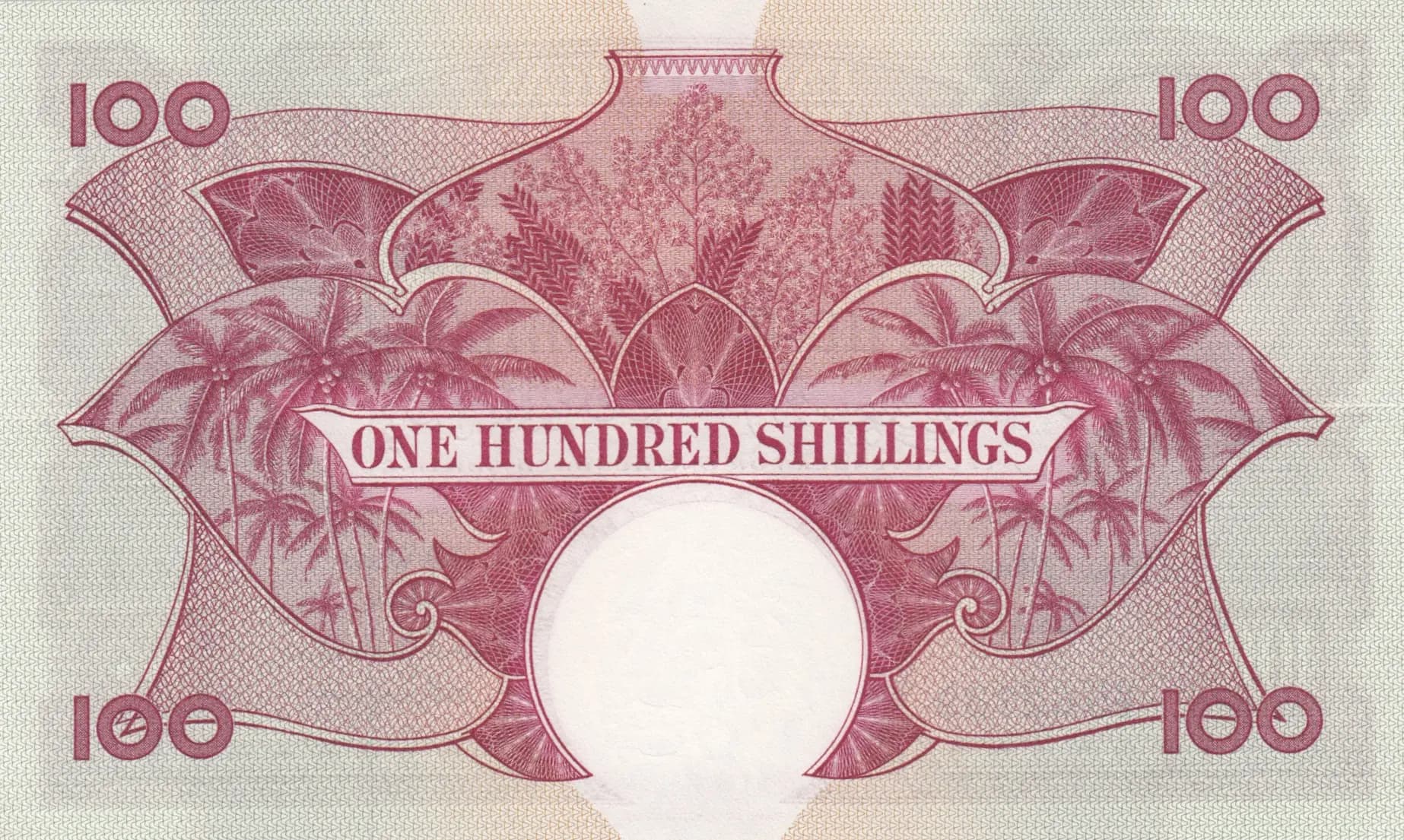
This is an exceptional East African Currency Board 100 Shillings note from 1961-1962, graded UNC, featuring the portrait of Queen Elizabeth II in a delicate circular vignette on the obverse. The note displays pristine condition with sharp, clean printing throughout and exhibits the characteristic pink/magenta color scheme with cream accents typical of this iconic series. The reverse showcases intricate botanical illustrations of tropical palm trees and ornamental foliage, exemplifying the high-quality engraving standards of Thomas de la Rue.
Common. While eBay market data shows UNC examples trading at $2,850 (reflecting genuine scarcity in top-tier preservation), the base note type P-44b remains a standard issue from the East African Currency Board's production run of 1961-1963. The high prices reflect the overall rarity of 60-year-old notes surviving in uncirculated condition, not scarcity of the issue itself. Circulated and AU examples trade for under $200, confirming this is a regularly encountered note in the secondary market when not in pristine condition.
Issued during the early years of East African independence, this note represents the region's monetary sovereignty under the East African Currency Board, a transitional institution managing currency for the East African territories before national central banks took control. The continued depiction of Queen Elizabeth II reflects the Commonwealth connection of these newly independent nations, while the tropical botanical imagery on the reverse celebrates the natural resources and distinct identity of East Africa. The Arabic inscription alongside English text demonstrates the multicultural and multilingual character of the East African region during this post-colonial period.
The obverse features a three-quarter left-facing profile portrait of Queen Elizabeth II positioned within an ornate circular frame on the left side of the note, surrounded by intricate engraved decorative borders and floral geometric patterns in the Art Deco style. The note carries three signatures on the left side and four on the right, with A. L. Adu as the top left signatory. The reverse displays an elaborate tropical botanical composition dominated by stylized palm trees and various East African flora rendered in fine engraved line work, with symmetrical ornamental scrollwork in the corner panels. The entire design is executed in a sophisticated pink and cream color palette with white space elements creating visual balance.
FRONT: 'EAST AFRICAN CURRENCY BOARD' (English, issuing authority) / '100' (denomination in numerals) / 'ONE HUNDRED SHILLINGS' (denomination in words) / 'LEGAL TENDER FOR ONE HUNDRED SHILLINGS' (legal tender clause) / 'MEMBERS OF EAST AFRICAN CURRENCY BOARD' (institutional reference) / 'إحدى مائة شلن' (Arabic: One hundred shillings) / Serial number: V562739. BACK: 'ONE HUNDRED SHILLINGS' (English, denomination) / '100' (numerical denomination in corner frames).
This note was produced using traditional steel plate intaglio engraving (recess printing), the premium security printing method employed by Thomas de la Rue & Company, London, the world-renowned British currency printer. The fine line work, portrait vignette quality, and intricate botanical patterns visible throughout the note are characteristic signatures of this labor-intensive engraving technique, which creates the three-dimensional tactile feel and anti-counterfeiting properties that made TDLR notes the international standard for currency security.
This specimen represents Pick P-44b (Nairobi printing), distinguished from P-44a by specific signature configurations and printing details. The note exhibits three signatures at left and four at right, consistent with the P-44b variant cataloging. Serial number V562739 indicates standard production run allocation. The Arabic script alongside English text is characteristic of this series reflecting the multicultural composition of East African Currency Board member states (Kenya, Uganda, Tanzania, and Zanzibar).