10 shillings 1957
Market Prices
5 salesAbout This Note
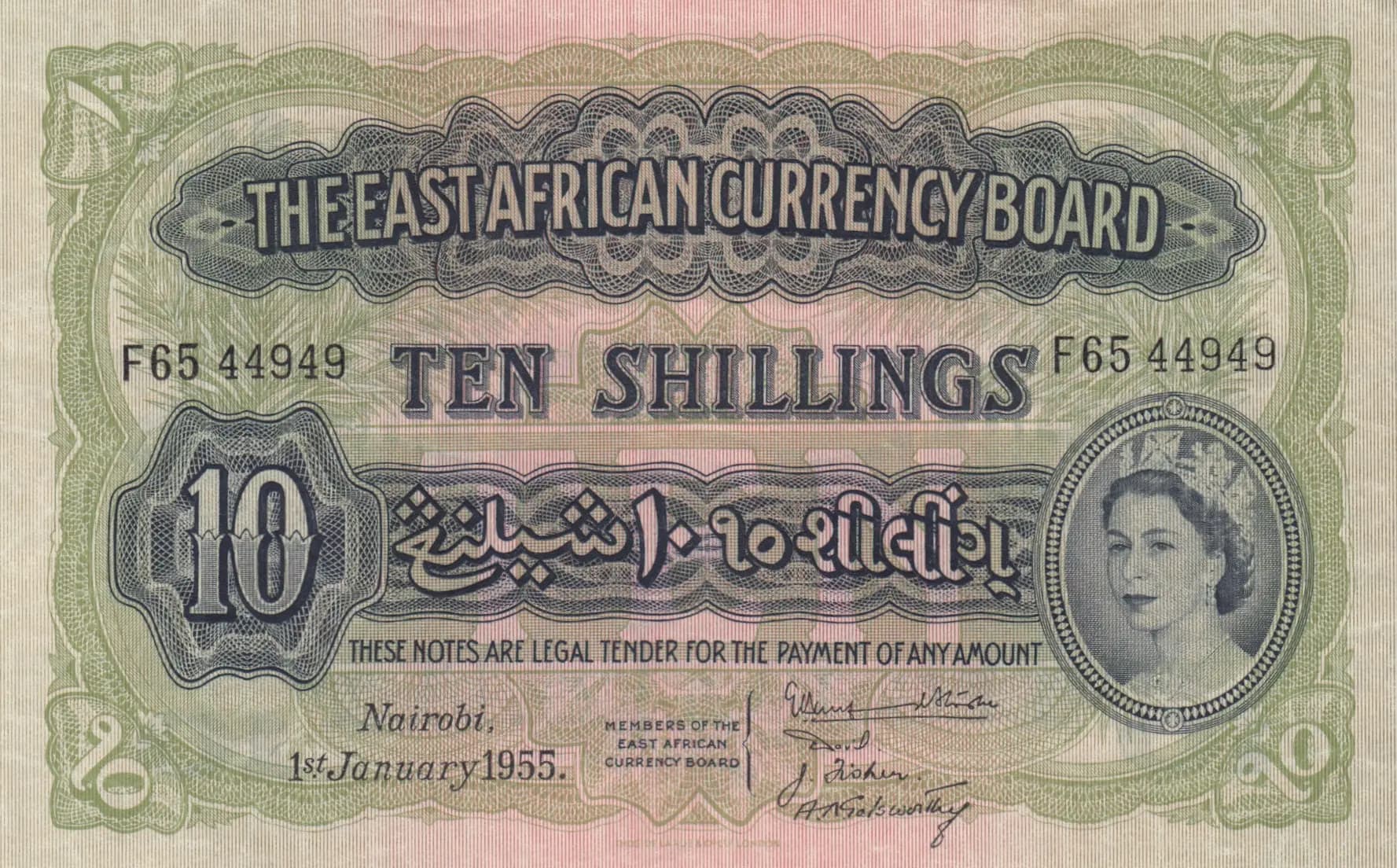
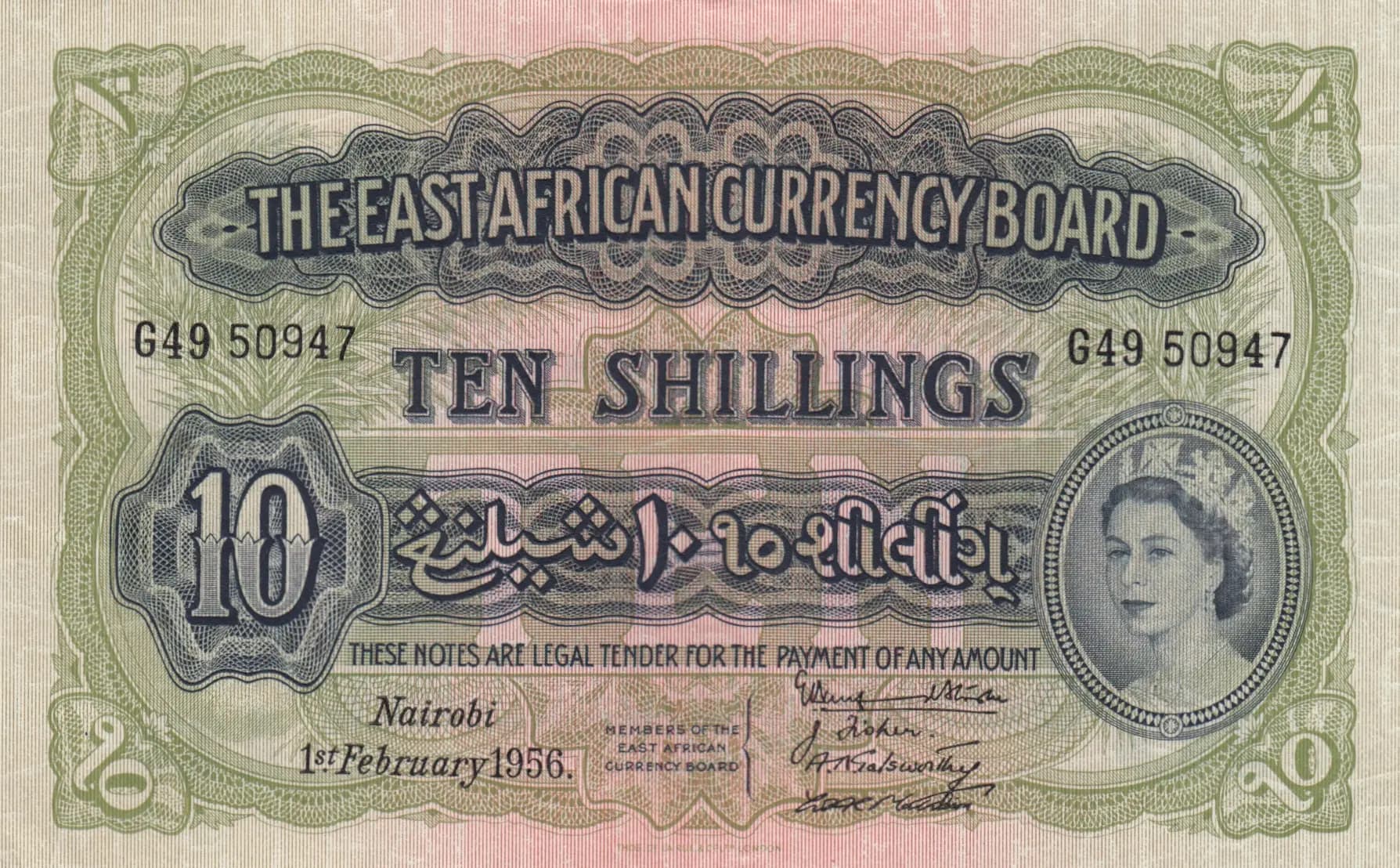
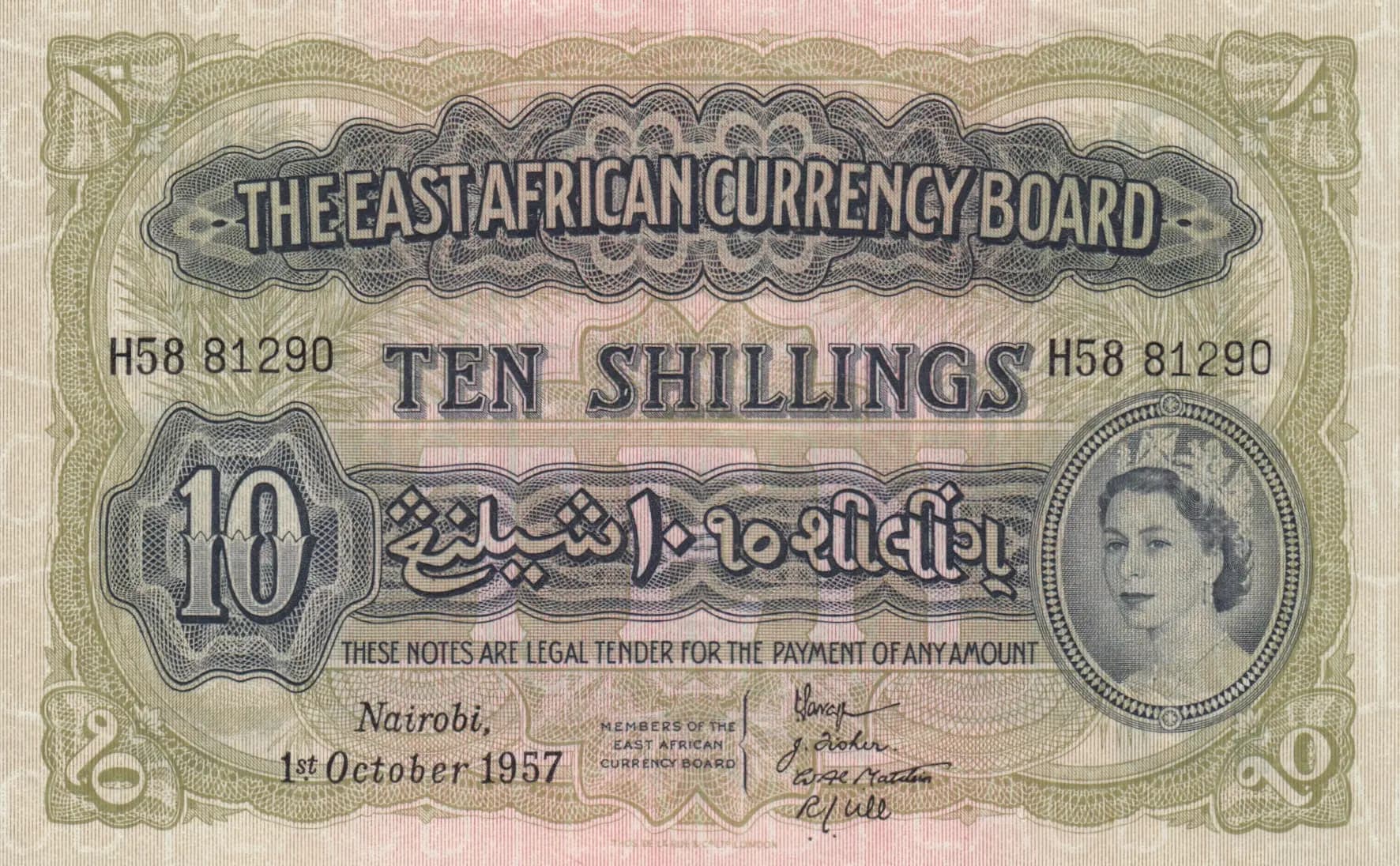
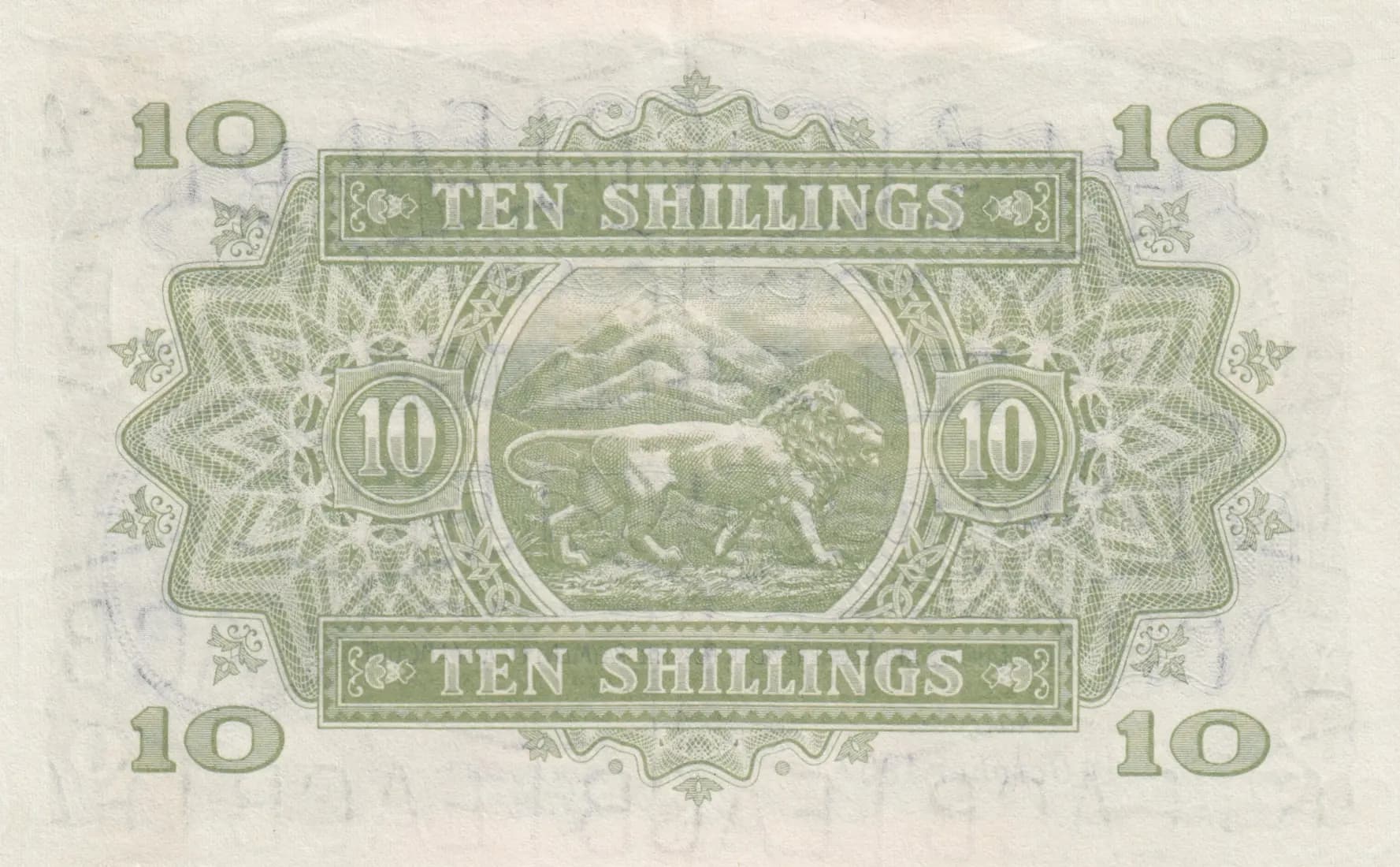
This East African Currency Board 10 Shillings note from October 1, 1957 (Pick P-34) presents an excellent example of this short-lived issue with notable historical significance. The obverse features a fine portrait of Queen Elizabeth II within an ornate circular frame, rendered in blue-black on green and pink underprint, while the reverse showcases a detailed engraved elephant in its natural East African habitat. Despite visible foxing and aging consistent with circulation and age, the note maintains strong definition in its engraved elements and retains the vivid green coloring characteristic of this series.
Common. This note circulated widely across the East African territories (Kenya, Uganda, and Tanganyika) during its brief three-year issue period (1953-1957). eBay sales data shows consistent pricing in the $37-$117 range for circulated examples, with catalog values from 2016 placing VF specimens at $175 and uncirculated at $850, indicating substantial surviving quantities. The observed foxing and circulation wear are consistent with abundant surviving examples in various condition grades. No print-run restrictions or recall issues are documented for this Pick number.
Issued during the twilight of British colonial administration in East Africa, this note represents the final year of the African Currency Board's tenure before the formation of independent central banks. The imagery reflects the dual cultural identity of the period—Queen Elizabeth II symbolizing the Commonwealth connection while the elephant vignette on the reverse celebrates the iconic wildlife of East Africa. Dated October 1, 1957, this note documents a pivotal moment when East African territories were on the cusp of independence, with Kenya achieving independence in 1964.
The obverse features a right-facing profile portrait of Queen Elizabeth II wearing a tiara, enclosed within an ornate circular frame positioned on the right side of the note. The frame is surrounded by decorative scalloped borders and elaborate corner ornaments with curved vine and leaf designs characteristic of Thomas de la Rue's engraving style. The reverse displays a central vignette of an African elephant in a naturalistic savanna setting, with a mountainous landscape and water body visible in the background, symbolizing East Africa's iconic wildlife. Both sides employ intricate cross-hatching, fine line work, and geometric patterns in the decorative borders, creating sophisticated security features typical of 1950s British currency production.
FRONT: 'THE EAST AFRICAN CURRENCY BOARD' (issuing authority); 'TEN SHILLINGS' (denomination in English); Arabic/Urdu script 'اشرافى شلنگ' (Ten Shillings - reflecting multi-lingual currency board practices); 'THESE NOTES ARE LEGAL TENDER FOR THE PAYMENT OF ANY AMOUNT' (legal tender declaration); 'Nairobi, 1st October 1957' (place and date of issue); 'MEMBERS OF THE EAST AFRICAN CURRENCY BOARD' (authority designation); Serial number 'H58 81290' (appears twice, left and right); Denomination numerals '10'. BACK: 'TEN SHILLINGS' (appears at top and bottom); Denomination numerals '10' (appears in all four corners).
Intaglio engraving (recess printing) by Thomas de la Rue, London, the premier British currency printer of this period. The fine line engraving throughout the decorative borders, complex cross-hatching in background areas, and high-detail portrait and elephant vignettes are characteristic of deep-plate intaglio work. Security features include fine-line ornamentation, intricate border patterns, and detailed background engraving that would be difficult to counterfeit using period technology.
This specific note is identified as the Nairobi variant (as noted in PMG population report). The serial number 'H58 81290' suggests a mid-range printing sequence. Signature varieties are documented for this issue type, with multiple versions of official signatures appearing on surviving notes. The date '1st October 1957' falls within the final year of issue, making this a late-series example. No overprints or signature substitutions are visible on this specimen.