10 shillings 1955
Market Prices
5 salesAbout This Note
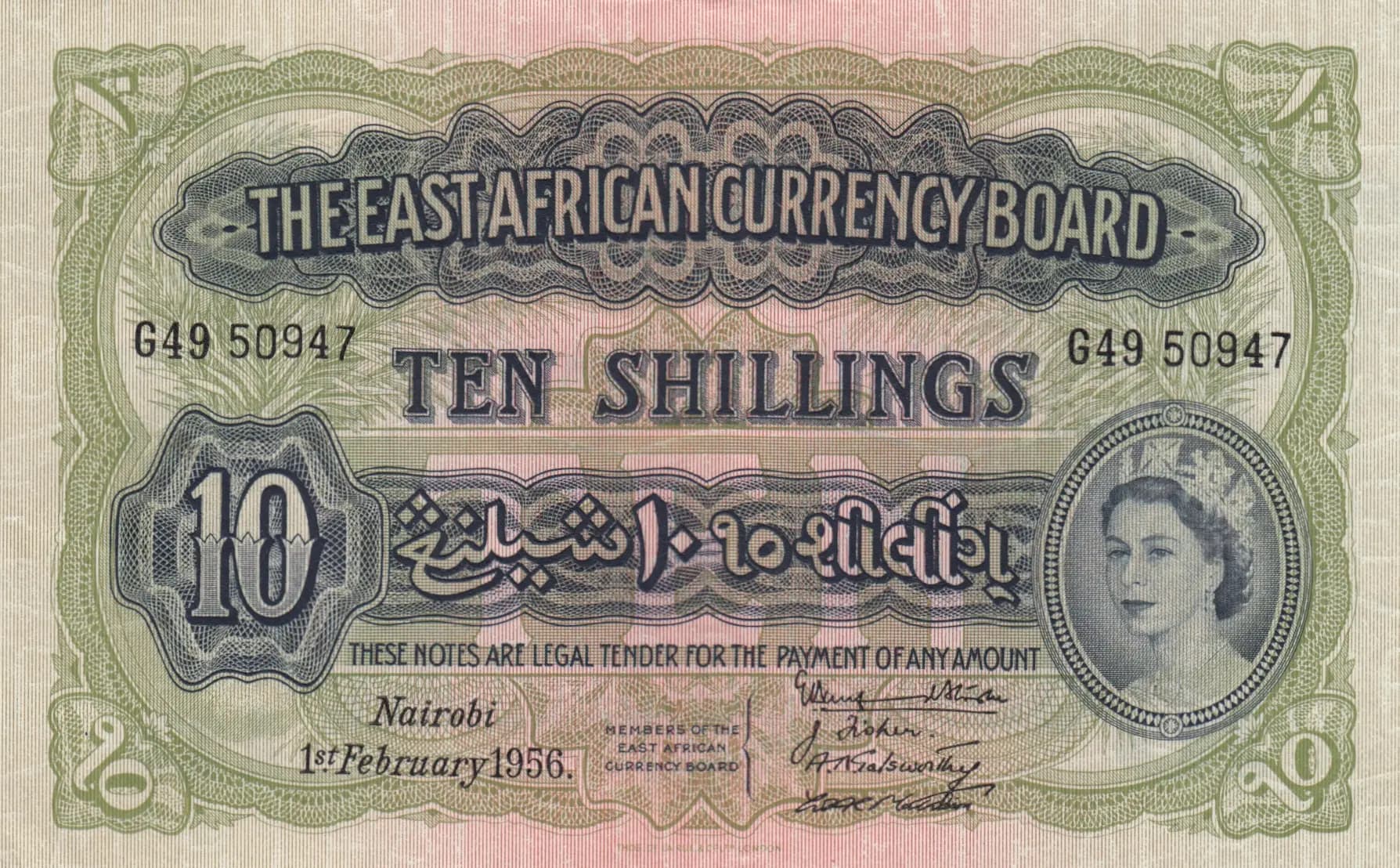
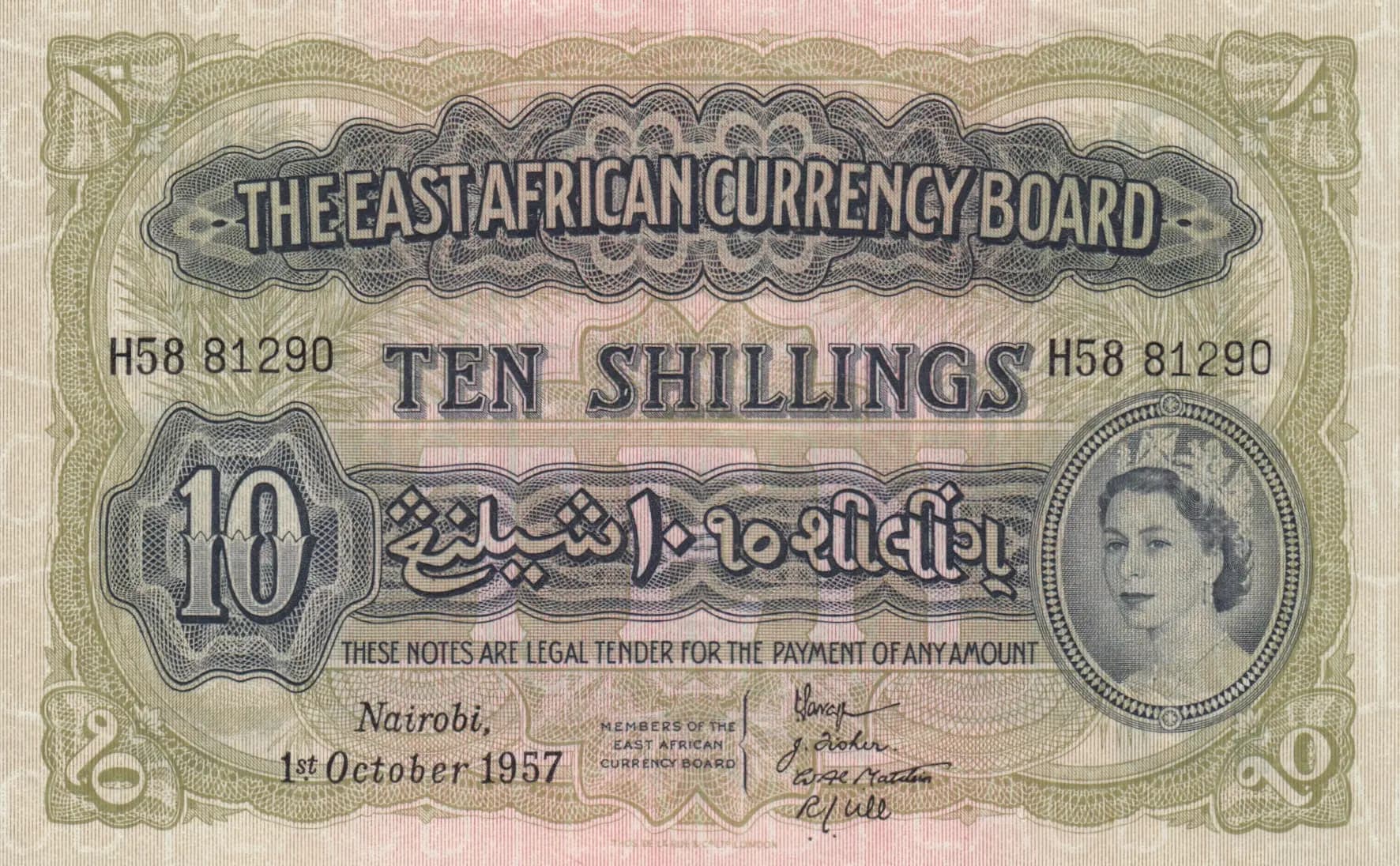
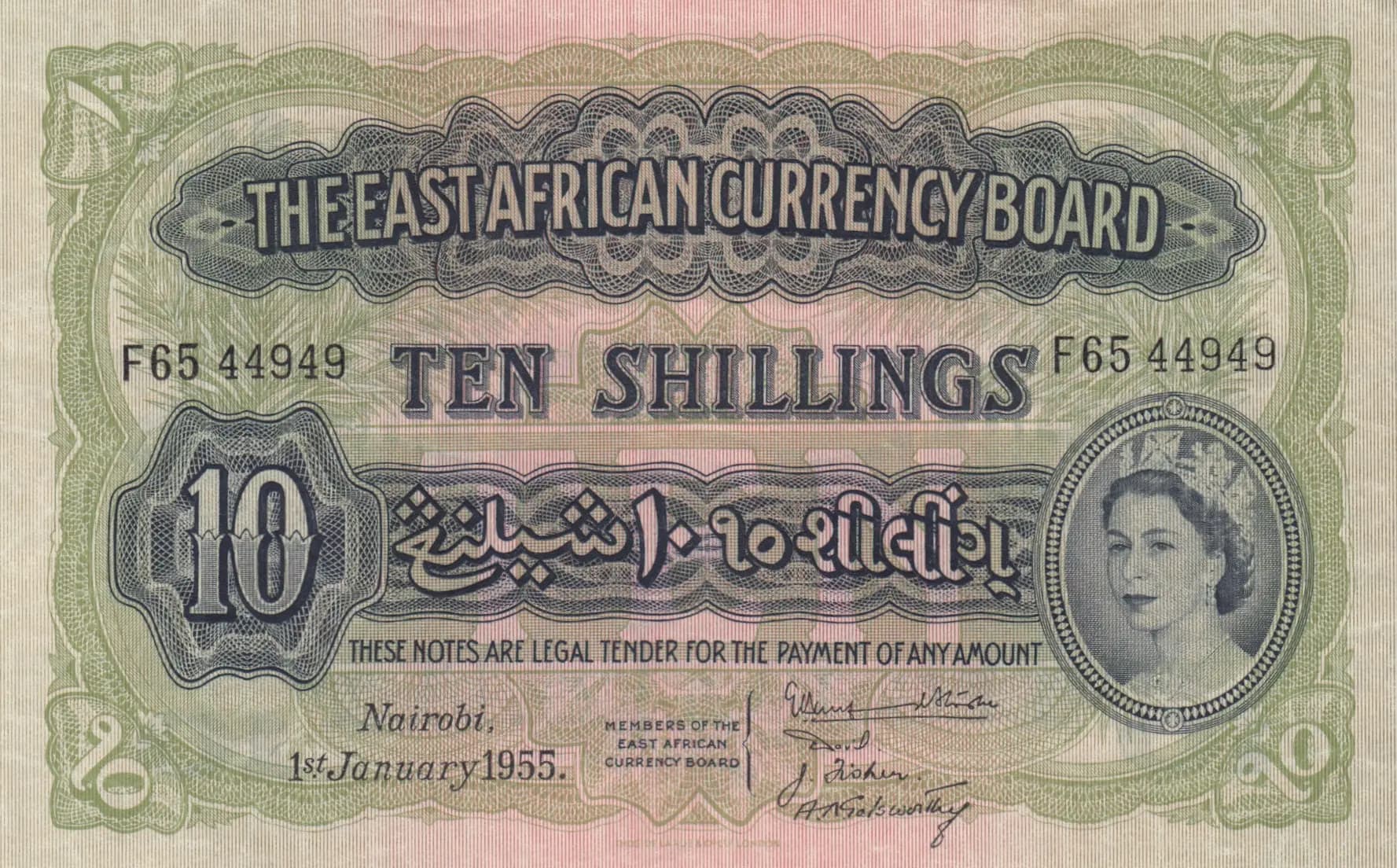
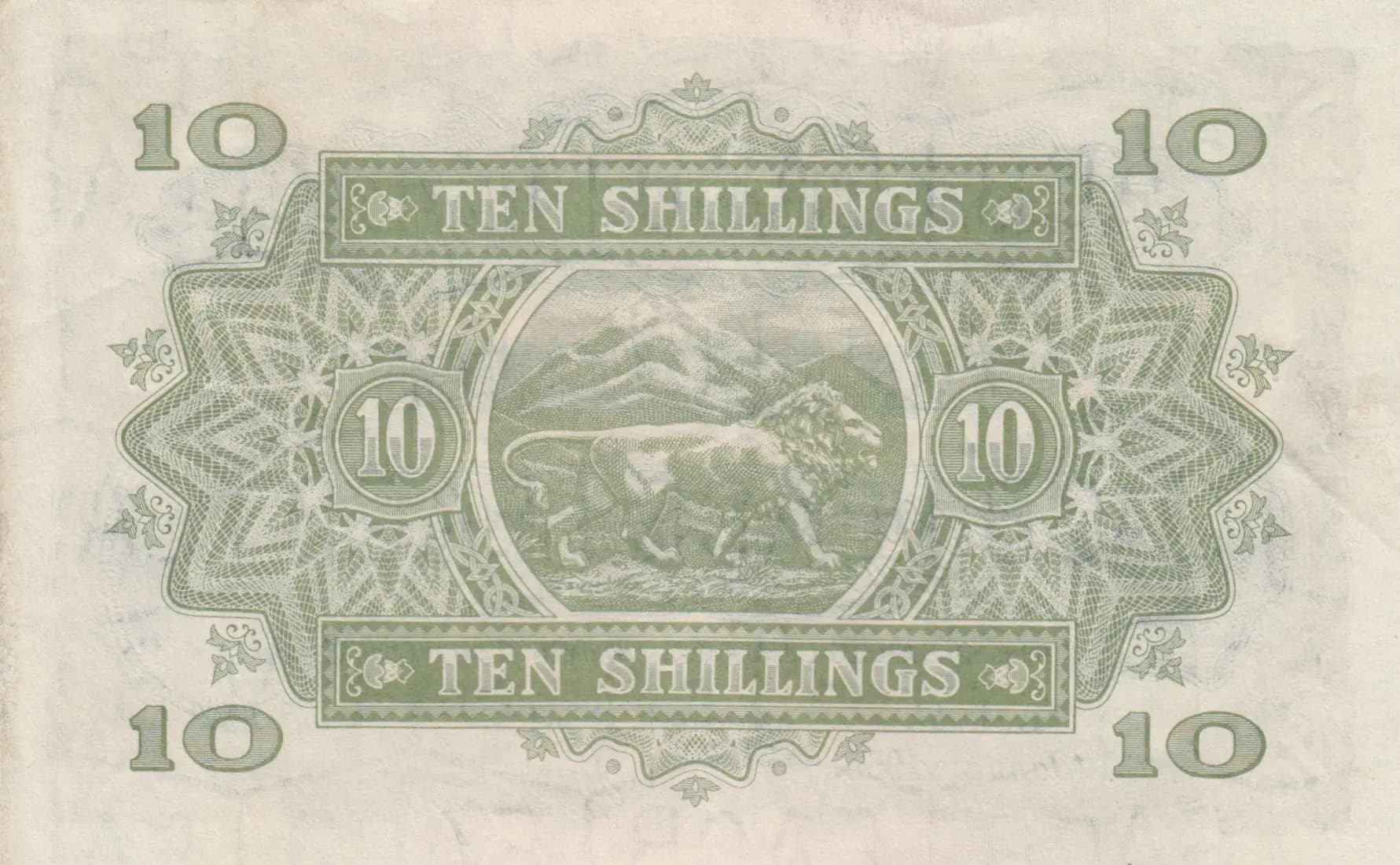
This is an East African Currency Board 10 Shillings note from 1955, printed by Thomas de la Rue in London and issued during the final years of the Currency Board's operation. The note displays the characteristic blue-black portrait of Queen Elizabeth II on the obverse with green and pink underprinting, while the reverse features a striking lion in a mountainous landscape. In VF condition, the note shows expected age-related patina with visible fold lines and foxing, yet retains sharp print clarity and strong color definition—a desirable example of this Commonwealth colonial currency.
Common. Market evidence strongly supports this assessment: eBay sales data shows multiple examples trading in the $37–$117 range across all grades (F to VF), with catalog values placing VF examples at $175 and UNC at $850. These are typical price points for widely circulated British colonial currency from major issuing authorities. The East African Currency Board issued substantial quantities during its 1953–1957 operational window, and 10 Shilling denominations were workhorse circulation notes. No print run limitations, recalls, or scarcity factors are documented for this Pick number.
Issued during 1953–1957 by the East African Currency Board, this note represents the final period of British colonial monetary authority in East Africa before independence movements reshaped the region. The portrait of Queen Elizabeth II (newly crowned in 1953) and the majestic lion imagery symbolized both the British Commonwealth connection and East Africa's natural heritage. The trilingual inscriptions—including Arabic alongside English—reflect the multicultural commercial and administrative reality of East Africa during this transitional period.
The obverse features Queen Elizabeth II in left-facing profile within a circular medallion positioned at the right side of the note, rendered in the formal portrait style typical of Commonwealth currency of the 1950s. The reverse showcases a dramatic vignette of an African lion amid mountainous terrain, positioned centrally within ornate rectangular frames. Both sides employ elaborate decorative borders featuring guilloche patterns, floral corner motifs, and ornamental numerals in decorative circles at all corners. The color scheme combines green and pink/red underprinting on the obverse with predominantly green tones on the reverse, creating a visually distinctive and elegant design characteristic of Thomas de la Rue's high-quality intaglio work.
FRONT SIDE: 'THE EAST AFRICAN CURRENCY BOARD' / 'TEN SHILLINGS' / Serial number: F65 44949 / 'THESE NOTES ARE LEGAL TENDER FOR THE PAYMENT OF ANY AMOUNT' / Location: Nairobi / Date: 1st January 1955 / 'MEMBERS OF THE EAST AFRICAN CURRENCY BOARD' / Denomination: 10 / Arabic: 'اشلنغي' (Shillings). BACK SIDE: 'TEN SHILLINGS' / Denomination: 10
Multi-color intaglio (engraved) printing by Thomas de la Rue, London. The note exhibits fine line engraving throughout with complex guilloche security patterns, characteristic of the British security printer's premium work. The multiple color printing technique—combining blue-black, green, pink, and cream tones—was achieved through successive intaglio passes, a labor-intensive but highly secure method standard for colonial currency of the period.
The observed example is dated 1st January 1955 and located in Nairobi, with serial number F65 44949. The 'F' prefix appears consistent with PMG's catalogued variant. The note falls within the broader 1953–1957 issue range, with documented signature varieties across the series. No specific overprints or unusual variants are evident in this specimen, making it a standard regular-issue example of the denomination.