10 shillings 1956
Market Prices
5 salesAbout This Note
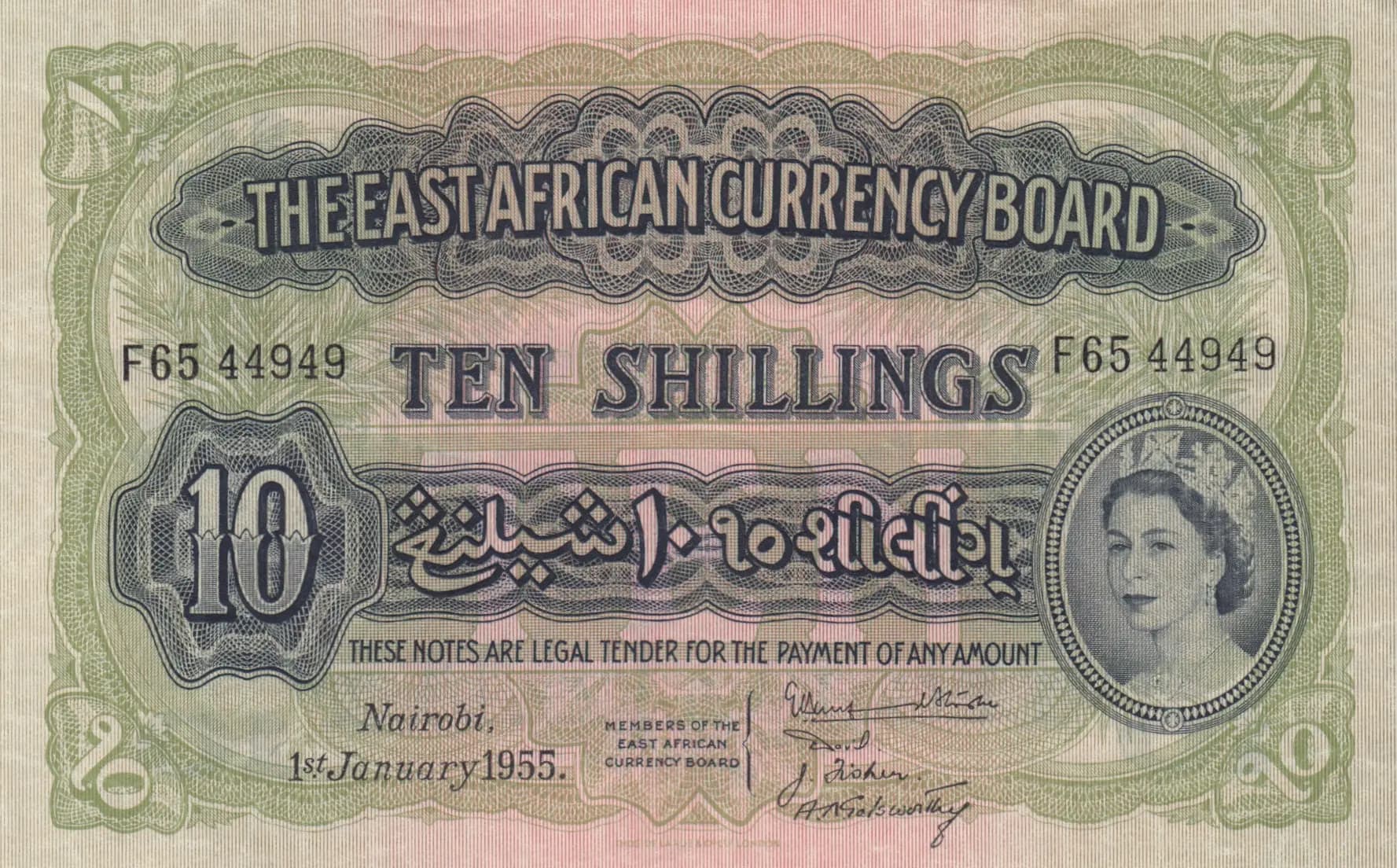
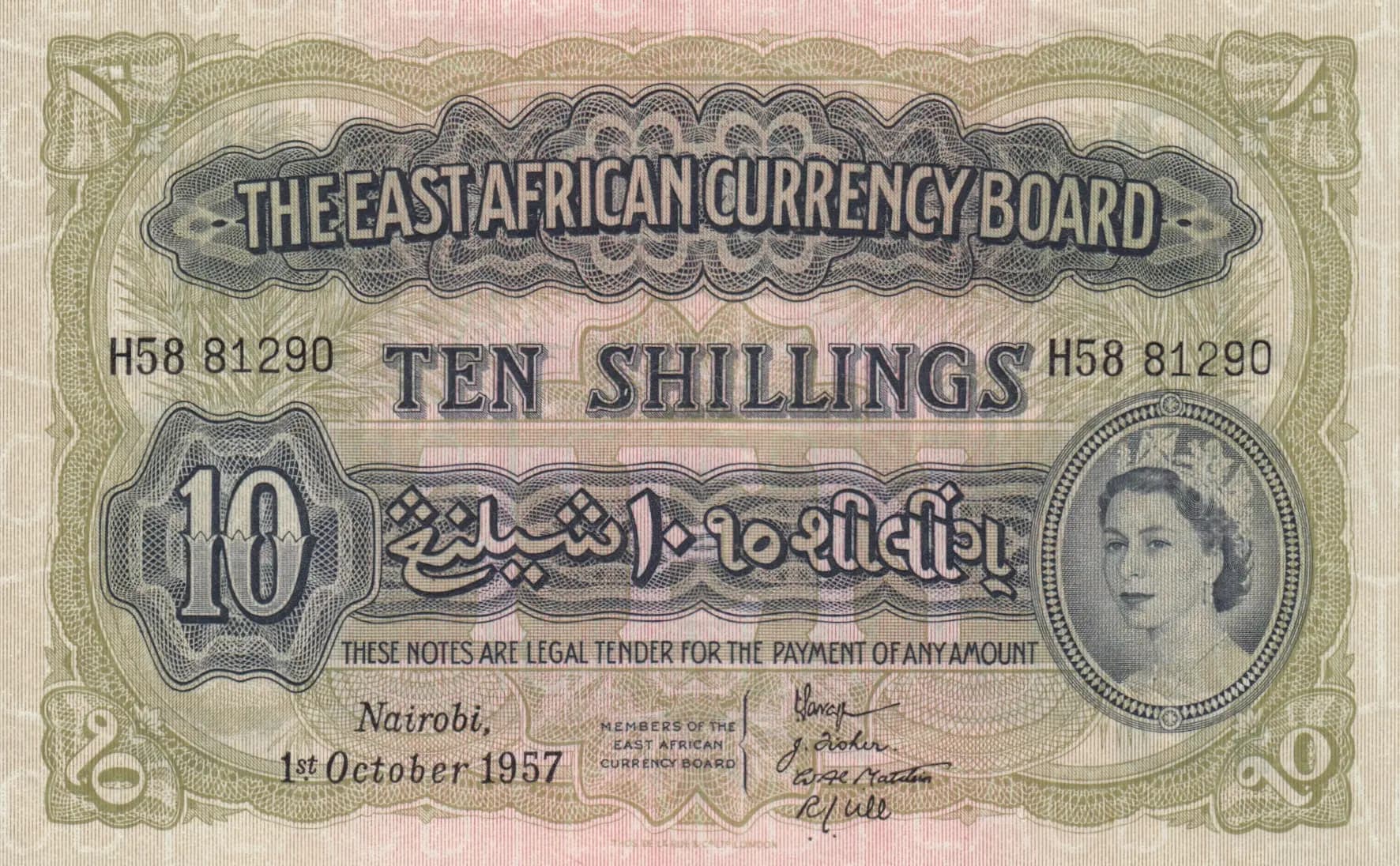
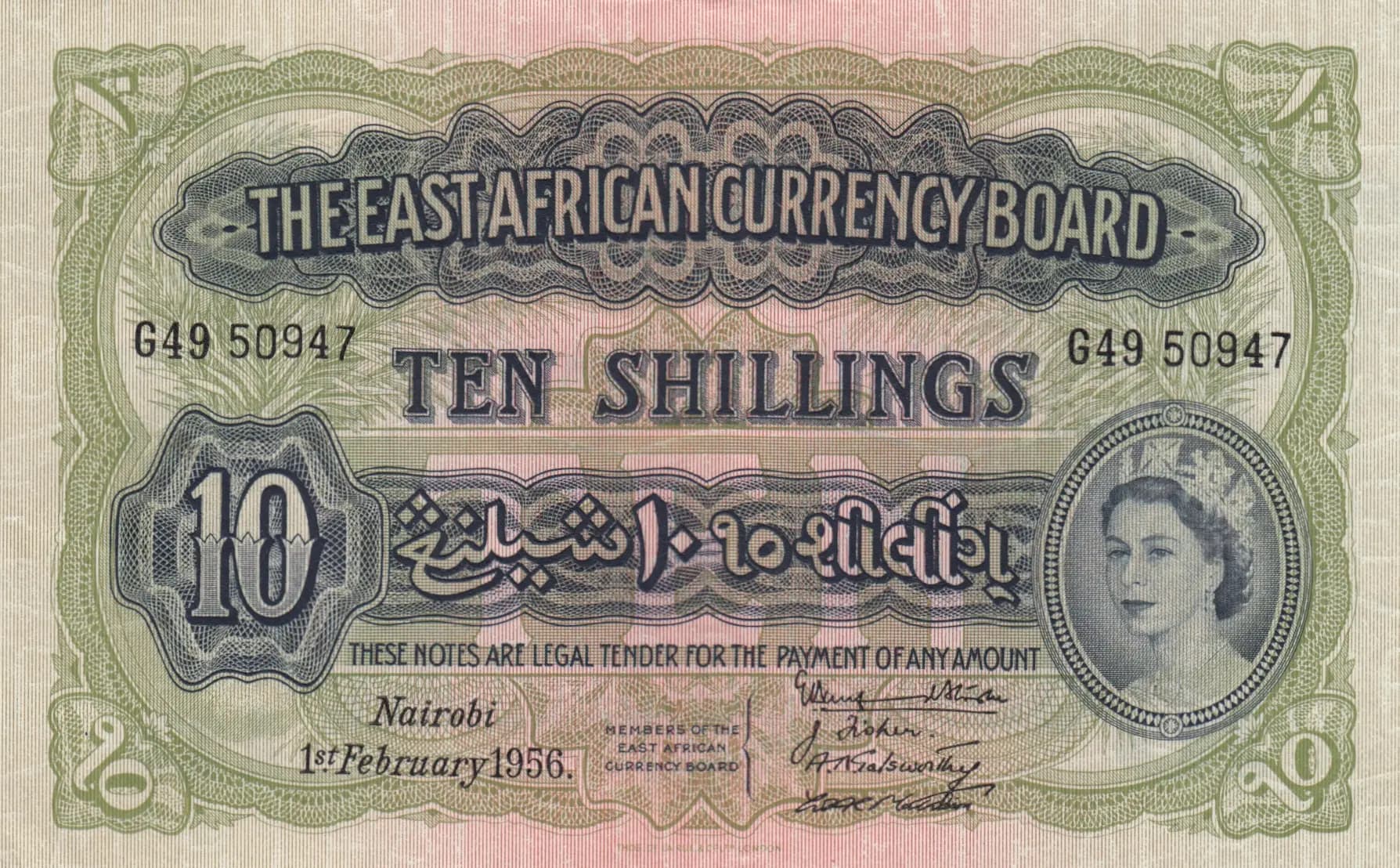
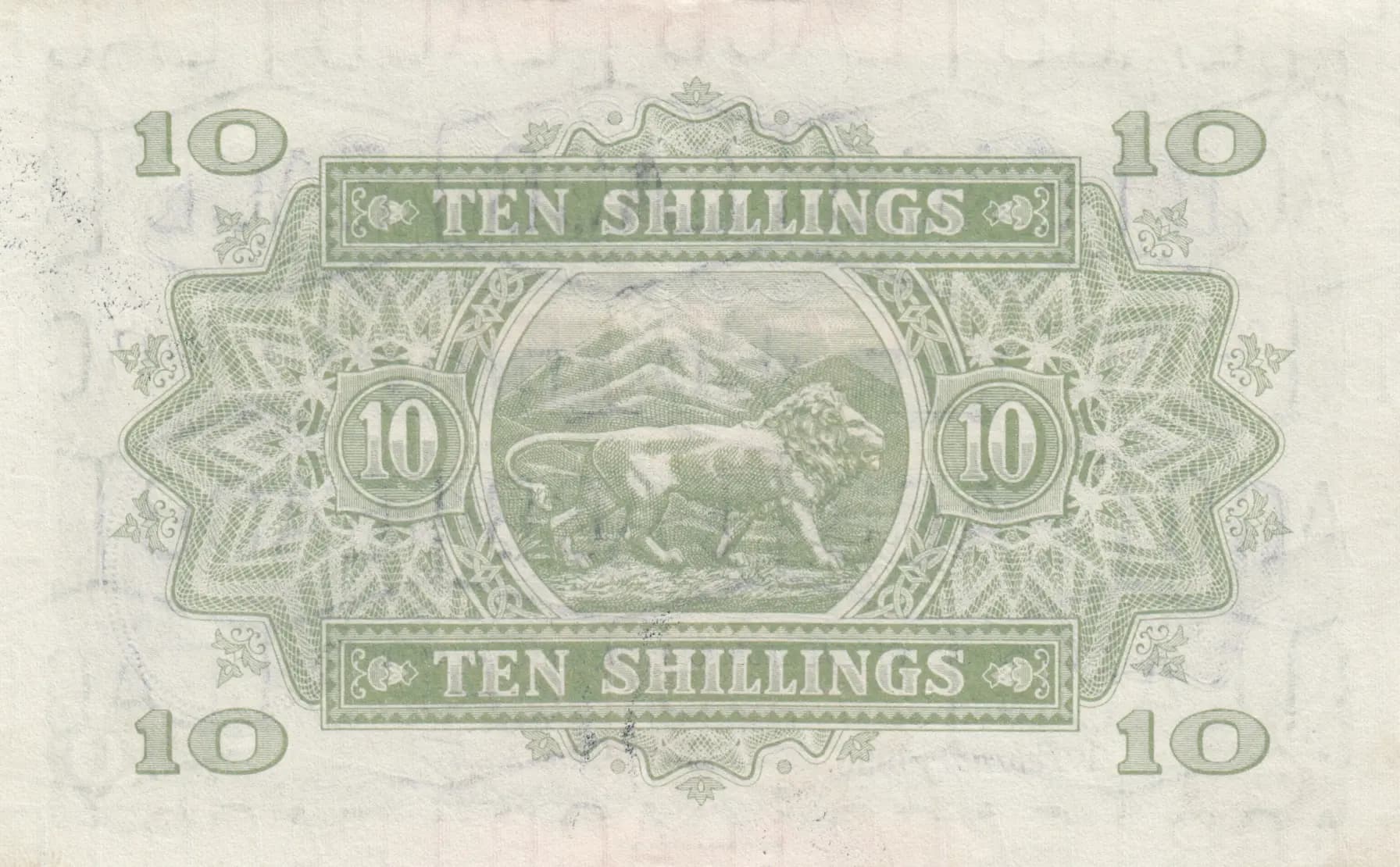
An excellent example of the East African Currency Board's 1956 ten shilling note, printed by Thomas de la Rue in their characteristic blue-black, green, and pink color scheme. The obverse features a fine portrait of Queen Elizabeth II in an ornate oval frame, while the reverse showcases a detailed engraving of a Cape buffalo in naturalistic East African landscape. In AU condition, this note displays crisp printing, vibrant colors, and minimal wear, representing a well-preserved specimen from the early independence era of East Africa.
Common. While the East African Currency Board ceased operations in the early 1960s, the 1953–1957 series (Pick P-34) was produced in substantial quantities for circulation across Kenya, Uganda, and Tanganyika. eBay transaction history shows consistent availability with examples in various grades, with prices ranging from $37–$175 for F to VF grades, and catalogue values reflecting common market status. AU specimens command modest premiums but remain readily obtainable for collectors.
Issued during the twilight years of British colonial administration in East Africa, this 1956 note represents the transition period before the region's territories gained independence. The bilingual design (English and Arabic script) reflects the cosmopolitan character of East Africa, particularly the Swahili-speaking regions and the presence of Arab trading communities. The Queen Elizabeth II portrait underscores the Commonwealth currency union that bound East Africa's currency board until the early 1960s, when individual nations established their own central banks.
The obverse presents Queen Elizabeth II in profile, facing right within a circular ornate frame, positioned on the right side of the note. The surrounding design features elaborate decorative borders in green and pink with scalloped elements and geometric corner ornaments typical of British currency board notes. The reverse depicts a Cape buffalo (Syncerus caffer) as the central vignette, rendered in fine naturalistic detail and set within a stylized East African landscape with mountainous terrain visible in the background. The composition employs symmetrical ornamental frames and guilloche patterns characteristic of De la Rue's security printing of the mid-20th century. The bilateral text (English and Arabic) emphasizes the note's circulation across East Africa's diverse populations.
Front side — English inscriptions: 'THE EAST AFRICAN CURRENCY BOARD', 'TEN SHILLINGS', 'THESE NOTES ARE LEGAL TENDER FOR THE PAYMENT OF ANY AMOUNT', 'MEMBERS OF THE EAST AFRICAN CURRENCY BOARD', 'Nairobi', '1st February 1956'. Arabic inscription: 'عشرة شلنات' (Ashara Shillinaat) = 'Ten Shillings'. Serial number: G49 50947 (appears twice, top left and right). Reverse side — English inscriptions: 'TEN SHILLINGS' (top and bottom), Denomination '10' (appears in all four corners).
Intaglio engraving (line engraving) by Thomas de la Rue & Company, London, utilizing fine-line cross-hatching and elaborate guilloche patterns for anti-counterfeiting purposes. The note demonstrates multicolor offset printing with separate color passes for green, pink, and black inks on a cream-colored security paper base. The fine detail work, intricate border designs, and the complex animal vignette are characteristic of mid-20th century British currency board security printing standards.
This note (G49 50947) represents the standard 1956 date variant issued 1st February 1956 from Nairobi. The prefix 'G49' indicates the serial number series. Signature varieties exist on this Pick number but require comparison with PMG population records; the visual analysis does not provide sufficient signature detail to distinguish among known varieties. The note appears to be a regular issue variant without overprints or emergency modifications.