10 shillings 1950
Market Prices
13 salesAbout This Note
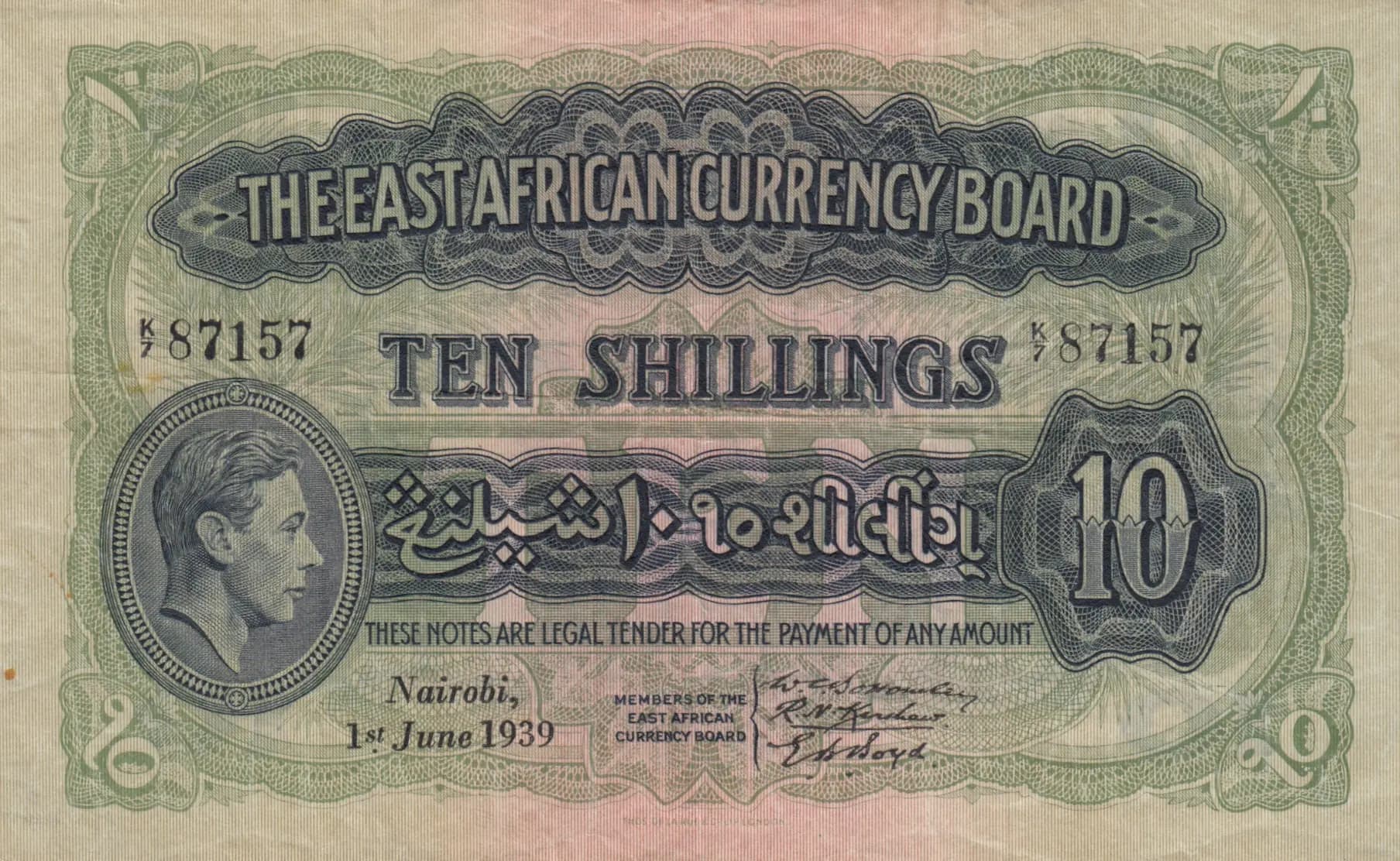
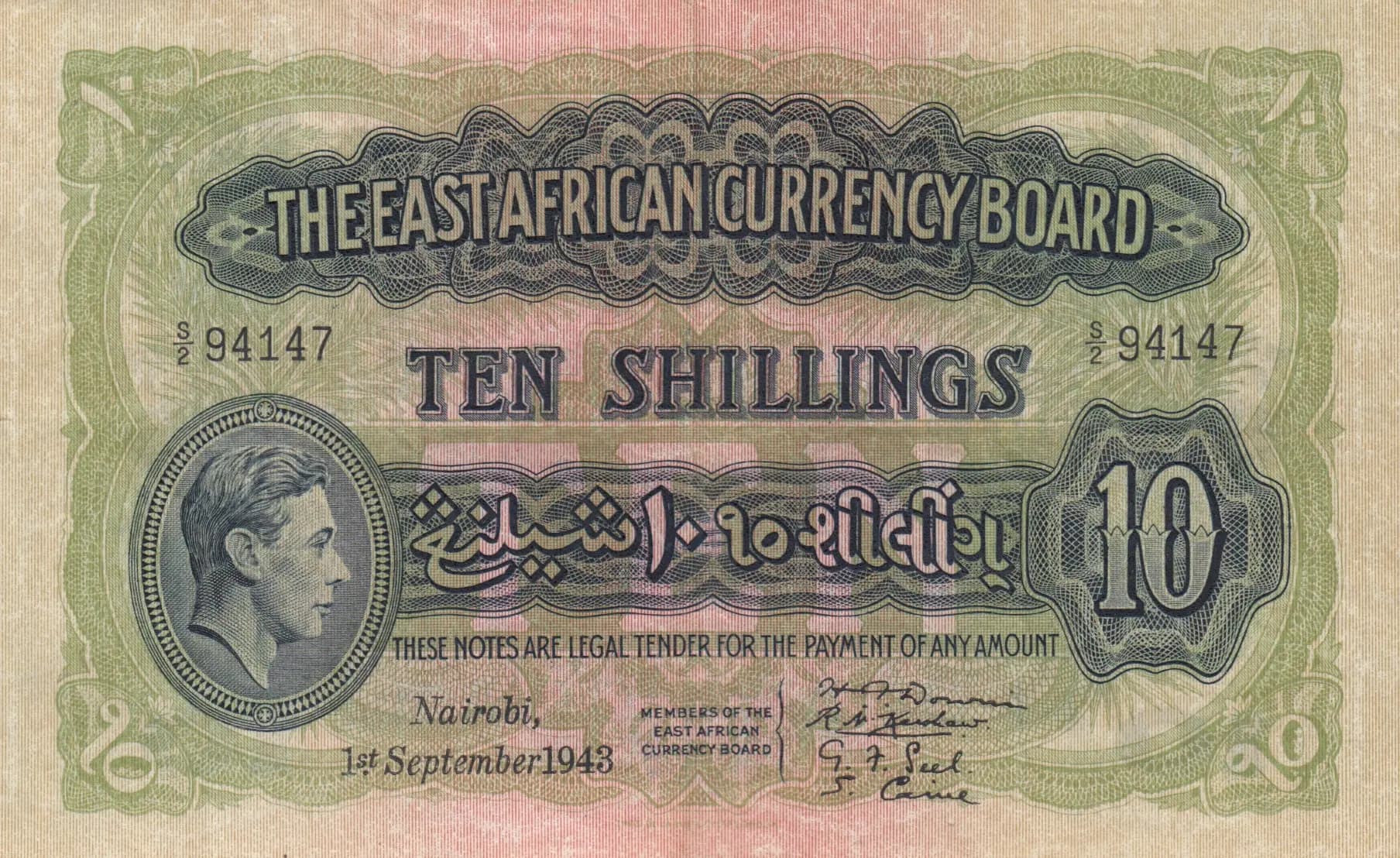
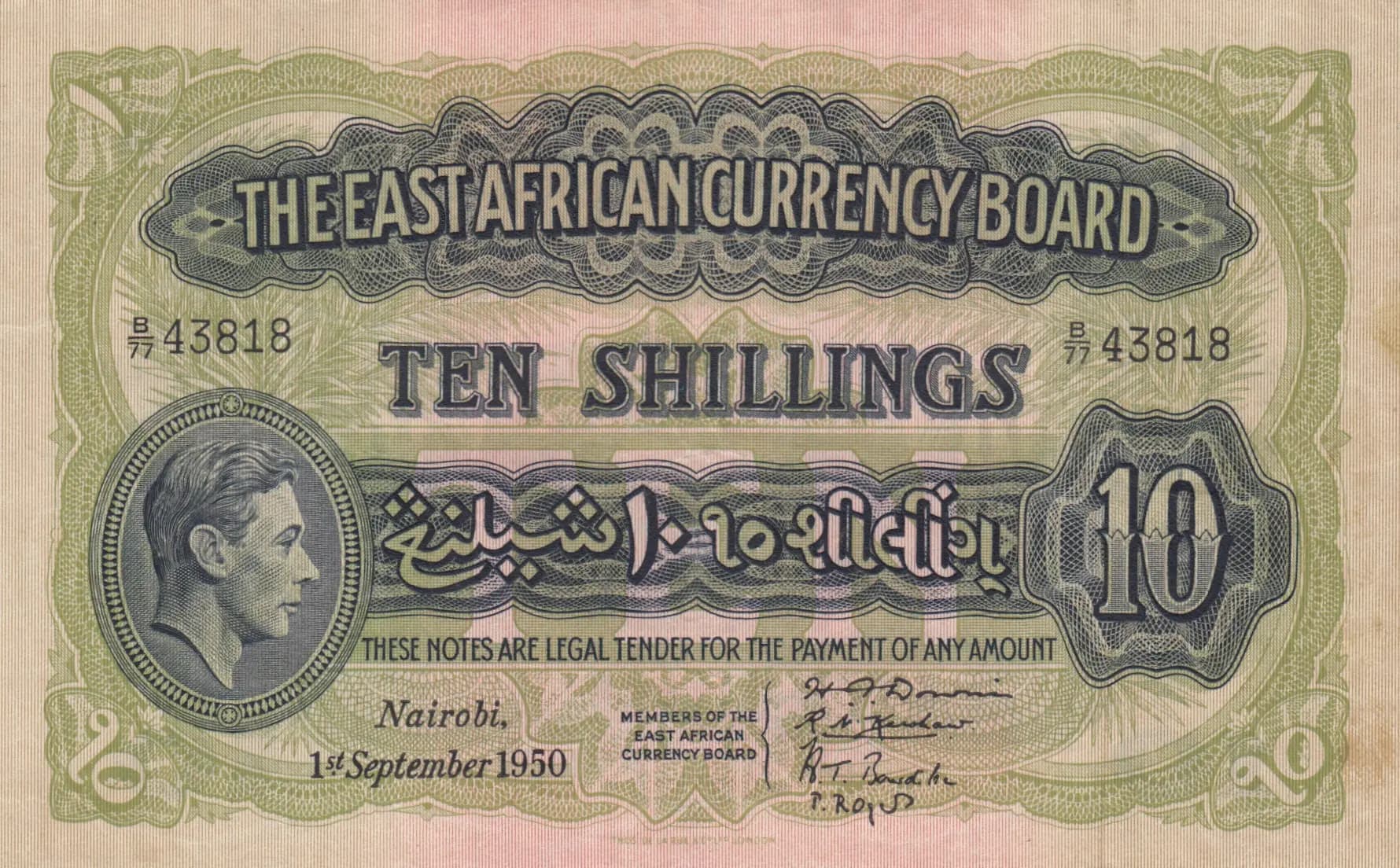
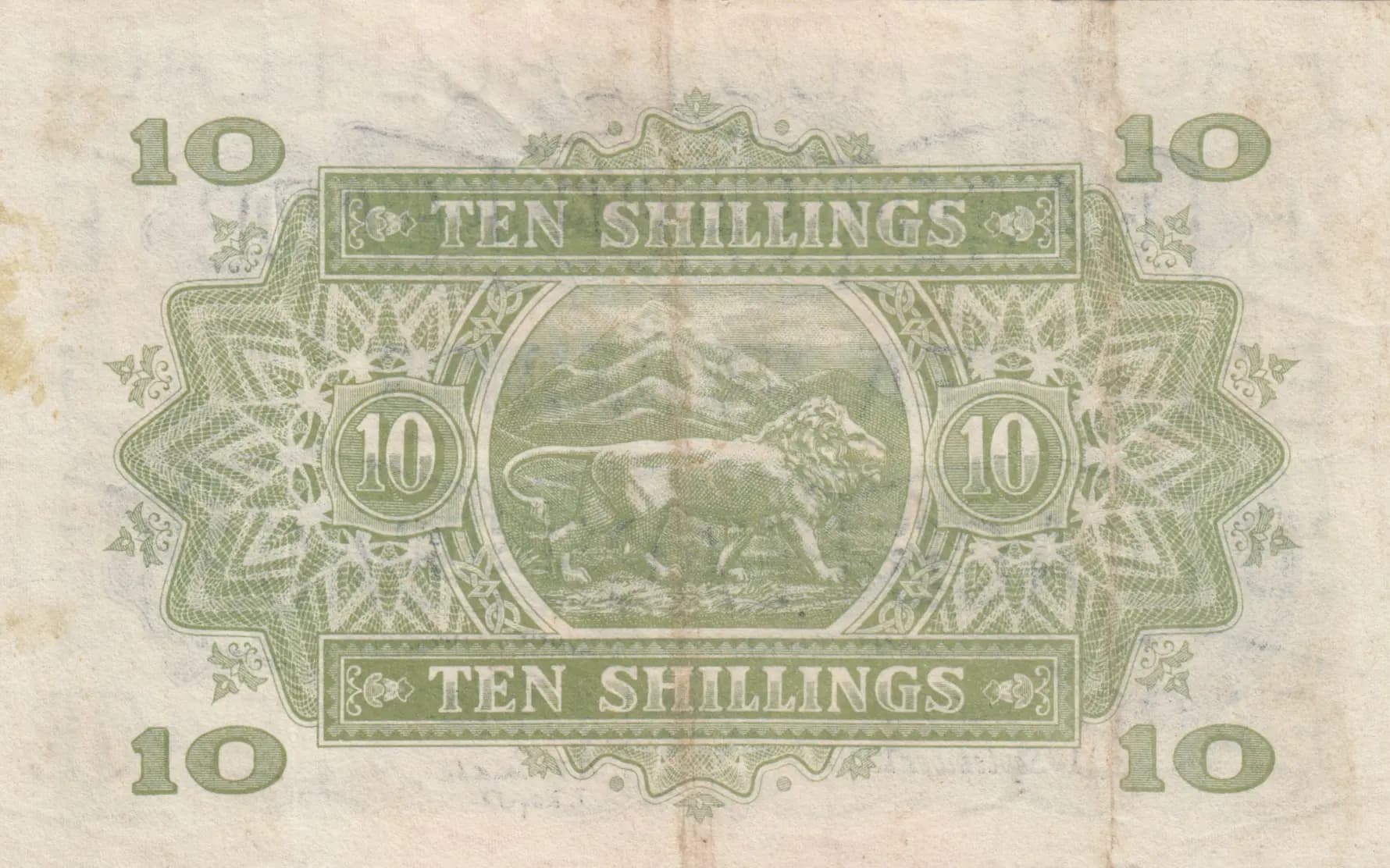
This East African Currency Board 10 Shillings note from 1st September 1950 presents an excellent example of mid-20th century colonial East African currency design. The obverse features a portrait of King George VI in profile within an ornate circular medallion, rendered in green, gold, and pink tones with bilingual English/Arabic inscriptions. The reverse displays a detailed engraved vignette of a lion in landscape setting, characteristic of the board's wildlife-themed denominations. The note exhibits light age-appropriate toning and foxing consistent with VF condition, with no major tears or creases, and remains an attractive collector example of this important series.
Common. The eBay sales data shows consistent trading activity with VF examples selling in the $47–$78 range over multiple decades, indicating stable but not elevated collector demand. The catalog value for VF is listed at $60, and the note saw regular circulation in East African territories. As a regular issue from the 1943–1952 production period with substantial print runs across the East African Currency Board member territories, this denomination and date combination remains readily available to collectors. The VF condition grade and standard Pick number designation (P-29b without special markings or overprints) further support common classification.
Issued by the East African Currency Board during the final years of British colonial administration in East Africa, this note represents a transitional period in the region's monetary history. The prominence of King George VI's portrait reflects the political authority of the British Crown over the East African territories (Kenya, Uganda, and Tanganyika), while the inclusion of Arabic script acknowledges the significant Muslim and Arab trading communities throughout the region. The lion imagery on the reverse symbolizes the wildlife heritage and natural resources of East Africa, common iconography in colonial currency designs meant to convey the territories' exotic character to international markets.
The obverse features a formal profile portrait of King George VI positioned in a circular medallion frame on the left side, rendered in classical intaglio style. The portrait is surrounded by elaborate decorative borders featuring ornamental leaf and floral engravings in gold and green tones against a pink underprint. The reverse displays a central vignette of an African lion in a naturalistic landscape setting with mountainous or hilly terrain, conveying the wildlife identity of the East African region. Both sides employ symmetrical design with shield-shaped denomination markers '10' positioned in the corners. The overall aesthetic reflects the high-quality engraving standards typical of Thomas de la Rue's work for colonial currency, with intricate border work and multiple decorative frames throughout.
FRONT SIDE: 'THE EAST AFRICAN CURRENCY BOARD' / 'TEN SHILLINGS' / 'عشرة شلن' (Arabic: Ten Shillings) / 'THESE NOTES ARE LEGAL TENDER FOR THE PAYMENT OF ANY AMOUNT' / 'Nairobi' / '1st September 1950' / 'MEMBERS OF THE EAST AFRICAN CURRENCY BOARD' / Serial number 'B 43818' / Denomination markers '10'. BACK SIDE: 'TEN SHILLINGS' / Denomination markers '10' in all four corners. All inscriptions are bilingual in English and Arabic script, reflecting the multilingual and multicultural composition of East African territories.
Intaglio (recess/engraved) printing on cotton-fiber banknote paper, executed by Thomas de la Rue, London—the premier security printer for British colonial and Commonwealth currencies. The fine line work visible throughout the note, the depth and detail of the lion vignette, the portrait medallion, and the complex decorative borders are all characteristic of intaglio process. Multiple passes and color layers (green, pink, gold) indicate sophisticated multi-color intaglio production. Security features include the complexity of the engraved patterns, bilingual inscriptions, and the fine detail work that would be difficult to counterfeit with period technology.
This note is catalogued as Pick P-29b, identified as the 1950 printing variant issued from Nairobi. The Pick catalog notes three variants for the 10 Shillings base: P-29a (1943 issue), P-29b (1950 issue, this note), and P-29s (specimen). The visual analysis confirms this as P-29b through the 1st September 1950 date. Serial number prefix 'B' and the specific date are consistent with the P-29b variety. Four signature lines are visible, indicating a four-signature variant typical of board notes from this period. No overprints or special designations are apparent, confirming this as a standard circulation note of the P-29b variety.