10 shillings 1939
Market Prices
5 salesAbout This Note
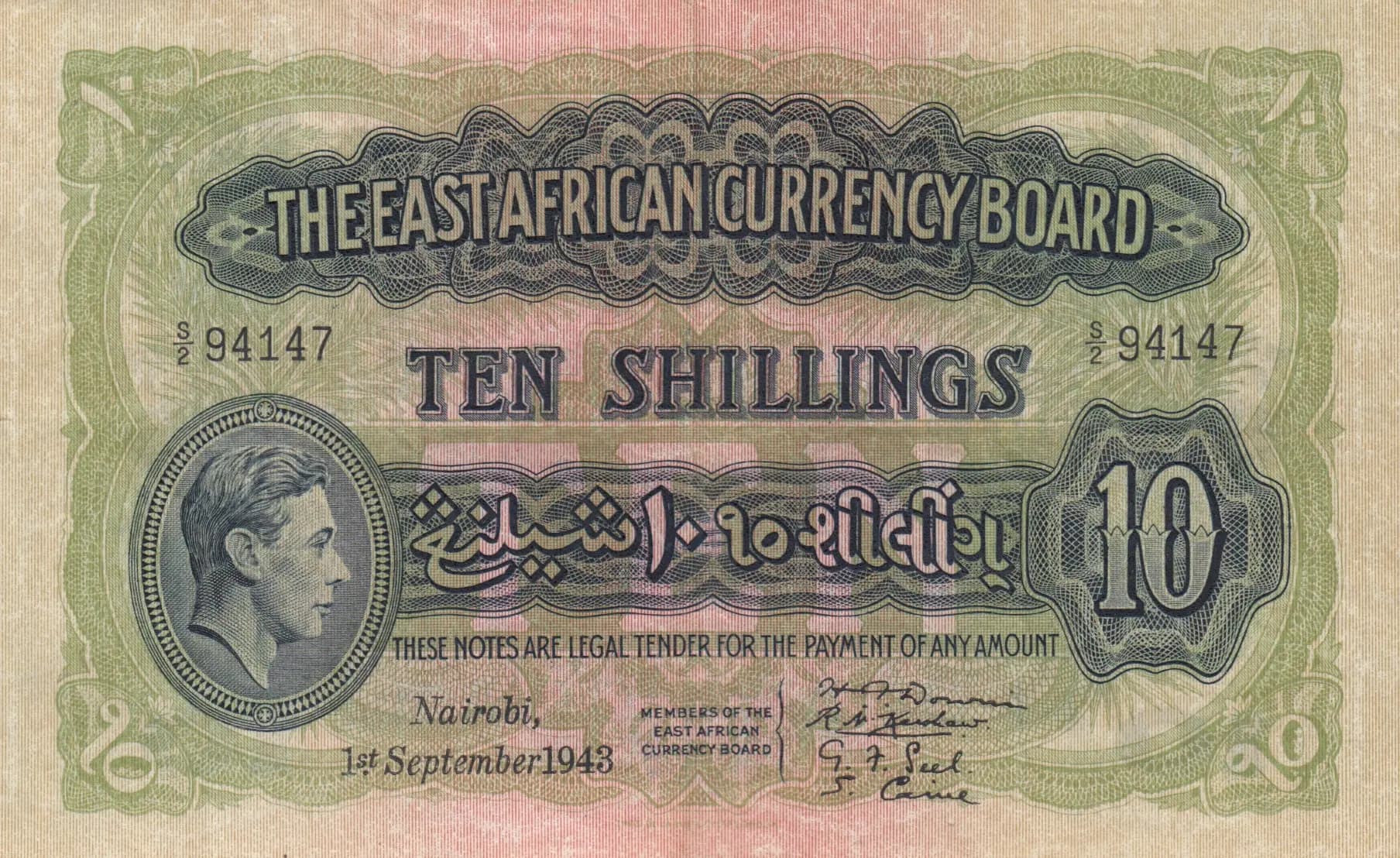
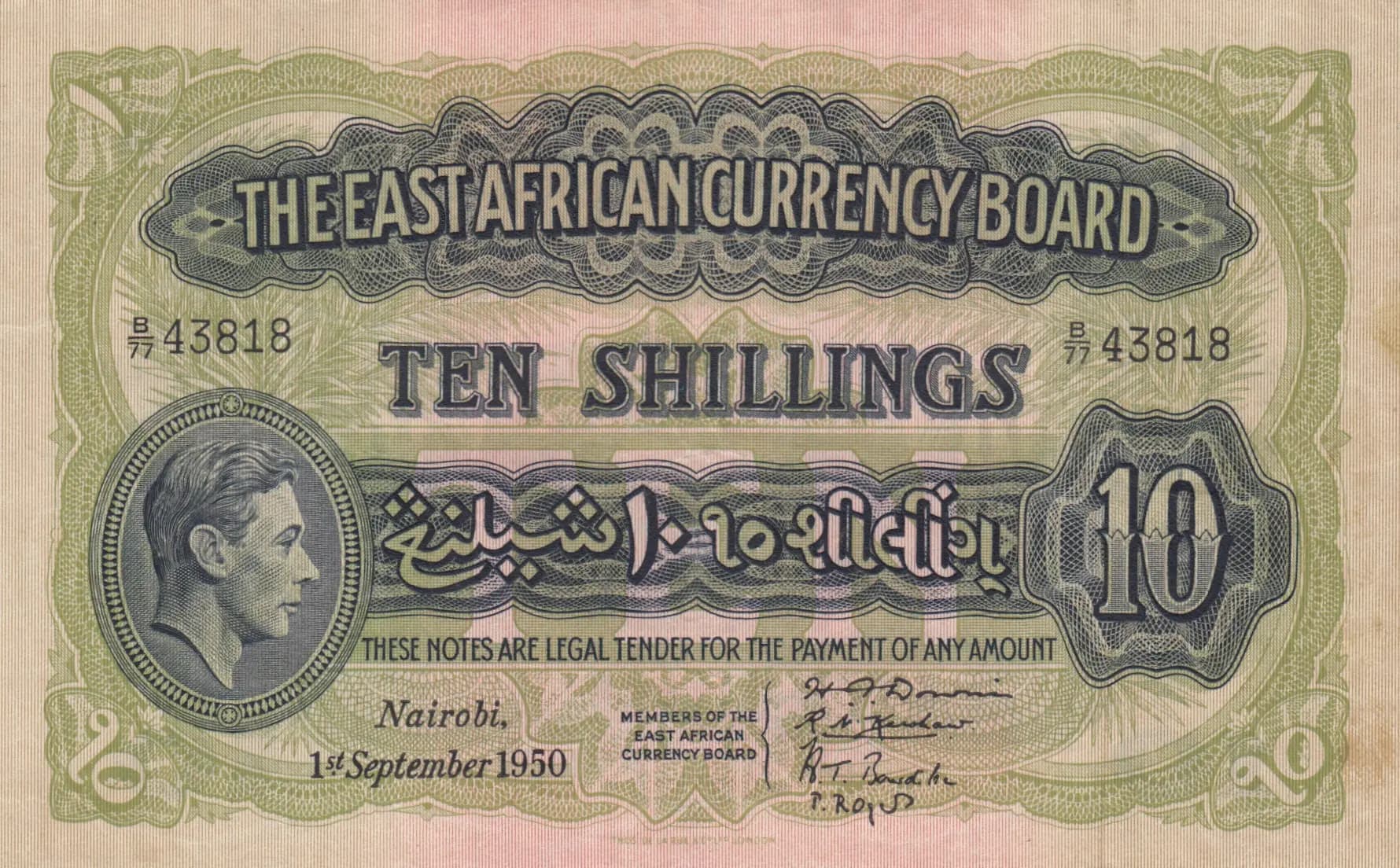
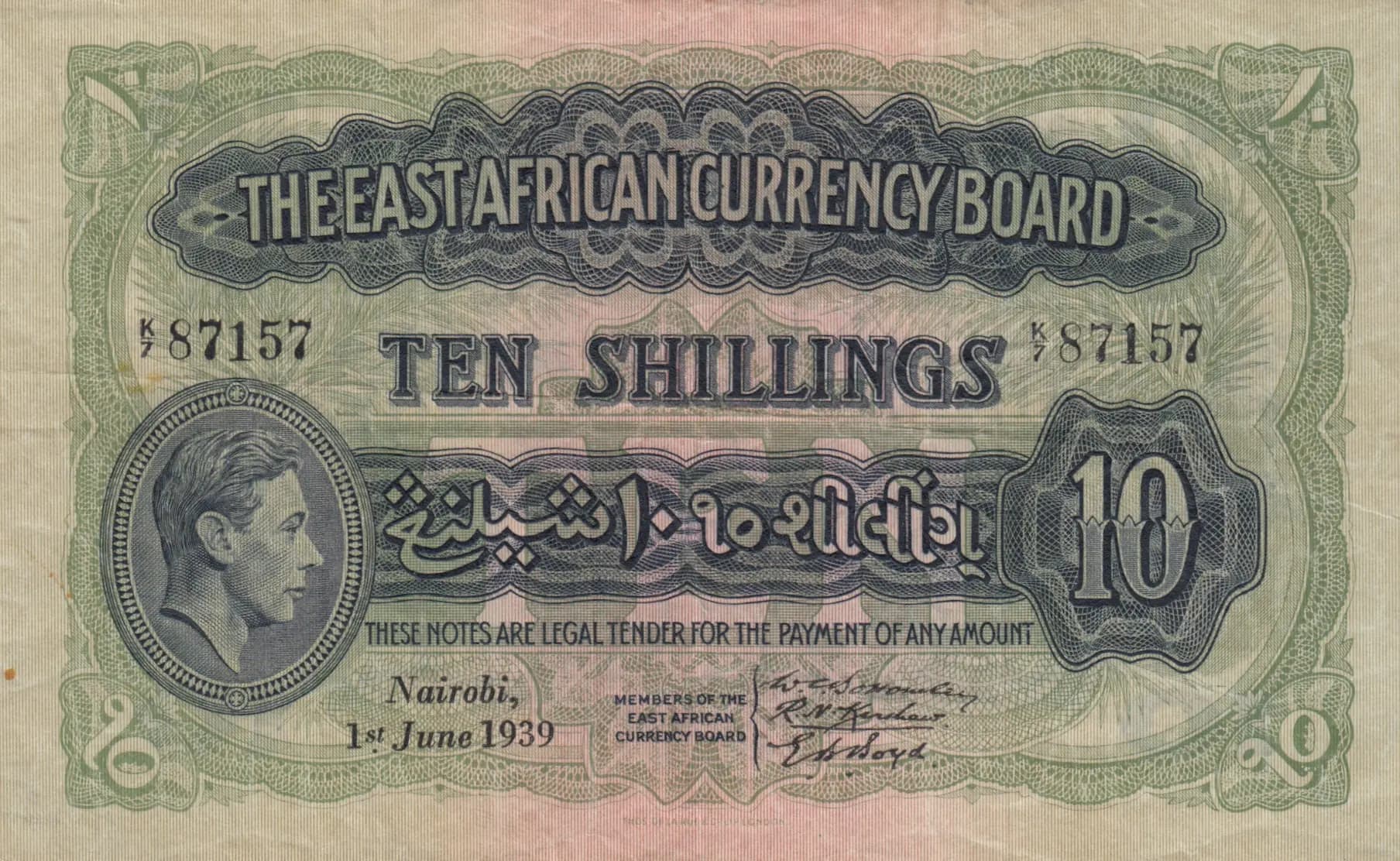
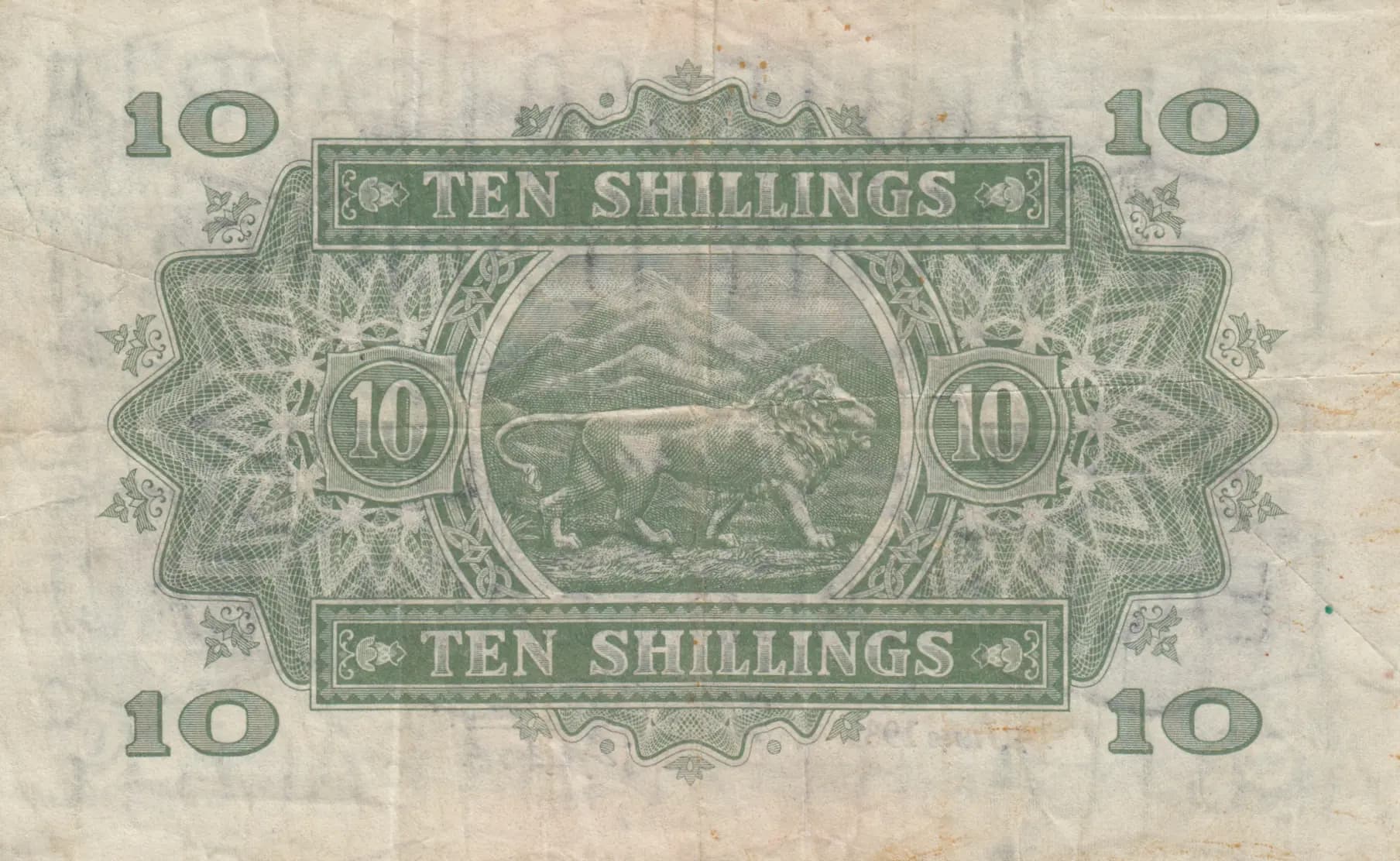
This East African Currency Board 10 shillings note dated 1st June 1939 presents an excellent example of colonial-era East African currency with distinctive bilingual (English/Arabic) design elements. The note exhibits F (Fine) condition with visible foxing, creasing, and age-related discoloration consistent with circulation, yet retains clear legibility of all inscriptions and the portrait of King George VI. The ornate geometric borders, intricate line engraving, and central lion vignette on the reverse demonstrate the sophisticated security printing standards of Thomas de la Rue, making this a desirable example for collectors of East African or colonial currency.
Common. eBay market data demonstrates consistent sales in the $69-80 range for F-grade examples over multiple transactions spanning 2013-2018, with catalogue values for F grade around $69-75. The East African Currency Board issued these notes in substantial quantities across the 1938-1952 period, and this Pick number (P-29a) represents a standard regular issue without special characteristics that would restrict supply. The relatively modest pricing and frequent sales activity indicate this is a readily available note in the collector market.
Issued during the final years before World War II, this note represents the African Currency Board's monetary authority over East Africa during the British colonial period. The bilingual Arabic/English inscriptions reflect the cosmopolitan trade routes and multi-ethnic populations of East Africa, particularly the significant Arab and Indian merchant communities in ports like Mombasa and Dar es Salaam. The portrait of King George VI and the lion symbol underscore British imperial sovereignty while the Nairobi date location marks the administrative center of the colonial East African territory.
The obverse features King George VI in profile, depicted within a circular medallion on the left side, rendered in classical numismatic portrait style typical of Commonwealth currency of the 1930s-40s. The reverse depicts a lion in its natural African habitat with acacia tree vegetation, serving as a heraldic symbol representing British imperial authority and the East African territories. The design employs ornate scalloped borders with intricate geometric and floral patterns, decorative corner cartouches, and line-engraved security work throughout. The bilingual inscriptions in English and Arabic script reflect the multicultural context of East African colonial administration. The color scheme of green, pink/rose, and black on white paper creates a distinctive colonial aesthetic characteristic of African Currency Board issues.
FRONT SIDE: 'THE EAST AFRICAN CURRENCY BOARD' (English) — The issuing authority; 'TEN SHILLINGS' (English) and 'عشرة شلنات' (Arabic) — Both translations of the denomination; 'THESE NOTES ARE LEGAL TENDER FOR THE PAYMENT OF ANY AMOUNT' (English) — Legal tender declaration; 'Nairobi, 1st June 1939' (English) — Issue location and date; 'MEMBERS OF THE EAST AFRICAN CURRENCY BOARD' (English) — Signature block identifier; Serial number 'K.O.71157' appears twice. BACK SIDE: 'TEN SHILLINGS' (English) — Denomination text appearing in cartouches at top and bottom; '10' (numeral) — Denomination indicators in all four corners.
Intaglio line engraving produced by Thomas de la Rue, London, the premier security printer of the period. The intricate geometric patterns, fine line work, detailed portraiture, and ornate borders are hallmarks of hand-engraved intaglio production. The precision security engraving visible in both the portrait medallion and the reverse lion vignette, combined with the multi-color printing (green and pink/rose underprints with black overprinting), demonstrates sophisticated letterpress and intaglio techniques typical of de la Rue's colonial currency work.
This note is catalogued as Pick P-29a, dated 1st June 1939, and exhibits the standard obverse design with dark blue on green and pink underprint. The serial number K.O.71157 with prefix K.O. is consistent with this variety. PMG population data indicates three variants exist for this base Pick number (P-29a, P-29b, P-29s), with differences likely related to signature varieties or minor design elements. The presence of Thomas de la Rue printer's imprint distinguishes this from the similar P-26B variety referenced in catalog materials. The three-signature format visible on this example is characteristic of the standard Currency Board member authorization block for this issue period.