10 shillings 1943
Market Prices
13 salesAbout This Note
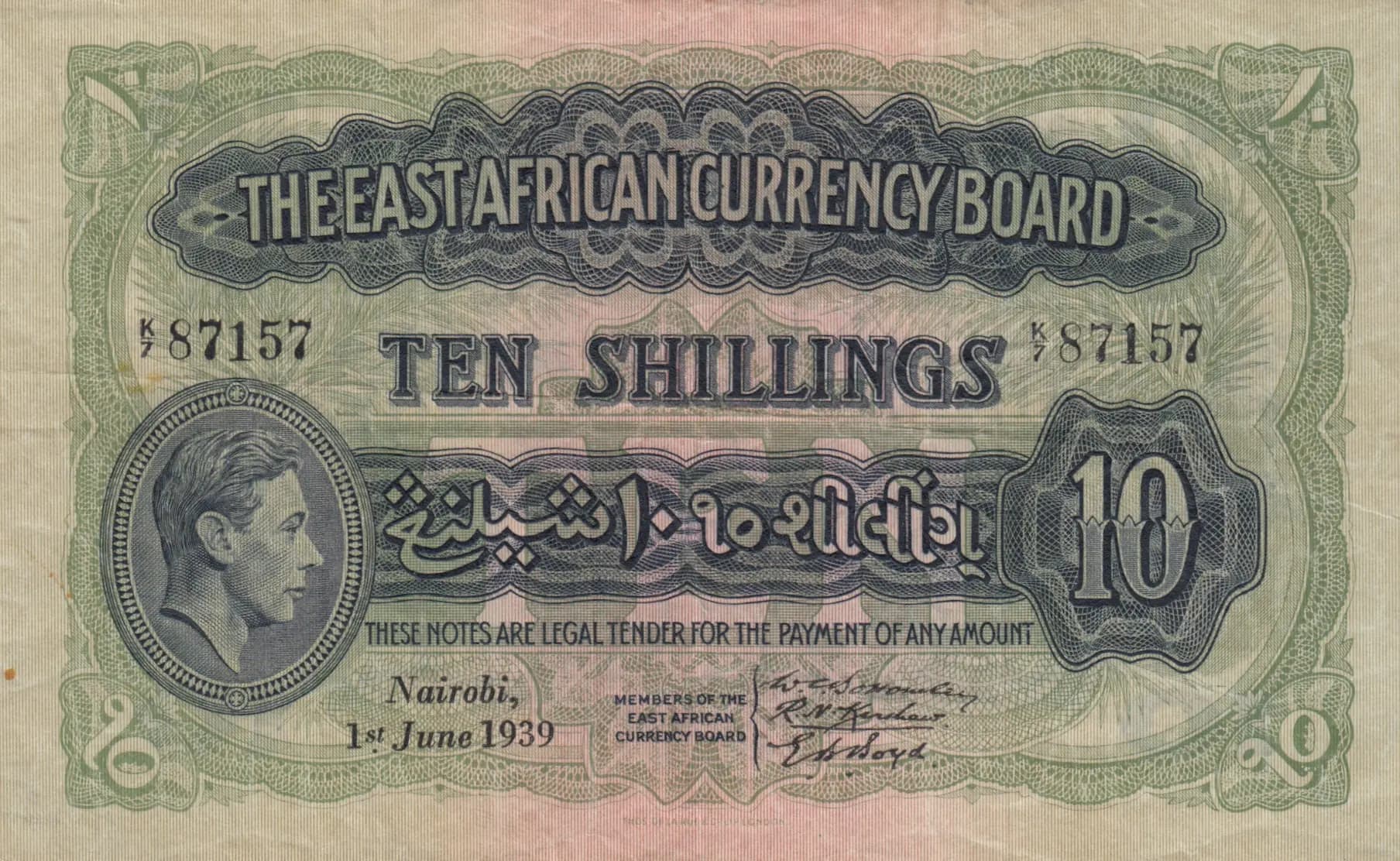
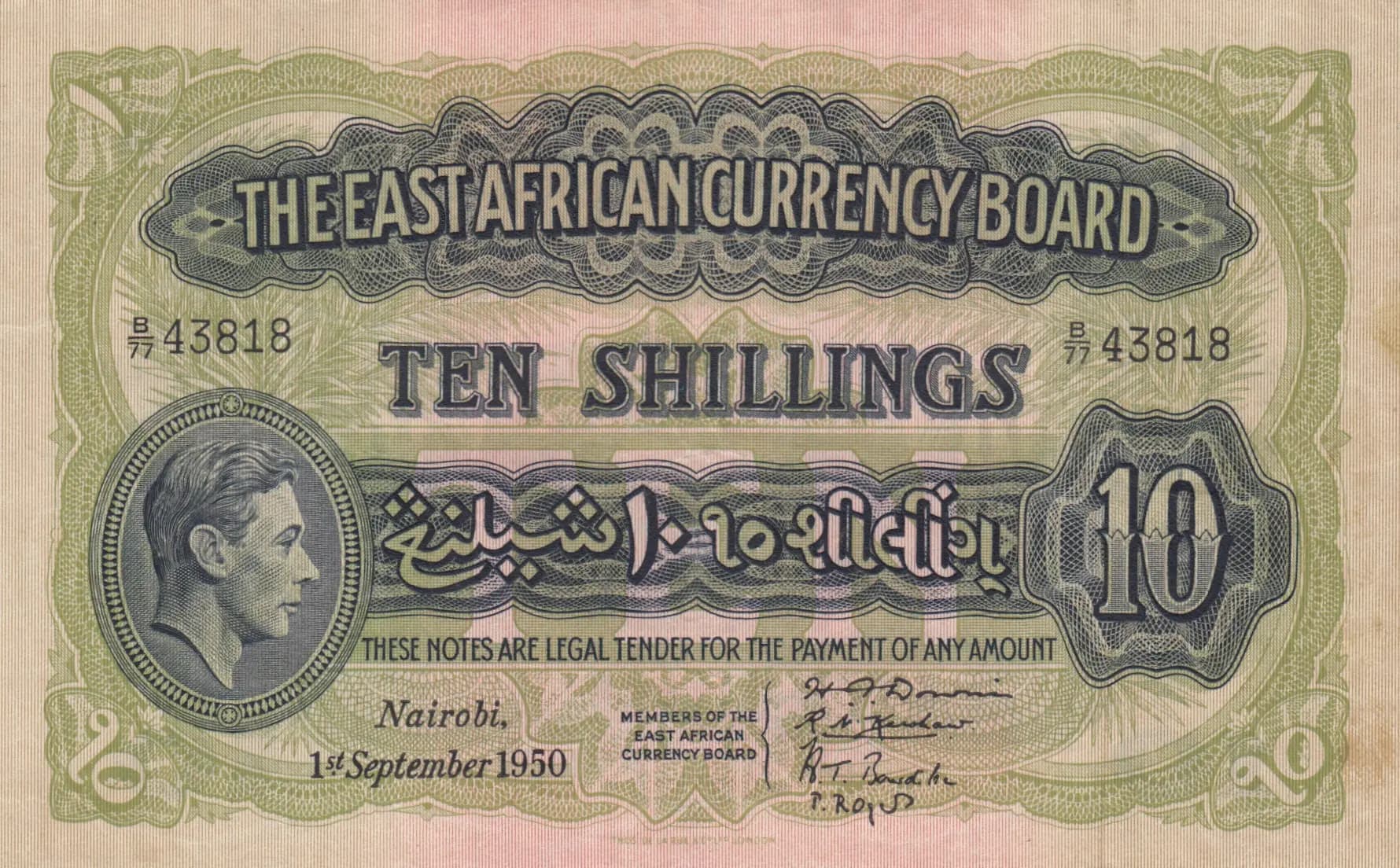
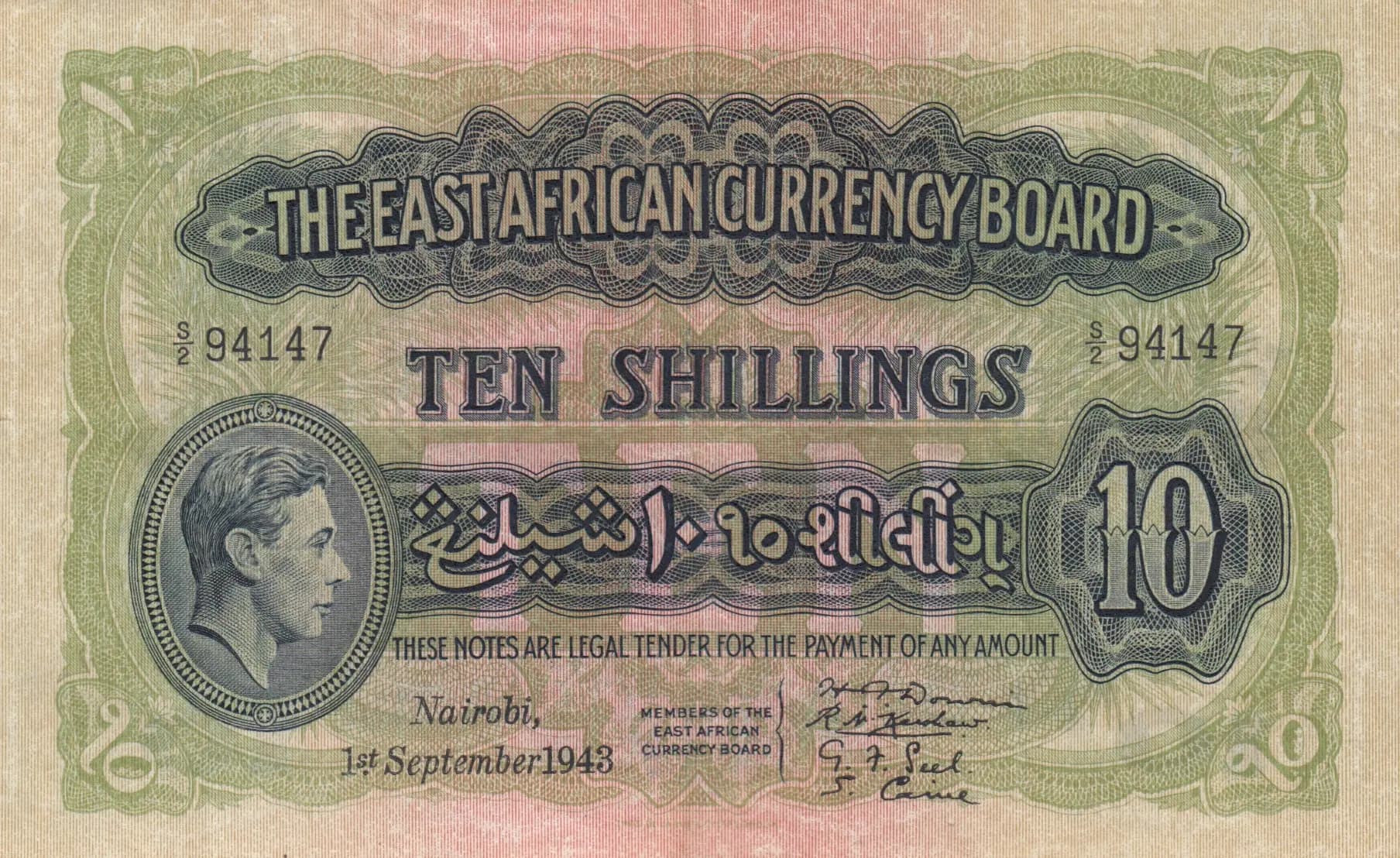
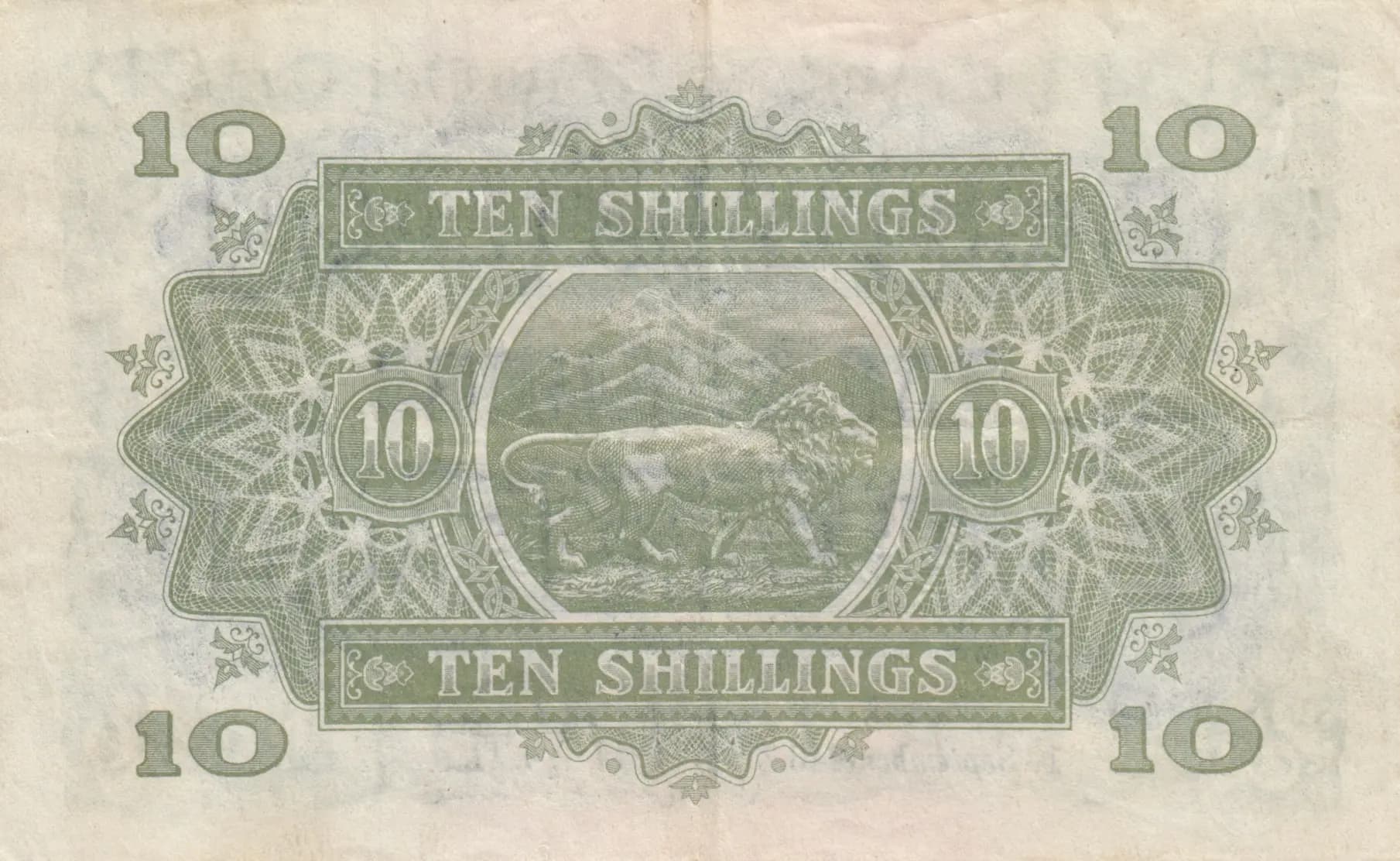
A VF-grade 10 Shillings note from the East African Currency Board dated 1st September 1943, printed by Thomas de la Rue in London. This P-29b variant features a striking portrait of King George VI on the obverse with ornate green and pink underprinting, and a notable reverse depicting an African lion with mountainous landscape. The note exhibits age-appropriate patina and foxing consistent with 80+ year old currency, with strong visual appeal and clear impressions throughout.
Common. eBay market data shows consistent sales in the $47-$78 range for VF specimens (2011-2024), with recent VF examples selling at approximately $51.55 (December 2024). The catalog value for VF grade is listed at $60. The East African Currency Board issued these notes in substantial quantities across the 1938-1952 period, and P-29b represents a standard variant from the peak circulation years. Print runs were large, and surviving examples remain readily available in all grades.
Issued during World War II by the East African Currency Board (established 1919), this note represents monetary authority during the period of British colonial administration in East Africa. The portrait of King George VI underscores the region's ties to the British Empire during the war years, while the reverse's depiction of African wildlife—specifically the lion—served both as a symbol of power and as a distinctive design element representing the territory's natural heritage and colonial aesthetic preferences.
The obverse features a left-facing profile portrait of King George VI in circular frame, rendered in classical black and white engraving style characteristic of Thomas de la Rue's work. The background employs a complex palette of green, pink, and cream tones with ornate decorative scrollwork and geometric borders throughout. The reverse displays a central vignette of an African lion set against a mountainous landscape (likely Mount Kenya), rendered in green and olive tones, with denomination numerals '10' contained within decorative shield frames positioned in all four corners. The overall composition reflects the aesthetic conventions of 1940s British colonial currency design, emphasizing both metropolitan authority (the monarch) and territorial identity (African wildlife).
FRONT: 'THE EAST AFRICAN CURRENCY BOARD' (issuing authority); 'TEN SHILLINGS' (denomination); 'THESE NOTES ARE LEGAL TENDER FOR THE PAYMENT OF ANY AMOUNT' (legal tender declaration); 'Nairobi, 1st September 1943' (place and date of issue); 'MEMBERS OF THE EAST AFRICAN CURRENCY BOARD' (institutional reference); Serial number '94147'. Arabic/Swahili script text appears in decorative band (specific text unclear from image). Two handwritten signatures present. BACK: 'TEN SHILLINGS' (repeated at top and bottom); '10' (denomination markers in all four corners).
Intaglio (steel engraving) printing on banknote paper, produced by Thomas de la Rue & Company, London. The fine line work, complex geometric patterns, and high level of detail observable throughout both sides—particularly in the ornamental borders, portrait rendering, and landscape vignette—are characteristic of intaglio processes. The multi-color effect (green, pink, cream) suggests multiple passes or advanced multi-color intaglio technology employed by TDLR during this period.
This is identified as P-29b (Nairobi variant) rather than P-29a. The Pick catalog distinguishes P-29a (without printer's name, Indian-style serial numbers, dated 01.08.1942) from P-29b (the present note, dated 1943). Key distinguishing features of P-29b include: (1) presence of 'TDLR' (Thomas de la Rue) printer attribution; (2) four signature varieties present on this issue; (3) later date of 1st September 1943 vs. 1942 for P-29a. The serial number 94147 shown here is consistent with standard English-style numbering for this variant. A specimen variant (P-29s) also exists in the catalog but is distinct from this circulated issue.