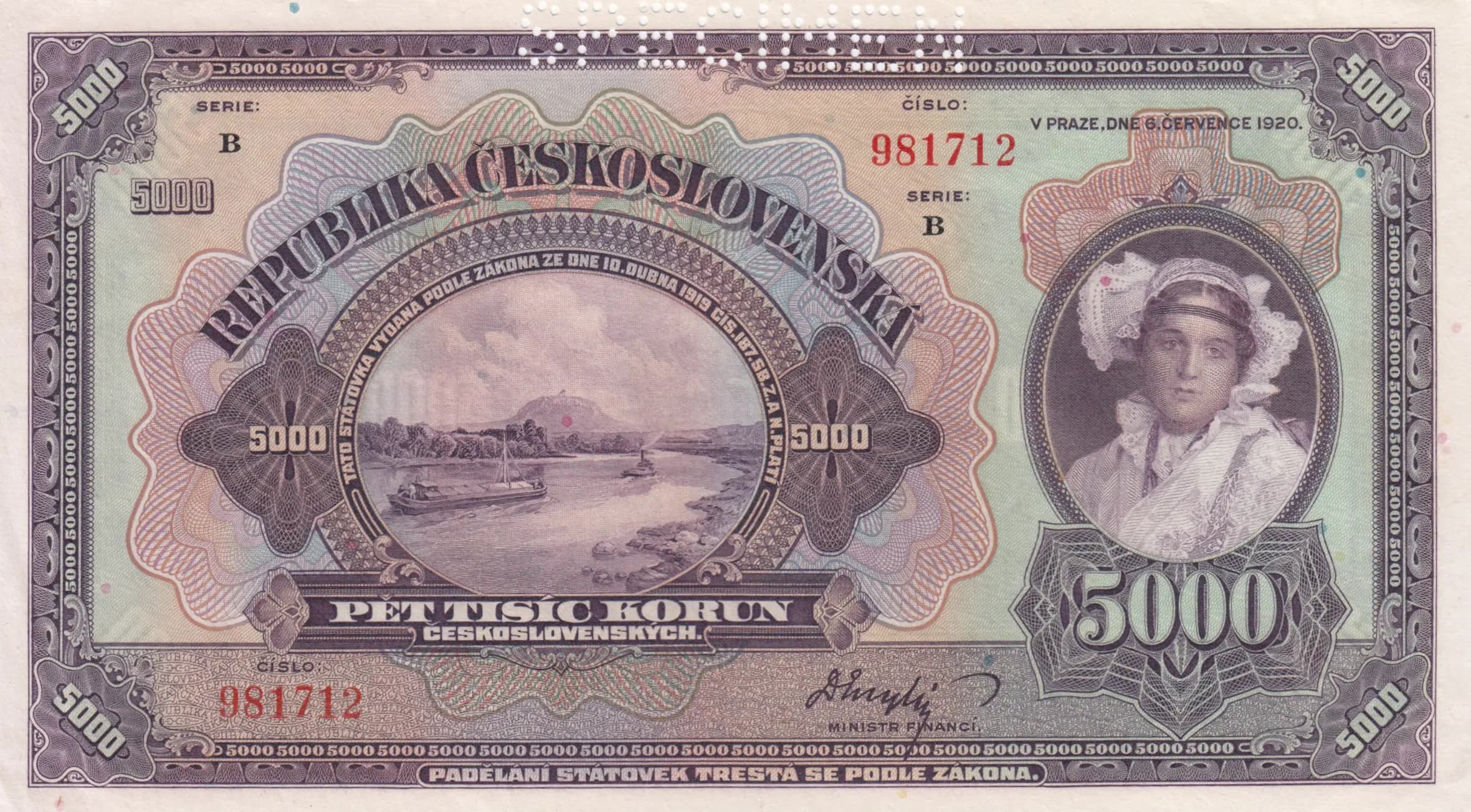
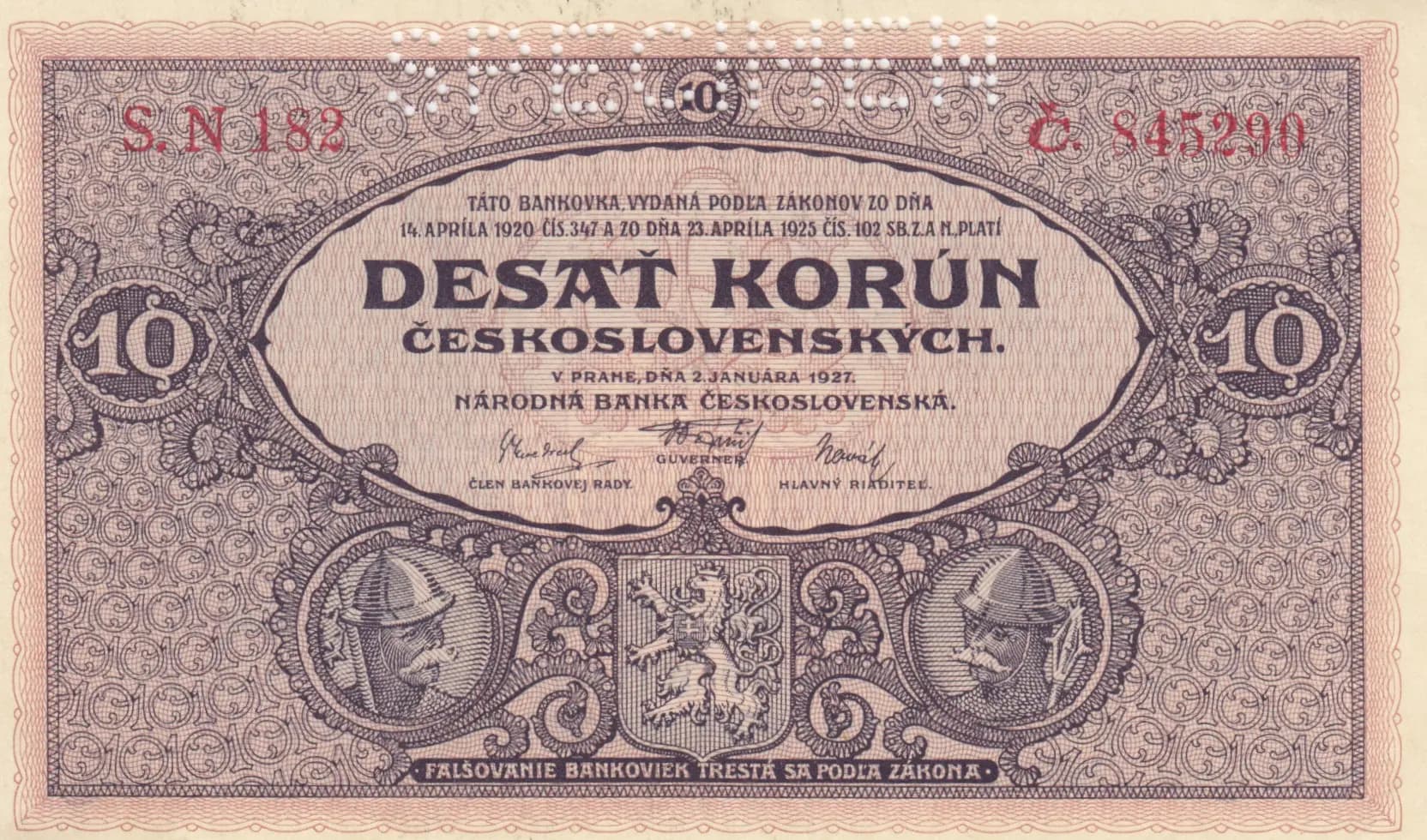
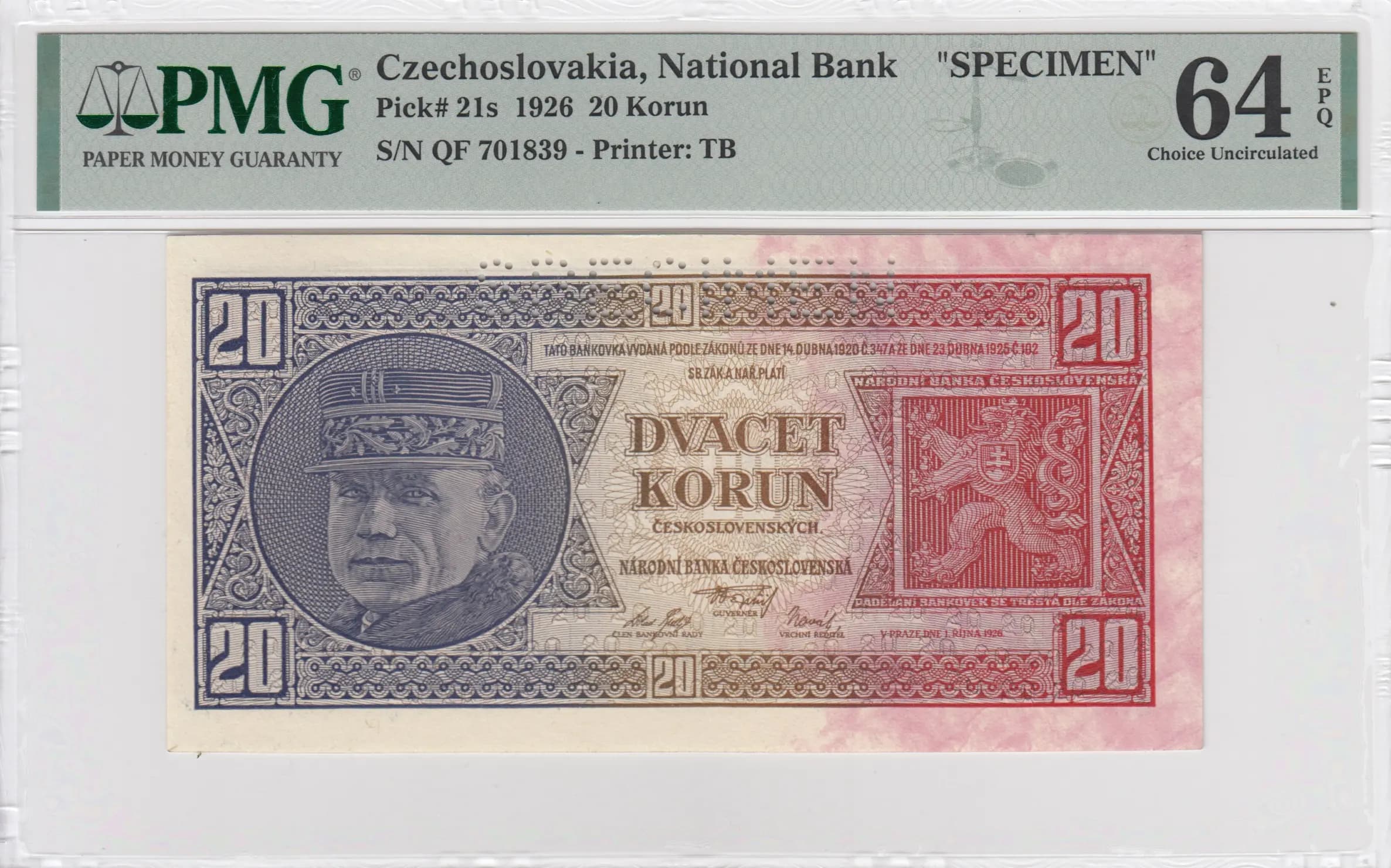
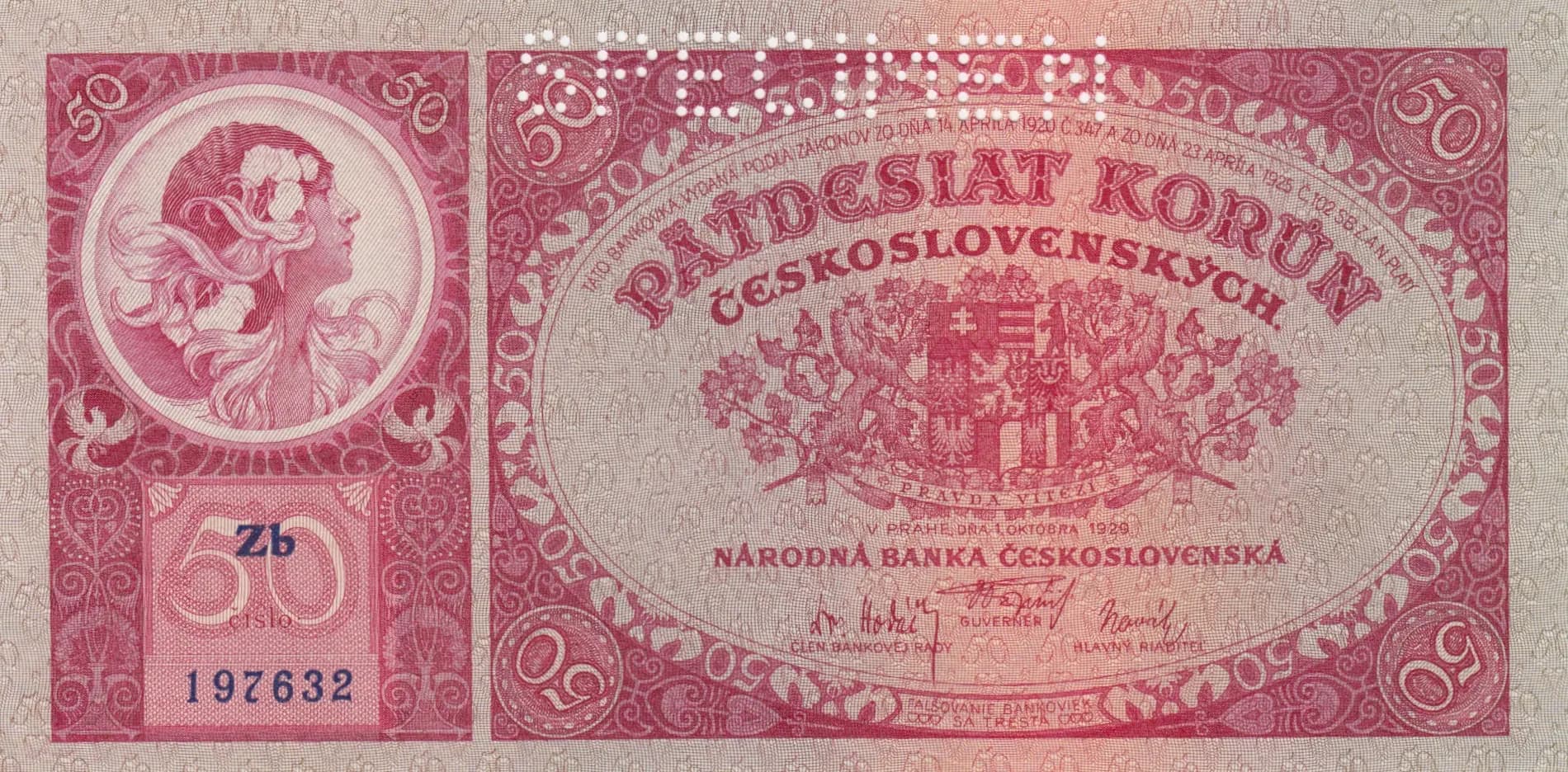
5000 korun 1945 specimen
Market Prices
10 salesAbout This Note
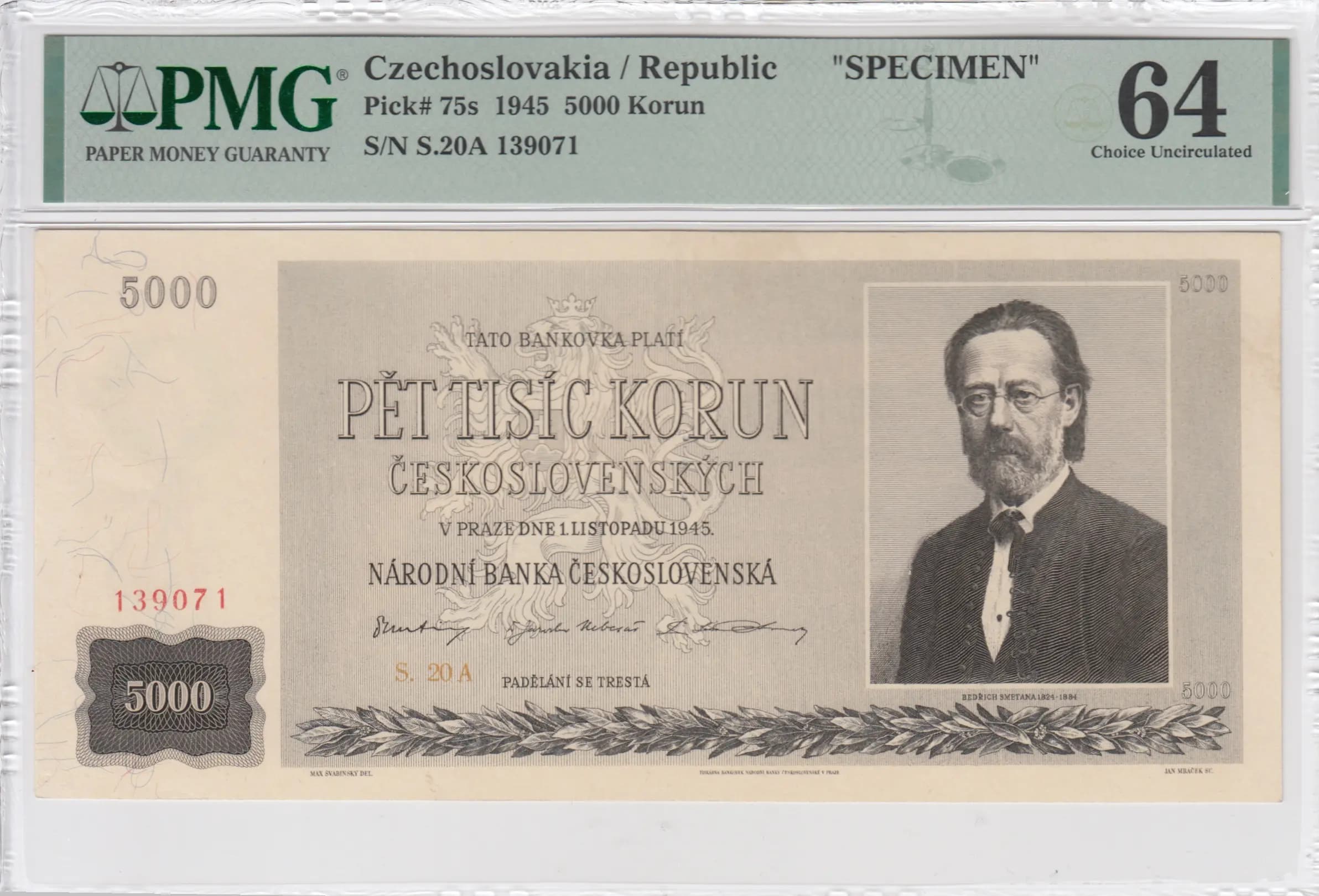
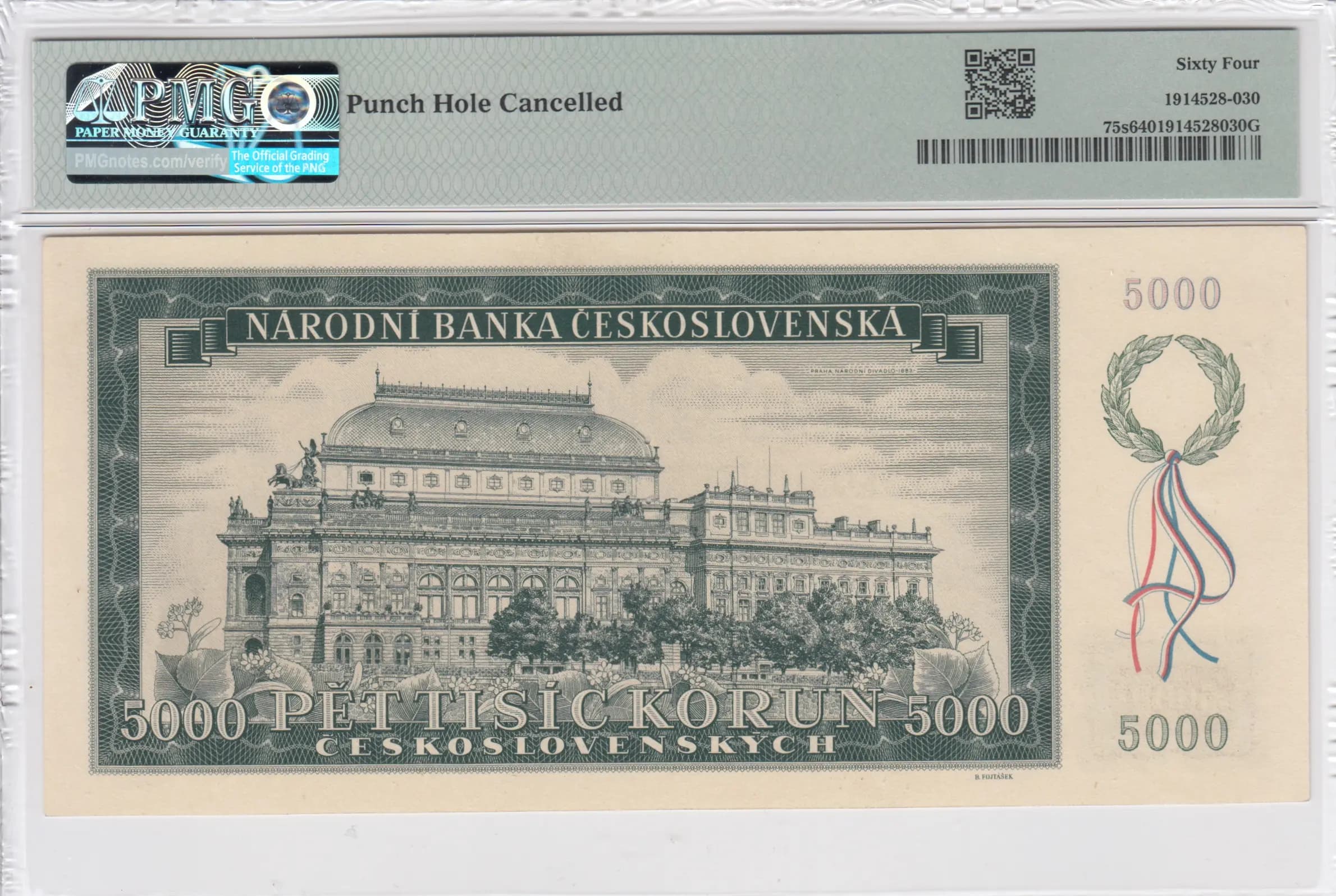
This is a PMG Choice Uncirculated 64-graded specimen note of the 5000 Korun issued by Československá National Bank on November 1, 1945. The note features a striking portrait of composer Bedřich Smetana on the obverse and a detailed engraving of Prague's National Theatre on the reverse, with the characteristic punch-hole specimen cancellation marking it as a non-circulating specimen. The crisp printing, cream-colored paper with excellent preservation, and historical significance of this immediate post-WWII Czechoslovak currency make it an attractive piece for collectors of Central European numismatics.
common. While this is a specimen note (indicated by punch-hole cancellation), specimen notes from this series are regularly encountered in the numismatic market. eBay sales data shows consistent availability with prices ranging from approximately $17 to $81 USD across various grades from 2013-2020, with UNC examples typically selling between $50-$80. The PMG population report indicates at least one professionally graded example exists, and the catalog 2016 valuation of $60 for UNC condition aligns with observed market activity. The absence of any evidence of severe scarcity, recall, or limited print run, combined with regular market transactions, indicates this is a common specimen note among collectors.
This 5000 Korun note was issued in November 1945, just months after Czechoslovakia's liberation from Nazi occupation and the re-establishment of the independent Czechoslovak state. The selection of Bedřich Smetana, the revered 19th-century Czech composer and nationalist symbol, as the obverse portrait reflects the nation's emphasis on cultural pride and sovereignty during reconstruction. The National Theatre depicted on the reverse—a focal point of Czech cultural identity—further underscores the bank's use of national monuments to reinforce post-war national identity and confidence in the restored republic.
The obverse presents a formal portrait of Bedřich Smetana (1824-1884), the celebrated Czech composer, positioned on the right side wearing a dark suit with formal attire, rendered in black and gray tones against a cream background. The reverse features a prominent neoclassical engraving of the Národní divadlo (National Theatre of Prague), depicted with its characteristic domed architecture, ornamental detailing, and surrounding landscaping. The right side of the reverse displays a decorative wreath incorporating the Czechoslovak national colors (red, white, and blue ribbon), serving as a heraldic emblem of state authority. Both sides incorporate ornamental header and border elements with fine-line engraving work, denomination tablets, and period-appropriate security features.
OBVERSE: 'NÁRODNÍ BANKA ČESKOSLOVENSKÁ' (Czechoslovak National Bank); 'PĚTITISÍC KORUN ČESKOSLOVENSKÝCH' (Five Thousand Czechoslovak Crowns); 'V PRAZE DNE 1.LISTOPADU 1945.' (In Prague on November 1, 1945); 'TATO BANKOVKA PLATÍ' (This banknote is valid); 'PADĚLÁNÍ SE TRESTÁ' (Counterfeiting is punished); 'BEDRICH SMETANA 1824-1884'; 'S. 20 A' (Series 20 A); Serial number '139071'. REVERSE: 'NÁRODNÍ BANKA ČESKOSLOVENSKÁ' (Czechoslovak National Bank); '5000 PĚTITISÍC KORUN ČESKOSLOVENSKÝCH' (5000 Five Thousand Czechoslovak Crowns).
Intaglio engraving (line engraving), characteristic of high-security banknote production of the era. The note was printed by Tiskárna Bankovek (Banknote Printing Works) in Prague. The fine-line patterns, detailed portrait rendering, decorative borders, and architectural engraving of the National Theatre exhibit the precision hallmarks of 1940s-era intaglio bank note production. Security features include watermark areas visible in the background and complex engraved line work throughout.
This note is identified as Pick 75s (specimen variant). The 's' designation indicates specimen cancellation via punch holes, distinguishing it from circulating notes. The observed series marking 'S. 20 A' visible on the obverse indicates Series 20 A. The serial number observed is 139071. No significant varieties of overprints, signature variations, or printing differences have been identified in the visual analysis; this represents the standard 1945 specimen issue.