5000 korun 1920 specimen
Market Prices
21 salesAbout This Note
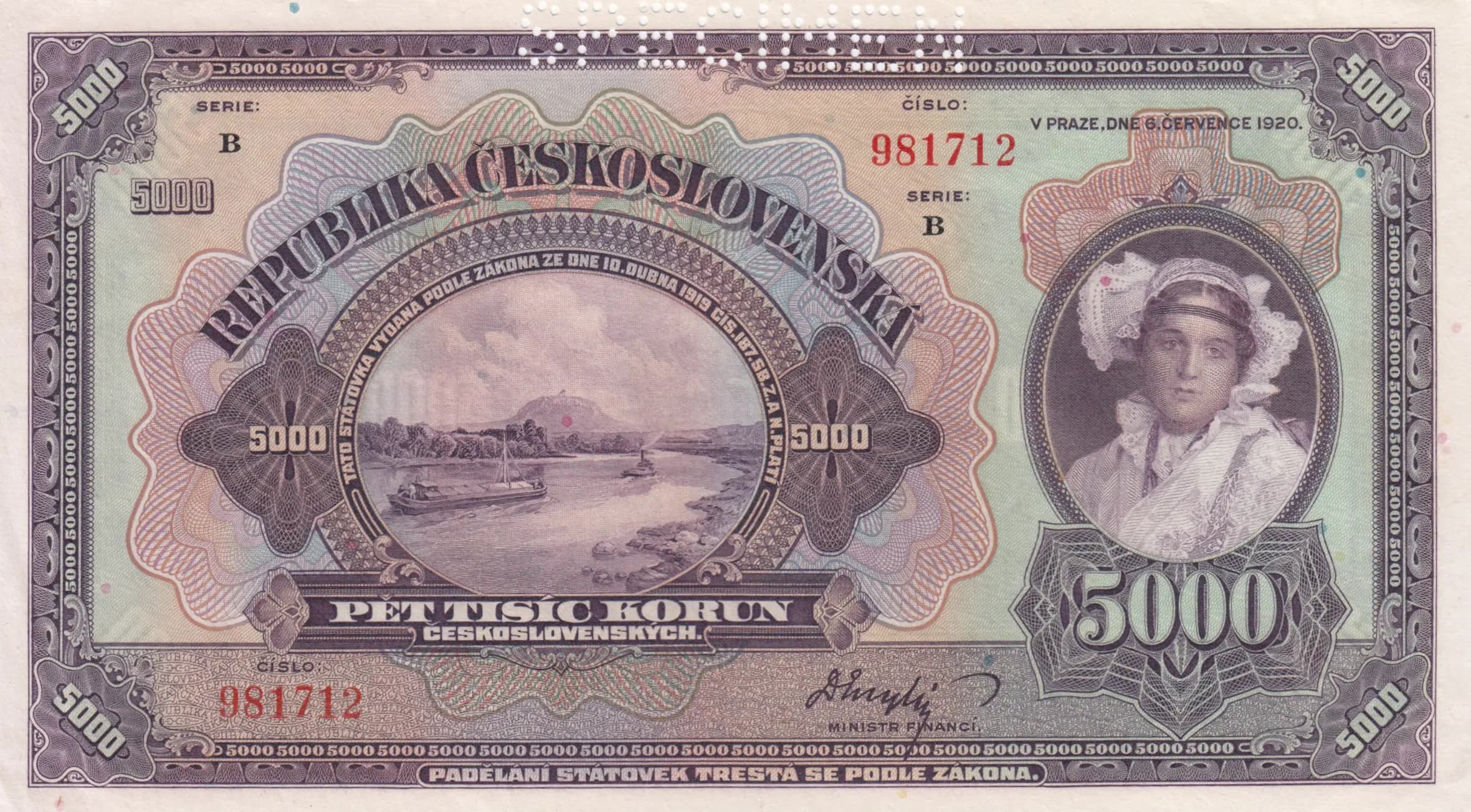
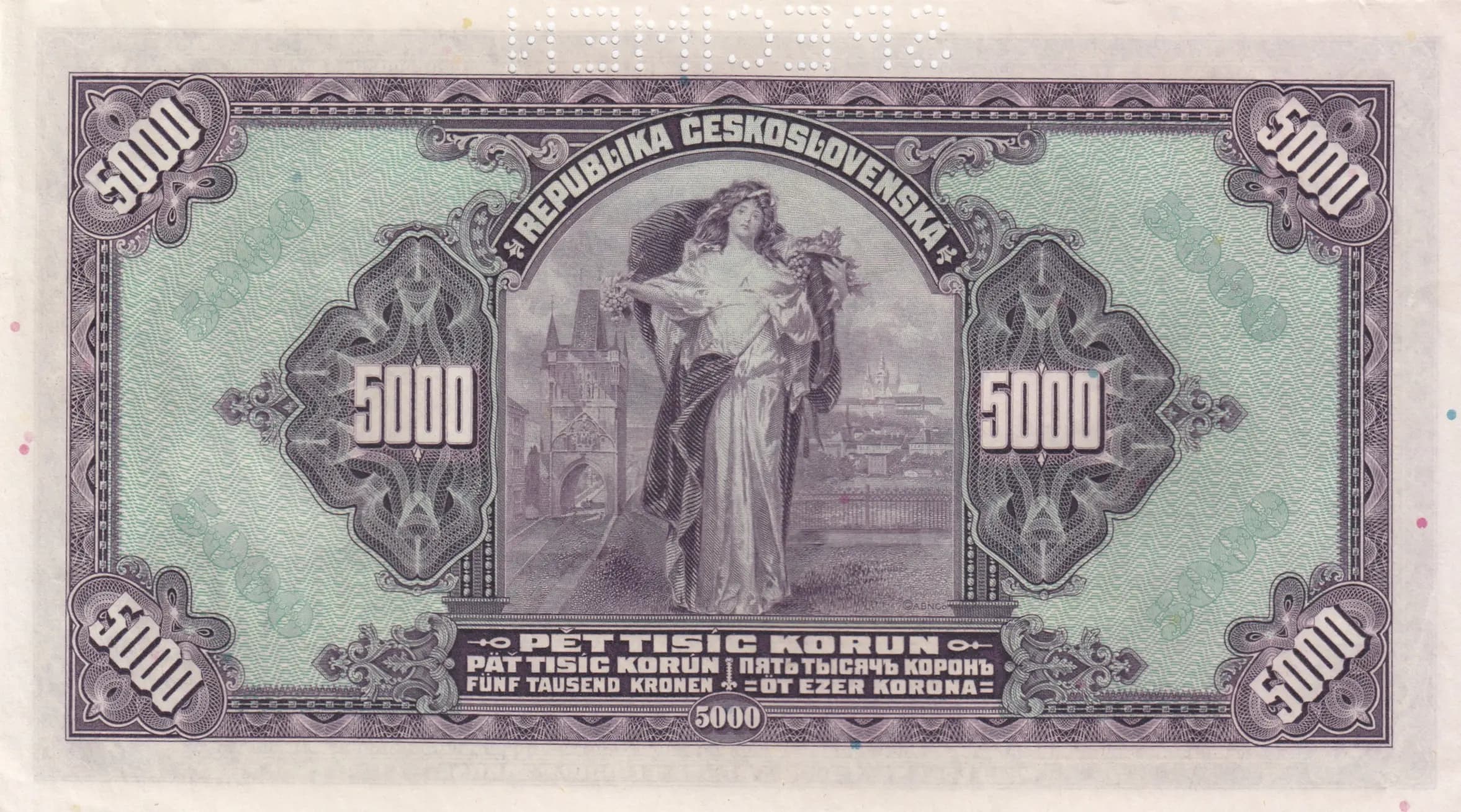
This is a magnificent specimen note of the 5000 Czechoslovak koruna from 1920, showcasing the artistic pinnacle of early Czechoslovak currency design. The obverse features an ornate purple-brown and green palette with a stunning river landscape vignette and a woman in traditional Tábor costume, while the reverse displays a classical allegorical female figure against a cityscape backdrop. In AU condition, this note displays crisp, clear printing with no visible wear, creasing, or tears, making it an outstanding example of interwar Czechoslovak currency artistry.
Common. The eBay price data provided demonstrates consistent market activity over a 7-year period (2013-2020) with numerous sales ranging from $24 to $152.50 USD depending on grade and certification. The average selling price for AU-UNC examples appears to fall in the $50-90 range, and even lower grades consistently sell for $25-50. The broad availability of pricing data across multiple grades indicates a readily available note in the collector market. While specimen notes command a premium over circulation examples, the P-19s itself is not a scarce issue—multiple series (B and C noted) exist, and the Print run was substantial enough to satisfy early Czechoslovak banking needs. Standard early Czechoslovak banknotes of this type are considered common in the numismatic market.
Issued on June 6, 1920, just months after Czechoslovakia's establishment as an independent republic following World War I, this banknote represents the new nation's economic sovereignty and cultural identity. The imagery deliberately incorporates distinctly Czech and Slovak elements—the Elbe River landscape representing Czech geography and the woman in Tábor costume symbolizing national heritage—while the allegorical figure on the reverse evokes classical European banking traditions. This 1920 series was among the first official currency designs under the Loan Law of March 10, 1919, establishing the Czechoslovak financial system.
The obverse features a brown-violet and green multicolor design with ornate scalloped oval frames and heraldic corner devices. The left-center vignette depicts the Elbe River (Labe) with sailing cargo vessels and shoreline featuring trees and pastoral landscape, symbolizing Czechoslovak commerce and geography. The right side portrays a woman wearing traditional costume of Tábor—a historically significant Czech city—with distinctive white lace headscarf and regional dress, representing Czech cultural identity. The reverse displays a neoclassical allegorical female figure in Greco-Roman robes with flowing hair, positioned centrally against an urban architectural backdrop featuring a medieval tower and cathedral buildings, symbolizing the historical continuity and classical learning of the new republic. Both sides are framed with elaborate decorative borders incorporating floral and geometric patterns, with denomination numerals positioned in all four corners. The design incorporates text in three languages (Czech, German, and Hungarian), reflecting the multinational character of the Czechoslovak state.
FRONT: 'REPUBLIKA ČESKOSLOVENSKÁ' (Czechoslovak Republic) / 'PĚTITISÍC KORUN' (Five Thousand Crowns) / 'ČESKOSLOVENSKÝCH' (Czechoslovak) / 'V PRAZE, DNE 6. ČERVNA 1920' (In Prague, June 6, 1920) / 'PŮJČKA ZÁKONA ZE DNE 10. BŘEZNA 1919 ČÍSLA 19' (Loan Law from March 10, 1919 Number 19) / 'MINISTR FINANCÍ' (Minister of Finance) / 'PADĚLÁNÍ STÁTOVEK TRESTÁ SE PODLE ZÁKONA' (Counterfeiting banknotes is punished according to law) / 'SÉRIE: B' (Series B) / 'ČÍSLO: 981712' (Number 981712). BACK: 'REPUBLIKA ČESKOSLOVENSKÁ' (Czechoslovak Republic) / 'PĚTITISÍC KORUN' (Five Thousand Crowns) / 'ČESKOSLOVENSKÉ REPUBLIKY' (Of the Czechoslovak Republic) / 'FUNF TAUSEND KRONEN' (Five Thousand Crowns in German) / 'OT EZER KORONA' (Five Thousand Crowns in Hungarian).
Intaglio engraving (steel plate printing), executed by American Bank Note Company (ABNC), New York, without visible printer imprint. The visual analysis confirms the characteristic intaglio features: intricate fine line work, precise geometric cross-hatching, complex security patterns integrated throughout the design, and crisp, deeply impressed detail characteristic of ABNC's high-security bank note production. The security design elements include the elaborate border patterns, fine geometric background work, and the overall complexity of the vignettes—all hallmarks of premium intaglio craftsmanship.
This is a confirmed specimen note of Pick catalog P-19s, indicated by perforated 'SPECIMEN' marking. The example shown is Series B, serial number 981712. According to the PMG population report, there is one cataloged variant for this base Pick number. The back of the note exhibits colored dots (red/pink markings visible on left and right margin edges), consistent with archival handling marks or specimen preparation practices rather than printing varieties. This particular example's serial number and series designation (B) should be recorded for reference purposes; sister notes in Series C are also known to exist.