10 korun 1927 specimen
Market Prices
18 salesAbout This Note
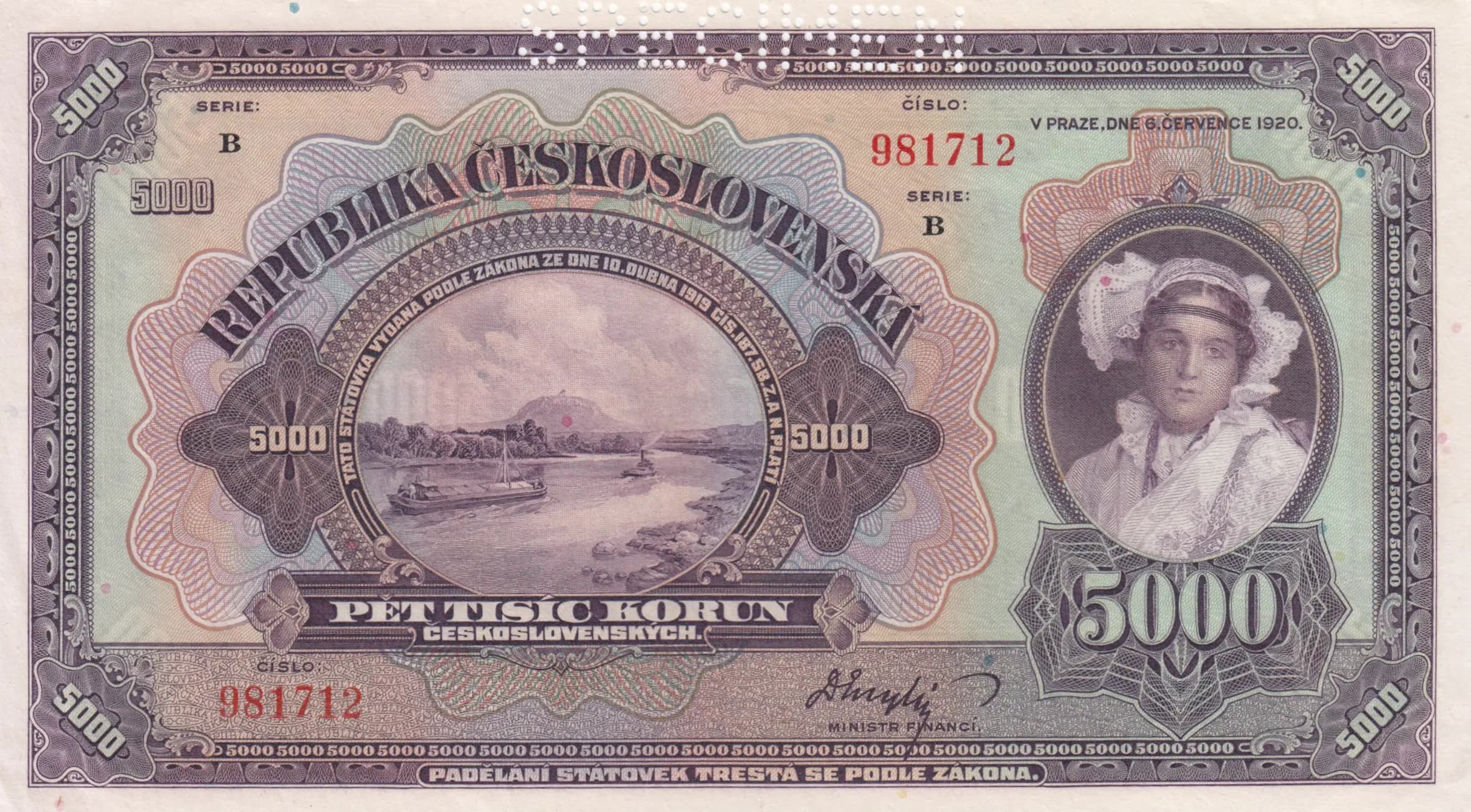
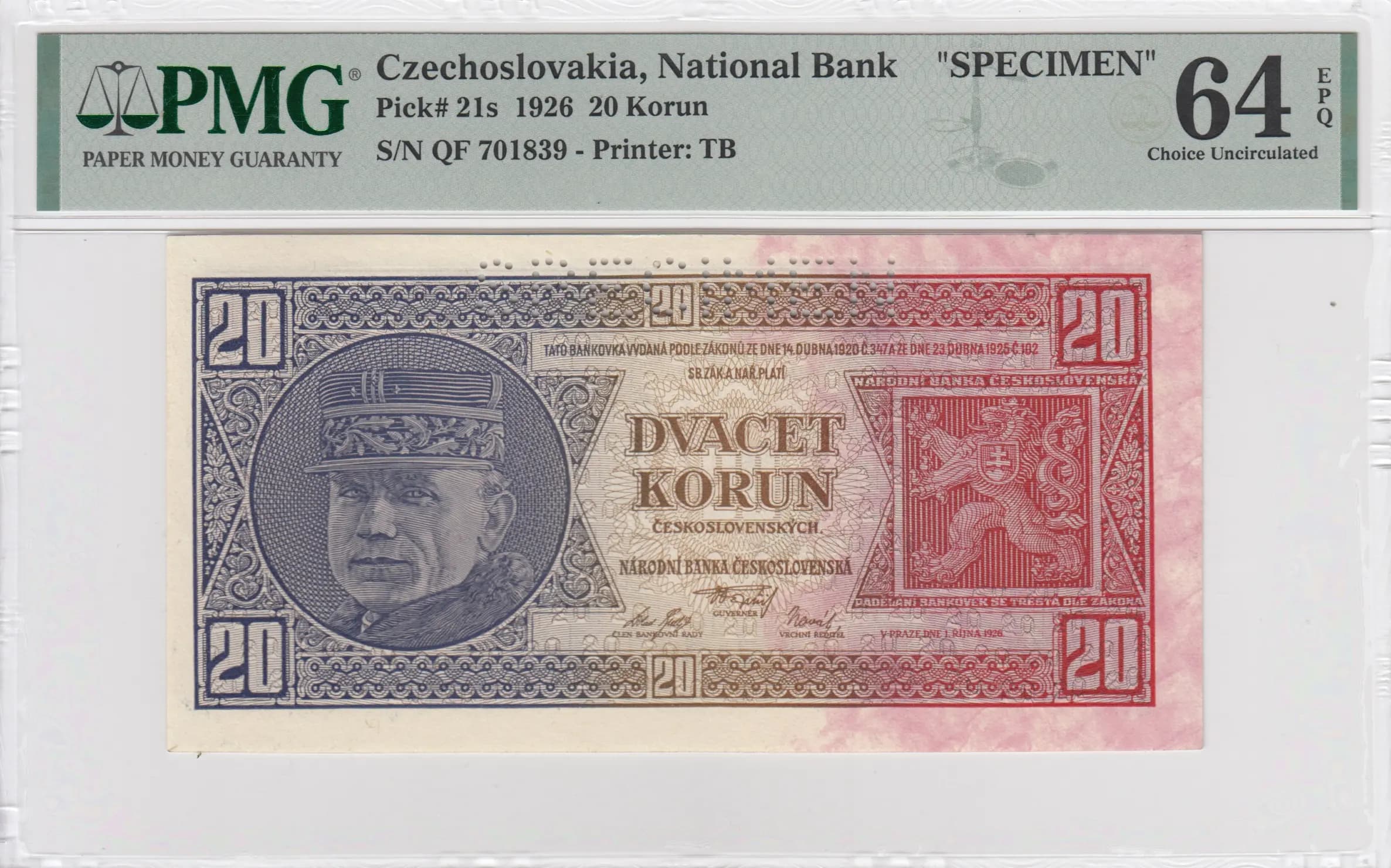
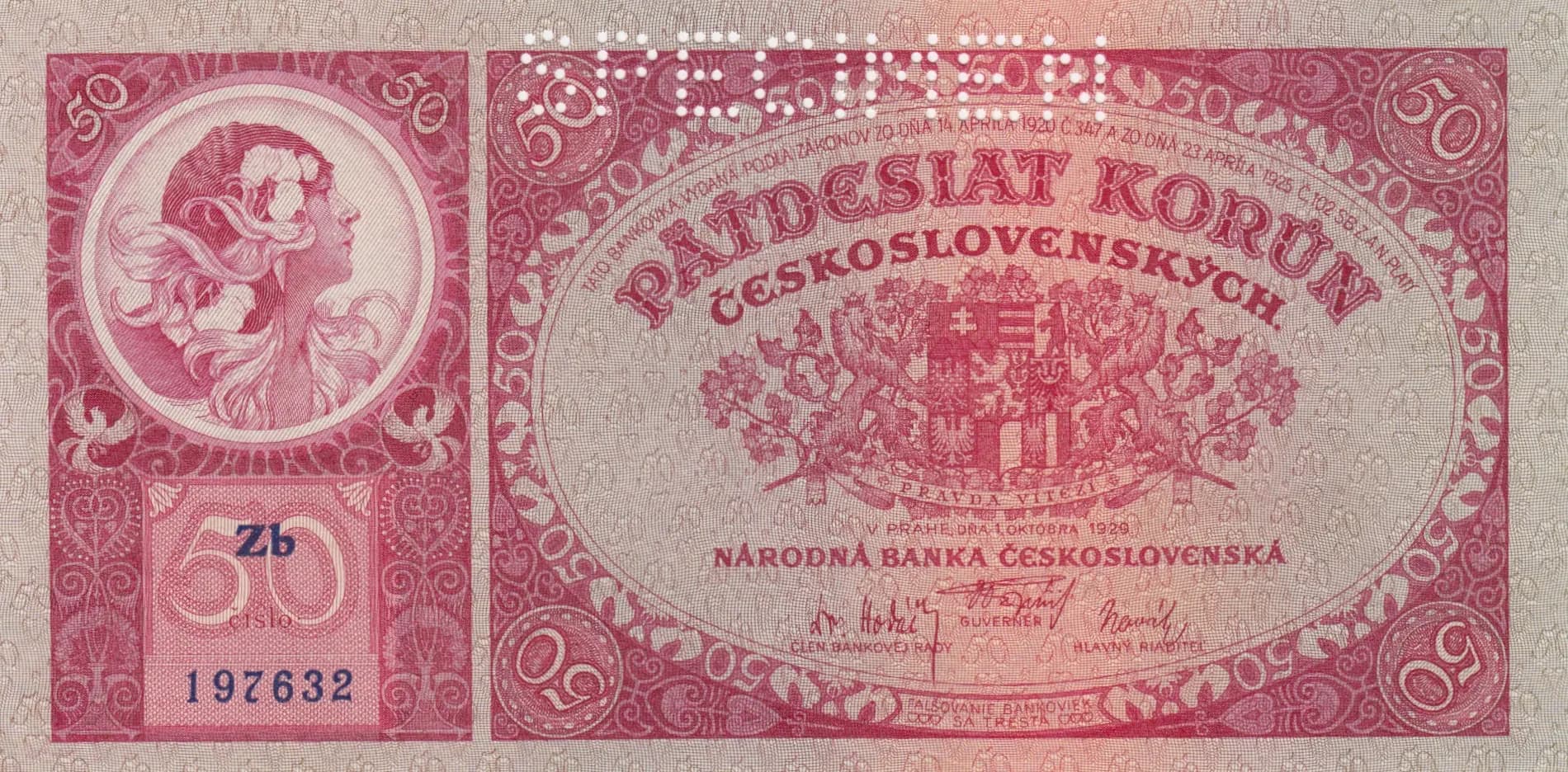
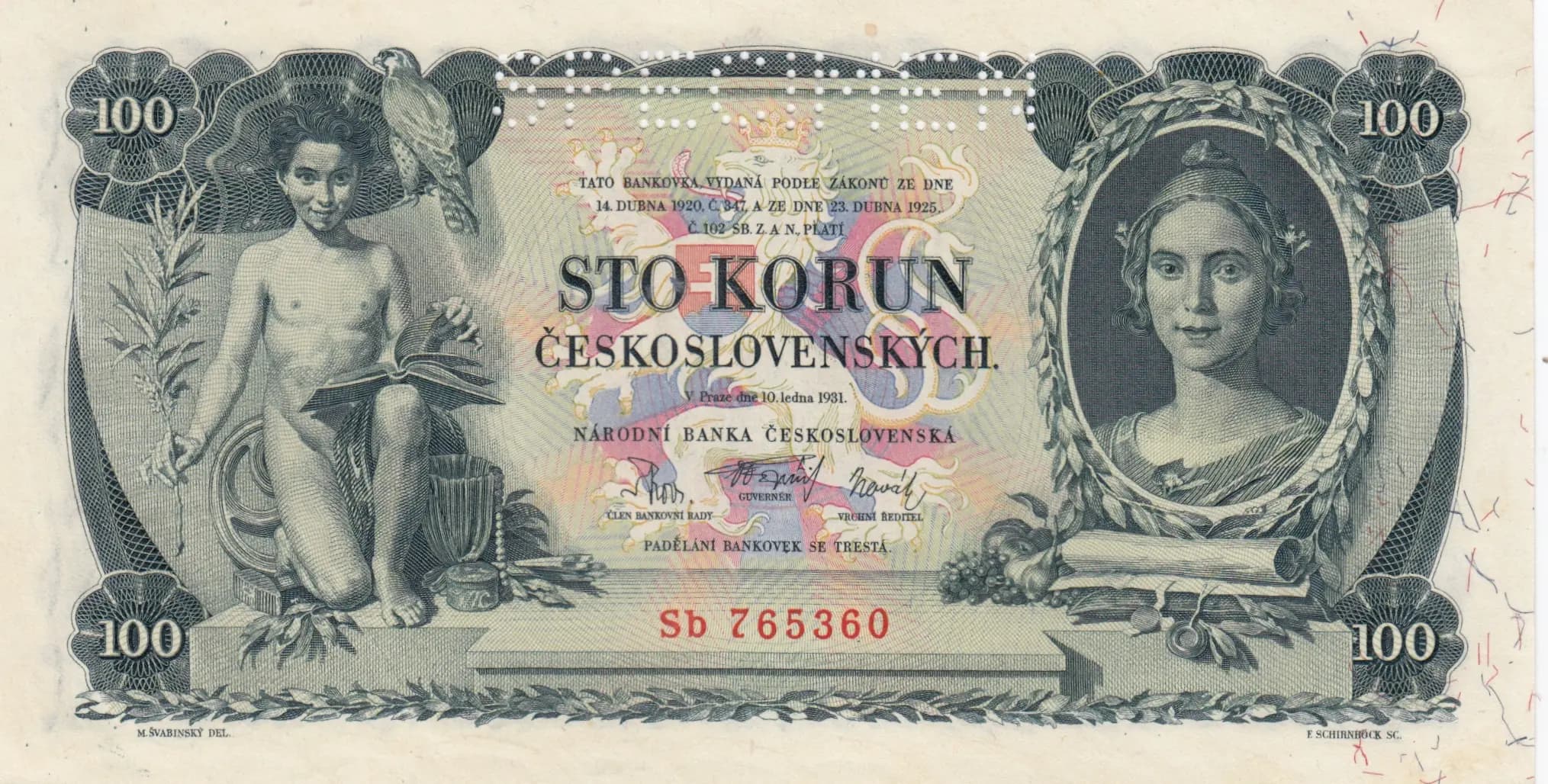
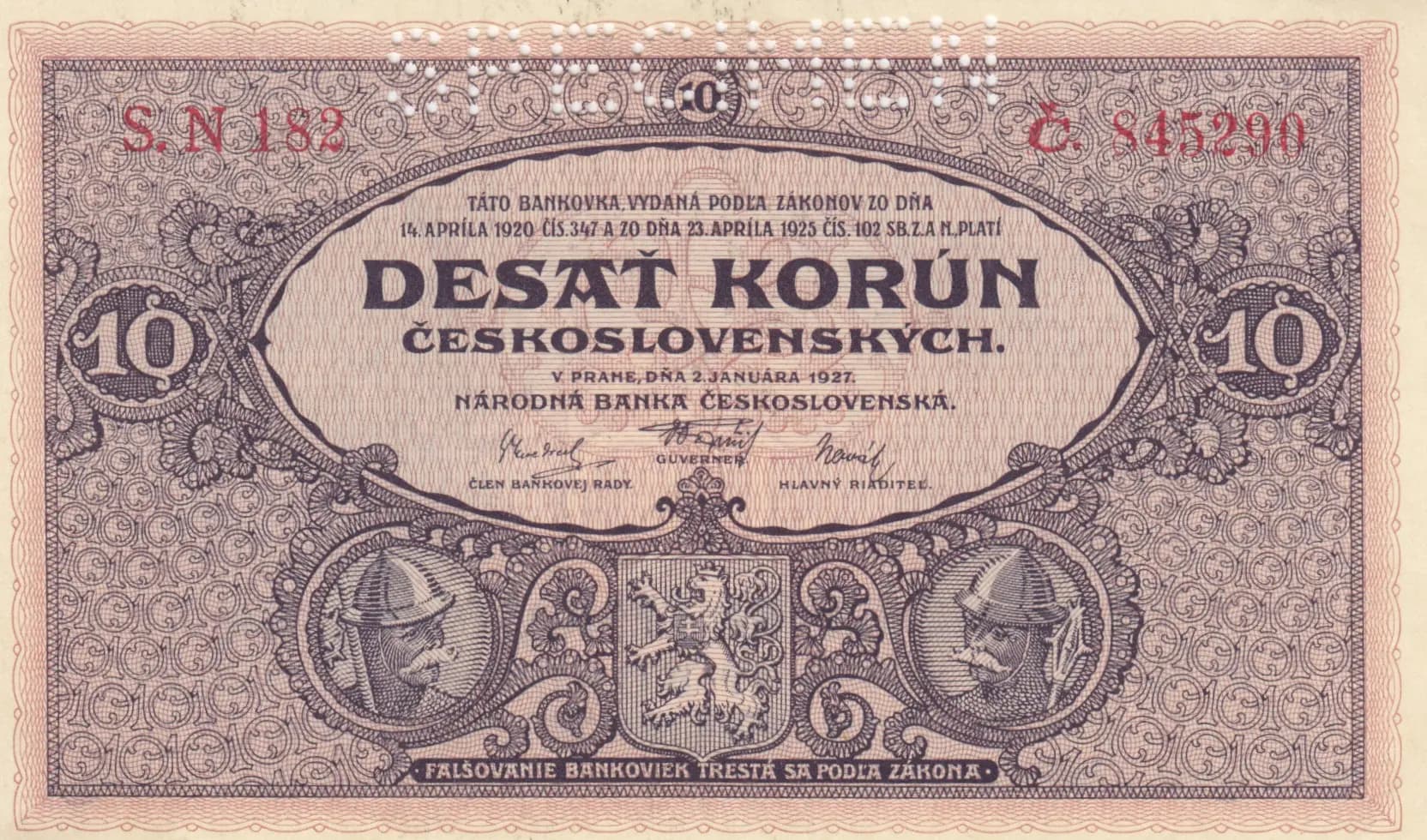
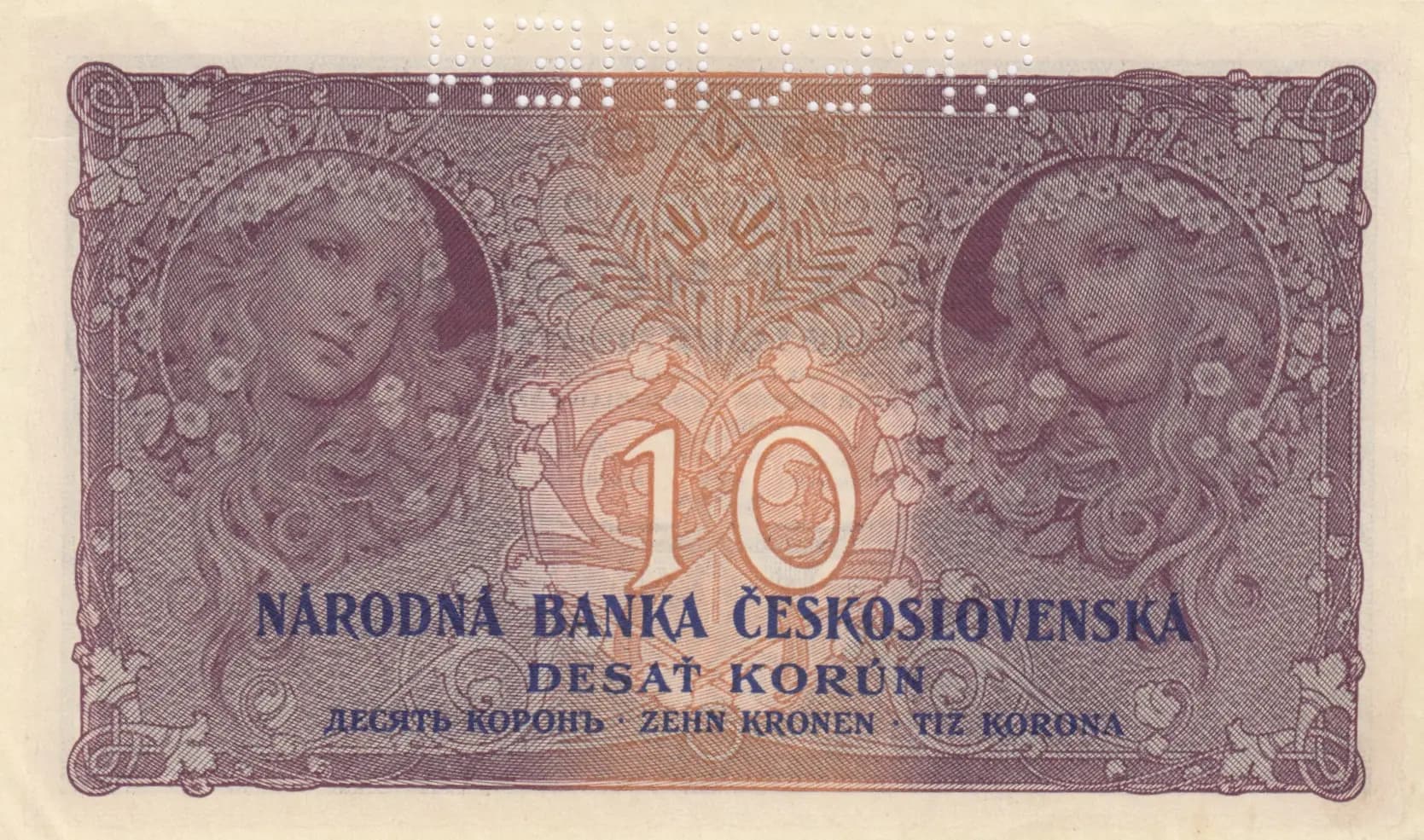
This is an AU-graded specimen note of the 1927 Czechoslovak 10 korun, issued by the Národná Banka Československá on January 2, 1927. The note displays exceptional preservation with sharp, crisp engraving throughout and no visible wear, circulation marks, or damage. The specimen designation (visible as perforated text) and the presence of braille dots on the reverse confirm this as a special issue note rather than a circulation piece, making it a significant item for Czechoslovak currency collectors interested in early post-WWI monetary history.
Common. The eBay sales data provided shows consistent market activity with prices ranging from approximately $7–$23 for AUNC and EF examples over a multi-year period, with an average around $12–$15. This indicates steady but modest collector demand typical of early Czechoslovak banknotes. The specimen designation adds modest collector value over regular circulation notes, but the base denomination and issue are not scarce. The AU condition grade and specimen status are within normal parameters for surviving examples.
This 10 korun note was issued during the early years of the Czechoslovak Republic, established in 1918 following the collapse of the Austro-Hungarian Empire. The note's design features Hussite soldiers (referenced in the helmeted military figures depicted on both sides), connecting to Czechoslovakia's medieval heritage and the significance of the 15th-century Hussite movement in Czech national identity. The dual-language text (Czech and Slovak) reflects the bilingual character of the newly united state, while the coat of arms and formal imagery emphasize the legitimacy and sovereignty of the young nation's central bank.
The obverse features a dominant central oval frame containing denomination and issuing authority text, flanked by two profile portraits of Hussite soldiers wearing military headgear, facing outward and separated by a Czechoslovak coat of arms featuring a lion. Large red numerals '10' occupy all four corners in ornate cartouches. The design employs purple-brown and red-pink coloring with an intricate, fine-line engraved border of scrollwork and circular medallions. The reverse centers on a large ornamental numeral '10' with red-orange coloring, surrounded by a radiating rosette pattern, with matching Hussite soldier profiles facing inward on either side. Braille dots visible at the top of the reverse indicate accessibility accommodation and serve as an additional security feature. Both sides demonstrate the high-quality engraving characteristic of TB (Topičova banka), Prague, the printing firm responsible for this issue.
FRONT SIDE: 'DESÁT KORÚN ČESKOSLOVENSKÝCH' (Ten Crowns of Czechoslovakia); 'TATO BANKOVKA VYDANÁ PODLE ZÁKONA ZO DNA 14.APRILA 1920 ČÍS.347 A ZO DNA 23.APRILA 1928 ČÍS.102 SB.ZA N.PLATI' (This banknote issued pursuant to the law of April 14, 1920 No. 347 and of April 23, 1928 No. 102); 'V PRAZE, DŇA 2.JANUÁRA 1927' (In Prague, January 2, 1927); 'NÁRODNÁ BANKA ČESKOSLOVENSKÁ' (National Bank of Czechoslovakia); 'GUVERTER' (Governor); 'ČLEN BANKOVEJ RADY' (Member of the Bank Board); 'HLAVNÝ RIADITEĽ' (Chief Director); 'FALŠOVANIE BANKOVIEK TRESTÁ SA PODĽA ZÁKONA' (Counterfeiting banknotes is punishable by law); 'S.N.R.25' (Serial designation); 'č. 819200' (Number 819200). BACK SIDE: 'NÁRODNÁ BANKA ČESKOSLOVENSKÁ' (National Bank of Czechoslovakia); 'DESÁT KORÚN' (Ten Crowns); 'DESETI KORUN ZEHN KRONEN VIZ KORUNA' (Ten Crowns, Ten Crowns in German, See Crown).
Intaglio engraving (line engraving) on letterpress. The note exhibits the fine line work, geometric patterns, and radiating designs typical of high-security intaglio currency production of the 1920s. The printer is identified as TB (Topičova banka, Prague). Security features include intricate engraved borders, fine-line rosette patterns, and braille dots. The perforated 'SPECIMEN' or 'NEPLATNÉ' (not valid) overprint visible on this specimen note was added post-printing to invalidate it for circulation.
This note is cataloged as Pick P-20s, the specimen variant. A circulation version exists as P-20a. The specimen variety is identified by the perforated text 'SPECIMEN' or 'NEPLATNÉ' overprint and the braille dots on the reverse. Serial number observed: 'S.N.R.25' with number 819200. The note is dated 2 January 1927 in Prague. No significant signature, serial prefix, or overprint variations are noted beyond the specimen designation.