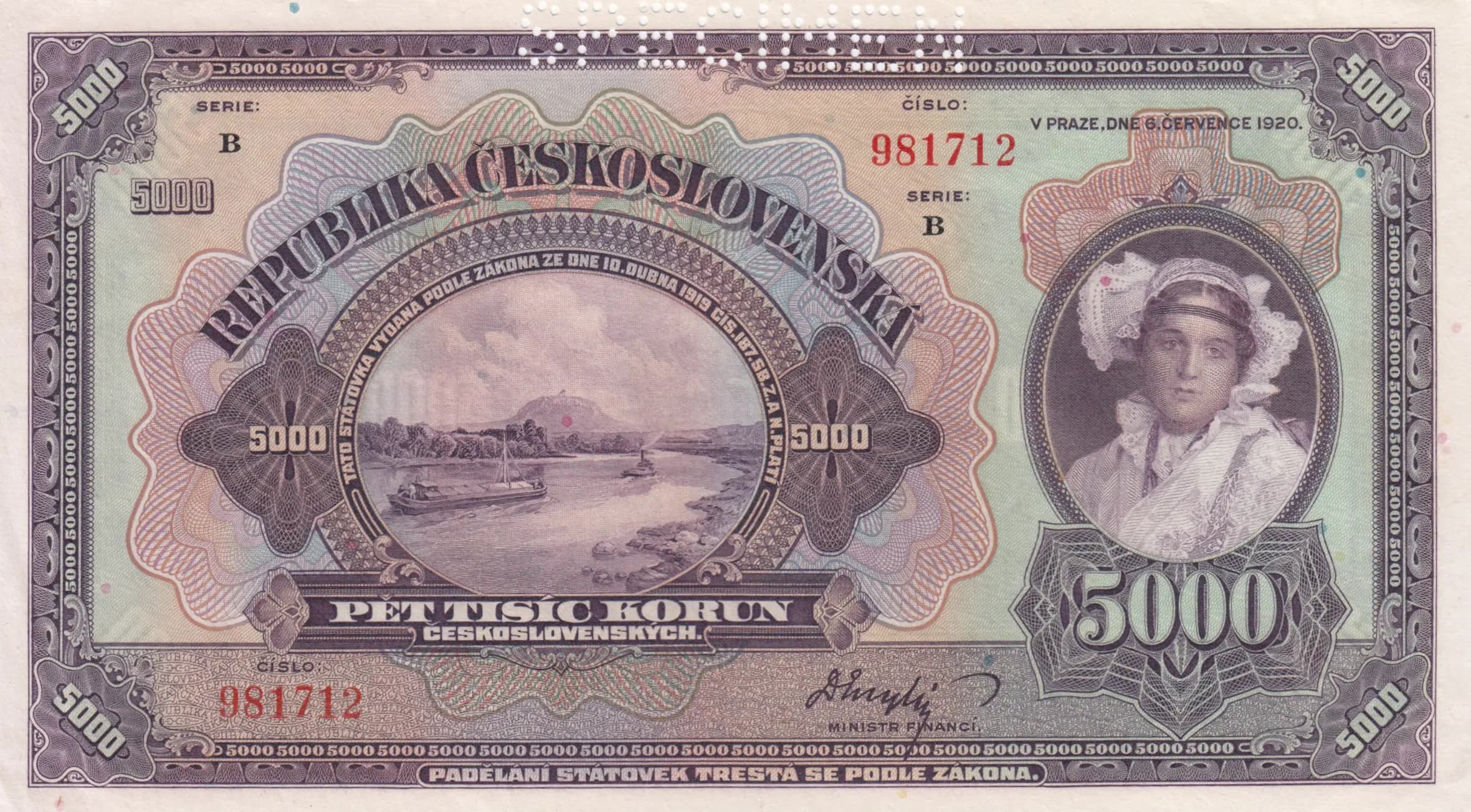
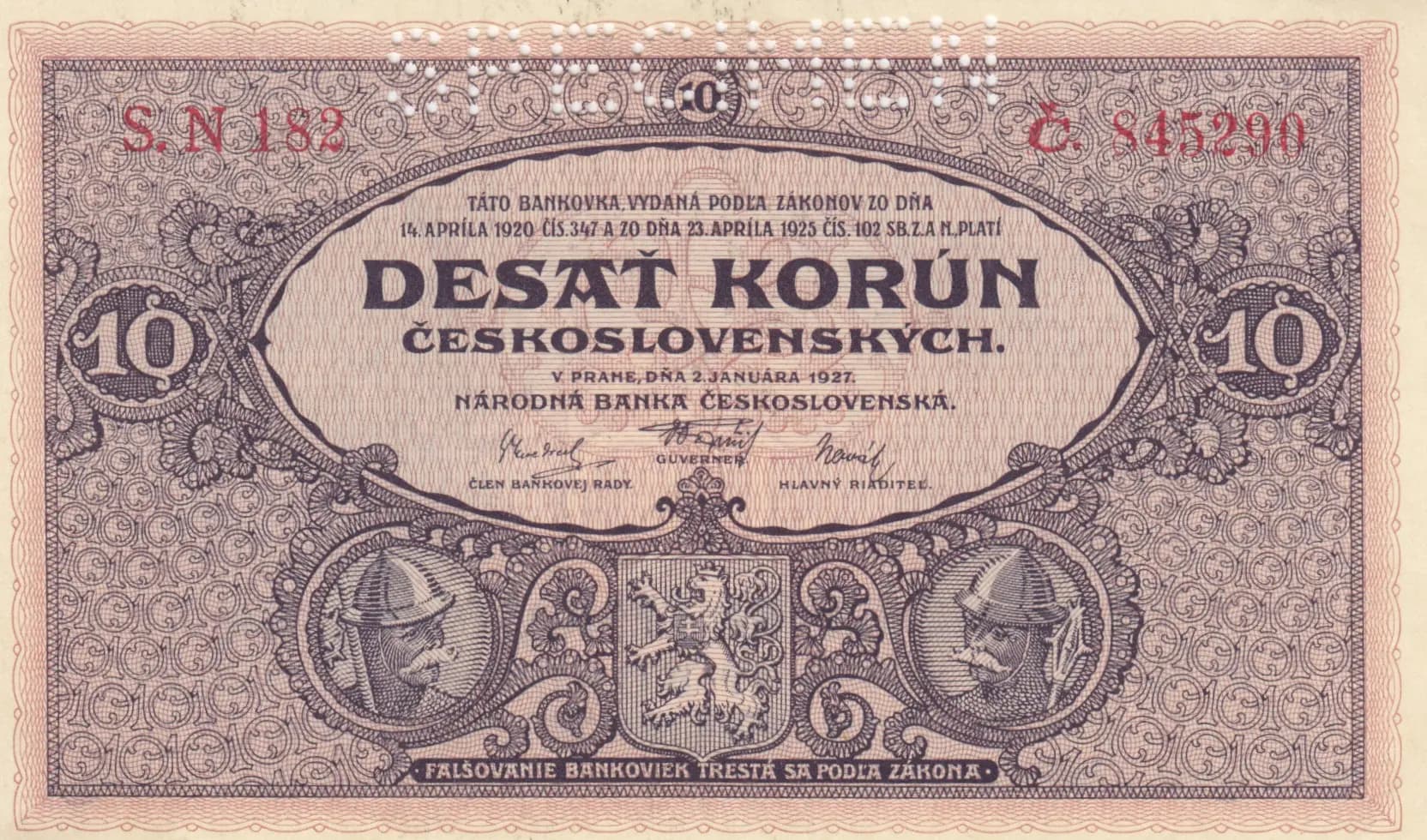
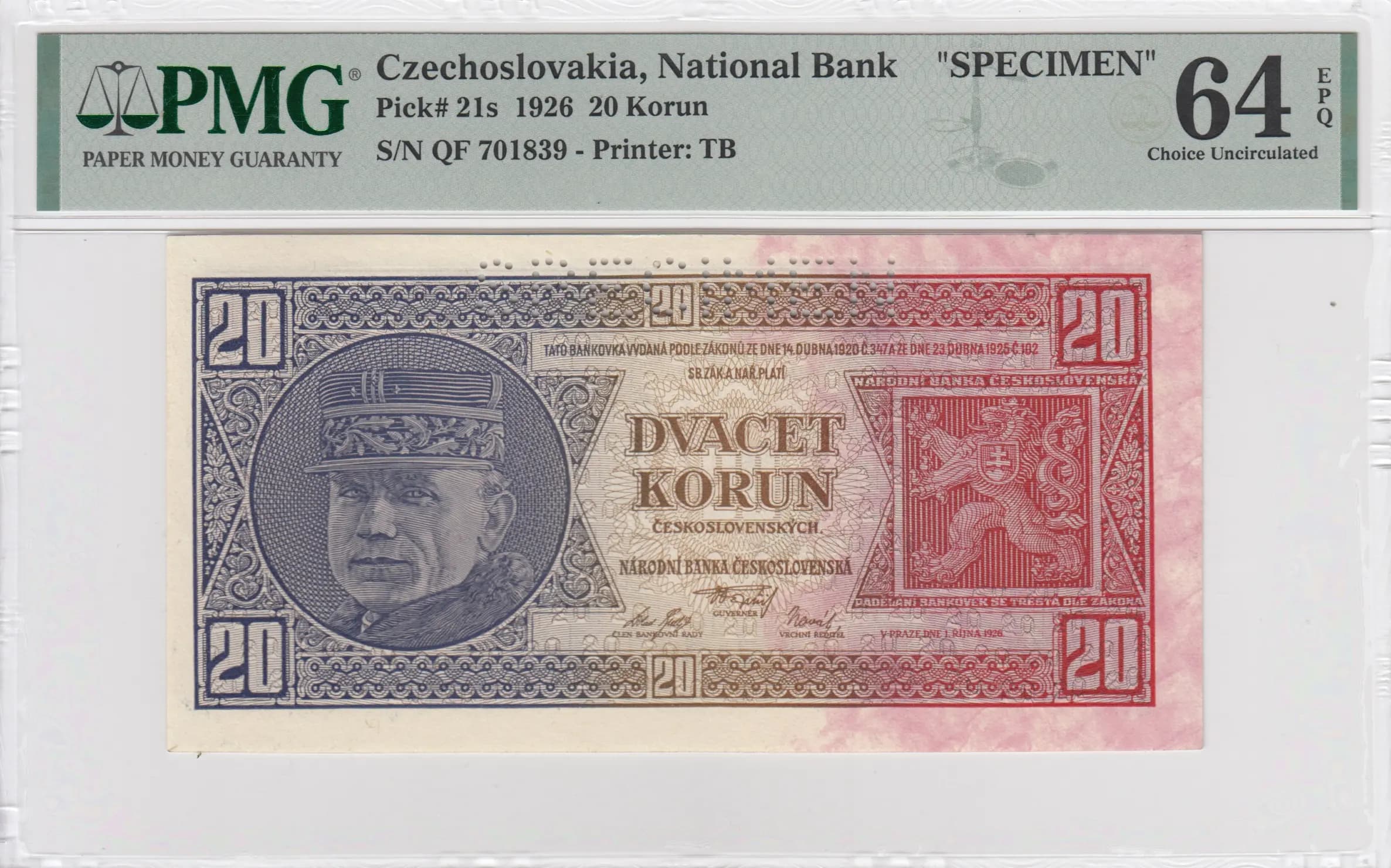
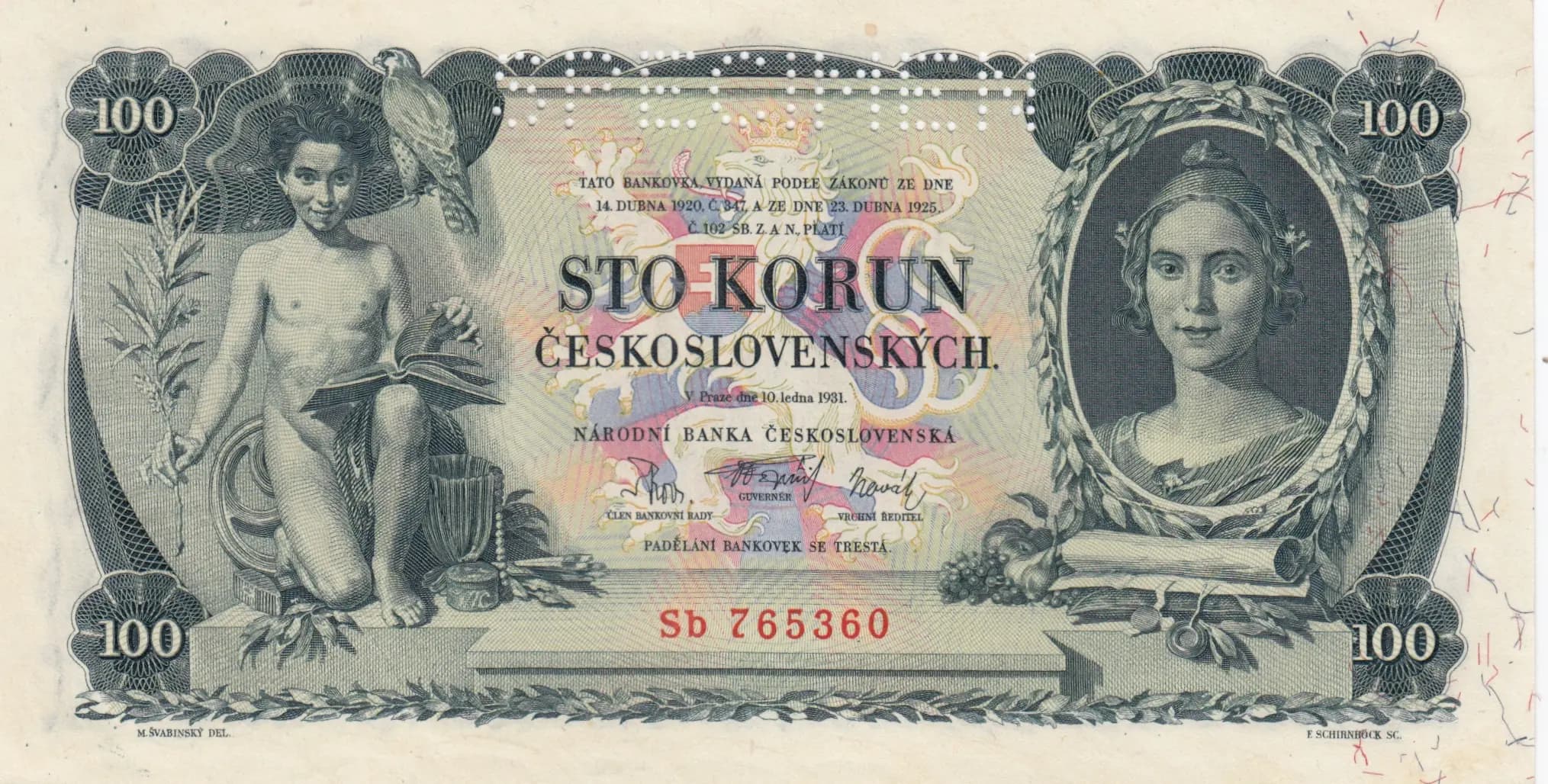
50 korun 1929 specimen
Market Prices
33 salesAbout This Note
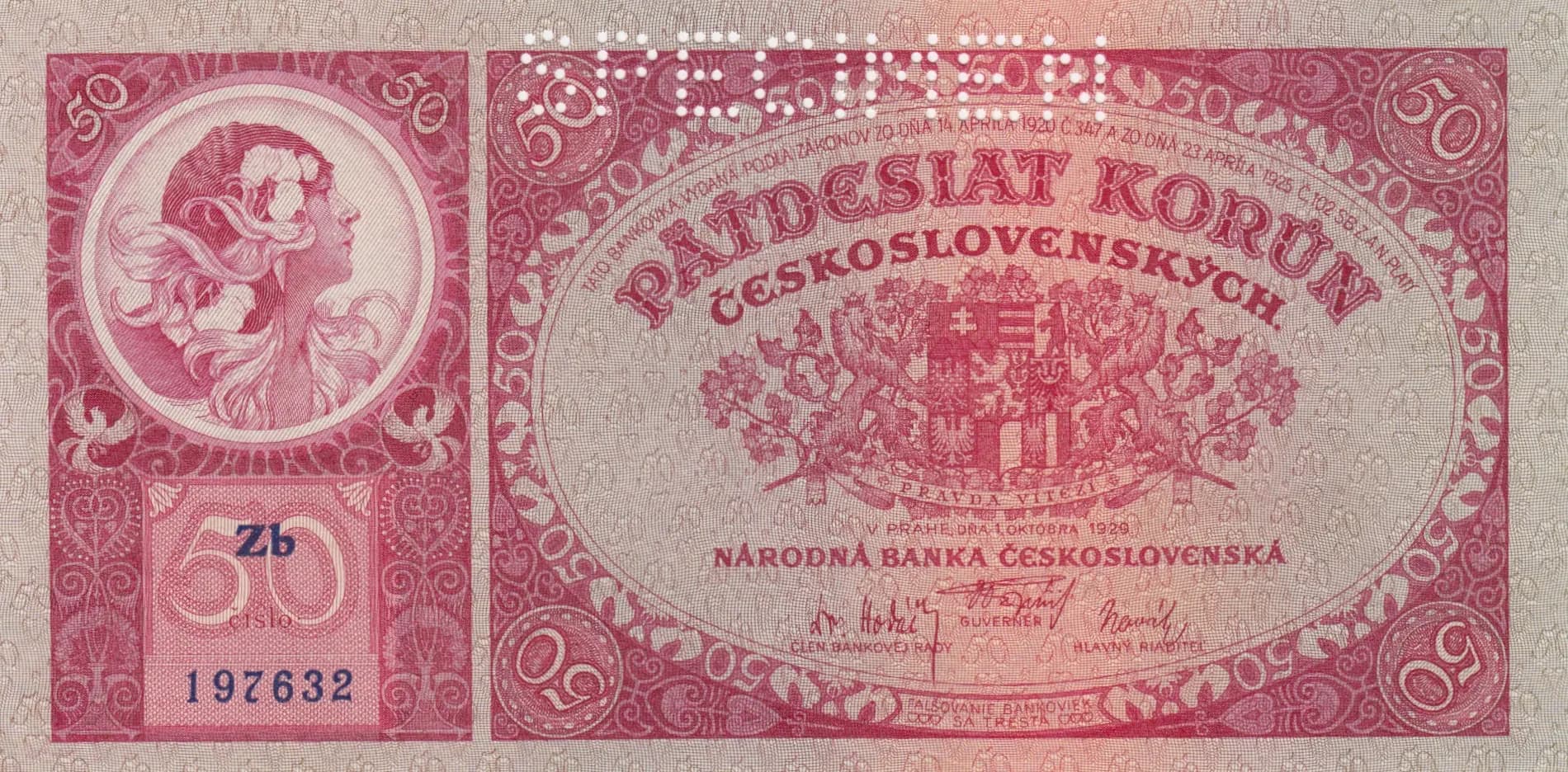
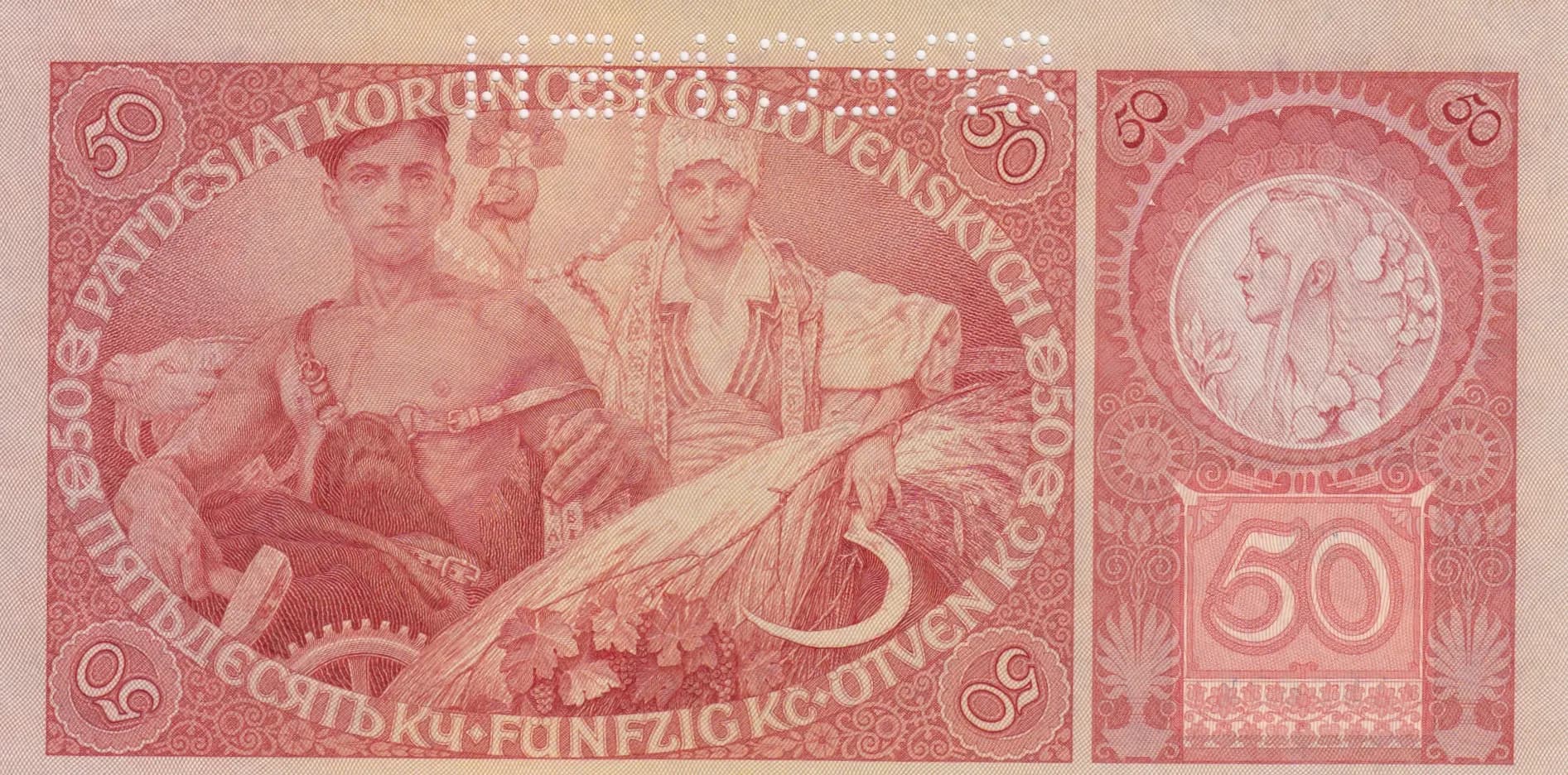
This is a 1929 Czechoslovak 50 Korun specimen note in uncirculated condition, representing an exceptional example of interwar Central European banknote design. The note features striking magenta/pink coloring with elaborate intaglio engraving throughout, displaying allegorical figures representing labor and industry on the obverse alongside a classical portrait, while the reverse presents heraldic imagery befitting the newly established nation. As a perforated specimen note with sharp, crisp printing and no visible wear, this piece exemplifies the high-quality security printing standards of the period and serves as an important historical artifact from Czechoslovakia's early national banking era.
Common. While specimen notes are technically more limited in distribution than regular circulation notes, this particular 1929 50 Korun specimen has appeared frequently in the secondary market with consistent eBay auction activity spanning from 2013 to 2025. Market pricing for UNC examples has remained stable in the $20-35 range over the past decade, with occasional PMG 66 examples reaching $65-120. The robust secondary market activity and stable, accessible pricing indicate this is a commonly available specimen among collectors, not a scarce or rare issue. The specimen overprint and 1929 date do not significantly elevate rarity relative to circulation examples.
This banknote was issued by the Národní Banka Československá on October 1, 1929, just weeks before the Wall Street Crash that would trigger the Great Depression. The allegorical imagery celebrating labor, industry, and agriculture on the obverse reflects the nation's aspirations following independence from Austria-Hungary in 1918, while the heraldic coat of arms on the reverse affirms Czechoslovak sovereignty during the optimistic First Republic period. The note represents a pivotal moment in the young nation's monetary history, issued during the brief window of economic confidence before global economic collapse would force significant redenomination and currency reform.
The obverse features an allegorical scene on the left depicting personifications of labor and industry—classical male and female figures engaged in manufacturing and agricultural work—reflecting the nation's economic identity. On the right is a classical profile portrait in an ornate circular medallion frame, likely representing a national figure or allegorical representation of the Czechoslovak state. The reverse displays the double-headed heraldic eagle with shield, characteristic of Czechoslovak state symbolism, surrounded by ornate decorative scrollwork and circular guilloche patterns. Both sides are framed by elaborate border designs with repeated geometric motifs and corner ornaments typical of high-security banknote engraving. The overall aesthetic combines classical allegorical traditions with Art Nouveau-influenced decorative elements.
Front side: '50' (numeric denomination), 'ČESKOSLOVENSKÉ KORUN' (Czechoslovak Korun), 'PADESÁT KORUN' (Fifty Korun). Back side: '50' (numeric denomination), 'ČESKOSLOVENSKÉ' (Czechoslovak), 'NÁRODNÁ BANKA ČESKOSLOVENSKÁ' (National Bank of Czechoslovakia), '50 KORUN' (50 Korun), 'ČESKOSLOVENSKÉ KORUN' (Czechoslovak Korun). Additional multilingual denomination variants present: 'Korona' (Slovak/Hungarian), 'Kronen' (German), 'Koron'' (alternate Slavic).
Intaglio engraving (steel plate engraving) executed by TB (Tiskárna Bajla/Praha—Prague-based security printer). The fine line work, cross-hatching, guilloche patterns, and detailed allegorical scene demonstrate the sophisticated intaglio technique standard for high-value banknotes. The clarity and sharpness of the impression, even on the specimen note, indicates skilled plate preparation and printing execution. No lithography or other secondary printing methods appear to have been employed—the design is executed entirely through classical intaglio engraving.
This note is cataloged as P-22s, where the 's' designation indicates a specimen note with perforated 'SPECIMEN' overprint. The Pick catalog identifies only one variant for this base number. No signature varieties, date variants, or serial number prefix variations are evident from the visual analysis. The note represents the standard 1929 issue specimen variety without known sub-varieties among cataloged examples.