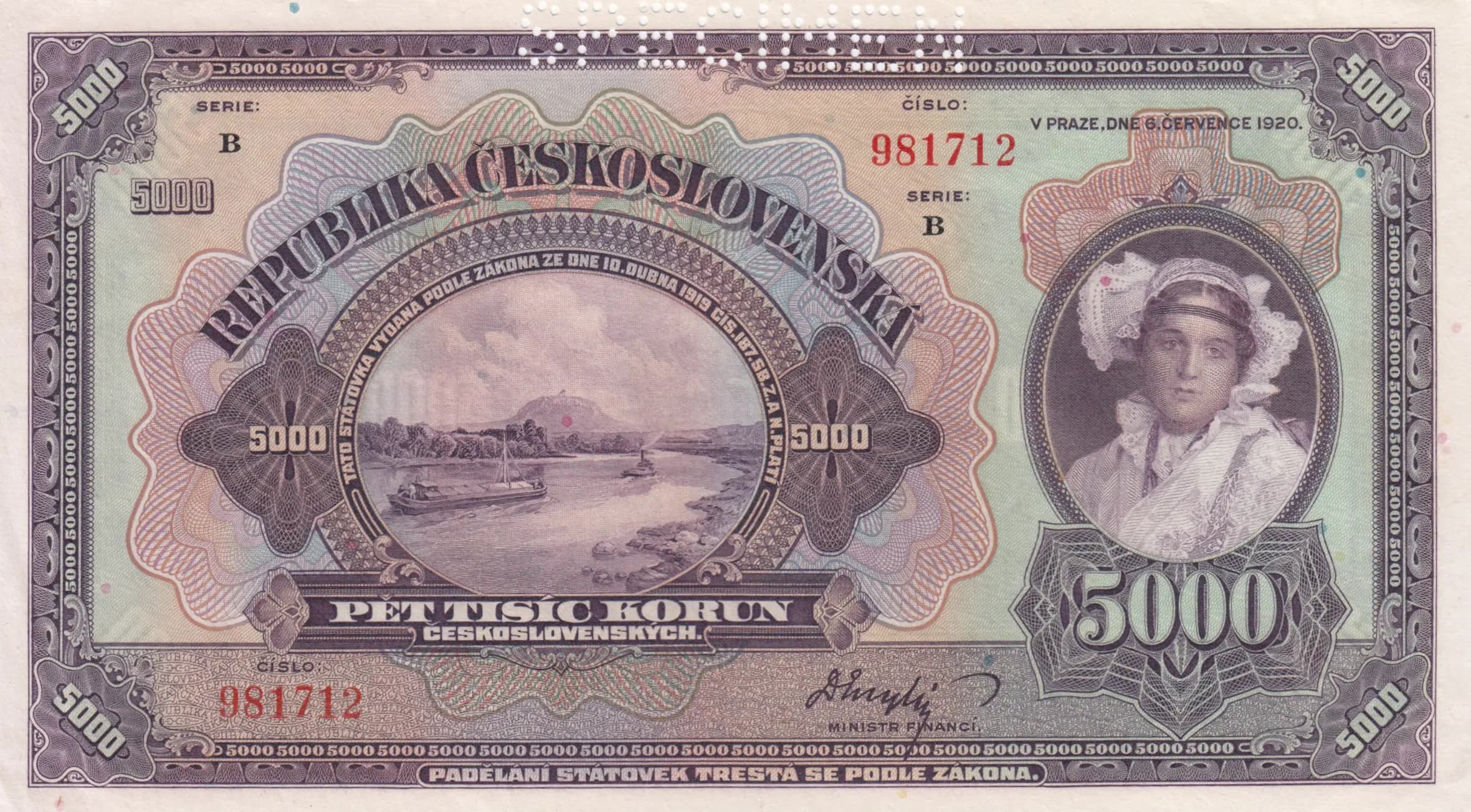
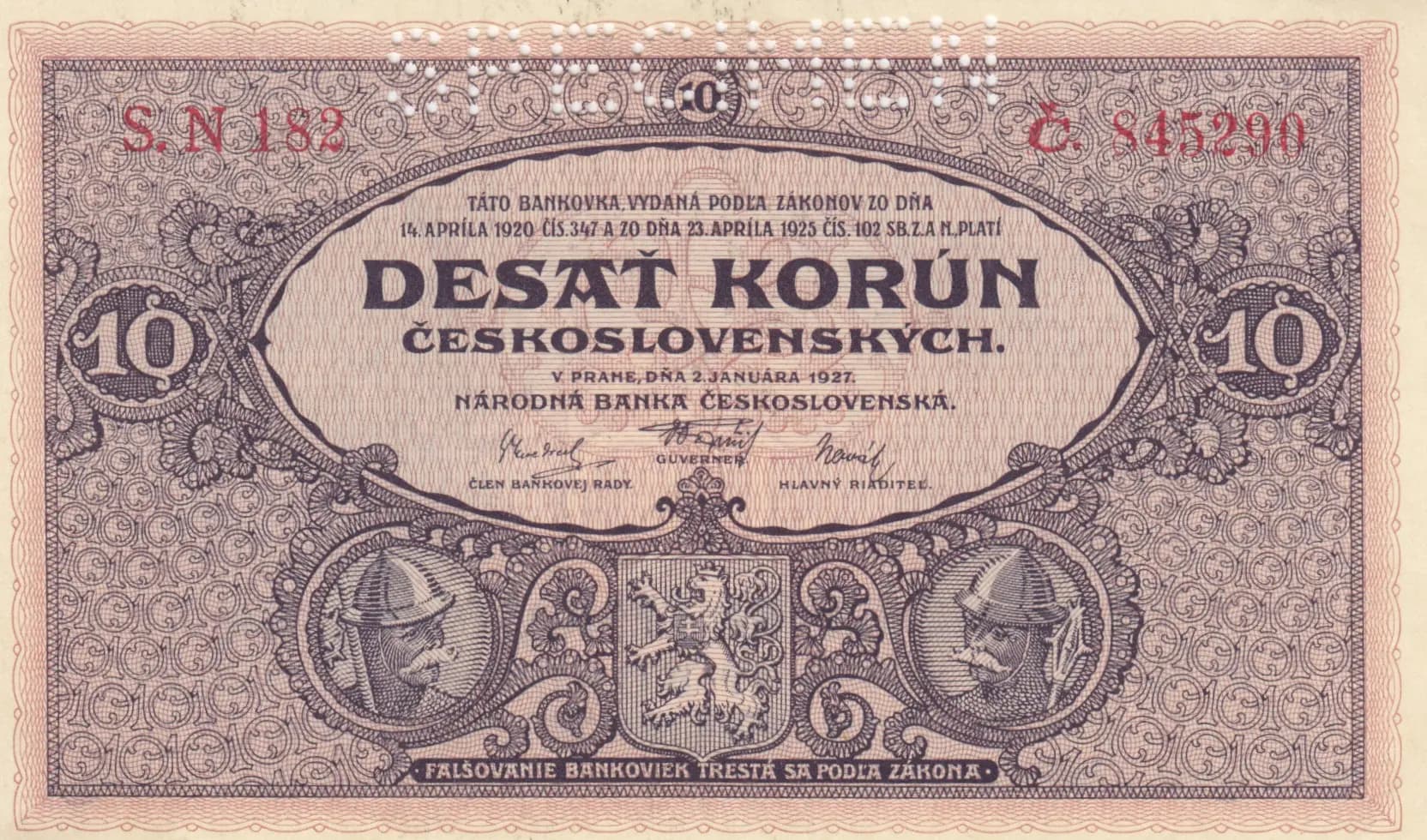
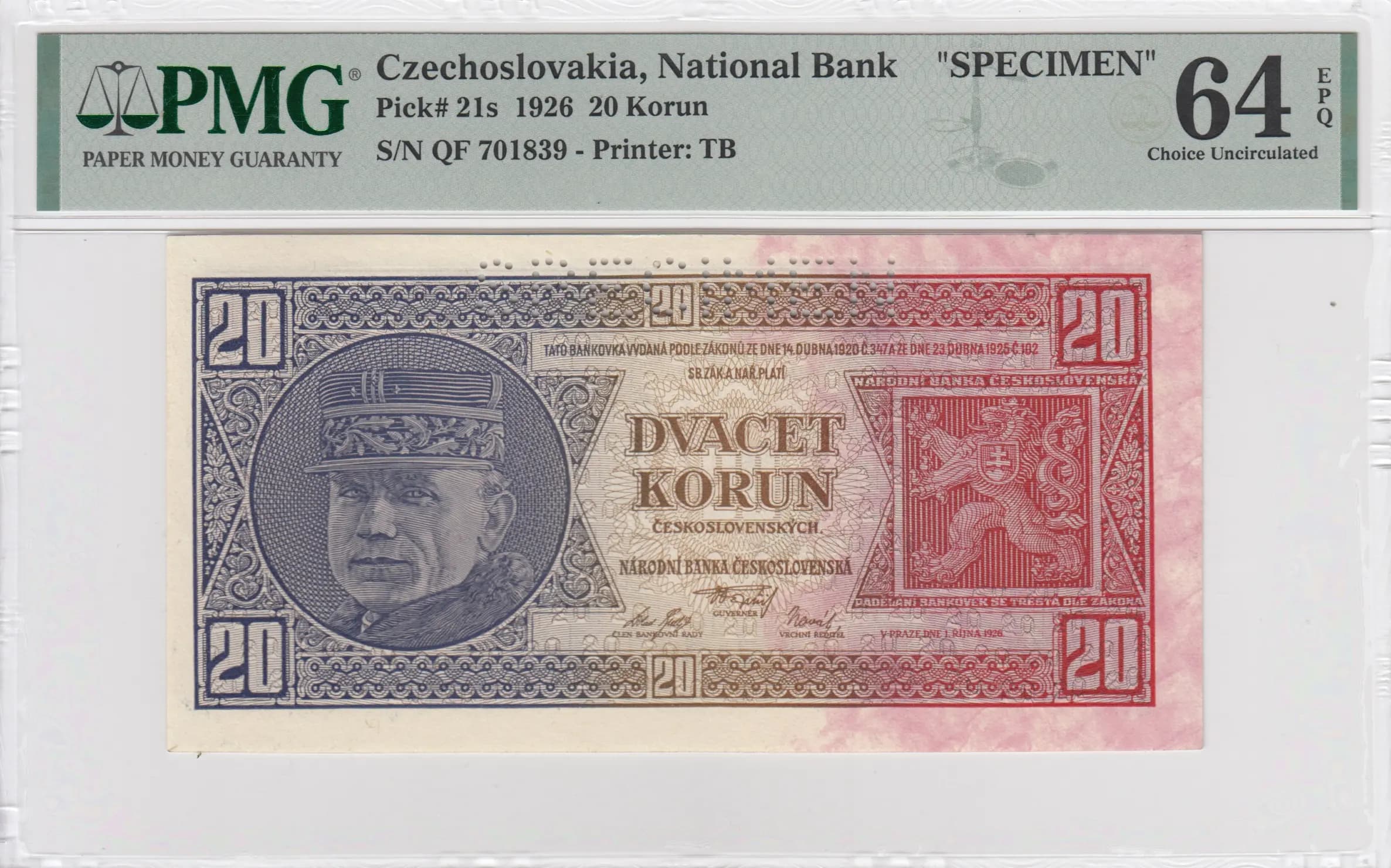
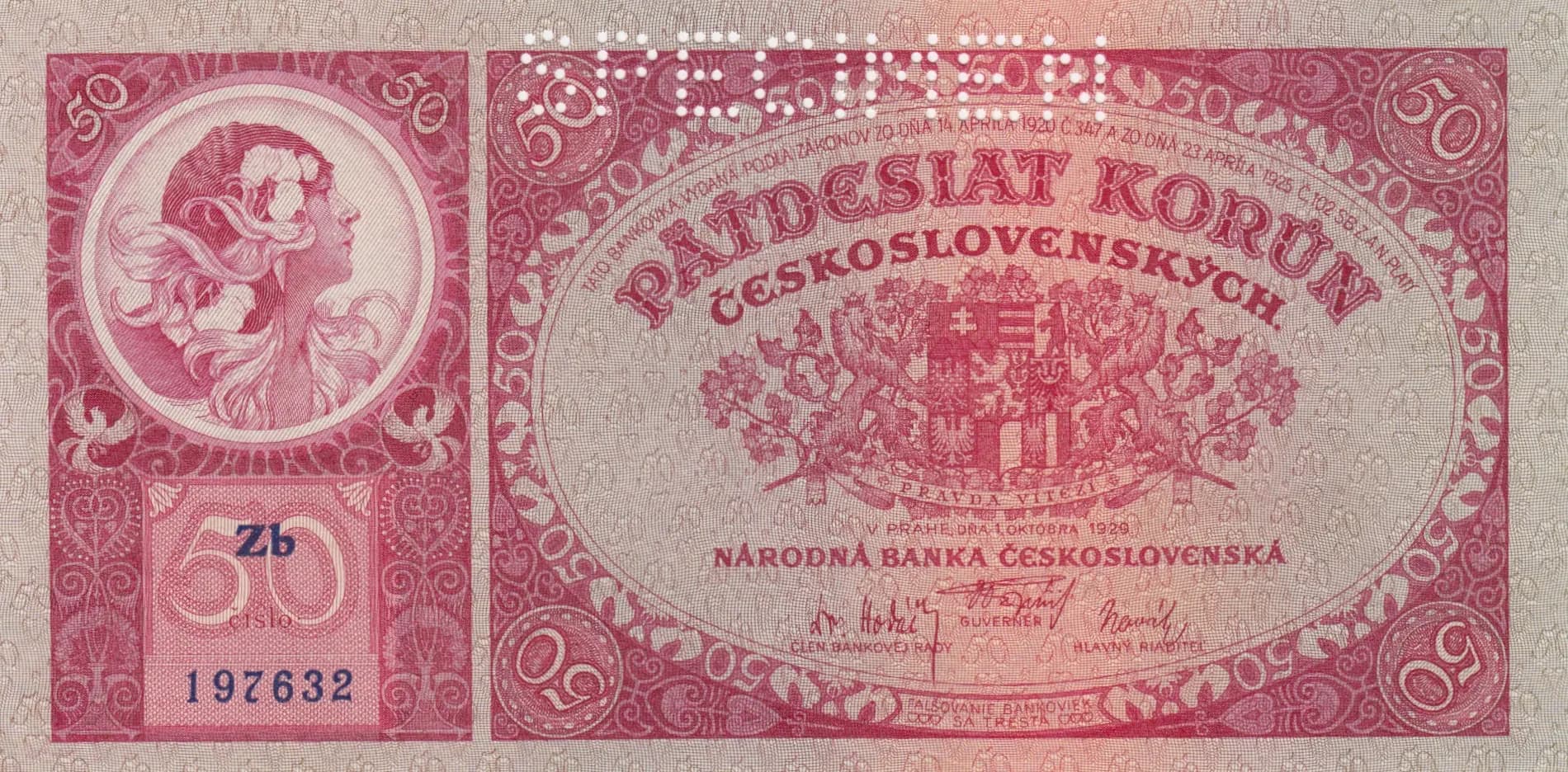
100 korun 1931 specimen
Market Prices
25 salesAbout This Note
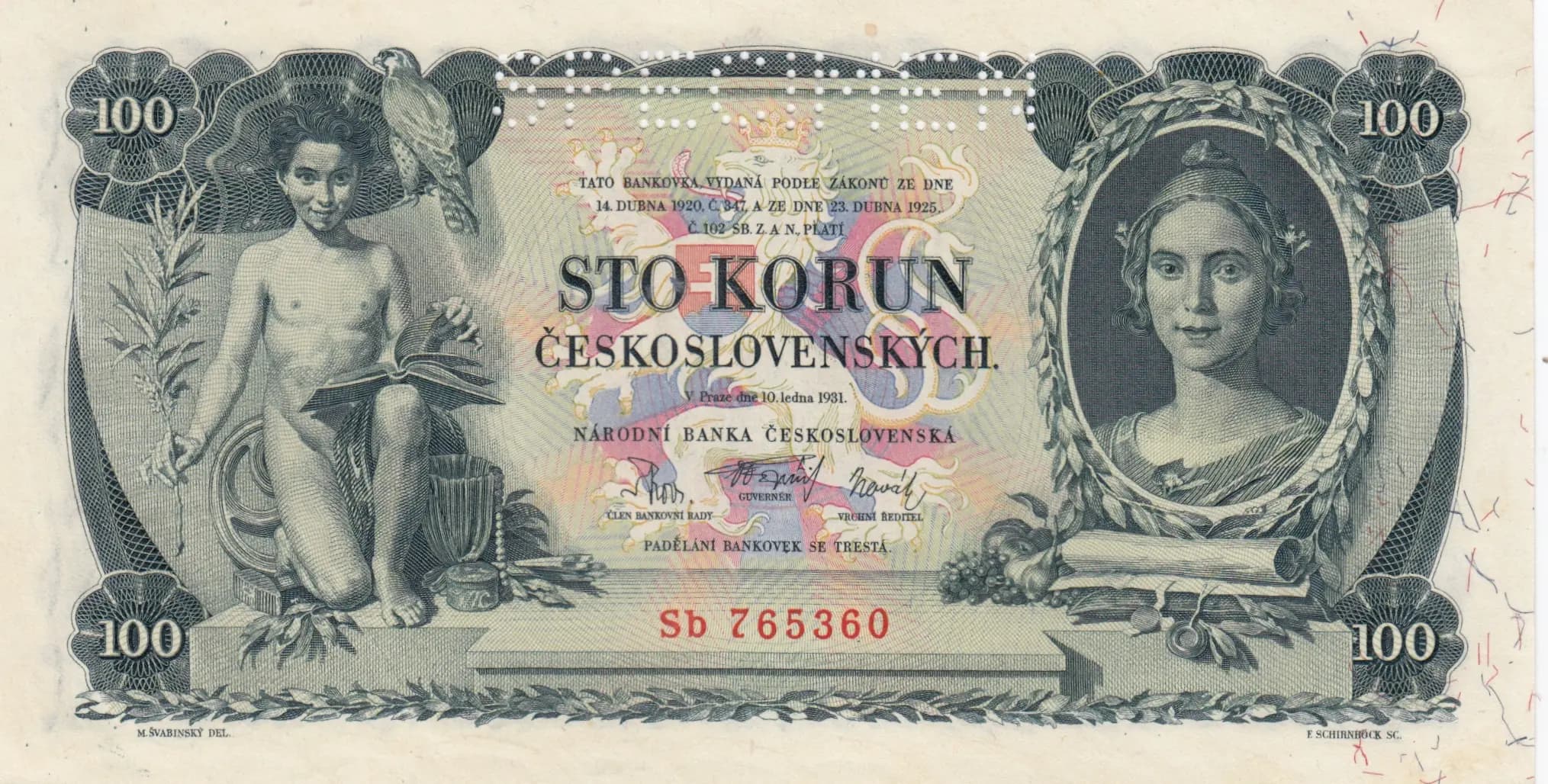
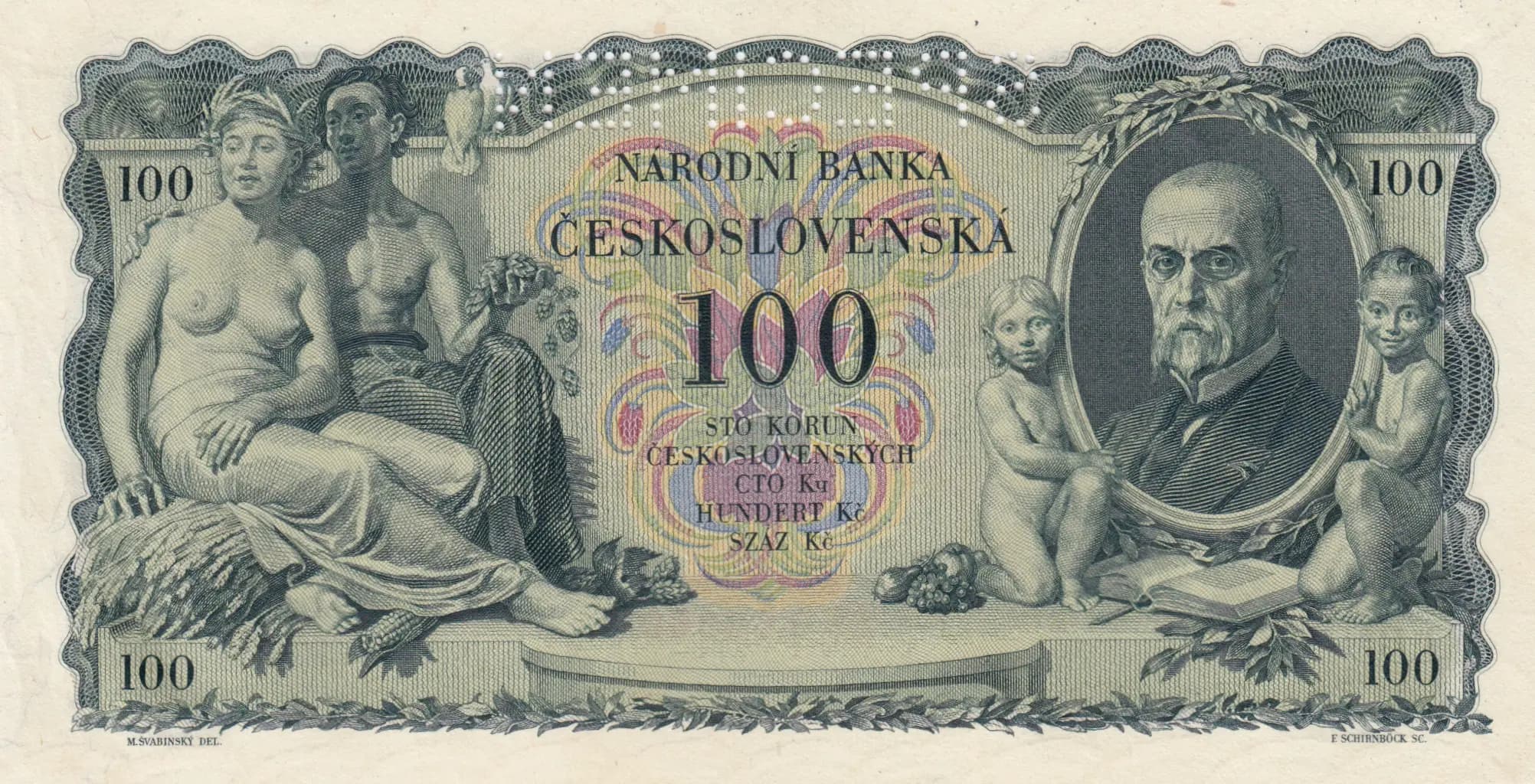
This is a 100 Korun specimen note from Czechoslovakia dated January 10, 1931, issued by the Národní Banka Československá. The note features ornate allegorical designs on both sides with fine line engraving, displaying a boy with falcon and Liberty on the obverse, and President Tomáš Garrigue Masaryk's portrait on the reverse. The AU condition grade reflects light wear consistent with age and handling, with visible creasing and light foxing throughout, though the intricate design remains well-preserved and legible.
Common. This note, though a specimen variety (indicated by the perforated SPECIMEN marking), trades regularly on secondary markets with consistent eBay sales activity documented from 2010 through 2024. Recent sales range from $12.50 to $130.50 depending on condition grade, with an average around $30-35 for circulated examples and UNC specimens bringing $40-50. The broad availability and frequent auction appearances indicate a common issue within Czechoslovak currency collecting.
This note was issued during the early years of the Czechoslovak Republic, following the country's independence in 1918. The 1931 date reflects a period of relative stability in the newly formed nation, and the imagery—featuring Liberty, allegorical figures, and President Masaryk—emphasizes national identity and democratic values. The multilingual inscriptions in Czech, German, and Hungarian reflect Czechoslovakia's ethnically diverse population during this interwar period.
The obverse features a complex allegorical composition with a boy holding a falcon at the left, the national arms at center, and Liberty personified at the right. The reverse presents an elaborate allegorical scene with a seated female figure (representing wisdom or the nation) on the left, male allegorical figure, and a central portrait of President Tomáš Garrigue Masaryk in an oval frame flanked by cherub figures. Both sides are framed with ornate decorative borders, rosettes, and laurel wreaths. The design was created by artist M. Švarinsky and engraved by F. Schirmbock, reflecting high-quality artistic craftsmanship typical of interwar Czechoslovak currency.
Front Side: 'NÁRODNÍ BANKA ČESKOSLOVENSKÁ' (National Bank of Czechoslovakia); 'STO KORUN ČESKOSLOVENSKÝCH' (One Hundred Czechoslovak Koruna); 'TATO BANKOVKA VYDANÁ PODLE ZÁKONA ZE DNE 14. DUBNA 1920, č. 341 A ZE DNE 23. DUBNA 1925' (This banknote issued according to the law of April 14, 1920, no. 341 and of April 23, 1925); 'Praze dne 10. ledna 1931' (Prague, January 10, 1931); 'CLEN BANKOVNÍ RADY' (Member of Bank Board); 'VŘÍCÍM ŘEDITELI' (Vice Director); 'PADĚLÁNÍ BANKOVEK SE TRESTÁ' (Counterfeiting banknotes is punished); 'M.ŠVARINSKY DEL.' (M. Švarinsky designed); 'F.SCHIRMBOCK SC.' (F. Schirmbock engraved); Serial number 'SD 765360'. Back Side: 'NÁRODNÍ BANKA ČESKOSLOVENSKÁ' (National Bank of Czechoslovakia); 'STO KORUN ČESKOSLOVENSKÝCH' (One Hundred Czechoslovak Koruna); multilingual denominations: 'CTO Kč' (Czech), 'HUNDERT Kč' (German), 'SZÁZ Kč' (Hungarian); 'M.ŠVARINSKY DEL.' and 'F.SCHIRMBOCK SC.' (artist attributions).
The note was produced using intaglio (line engraving) printing, executed by TB (Tisk v Brně/Printing in Brno), Prague. The security features include intricate line engraving patterns throughout, fine cross-hatching in background areas, multiple decorative borders, and colored overprinting applied to central text and denomination areas. This represents the high-security standard printing methods employed by Czechoslovak authorities in the early 1930s.
This is specifically identified as Pick P-23s, the specimen variety of the 1931 100 Korun note. The 's' designation in the Pick catalog indicates this is a specimen note, distinguishable by the perforated 'SPECIMEN' marking visible on the banknote. The printer is identified as TB (Prague). Serial number variant SD 765360 is noted on this particular example. Specimen notes were produced for bank distribution and archival purposes, making them slightly less common than regular circulation issues, but still readily available in the collector market.