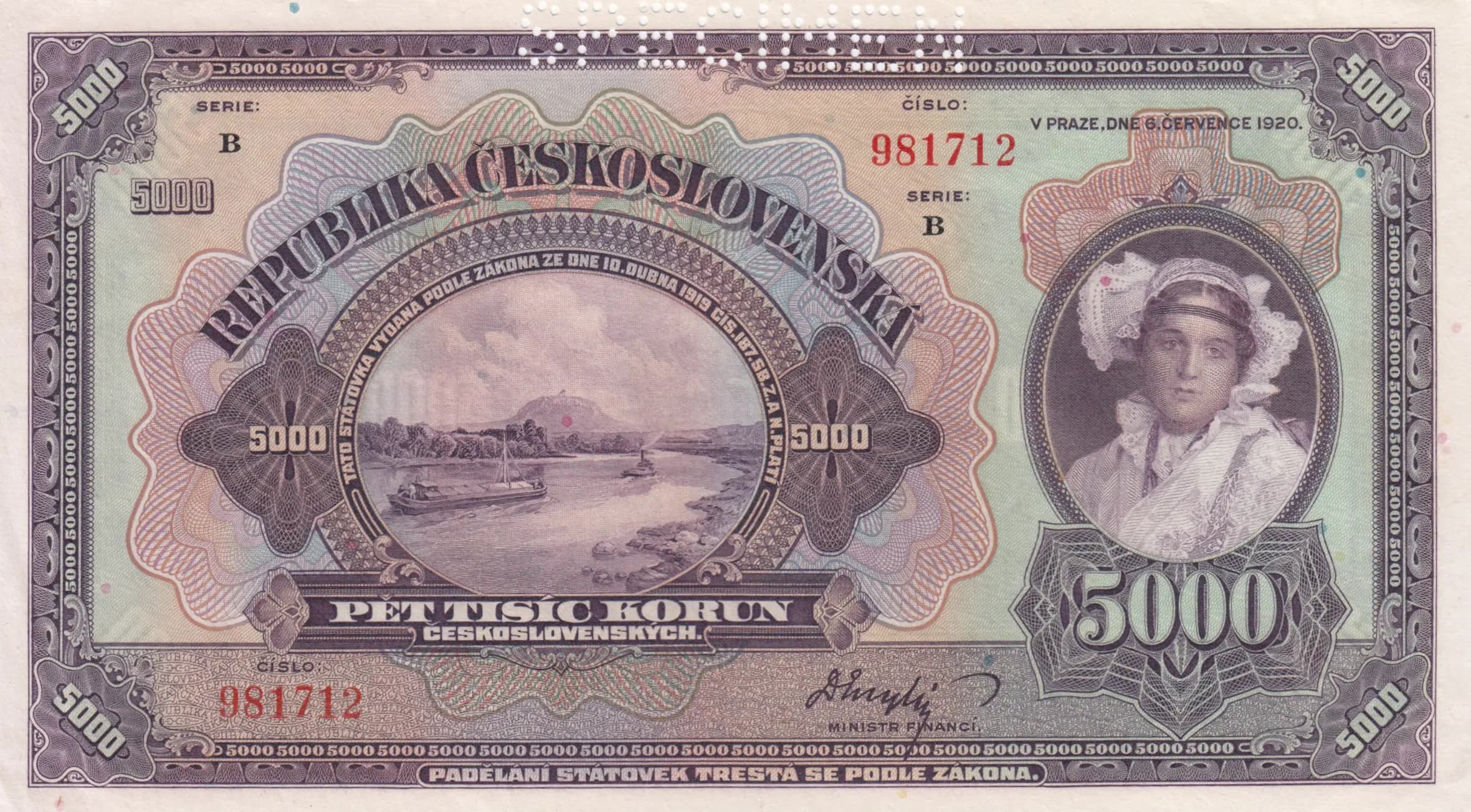
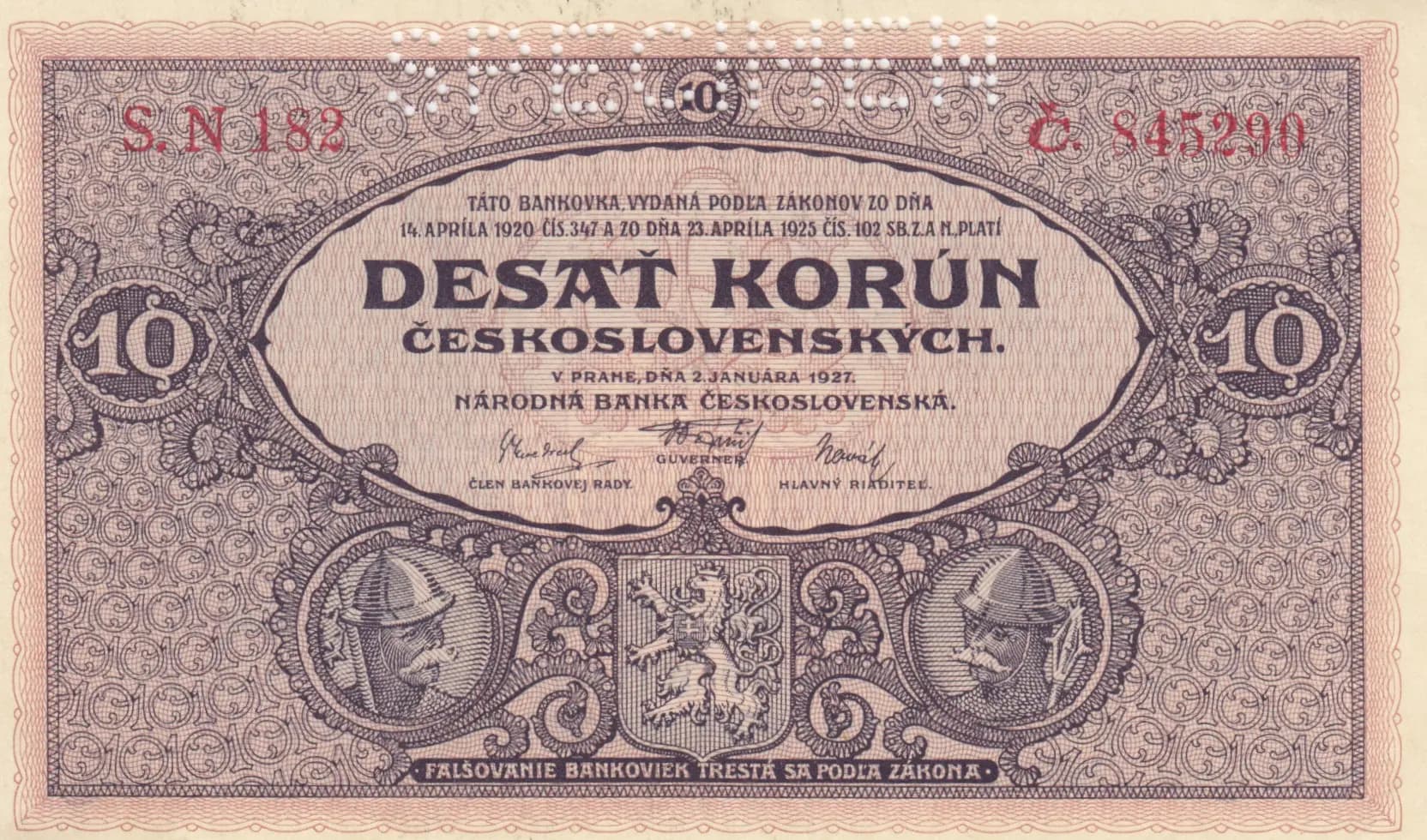
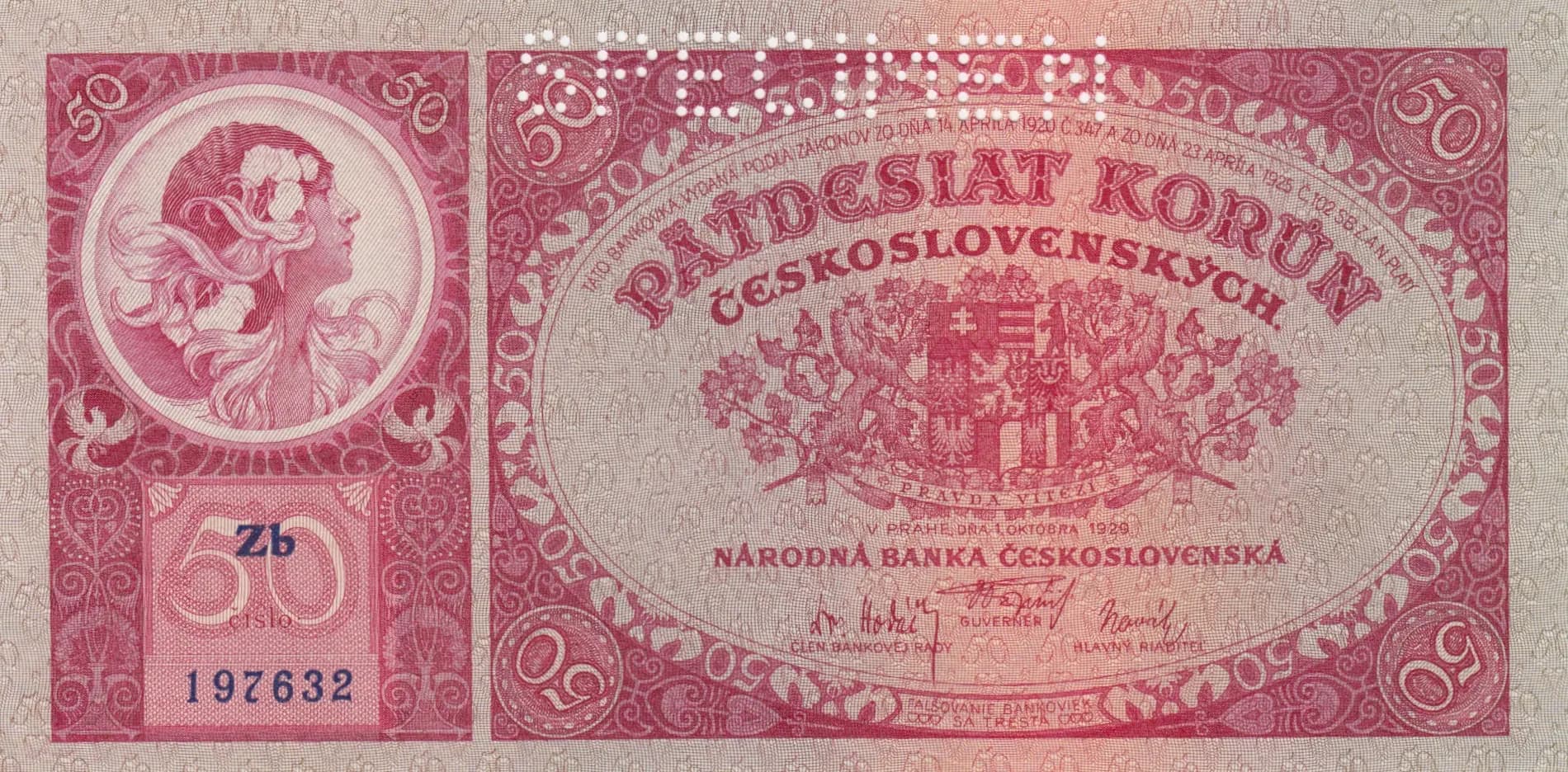
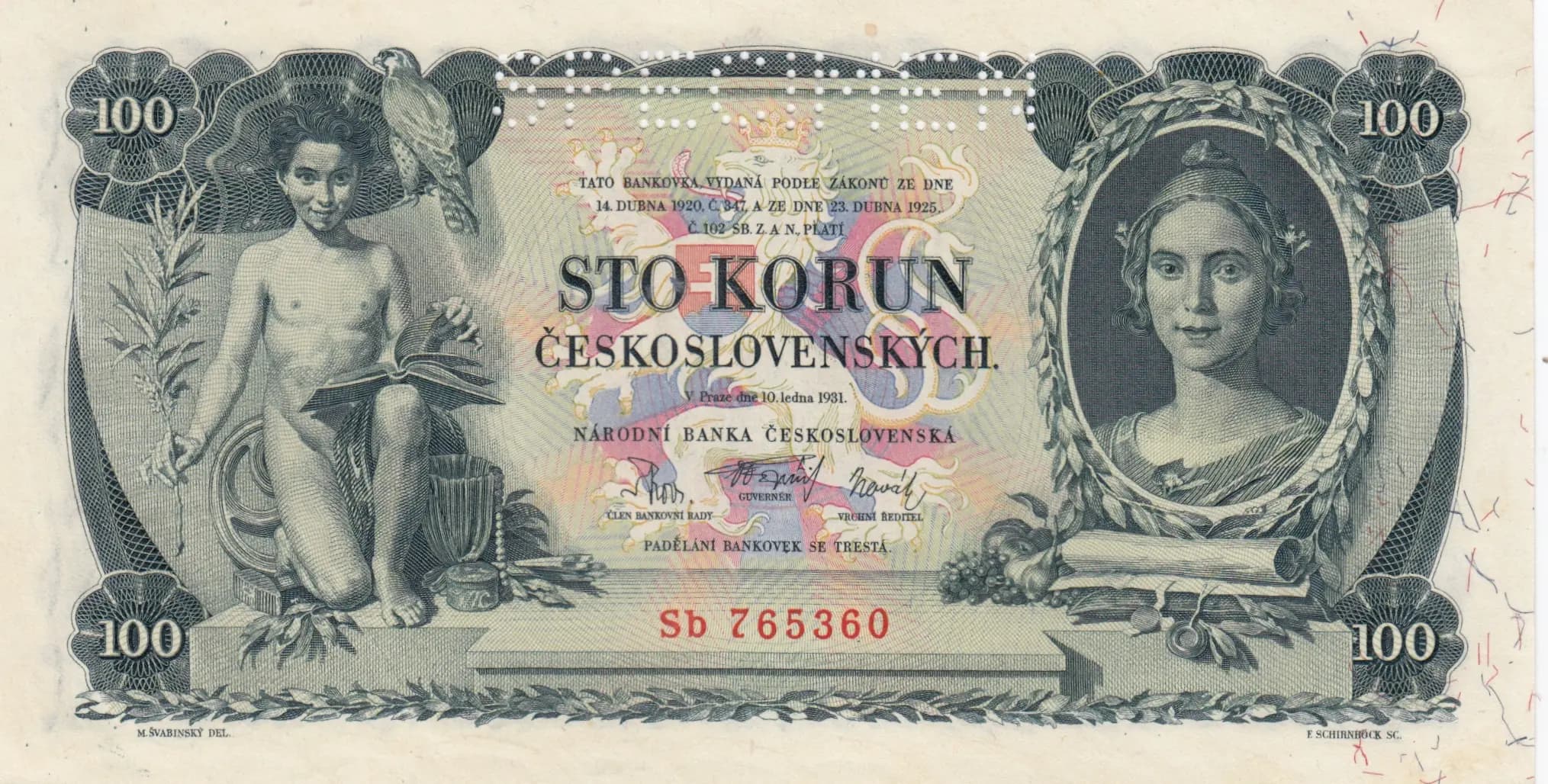
20 korun 1926 specimen
Market Prices
26 salesAbout This Note
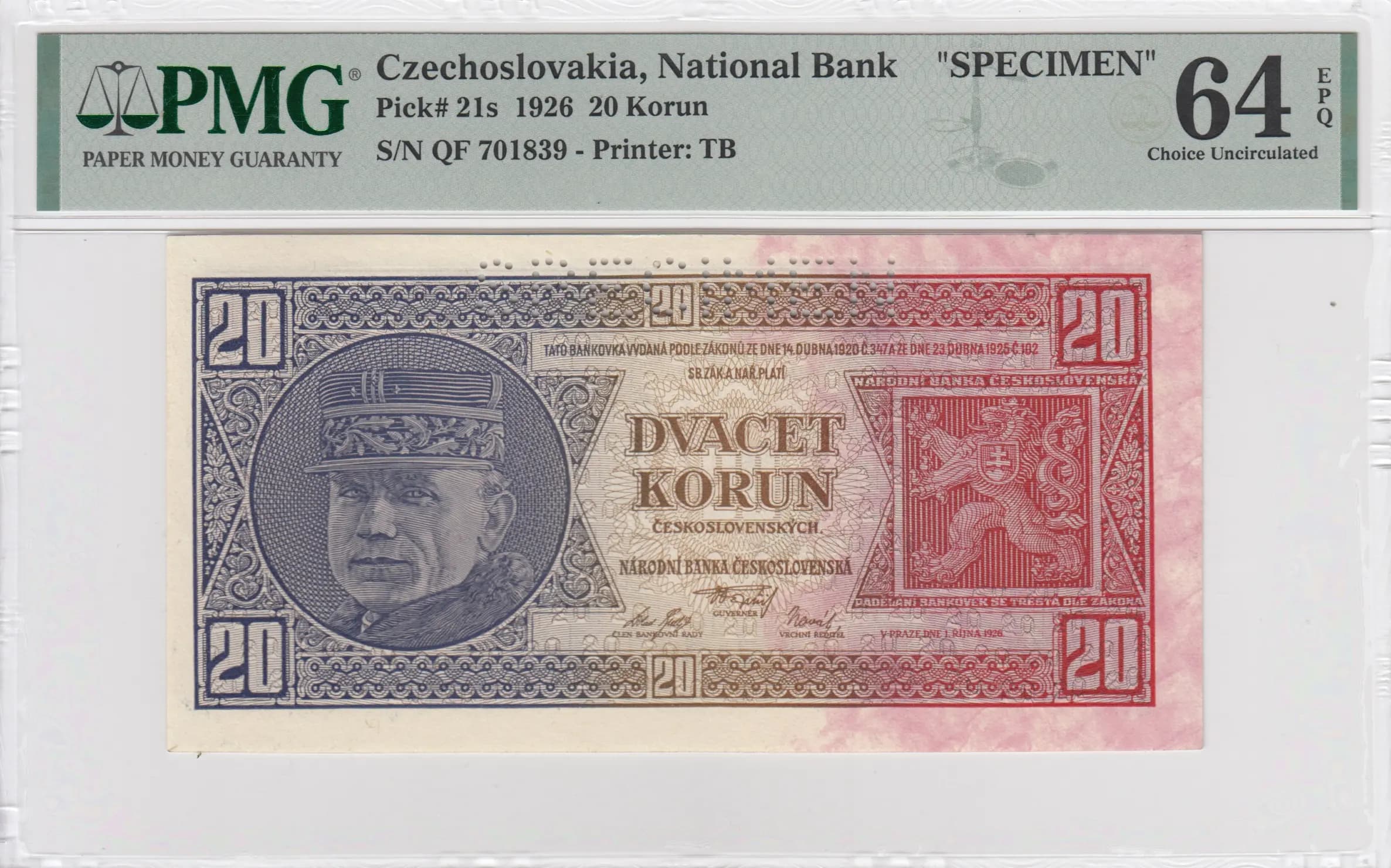
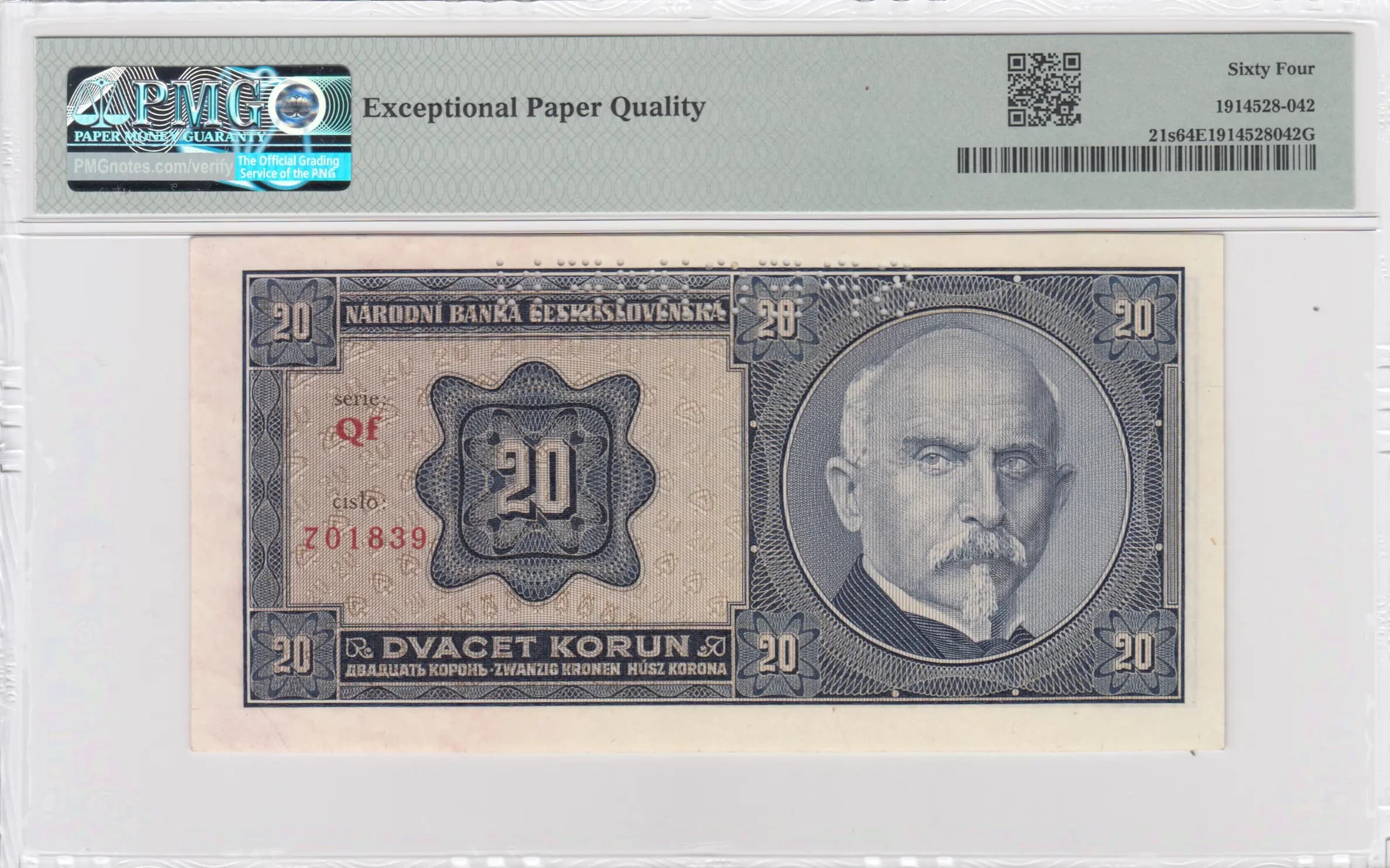
This is a PMG-graded Choice Uncirculated 64 EPQ specimen of the 1926 Czechoslovak 20 Korun note, featuring the distinctive tri-color design (blue, red, and tan) with General Milan Rastislav Stefanik's portrait in a circular frame on the obverse and Dr. Alois Rasin's portrait on the reverse. As a specimen note with perforated 'SPECIMEN' marking and QF series designation, it represents an institutional or promotional printing variant that never saw circulation, making it a particularly desirable collectible for Czechoslovak numismatists.
Common. While specimen notes represent institutional printings and are less frequently encountered than regular circulation examples, eBay market data for this Pick number shows consistent sales activity with prices typically ranging from $5-$31 depending on grade and certification, with PMG 64 examples having sold for $56 in 2019 but more recently in the $15-$25 range. The existence of multiple recorded sales and the availability of both P-21a (regular) and P-21s (specimen) variants in the PMG population report indicate adequate supply in the collector market. Specimen notes of this era are collectible but not scarce.
Issued on October 1, 1926, by the Národní Banka Československá following the April 23, 1926 legislative authorization, this note commemorates two significant figures in Czechoslovak history: General Milan Rastislav Stefanik, a key military and political figure in Czechoslovak independence, and Dr. Alois Rasin, the architect of Czechoslovak fiscal policy and first Finance Minister. The trilingual inscriptions (Czech, German, and Hungarian) reflect the multinational composition of the Czechoslovak state during the interwar period.
The obverse features General Milan Rastislav Stefanik in left-facing profile within an ornate circular frame, positioned on the left portion of the note rendered in blue. The right side displays the Czechoslovak coat of arms with heraldic emblems and scrollwork in red. The denomination '20' appears in all four corners. The reverse presents Dr. Alois Rasin in right-facing profile with a distinctive mustache, enclosed in an oval frame on the right side, while the left side features an elaborate ornate rosette or star-shaped design containing the denomination. Both sides employ intricate geometric and floral border patterns in black and tan tones. The design was created by artists Alois Mudrunka and Karel Wolf and printed by Haase Praha and TBNECS (Prague).
FRONT: 'DVACET KORUN ČESKOSLOVENSKÝCH' (Twenty Koruna of Czechoslovakia); 'NÁRODNÍ BANKA ČESKOSLOVENSKÁ' (National Bank of Czechoslovakia); 'TATO BANKOVKA VYDÁNA PODLE ZÁKONA ZE DNE 14. DUBNA 1920 č 397 A ZE DNE 23. DUBNA 1926 č 102 SBŘ. ZÁK A NAR PLAT' (This banknote issued according to the law from April 14, 1920 no. 397 and from April 23, 1926 no. 102 Collection of Laws and Decrees). BACK: 'DVACET KORUN' (Twenty Koruna); 'NÁRODNÍ BANKA ČESKOSLOVENSKÁ' (National Bank of Czechoslovakia); 'DVADZÁCT KORUN - ZWANZIG KRONEN HUSZ KORONA' (Twenty Koruna in Czech, German, and Hungarian); Series QF; Number z01839.
Intaglio engraving (steel plate engraving), evidenced by the fine-line guilloche patterns, intricate geometric borders, and complex security line work throughout both sides of the note. The tri-color capability indicates sophisticated engraving techniques. Printed by Haase Praha and Tiskárna Národní Banky Československé (TBNECS), Prague, both specialized security printers.
This is the P-21s variant (specimen issue) as opposed to P-21a (regular circulation notes). The specimen marking is indicated by perforated 'SPECIMEN' text and the QF series prefix with specimen number z01839. The note was printed in series A-Z and Aa-Zh for regular issues. The multilingual reverse (Czech, German, Hungarian) reflects standard design for Czechoslovak currency of this period intended for use across the multinational state. No signature varieties are apparent from the visual analysis provided.