500 korun 1929 specimen
Market Prices
30 salesAbout This Note
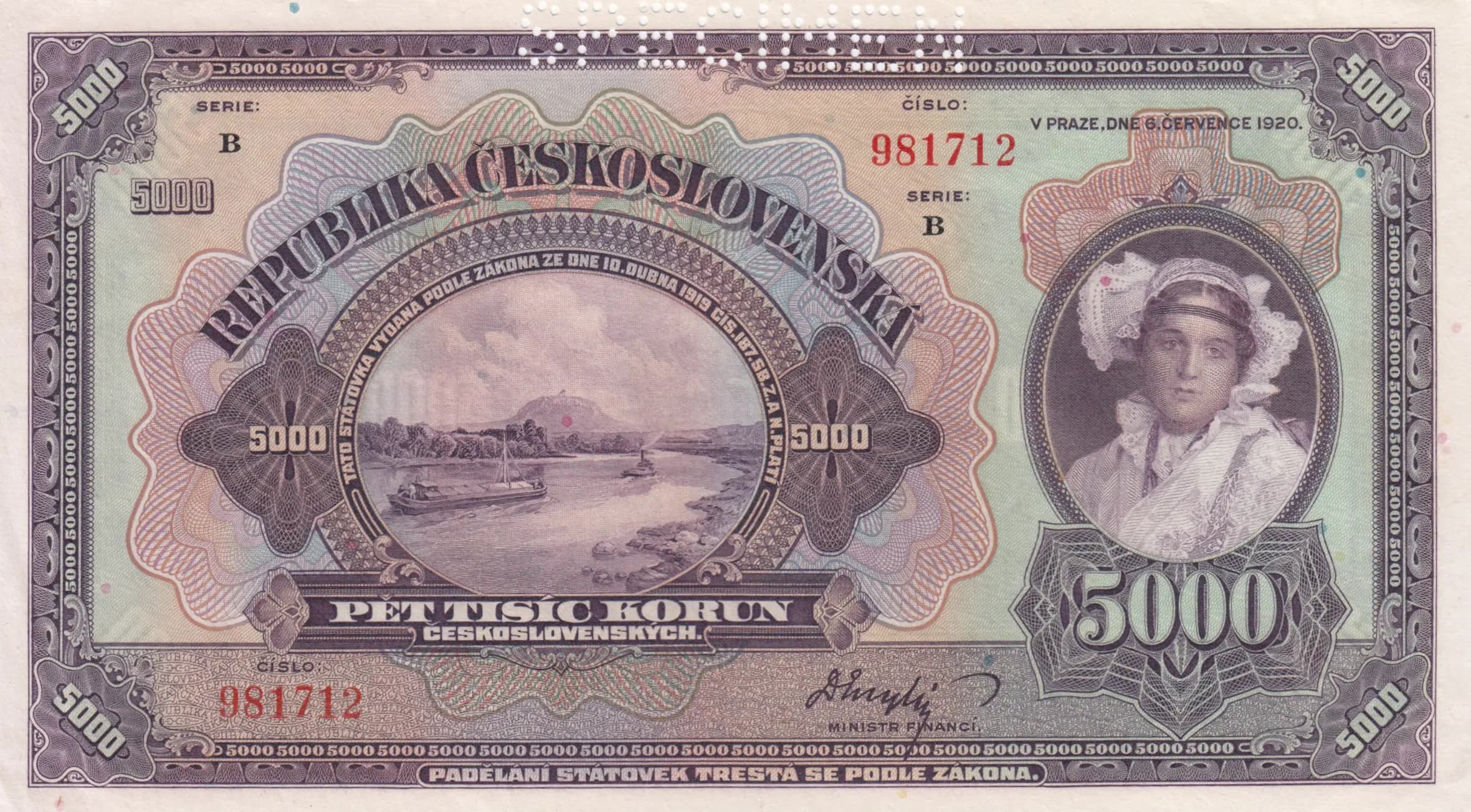
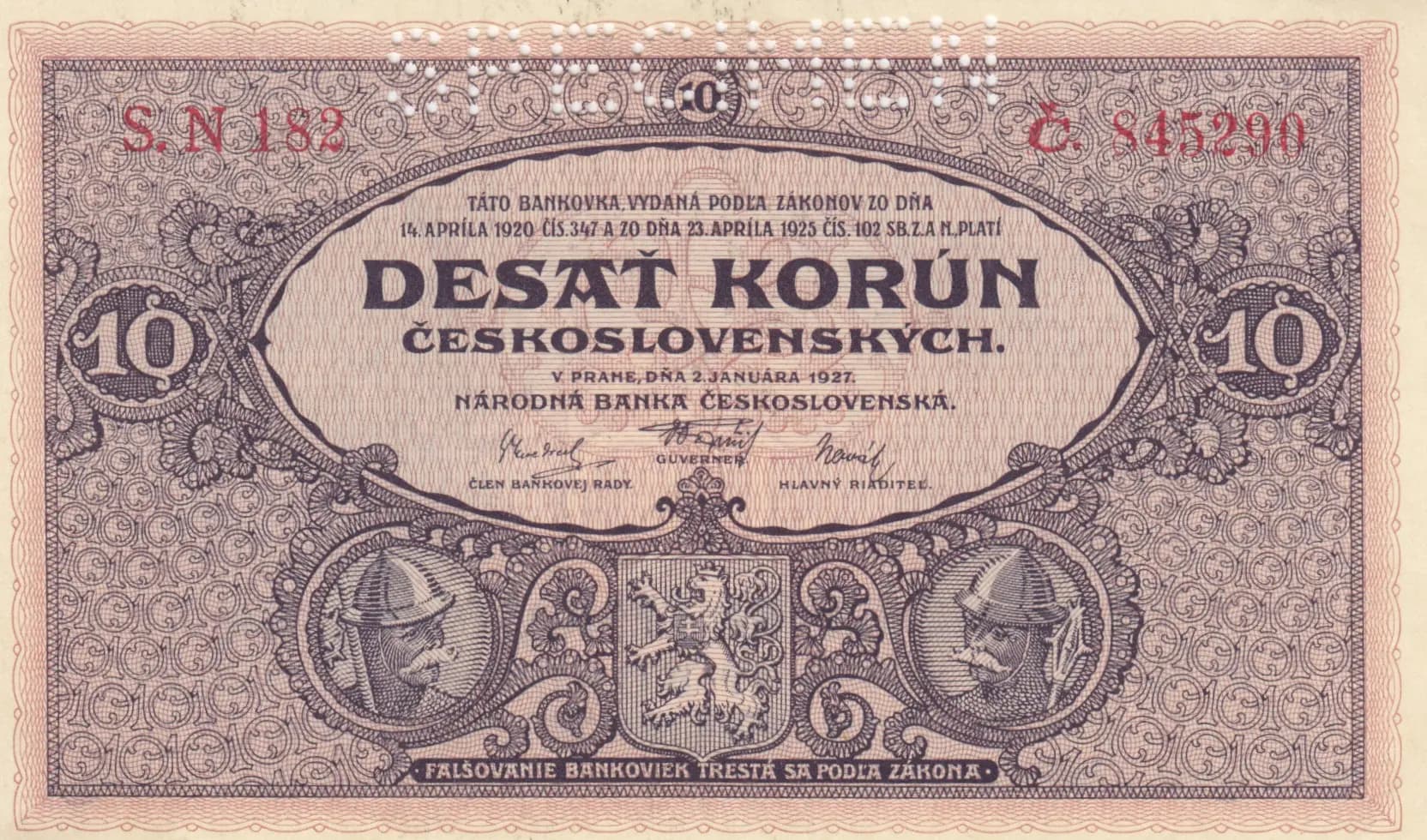
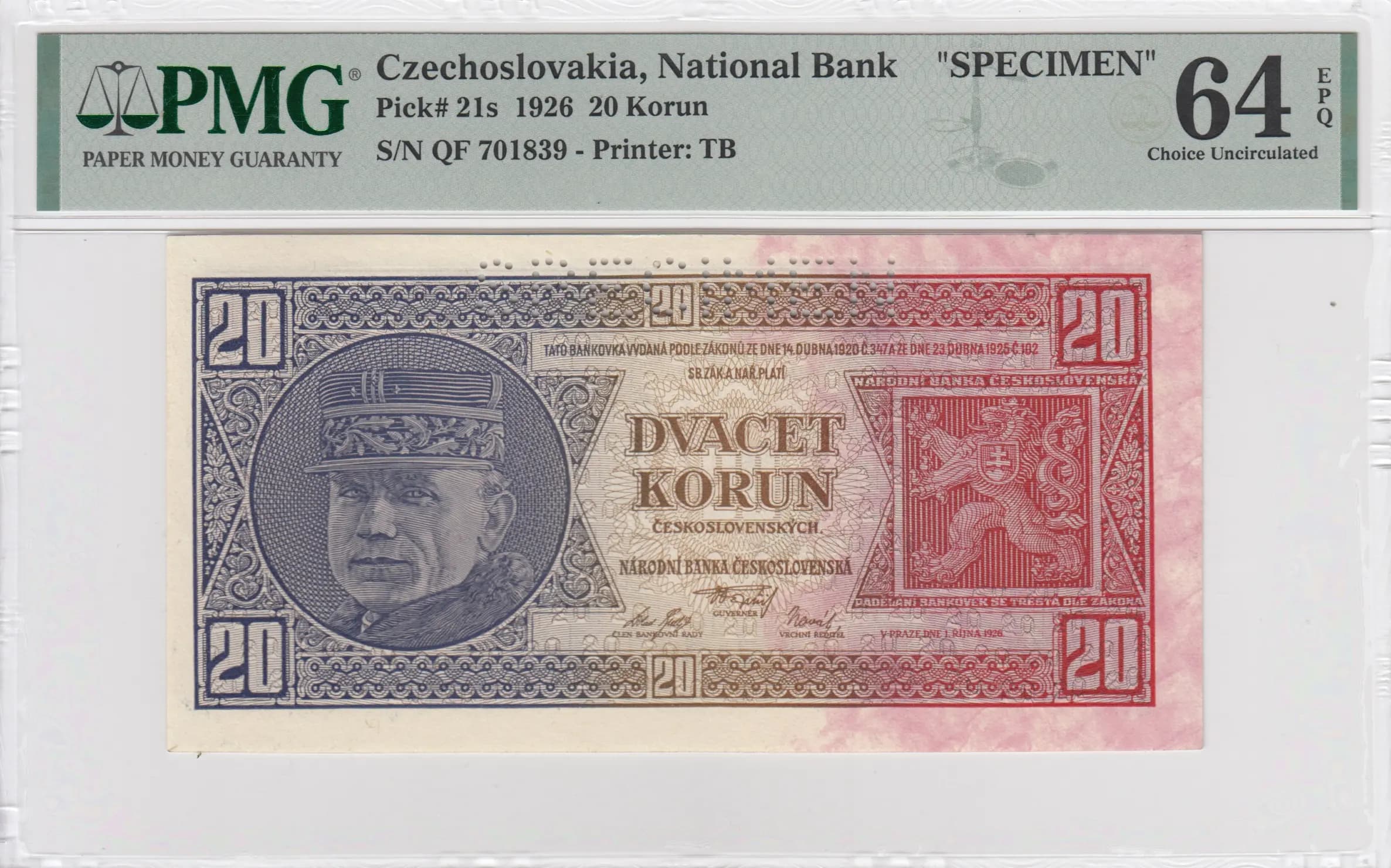
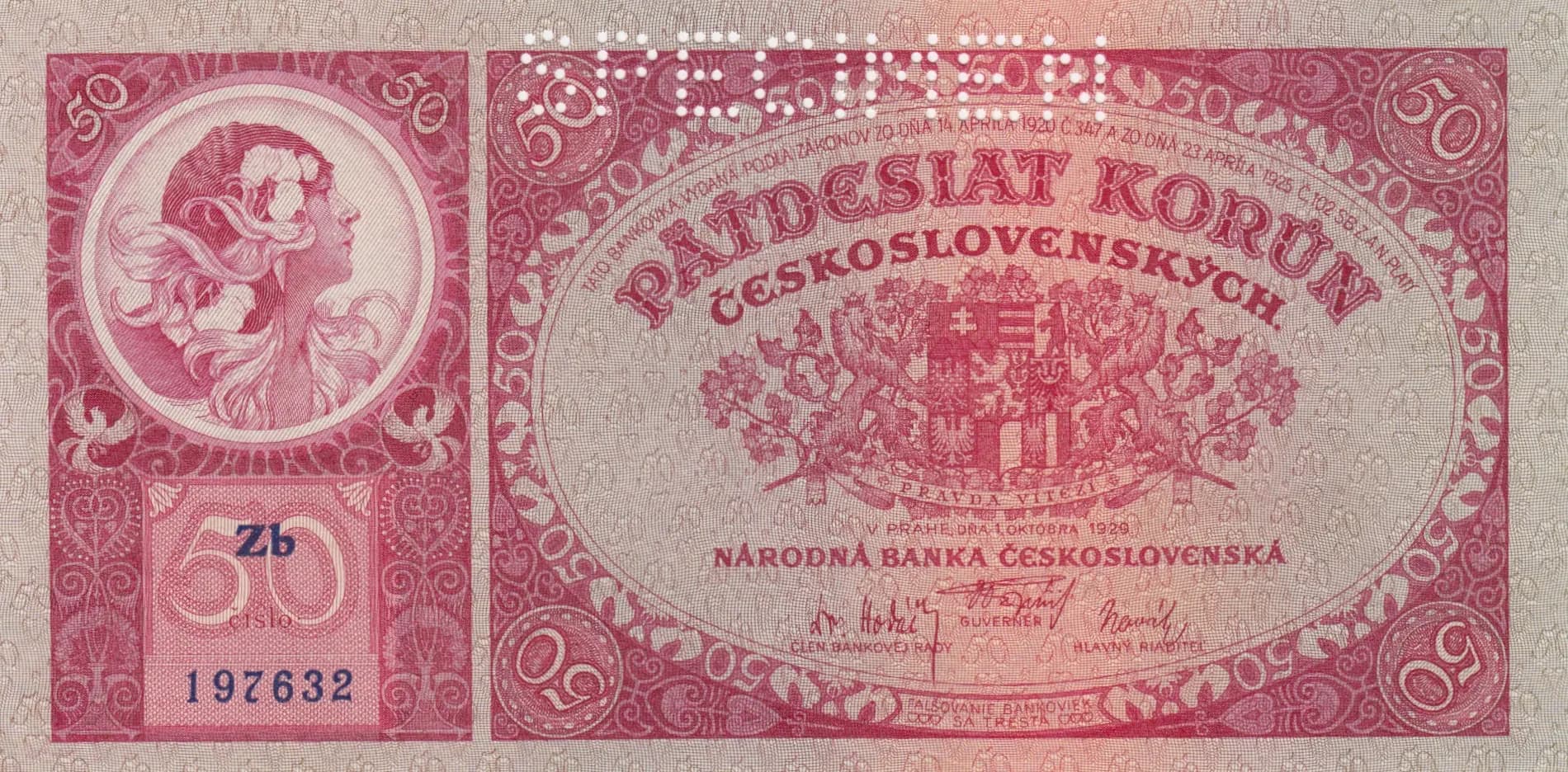
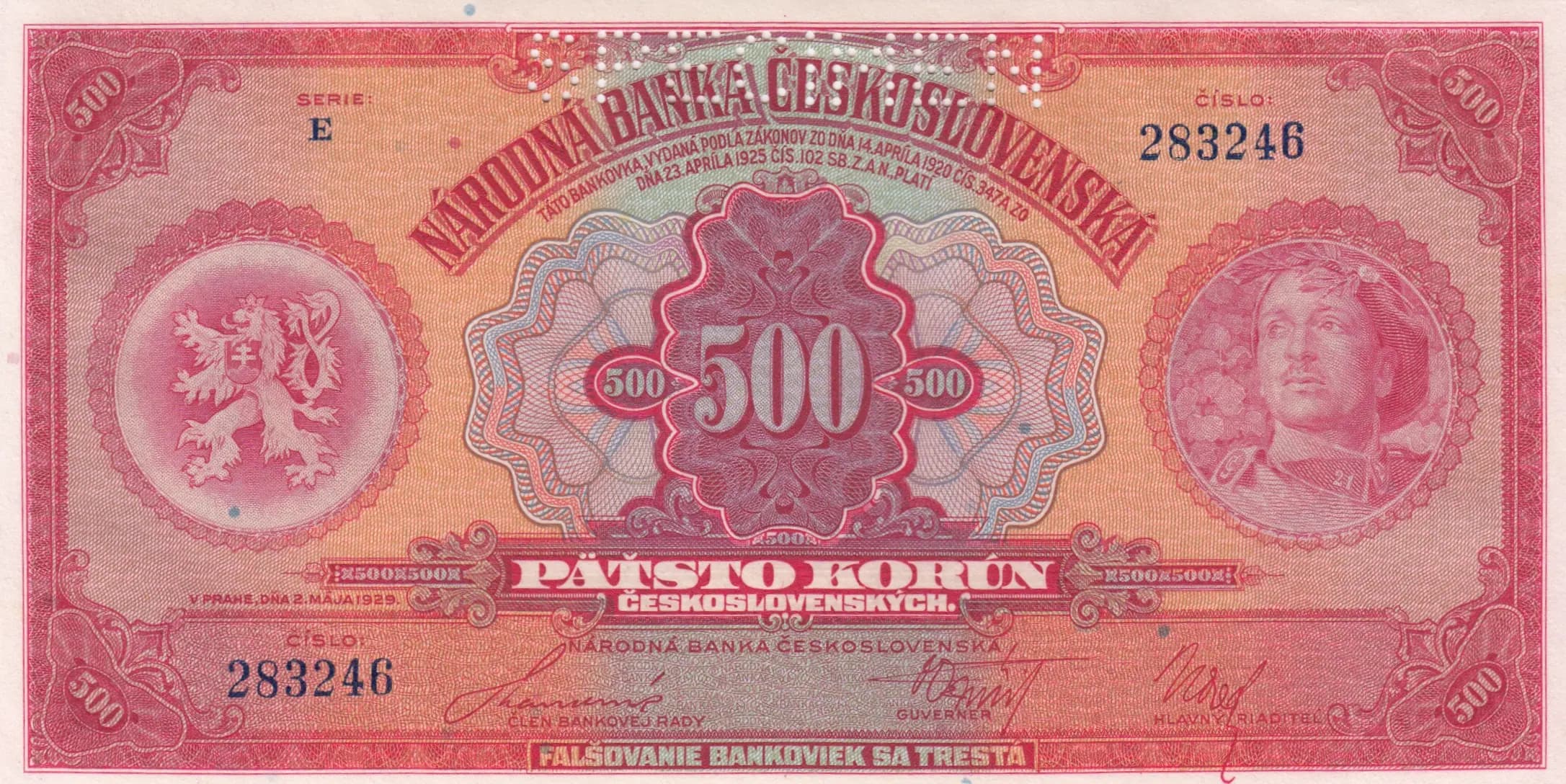
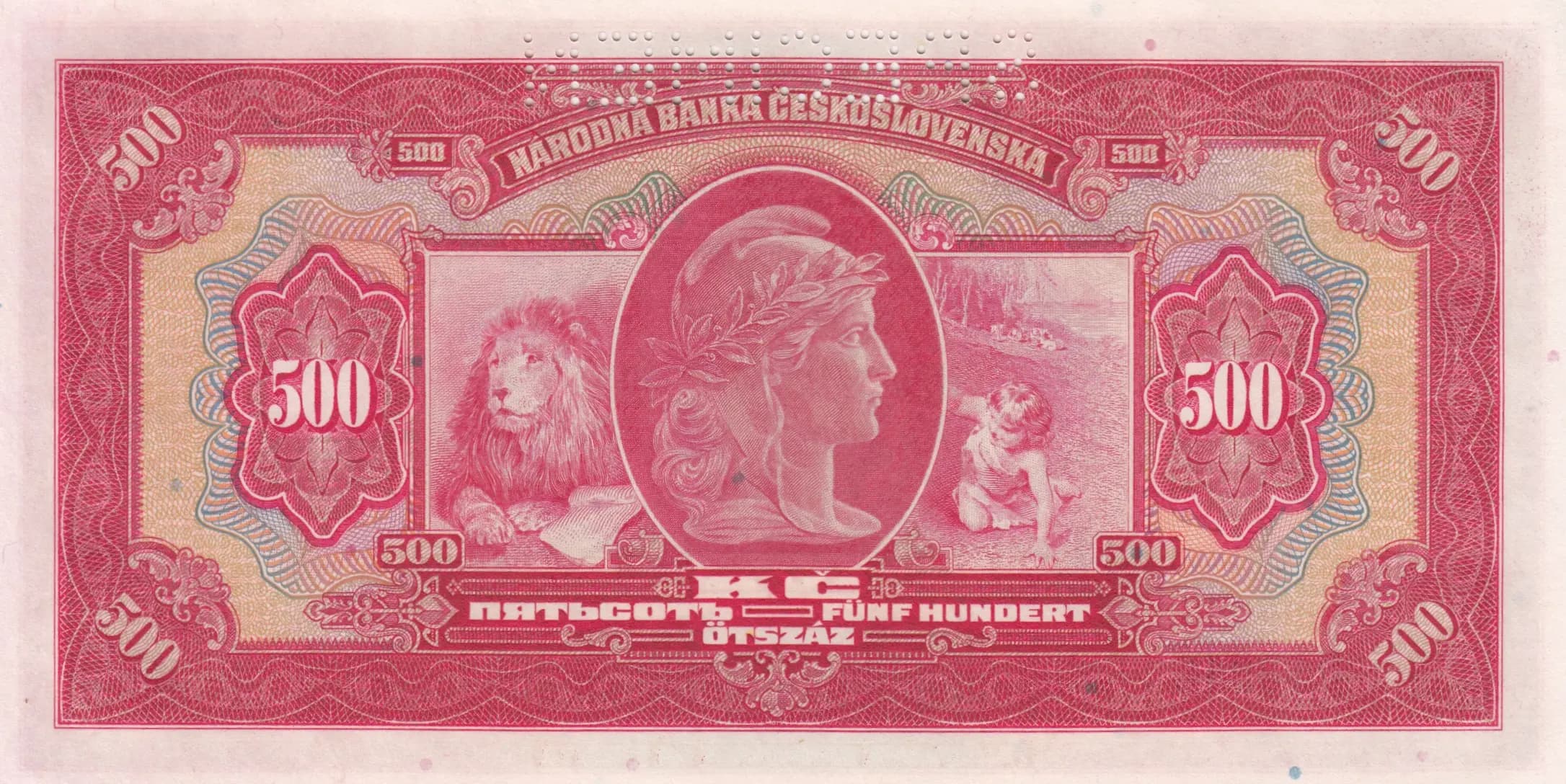
This is a striking 1929 specimen note from the Československá Republic's foundational currency period, rendered in elegant pink/red and cream tones with exceptional engraving detail throughout. The note displays the characteristic Art Deco styling of interwar Czechoslovak banknote design, featuring heraldic and allegorical imagery that reflects the newly independent nation's identity. In uncirculated condition with pristine surfaces and vibrant colors, this specimen note represents an important early example of Czechoslovak monetary design before the later 1930 series redesign.
Common. While this is a specimen note (marked PERFORATED: SPECIMEN), the eBay sales data shows consistent and frequent trading at modest prices ($10-$122.50 depending on condition grade), with multiple sales annually across the tracked period. The 2016 catalog value of $45 for UNC specimens and the observed sales patterns indicate this is a readily available note in the collector market. Specimen overprints were typically produced in moderate quantities for bank presentation and distribution purposes, and this note does not appear to be from a restricted mintage. The regular appearance in auctions at stable, modest prices confirms common status.
Issued on May 2, 1929, this note commemorates the early period of the Czechoslovak Republic following its establishment in 1918 after the collapse of the Austro-Hungarian Empire. The imagery—featuring a Czech legionnaire, heraldic lion, and allegorical Liberty figure with child—celebrates Czech national identity, military heritage, and the ideals of freedom underlying the new state. The choice of classical female portraits and protective symbolism reflects the optimistic, forward-looking design philosophy of the First Republic during the relative economic stability of the mid-1920s.
The obverse features the coat of arms of Czechoslovakia at left (heraldic lion with shield and crossed items) paired with a portrait of a Czech WWI legionnaire at right, symbolizing the military heroes who secured independence. The reverse showcases a central allegorical female portrait (representing Liberty or the Czechoslovak nation) in classical style with what appears to be a laurel wreath, flanked by a protective lion (national heraldry) on the left and a cherub or putto (child, symbolizing future generations or hope) on the right. The denomination '500' appears in four ornamental shield-shaped frames positioned symmetrically. The entire design employs fine engraved line work with elaborate scrollwork borders and floral motifs, creating a sophisticated, dignified appearance befitting a high-value denomination. The color scheme of rose-pink with cream and subtle blue-gray accents provides excellent contrast for security and visual appeal.
FRONT SIDE: 'STÁTNÍ BANKA ČESKOSLOVENSKÁ' / 'NÁRODNÍ BANKA ČESKOSLOVENSKÁ' (National Bank of Czechoslovakia); 'PĚTISET KORUN ČESKOSLOVENSKÝCH' (Five Hundred Crowns Czechoslovak); 'SÉRIE: E' (Series: E); 'ČÍSLO: 283246' (Number/Serial: 283246); '500' (denomination); 'V PRAZE, DNA 2. KVĚTNA 1922' (In Prague, May 2, 1922 [note: visual shows 1922 but catalog date is 1929, suggesting design date vs. issue date discrepancy]); 'FALSOVÁNÍ BANKOVEK SA TRESTÁ' (Counterfeiting of banknotes is punishable). BACK SIDE: 'NÁRODNÍ BANKA ČESKOSLOVENSKÁ' (National Bank of Czechoslovakia); '500' (denomination, repeated twice); 'PĚTI HUNDERT' (Five Hundred, in mixed German/Czech usage reflecting bilingual tradition).
Intaglio engraving (line engraving), the standard security printing method for banknotes of this period. The printer is identified as ABNC (American Bank Note Company), a leading international security printer with no imprint visible on the note itself, consistent with ABNC's practice of unmarked production for certain clients. The intricate fine-line engraving visible throughout—particularly in the decorative borders, portrait work, and scrollwork—is characteristic of ABNC's high-security intaglio production standards of the 1920s-1930s era.
Confirmed as P-24s (specimen variant). The visual analysis shows SÉRIE: E and serial number 283246, placing this in Series E. The catalog notes two variants exist: P-24a (standard) and P-24s (specimen). This example is the specimen variant, evidenced by the SPECIMEN perforation marking (standard for specimen notes intended for display and distribution rather than circulation). The ABNC printer attribution without imprint and the Series D/G references from realbanknotes.com suggest multiple series and print runs existed for this denomination, though this specific specimen represents the 'S' variant designation.