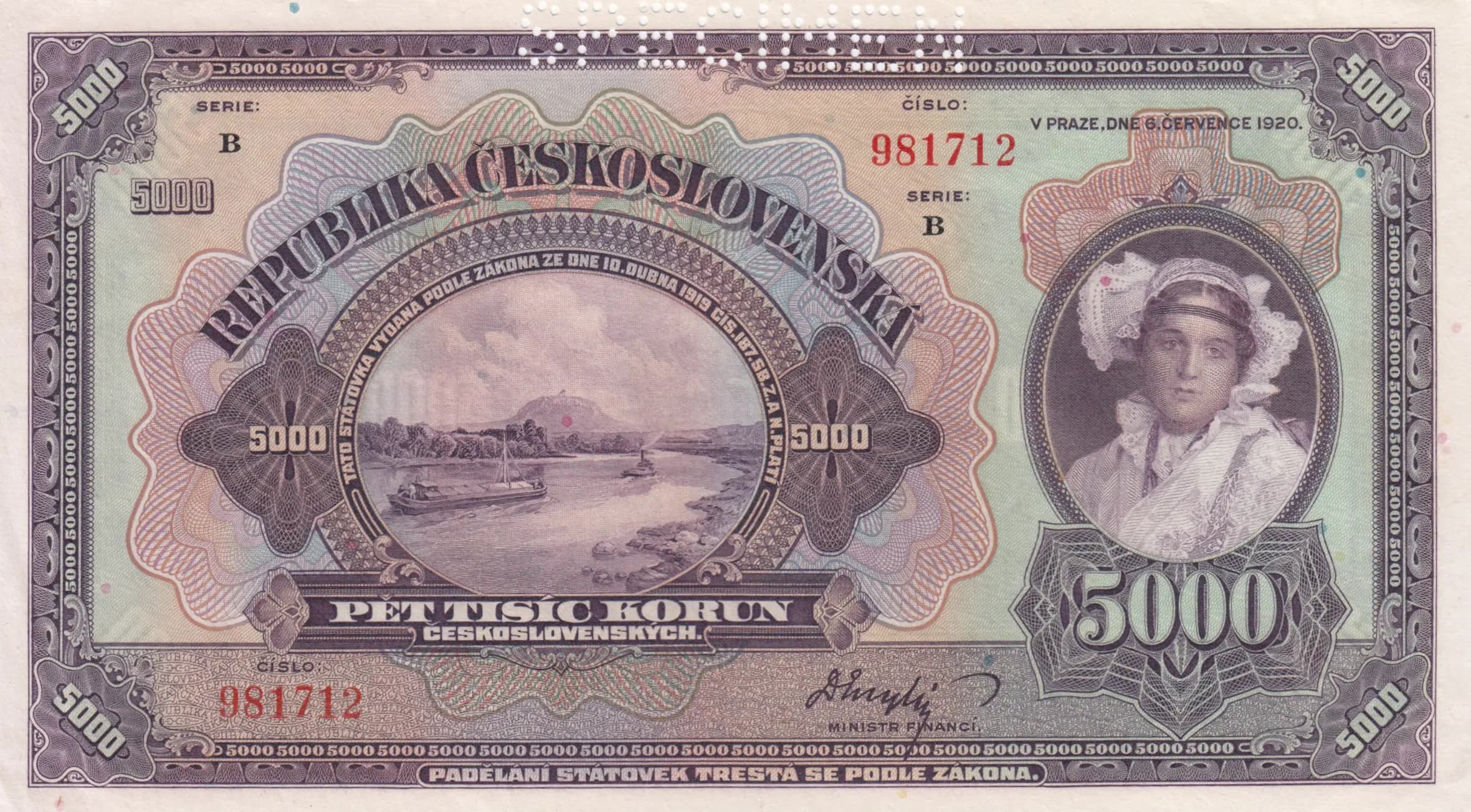
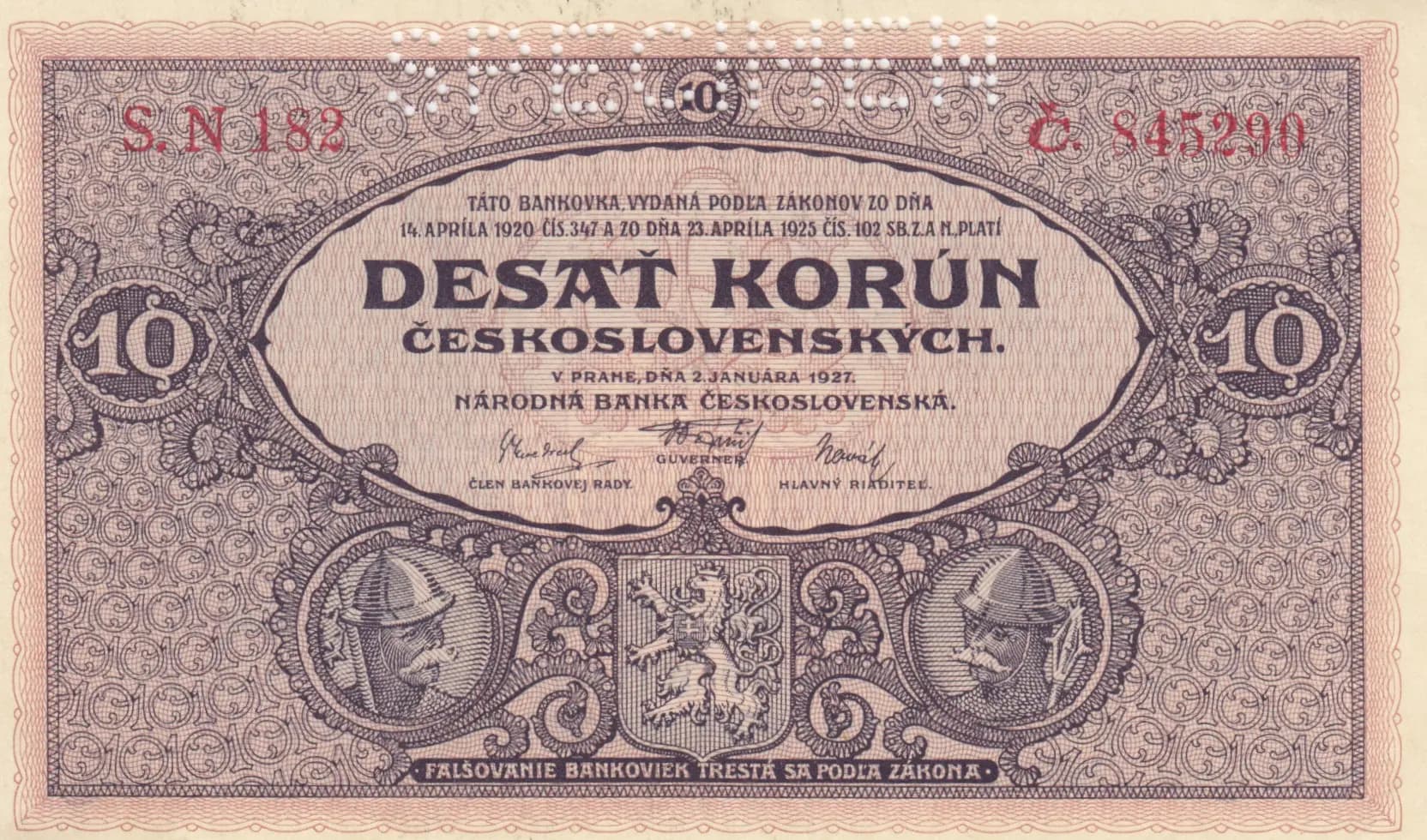
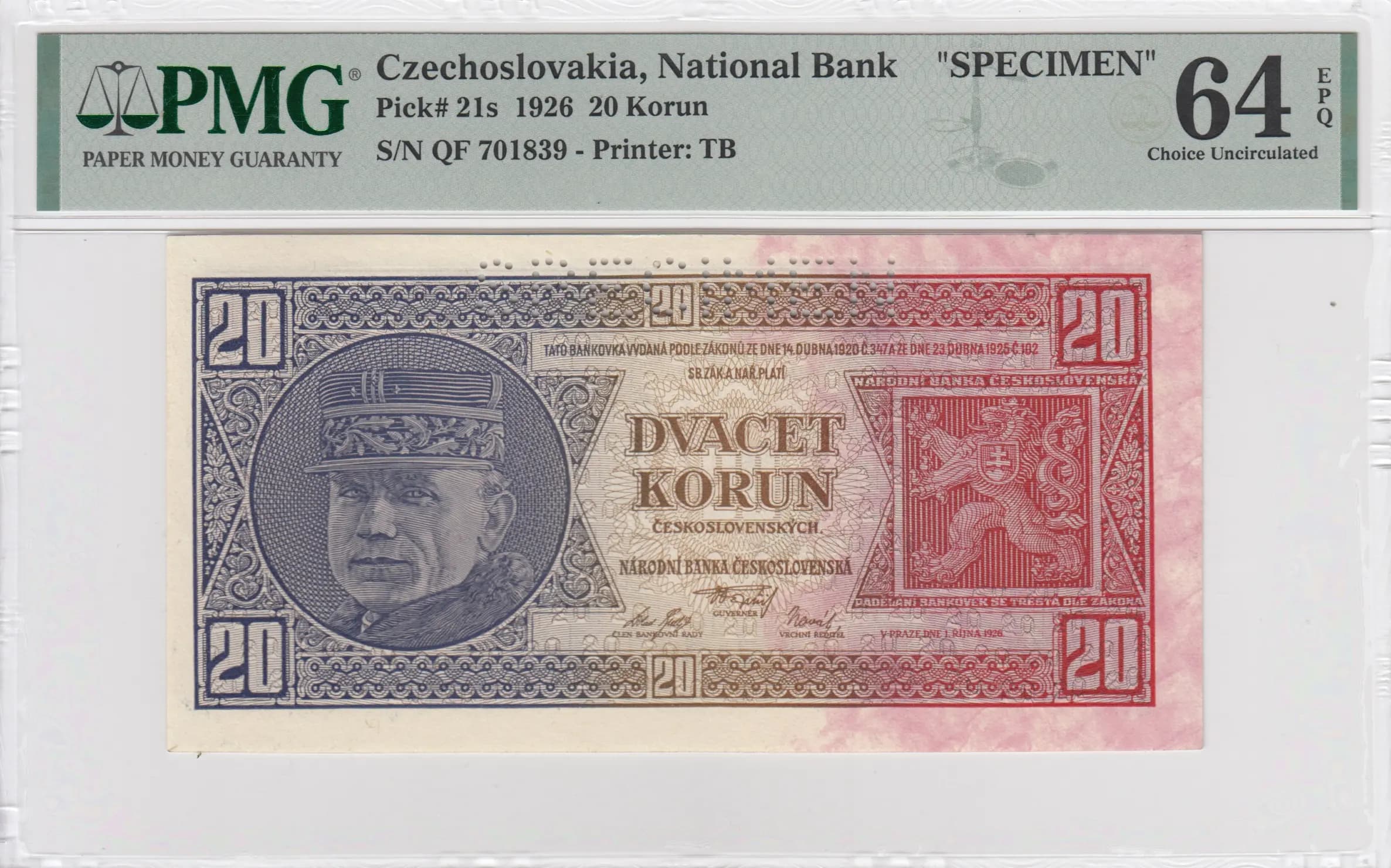
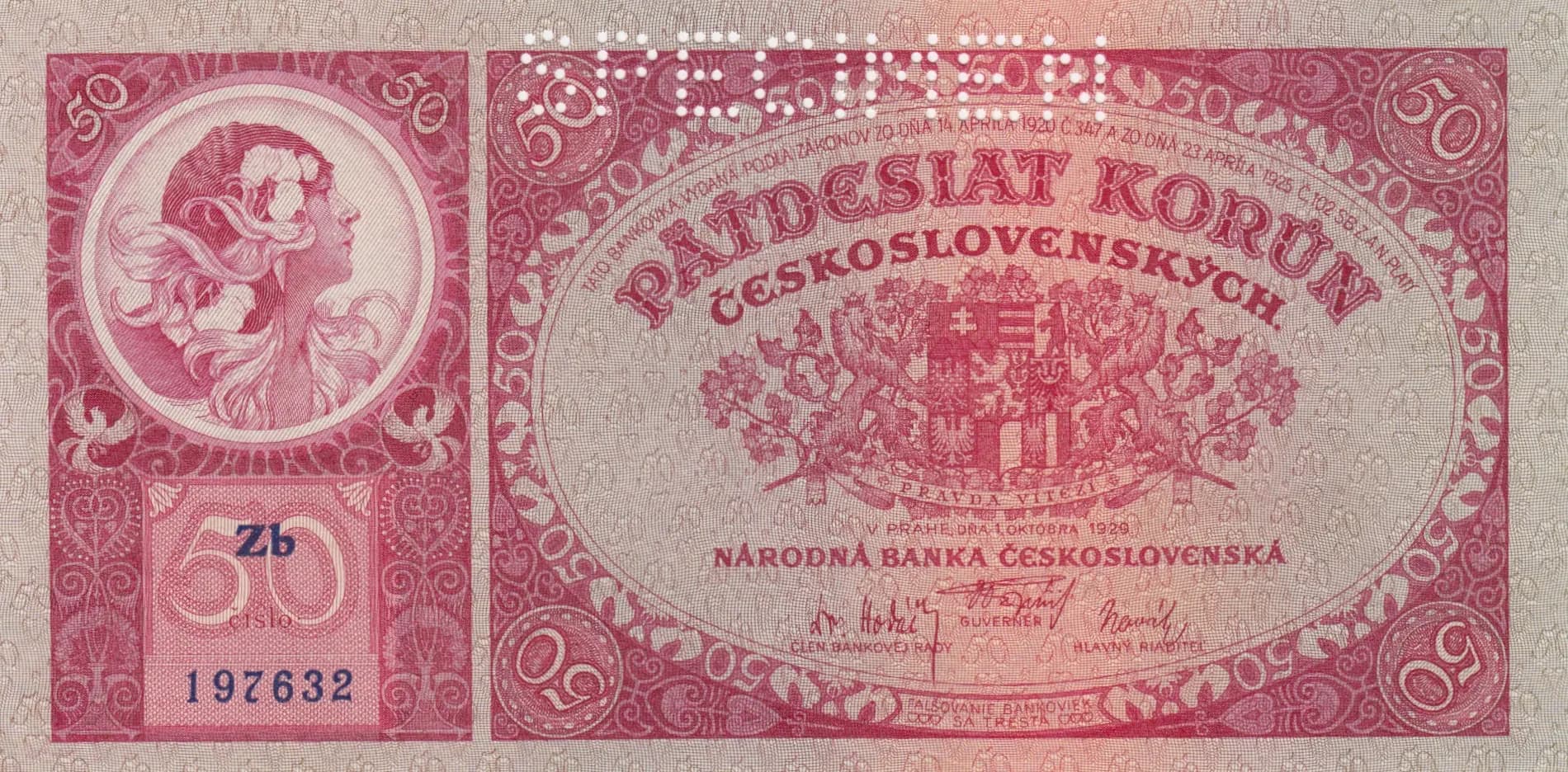
1000 korun 1934 specimen
Market Prices
24 salesAbout This Note
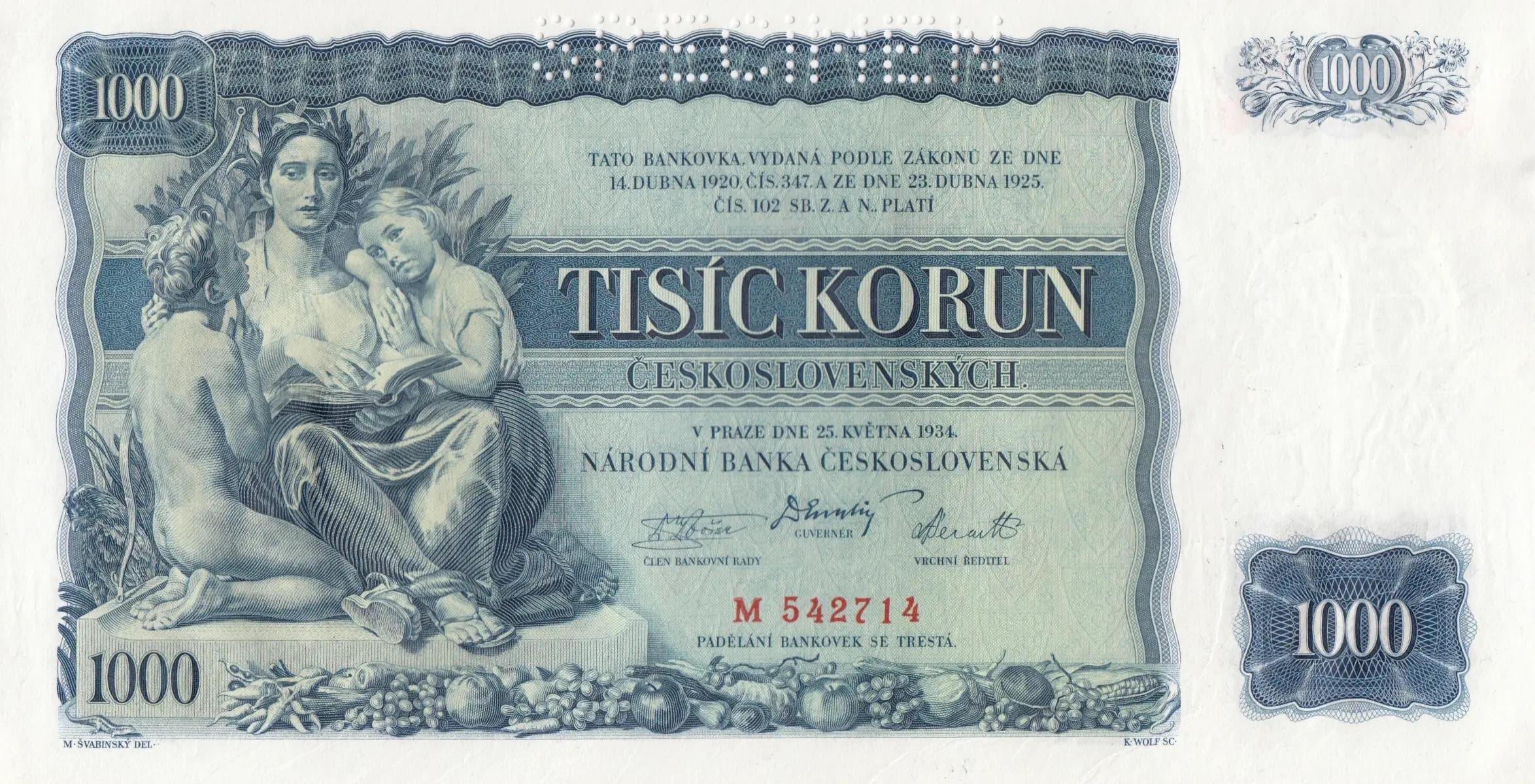
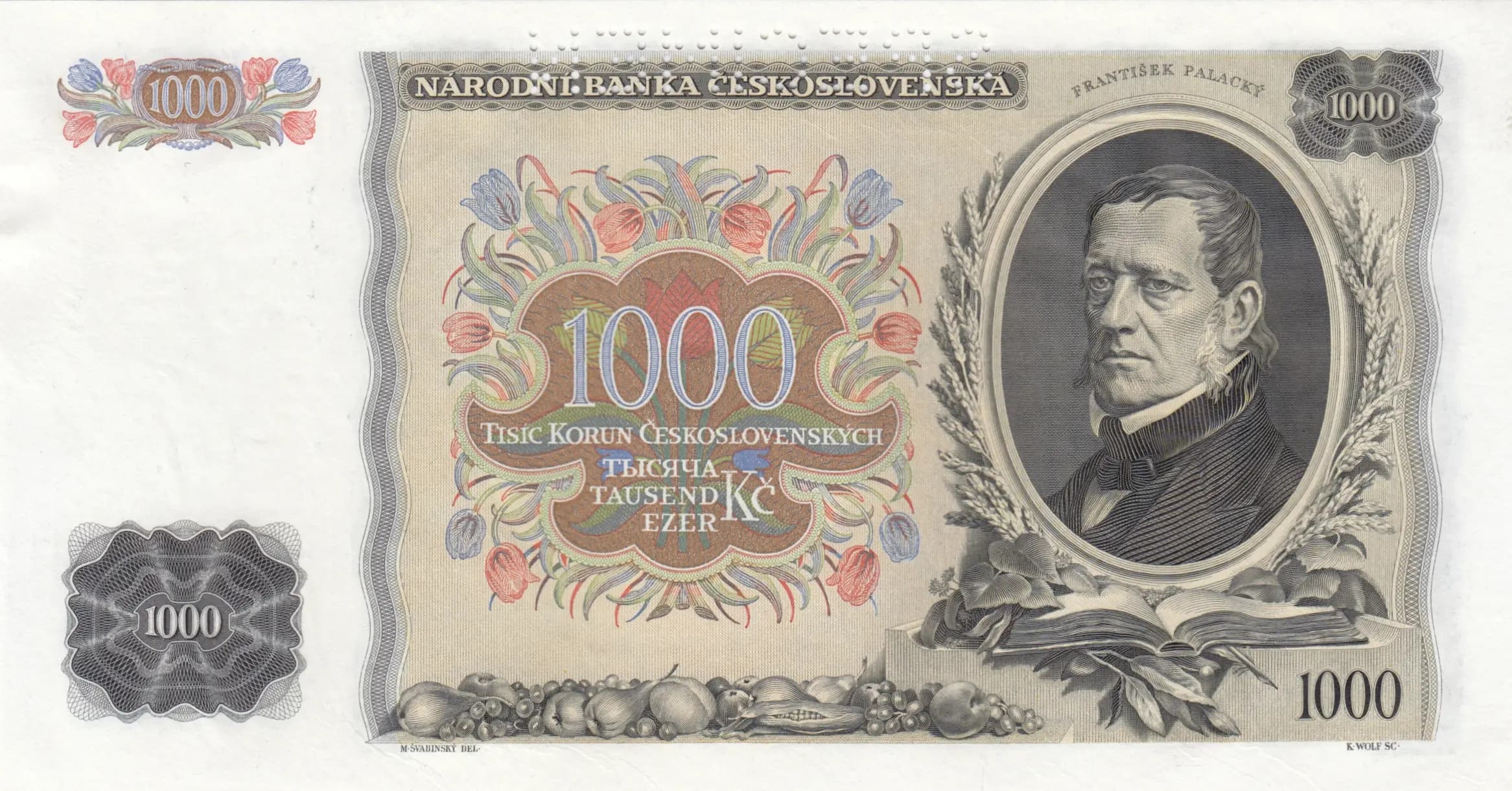
This is an exceptional UNC specimen of the 1000 Czechoslovak Korun from 1934 (Pick P-26s), featuring pristine condition with sharp, crisp engraving throughout. The note displays the characteristic blue-gray palette of the obverse with an allegorical woman and children amid agricultural imagery, while the reverse showcases a striking portrait of František Palacký within an ornate oval frame surrounded by colorful floral and agricultural motifs. As a specimen note with perforated SPECIMEN marking, it represents an important piece of Czechoslovak banking history from the interwar period.
Common. While specimen notes command a premium over regular circulation issues, this denomination and issue date are not exceptionally rare. eBay market data from 2014-2024 shows consistent sales in the $25-$150 range depending on grade, with most UNC examples selling between $40-$75. The market shows steady collector interest but no evidence of scarcity. The specimen designation (perforated SPECIMEN marking) makes it a banking artifact rather than legal currency, which affects its desirability but not its relative scarcity.
Issued on May 25, 1934, by the Národní Banka Československá during the First Czechoslovak Republic, this note reflects the nation's post-WWI economic consolidation and cultural pride. The portrait of František Palacký, the 19th-century Czech historian and nationalist leader, symbolizes Czechoslovak cultural identity and historical consciousness during a period of relative stability between the wars. The allegorical woman with children on the obverse represents the nation's fertility and prosperity, common iconographic elements in Central European currency design of this era.
The obverse features an allegorical composition depicting a woman seated with a child, representing prosperity and the future of the nation, surrounded by cornucopian agricultural abundance including grapes, apples, and other fruits and vegetables. The woman holds a book, symbolizing knowledge and education. The design is framed by ornamental borders with wavy patterns and decorative guilloche work. Denomination numerals (1000) appear in ornate frames in the upper right and lower corners. The reverse presents a formal portrait of František Palacký (1798-1876), the renowned Czech historian, politician, and leader of the Czech National Revival movement, positioned within an ornate oval frame. The portrait is surrounded by a decorative cartouche containing the denomination in Czech, German, and Russian scripts, flanked by wheat stalks and a colorful floral border featuring red and blue tulips. The agricultural motifs at the base reinforce themes of national prosperity and productivity. The note was designed by M. Švarínský and engraved by K. Wolf.
{"front":{"title":"One Thousand Czechoslovak Crowns","inscriptions":[{"original":"TISÍC KORUN ČESKOSLOVENSKÝCH","translation":"One thousand Czechoslovak Crowns"},{"original":"NÁRODNÍ BANKA ČESKOSLOVENSKÁ","translation":"Czechoslovak National Bank"},{"original":"TATO BANKOVKA VYDANÁ PODLE ZÁKONA ZE DNE 14.DUBNA 1920.ČÍS.347 A ZE DNE 23.DUBNA 1925. ČÍS. 102 SB.Z A N., PLATÍ","translation":"This banknote issued according to law from April 14, 1920, no. 347 and from April 23, 1925, no. 102 of the collection, is valid"},{"original":"V PRAZE DNE 25.KVĚTNA 1934.","translation":"In Prague on May 25, 1934"},{"original":"ČLEN BANKOVNÍ RADY","translation":"Member of Bank Board"},{"original":"GUVERNÉR","translation":"Governor"},{"original":"VRCHNÍ BĚŽITEL","translation":"Chief Executive"},{"original":"PADELÁNÍ BANKOVEK SE TRESTÁ","translation":"Counterfeiting of banknotes is punished"},{"original":"M·ŠVARÍNSKÝ DEL.","translation":"M. Švarínský del. (Designer)"},{"original":"K·WOLF SC","translation":"K. Wolf sc. (Engraver)"},{"original":"M 542714","translation":"Serial number"}]},"back":{"title":"One Thousand Czechoslovak Crowns","inscriptions":[{"original":"Tisíc KORUN ČESKOSLOVENSKÝCH","translation":"One thousand Czechoslovak Crowns"},{"original":"NÁRODNÍ BANKA ČESKOSLOVENSKÁ","translation":"Czechoslovak National Bank"},{"original":"FRANTIŠEK PALACKÝ","translation":"František Palacký"},{"original":"TAUSEND","translation":"One thousand (German)"},{"original":"TISÍČHA","translation":"One thousand (Russian/Cyrillic)"},{"original":"KC̆","translation":"Czechoslovak Crowns"},{"original":"M·ŠVARÍNSKÝ DEL.","translation":"M. Švarínský del. (Designer)"},{"original":"K·WOLF SC","translation":"K. Wolf sc. (Engraver)"}]}}
This note was produced using the traditional steel engraving/intaglio method, as evidenced by the fine line engraving visible throughout both sides, complex guilloche patterns in ornamental frames, and detailed cross-hatching in background areas. The printer was TB (Tiskárna Boom), Prague, a major Czechoslovak security printer of the period. Multi-color printing was employed, with red and blue inks applied to the back side in addition to the primary black engraving. The sharpness and precision of the printing in this specimen exemplifies the high-security printing standards of the Czechoslovak National Bank during the 1930s.
This is a specimen note (designated P-26s in the Pick catalog), identifiable by the SPECIMEN perforation. The serial number visible is M 542714, with the M prefix indicating Czech/Czechoslovak origin. Only one variant has been catalogued by PMG for this Pick number (P-26s). The date of issue is fixed at May 25, 1934. There are no reported significant varieties for this note type, making it a straightforward catalog entry.