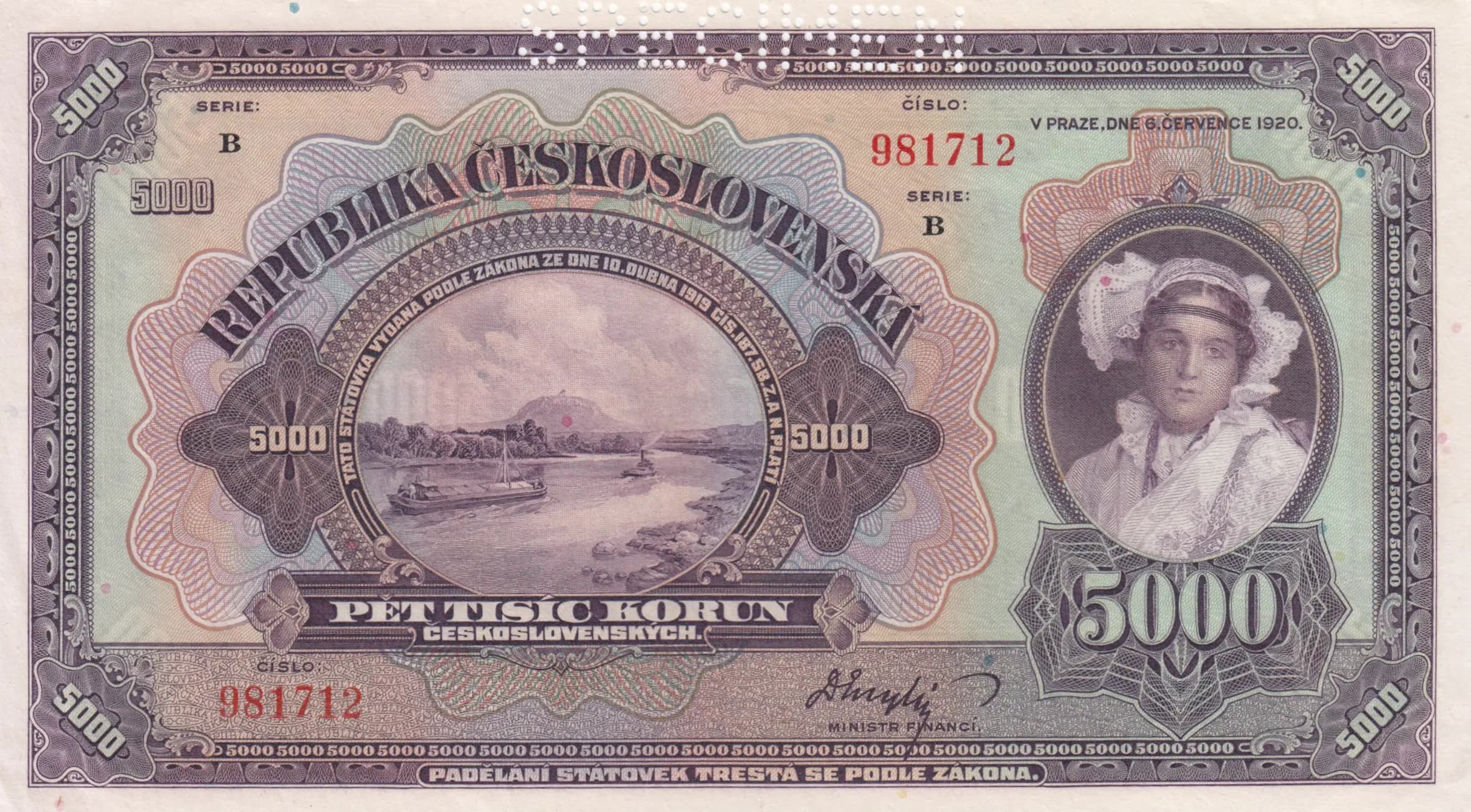
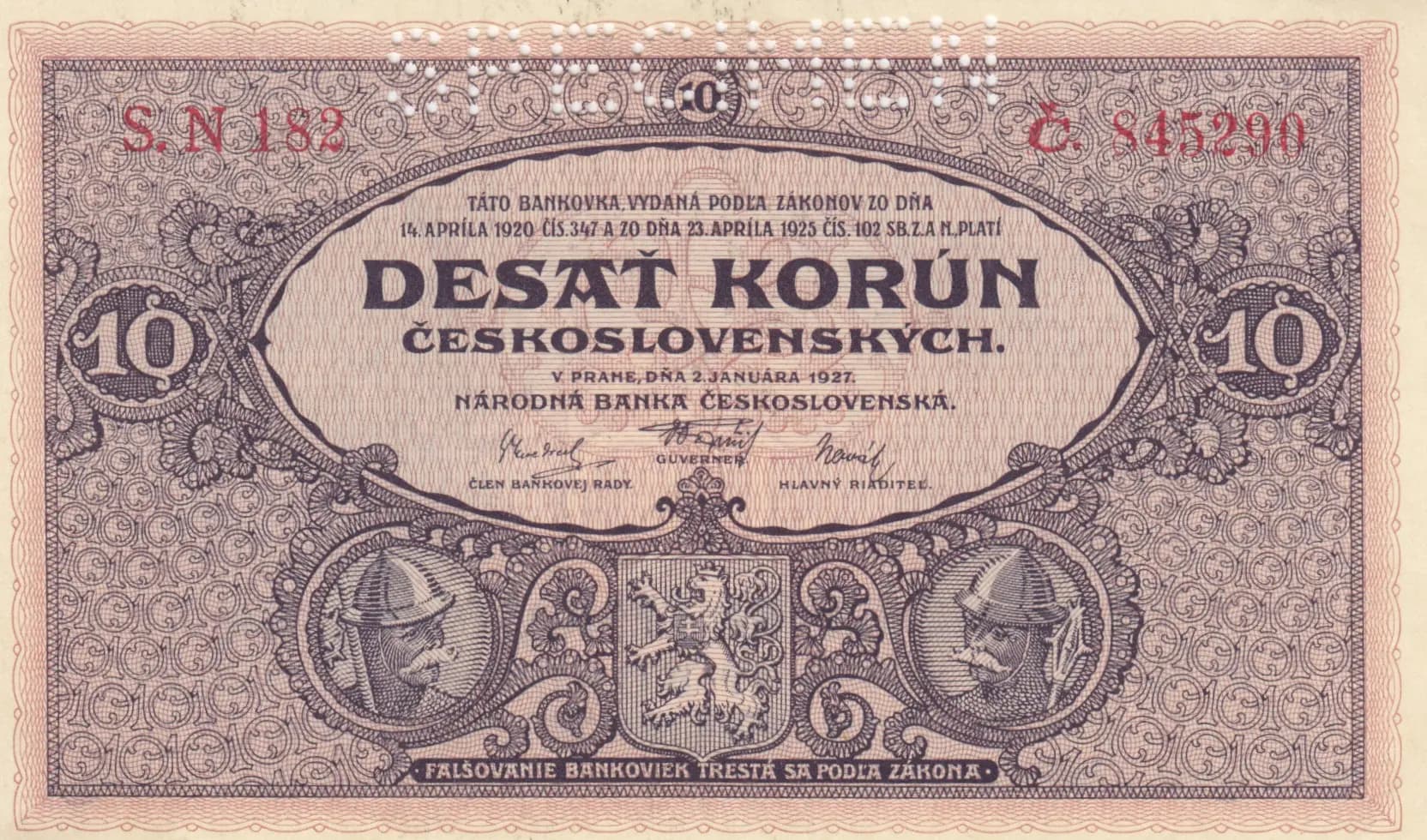
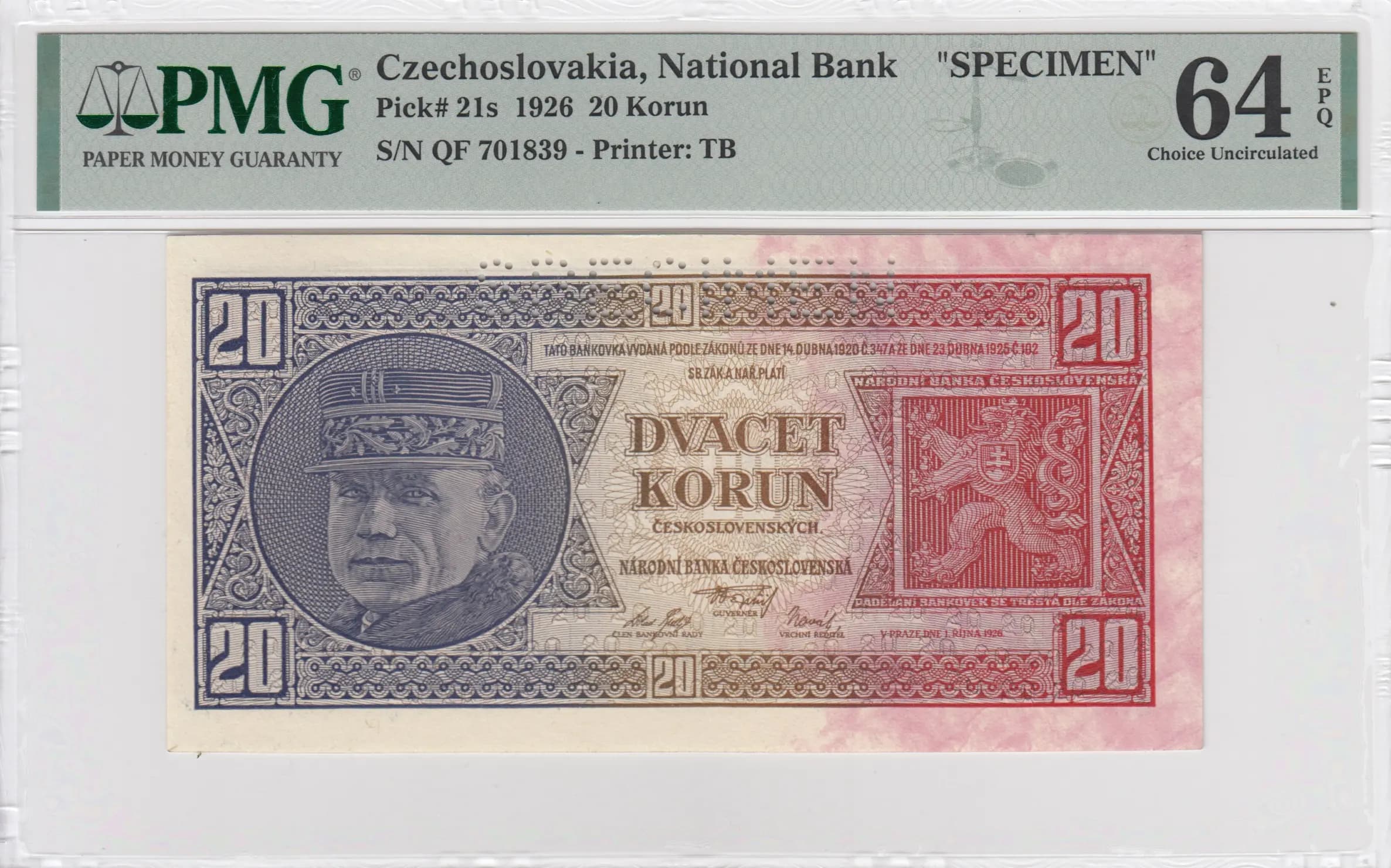
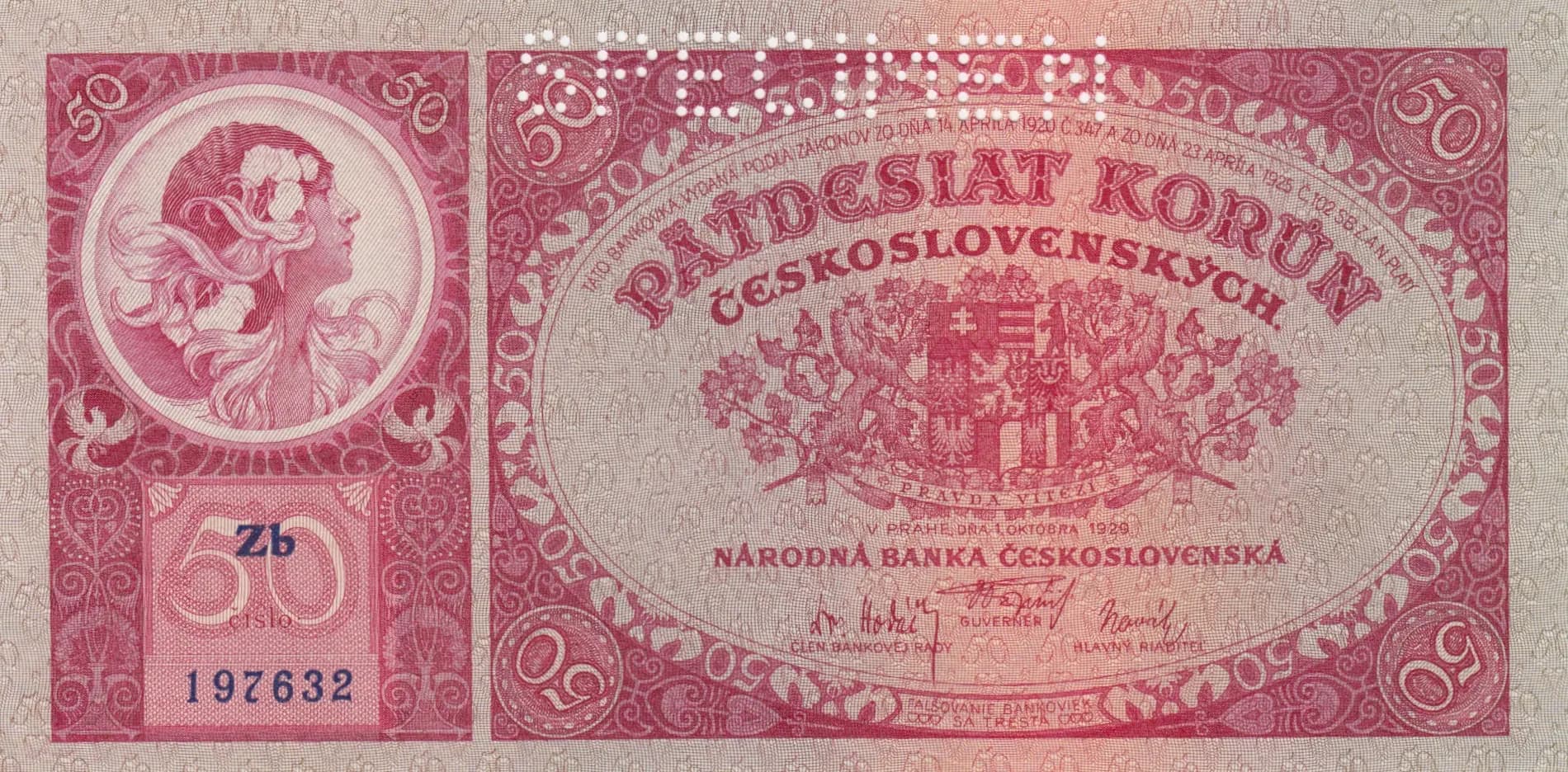
100 korun 1944 specimen
Market Prices
17 salesAbout This Note
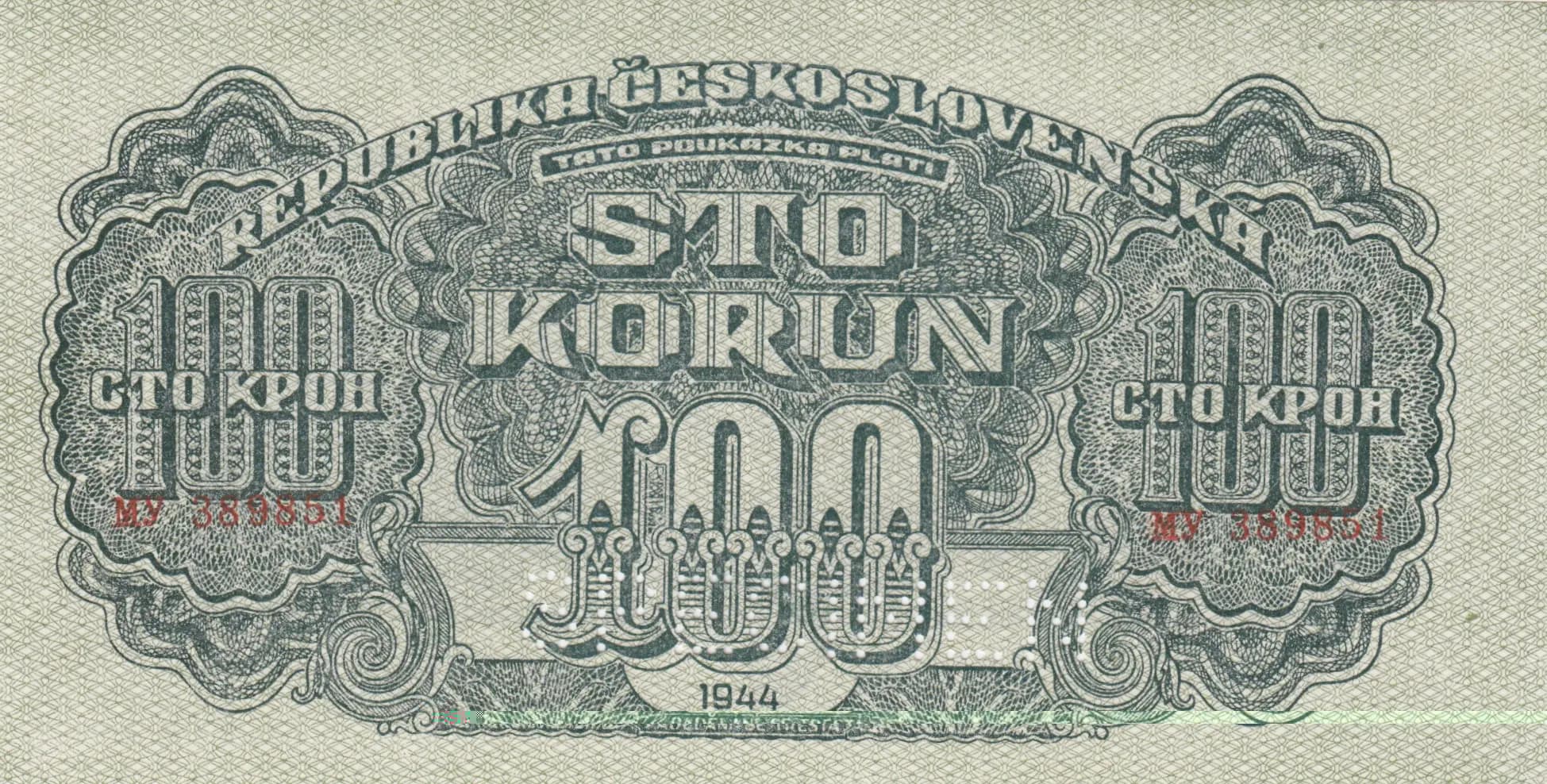
This is a 1944 Czechoslovak 100 Korun specimen note printed by Goznak in Moscow, presented in exceptional EF condition. The note features striking green-on-cream coloring with elaborate baroque ornamental design work characteristic of interwar Czechoslovak currency. As a perforated specimen with red specimen marks, this note represents a non-circulating presentation example and is notably scarce in the collectible banknote market.
Common. Despite being a specimen note with red perforations indicating non-circulation, this denomination and year combination has appeared regularly in secondary markets. eBay auction data spanning 2013-2021 shows consistent availability with specimens regularly selling between $5-$35 USD depending on grade, with most examples in AUNC/EF condition commanding under $10. The 2016 catalog value of $17.50 for UNC reflects modest collector demand. The consistent supply of examples at modest prices indicates this specimen variety was produced in sufficient quantities to remain affordable and relatively common in the numismatic market.
This 100 Korun note was issued during 1944, a critical period for Czechoslovakia under Nazi occupation during World War II. The inscription 'Československé Státní Půjčka' (Czechoslovak State Loan) reflects the complex financial mechanisms employed during the German Protectorate period. The note's production by Soviet state printer Goznak in Moscow indicates the geopolitical complexities of wartime currency printing, as the Soviet Union became a haven for producing materials for governments-in-exile and liberation movements.
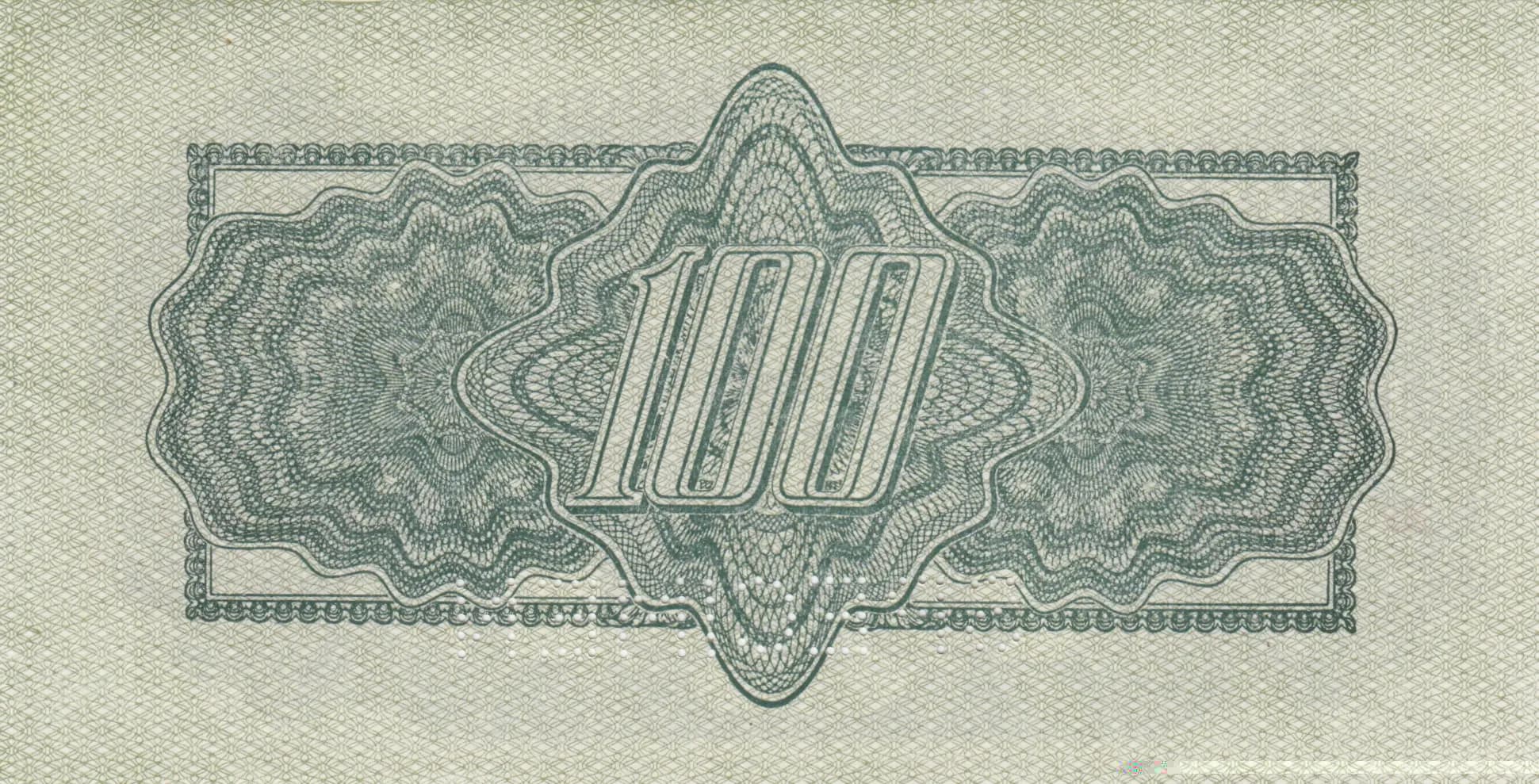
The note displays an ornate design without portraits or identifiable landmarks, instead emphasizing decorative security elements. The obverse features symmetrical baroque-style ornamental cartouches positioned left and right of center, each containing the denomination numerals in elaborate frames. The reverse presents a large central diamond or star-shaped ornamental medallion as the focal point, surrounded by intricate geometric and floral engraving. The entire composition employs fine parallel lines and cross-hatching techniques to create visual depth and anti-counterfeiting complexity. Floral scrollwork and repeated border embellishments frame both sides.
Front side: 'ČESKOSLOVENSKÁ' (Czechoslovak), 'ČESKOSLOVENSKÉ STÁTNÍ PŮJČKA' (Czechoslovak State Loan), 'STO KORUN' and '100 STO KORUN' (One Hundred Crowns/100 One Hundred Crowns), '1944' (year of issue). Back side: '100' (denomination). All text appears in Czech language using Latin script.
This note was produced using intaglio (engraved) printing, as evidenced by the fine cross-hatching, parallel line work, and sharp detail visible throughout the design. The sophisticated geometric patterns and security engraving suggest steel plate engraving with deep relief printing—the signature technique of Goznak, the Soviet state security printer. The precise parallel lines and baroque ornamental detail are characteristic of high-security banknote production of the 1940s era.
This is catalogued as P-48s (specimen variety). The Pick catalog notes two serial number varieties exist for the base P-48 designation. The 'SPECIMEN' overprint and red perforation marks are definitional for the -s suffix variant. No signature varieties or distinctive serial number prefixes are evident from the visual analysis, suggesting this represents the standard specimen issue. The printer attribution to Goznak, Moscow is confirmed by both catalog sources and is the sole documented printer for this Pick number.