1000 francs 1978
Market Prices
17 salesAbout This Note
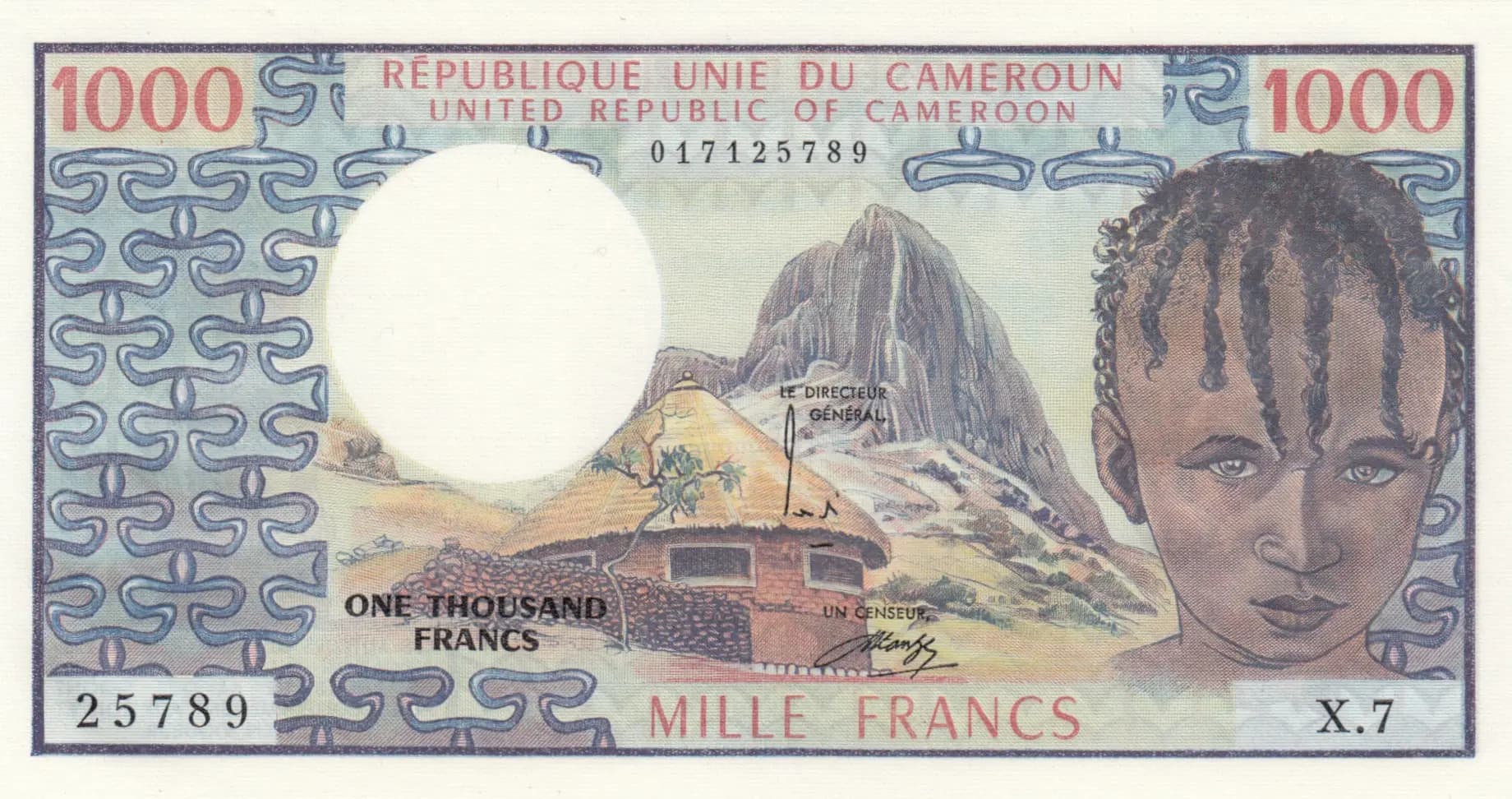
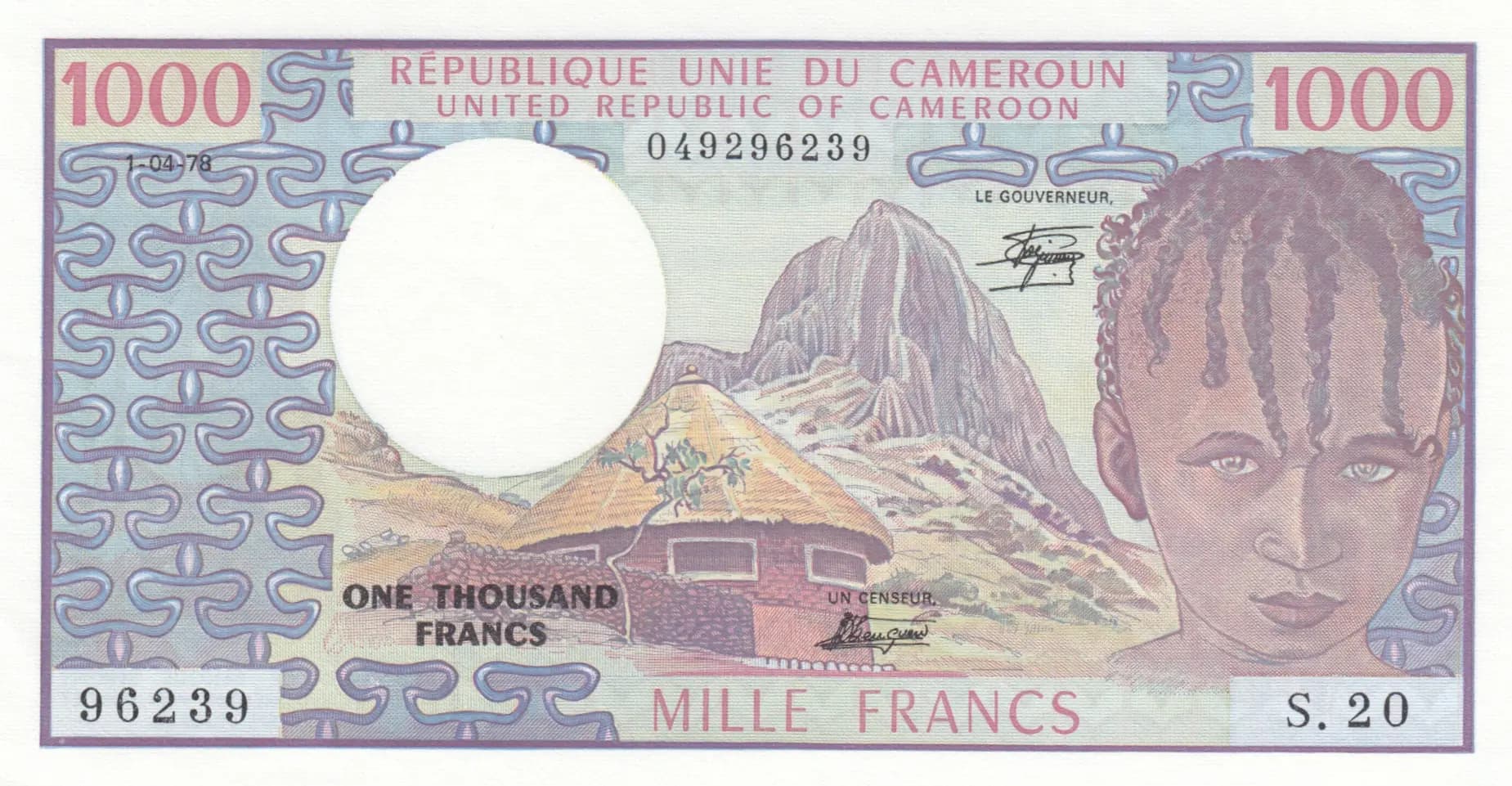
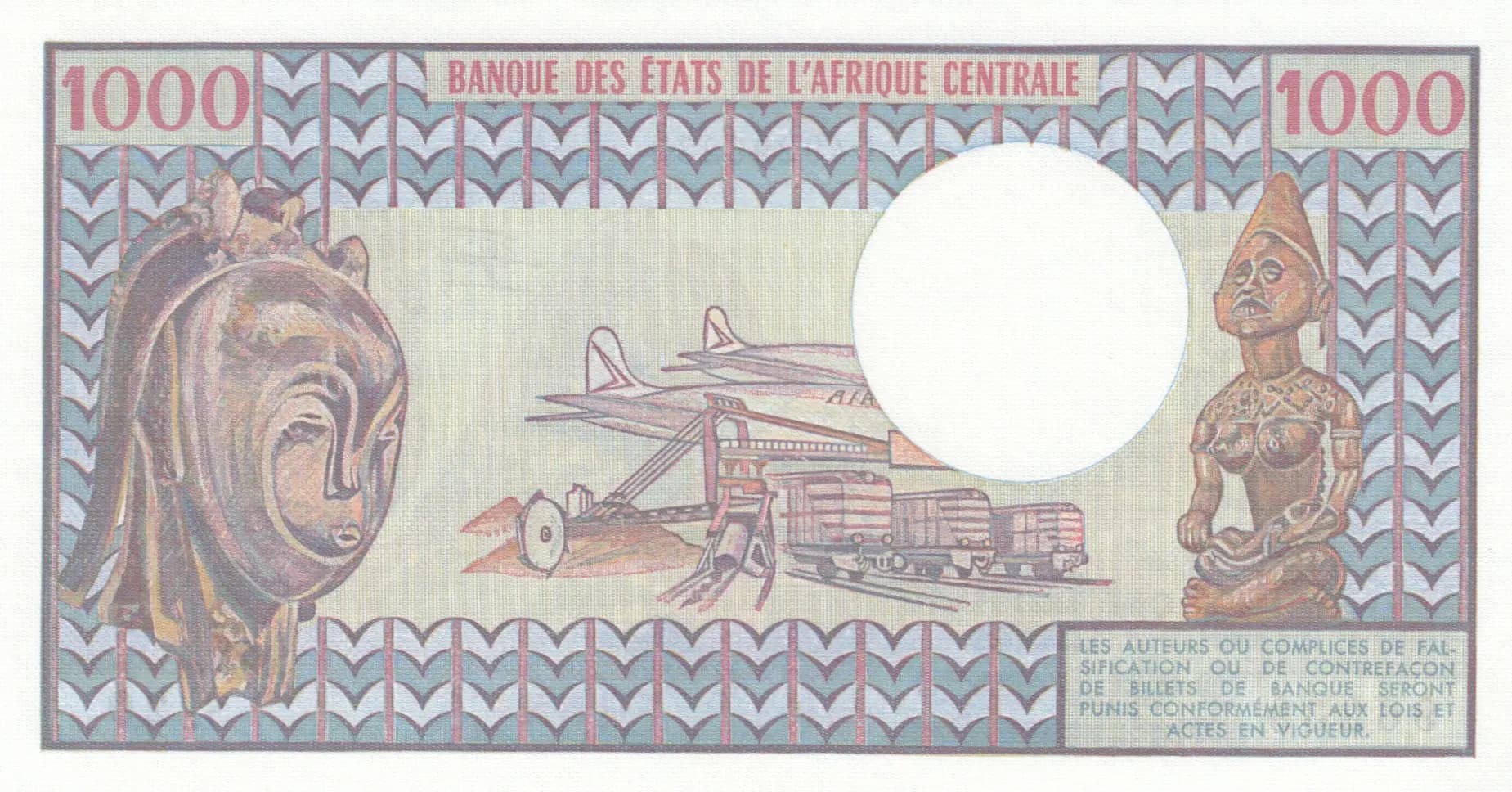
This is an uncirculated 1000 Francs banknote from Cameroon, issued in 1978 by the Banque des Etats de l'Afrique Centrale (BEAC). The note exhibits exceptional preservation with no visible wear, creases, or stains, displaying vibrant original colors dominated by purple, pink, and blue hues. The obverse features a striking portrait of an African woman with plaits on the right side, paired with the iconic Rhumsiki Peak mountain landscape and traditional hut imagery, while the reverse showcases Cameroon's economic development through depictions of mining, aviation, rail transport, and indigenous sculptural artifacts.
Common. The secondary market data shows consistent circulation through eBay sales across multiple condition grades from 2014–2022, with UNC examples trading at $40–$86 (2014–2022) and lower grades trading at $3.50–$15. The 2019 catalog value of $40 (UNC) reflects standard pricing for widely-issued BEAC currency. The high auction frequency and modest price points indicate substantial print runs and ready availability in the numismatic market.
This 1978 issue represents the BEAC's currency during Cameroon's period as the United Republic of Cameroon, reflecting the nation's post-colonial identity and economic priorities. The reverse's emphasis on transportation infrastructure (airplane, train, mining operations) and indigenous art symbolizes Cameroon's modernization aspirations while honoring its cultural heritage. The dual French and English inscriptions underscore Cameroon's bilingual character as a former British and French colonial territory.
The obverse features a portrait of a Cameroonian woman with traditional braided hairstyle positioned on the right side, serving as the primary portrait element. The central landscape vignette depicts Rhumsiki Peak, Cameroon's distinctive mountain formation characterized by its dramatic volcanic peaks, accompanied by a traditional hut with reddish-brown thatching and terraced agricultural landscape. The left border incorporates a geometric interlocking chain or S-pattern motif in the security design. The reverse presents an economic development theme with a commercial airplane in flight, a locomotive on tracks, and mining operations depicted in the central vignette, flanked by African sculptural artifacts—a carved mask head on the left and a standing figurine with decorative patterns on the right. The background on both sides features fine line engraving with chevron or leaf-like repeating patterns. A large circular watermark area (featuring an antelope in profile) is visible in the center-left of the obverse and center of the reverse.
FRONT: 'REPUBLIQUE UNIE DU CAMEROUN' (United Republic of Cameroon), 'UNITED REPUBLIC OF CAMEROON' (English equivalent), 'MILLE FRANCS' (One Thousand Francs), 'ONE THOUSAND FRANCS' (English equivalent), 'LE GOUVERNEUR' (The Governor), 'UN CENSEUR' (A Censor), Serial designation 'S.20', date reference '04-78'. BACK: 'BANQUE DES ETATS DE L'AFRIQUE CENTRALE' (Bank of the Central African States), denomination '1000' (repeated), warning text 'LES AUTEURS OU COMPLICES DE FAUX BILLETS, DE CONTREFAÇON DE BILLETS DE BANQUE SERONT PUNIS CONFORMEMENT AUX LOIS ET ACTES EN VIGUEUR' (The authors or accomplices of counterfeit currency, counterfeiting of banknotes will be punished in accordance with the laws and acts in force).
Lithographed (offset lithography), as confirmed by the catalog designation and visual characteristics. The note employs intaglio engraving elements for fine-line security patterns and detailed sculptural vignettes. The BEAC currency of this period utilized modern lithographic security printing with engraved overlays to produce the multicolor design with sharp registration and detailed line work visible on both sides.
This note is cataloged as Pick P-16c, identified by Signature #10 in lithographed format. The PMG population report documents seven distinct varieties for the base Pick number (P-16a through P-16ds) distinguished by signature varieties and printing techniques (engraved versus lithographed). This specific specimen carries the signature titles 'LE GOUVERNEUR' and 'UN CENSEUR' consistent with the P-16c designation. The series designation 'S.20' and date reference '04-78' observed on the note align with the 1978 issue period.