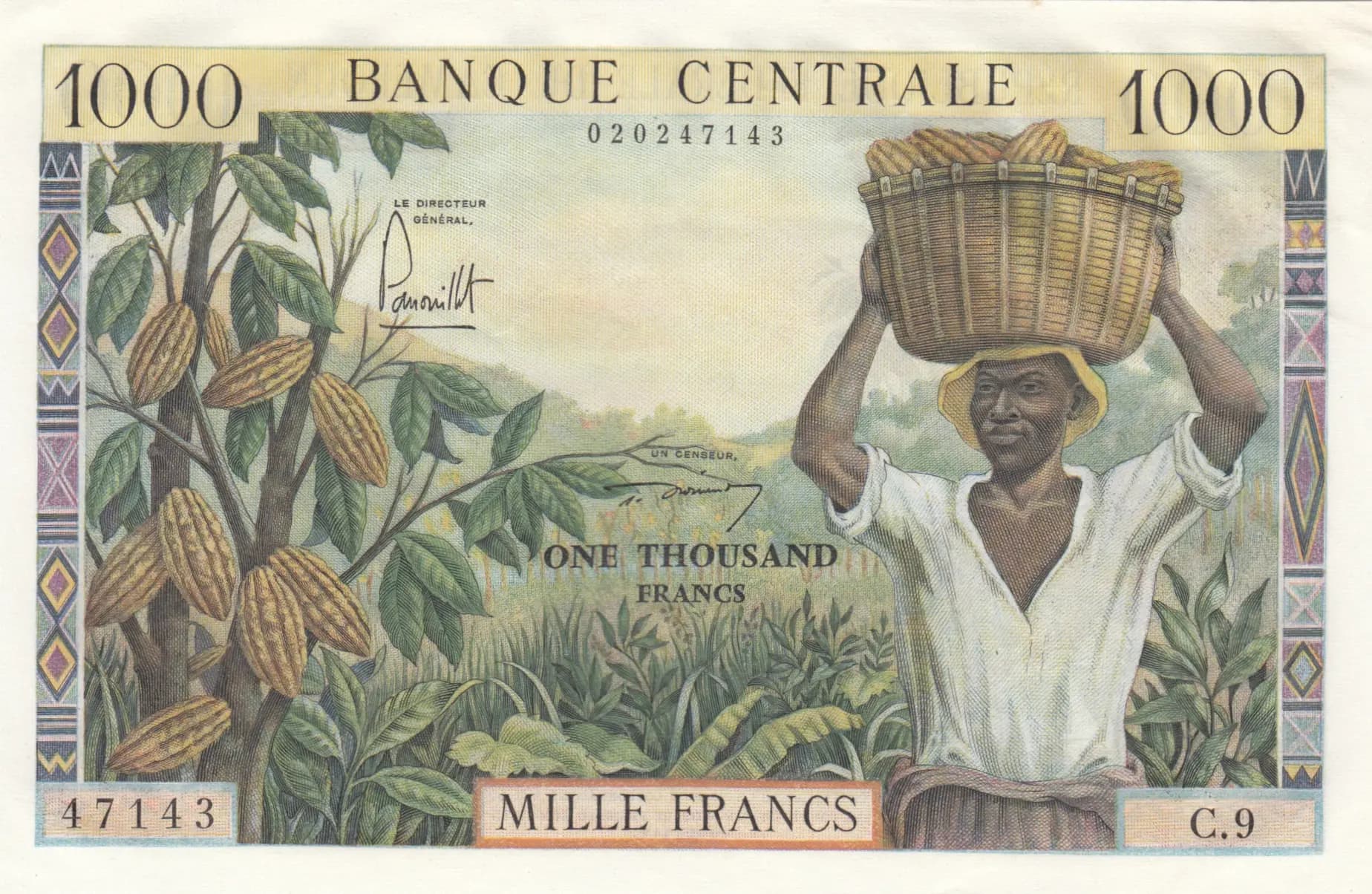
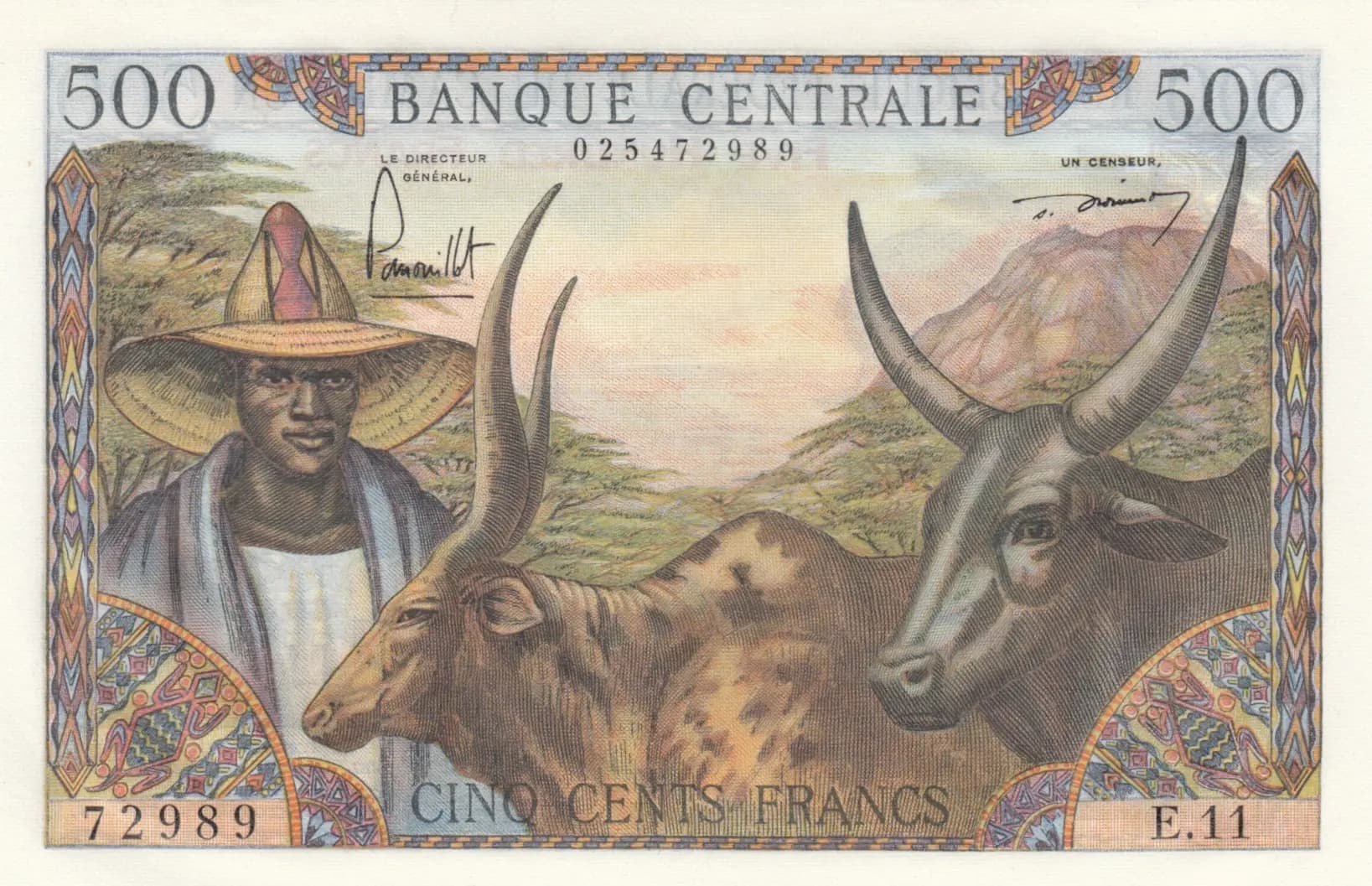
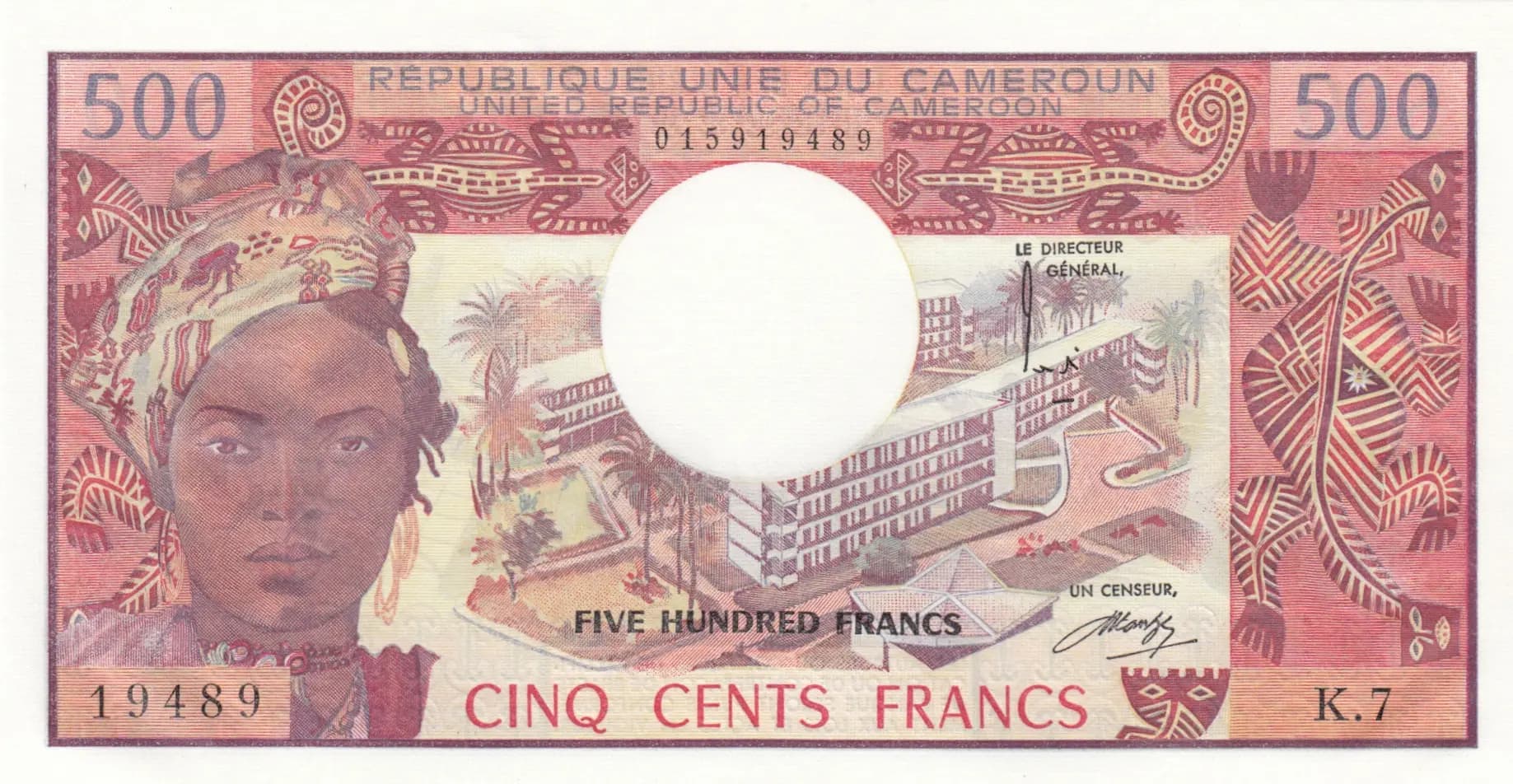
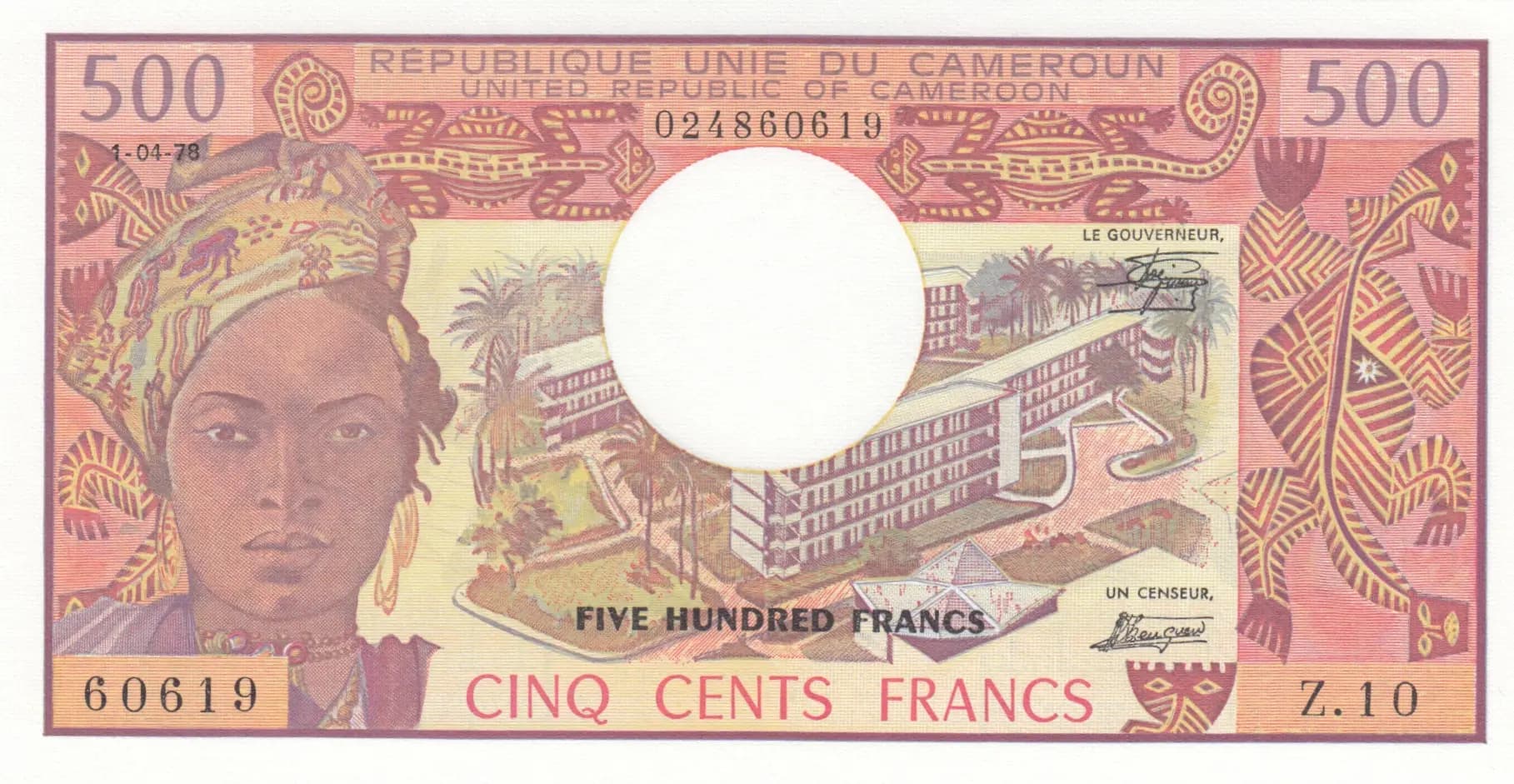
100 francs 1962
Market Prices
58 salesAbout This Note
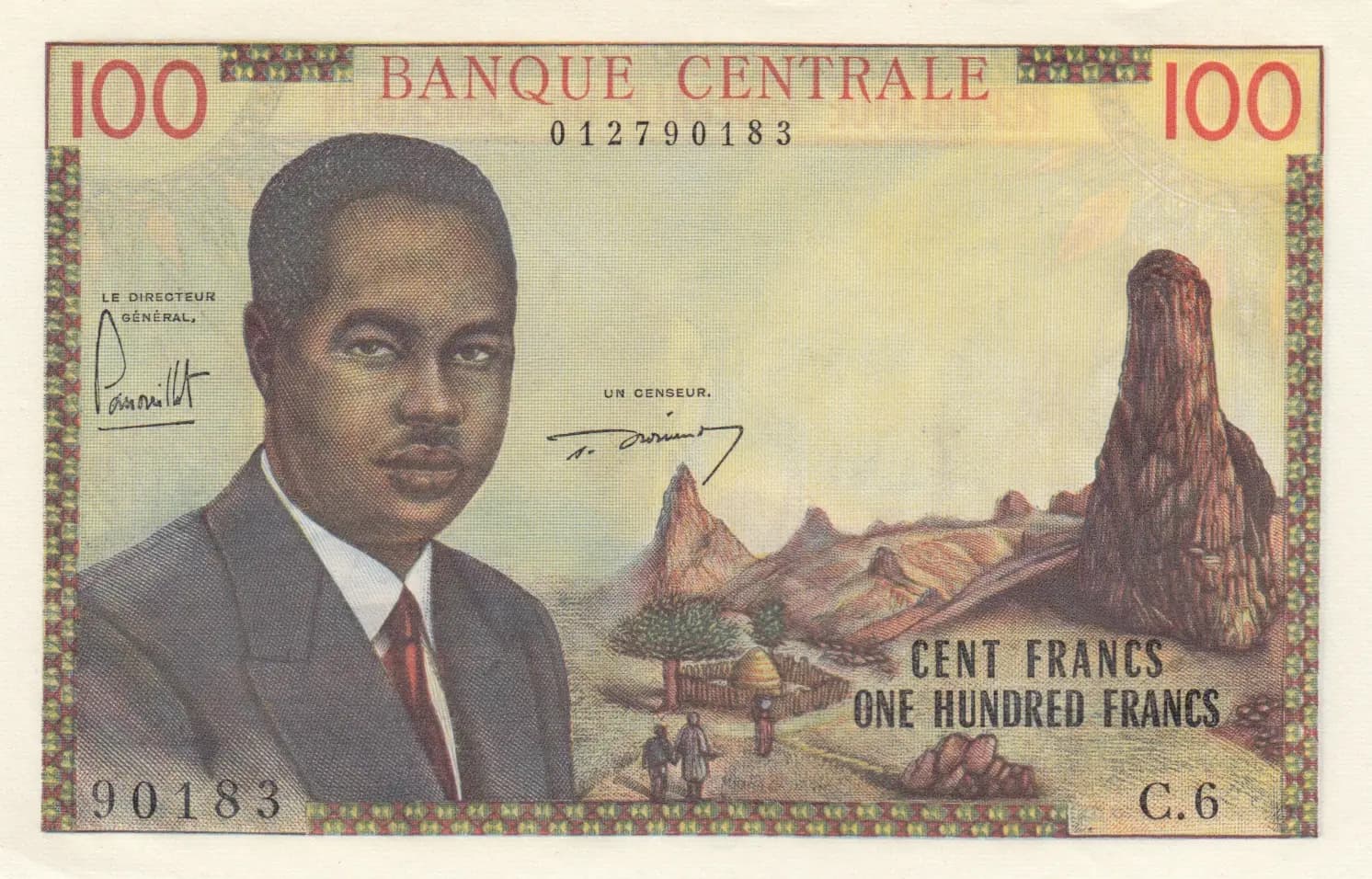
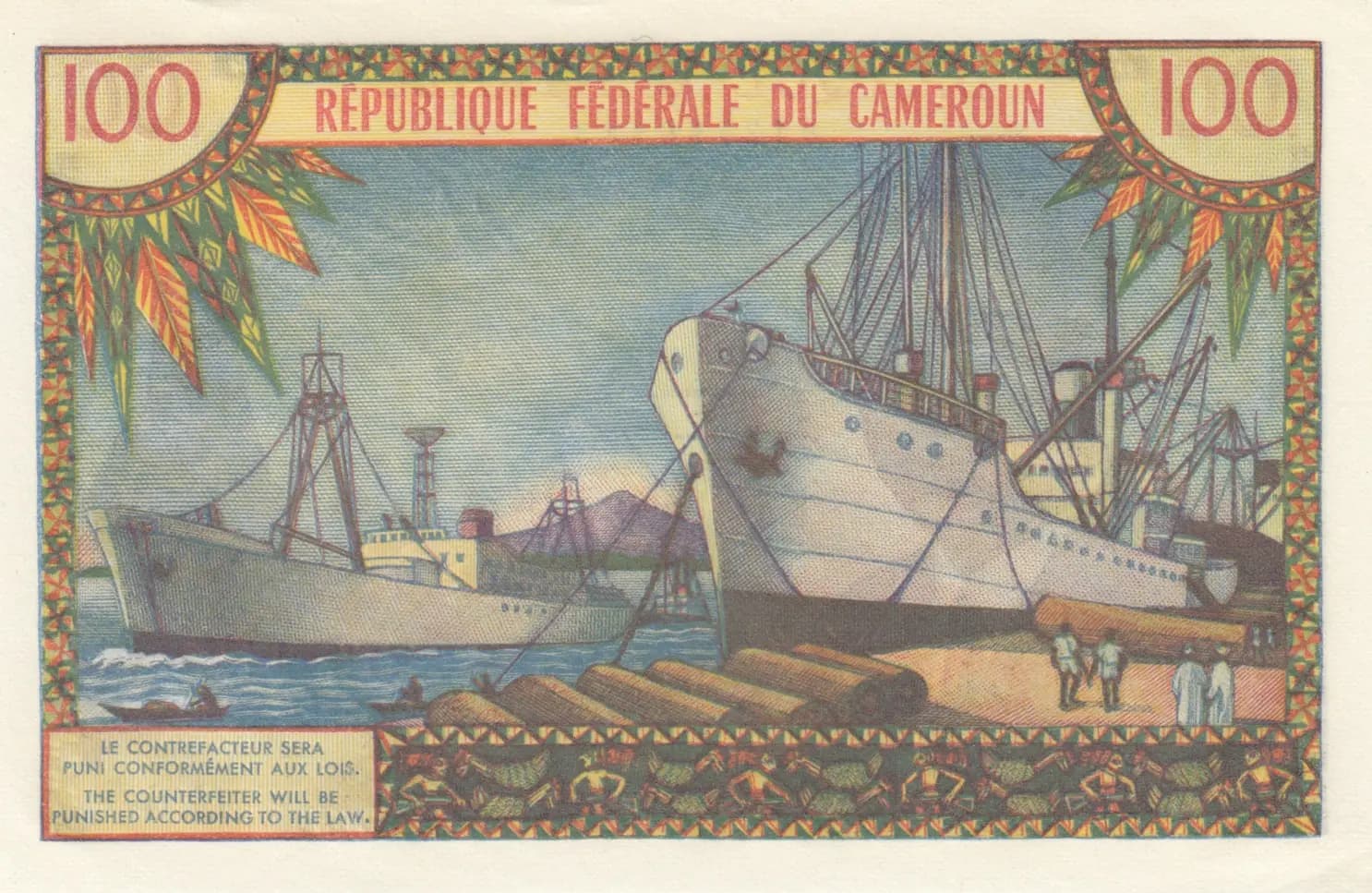
This is a stunning example of Cameroon's 100 Francs banknote from 1962 (Pick P-10), the nation's early post-independence currency. Displayed in uncirculated condition with crisp detail, the note features a formal portrait of President Ahmadou Ahidjo on the obverse alongside the iconic Rumsiki peak landscape, while the reverse depicts the bustling port of Douala with three cargo vessels—imagery reflecting Cameroon's strategic maritime commerce. The multicolored design with red, green, and earth tones, combined with the dual French-English inscriptions, exemplifies the transitional currency design of newly independent African nations.
Common. eBay market data shows consistent sales activity with prices ranging from $3.75 to $489 across all grades over a 16-year period (2009-2025). Uncirculated examples sold for $295 (2022) and $99.99 (2019), while VF/EF specimens trade consistently in the $20-$70 range. The 2019 catalog value of $125 for UNC is consistent with market reality. High-grade professionally graded examples (PMG 66-67) command premiums ($362-$497), but the note's overall supply and consistent availability indicate a regular issue with no print run restrictions. The Federal Republic of Cameroon maintained currency production continuity, making this an early but non-scarce emission.
Issued in 1962, this banknote commemorates Cameroon's independence and the presidency of Ahmadou Ahidjo, who led the nation from 1960-1982. The inclusion of Rumsiki peak—a distinctive geological landmark in the Far North Region—and the port of Douala emphasizes the nation's natural resources and economic infrastructure. The dual-language presentation reflects Cameroon's complex colonial heritage with both French and English-speaking regions, a legacy of the League of Nations mandate system that divided the former German Kamerun between France and Britain.
The obverse features a formal, dignified three-quarter portrait of President Ahmadou Ahidjo positioned at left, rendered in dark tones against a cream background, wearing a dark suit jacket and distinctive red tie. To his right occupies a landscape vignette of Rumsiki peak—the dramatic natural rock formations in Cameroon's Far North characterized by towering columnar basalt pillars rising from an arid valley setting with scattered vegetation and settlement structures below. The reverse showcases an active harbor scene depicting three merchant/cargo vessels at the Port of Douala with visible masts, rigging, and loading equipment, set against blue water and sky with tropical palm fronds visible in the upper corners. Both sides feature ornate decorative borders with geometric patterns including triangular motifs and botanical designs in red and orange. The note employs bilingual inscriptions throughout, reflecting the nation's French and English heritage.
OBVERSE: 'BANQUE CENTRALE' (Central Bank); 'CENT FRANCS ONE HUNDRED FRANCS' (One Hundred Francs in French and English); 'LE DIRECTEUR GÉNÉRAL' (The General Director); 'UN CENSEUR' (A Censor); denomination '100' appears in multiple locations; serial number '01279018383' and series designation 'C.6'. REVERSE: 'REPUBLIQUE FEDERALE DU CAMEROUN' (Federal Republic of Cameroon); 'LE CONTREFACTEUR SERA PUNI CONFORMÉMENT AUX LOIS' (The counterfeiter will be punished in accordance with the laws - French); 'THE COUNTERFEITER WILL BE PUNISHED ACCORDING TO THE LAW' (English); denomination '100'.
Intaglio letterpress multicolor printing, typical of 1960s Central Bank currency production. The fine line work visible in the portrait shading, ship rigging detail, and border patterns indicates steel engraving for the primary design elements. The multiple color registration and decorative security lines suggest the work of a specialized currency security printer, likely Bradbury Wilkinson or a comparable European security printer of that era, though specific attribution for this Pick number requires additional documentation.
The observed specimen shows series designation 'C.6' with serial number beginning '01279018383' and suffix fragment '90183', indicating this is from the standard C-series production run. PMG has cataloged four variants for Pick P-10: the base P-10, plus P-10p (prefix variant), P-10pp1 (dual prefix variant), and P-10s (specimen). The note examined does not exhibit evidence of specimen overprinting or special prefix characteristics suggesting it is the standard P-10 variety. Serial number variations and signature blocks are present but require specialized reference materials to determine if this specimen represents any cataloged sub-variety.