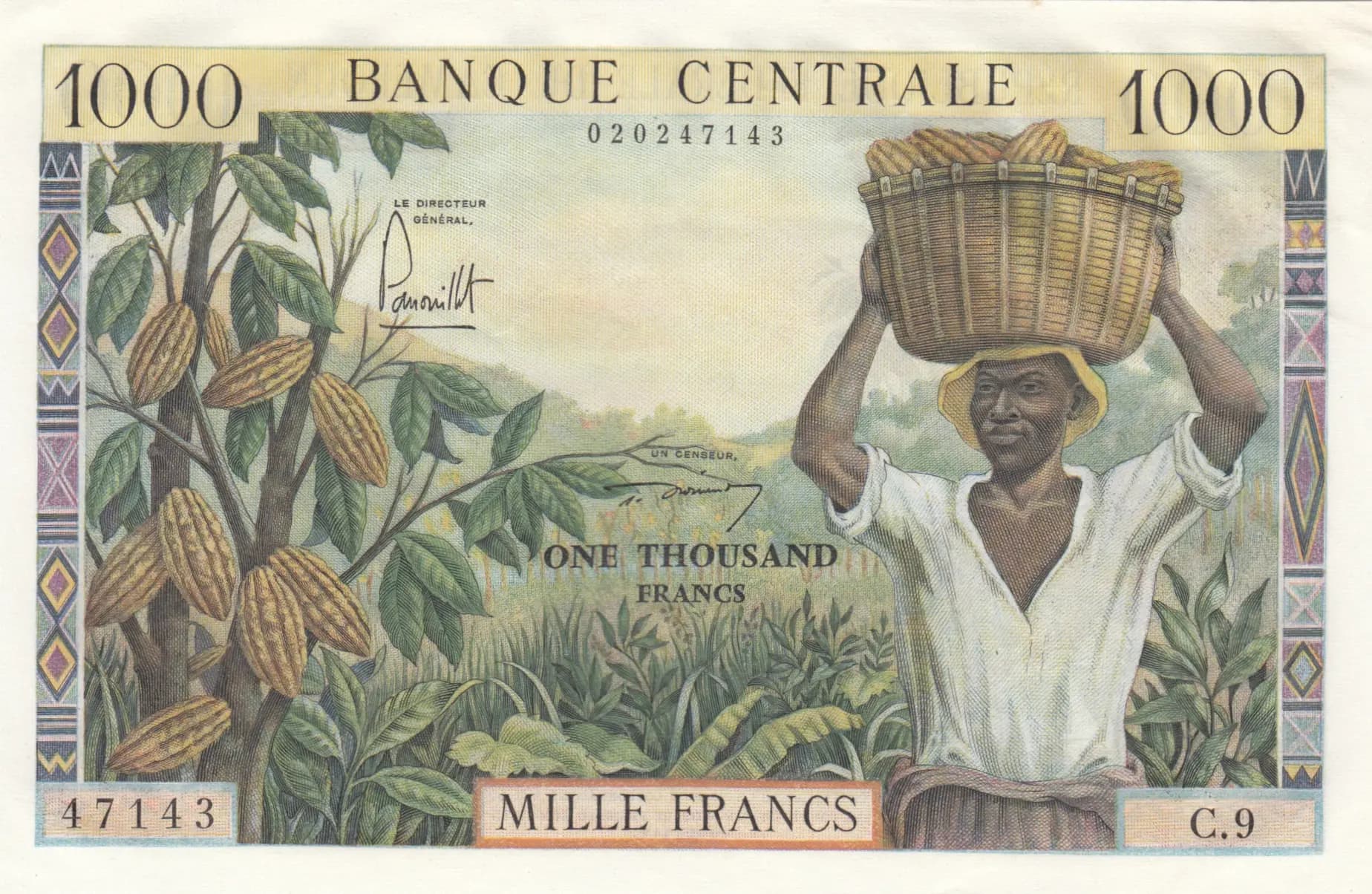
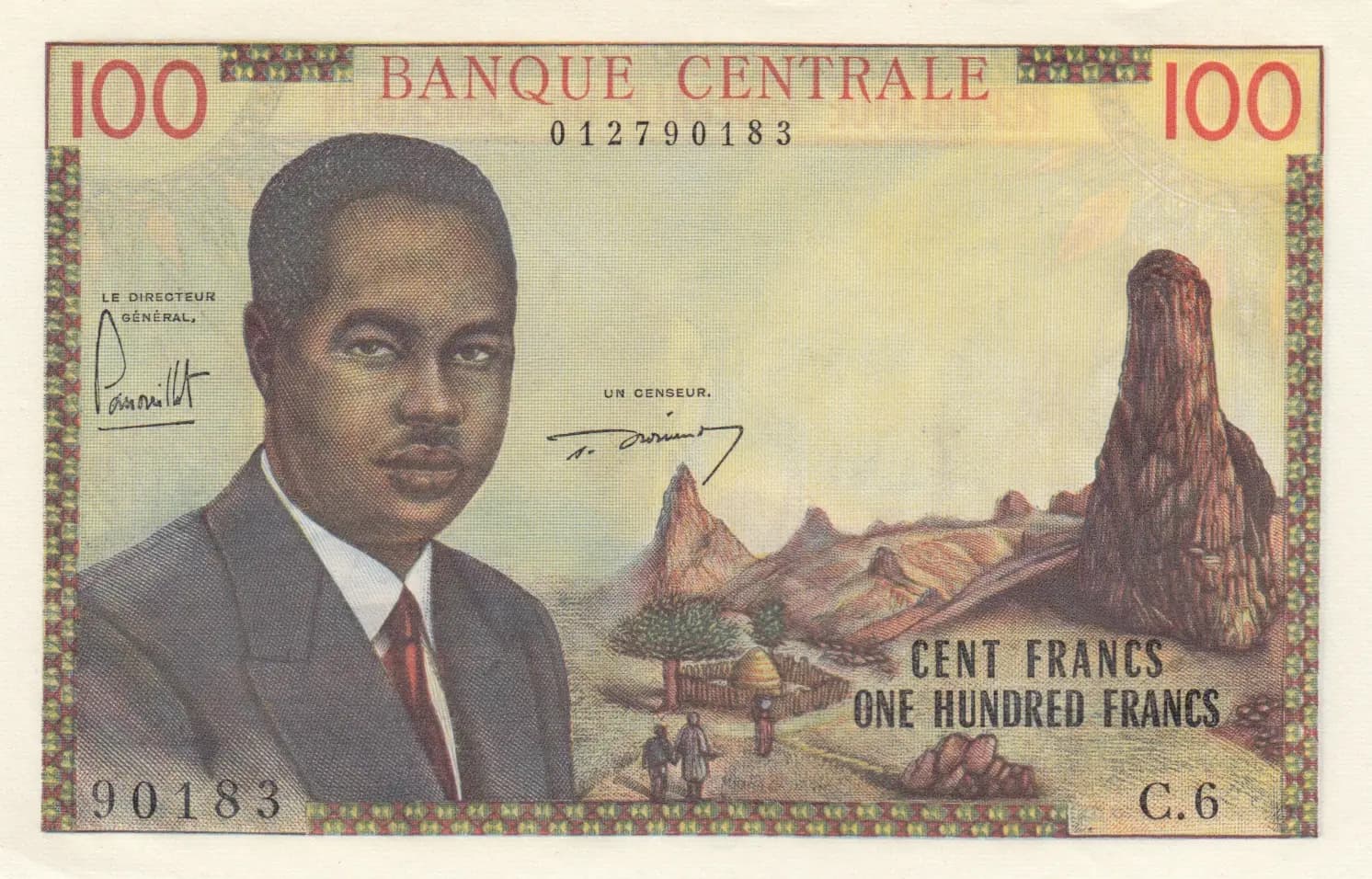
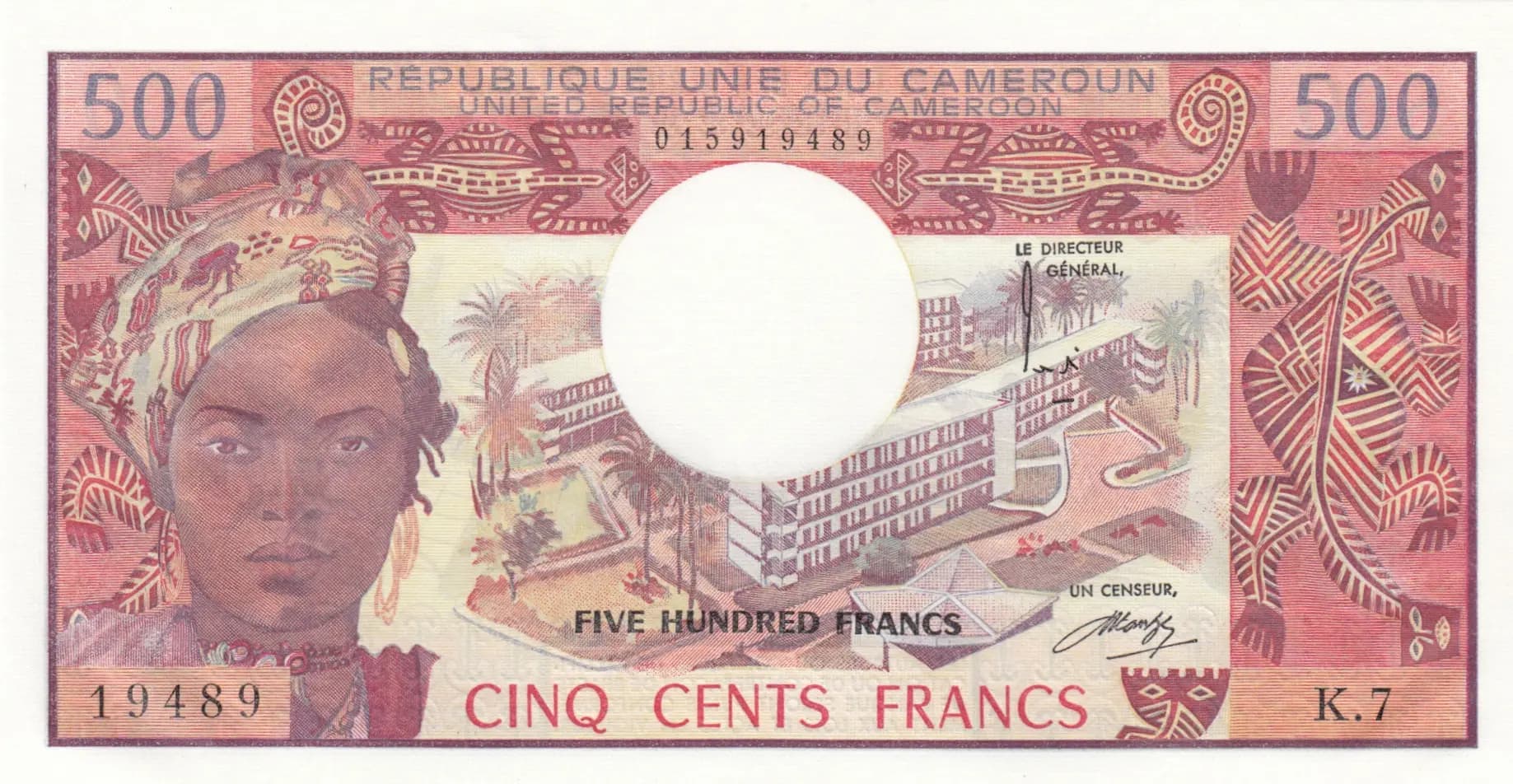
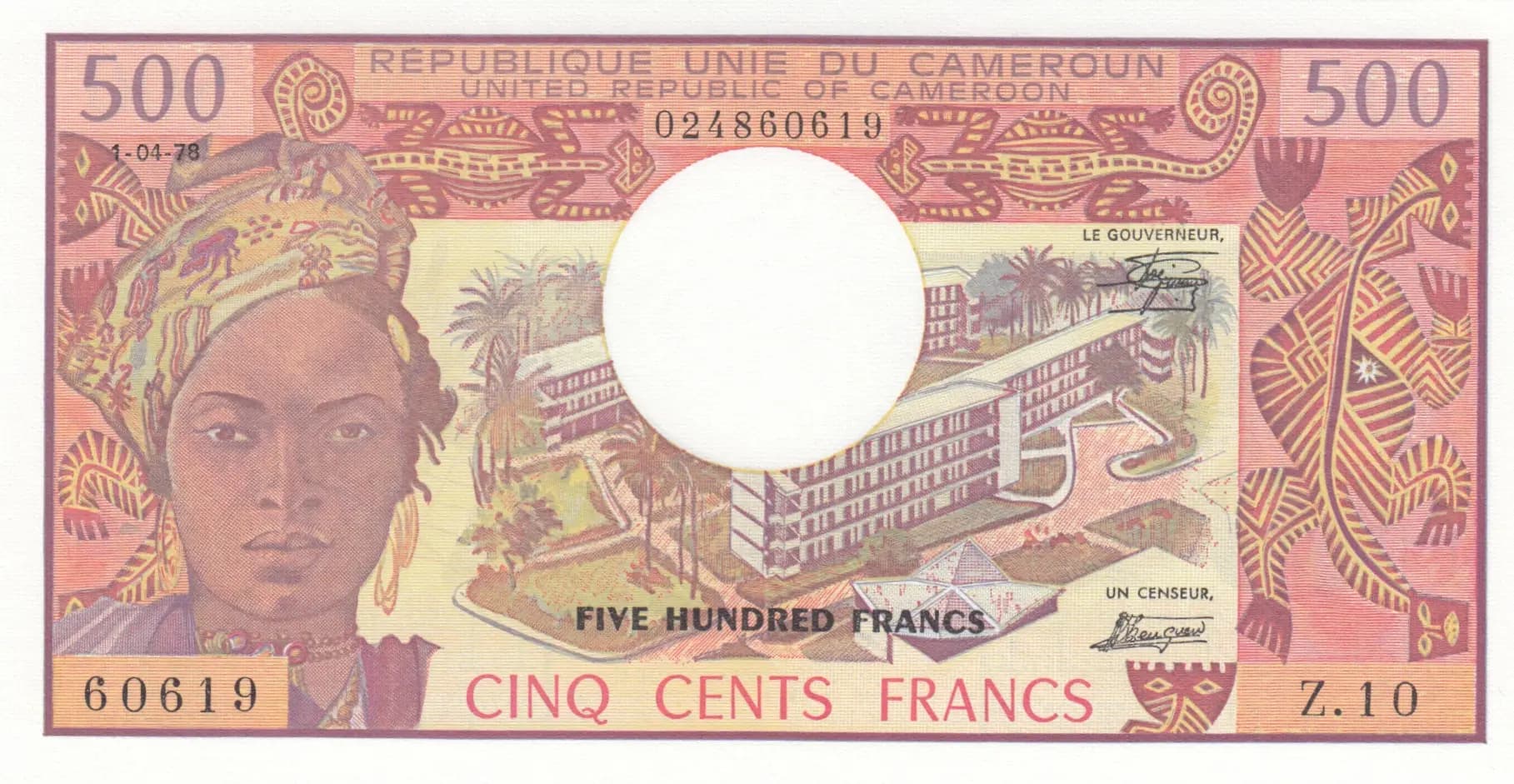
500 francs 1962
Market Prices
14 salesAbout This Note
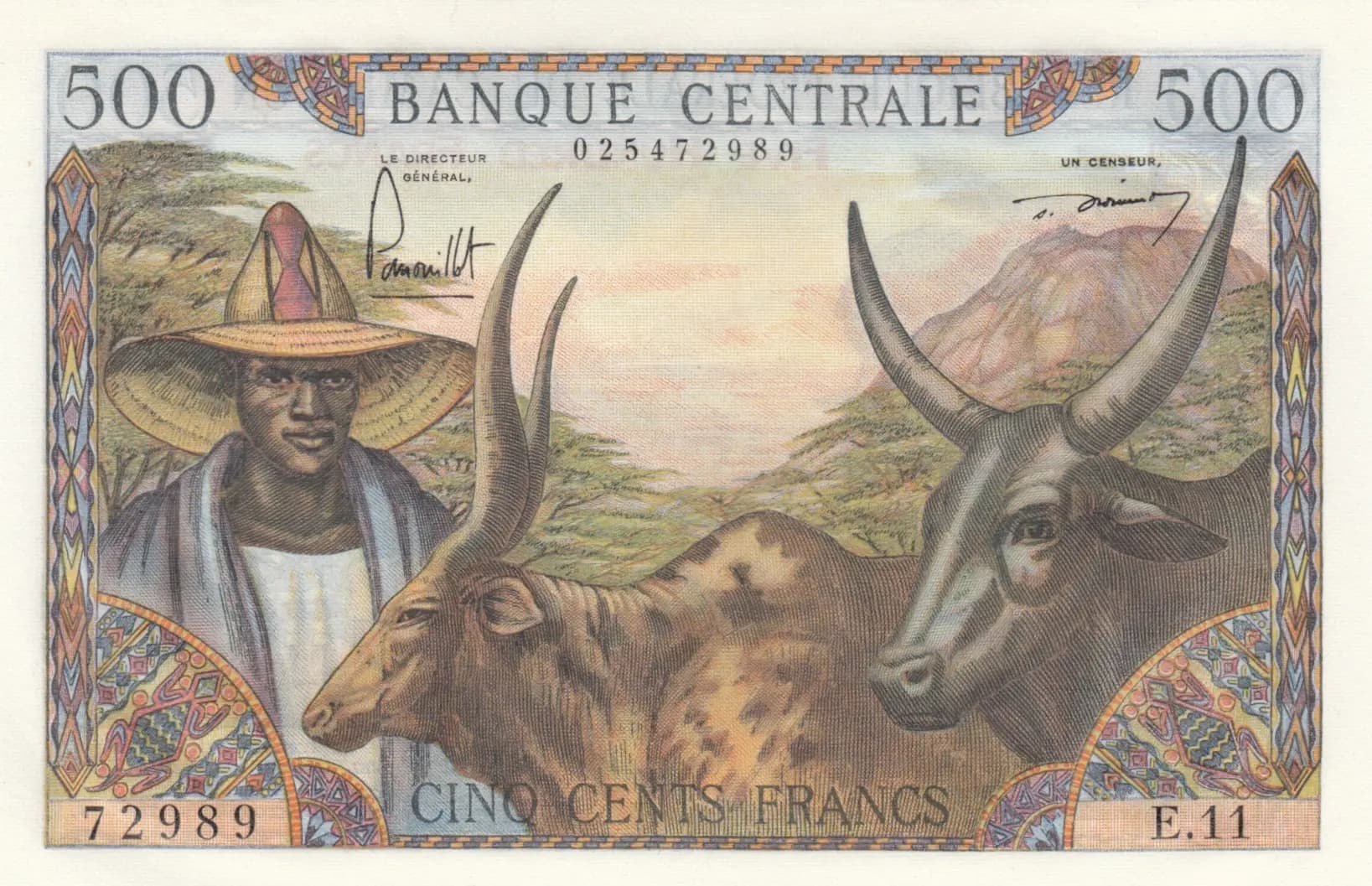
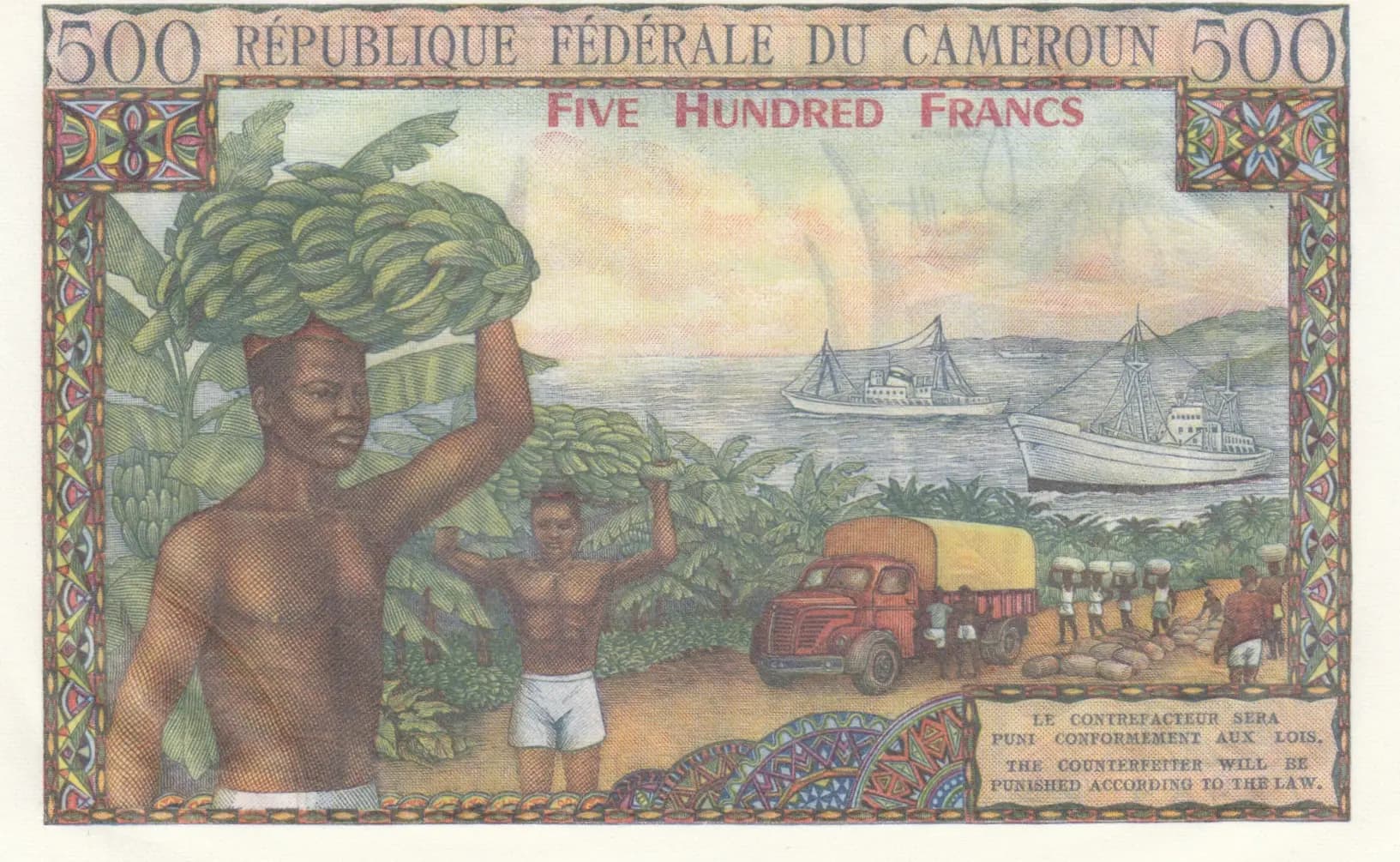
This is an uncirculated example of Cameroon's 500 Francs banknote from 1962 (Pick P-11), issued by the Banque Centrale of the newly independent Federal Republic of Cameroon. The note exhibits pristine condition with crisp paper, vibrant multicolored printing, and no signs of wear, handling, or circulation. The obverse features a man in traditional Central African dress alongside zebu cattle in a pastoral landscape, while the reverse depicts the nation's economic development through scenes of banana harvesting, dock labor, maritime commerce, and a cargo truck—themes highly relevant to Cameroon's post-independence nation-building narrative.
Common. While this is a collectible vintage note from an independent African nation's early years, the eBay sales data demonstrates consistent market availability at moderate prices ($30-$75 for circulated examples, $475-$535 for UNC specimens per catalog values). The note appears in multiple auction records spanning 2015-2020, indicating regular supply in the collector market. UNC examples are less common than circulated grades, but this Pick number was clearly produced in sufficient quantities for sustained collector availability. The current specimen's premium condition (UNC) places it in the upper range of desirability for this common issue.
This 1962 banknote was issued during Cameroon's immediate post-independence period (independence achieved in 1960), when the newly formed Federal Republic sought to assert its sovereignty and modernize its economy. The imagery deliberately emphasizes Cameroon's agricultural wealth (pastoral cattle herding and banana cultivation) and maritime/port infrastructure, reflecting the government's development priorities for a nation positioned as a key economic hub in West-Central Africa. The bilingual French-English counterfeiting warning reflects Cameroon's dual colonial heritage and its position as a francophone nation with international commerce aspirations.
The obverse portrays an unidentified Cameroonian man wearing a traditional conical straw hat (typical of Central African ethnic groups) and light blue garment, positioned to the left alongside two long-horned zebu cattle in a pastoral savanna landscape with rolling hills. The reverse depicts scenes of Cameroon's economic development and export economy: a bare-chested man carrying a large bunch of bananas on his head (center-left), tropical harbor activities with a red cargo truck on the dock, two ships in the background waters, dock workers, palm trees, and maritime commerce. Both sides are framed by decorative geometric borders featuring orange, blue, and yellow repeating African-inspired patterns. The design composition emphasizes the nation's dual economic foundations in agriculture and maritime trade.
Front side: '500' (denomination), 'BANQUE CENTRALE' (Central Bank), 'CINQ CENTS FRANCS' (Five Hundred Francs), 'LE DIRECTEUR GÉNÉRAL' (The Director General), 'UN CENSEUR' (A Censor), serial numbers '0254729899' and '72989', series designation 'E.11', and signatures including 'Charbault' and 'Pompidou'. Back side: '500' (denomination), 'REPUBLIQUE FEDERALE DU CAMEROUN' (Federal Republic of Cameroon), 'FIVE HUNDRED FRANCS' (English denomination), 'LE CONTREFACTEUR SERA PUNI CONFORMEMENT AUX LOIS - THE COUNTERFEITER WILL BE PUNISHED ACCORDING TO THE LAW' (bilingual counterfeiting warning in French and English).
This note was produced using multicolor intaglio (engraved) printing, characteristic of early 1960s banknote production by European security printers. The fine line work evident in the geometric borders, the depth and precision of the portraits and landscape details, and the multiple color separations visible in the note all indicate professional intaglio engraving. The security printer for this specific issue is not definitively identified from the visual analysis alone, though French printers were common for francophone African central bank notes of this era.
The PMG population report indicates two cataloged variants exist for Pick-11: the base P-11 and a P-11s (specimen). The observed note appears to be the standard P-11 issue variant. The serial number prefix 'E.11' and signature varieties (Charbault and Pompidou identified as signatories) may represent minor sub-varieties, as is typical with African central bank notes of this era where multiple signature combinations exist for the same Pick number due to staggered note printing batches.