50 francs 1977
Market Prices
10 salesAbout This Note
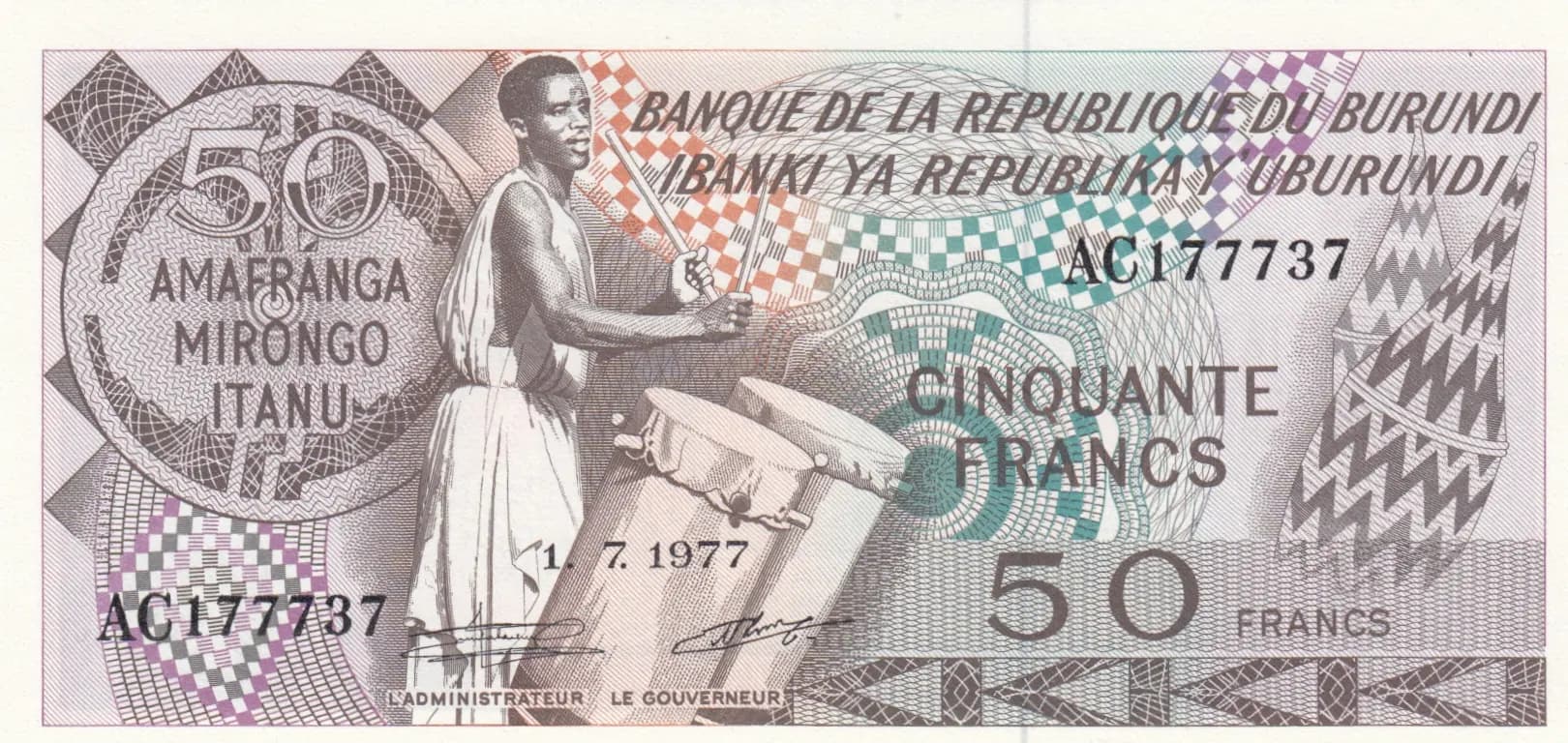
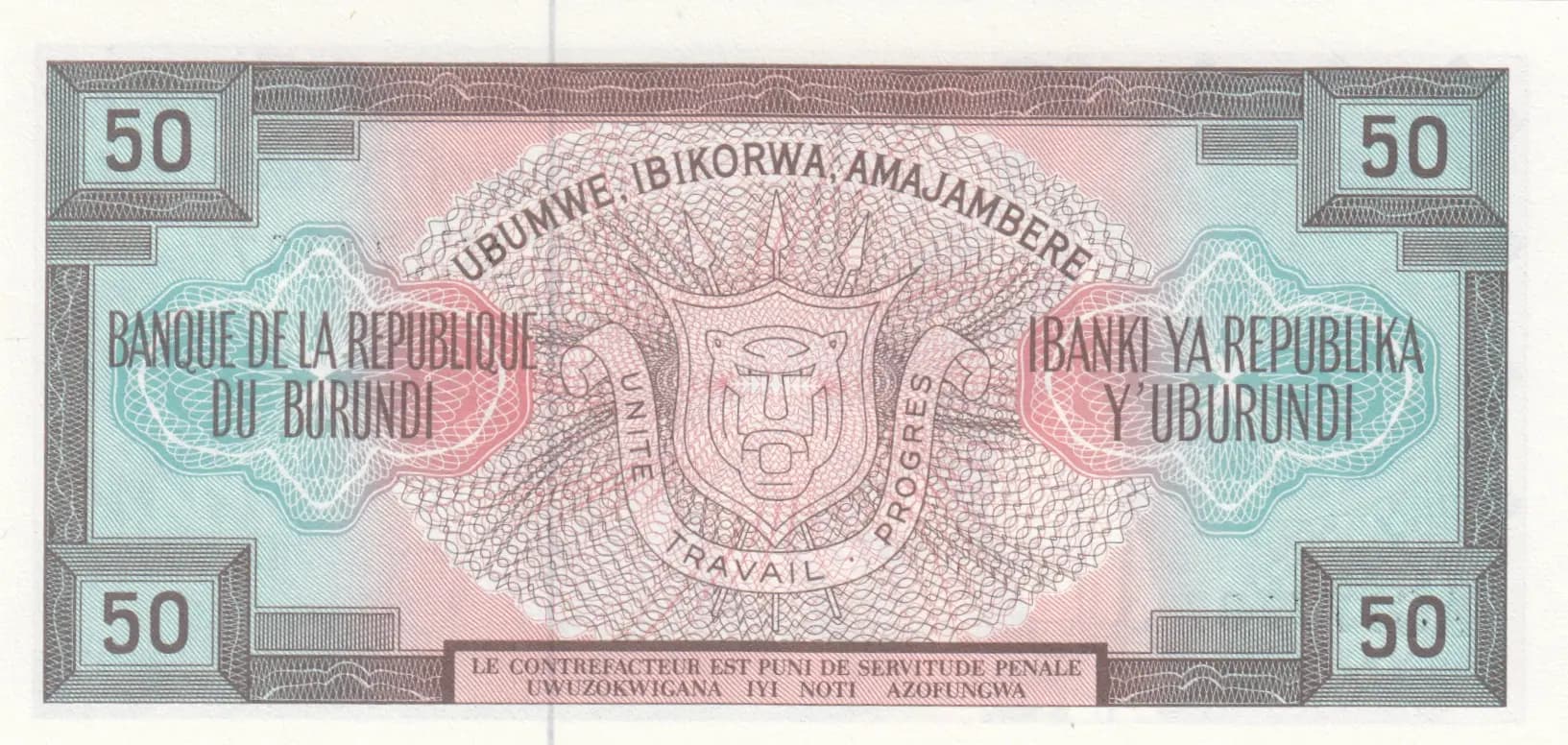
This Burundi 50 francs banknote from 1977 presents an exceptional example of the classical design era from the Banque de la République du Burundi. The obverse features an allegorical female figure in classical dress, while the reverse displays the national coat of arms with a stylized feline head, rendered in sophisticated multicolor engraving with browns, greens, purples, and salmon tones. The specimen examined is in uncirculated condition with sharp detail, crisp printing, and no visible wear, making it an attractive example for collectors of African currency.
Common. This note was issued in 1977 and remained in circulation (with various signatures and dates) until the early 1990s, indicating a substantial print run. Current market data from eBay shows UNC specimens consistently selling for $5–$12.50 in recent years, with the most recent sale (March 2025) at $9.65. Catalog values from 2019 list UNC examples at $7.50. The regular issue status, prolonged circulation period, and consistent low market prices all confirm this as a common banknote despite its attractive design. There is no evidence of short print runs, recalls, or scarcity.
This note was issued in 1977, during a pivotal period in post-independence Burundi's economic development. The allegorical imagery on the obverse—a classical female figure holding a torch—reflects modernist symbolism common in African nations seeking to project progress and enlightenment. The reverse's national motto 'UBUMWE IBIKORWA AMA JAMBARE' (Unity, Work, Progress) in Kirundi emphasizes the bilingual character of Burundi's identity, pairing French colonial administrative language with the indigenous Kirundi language.
The obverse features an allegorical representation of classical female virtue or national identity seated at right, dressed in white/cream robes and holding a torch or staff—symbolic of progress and enlightenment. The dominant design element on the left is a large circular medallion with intricate geometric cross-hatch patterns and fine line work, incorporating the denomination within an ornamental frame. The color palette employs browns as the dominant tone with green, purple, cream, and orange-red accents in decorative diamond patterns and mesh work throughout. The reverse displays the national coat of arms as its primary focus—a stylized feline head (likely representing a leopard or lion, symbolizing national strength) rendered in geometric patterns at the center. The emblem is surrounded by the national motto in a circular arrangement, with corner boxes containing the denomination '50' and decorative security patterns in teal/green and pink/salmon colors. Both sides employ symmetrical guilloche patterns and fine engraving as security measures.
FRONT SIDE: 'BANQUE DE LA REPUBLIQUE DU BURUNDI' / 'IBANKI YA REPUBLIKA Y'UBURUNDI' (Bank of the Republic of Burundi in French and Kirundi); '50 AMAFRANGA' / 'MIRONGO ITANU' (50 Francs in Kirundi); 'CINQUANTE FRANCS' (Fifty Francs in French); Date: '1.7.1977' (July 1, 1977); Serial number: 'AGI77737'; Signatures: 'L'ADMINISTRATEUR' (The Administrator) and 'LE GOUVERNEUR' (The Governor). BACK SIDE: 'BANQUE DE LA REPUBLIQUE DU BURUNDI' / 'IBANKI YA REPUBLIKA Y'UBURUNDI' (Bank of the Republic of Burundi); 'UBUMWE IBIKORWA AMA JAMBARE' (Unity, Work, Progress in Kirundi); 'LE CONTREFACTEUR EST PUNI DE SERVITUDE PENALE' (The counterfeiter is punished with penal servitude in French); 'UMUZOKWIGANA IYI NOTI AZOFUNGWA' (Whoever counterfeits this note will be imprisoned in Kirundi); Multiple instances of denomination '50'.
This note was produced using multi-color intaglio (engraved) printing, a sophisticated technique involving multiple color passes and fine line engraving. The complexity of the geometric patterns, the precise registration of colors (browns, greens, purples, pinks), the fine mesh work forming the medallion and emblem, and the intricate guilloche-style security patterns are all characteristic of high-security intaglio production. The printing was likely executed by a European or international security printer specializing in central bank currency production, though specific attribution to a particular printer for this Pick number is not definitively documented in standard catalogs.
This specimen is identified as Pick-28a, representing the 1977 issue with the date '1.7.1977' (July 1, 1977) printed on the obverse. The serial number prefix 'AGI' may indicate a particular printing batch or security printer block. Multiple signature varieties exist for this issue, as indicated by the signature lines for 'L'ADMINISTRATEUR' and 'LE GOUVERNEUR,' though the specific signatures on this example are not fully legible in the analysis. The note was issued in series extending through at least 1979 (based on external reference noting 1977-1993 circulation), suggesting minor date and signature varieties occur within Pick-28a. No dramatic overprints or special commemorative variants are documented for this denomination and year.