1 rupee 1942
Market Prices
26 salesAbout This Note
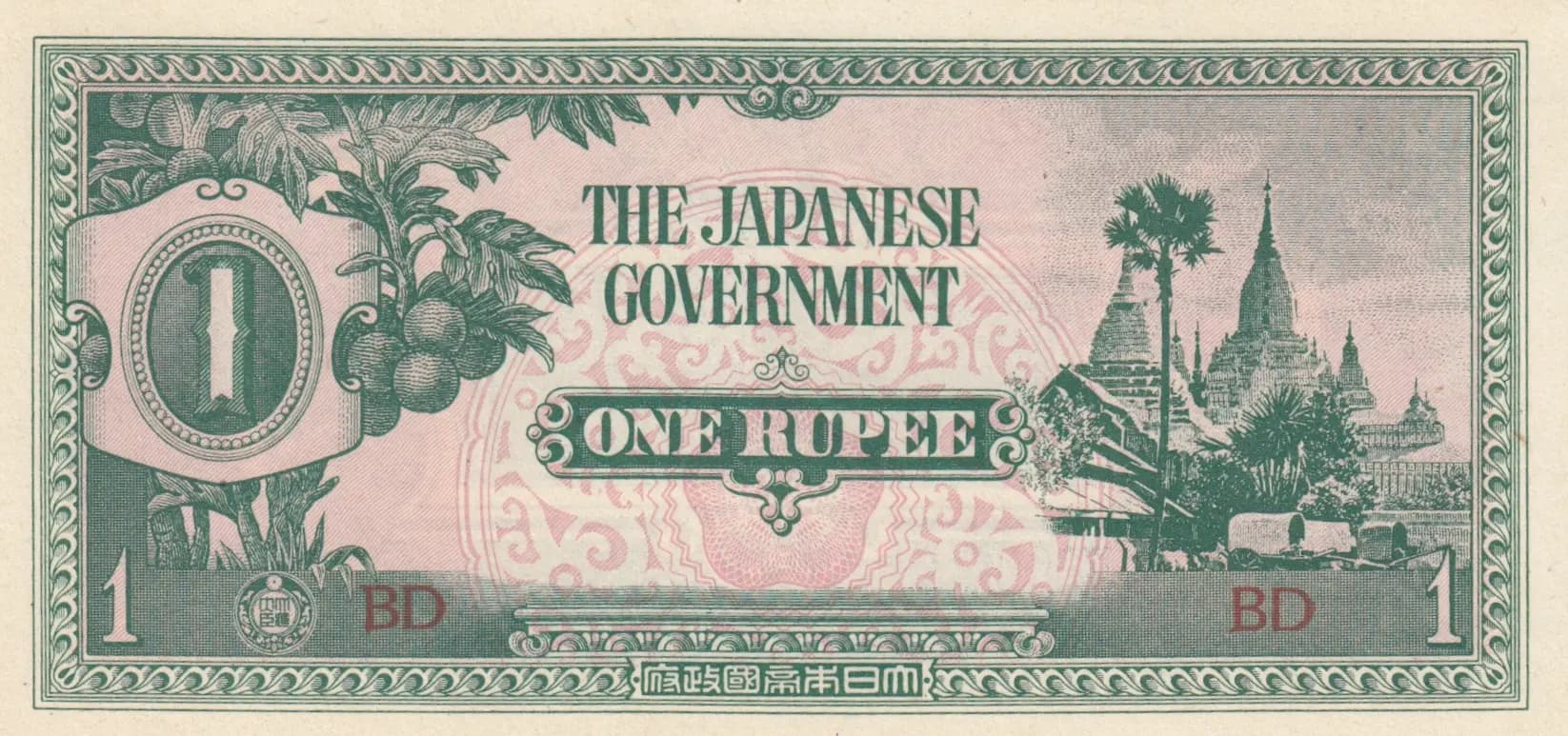
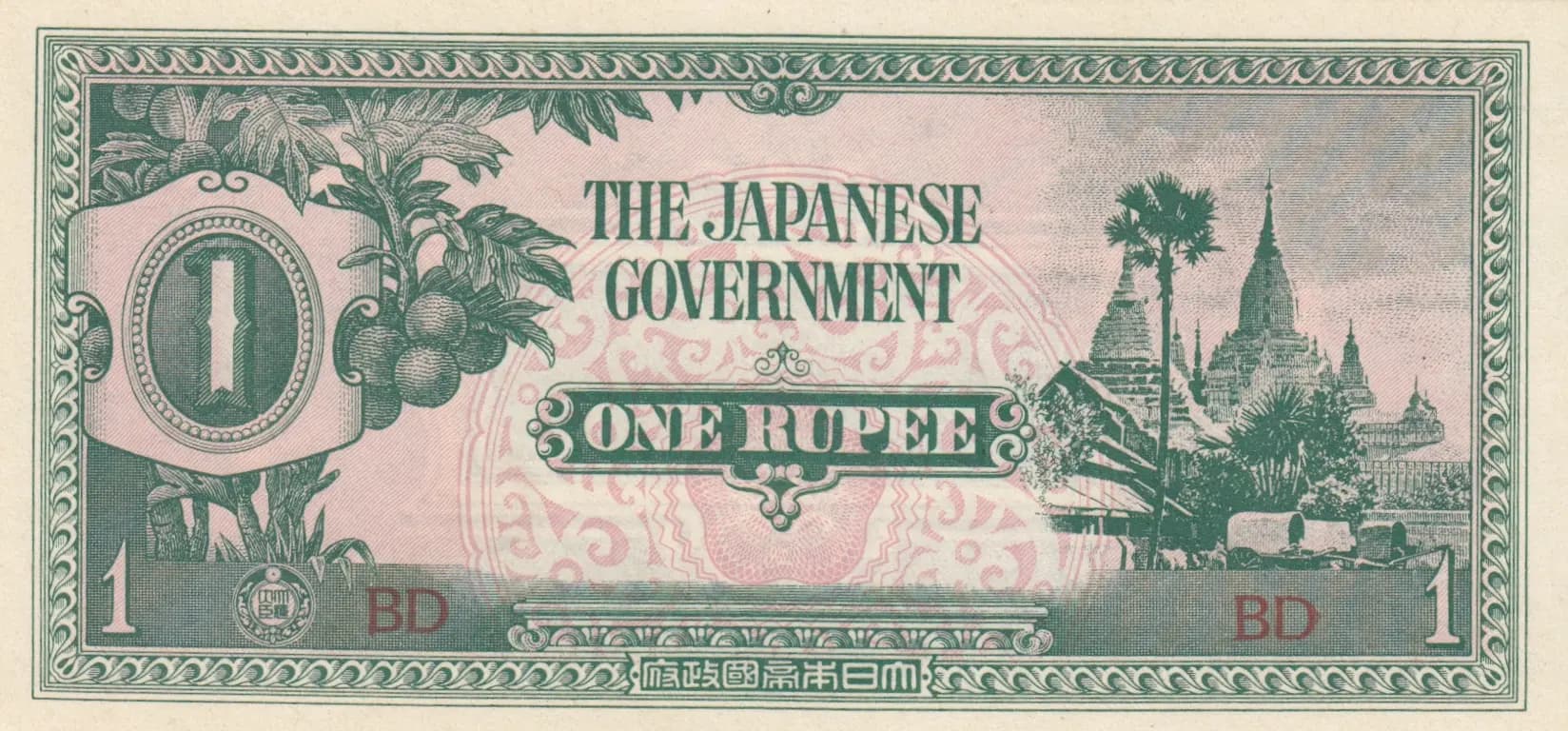
This is a stunning uncirculated example of the 1942 Japanese Government 1 Rupee note for Burma (Pick P-14b), displaying pristine condition with crisp printing and no visible wear. The note features an elegant design with the Ananda Temple of Pagan depicted on the front in green, complemented by ornate scrollwork borders and botanical motifs rendered in pink, green, and cream tones. As a Japanese occupation currency with strong historical significance and exceptional eye appeal, this UNC specimen represents a desirable issue for collectors of World War II-era Asian currency.
Common. Despite its historical significance as occupation currency, the 1942 1 Rupee (Pick P-14b) is readily available and inexpensive. eBay market data shows substantial transaction volume with prices ranging from $0.50 to $51 USD depending on condition and grading company, with most UNC/near-UNC examples selling between $10-$30. The 2016 catalogue value for UNC is only $0.75, reflecting abundant supply. Large print runs of Japanese occupation currency ensure these notes remain common in the collector market.
This note was issued by the Japanese Government during its occupation of Burma in 1942, representing the military administration's monetary control over the region. The prominent depiction of the Ananda Temple at Pagan (modern Bagan)—one of Burma's most sacred Buddhist landmarks—reflects Japan's attempt to legitimize its rule by incorporating culturally significant local imagery into the occupation currency. The use of English text ('THE JAPANESE GOVERNMENT,' 'ONE RUPEE') alongside Japanese characters demonstrates the dual administrative nature of the occupation regime.
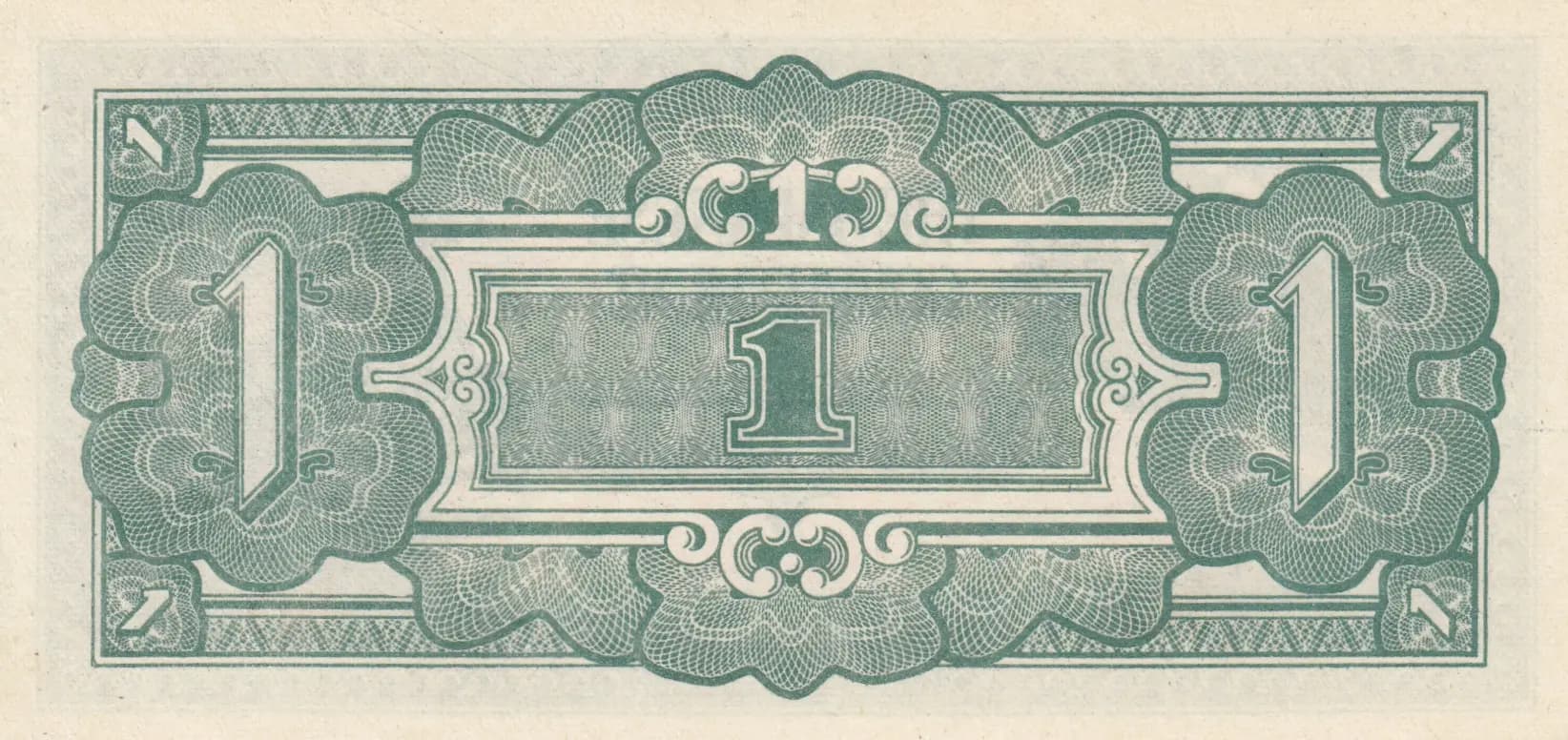
The front features the Ananda Temple of Pagan rendered in green on the right side, identifiable by its distinctive multiple pointed spires and characteristic Burmese architectural style, accompanied by a palm tree. The left side displays a large ornamental circular '1' numeral with decorative botanical elements depicting citrus fruit on a branch, symbolizing the fertility and resources of Burma. The entire design is framed by elaborate scrollwork borders in a pink/rose background with green accents. The back presents a symmetrical design dominated by a large central '1' within an ornate rectangular cartouche, with corner numerals '1' positioned within decorative lotus or floral medallions—motifs reflecting Buddhist artistic traditions. The overall aesthetic combines Japanese printing conventions with Burmese cultural symbolism.
Front side: 'THE JAPANESE GOVERNMENT' (English) - identifying the issuing authority; 'ONE RUPEE' (English) - the denomination; 'BD' (English, appears in red in lower corners) - likely a series or batch designator; Japanese text at bottom (昭和 era characters, partially legible) - standard Japanese government authorization text typical of occupation currency. Back side: Large central '1' (numeric) - denomination numeral in decorative cartouche; Corner '1' numerals (numeric) - denomination markers in all four corners within floral frames.
Intaglio engraving (line engraving), as evidenced by the fine line work, detailed scrollwork patterns, crisp margins, and sharp detail visible throughout both sides. The Japanese government employed skilled security printers for occupation currency; this note was likely produced by the Imperial Japanese Government Printing Bureau or a contracted security printer in Japan. The precision of the engraved ornamental elements and the clarity of the fine line patterns are characteristic of high-quality intaglio work from this period.
Pick P-14b indicates this is a specific variety within the 1 Rupee denomination. The red 'BD' markings visible in the lower corners and the Japanese text at the base may represent variety identifiers. Standard Japanese occupation notes of this type do not typically feature multiple date varieties (ND - no date designation applies), though signature or printer variations may exist. The consistent design elements observed (Ananda Temple, fruit botanical, pink/green color scheme) confirm this as the standard P-14b variety. Serial number prefix varieties are common for Japanese occupation currency; inspection of the serial numbers (not fully visible in provided images) would determine specific series.