1shilling 1918

Market Prices
2 salesAbout This Note
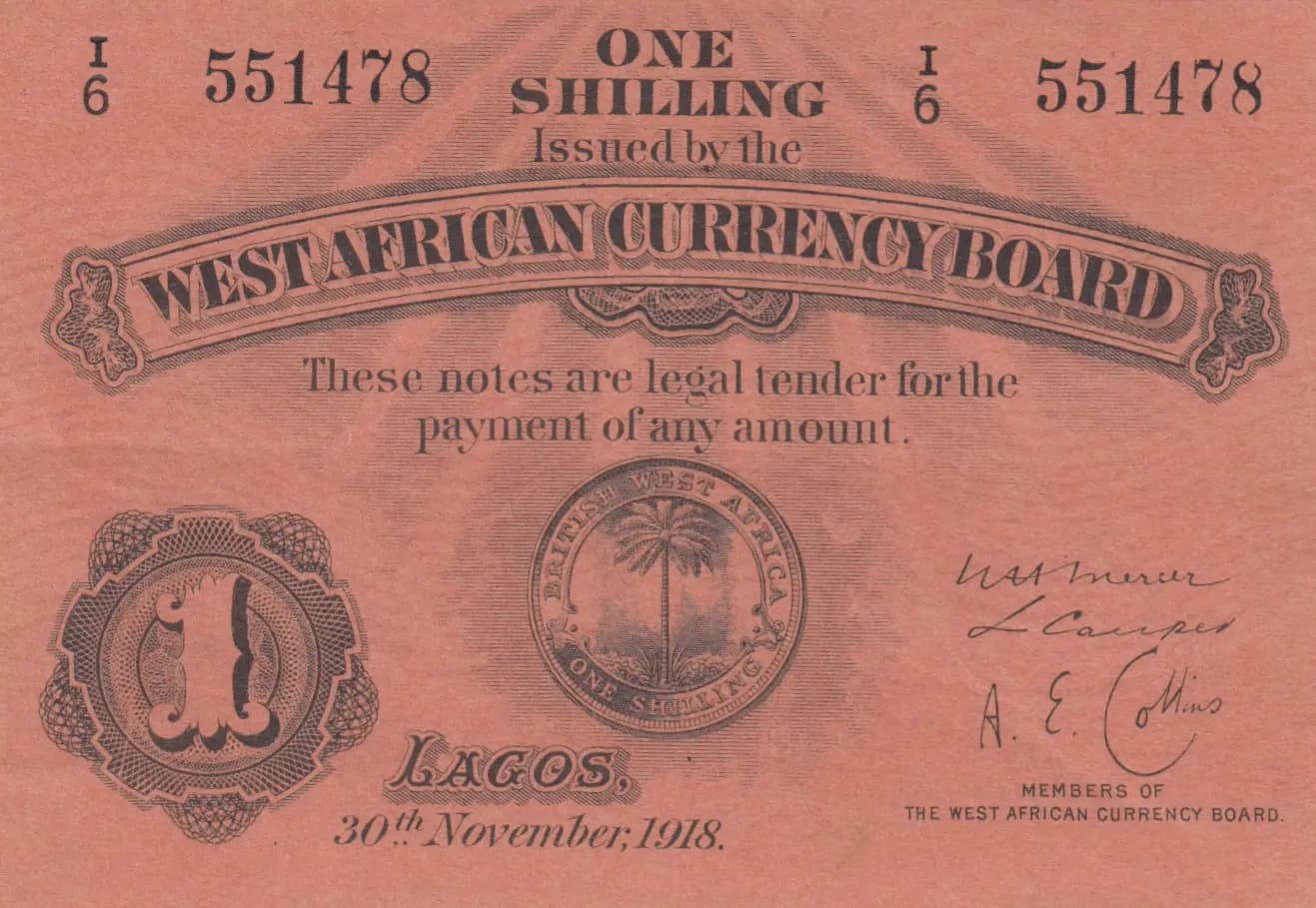
This is the iconic first banknote issued by the West African Currency Board on 30th November 1918, a historically significant One Shilling note in salmon-pink coloring. The note displays excellent condition with clear printing of the central palm tree emblem and ornate circular frames, though age-related toning and minor foxing are evident. As Pick-1, this represents the foundational currency issue for British West Africa and remains a desirable collector piece, with EF-graded examples cataloging at $600.
Common. The eBay transaction history shows these notes trading regularly in lower grades (F condition at $32 in 2009), and catalog values reflect steady supply—EF examples at $600 represent fair market value rather than scarcity premiums. The West African Currency Board maintained this denomination in production across its operating territories, and survival rates are adequate for collector acquisition. The note's historical significance drives collector interest rather than rarity.
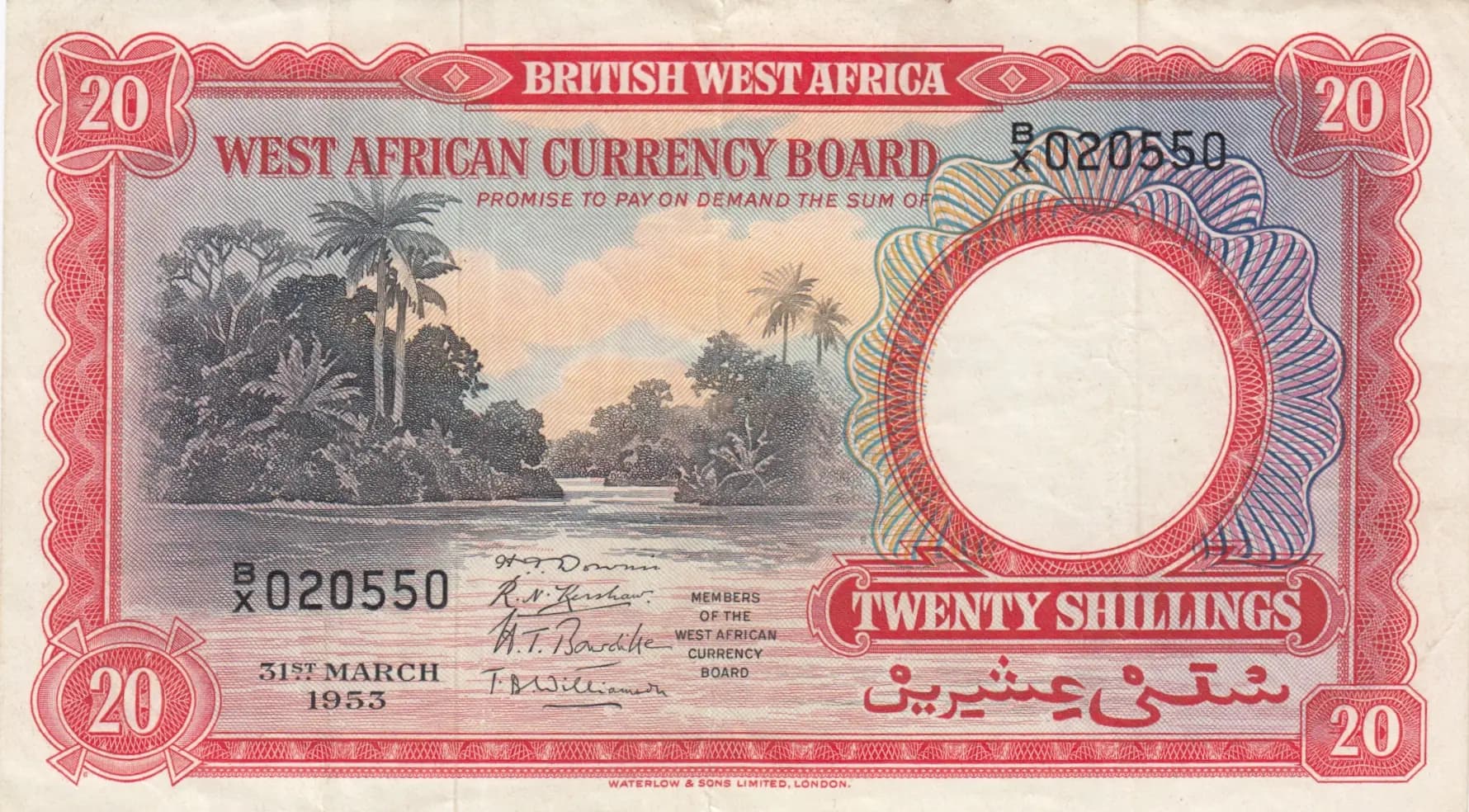
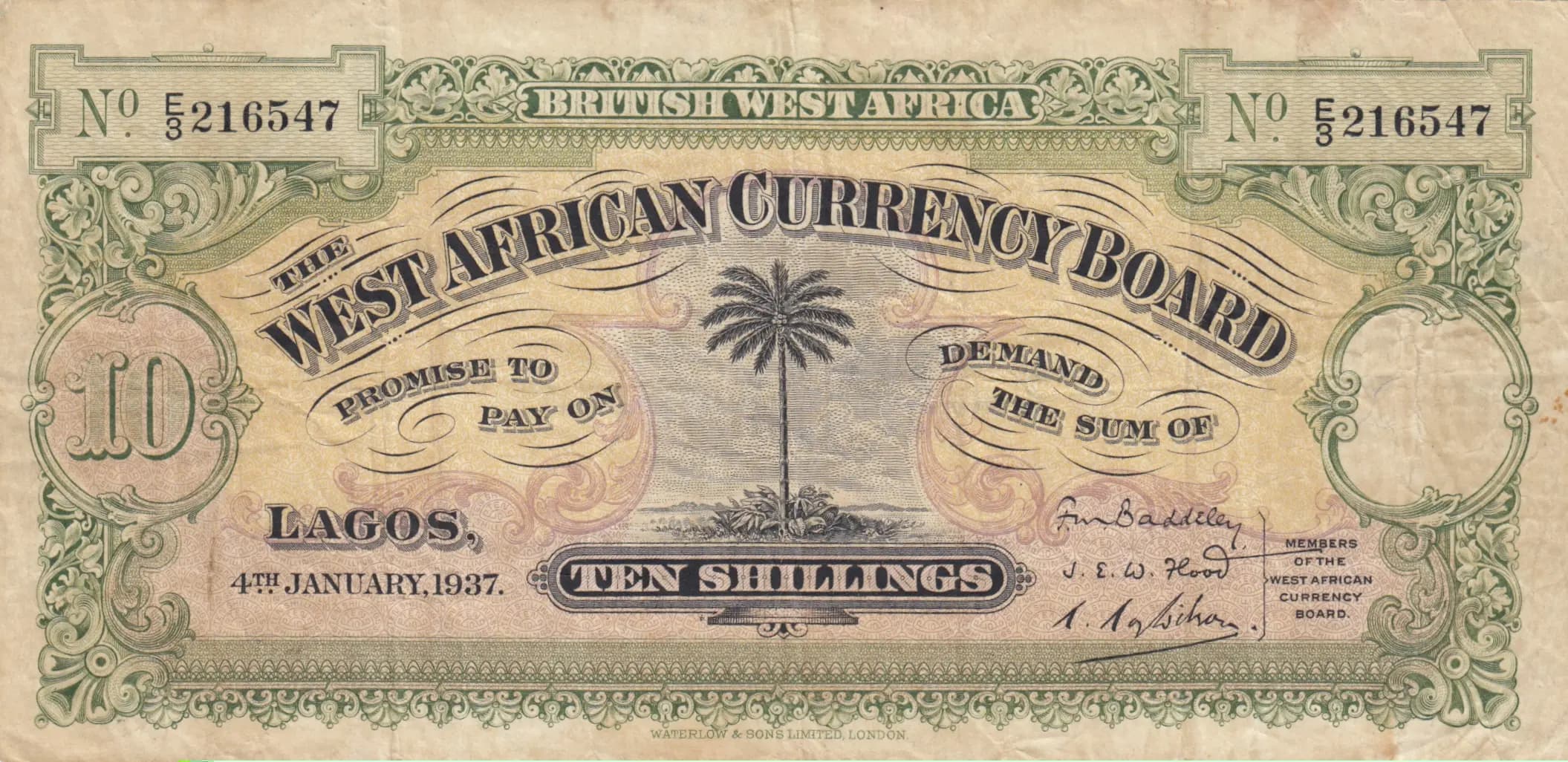
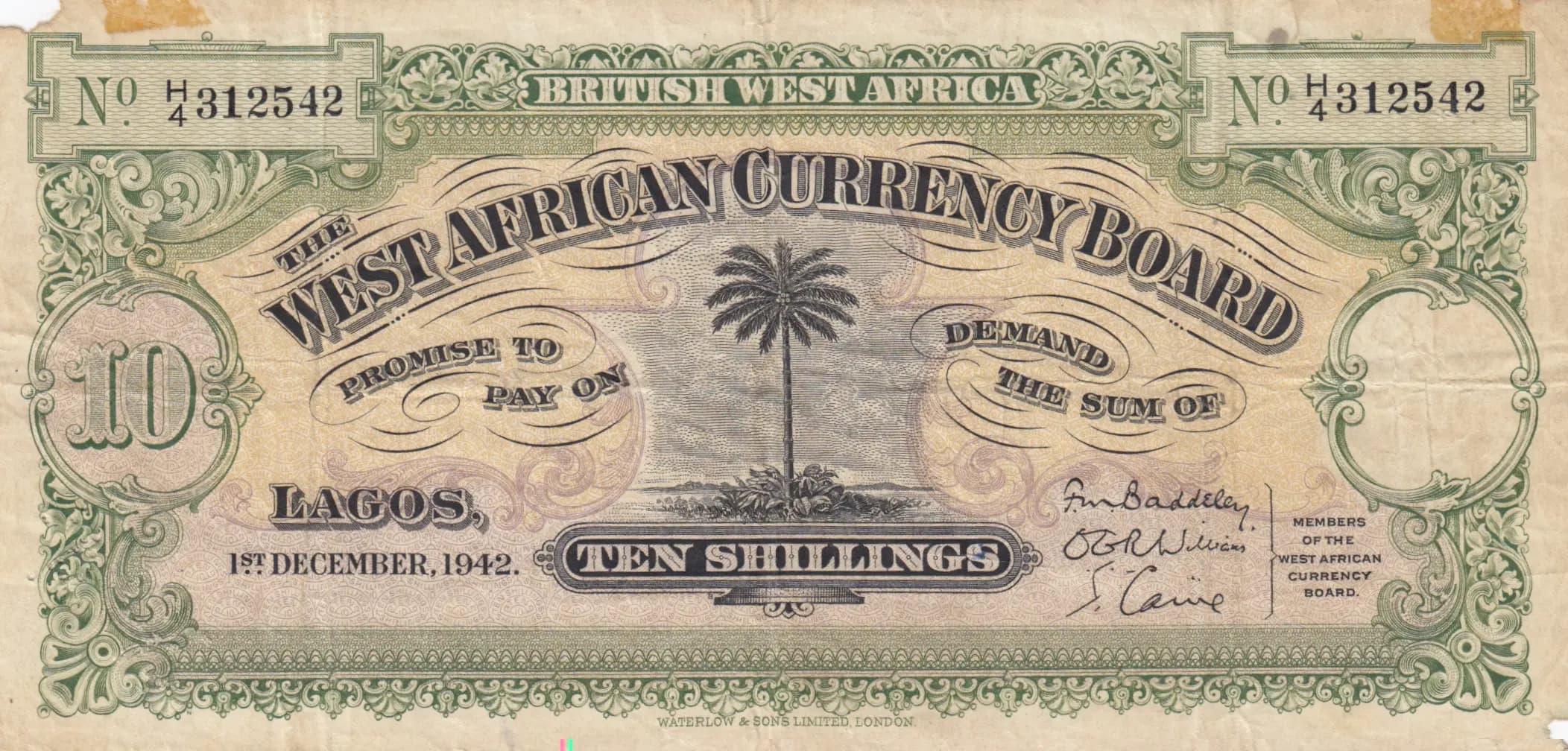
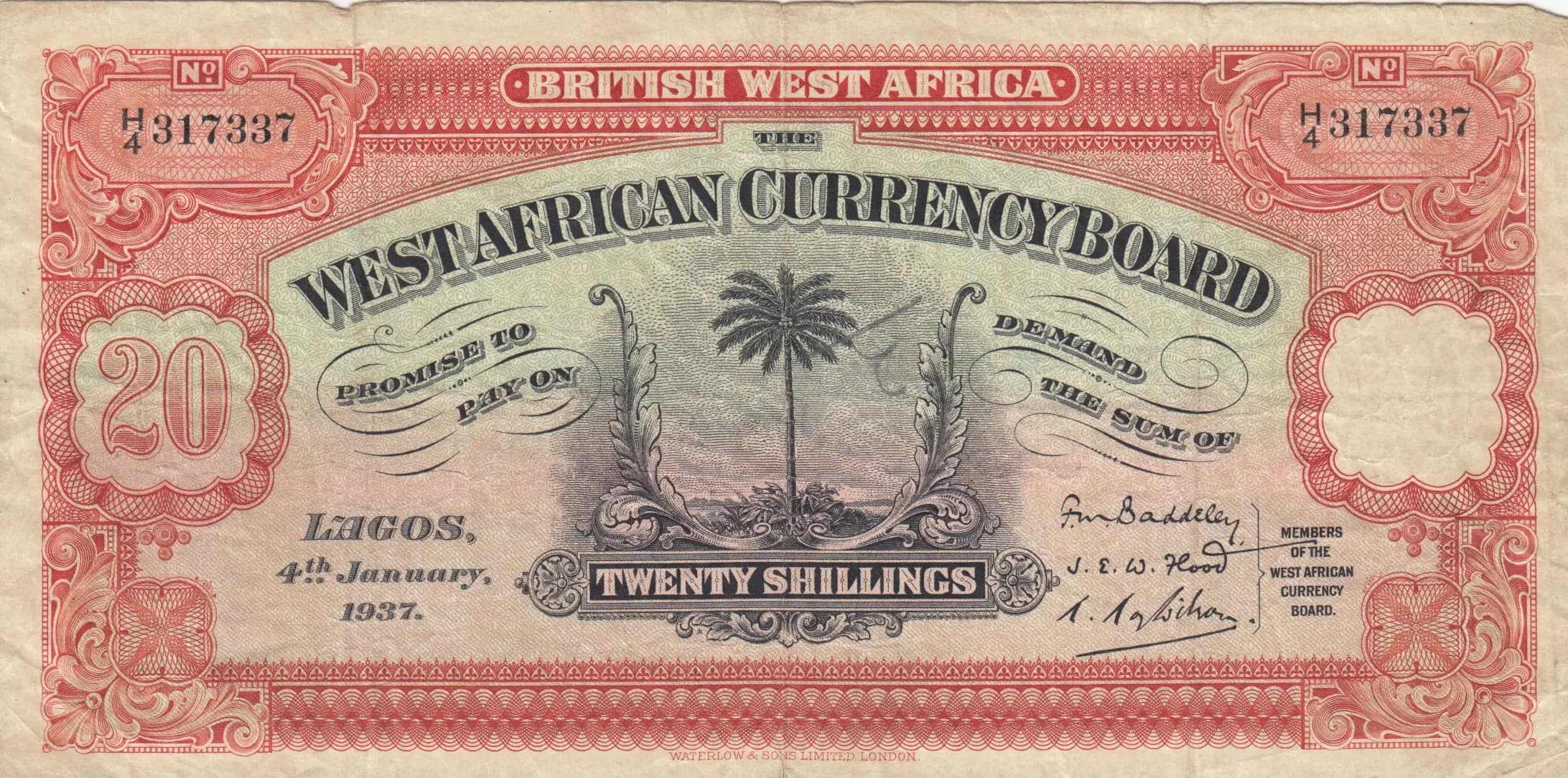
The West African Currency Board's 1918 issuance marked the establishment of a unified currency system for British West African colonies following World War I. The central palm tree emblem symbolized the region's colonial economic importance and natural resources, while the Lagos date and board member signatures reflect the administrative structure governing currency in Nigeria, Gold Coast, Sierra Leone, and the Gambia. This first emission represents a pivotal moment in the region's financial independence from direct sterling circulation.
The obverse features a dignified, formally structured design centered on a circular seal containing a palm tree, flanked by ornate circular frames containing the numeral '1' on the left side. The denomination 'ONE SHILLING' dominates the top, with institutional text arranged in a curved banner. The palm tree emblem represents both the region's colonial economic base and its natural character. Handwritten signatures of West African Currency Board members appear on the right, personalizing the authority's commitment. The reverse is entirely blank, typical of early 20th-century British colonial currency practice. The salmon-pink coloring throughout serves as the primary security feature alongside intricate line engraving.
Front Side: 'ONE SHILLING' (denomination); 'Issued by the WEST AFRICAN CURRENCY BOARD' (issuing authority); 'These notes are legal tender for the payment of any amount' (legal tender declaration); 'LAGOS, 30th November, 1918' (place and date of issue); Serial number '551478' with reference code 'I 6'; 'MEMBERS OF THE WEST AFRICAN CURRENCY BOARD' (signature line identification); [Handwritten signatures of board members]. Back Side: Blank with no visible inscriptions or printing.
Intaglio line engraving, executed with the fine cross-hatching and detailed ornamental work characteristic of security printing. The intricate decorative scrollwork, circular frames, and the densely engraved palm tree design provided security through complexity—a hallmark of colonial-era banknote production. Signatures were added by hand after printing. The printer attribution is not specified in available catalogs for the P-1, though W&S (Waterlow & Sons) printed higher denominations in this series.
This specimen is identifiable as variety P-1a or P-1s based on PMG population records, though the exact variant designation would require comparison of signature combinations and printing characteristics with the PMG census. The serial number prefix 'I 6' and the specific handwritten signatures visible on this example (though illegible in the image) would determine precise variety classification. The date 30th November 1918 confirms this is from the inaugural emission, the most historically significant variety.