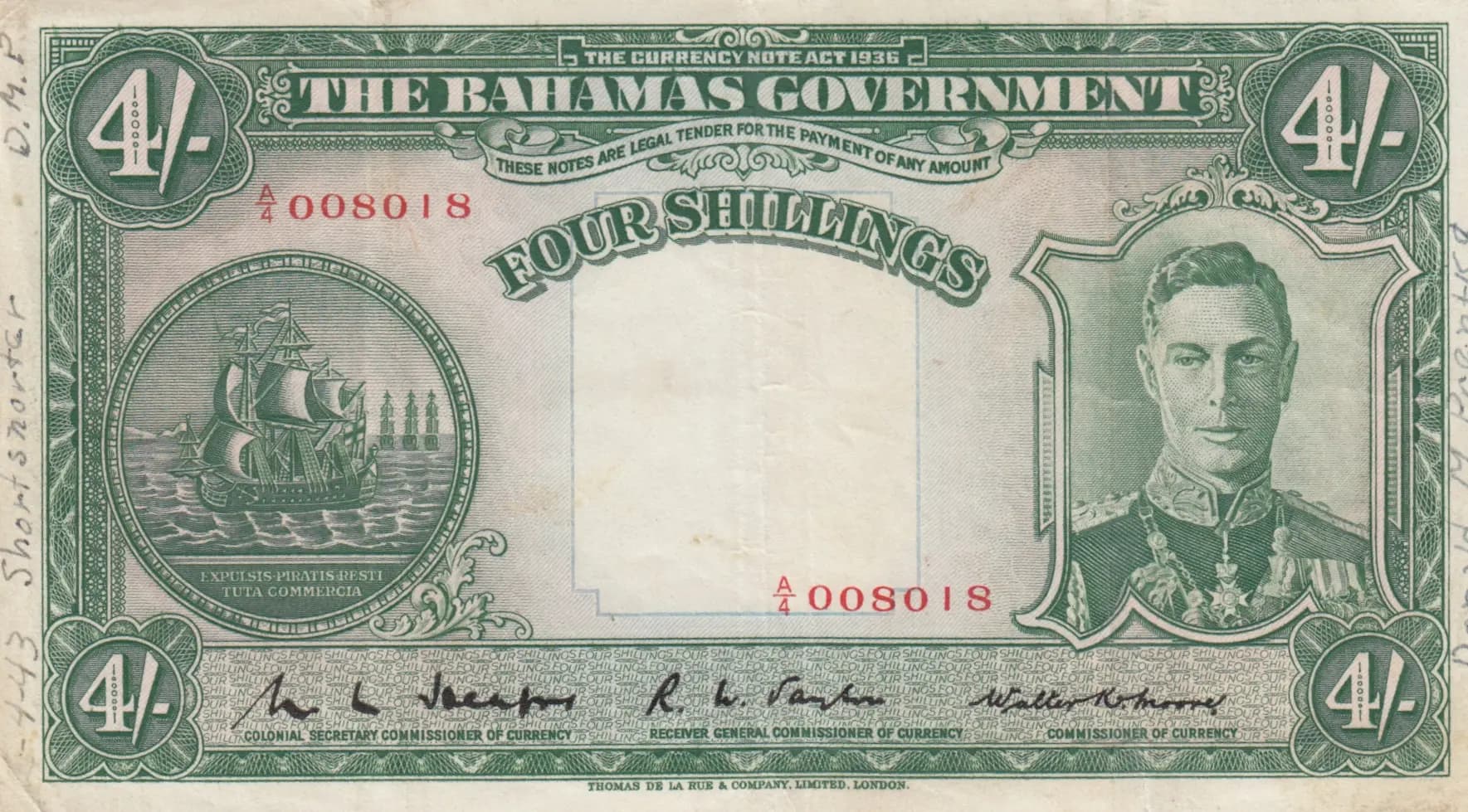
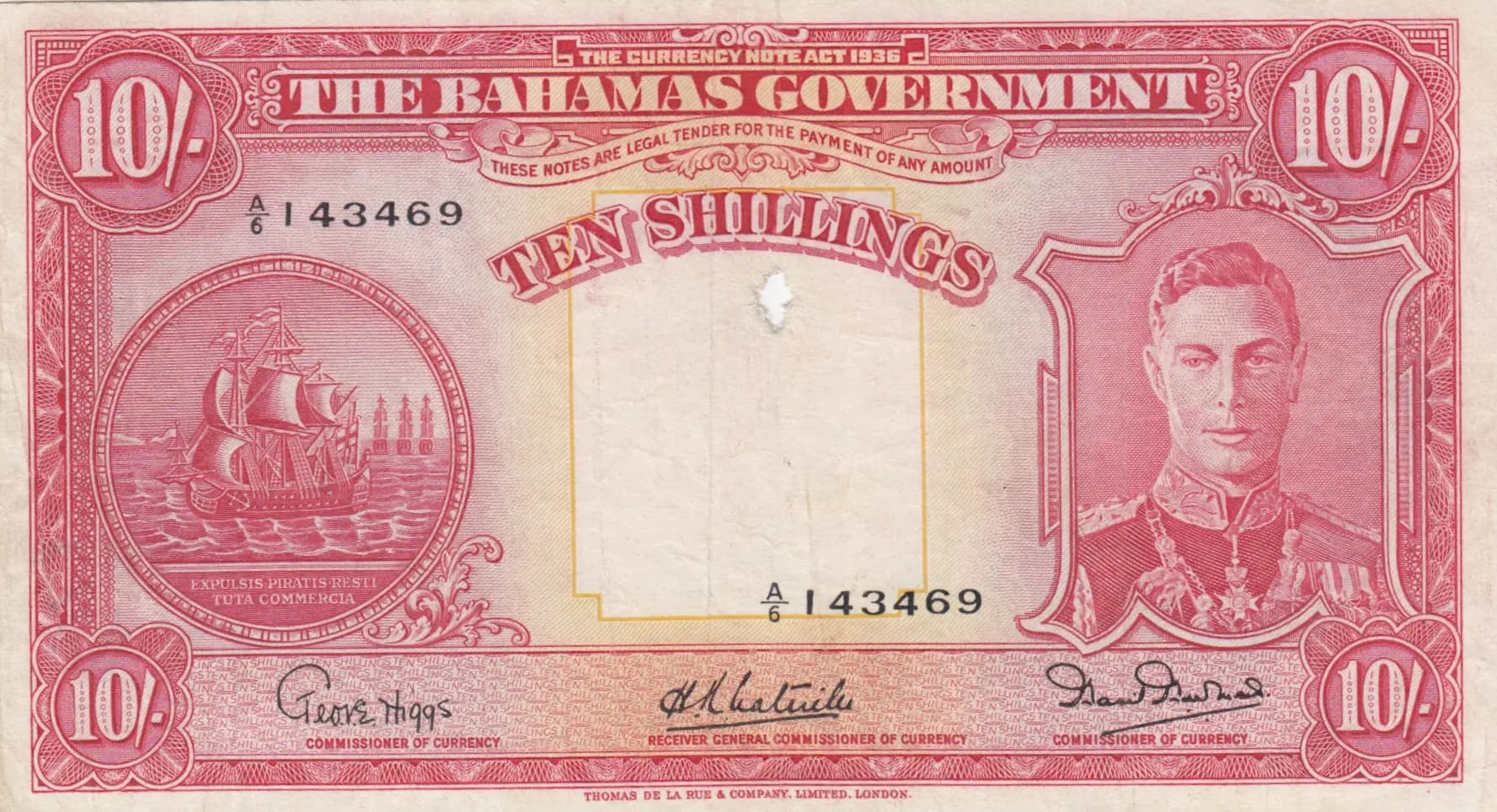
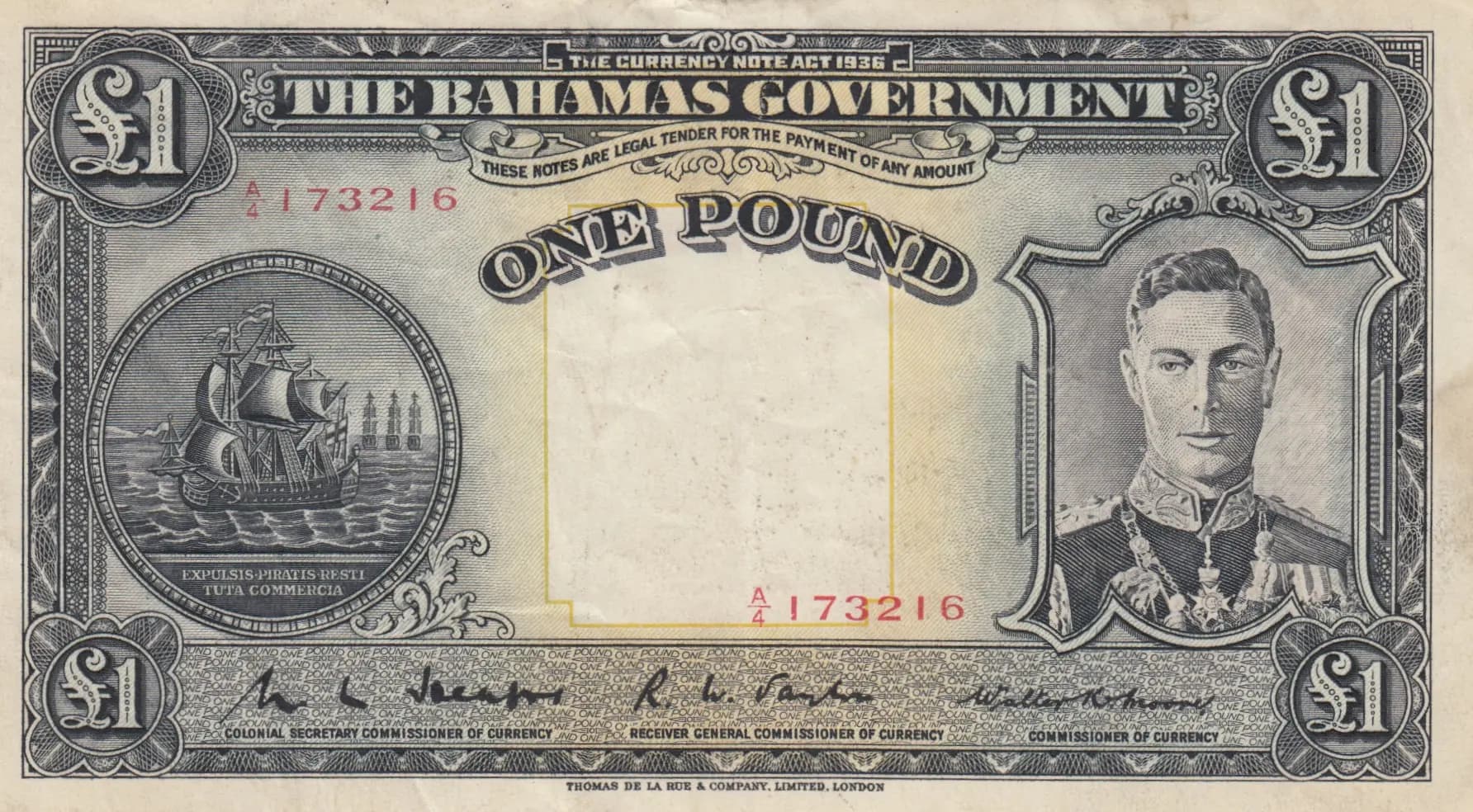
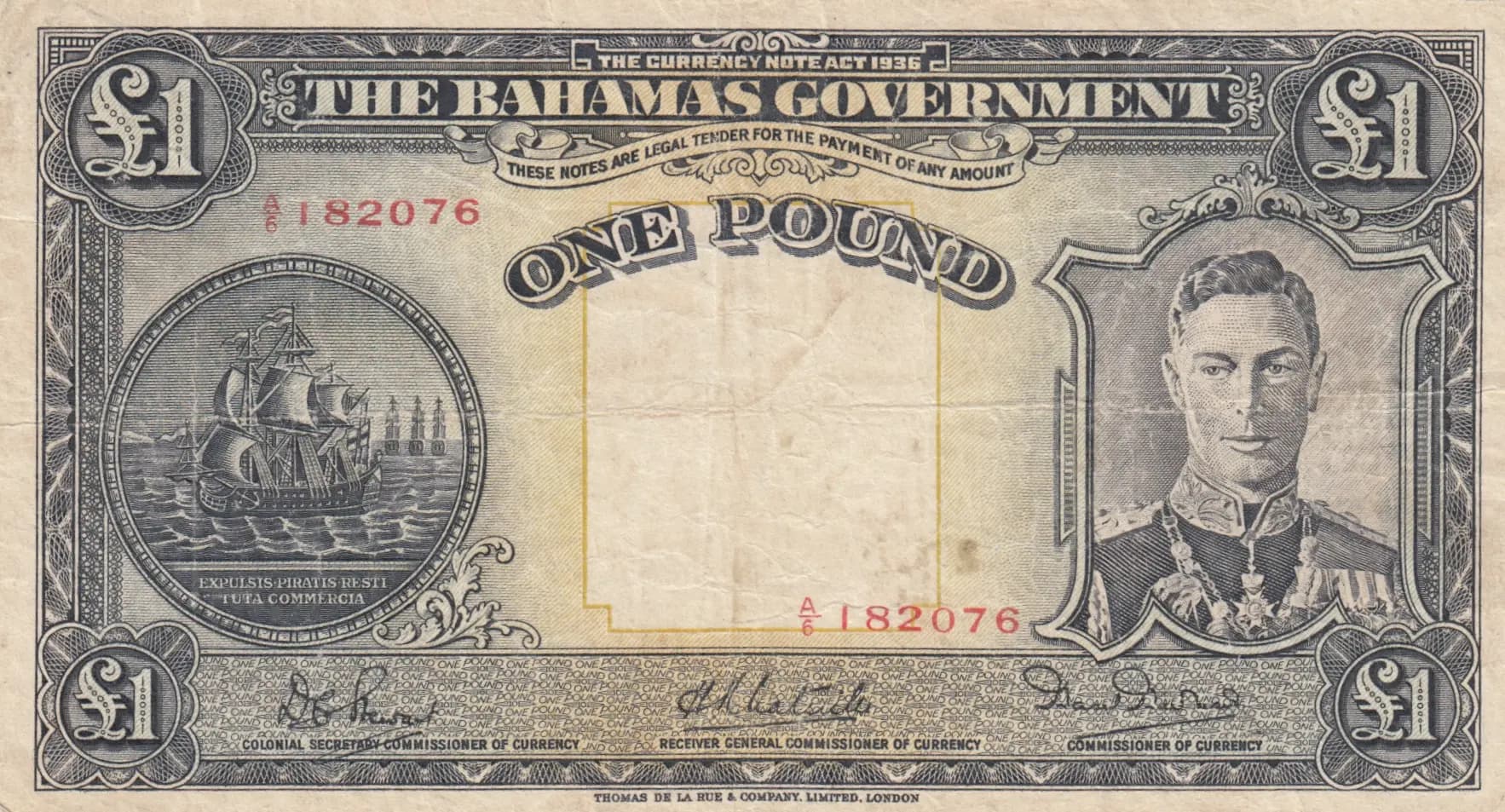
4 shillings 1936
Market Prices
15 salesAbout This Note
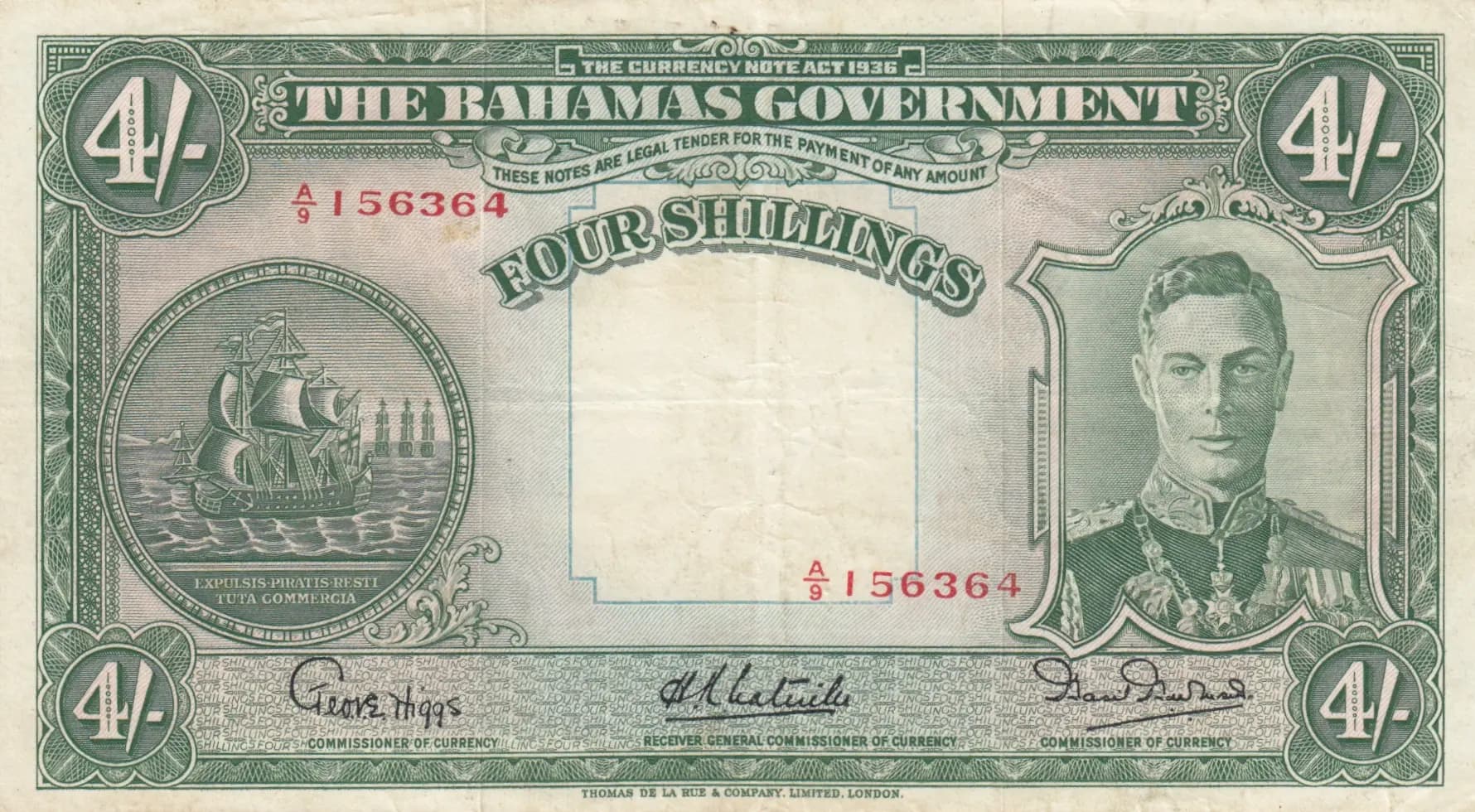
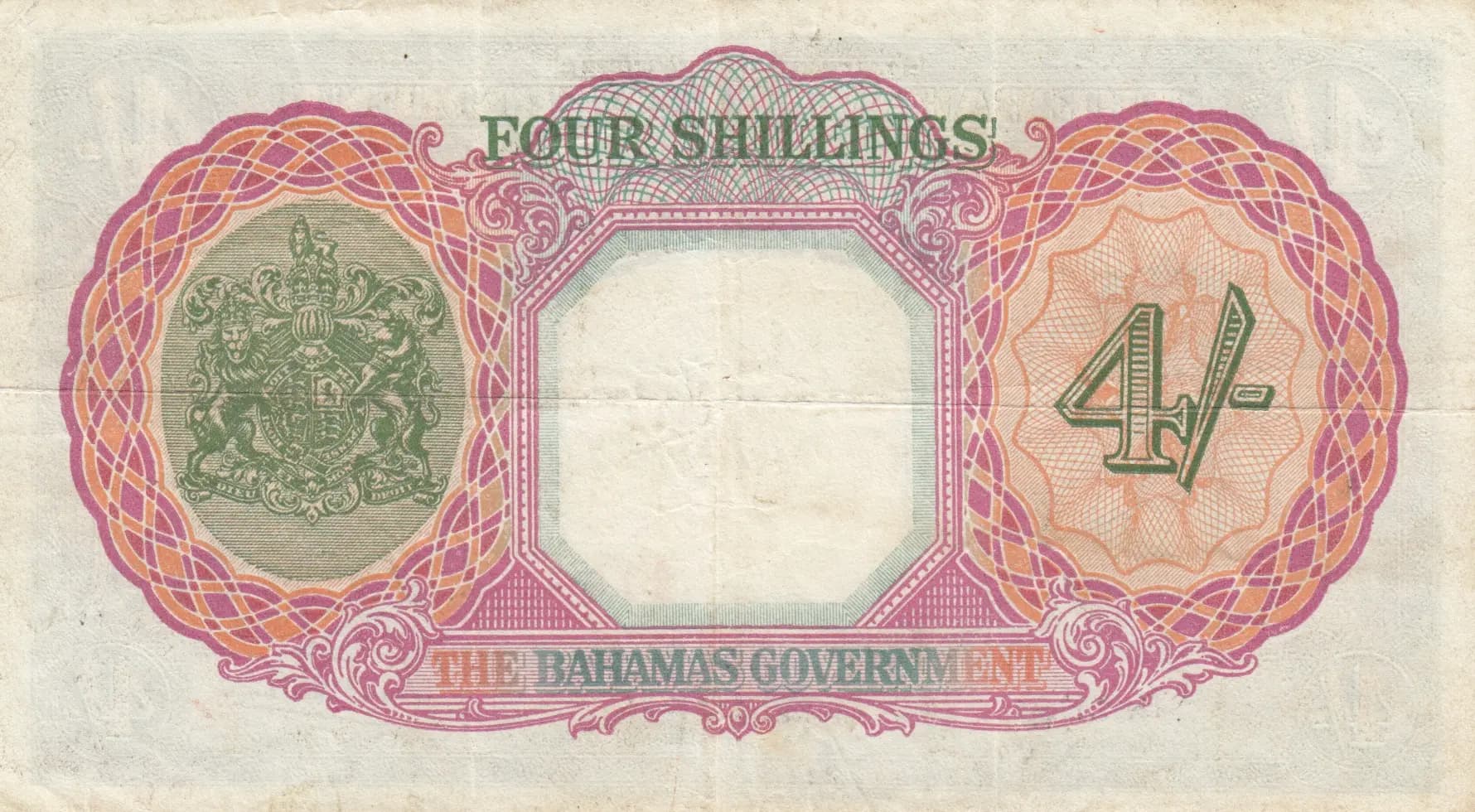
This 1936 Bahamas Government 4 Shillings note (Pick P-9e) presents in VF condition with visible signs of age and circulation wear including creasing, foxing, and an aged cream patina throughout. The note features exceptional period engraving with a striking green obverse displaying a detailed sailing ship vignette and military portrait, complemented by a colorful reverse in pink, magenta, and orange with heraldic coat of arms. The combination of fine security printing by Thomas de La Rue and historical significance as an early Commonwealth currency issue makes this an attractive example for collectors of early Bahamian numismatics.
Common. Market data from eBay sales demonstrates consistent availability of this note in VF condition, with recent sales (2023-2025) in the $38-$55 range and historical catalog values establishing VF at approximately $50. The note was issued in sufficient quantity to remain available in the modern collector market, and VF examples are regularly offered for sale with modest price volatility reflecting typical collector demand for early Commonwealth currency rather than scarcity.
Issued under the Currency Note Act of 1936, this note represents the Bahamas Government's transition to a formalized currency system during the colonial period under British dominion. The portrait depicts King George VI in military dress uniform, reflecting the British Crown's authority over the island colony during the reign that spanned 1936-1952. The heraldic coat of arms on the reverse and the Latin motto 'Expulsis Piratis Restituta Commercia' (With pirates expelled, commerce is safe) reference the islands' historical maritime commerce and legacy, connecting the currency to the Bahamas' identity as a seafaring nation.
The obverse features King George VI in ceremonial military dress uniform with medals and regalia positioned on the right side, representing British royal authority. The left side displays a detailed circular vignette of a multi-masted sailing vessel in harbor waters with colonial buildings visible in the background, symbolizing the Bahamas' maritime heritage and commercial significance. The design incorporates ornate Art Deco-influenced decorative borders with fine scrollwork and filigree throughout, with the denomination '4/-' positioned in all four corners within ornate circular frames in green ink. The reverse showcases a heraldic coat of arms featuring lions, crown, and shield elements characteristic of British heraldry, displayed in green and gold on the left, with the denomination prominently featured on an orange/peach panel on the right. The interlocking geometric border pattern in pink and magenta demonstrates sophisticated multi-color printing coordination.
FRONT SIDE: 'The Currency Note Act 1936' (legislative authority); 'The Bahamas Government' (issuer); 'These notes are legal tender for the payment of any amount' (legal status declaration); 'Four Shillings' / '4/-' (denomination in two formats); Serial number 'A9 I56364'; 'Expulsis Piratis Restituta Commercia' (Latin: 'With pirates expelled, commerce is safe'); Signatures of 'George Higgs' as Commissioner of Currency and 'H.L. Mould' as Receiver General; 'Thomas de La Rue & Company, Limited, London' (printer). BACK SIDE: 'Four Shillings' / '4/-' (denomination); 'The Bahamas Government' (issuer identification).
Intaglio (engraved) printing by Thomas de La Rue & Company, Limited of London, a world-renowned security printer known for producing high-quality banknotes and currency for the British Commonwealth. The fine line work, detailed portrait and vignette engraving with subtle shading, complex ornamental borders, and multi-color printing with precise color separation indicate the use of multiple printing plates and careful registration typical of de La Rue's premium production methods of the 1930s period.
This is identified as Pick P-9e variant based on catalog designation. The catalog data indicates PMG has recognized at least variants P-9a and P-9b for this base Pick number. This specific note bears signatures of George Higgs (Commissioner of Currency) and H.L. Mould (Receiver General), with serial number A9 I56364, and was printed by Thomas de La Rue & Company. The 1936 date combined with the specific signature pairing and serial number prefix may indicate a particular printing run or signature combination variant, though without additional reference materials, the specific variant designation cannot be confirmed beyond the P-9e designation provided in the catalog data.