1 pound 1936
Market Prices
1 saleAbout This Note
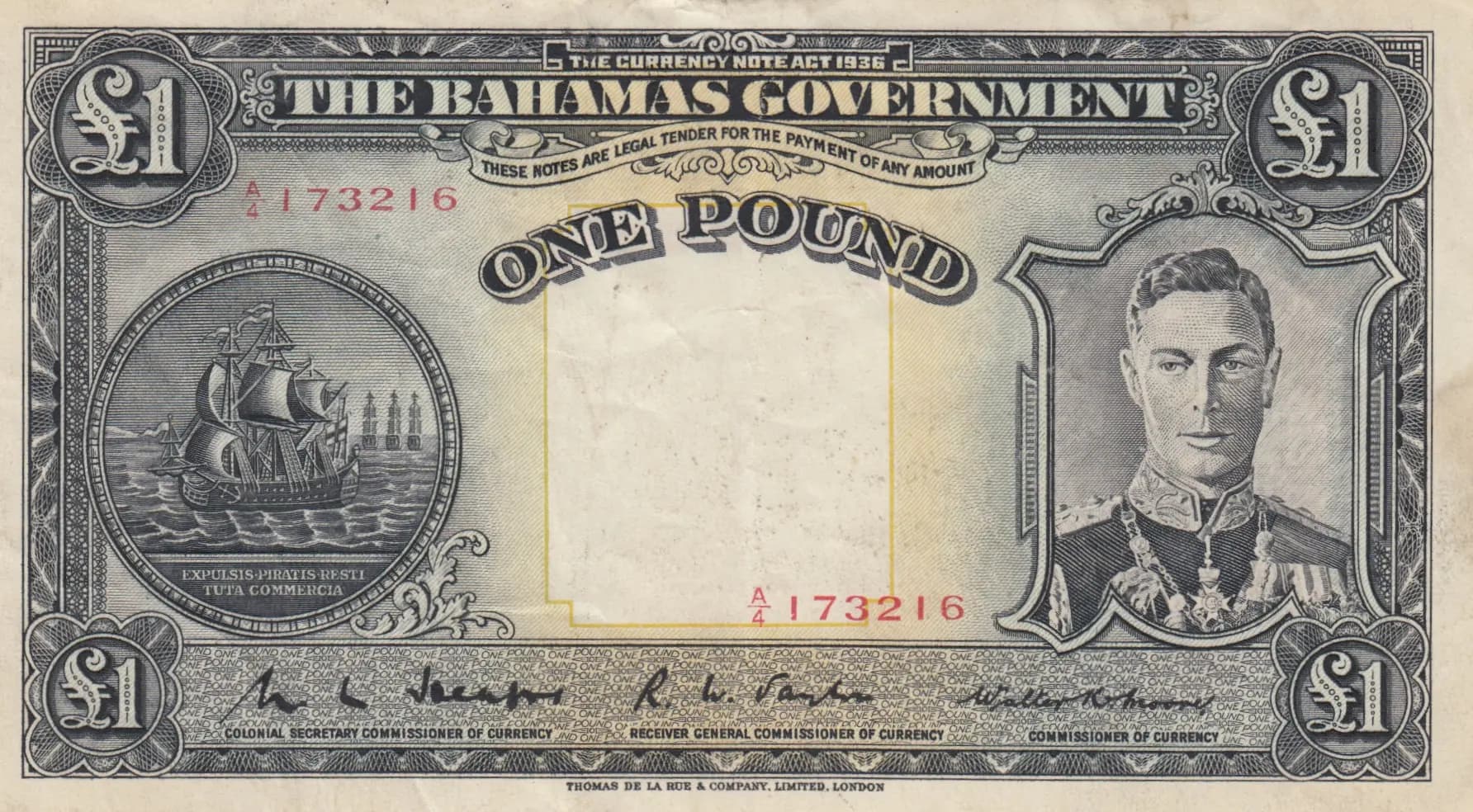
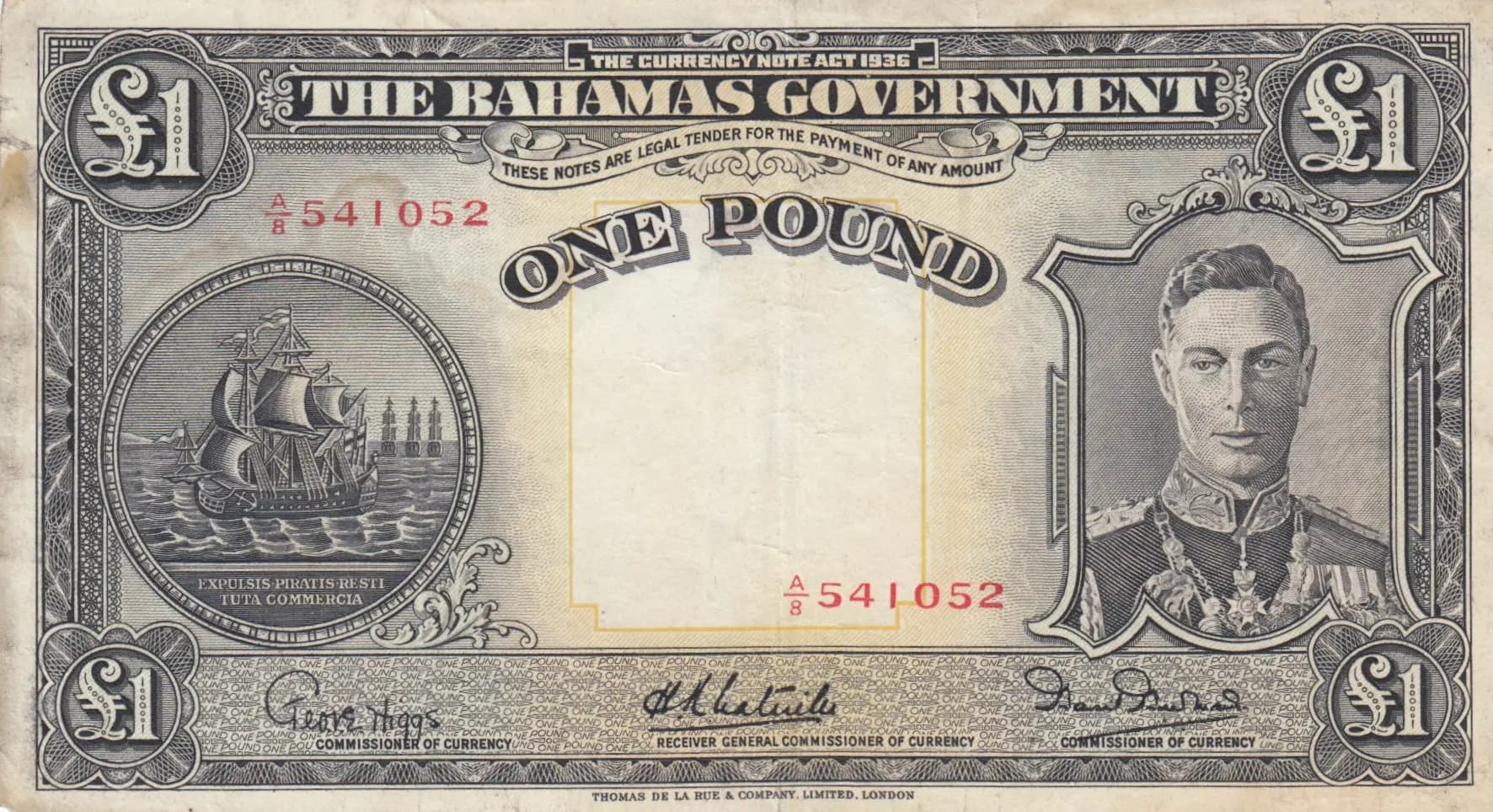
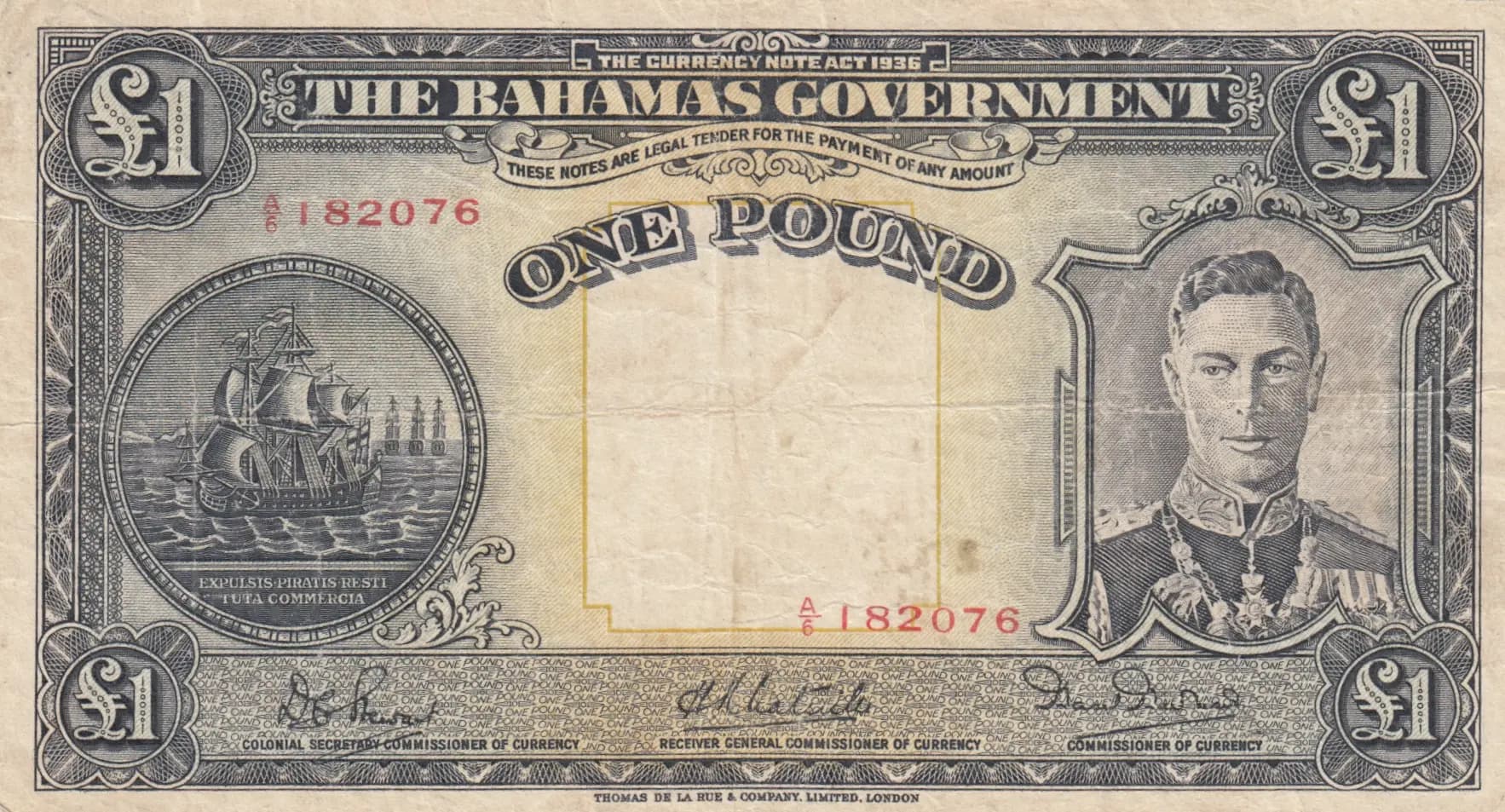
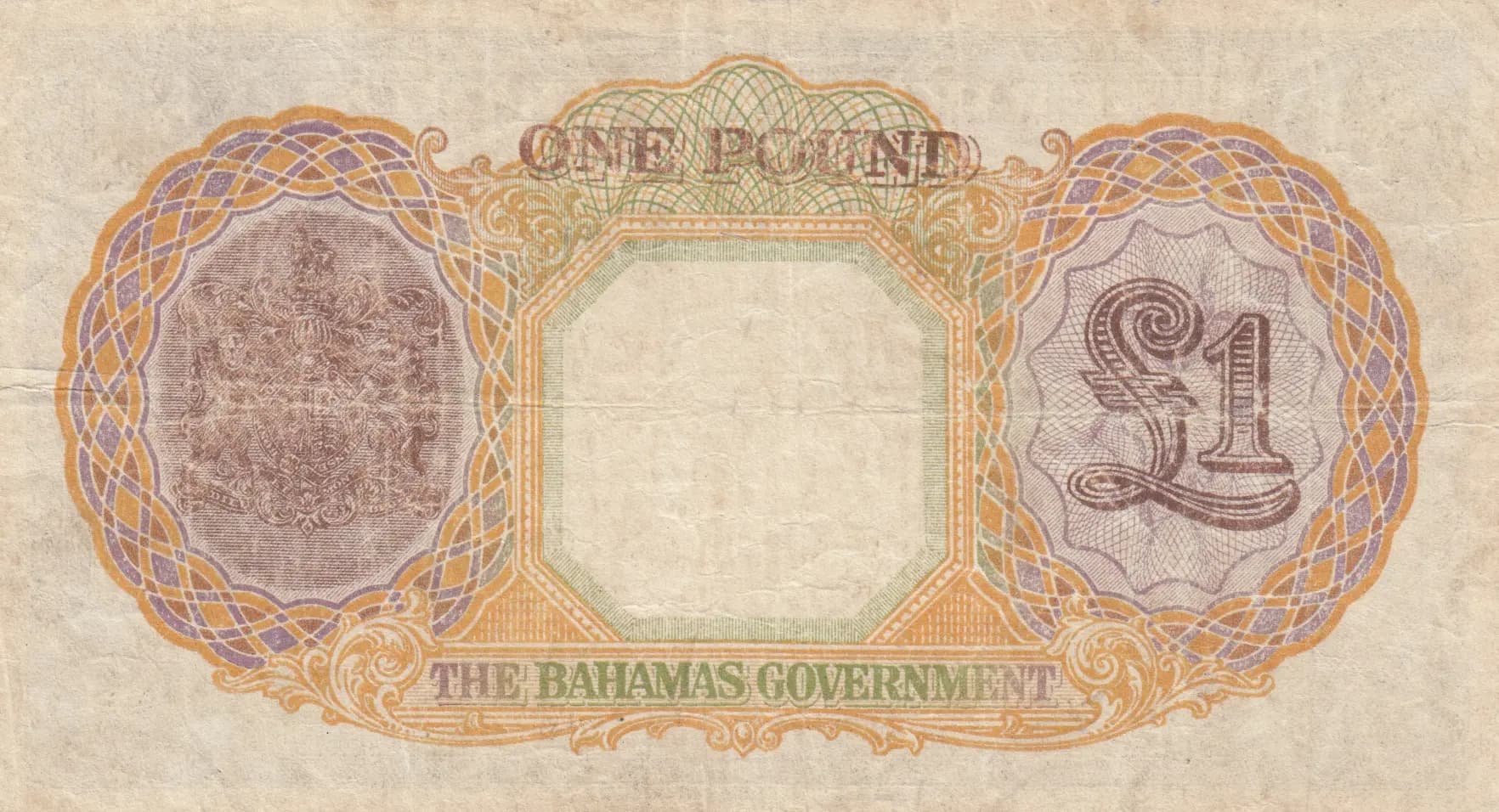
This is a 1936 Bahamas Government one pound note (Pick P-11d) in Fair condition, featuring King George VI in military dress on the obverse and ornate baroque-style decorative framing on the reverse. The note displays typical circulation wear including a prominent center crease, foxing, and yellowing consistent with nearly nine decades of age, yet the fine engraving detail remains legible throughout.
Common. While this note is from the inaugural 1936 currency issue and represents an early Bahamian government note, the catalog price data and eBay transaction history indicate it remains readily available to collectors. A Fair-grade example sold for $36 in 2012, and the 2016 catalog valued this grade at $50, placing it firmly in the affordable range for early Commonwealth currency. The note was issued in adequate quantities to support the Bahamas' monetary system and examples survive in reasonable numbers.
Issued under the Currency Note Act of 1936, this note represents the Bahamas' early monetary independence as it established its own government currency. The prominent sailing ship (galleon) medallion on the left symbolizes the colony's maritime heritage and trade history, while the Latin inscription 'Expuisis Piratis Restituta Commercia' (Trade restored from the expulsion of pirates) references the historical suppression of piracy in Caribbean waters—a defining feature of Bahamian colonial identity.
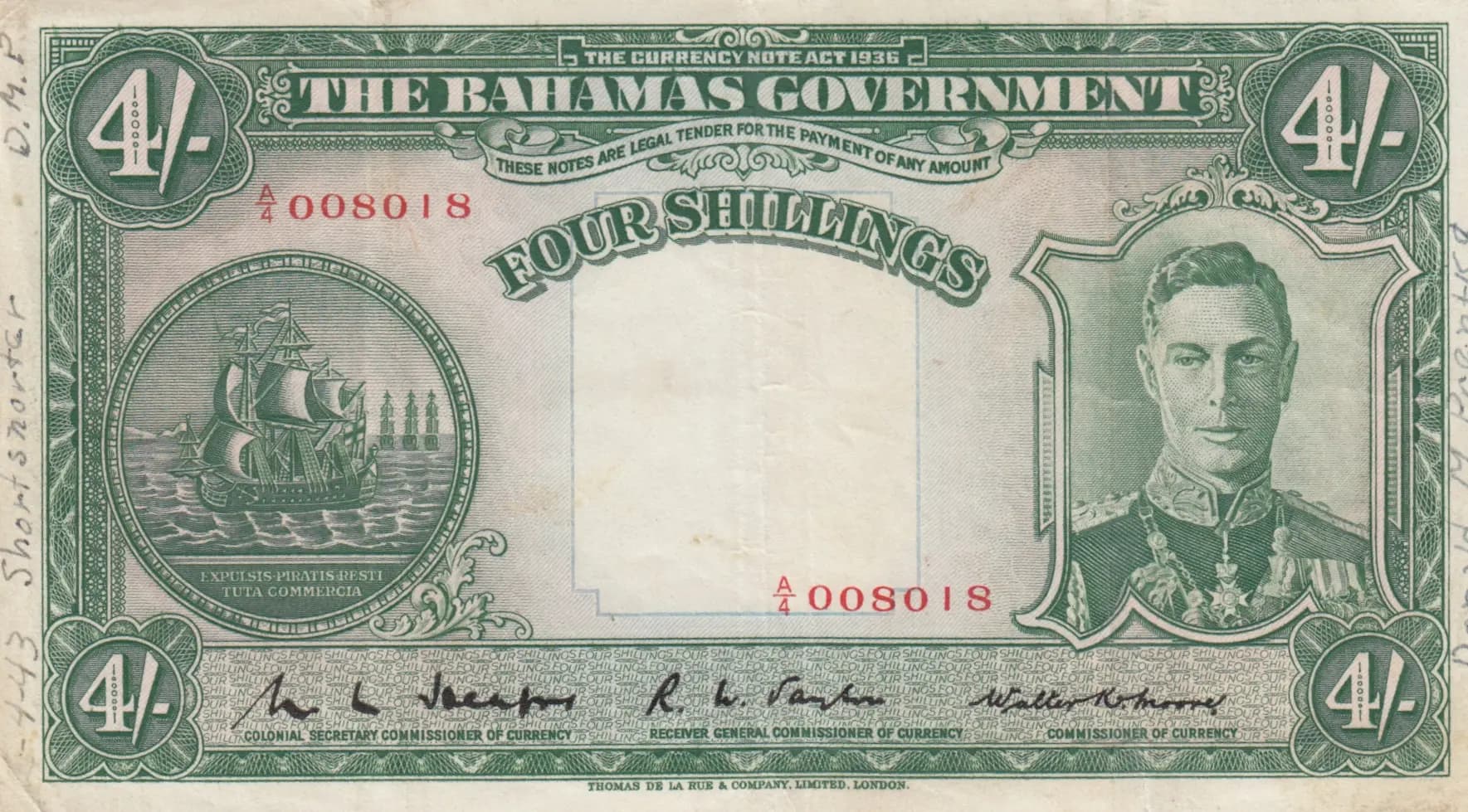
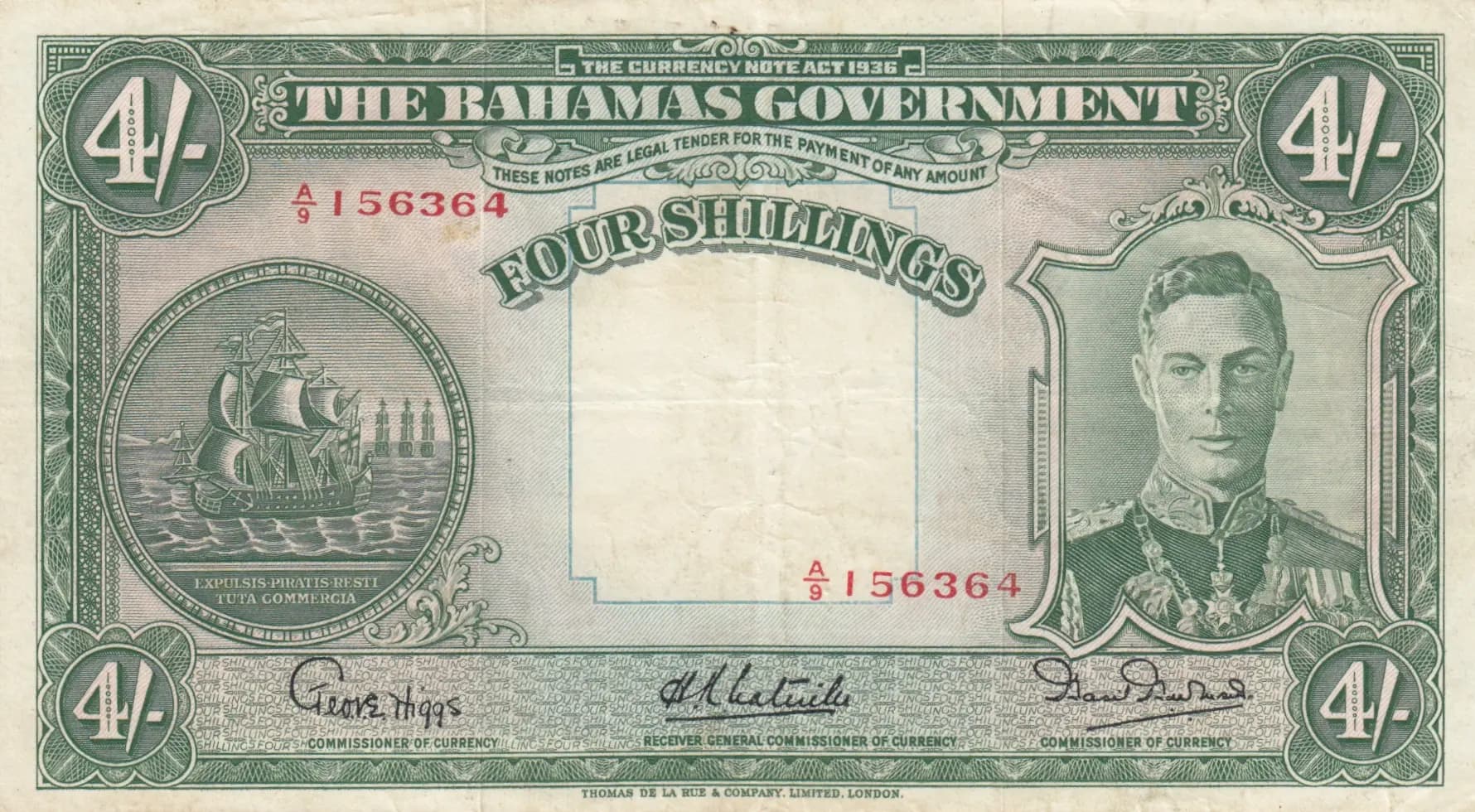
The obverse features a formal three-quarter length portrait of King George VI dressed in military uniform with medals and insignia, positioned on the right side of the note. On the left is a circular medallion containing a detailed engraving of a multi-masted galleon under full sail, representing the maritime commerce and piracy suppression of Bahamian history. The denomination 'ONE POUND' appears prominently in the center with ornate pound sterling symbols (£1) positioned in all four corners. The design is framed by elaborate scrollwork and geometric border patterns executed in black and gray tones. The reverse presents a more abstract decorative design featuring two large ornamental medallion frames with intricate baroque-style interlaced patterns in purple, mauve, orange, and gold tones, creating a highly detailed anti-counterfeiting visual element with minimal text—only the denomination and issuer identification appearing at top and bottom.
FRONT SIDE: 'THE CURRENCY NOTE ACT 1936' (legislative authority); 'THE BAHAMAS GOVERNMENT' (issuer); 'THESE NOTES ARE LEGAL TENDER FOR THE PAYMENT OF ANY AMOUNT' (legal tender declaration); 'ONE POUND' (denomination); 'EXPUISIS PIRATIS RESTITUTA COMMERCIA' (Latin: Trade restored from the expulsion of pirates); 'THOMAS DE LA RUE & COMPANY, LIMITED, LONDON' (printer); 'COLONIAL SECRETARY,' 'COMMISSIONER OF CURRENCY,' 'RECEIVER GENERAL' (official titles for signature lines); Serial number 'A/C 182076' and '182076' (note identification). BACK SIDE: 'ONE POUND' (denomination); 'THE BAHAMAS GOVERNMENT' (issuer).
This note was produced using steel engraving (intaglio printing), the hallmark security printing method of Thomas De La Rue & Company, the world's premier banknote printer. The extremely fine line work visible throughout both sides—particularly in the portrait rendering, ship medallion detail, and the intricate interlaced border patterns—is characteristic of high-quality intaglio engraving. The depth and precision of the engraving would have made this design highly resistant to contemporary counterfeiting methods.
This specimen represents the P-11d variety, one of three documented variants for the 1936 one pound note (P-11a, P-11d, and P-11e). All variants were printed by Thomas De La Rue & Company, London. The specific variety designation would typically relate to signature combinations or minor design differences; this note bears the signatures of D. J. Stewart (left) and Basil Burnside (right) as Commissioner of Currency and related officials. The serial number 'A/C 182076' is visible on this example. The note exhibits the watermark of Christopher Columbus, consistent with Thomas De La Rue's security printing standards for this series.