1 pound 1936
Market Prices
1 saleAbout This Note
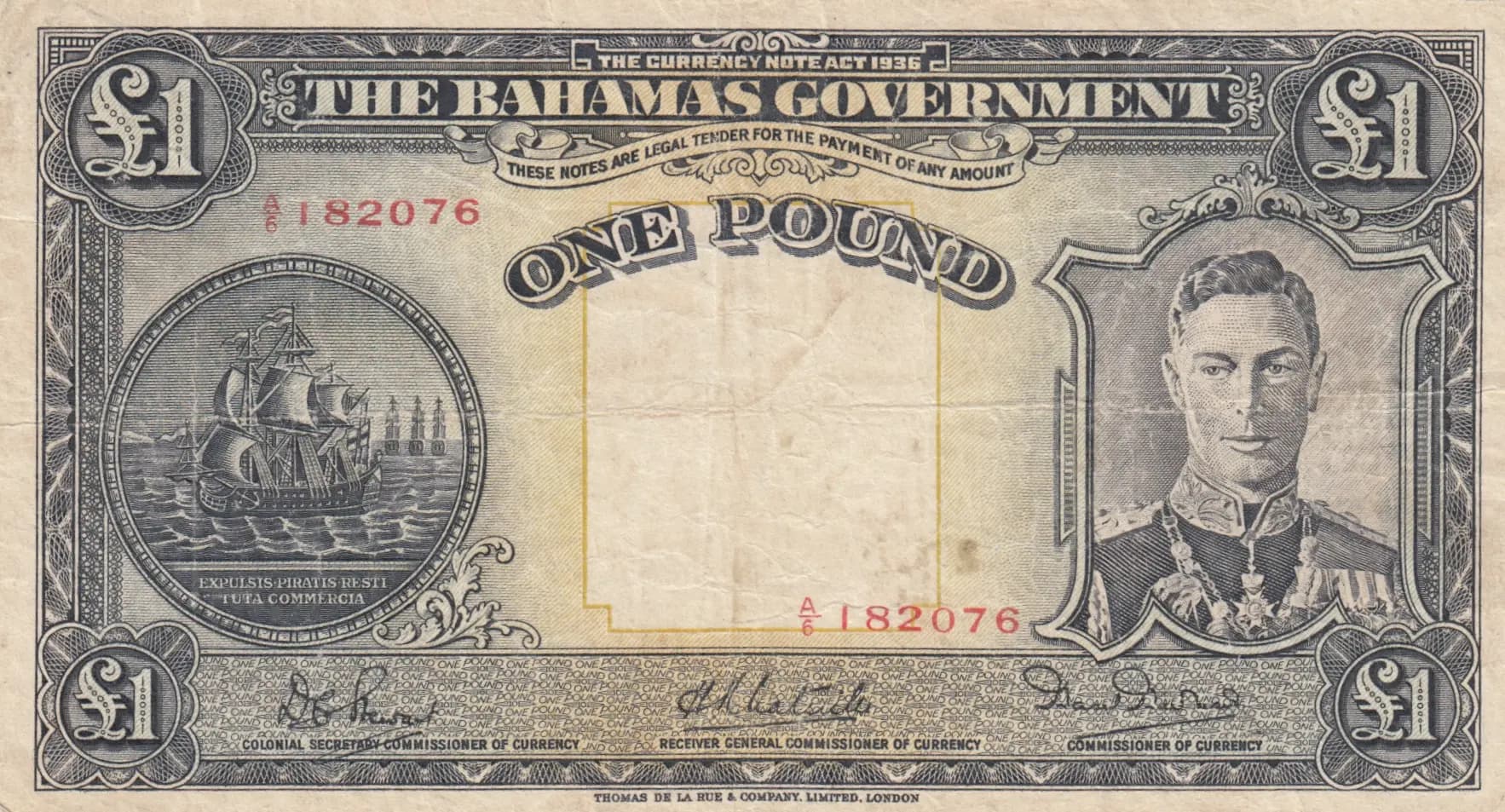
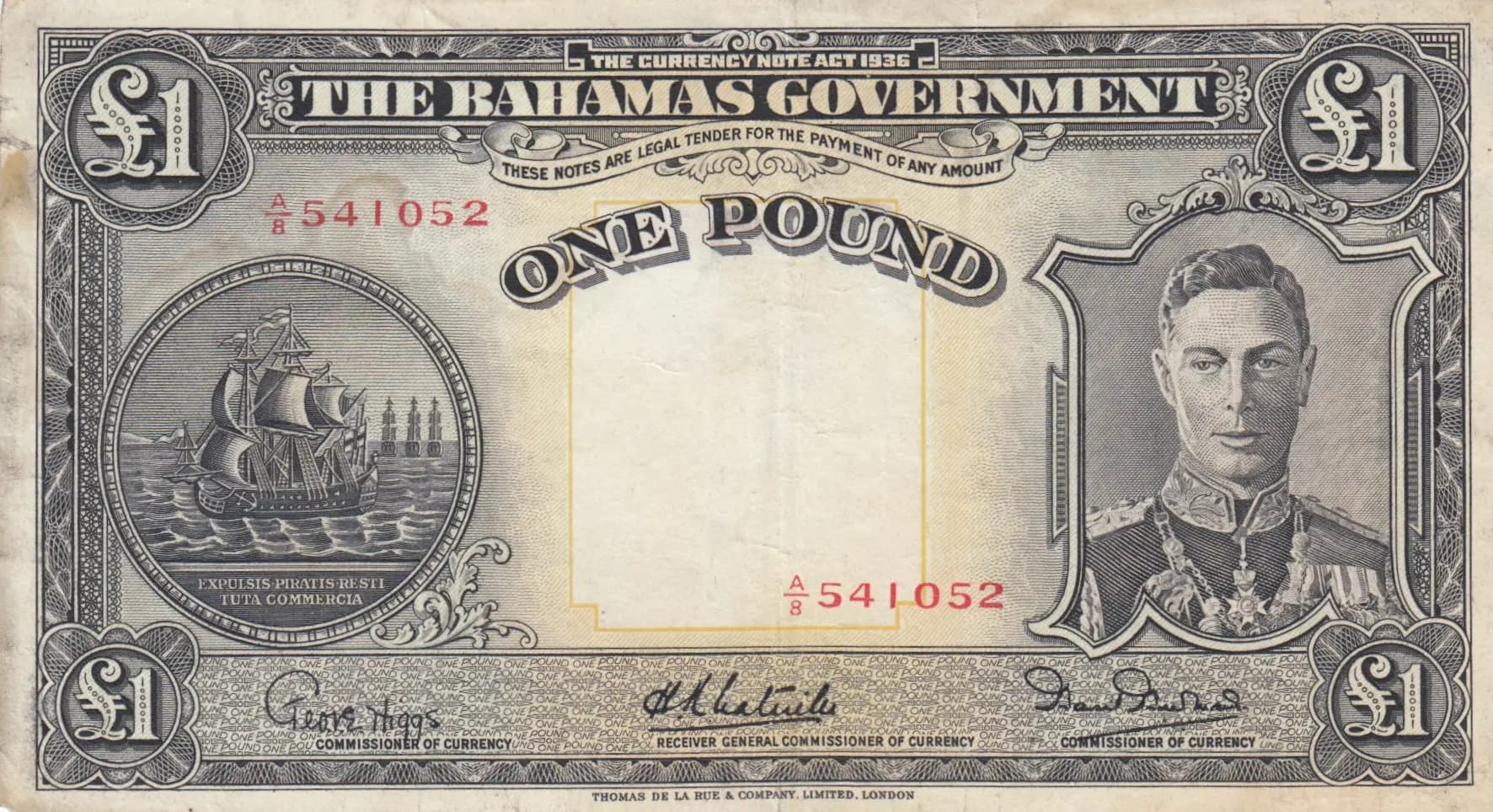
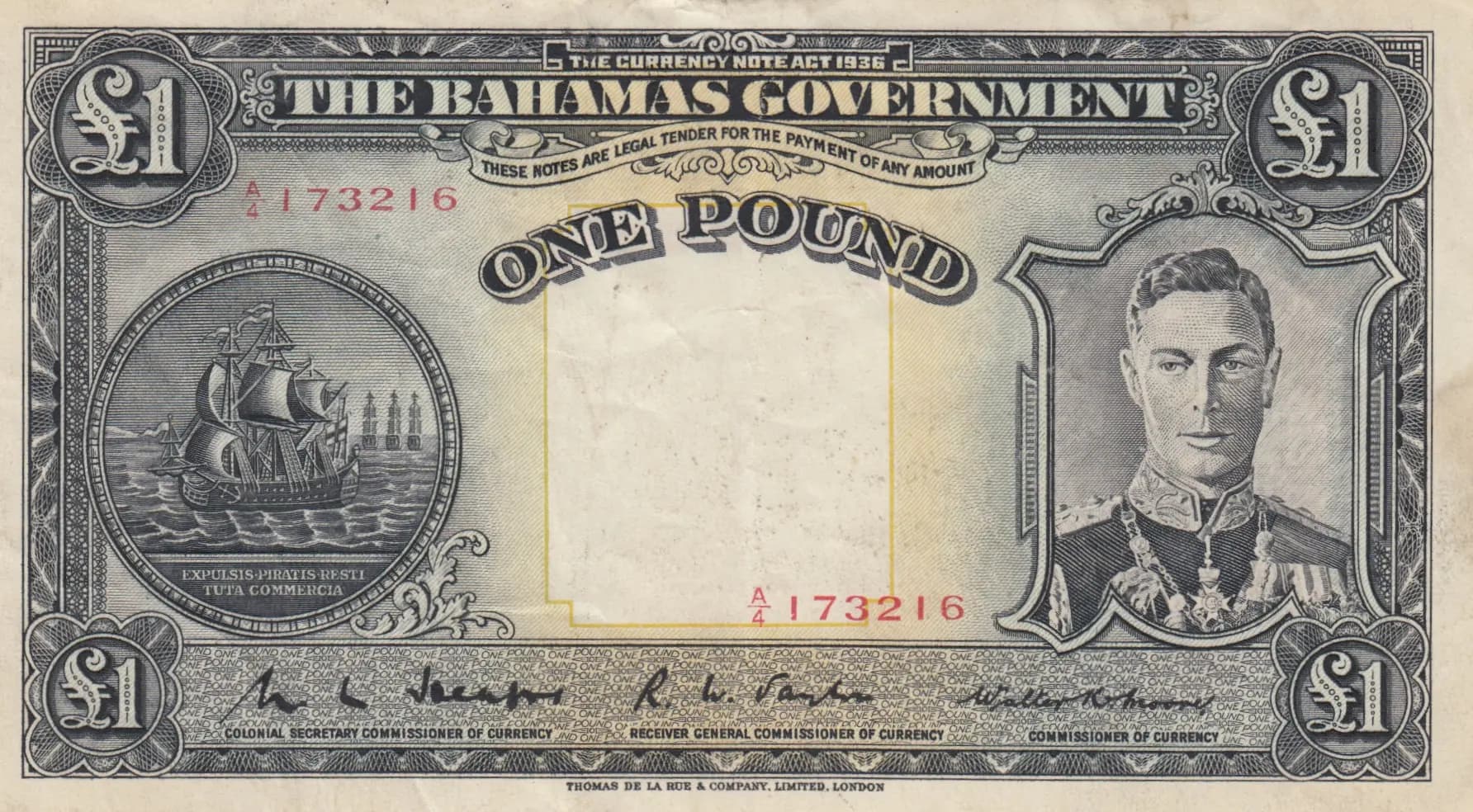
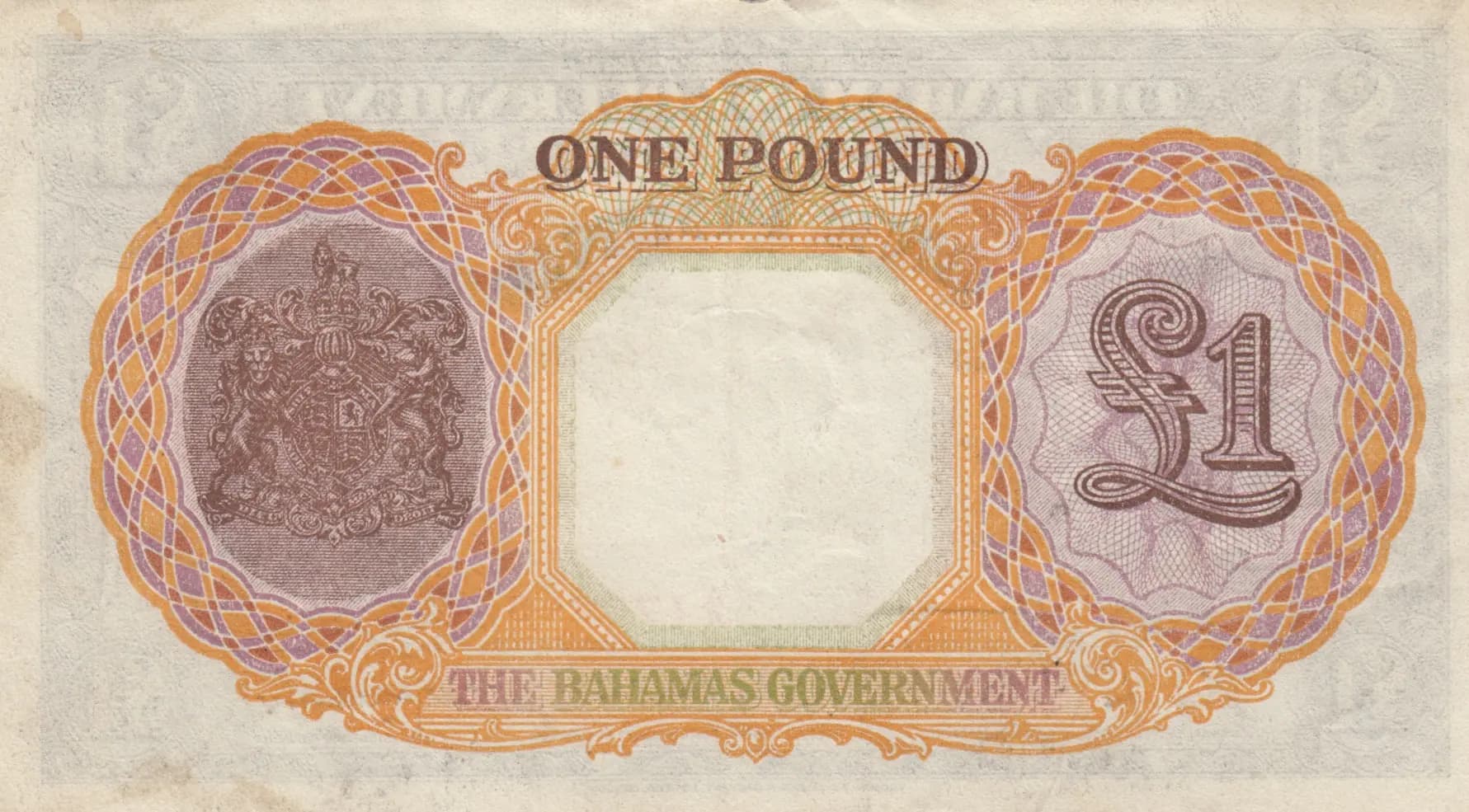
This is a VF-graded 1 Pound note from the Bahamas Government issued under the Currency Note Act of 1936, printed by Thomas de La Rue in London. The obverse features a striking portrait of King George VI in military dress uniform on the right, balanced by a historical circular vignette of a sailing ship with fortifications on the left, while the reverse displays the Bahamas coat of arms and ornate Celtic knotwork borders in purple and orange. The note shows appropriate aging with foxing and cream-toned patina consistent with an 85+ year old banknote that has seen light circulation, with visible security features including red serial numbering and intaglio printing detail.
Common. The 1936 Bahamas £1 notes are regular issue currency from a stable established issuer with no historical indication of limited print runs or subsequent recalls. The catalog price data from realbanknotes.com (VF graded: $250) reflects normal collector market valuation for an 85-year-old British Commonwealth banknote in Very Fine condition, not a rarity premium. Recent eBay market activity shows Fine examples selling in the $100-120 range with moderate bidding, indicating steady collector demand without scarcity constraints. No evidence of restricted issue, short production period, or rarity designation in Pick catalog variants.
This note was issued at a pivotal moment when the Bahamas Government first asserted monetary independence through the Currency Note Act of 1936, moving away from pure sterling dependence. The sailing ship vignette commemorates the maritime heritage and colonial naval history of the Bahamas, while the Latin motto 'Expulsis Piratis Restituta Commercia' (With pirates expelled, trade is safe) references the islands' historical struggle against piracy and their role as a vital Caribbean trading hub. The inclusion of King George VI's portrait underscores the Bahamas' continued ties to the British Crown during this interwar period.
The obverse presents a classical colonial currency design with bilateral symmetry: a circular ship vignette on the left depicts a multi-masted sailing vessel (likely representing a historical merchant or naval ship of the colonial period) anchored before fortified structures, rendered in fine line engraving. The center-right features a formal portrait of King George VI wearing military dress uniform complete with medals, decorations, and insignia, executed in the refined intaglio style characteristic of de La Rue's royal portraiture. The reverse displays the Bahamas heraldic coat of arms in a left-side oval cartouche rendered in purple and brown tones, balanced by a large decorative £1 numeral in an ornamental right-side oval. The entire perimeter is framed by an elaborate interlocking Celtic knotwork border in orange and purple with scrollwork and floral ornamental elements, a design choice reflecting the broader Art Deco aesthetic of 1930s currency design.
FRONT: 'THE BAHAMAS GOVERNMENT' / 'THE CURRENCY NOTE ACT 1936' / 'THESE NOTES ARE LEGAL TENDER FOR THE PAYMENT OF ANY AMOUNT' / 'ONE POUND' / 'EXPULSIS PIRATIS RESTITUTA COMMERCIA' (Latin: With pirates expelled, trade is safe) / Serial number 'A 173216' / 'COLONIAL SECRETARY' / 'COMMISSIONER OF CURRENCY' / 'RECEIVER GENERAL' / 'THOMAS DE LA RUE & COMPANY, LIMITED, LONDON'. BACK: 'ONE POUND' / 'THE BAHAMAS GOVERNMENT' / '£1'.
Intaglio (engraved) printing by Thomas de La Rue & Company, Limited, London. The visual analysis confirms characteristic deep intaglio impression creating raised tactile detail, fine line engraving visible in the vignette and portraiture, and the sophisticated multi-color register of the reverse design (purple, orange, brown). Red serial numbers indicate separate letterpress application. The security features include complex heraldic and ornamental patterns serving as anti-counterfeiting design elements, typical of de La Rue's high-security currency production standards of the 1930s.
This note is cataloged as Pick P-11b (1 Pound, 1936). The PMG population report identifies multiple variants within this base Pick number (P-11a, P-11d, P-11e), all printed by TDLR (Thomas de La Rue). The serial number A 173216 with red printing is consistent with the standard P-11b issue. Without comparison to other documented variants or signature analysis, the specific sub-variety cannot be definitively determined from the visual analysis alone, though the design, printer attribution, and technical specifications are consistent with the primary P-11b designation.