1 pound 1936
Market Prices
4 salesAbout This Note
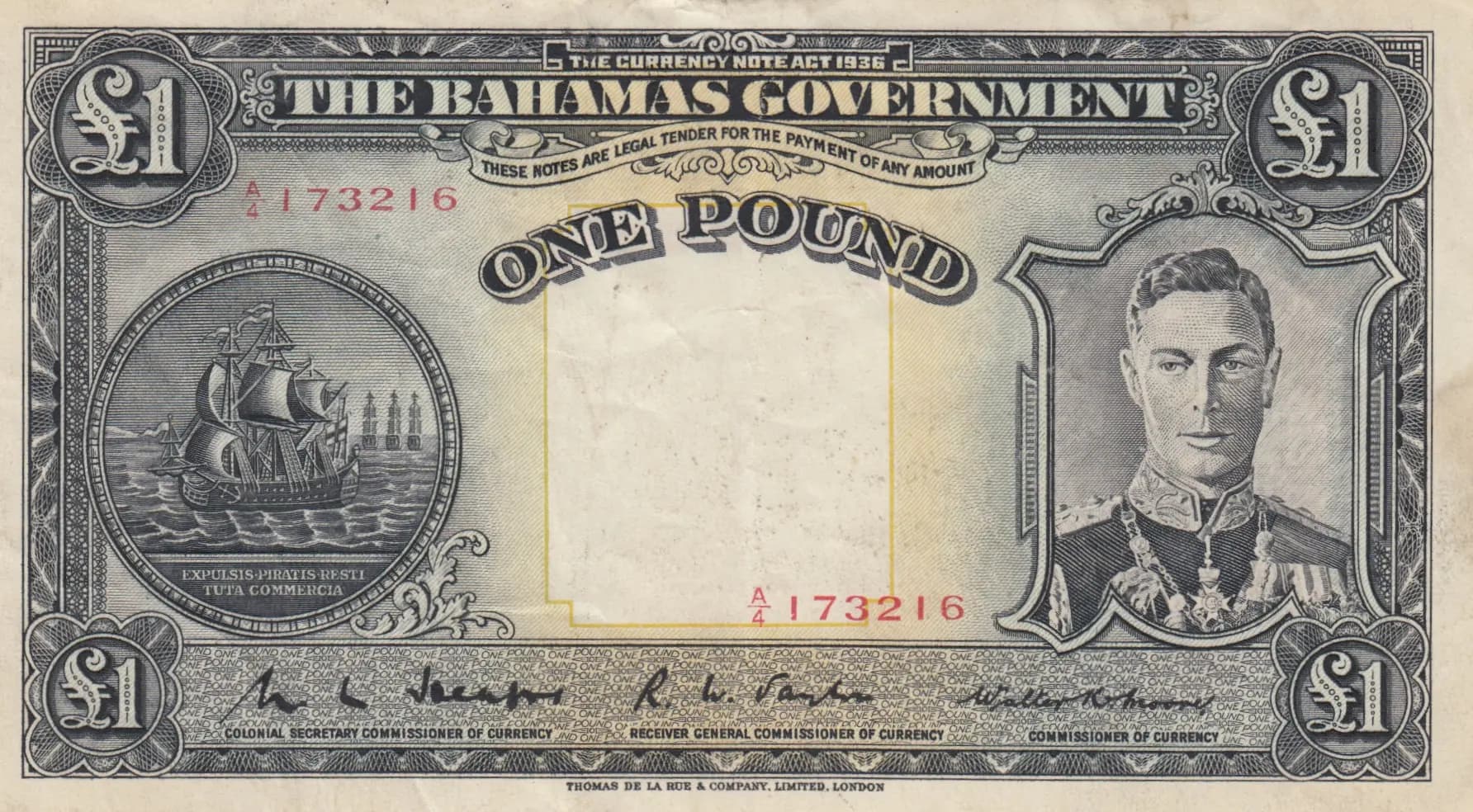
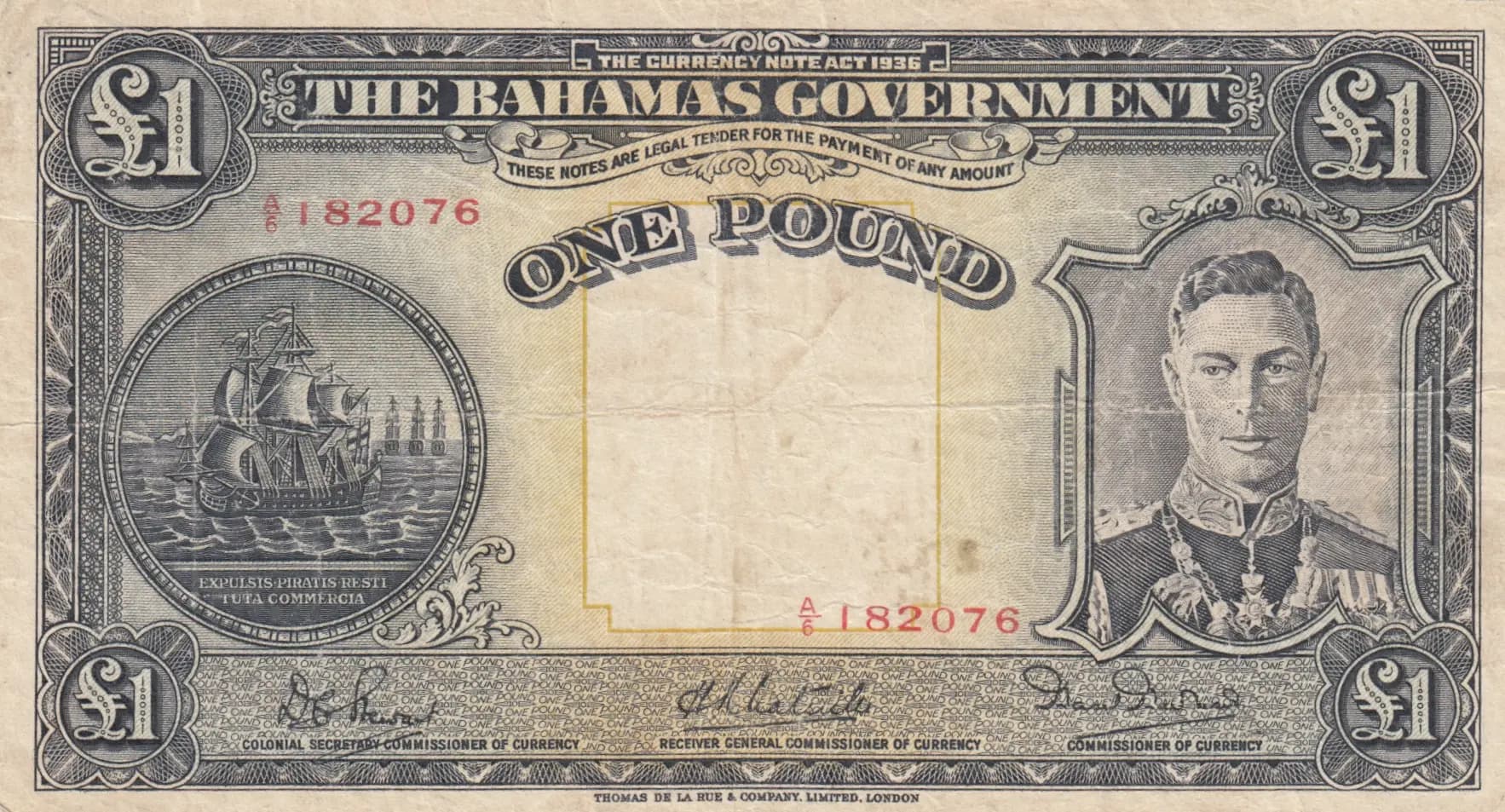
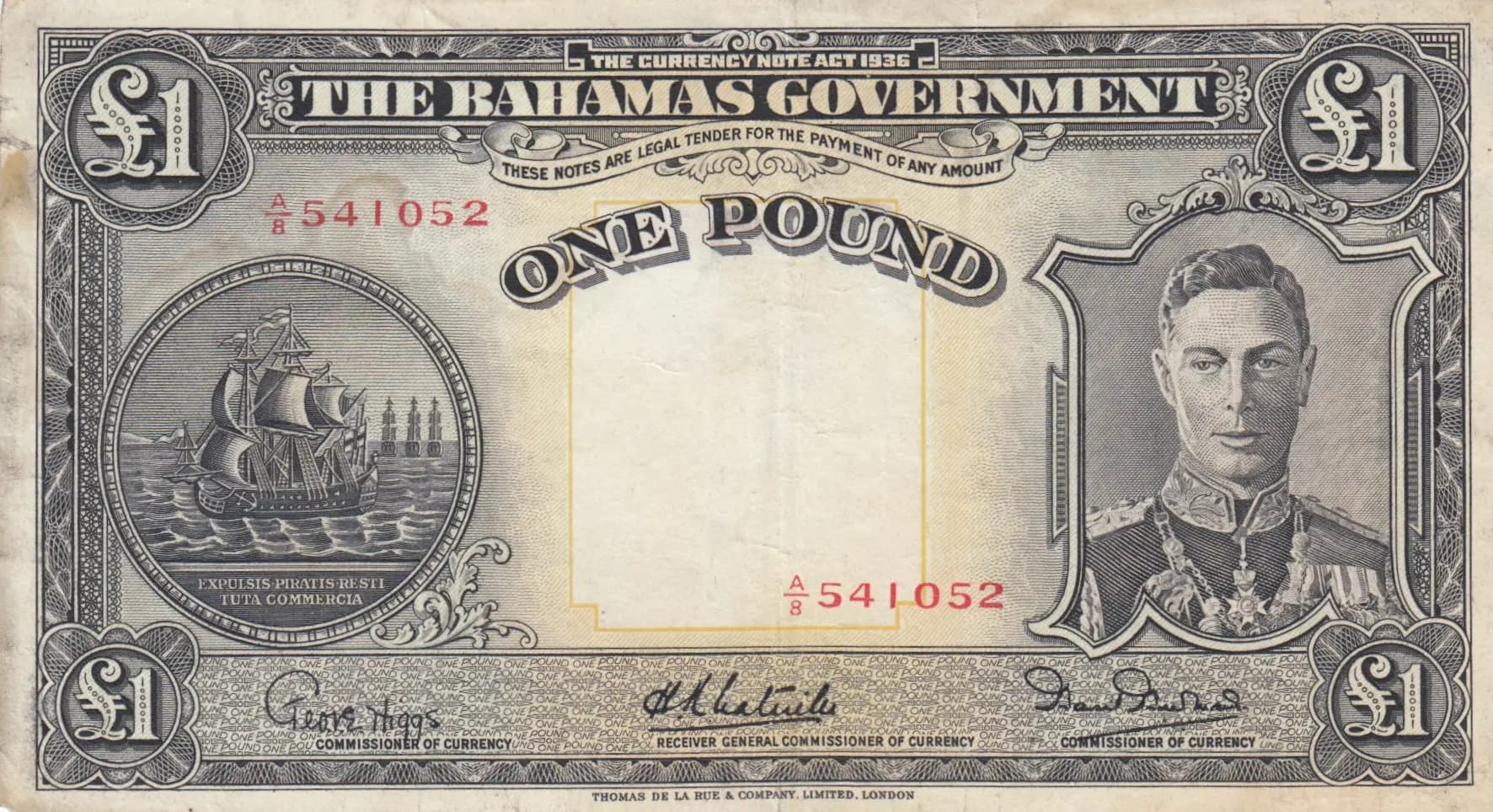
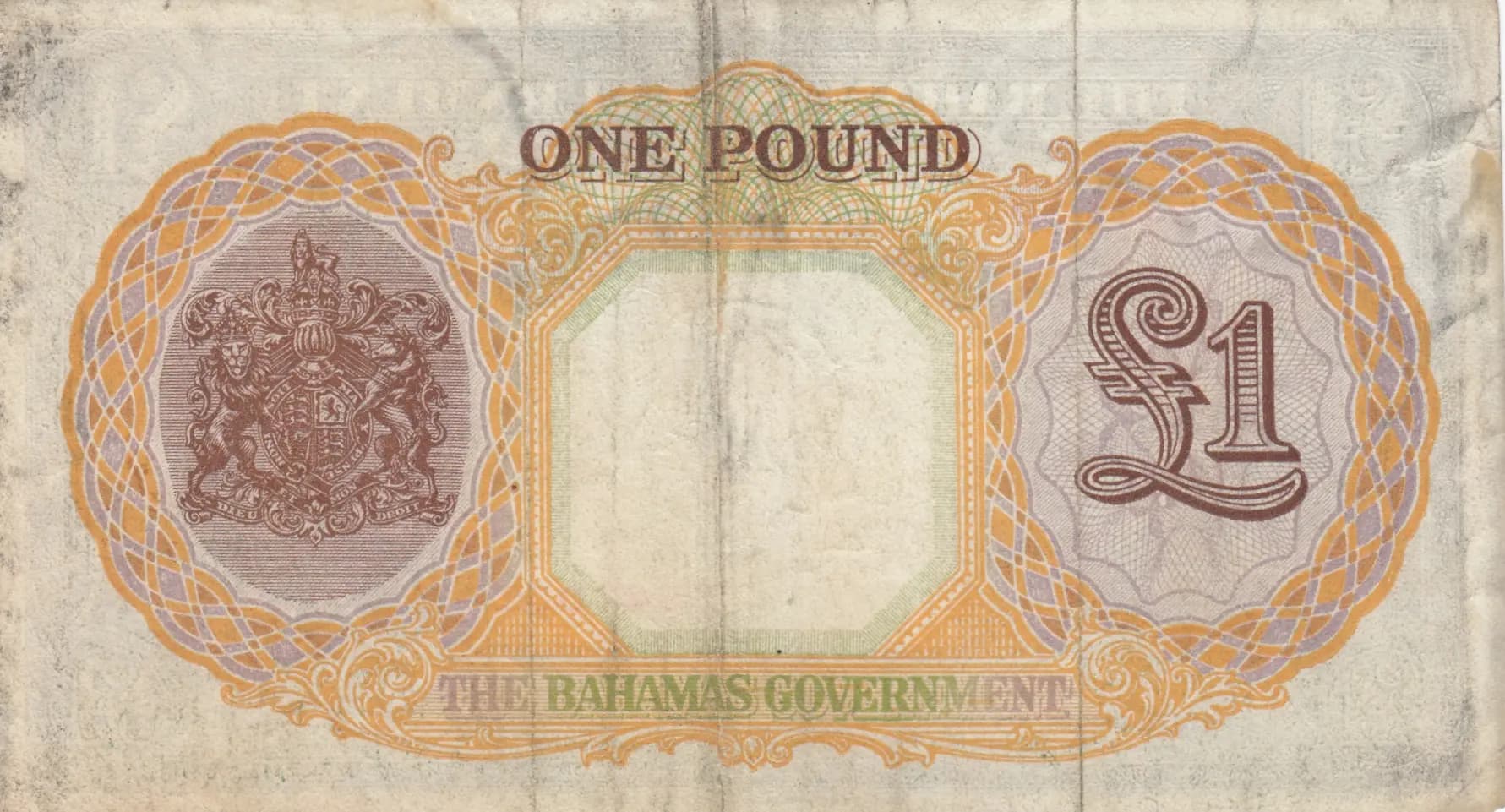
This is a 1936 Bahamas Government £1 note (Pick P-11e) printed by Thomas de la Rue in Fine condition, featuring a striking portrait of King George VI in military dress on the obverse and the Bahamas coat of arms on the reverse. The note displays the characteristic ornate baroque engraving style typical of De la Rue's prestigious currency work, with a distinctive sailing ship vignette representing the colonial maritime heritage of the Bahamas. While showing its age through creasing, fold lines, and tan discoloration consistent with decades of circulation, this historical piece remains a solid collector example of early Bahamian currency from the pre-independence era.
Common. The 1936 Bahamas £1 note (P-11e) is a standard issue with no indication of a restricted print run or special circumstances that would render it scarce. eBay market data shows consistent sales activity in the $40-$200 range depending on condition (VG to VF), indicating healthy collector demand and adequate supply in circulation. The Fine condition example represented here is well within the normal range of available specimens and aligns with typical pricing for this grade and pick number.
Issued under the Currency Note Act of 1936, this banknote represents the Bahamas' early assertion of monetary independence, featuring King George VI as the reigning British monarch during a period when the Bahamas remained a British Crown Colony. The sailing ship depicted on the obverse references the Bahamas' maritime heritage and colonial history, while the Latin motto 'Expulsis Piratis Restituta Commercia' (Commerce Restored, Pirates Expelled) reflects the islands' historical struggles against piracy and their eventual establishment as a secure trading center. The heraldic coat of arms on the reverse symbolizes governmental authority and the formal sovereignty exercised through this early national currency issue.
The obverse features an ornate black and white design with a circular vignette of a multi-masted colonial sailing vessel (galleon or merchant ship) at sea with a fortification visible in the background on the left side, symbolizing the maritime and defensive heritage of the Bahamas. On the right side is a formal three-quarter profile portrait of King George VI dressed in full military uniform with medals, ribbons, and decorations across the chest, reflecting his status as the reigning British monarch. Elaborate baroque-style decorative borders with geometric and floral engraved patterns frame both sides, with denomination symbols of £1 in ornate circular frames at the corners. The reverse displays a vibrant multicolored design (orange/gold lattice borders with purple/blue accents) featuring the Bahamas heraldic coat of arms in dark red/burgundy on the left and a large ornamental £1 denomination symbol on the right, with 'THE BAHAMAS GOVERNMENT' printed in green at the bottom.
FRONT SIDE: 'THE CURRENCY NOTE ACT 1936' — Legislative authority for the note's issuance; 'THE BAHAMAS GOVERNMENT' — Issuing authority; 'THESE NOTES ARE LEGAL TENDER FOR THE PAYMENT OF ANY AMOUNT' — Legal tender declaration; 'ONE POUND' — Denomination; 'EXPULSIS PIRATIS RESTITUTA COMMERCIA' — Latin motto meaning 'Commerce Restored, Pirates Expelled'; 'A 541052' — Serial number (appears twice); 'COMMISSIONER OF CURRENCY' — Signature title; 'RECEIVER GENERAL COMMISSIONER OF CURRENCY' — Official designation; 'THOMAS DE LA RUE & COMPANY, LIMITED, LONDON' — Printer attribution. BACK SIDE: 'ONE POUND' — Denomination; 'THE BAHAMAS GOVERNMENT' — Issuing authority.
Intaglio engraving (recess printing), the traditional and prestigious security currency printing method employed by Thomas de la Rue & Company, Limited of London. This technique involved engraving designs onto hardened steel plates, creating the characteristic fine line work, cross-hatching, and intricate geometric patterns visible throughout the note. The three-color printing on the reverse (orange/gold, purple/blue, and dark red) demonstrates multi-plate printing coordination typical of De la Rue's advanced currency production capabilities in the 1930s.
This note is identified as Pick P-11e, one of three cataloged variants (P-11a, P-11d, P-11e) all printed by TDLR (Thomas de la Rue). The variants likely reflect different signature combinations or minor design changes across the 1936 issue. The observed serial number 'A 541052' and the title 'COMMISSIONER OF CURRENCY' are consistent with standard issue characteristics. The specific variant designation (P-11e) should be confirmed by comparing signature blocks and other security printer marks with reference images, as the visual analysis does not provide sufficient detail to independently verify the exact variant.