4 shillings 1953
Market Prices
17 salesAbout This Note
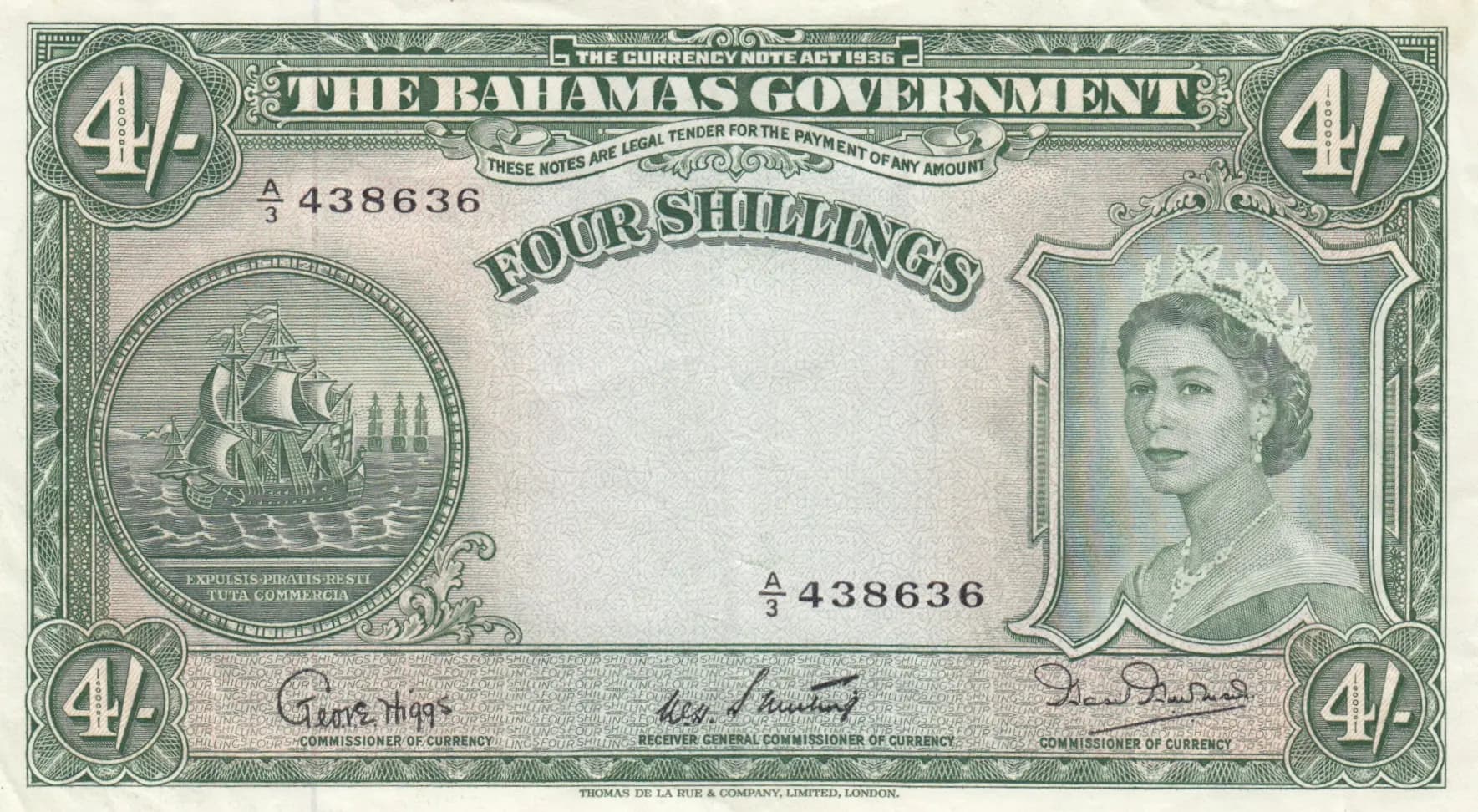
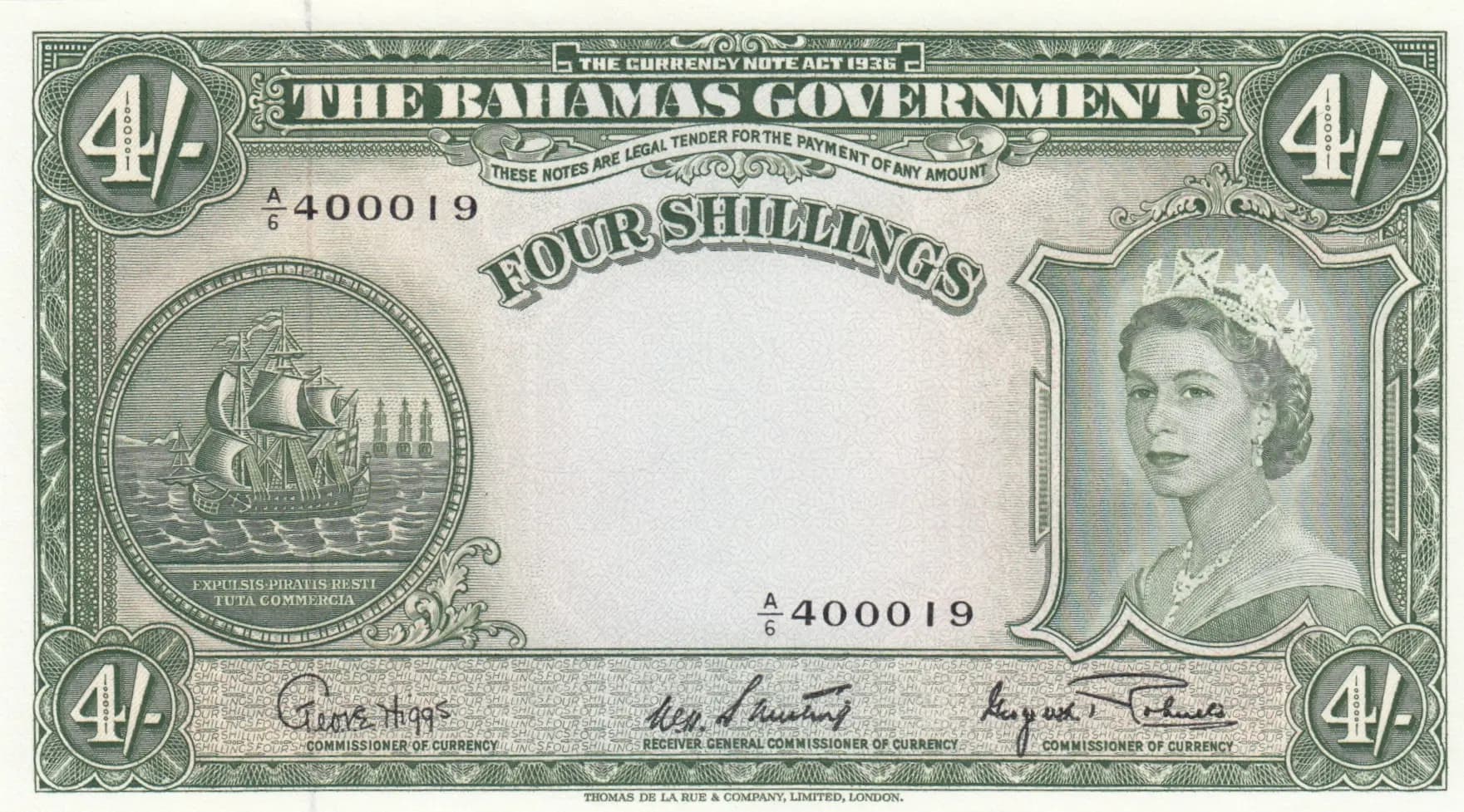
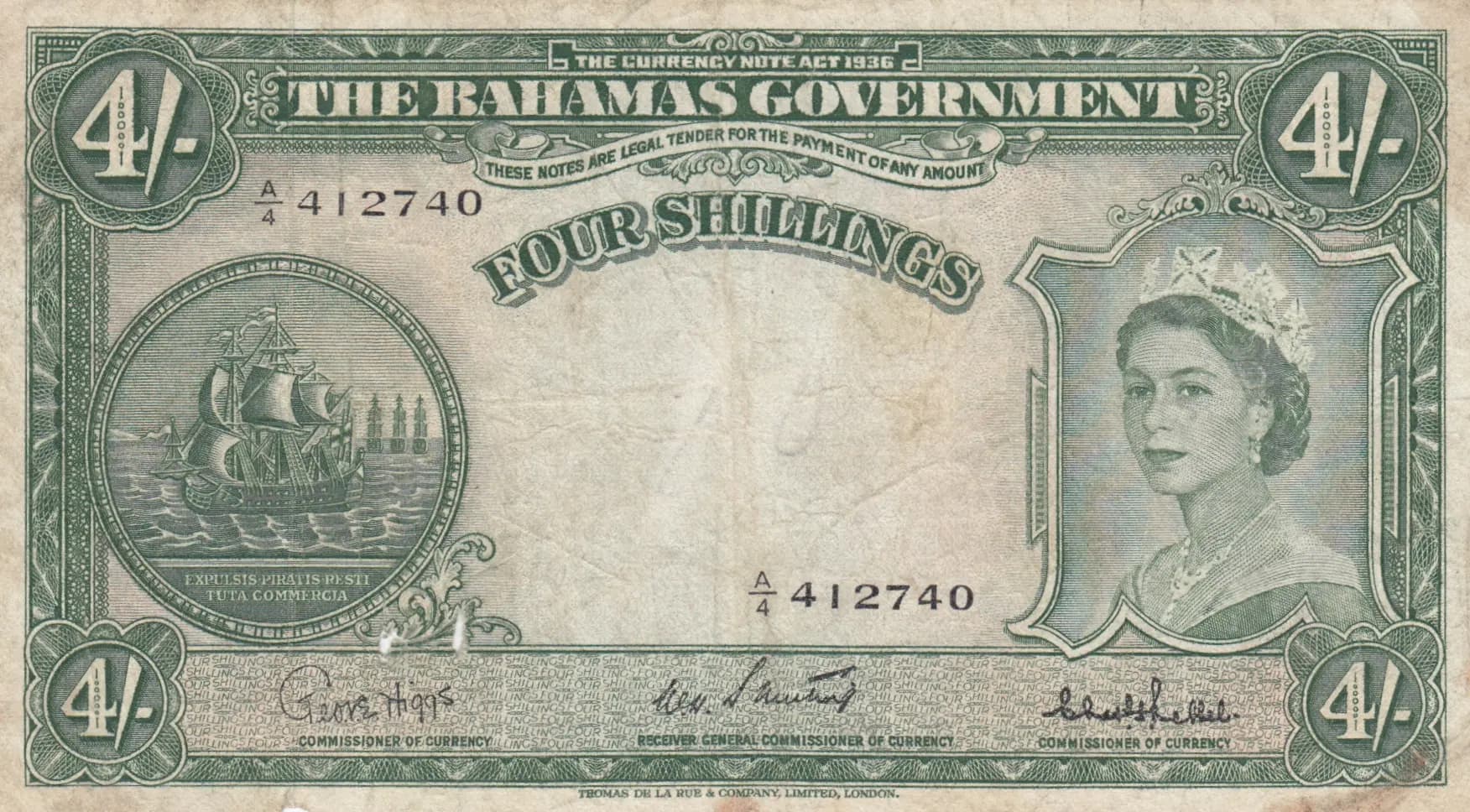
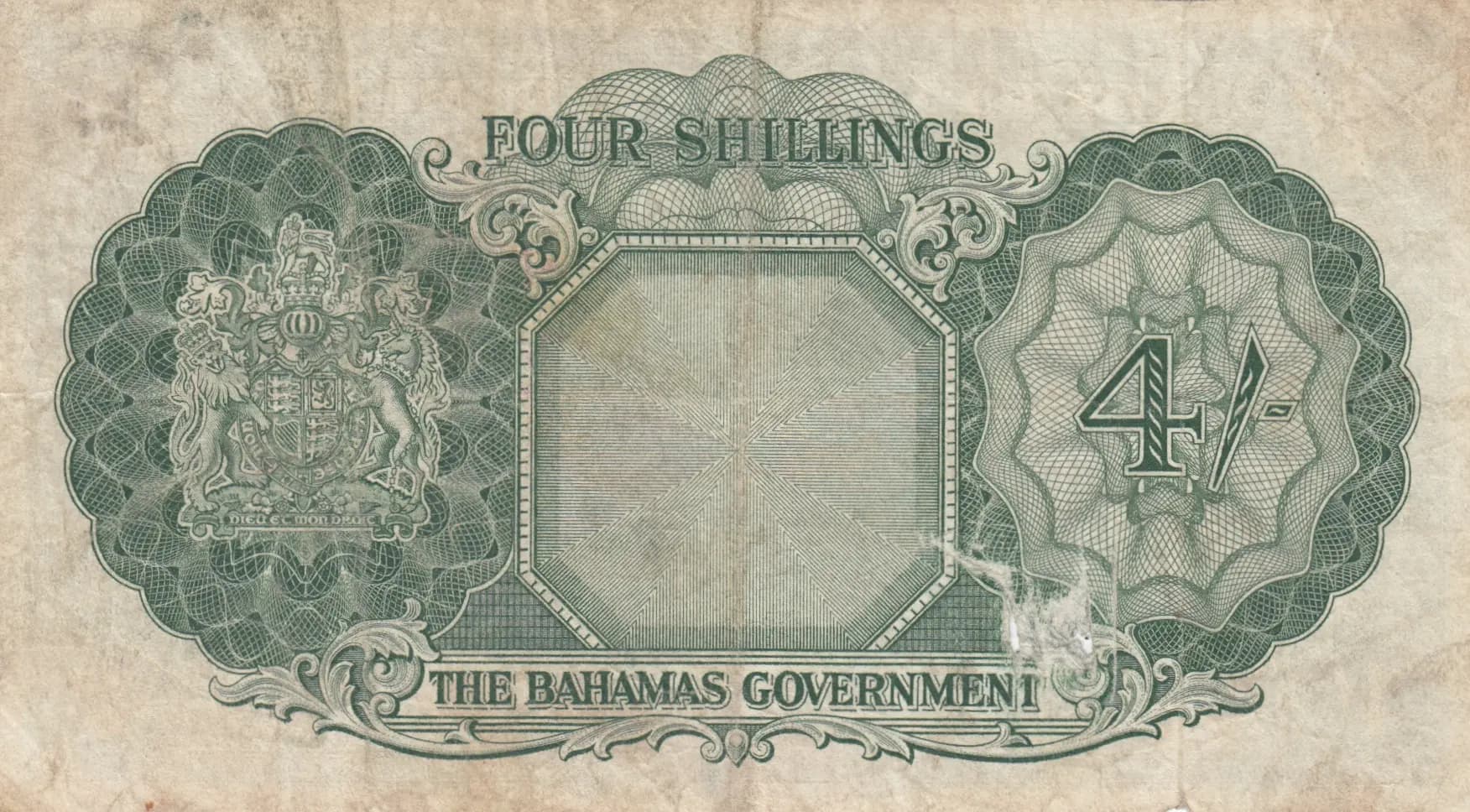
This is a VG-graded 1953 Four Shillings note from The Bahamas Government, printed by Thomas de La Rue in London. The note displays the characteristic green color scheme with a portrait of Queen Elizabeth II on the obverse and the Royal coat of arms on the reverse, both rendered in fine engraved detail. The piece shows expected wear from circulation including horizontal creasing, foxing, and age-related discoloration, consistent with its VG grade and historical circulation.
Common. While this is a historical banknote from 1953, the eBay price tracking data shows consistent sales of VG-graded examples at approximately $29 (2016), with catalog values for VG at $17.50 (2016). The regular circulation of VG-graded notes at modest prices ($13-$30 range across multiple sales) indicates this is a readily available variety in the secondary market. No evidence suggests restricted print runs or recall status. This Pick number (P-13c) is one of five cataloged variants of the 4 Shillings denomination, suggesting multiple printings across the series.
Issued in June 1953 under The Currency Note Act of 1936, this note represents the early post-war British Commonwealth currency system when the Bahamas Government maintained its own note-issuing authority before the eventual transition to decimal currency. The obverse features Queen Elizabeth II, reflecting the Bahamas' status as a British territory during her early reign, while the reverse displays the Royal coat of arms with the Latin motto 'Dieu et Droit,' emphasizing the colonial connection to the British Crown and the maritime heritage represented by the sailing ship medallion inscribed 'Expulsis Piratis Restituta Commercia' (With pirates expelled, commerce is secure).
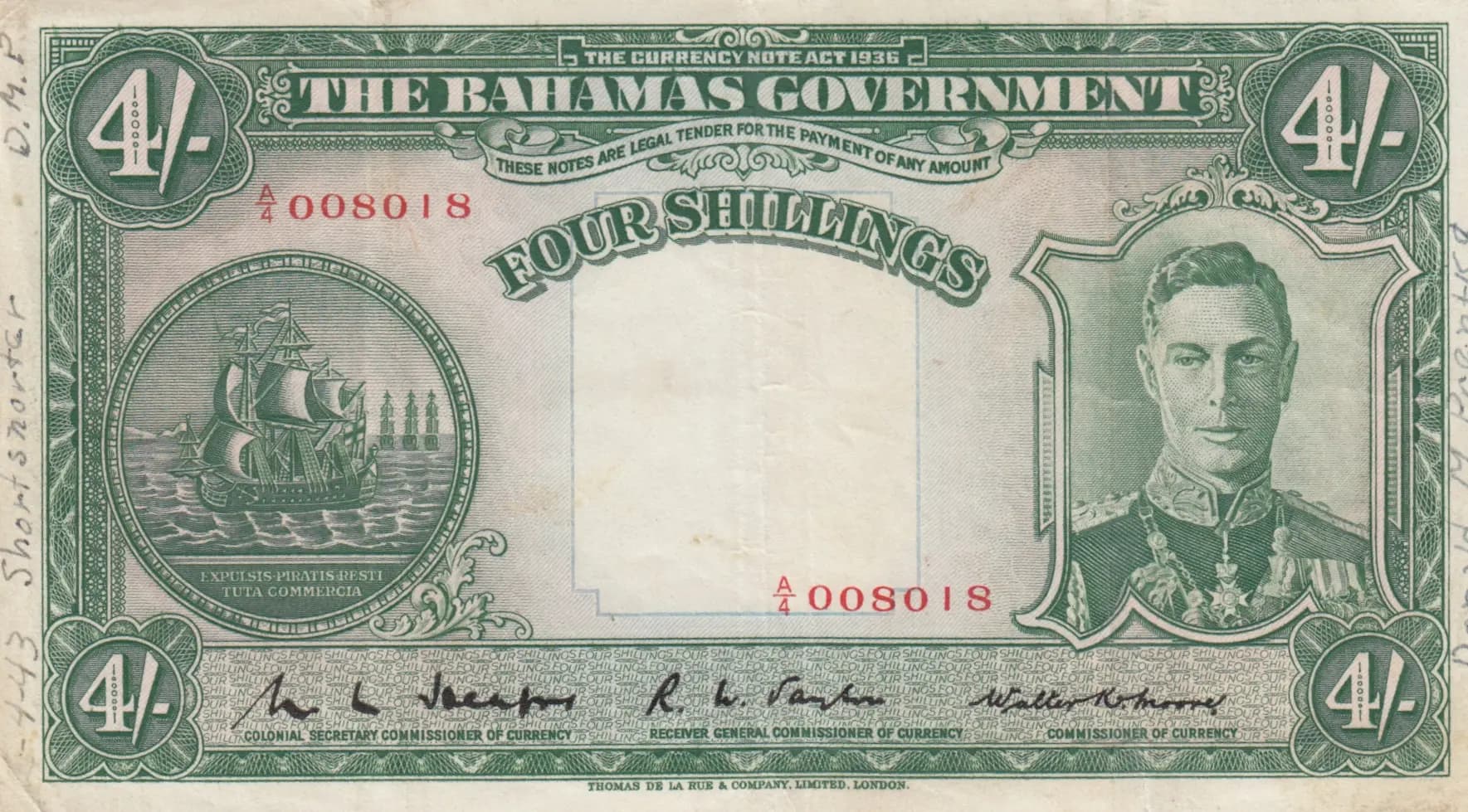
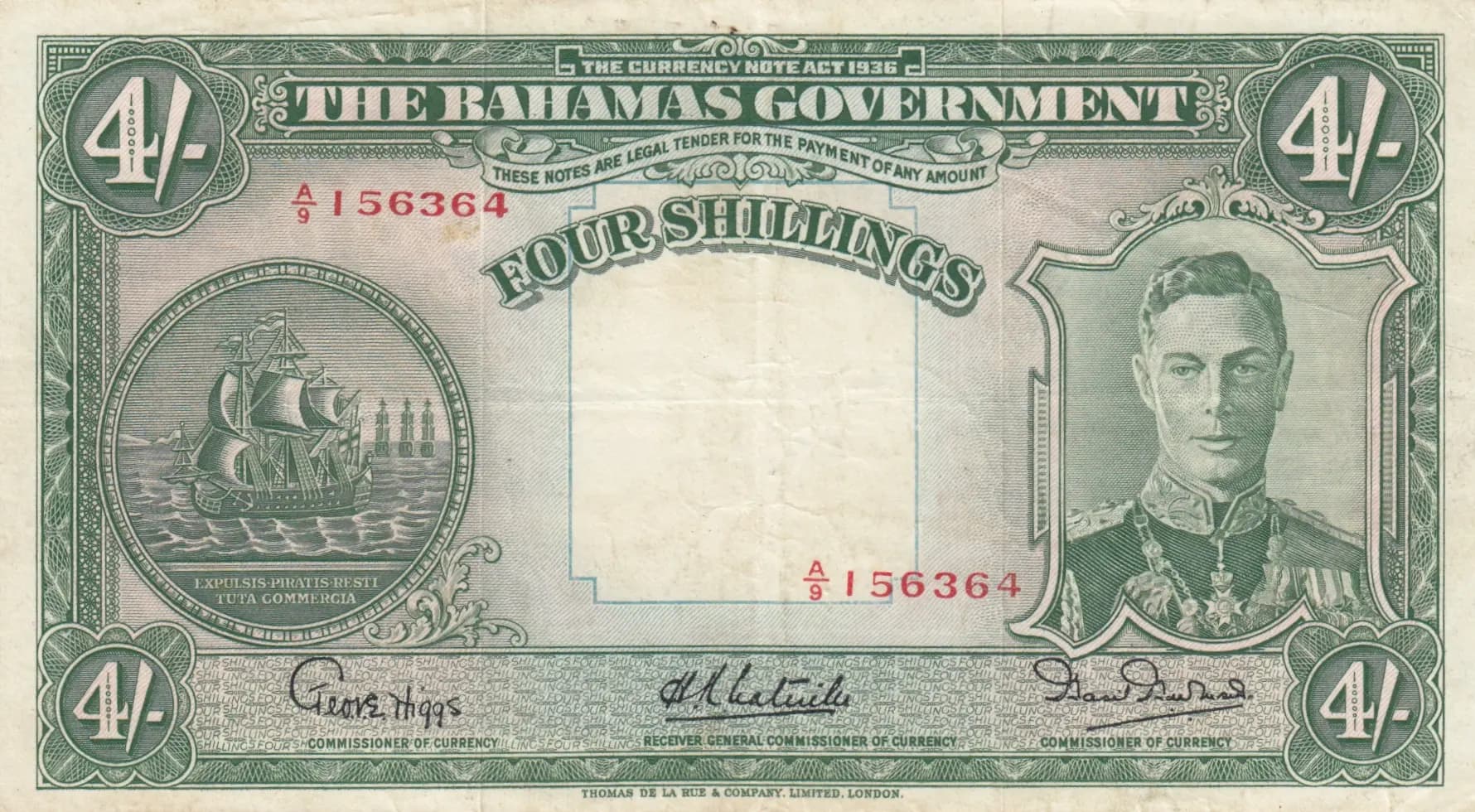
The obverse features a formal portrait of Queen Elizabeth II in profile facing left, wearing a tiara and pearl necklace, positioned on the right side of the note within a rectangular frame. On the left is a circular medallion containing a meticulously engraved multi-masted sailing ship on water, symbolizing the maritime heritage and commercial importance of the Bahamas. The entire design is framed by ornate decorative cartouches with baroque scrollwork in all four corners, typical of Thomas de La Rue's security printing aesthetic. The reverse displays the Royal coat of arms with lion and unicorn supporters and a crowned heraldic shield, positioned on the left within an elaborate decorative frame, with the denomination '4/-' in a scalloped shield frame on the right. An octagonal central space remains minimally decorated, allowing for potential overprinting. The symmetrical, ornate baroque-style design throughout exemplifies high-security engraved currency of the mid-20th century.
FRONT: 'THE CURRENCY NOTE ACT 1936' - The legislative authority for note issuance; 'THE BAHAMAS GOVERNMENT' - Issuing authority; 'THESE NOTES ARE LEGAL TENDER FOR THE PAYMENT OF ANY AMOUNT' - Legal tender declaration; 'FOUR SHILLINGS' and '4/-' - Denomination; 'A/4 412740' - Serial number; 'EXPULSIS PIRATIS RESTITUTA COMMERCIA' (Latin) - 'With pirates expelled, commerce is secure' - Motto on ship medallion; 'COMMISSIONER OF CURRENCY' and 'RECEIVER GENERAL COMMISSIONER OF CURRENCY' - Official titles; 'THOMAS DE LA RUE & COMPANY, LIMITED, LONDON' - Printer attribution; 'June 1953' - Issue date. BACK: 'FOUR SHILLINGS' and '4/-' - Denomination; 'THE BAHAMAS GOVERNMENT' - Issuing authority; 'DIEU ET DROIT' (French) - 'God and Right' - Royal heraldic motto.
Intaglio engraving (also called recess printing) by Thomas de La Rue & Company, Limited, London. The visual analysis confirms the characteristic fine parallel line shading, cross-hatching, and intricate engraved linework throughout both sides of the note. This advanced security printing technique was the standard for Commonwealth banknotes of the 1950s and provided protection against counterfeiting through the complexity of the engraved plates and the tactile relief of the printed design.
This note is cataloged as P-13c, indicating it is one of four variants (P-13a, P-13b, P-13c, P-13d) of the 1953 4 Shillings denomination, all printed by Thomas de La Rue. The specific variety P-13c cannot be definitively distinguished from other variants without additional reference material comparing signature variants, date variations, or printer mark differences. The observed serial number prefix 'A/4' and the dated 'June 1953' imprint are consistent with this issue period. The signatures of W. H. Sweeting (center) and Chas P. Bethel (right) are visible, which may be a distinguishing feature among the four variants, though this requires confirmation against PMG population records.