1 pound 1953
Market Prices
10 salesAbout This Note
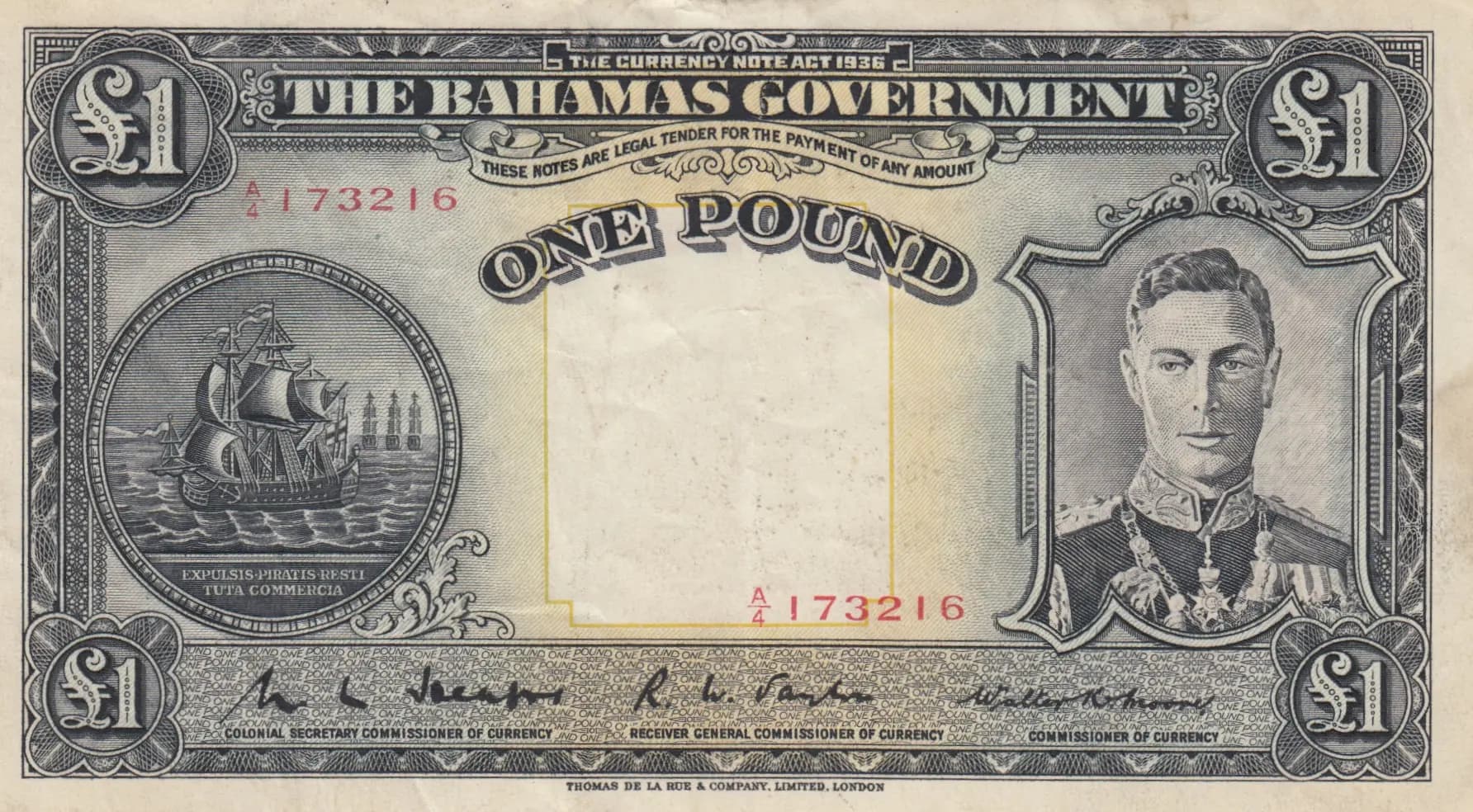
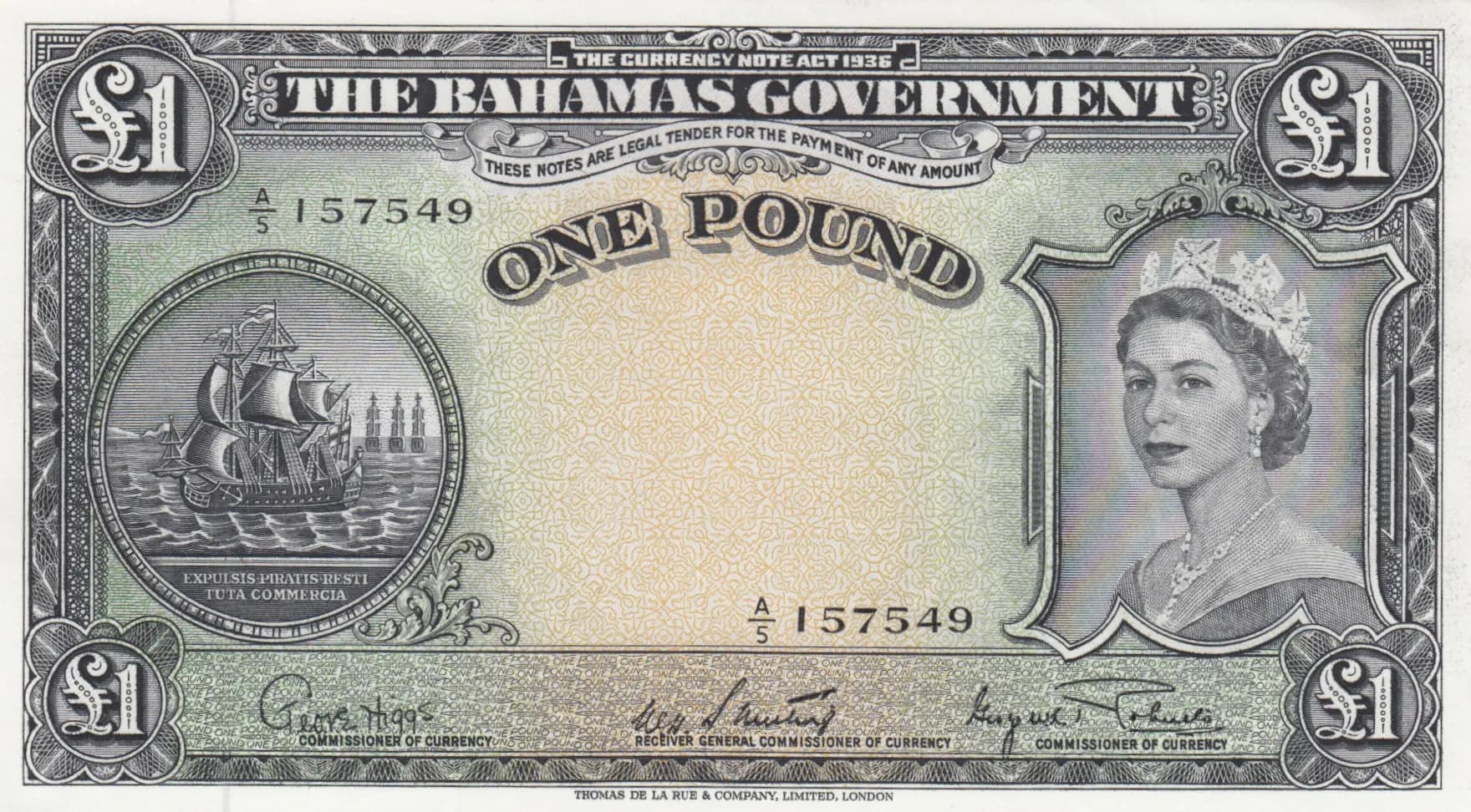
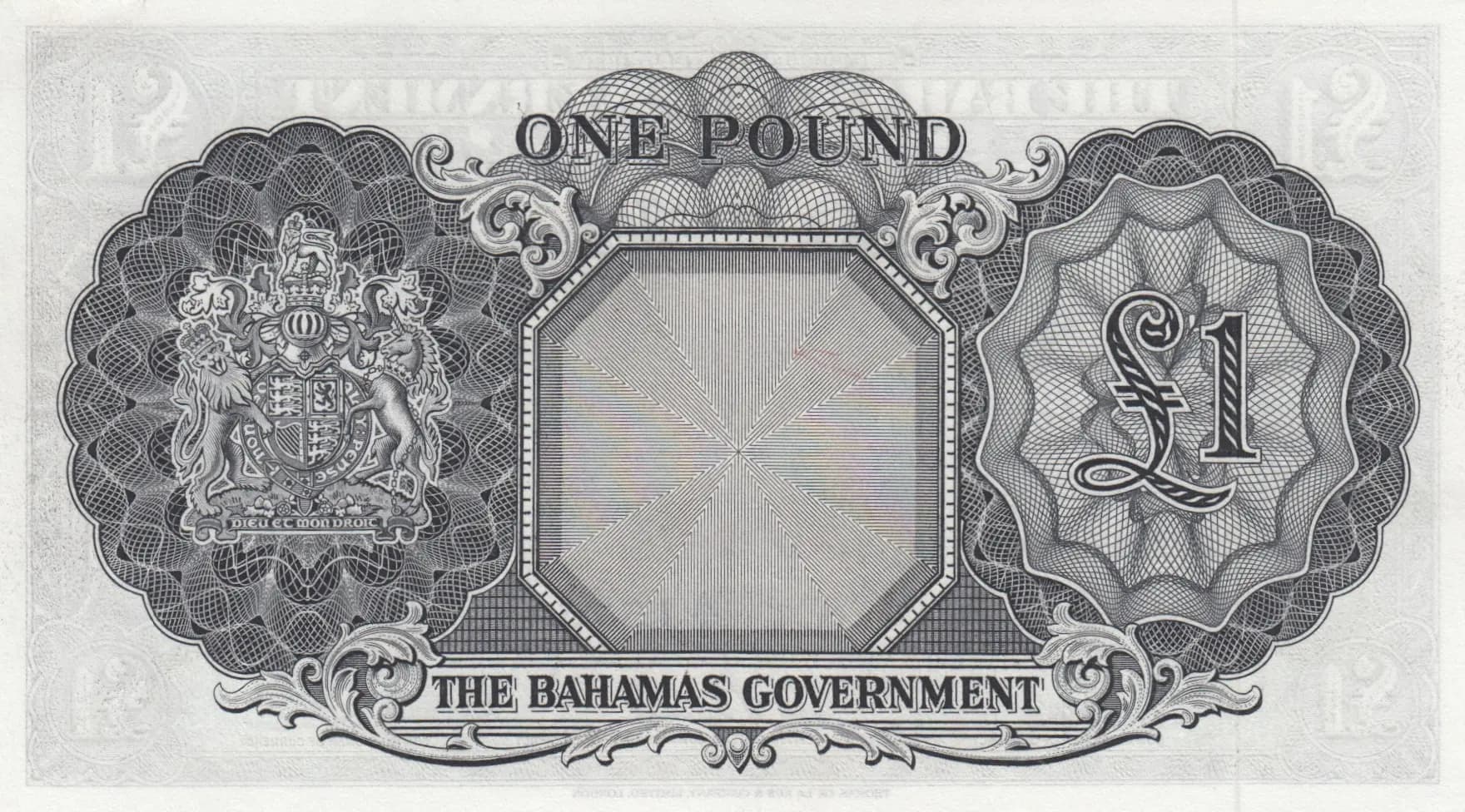
This is a pristine Uncirculated example of the Bahamas Government 1 Pound note from 1953 (Pick-15d), featuring the portrait of Queen Elizabeth II on the obverse and the national coat of arms on the reverse. The note exhibits exceptional condition with sharp engraving, clean margins, and no visible wear, creases, or handling marks. With catalog values reaching $1,000 for UNC examples and recent market activity supporting strong collector demand, this represents a desirable mid-20th century Commonwealth currency note in superb preservation.
Common. Despite the catalog value of $1,000 for UNC examples, the eBay market data shows regular sales activity with multiple VF examples selling between $31-$102 over the past decade, and lower grades consistently achieving sales in the $26-$85 range. This indicates steady collector interest and sufficient circulation in the market to classify this Pick number as common rather than scarce. The 1953 issue was a standard government currency note with no evidence of a restricted print run or early recall, supporting the common classification.
Issued under The Currency Note Act of 1936, this 1953 note commemorates the early reign of Queen Elizabeth II and represents the Bahamas' monetary sovereignty during the transition from colonial to self-governing status. The reverse features the national coat of arms with the Latin motto 'Expuisis Piratis Restituta Commercia' (Trade/Commerce restored expelling pirates), reflecting the nation's historical struggle against piracy and its emergence as a legitimate maritime commercial center in the Caribbean.
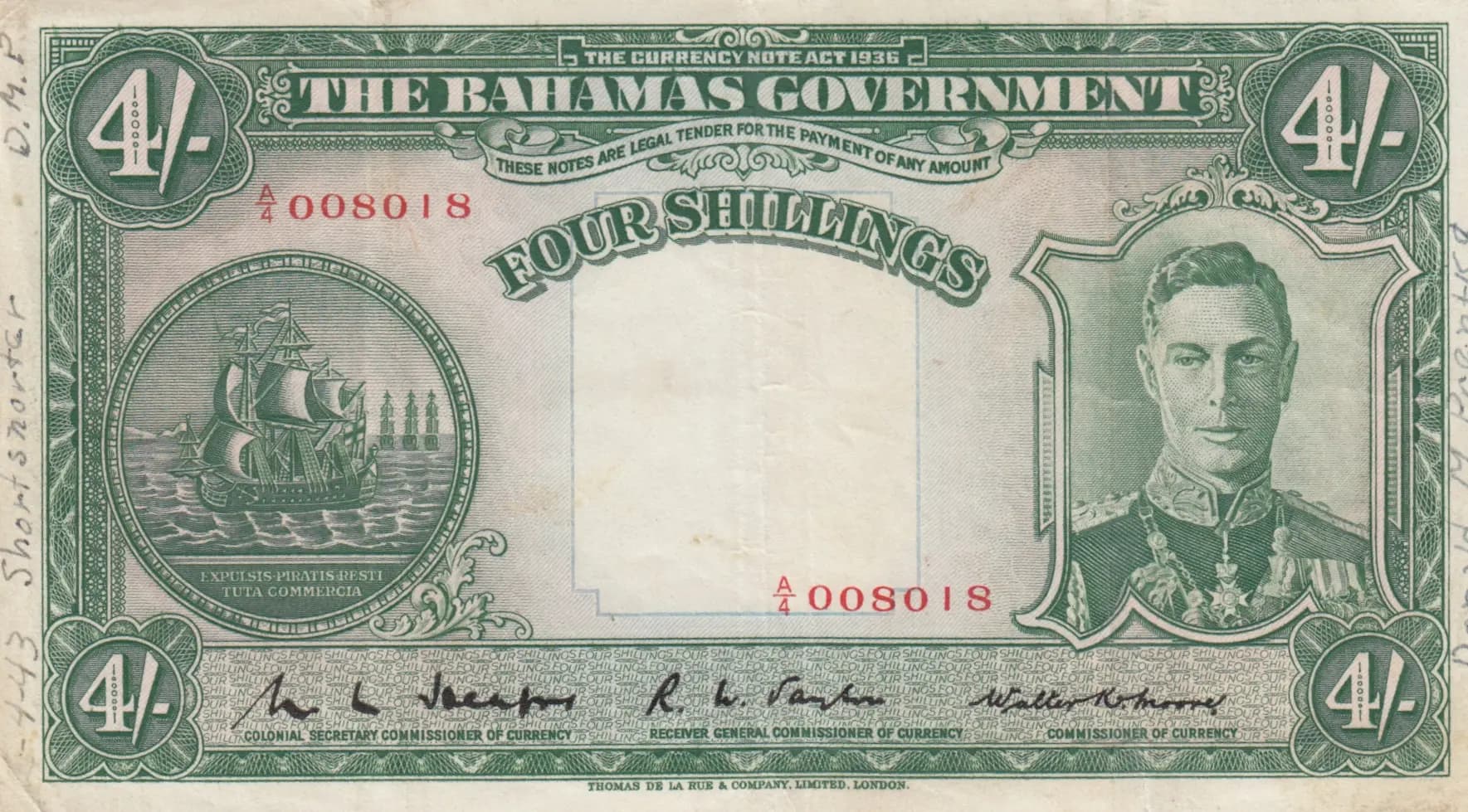
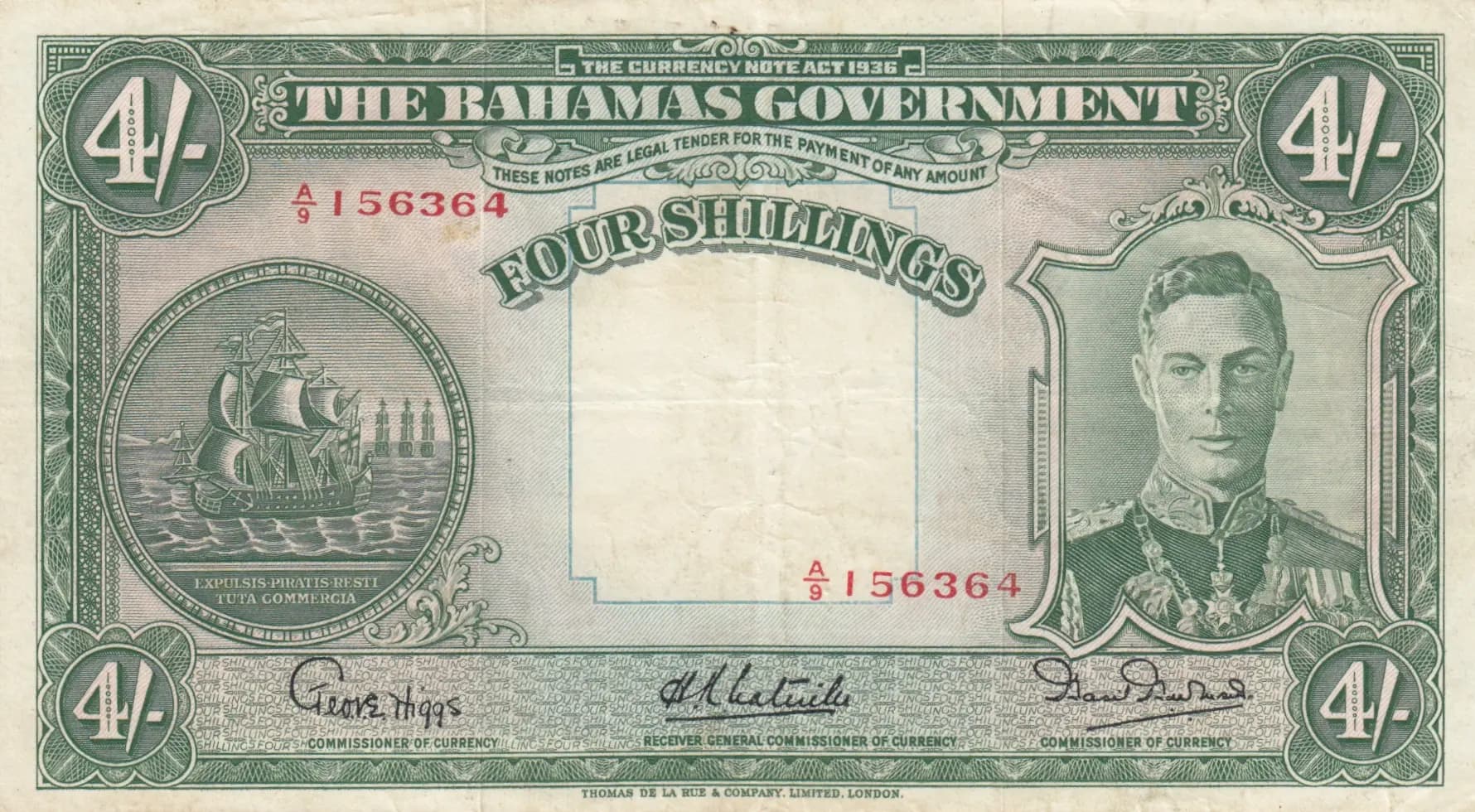
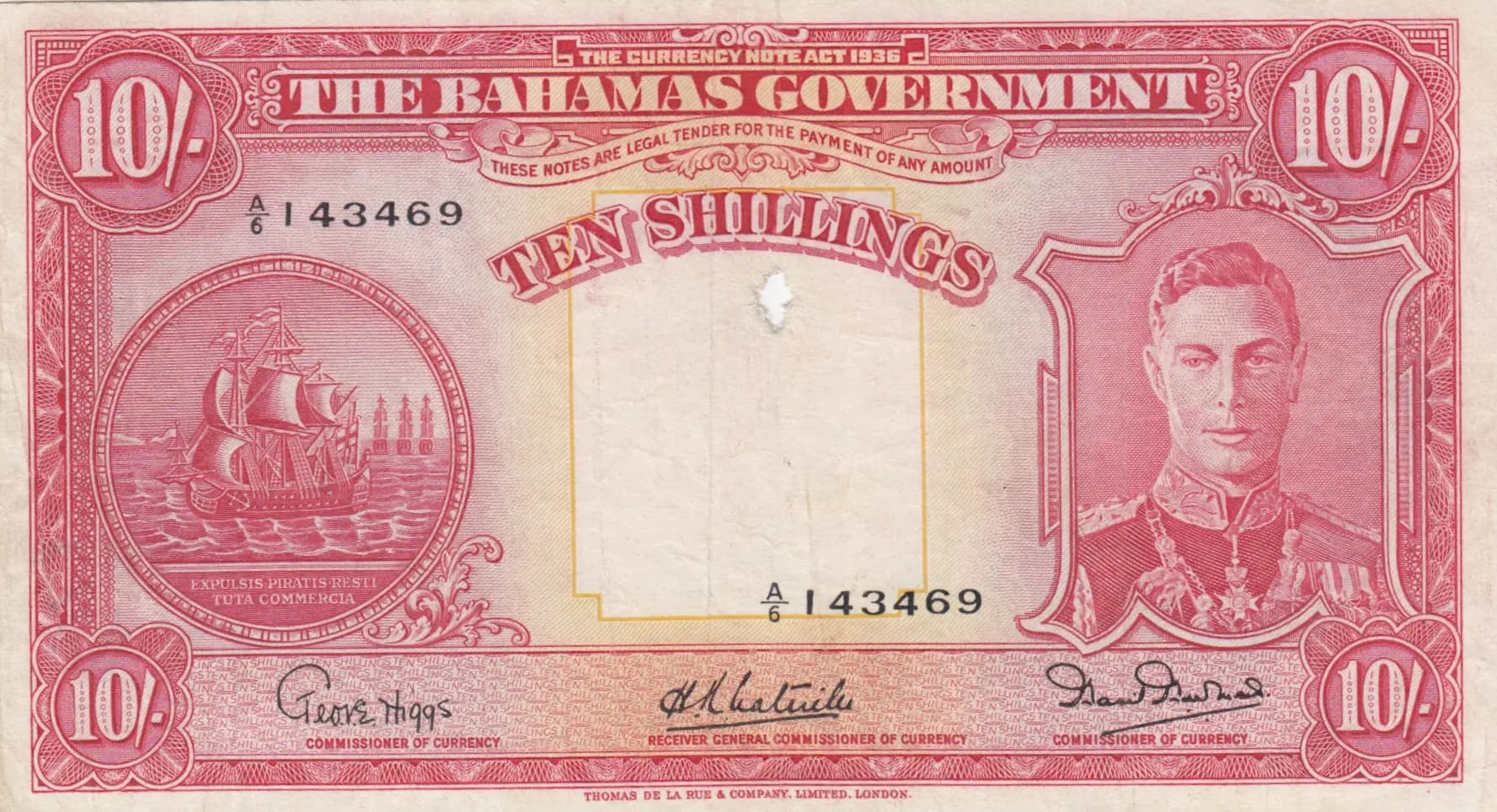
The obverse features a left-aligned circular medallion containing an engraved historical sailing vessel with multiple masts—a reference to the maritime heritage of the Bahamas and its colonial shipping history. On the right side is the formal portrait of Queen Elizabeth II wearing a tiara or crown, positioned within an ornate rectangular frame. The reverse displays heraldic elements including the coat of arms with a lion and shield on the left side, flanked by an elaborately styled '£1' denomination marker. Both sides are framed by intricate decorative scrollwork and geometric patterns in all four corners, with a beige/cream background on the obverse and black-and-white engraving on the reverse. The note measures denomination prominently throughout with the characteristic design elements of Thomas de La Rue's mid-century Commonwealth currency production.
FRONT SIDE: 'THE CURRENCY NOTE ACT 1936' — The legislative basis for note issuance; 'THE BAHAMAS GOVERNMENT' — Issuing authority; 'THESE NOTES ARE LEGAL TENDER FOR THE PAYMENT OF ANY AMOUNT' — Legal tender declaration; 'ONE POUND' — Denomination; 'EXPUISIS PIRATIS RESTITUTA COMMERCIA' (Latin) — 'Trade/Commerce restored [by] expelling pirates'; 'COMMISSIONER OF CURRENCY' and 'RECEIVER GENERAL COMMISSIONER OF CURRENCY' — Official positions; 'THOMAS DE LA RUE & COMPANY, LIMITED, LONDON' — Printer information; Serial number 'A 157549'. REVERSE SIDE: 'ONE POUND' — Denomination; 'THE BAHAMAS GOVERNMENT' — Issuing authority; 'DIEU ET MON DROIT' (French) — 'God and my right' (Royal motto).
Intaglio engraving (line engraving and steel plate printing) by Thomas de La Rue & Company, Limited, London. The visual analysis confirms the fine line engraving throughout with complex cross-hatching patterns, intricate geometric background designs, and sharp impression clarity characteristic of De La Rue's premium banknote production techniques. Multiple plates were used to achieve the color variations (black on beige/cream for the obverse) and the detailed security features evident in the ornamental borders and decorative elements.
This is cataloged as Pick-15d, one of three known variants (P-15a, P-15c, and P-15d) all printed by Thomas de La Rue. Variants likely differ by signature combinations or minor design alterations. The specific serial number observed is A 157549, with signatures identified as W. H. Sweeting and W. K. Roberts according to referenced community catalog data. The note bears the standard 'L. 1936 (1953)' dating convention, indicating the legislative basis (1936 Currency Note Act) and actual issue year (1953).