5 gulden 1800
Market Prices
1 saleAbout This Note
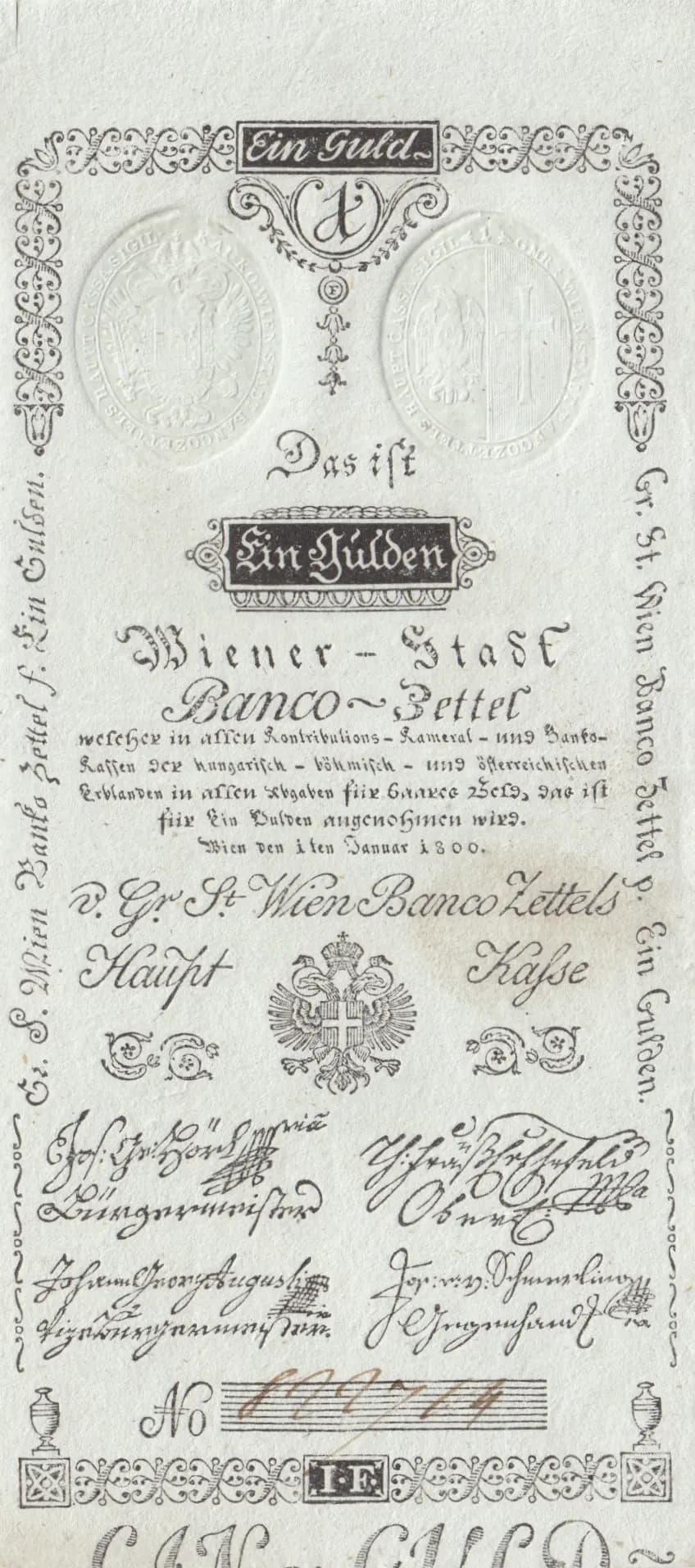
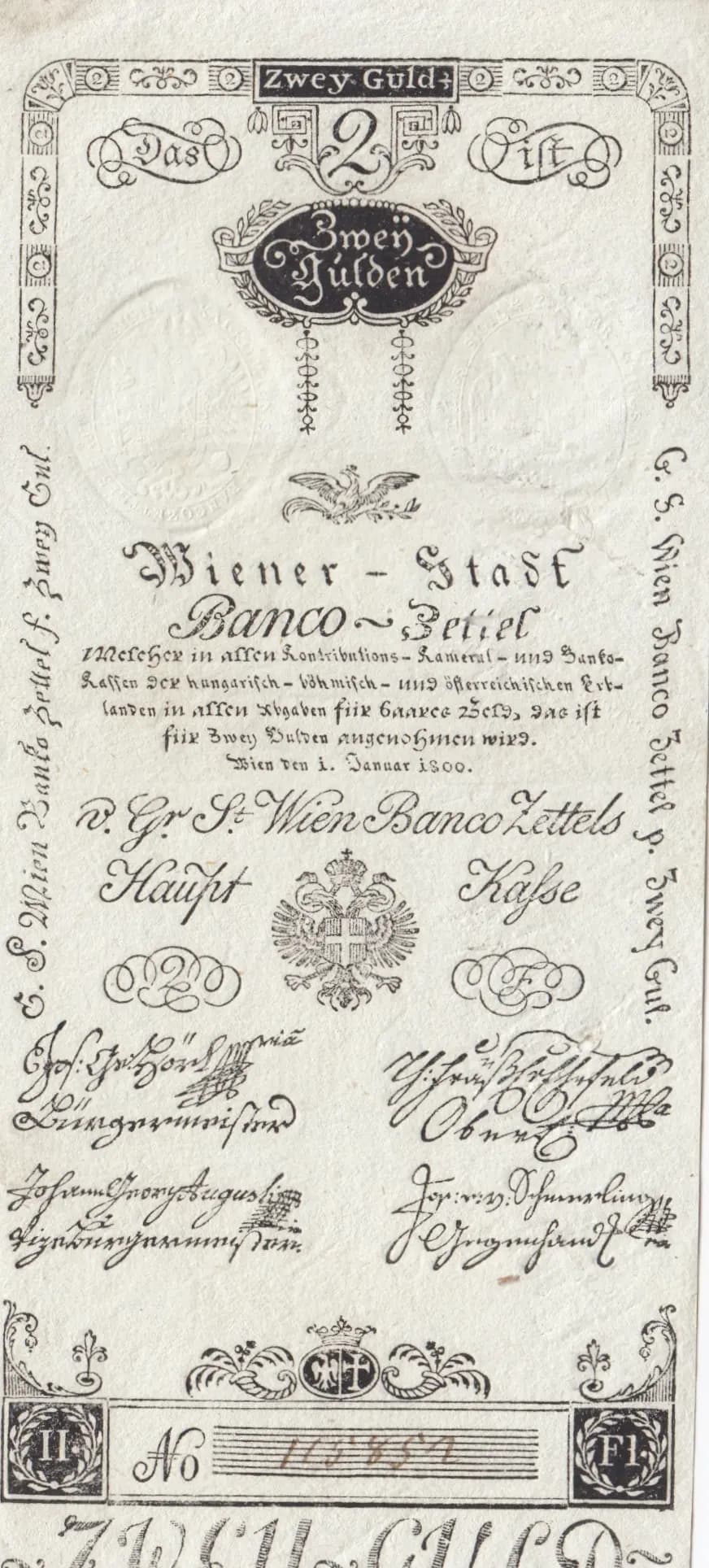
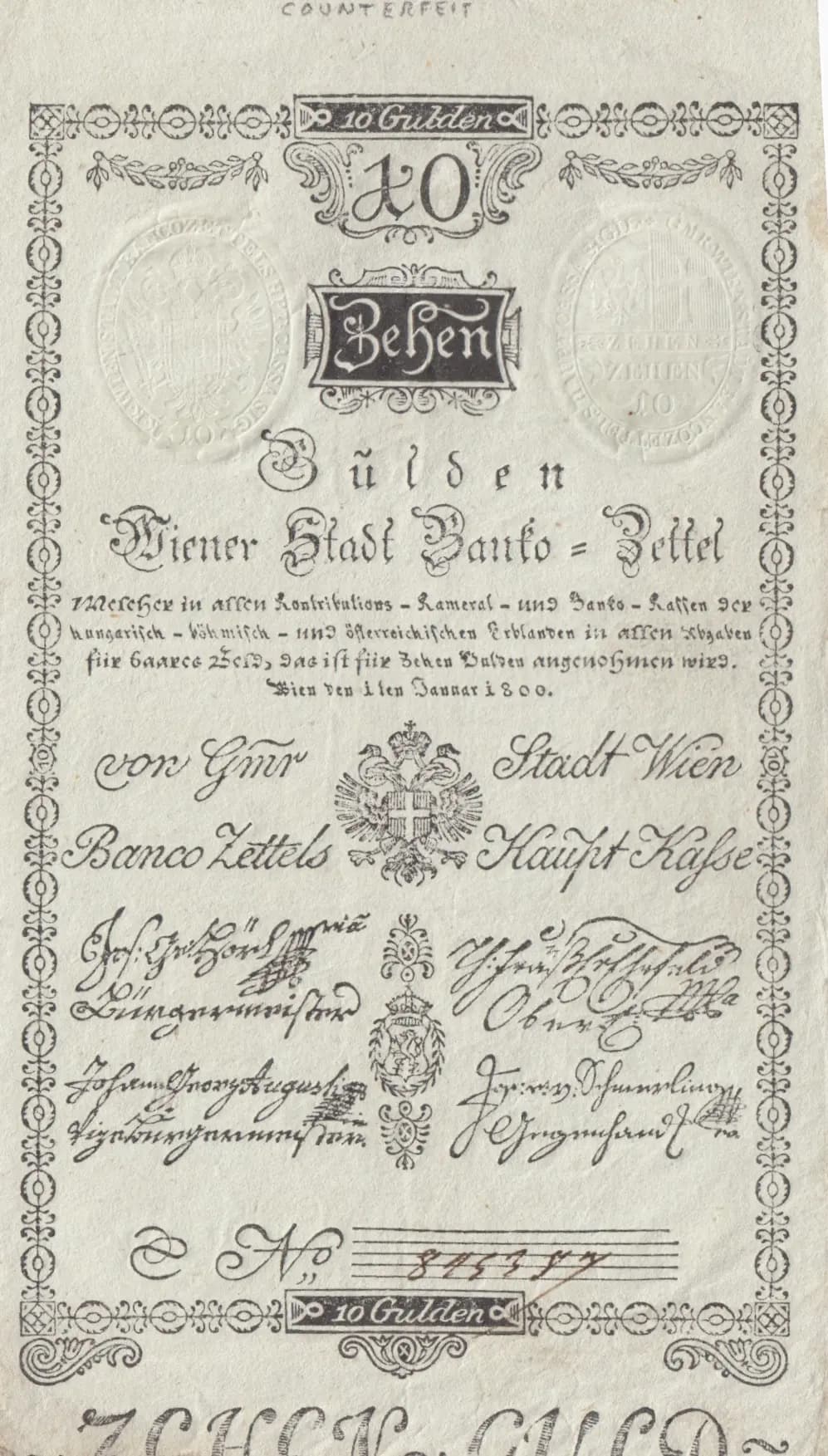
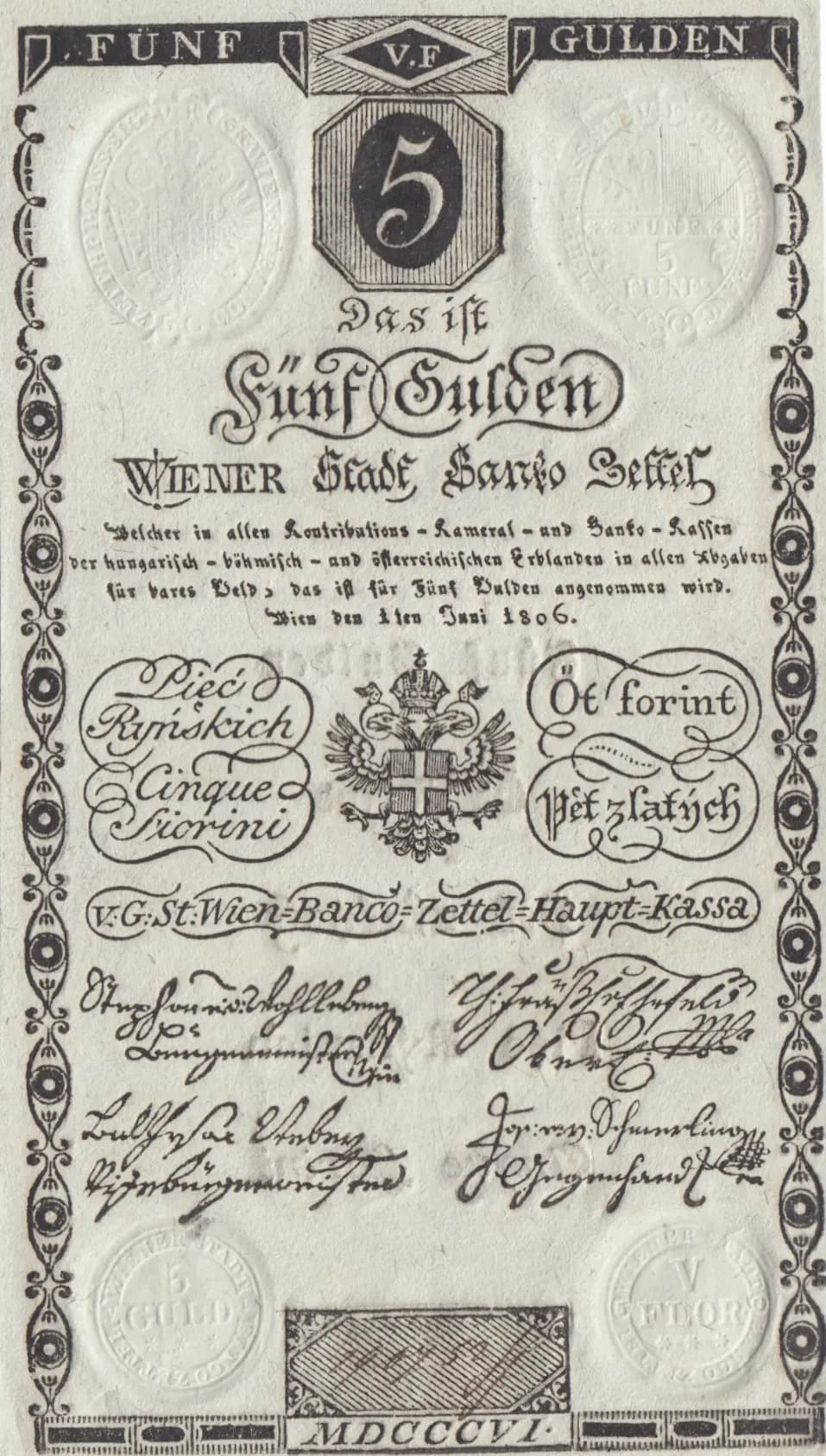
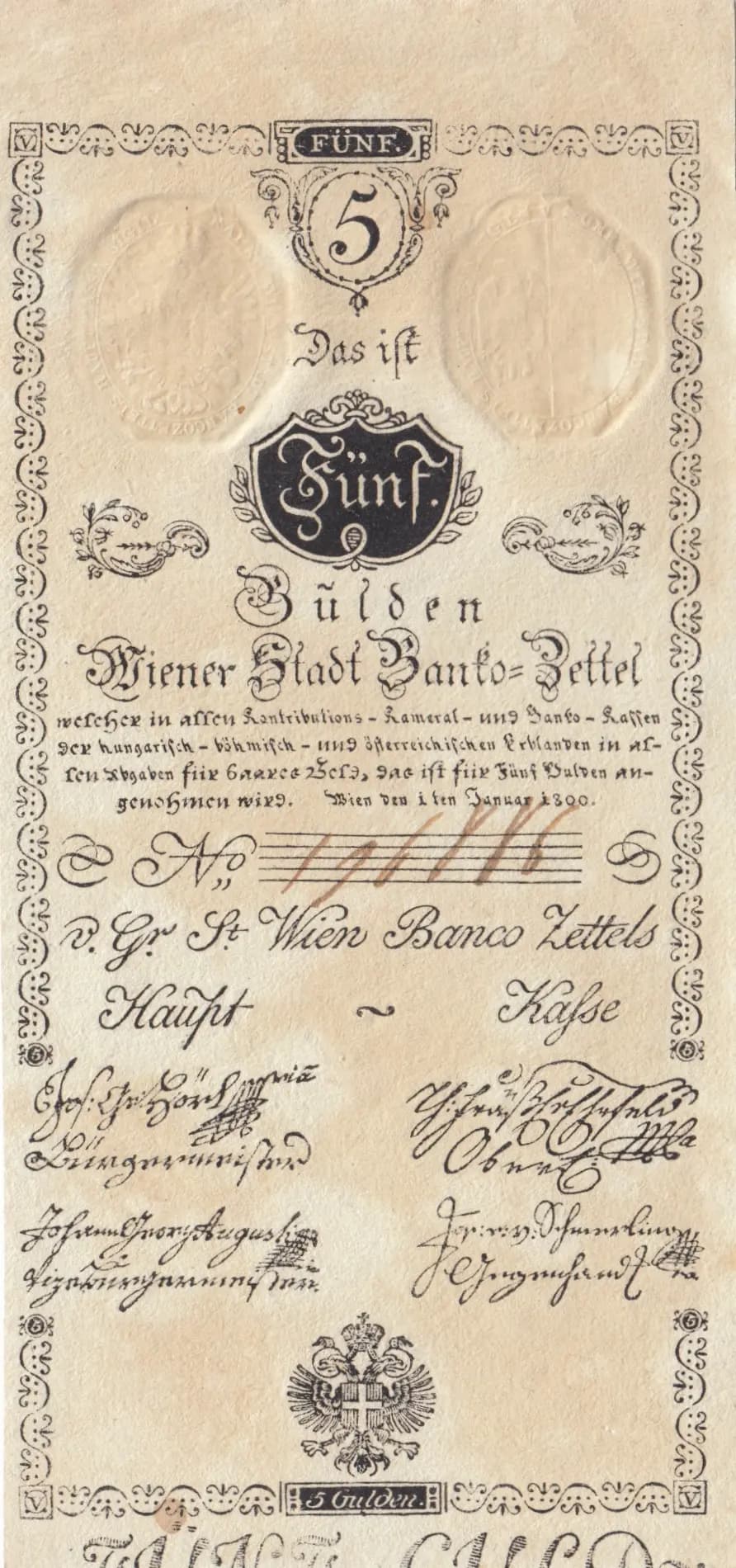
This is an Austrian 5 gulden banknote from 1800, issued by the Banco Zettel (Vienna City Bank), representing an early example of Austrian paper currency. The note features elaborate ornamental borders with scrollwork and floral patterns in black ink on aged cream paper, with the denomination prominently displayed in a decorative cartouche at the top. The specimen exhibits significant age-related wear including creasing, foxing, and yellowing consistent with its 200+ year history, yet maintains clear legibility of text and design elements, placing it solidly in the AU condition range.
common. This note is rated common based on several factors: (1) eBay market data shows F-grade specimens selling for approximately $28.50, indicating consistent market availability; (2) the EF-grade catalog value of $125 is modest, suggesting reasonable supply even in higher grades; (3) the Vienna City Bank operated continuously and issued these notes in standard denominations across multiple years; (4) the 1800 date represents the beginning of a long-running series, not a short-lived issue. While age and wear make all genuine 1800-dated notes inherently less common than modern currency, the availability of comparable pieces and moderate market prices indicate this is a regularly encountered note in the collector market rather than a scarce or rare variety.
This banknote was issued on January 1, 1800, by the Vienna City Bank (Wiener Stadt Banco) during the Austro-Hungarian Empire under Emperor Francis II. The double-headed imperial eagle and the multilingual text referencing 'Hungarian-Bohemian and Austrian lands' reflect the polyglot nature of the Habsburg monarchy, while the formal acceptance clause demonstrates the note's official legal tender status across all imperial treasuries and contribution chambers during a period of significant financial reorganization.
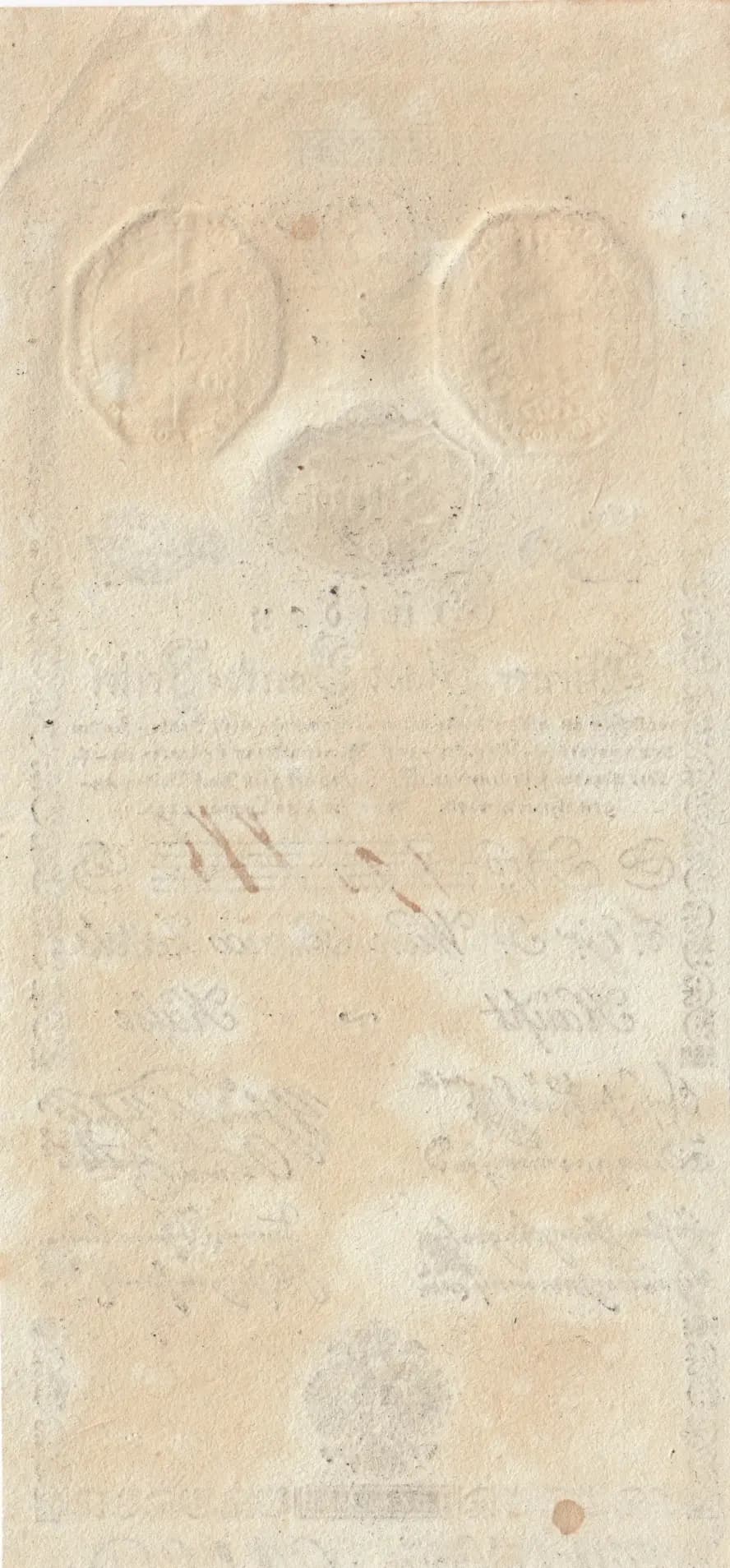
The obverse displays a formal, symmetrical design centered on the denomination denomination 'FÜNF' (Five) within an ornamental shield cartouche. Two large circular impressions flank the central text, representing official seals or coat-of-arms stamps of the Vienna City Bank and/or imperial authorities. The double-headed imperial eagle at the bottom center serves as the primary heraldic emblem symbolizing Habsburg sovereignty. An intricate decorative border of scrollwork and floral flourishes frames the entire note in black ink. Handwritten signatures and authorization marks appear in the lower portion, indicating manual authentication by bank officials. The reverse is largely blank except for three circular watermark impressions visible in the upper portion, a common security feature of the period. The paper stock is natural cream-colored linen fibers typical of early 19th-century banknote manufacture.
FRONT SIDE: 'Das ist Fünf Gulden' (This is Five Gulden) / 'Wiener Stadt Banco-Zettel' (Vienna City Bank Note) / 'welcher in allen Contributions-Kammeral- und Banco-Kassen S. der hungarisch-böhmisch- und österreichischen Erlanden in allen Obaven für bare 25 fl, das ist für Fünf Walden angenommen wird. Wien den 1ten Januar 1800.' (which in all contribution chambers, treasury, and bank offices of the Hungarian, Bohemian, and Austrian lands in all places for cash 25 fl., that is for five gulden is accepted. Vienna, 1st January 1800.) / 'v. Gf St Wien Banco Zettels Haupt ~ Kasse' (of the Count St Vienna Bank Note Chief ~ Treasury) / '25 Gulden' (25 Gulden) / BACK SIDE: Blank with watermark impressions only.
Intaglio (copperplate engraving) for the primary design elements, borders, and text, evidenced by the fine detail and precise lines visible in the ornamental scrollwork and heraldic elements. The circular seal impressions appear to be produced either through embossing or applied stamp impressions (possibly with embossing dies) on the damp paper during or after printing. Handwritten signatures and manuscript authorization marks were added manually post-printing by authorized bank officials. The watermarks in the paper (noted as Arabic and Roman numerals per catalog data) were created during the paper manufacturing stage through wire-form impressions in the papermaking process. This multi-step authentication approach was standard security practice for Austrian Banco Zettel notes of this period.
The specific variety details for this specimen would be distinguished by: (1) manuscript signature variants—the handwritten authorization signatures present on this note may differ from other examples depending on which bank officials were on duty; (2) date mark variations—while issued January 1, 1800, some notes may show hand-written date variations; (3) watermark clarity—three distinct circular watermark impressions noted on reverse, which may vary in prominence across the print run. Pick catalog P-A31 designation indicates this is the standard regular-issue variety for the 1800 5 gulden denomination. Without access to detailed signature registries or serial number data, specific official variety classifications cannot be definitively assigned, but the specimen represents the primary issue type for this denomination and date.