1 gulden 1800
Market Prices
5 salesAbout This Note
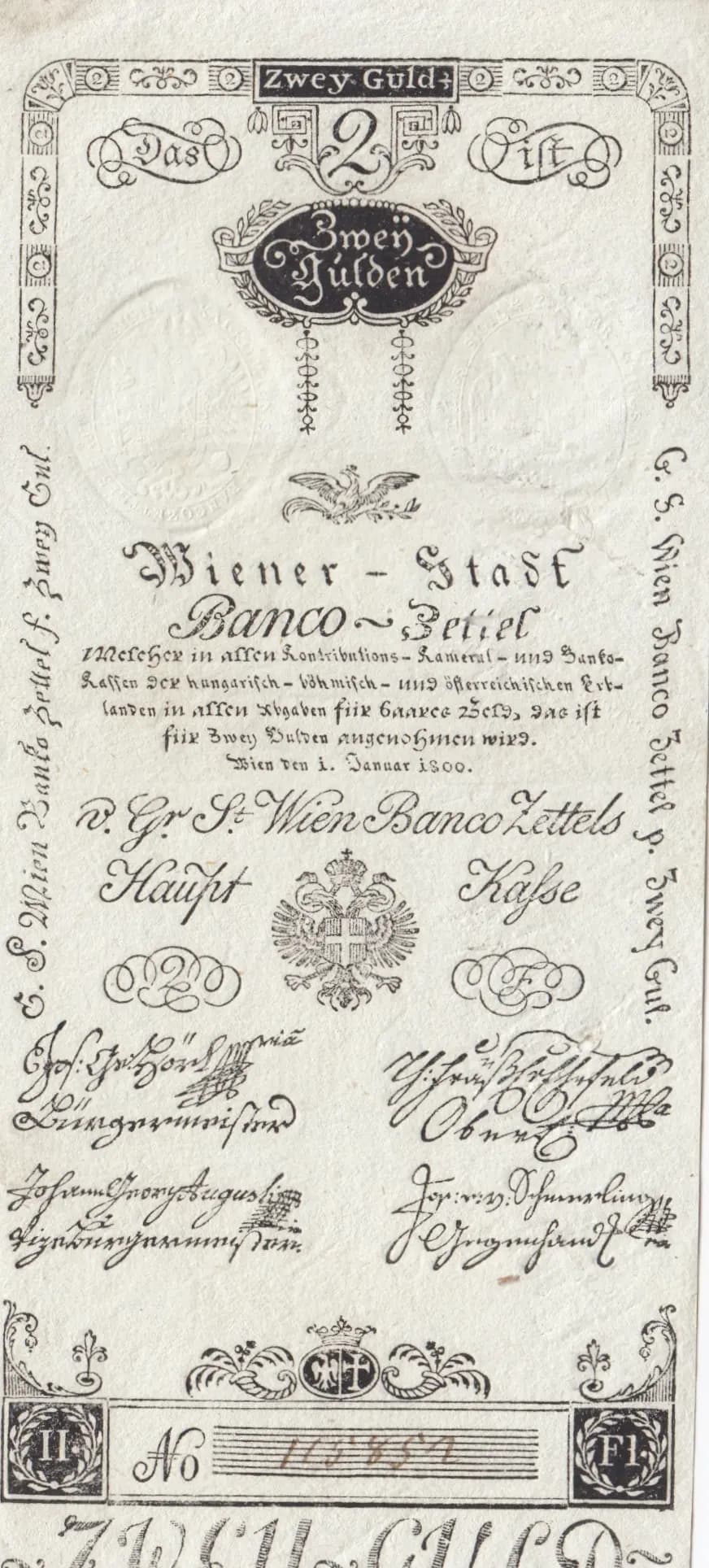
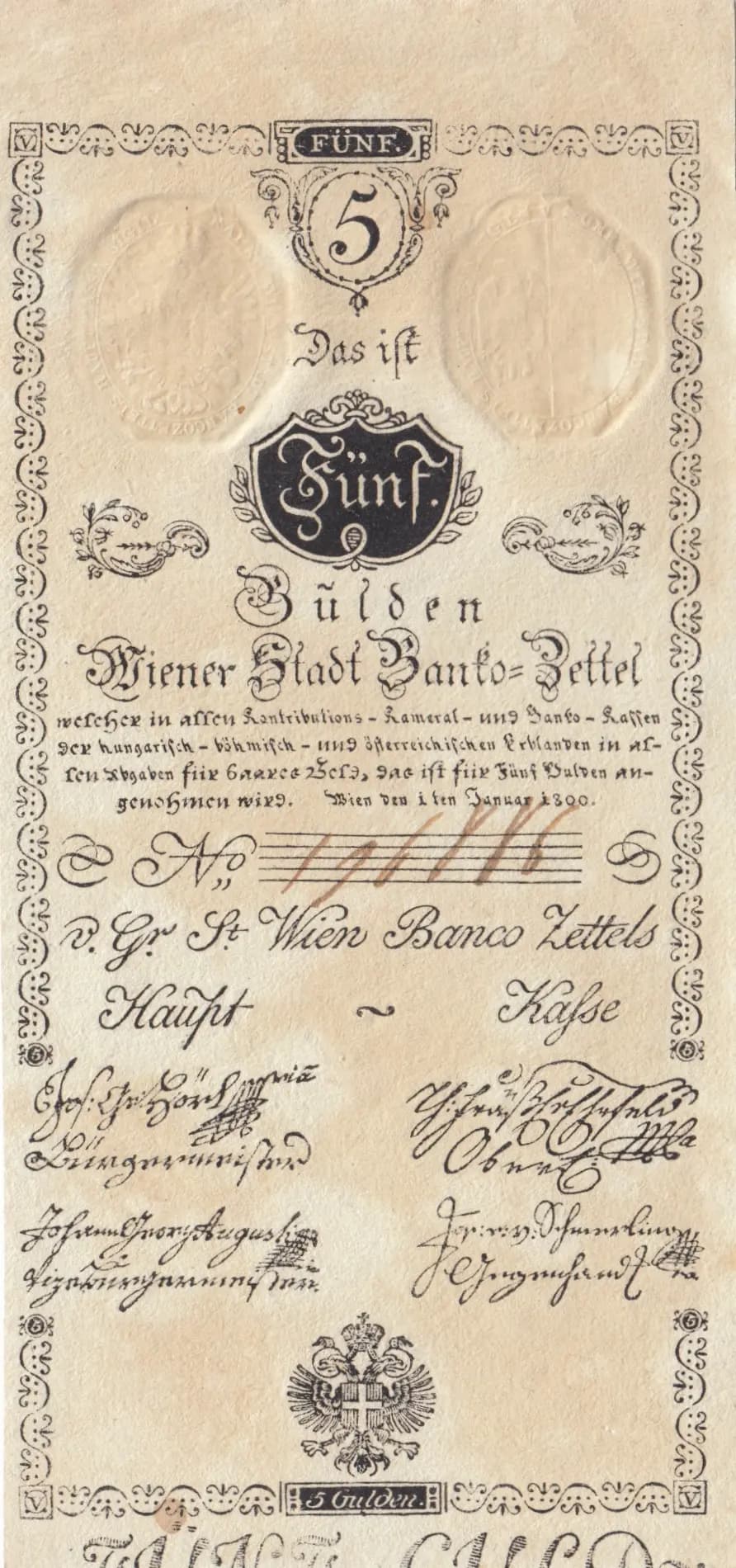
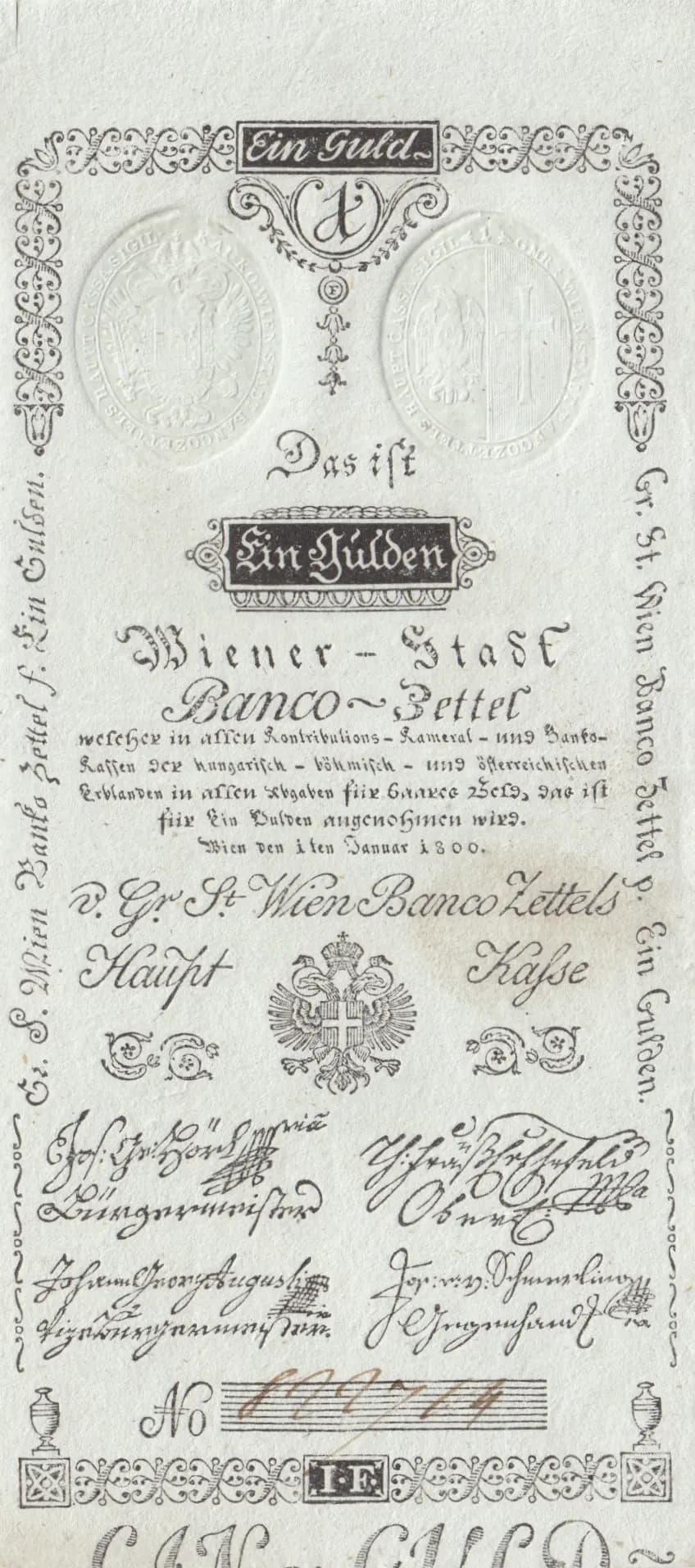
This is an Austrian 1 Gulden note from 1800, issued by the Wiener-Stadt Banco-Zettel (Vienna City Bank Note), featuring an ornately symmetrical design with two oval heraldic seals and the Imperial double-headed eagle coat of arms. The note displays the characteristic black printing on cream-colored paper typical of early 19th-century Austrian currency, with multiple handwritten signatures for authentication and decorative scrollwork borders throughout. In AU condition, this example shows sharp printing and clear definition of all design elements with only minor aging appropriate to its age, making it a well-preserved specimen of early Austrian monetary history.
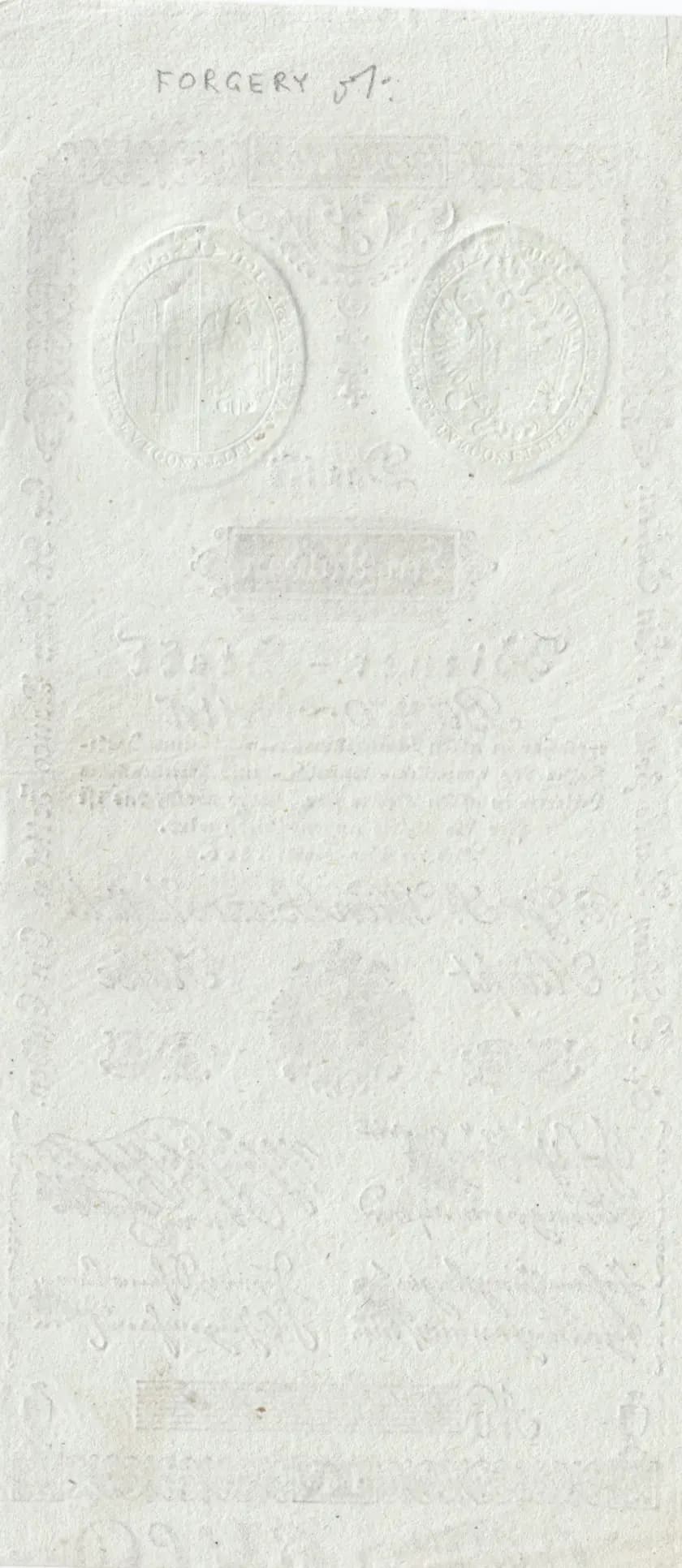
common. eBay market data shows relatively frequent sales with prices ranging from $36-$152.51 depending on condition grade, with multiple examples selling within the past decade. Catalog values for 2016 place the note at $90 in EF condition, indicating it is a standard issue with adequate supply in the marketplace. The Banco Zettel 1 Gulden denomination was issued in substantial quantities during its circulation period, and no print run limitations or recall circumstances suggest rarity. The identification of this particular specimen as a forgery (marked 'FORGERY v.7.') may affect its collector value, as forgeries are typically valued differently than genuine notes.
This note was issued on January 1st, 1800, at the beginning of a transformative century for the Austrian Empire, as indicated by the dated inscription 'Wien den 1ten Jänner 1800.' The Imperial coat of arms and references to 'hungarisch- böhmisch- und Österreichischen Erblanden' (Hungarian-Bohemian and Austrian hereditary lands) reflect the multi-national structure of the Habsburg Empire during this period. The Wiener-Stadt Banco-Zettel represented an early attempt at centralized, standardized currency across the far-flung Habsburg domains, replacing the previous patchwork of regional and local currencies.
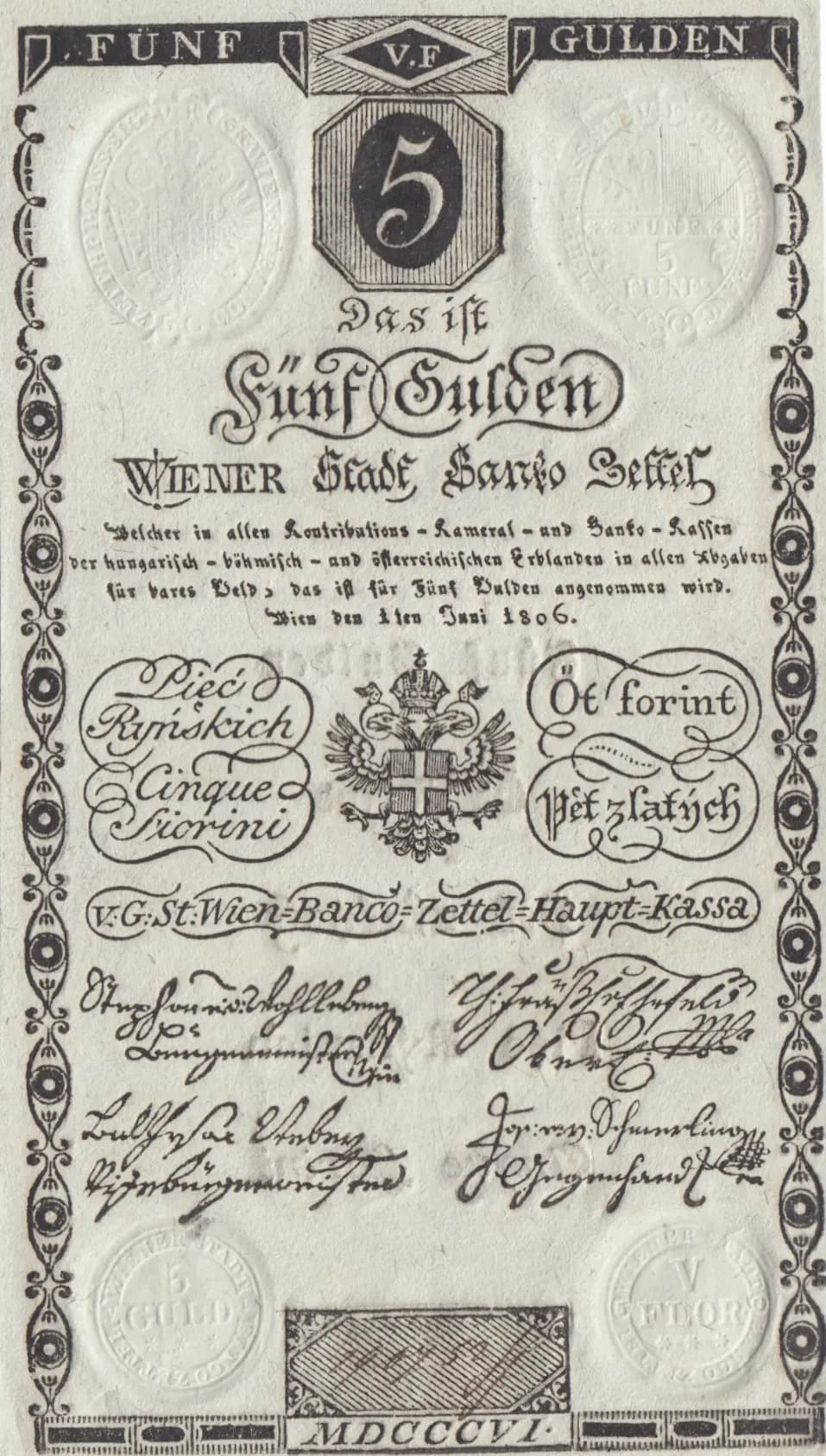
The obverse features a highly formal, symmetrical layout characteristic of early 19th-century Central European banknotes. Two oval medallions containing heraldic seals are positioned symmetrically on either side of the vertical axis, likely containing imperial eagles or other Habsburg heraldic symbols. At the center-lower portion sits the Imperial double-headed eagle coat of arms of Austria, the primary identifying symbol of Habsburg authority. The entire design is framed by ornate decorative borders of scrollwork and floral patterns rendered in fine line work. The denomination 'Ein Gulden' appears in two locations - in a decorative banner at the top center and again in text below the seals. The reverse contains two matching oval seals in embossed or relief-printed form, with the remainder of the surface largely blank or bearing only faint impressions. Musical staff lines appear at the bottom of the obverse, a security feature sometimes incorporated into period banknotes. Multiple handwritten signatures appear at the base of the obverse, serving as authentication by authorized bank officials.
FRONT: 'Ein Gulden' (One Gulden) - appears twice as the denomination indicator. 'Das ist' (This is) appears above the lower denomination statement. 'Wiener-Stadt Banco-Zettel' (Vienna-City Bank Note) identifies the issuing authority. 'welcher in allen Kontributions-Kameral- und Banco-Kassen der hungarisch- böhmisch- und Österreichischen Erblanden in allen Abgaben für Ganze 25CD. One ist für Ein Gulden angenommen wird.' translates to: 'which in all contribution, cameral, and bank cashiers of the Hungarian-Bohemian and Austrian hereditary lands in all duties for whole 25CD. One is accepted for One Gulden' - this is a legal tender clause establishing acceptance across the empire. 'Wien den 1ten Jänner 1800' (Vienna, January 1st, 1800) provides the issue date. 'k.k. St. Wien Banco-Zettels Haupt Kasse' (Imperial Royal St. Vienna Bank Note Main Cashier) identifies the issuing office. 'No' (No.) precedes a serial number field. BACK: 'FORGERY v.7.' appears as a handwritten annotation, indicating this specimen has been cataloged as a known forgery.
This note employs intaglio/copperplate engraving as the primary printing method, evident from the fine line work, sharp detail definition in the decorative borders, and the precise rendering of the heraldic seals and coat of arms. The embossed or relief-printed oval seals on both sides suggest either additional embossing/raised printing or secondary relief-printing techniques. The use of handwritten signatures indicates manual authentication by authorized officials rather than printed signatures. The ink is black on a cream-colored laid or wove paper stock. The printer for this specific Banco Zettel issue is not definitively identified in standard catalogs, though Austrian State Printing Office involvement is likely given the imperial nature of the issuer.
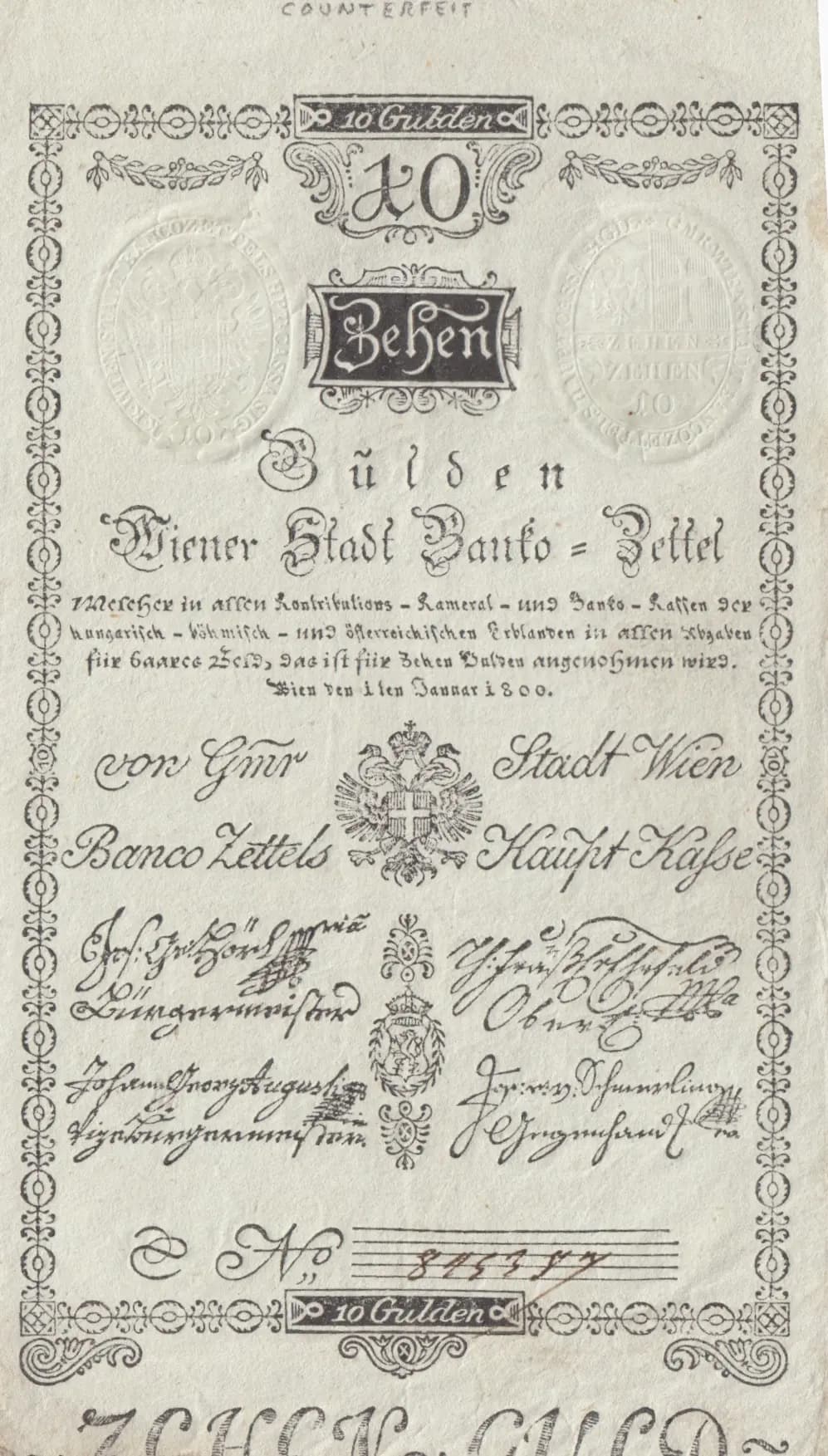
This specimen is marked as 'FORGERY v.7.' on the reverse, indicating it is a known counterfeit of the 1 Gulden Banco Zettel note rather than a genuine issue. It belongs to a cataloged series of forgeries of this type (version 7 of a counterfeit series). No unique authentic varieties are discernible from the images provided, though signature variations and serial number differences would typically distinguish between printing runs of genuine notes. The reverse marking suggests this note has been included in a reference collection or catalog of forged specimens for study and authentication purposes.