10 gulden 1800
Market Prices
About This Note
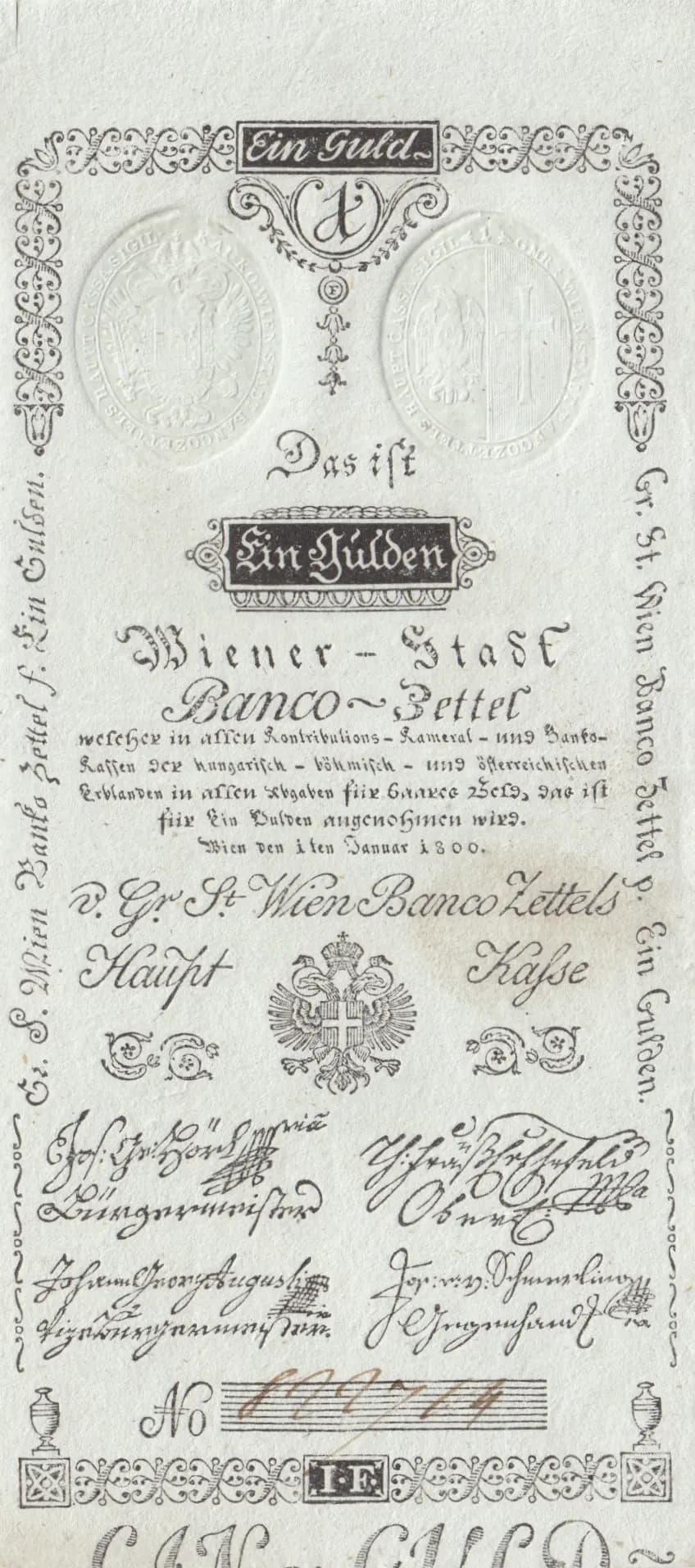
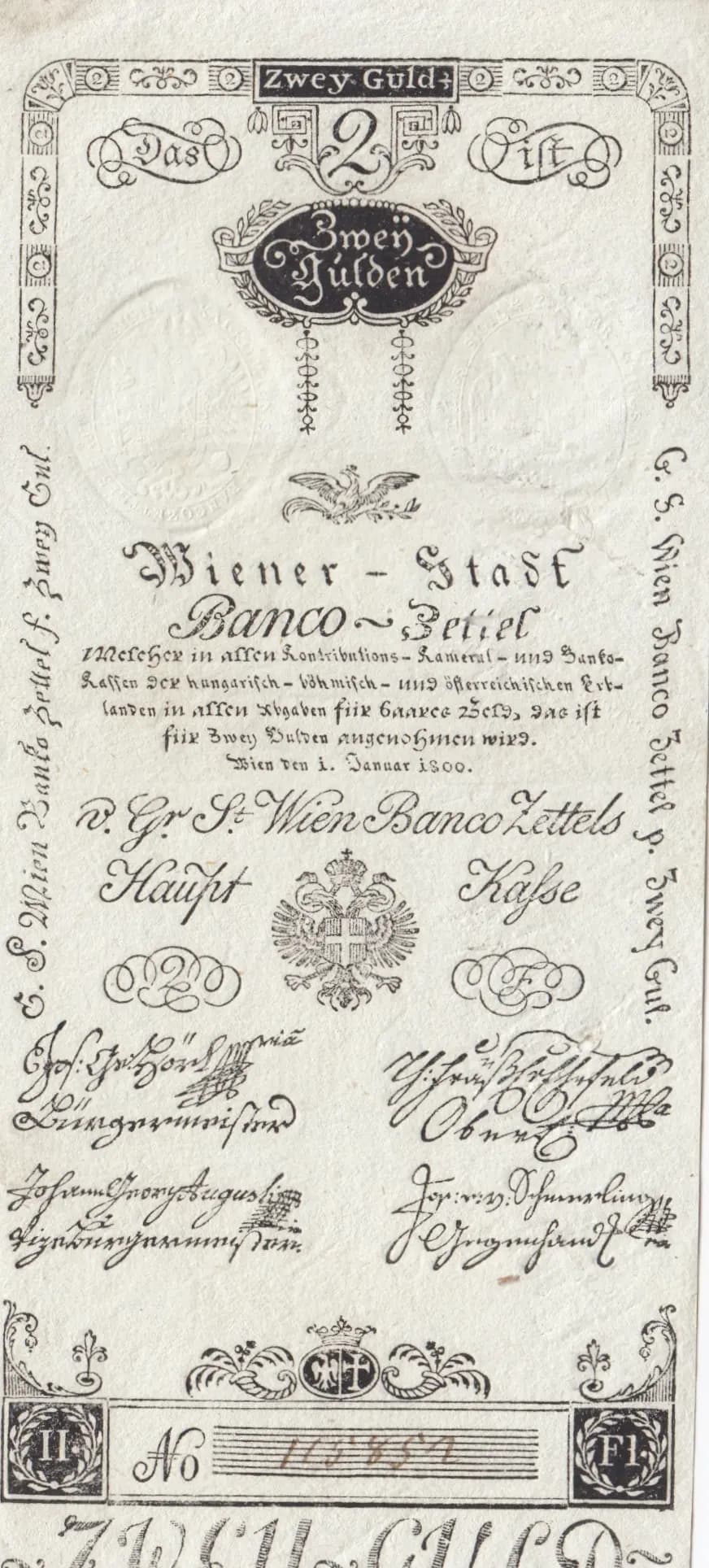
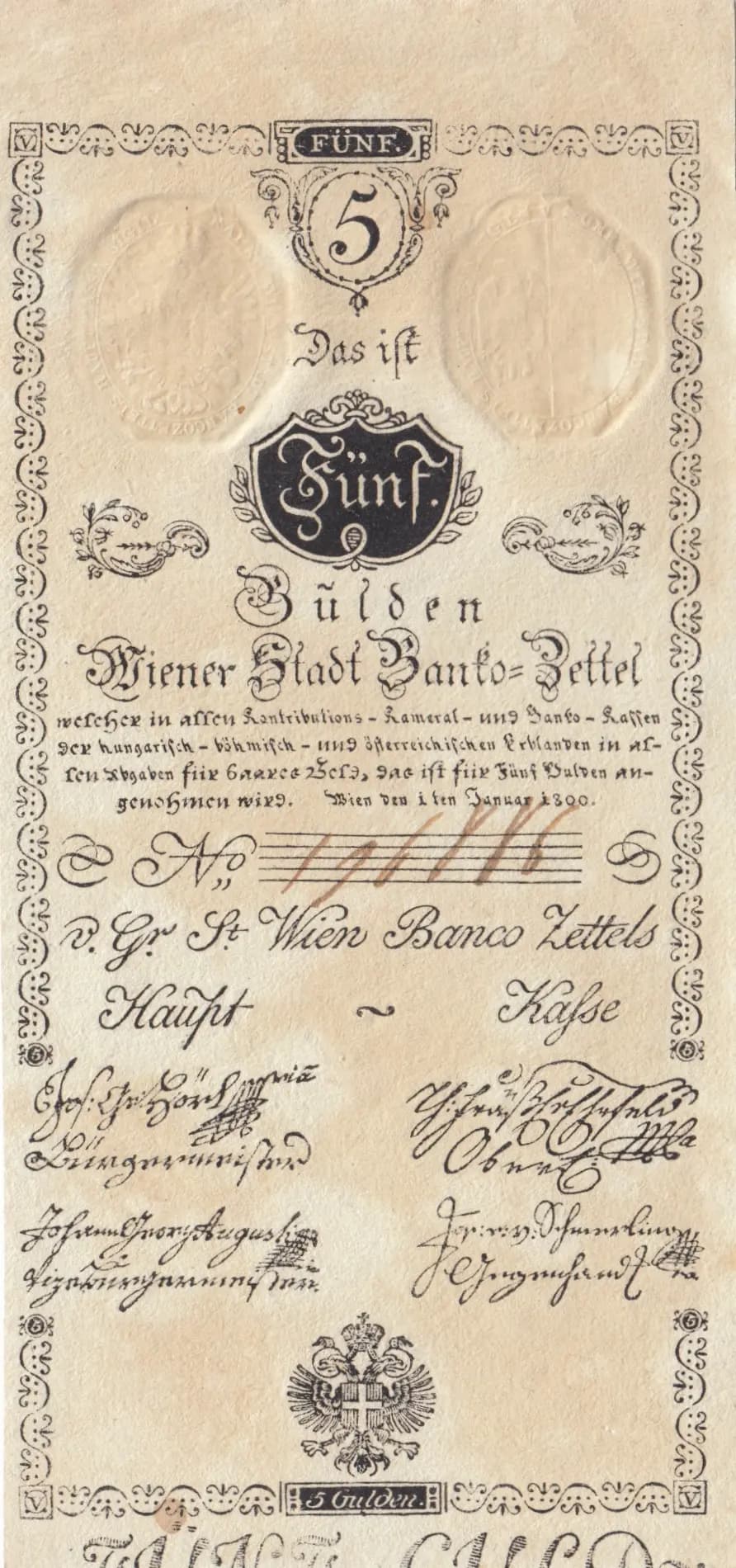
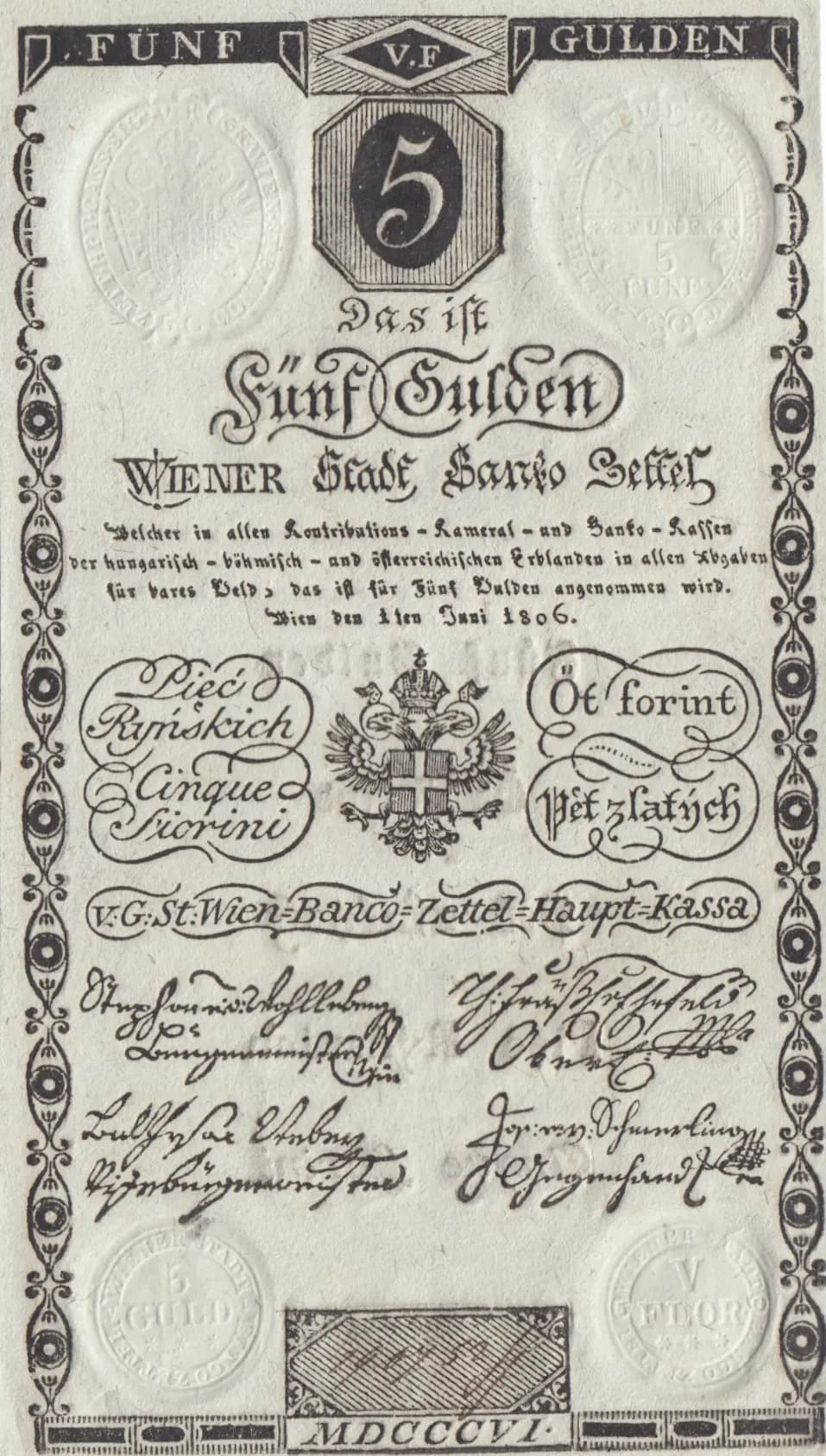
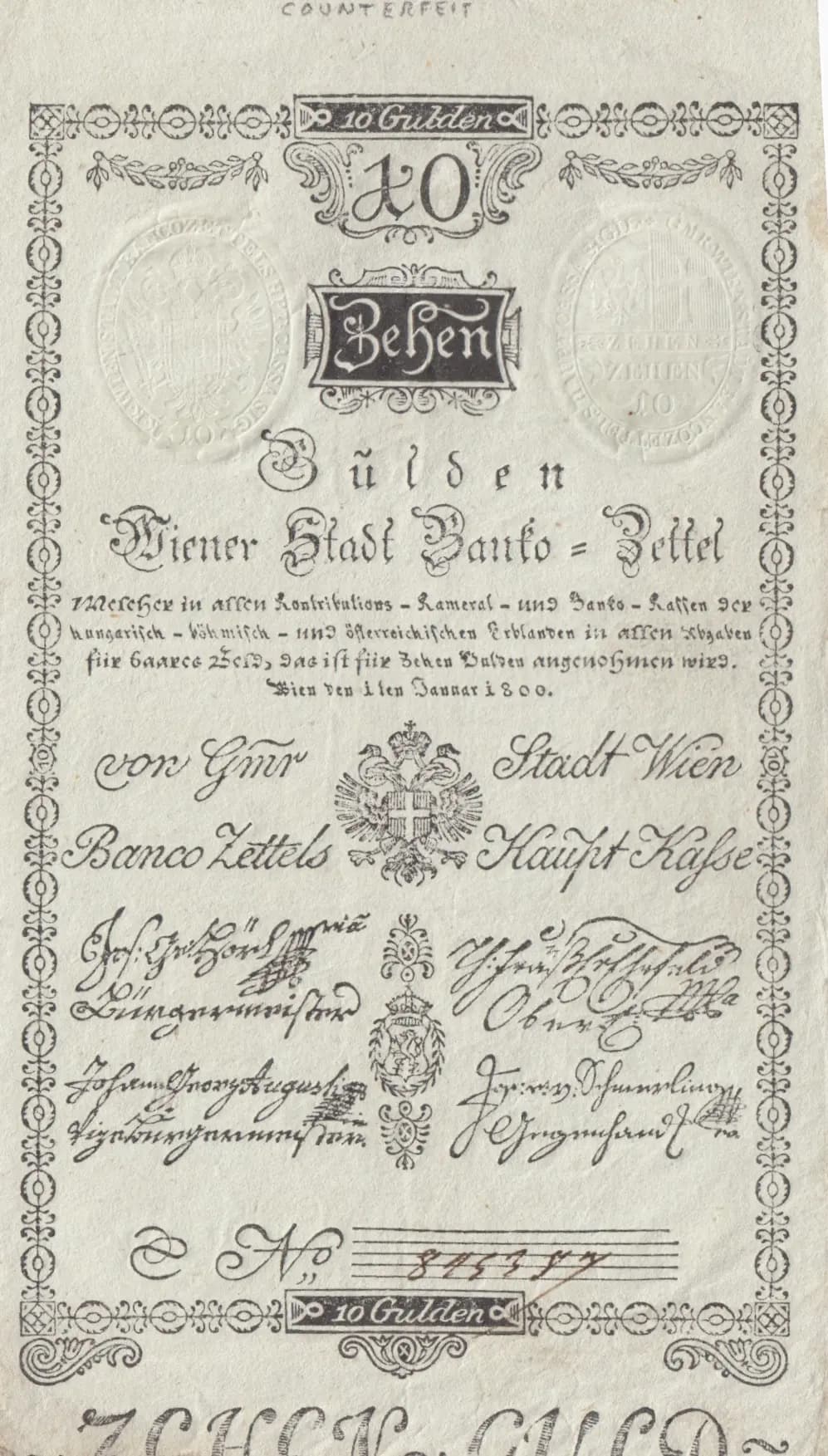
This is an Austrian 10 Gulden banknote from 1800, issued by the Vienna City Bank (Wiener Stadt Banco). The note features a predominantly black-printed design with an ornate decorative border and two large oval medallions containing watermark impressions. In VF condition as catalogued, the note exhibits significant age-related patina including foxing, cream-colored aging, and visible creases consistent with heavy circulation over more than two centuries, making it an authentic and well-preserved example of early 19th-century Austrian currency.
Common. The eBay price data provided shows a wide range ($121-$2500) indicating multiple examples in circulation on the secondary market, with several examples selling in the $121-$129 range. The 2016 catalogue values ($11 in G condition, $50 in F condition) demonstrate this is a regularly encountered note. The Wiener Stadt Banco produced these notes in substantial quantities during the early 1800s, and examples survive in reasonable numbers. The VF-graded specimen observed here aligns with the $225 EF catalogue value (suggesting VF examples trade somewhat below this), confirming this is a common issue despite its historical significance.
This banknote represents the Wiener Stadt Banco's currency system established in Vienna during the Austro-Hungarian Empire period. Dated January 1st, 1800, the note bears inscriptions indicating it was redeemable in the treasuries and chambers of Hungarian, Bohemian, and Austrian lands, reflecting the multi-national structure of the Habsburg Empire. The imperial double-headed eagle appearing multiple times on the obverse symbolizes the state authority backing these notes during a period of significant financial development in Central Europe.
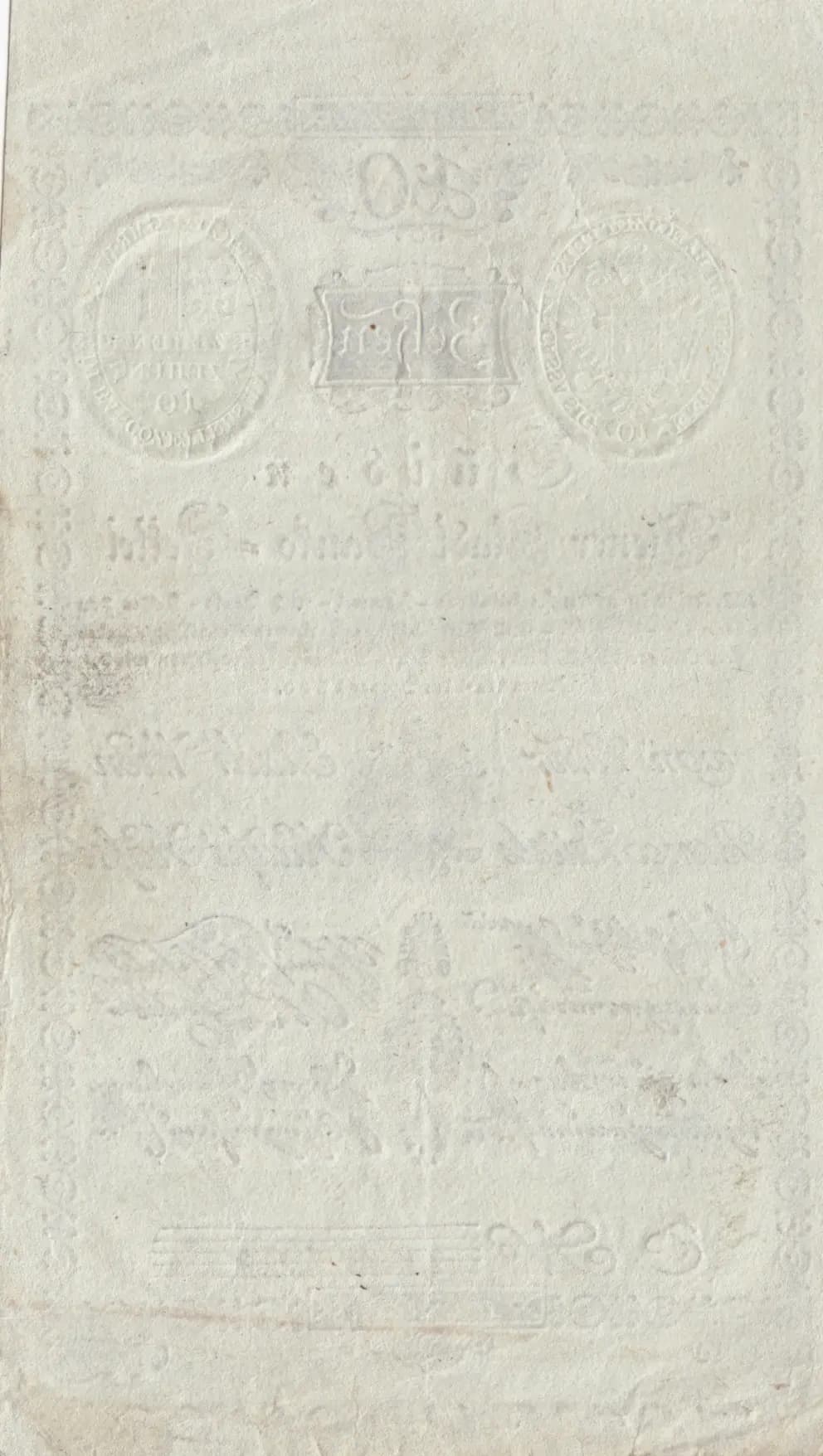
The obverse features a symmetrical composition centered on the denomination '10 Gulden' displayed prominently in an ornamental cartouche at the top. Two large oval medallions flank the central field, each containing watermark impressions with circular inscriptions around their perimeters—these served as security features. The imperial coat of arms (double-headed eagle with shield) appears multiple times throughout the design, reinforcing state authority. An ornate decorative border frames the entire note, consisting of repeating geometric and floral patterns typical of late 18th-century engraving. The lower portion contains redemption text in German, location and date information (Wien, 1800), and multiple official signatures. The reverse is largely blank except for the two prominent oval watermark impressions positioned symmetrically and a small central ornamental cartouche. The predominantly black printing on cream-colored paper is characteristic of the period's banknote production.
FRONT SIDE: '10 Gulden' (denomination in decorative cartouche at top); 'Behend' (meaning 'readily' or 'on demand', indicating redemption on demand); 'Gülden' (Gulden currency unit); 'Wiener Stadt Banco=Zettel' (Vienna City Bank Note); 'mercher in allen Restrictions Kamerai- und Banco-Kassen der hungarica böhmisch- und Oesterreichischen Landen in allen Gegenden fur Ganzes Wert, das ist für jeden Welschen angenohmen wird' (Redeemable in all restrictions chambers and Bank Treasuries of Hungarian, Bohemian and Austrian lands in all regions for full value, that is accepted by any person); 'Wien Den 1ten Jänner 1800' (Vienna, January 1st, 1800); 'von Ihrer Stadt Wien' (from Your City Vienna); 'Banco Zettels Haupt-Kasse' (Bank Note Main Treasury); Multiple official signatures (illegible). BACK SIDE: Predominantly blank with watermark impressions; minimal or illegible text elements.
Intaglio engraving (copper or steel plate engraving), which was the standard security printing method for banknotes in this era. The intricate decorative border patterns, fine line work in the oval medallions, and detailed inscriptions all display the hallmarks of intaglio printing. The watermark impressions visible on both sides indicate the use of specialized watermarked paper manufactured for this issue. The consistent, fine detail throughout suggests work by a skilled security printer of the Austrian imperial establishment, likely the Wiener Stadt Banco's official printing facility or an authorized imperial printer.
This specific note is dated 'Wien Den 1ten Jänner 1800' (Vienna, January 1st, 1800), representing the first issued date of this series. Varieties within the Pick A32 designation likely include different signature combinations of officials from the Banco Zettels Haupt-Kasse, though the signatures on this example are not legibly identifiable from the images. No specific overprints, rare signature combinations, or other distinguishing variety markers are evident in this specimen. The note represents the standard regular issue (Pick A32) without notable varieties.