10 kronen 1818 Kärnten
About This Note
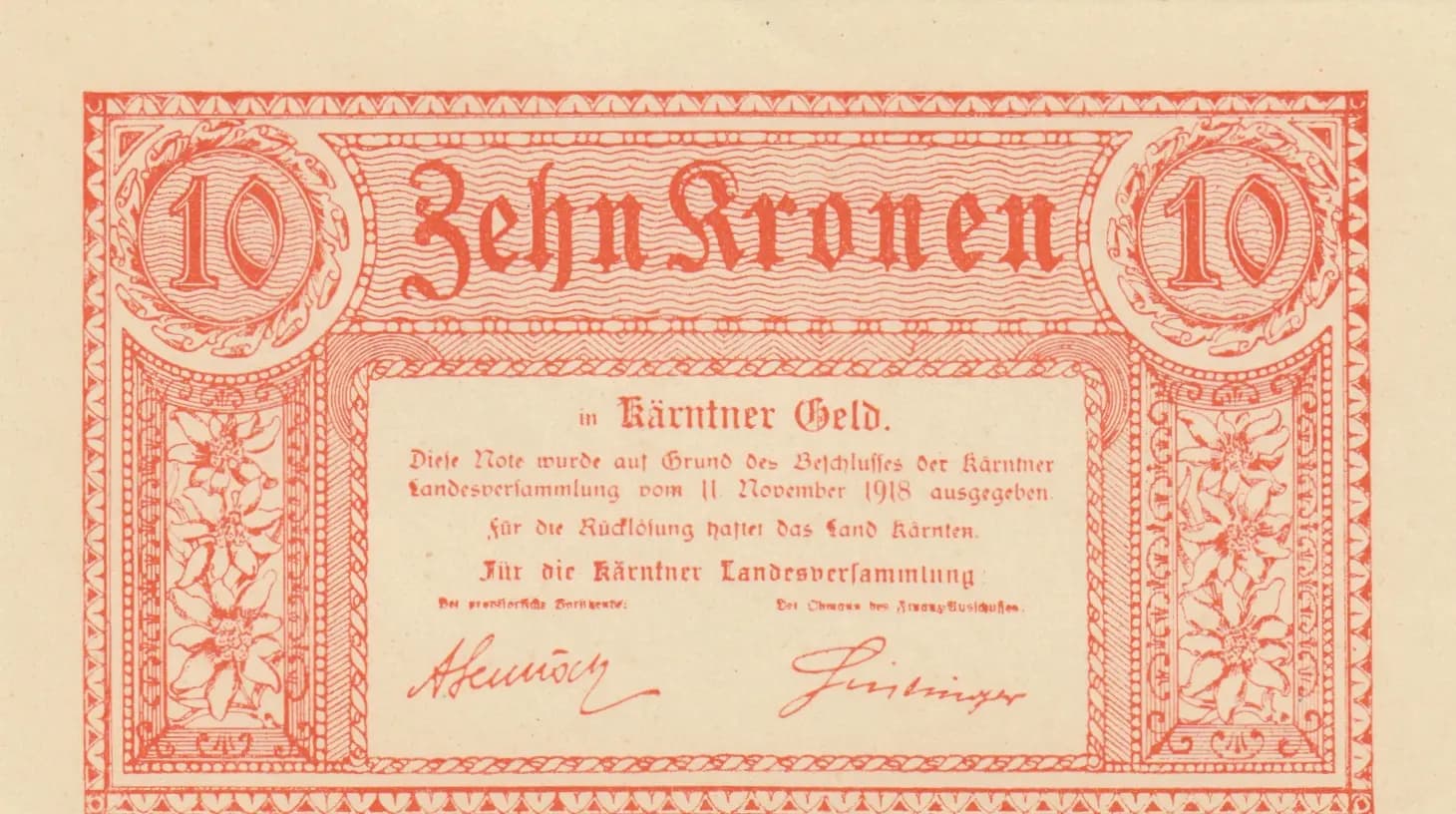
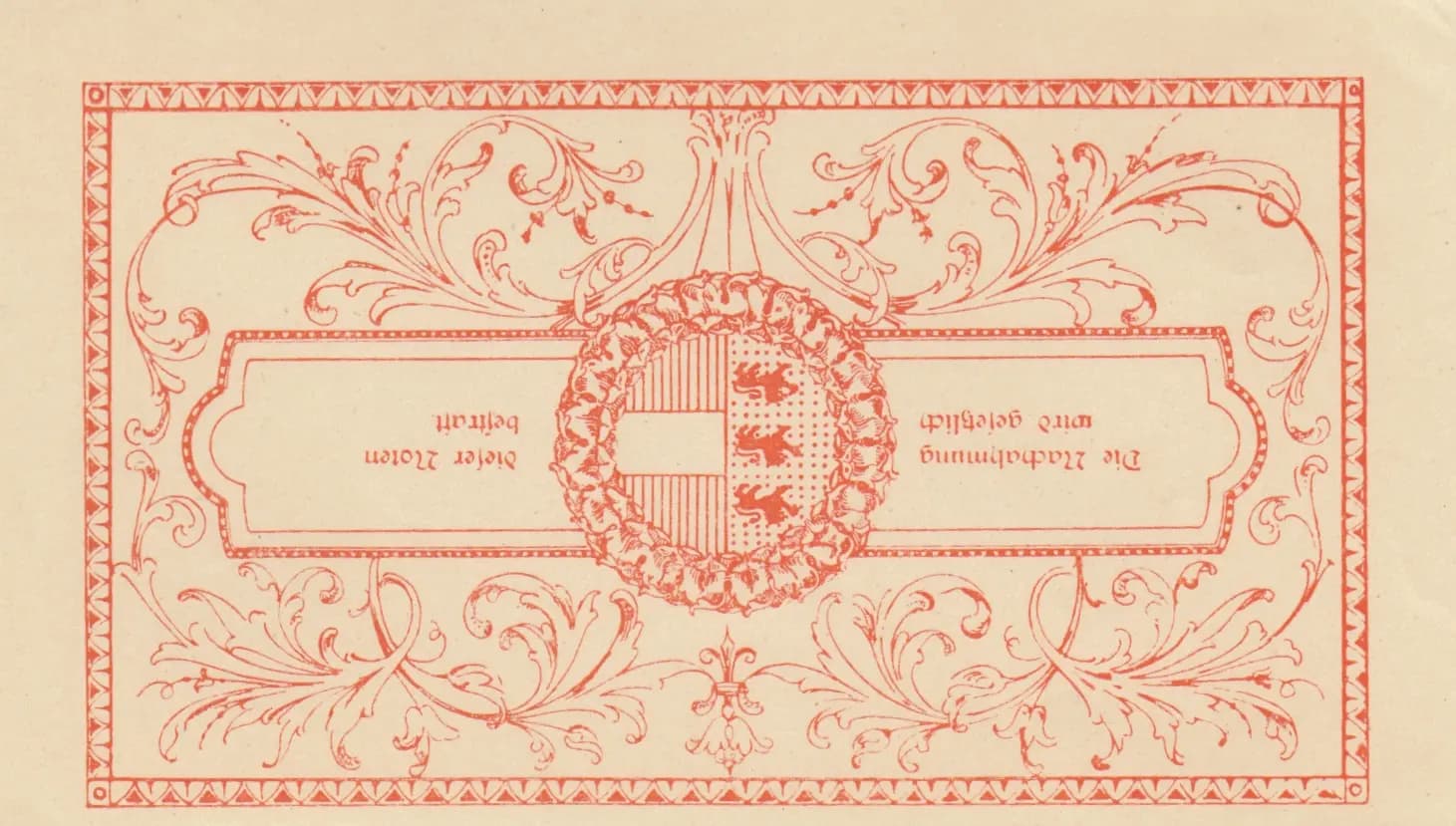
This is an exceptional example of an Austrian Carinthian emergency currency note from 1818 (post-WWI period), graded AU with pristine condition showing no circulation wear. The note features an elegant two-color design in red/coral and cream with ornate border work, denomination numerals in corner medallions, and centered Gothic-script text reading 'Zehn Kronen' (Ten Crowns). The reverse displays an impressive heraldic medallion and scrollwork, with this particular specimen bearing what appears to be an official signature of Peter Letononi as State Governor, making it an outstanding example of Carinthian regional currency from this historically significant transitional period.
Common. Carinthian emergency notes from 1918-1920 were issued in substantial quantities to serve regional monetary needs during the post-war transition period. Multiple denominations (including this 10 Kronen) and various printings ensured adequate circulation. While these notes are historically significant and increasingly collectible, they were not short-lived issues nor subject to mass recall, and examples survive in reasonable quantities. The AU condition grade observed here is desirable but not exceptionally rare for these notes, as many were preserved in institutional collections or hoards without circulation wear.
This 10 Kronen note represents Carinthian emergency currency issued following the November 11, 1918 resolution of the Carinthian State Assembly during the collapse of the Austro-Hungarian Empire. The note's formal design with the State Governor's seal and Finance Committee authorization reflects Austria's chaotic post-war period when regional authorities issued their own currency due to economic disruption and the need for localized monetary control. The heraldic imagery on the reverse, featuring Carinthian regional symbols, underscores the state's assertion of autonomy during the transition from imperial to republican governance.
The note employs a symmetric, formally elegant design centered on institutional authority rather than portraiture. The front features the denomination '10' displayed prominently in circular medallions at the upper corners, with 'Zehn Kronen' in decorative Germanic script as the central text element. Official authorization text occupies a rectangular cartouche in the lower center with spaces for two handwritten signatures of the Finance Committee representatives. The reverse showcases a large ornamental circular heraldic medallion—likely featuring the Carinthian coat of arms or regional shield—surrounded by elaborate scrollwork, rococo-style flourishes, and a secondary cartouche containing the State Governor's title and signature. The consistent ornate border treatment on both sides employs fine floral and geometric engraved patterns in red/coral against a cream background, creating a unified, official appearance befitting emergency state currency.
FRONT SIDE: '10' (denomination numeral); 'Zehn Kronen' (Ten Crowns); 'in Kärntner Geld' (in Carinthian currency); 'Diese Note wurde auf Grund des Beschlusses der Kärntner Landesversammlung vom 11 November 1918 ausgegeben für die Rückleitung hatte das Land Kärnten' (This note was issued on the basis of the resolution of the Carinthian State Assembly of November 11, 1918, for the return of which the state of Carinthia was responsible); 'Für die Kärntner Landesversammlung' (For the Carinthian State Assembly); 'Der Präsident der Landesversammlung' (The President of the State Assembly); 'Der Obmann des Finanz-Ausschusses' (The Chairman of the Finance Committee). BACK SIDE: 'Der Landeshauptmann' (The State Governor); 'Peter Letononi' (signature/name of official).
The note was produced using intaglio engraving (line-engraving) for the primary design elements, as evidenced by the detailed, intricate line-work visible throughout the border patterns, medallion designs, and ornamental flourishes. The red/coral and black printing on cream paper stock is characteristic of Austrian regional emergency currency printing from this period. The fine detail quality of the heraldic medallion and the precision of the decorative borders suggest work by an established security printer, likely the Österreichische Staatsdruckerei or a similar official Austrian printing facility, though specific printer attribution for Pick S102 requires additional catalog research.
This specific specimen is identified by the signature of Peter Letononi as Landeshauptmann (State Governor) on the reverse. Carinthian emergency notes are known to exist with variations in signature combinations of state officials, as different administrators approved notes at different times during the 1918-1920 issuance period. The handwritten signatures of the Assembly President and Finance Committee Chairman on the front would also create minor varieties. Collectors should note that while the core design of Pick S102 remained consistent, signature variations represent distinct administrative periods and may affect collector value incrementally, though all are common within the series.