1000 rublei 1919
Market Prices
About This Note
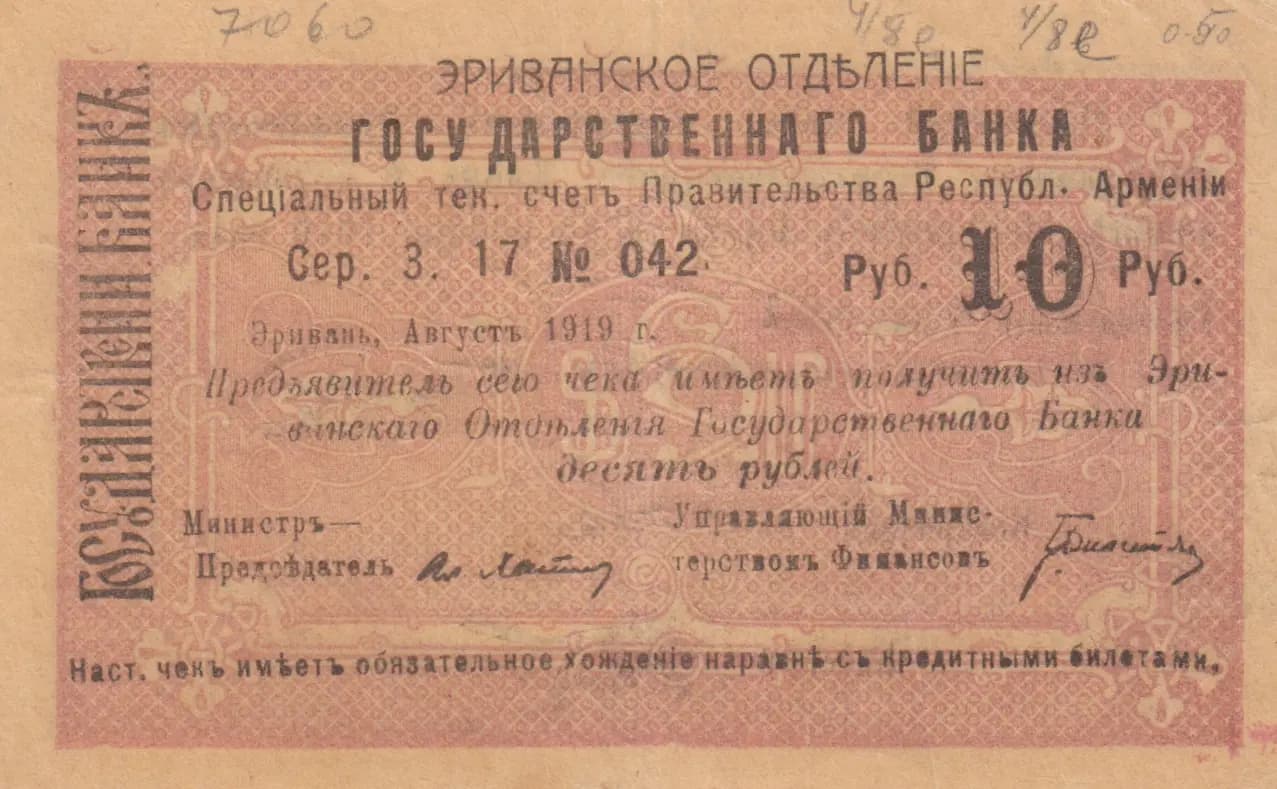
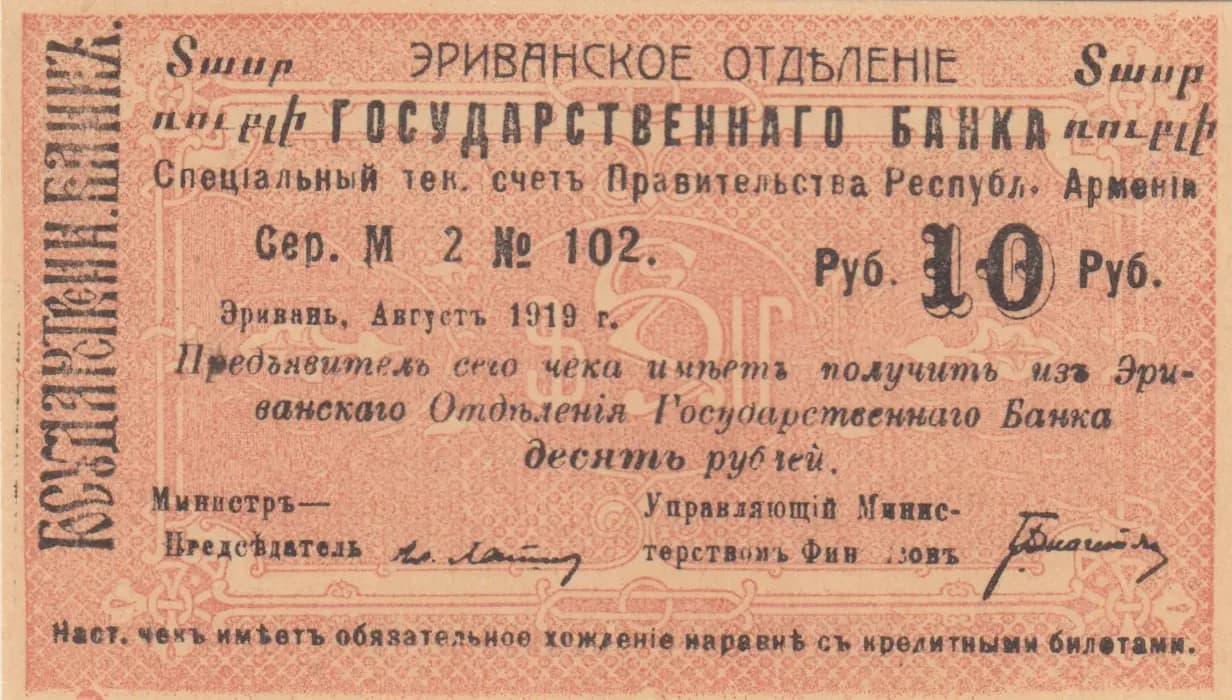
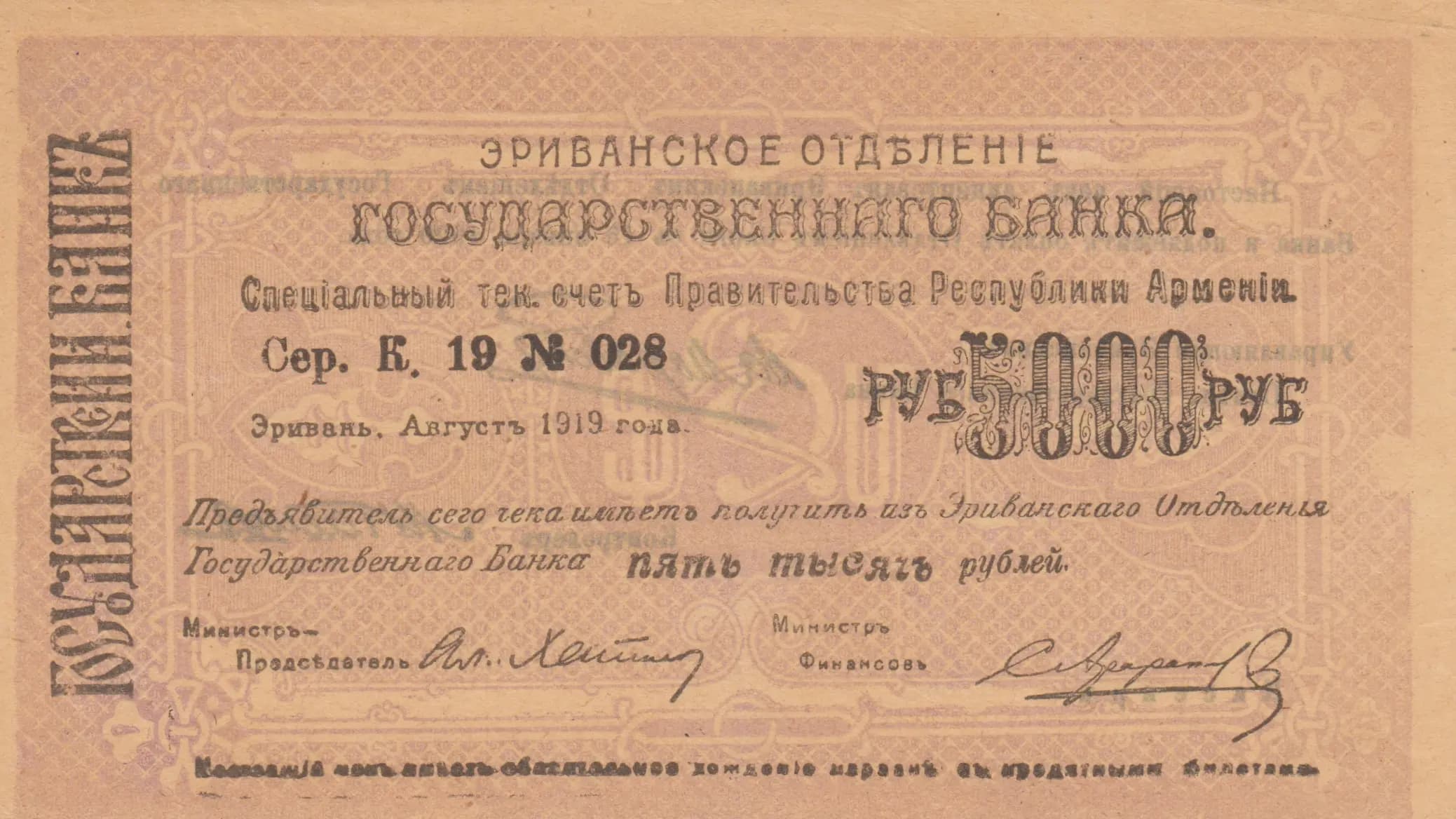
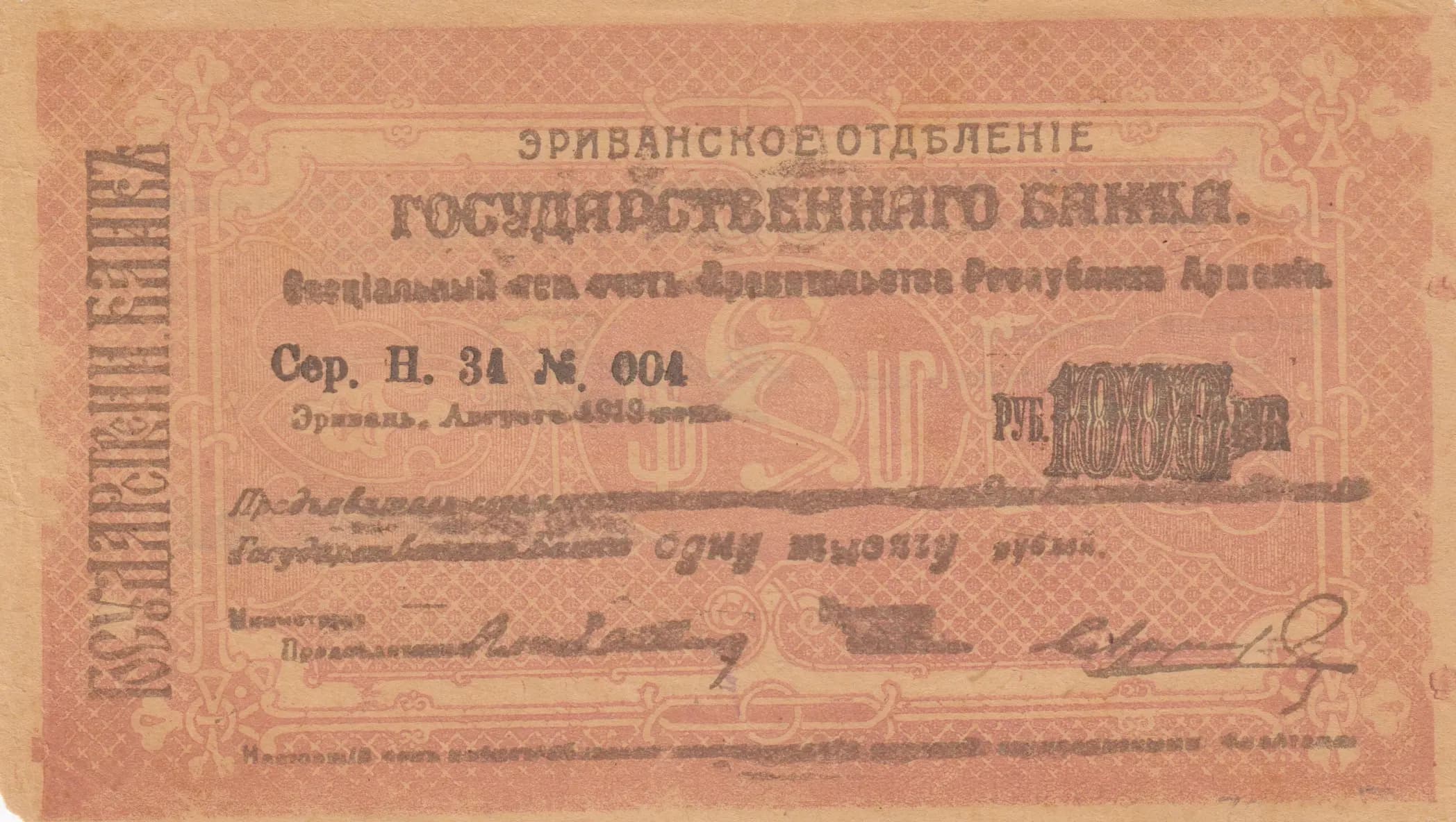
A 1000 Rublei note issued by the Erivan Branch of the Government Bank in August 1919, representing a fascinating piece of Armenian monetary history during the brief independence period. The note displays classical ornate design with tan and brown coloring, featuring decorative borders and geometric patterns typical of early 20th-century Russian imperial banking traditions. In VF condition, this example shows appropriate age-related wear with creasing and foxing, while maintaining good legibility of all inscriptions and signatures.
Common. Multiple eBay sales listings document this note trading regularly in the $33-$100 range across various grades, with VF specimens specifically noted at $99.99. The Catalogue 2016 value of $35 (F grade) and $70 (EF grade) confirms consistent market availability. This is a regular issue note from the Erivan branch with substantial print runs during 1919, and no evidence suggests limited production or high-grade scarcity. The note's historical interest exceeds its numismatic rarity.
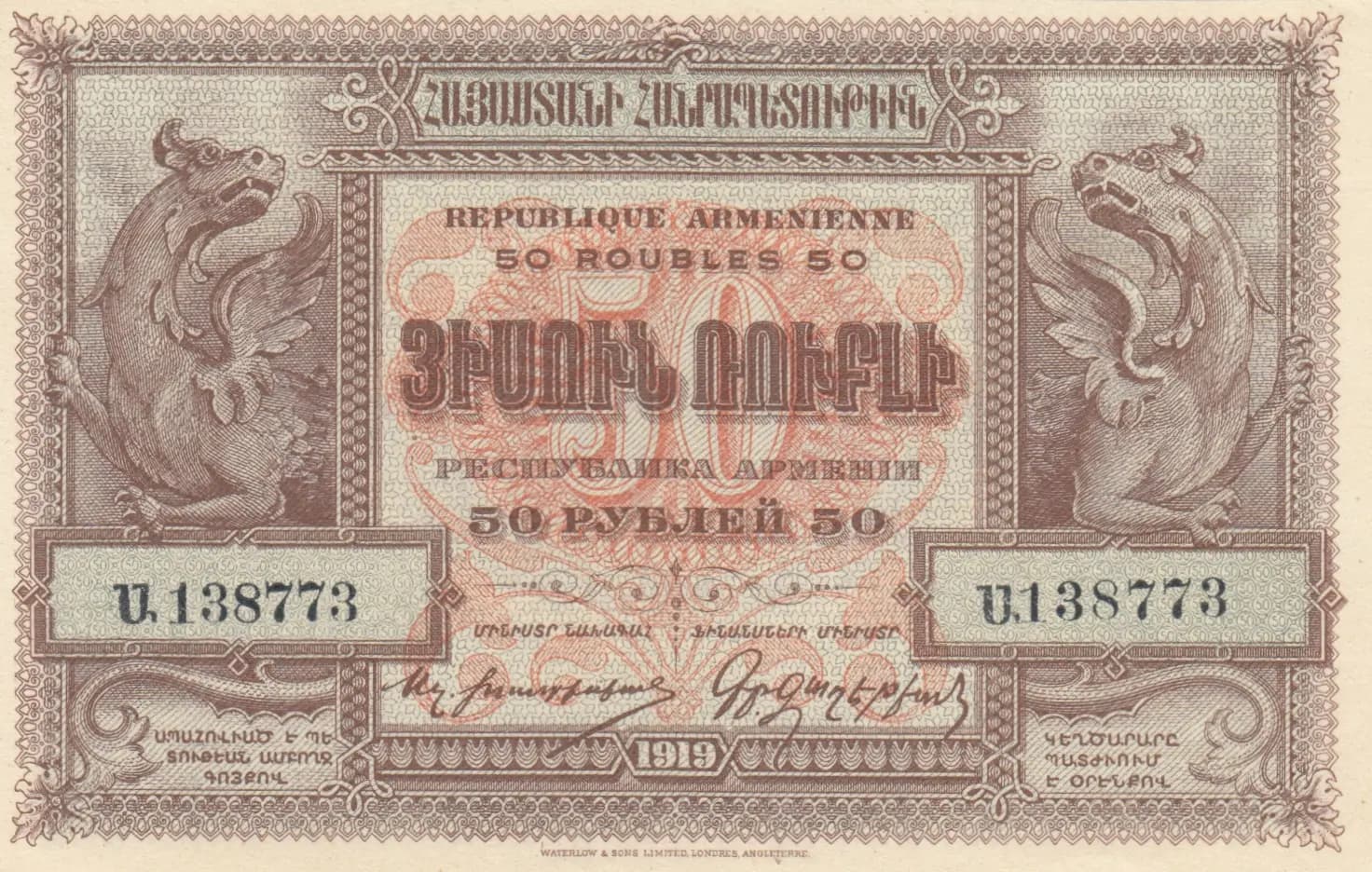
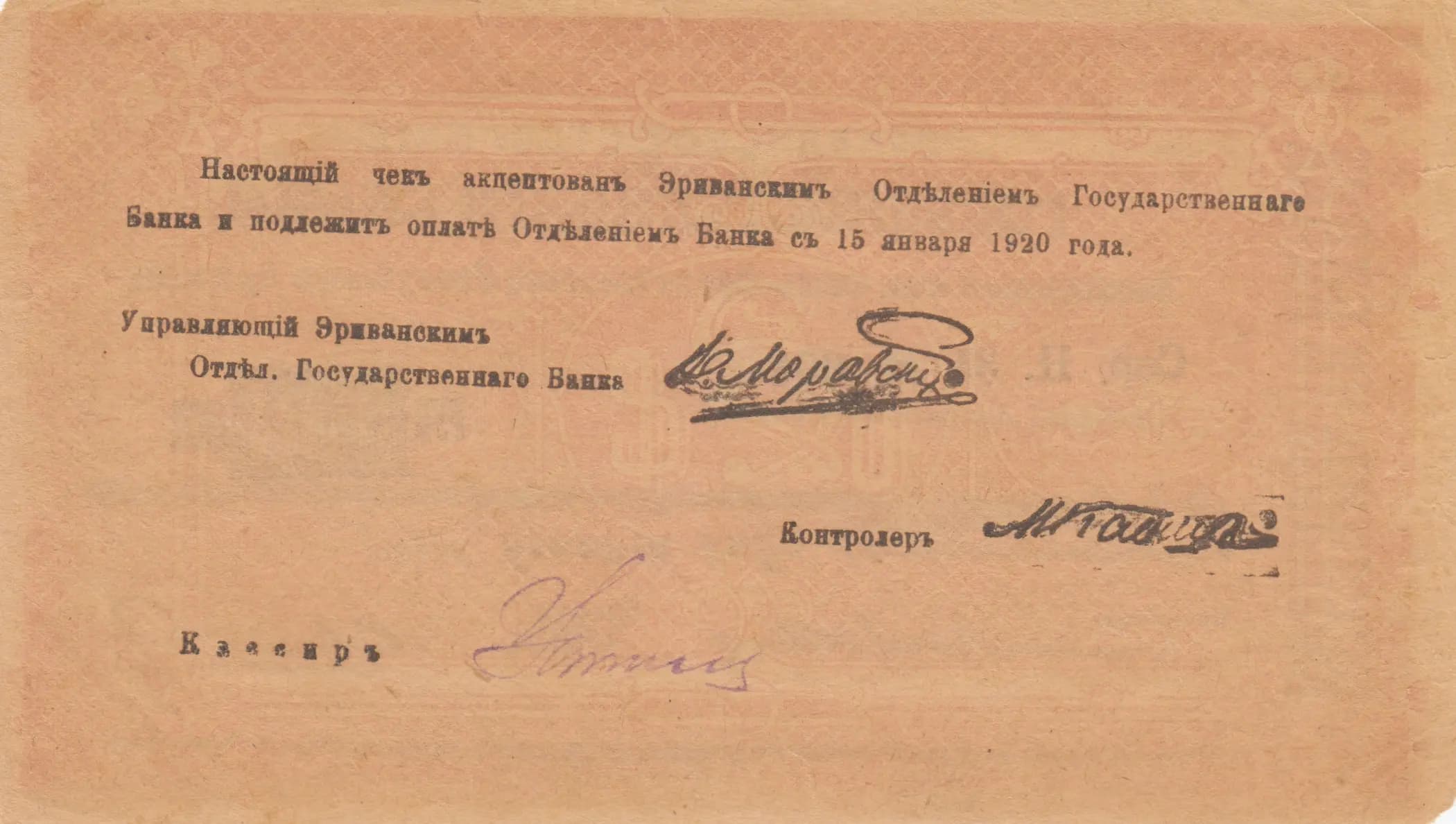
This banknote was issued during Armenia's brief independence period (1918-1920) following the Russian Revolution and Ottoman withdrawal. The Erivan (Yerevan) branch of the Russian State Bank continued operations under the new Armenian administration, issuing these notes with dual-language documentation reflecting the transitional political status. The back of the note indicates a payment validity date of January 15, 1920, marking the final months before Armenia's absorption into the Soviet Union, making this a poignant example of Armenian national autonomy.
The obverse features a classical ornate design with no portraits or architectural landmarks, instead relying on decorative elements consistent with Russian imperial banking practice. The design is dominated by an intricate guilloche pattern background with geometric diamond/lattice motifs and elaborate scrollwork elements providing security through complexity. The large denomination numeral appears prominently on the right side. Three handwritten signatures appear on the reverse—representing the manager, controller, and cashier of the Erivan branch—providing authentication in the administrative style typical of Russian State Bank operations. The tan/beige base color with brown printing and light violet underprint (noted in secondary sources) creates visual distinction while the formal document layout on the back resembles a bank check or acceptance certificate rather than a traditional banknote.
FRONT: 'ЭРИВАНСКОЕ ОТДЕЛЕНИЕ ГОСУДАРСТВЕННОГО БАНКА' (Erivan Department of the State Bank) | 'Официальный лист части Фронтального Республики Армении' (Official document of the Armenian Republic) | 'Сер. Н. 34 № 004' (Series N. 34 No. 004) | 'Эривань, Августа 1919-год' (Erivan, August 1919) | 'РУБ. 10000' (10,000 Rubles) [Note: Denomination discrepancy between catalog designation of 1000 and visual observation of 10000]. BACK: 'Настоящий чек акцептован Эриванским Отделением Государственного Банка и подлежит оплате Отделением Банка со 15 января 1920 года.' (This check is accepted by the Erivan Department of the State Bank and is subject to payment by the Bank Department from January 15, 1920) | 'Управляющий Эриванским Отд. Государственного Банка' (Manager of the Erivan Department of the State Bank) | 'Контролер' (Controller) | 'Кассир' (Cashier)
Letterpress printing with hand-applied signatures, characteristic of Russian State Bank notes of the period. The ornate guilloche patterns and geometric backgrounds suggest engraved plates typical of official security printing practices. The light violet underprint on the reverse indicates a separate printing pass, adding a minimal security layer. No specific security printer is documented for this regional issue, as production likely occurred at existing Erivan branch facilities using imperial-era equipment and plates.
This specimen is identified as Series N. 34, No. 004, representing the base P-27 variety. PMG has catalogued variants P-27b and P-27c, though the specific distinguishing characteristics between varieties are not definitively documented in available sources. Possible variants may relate to signature combinations, series/serial number ranges, or subtle printing differences. The August 1919 date and Erivan branch designation are consistent with the primary issue type, and the January 15, 1920 validity date on the back matches the standard P-27 documentation.