500 fils 1965
Market Prices
10 salesAbout This Note
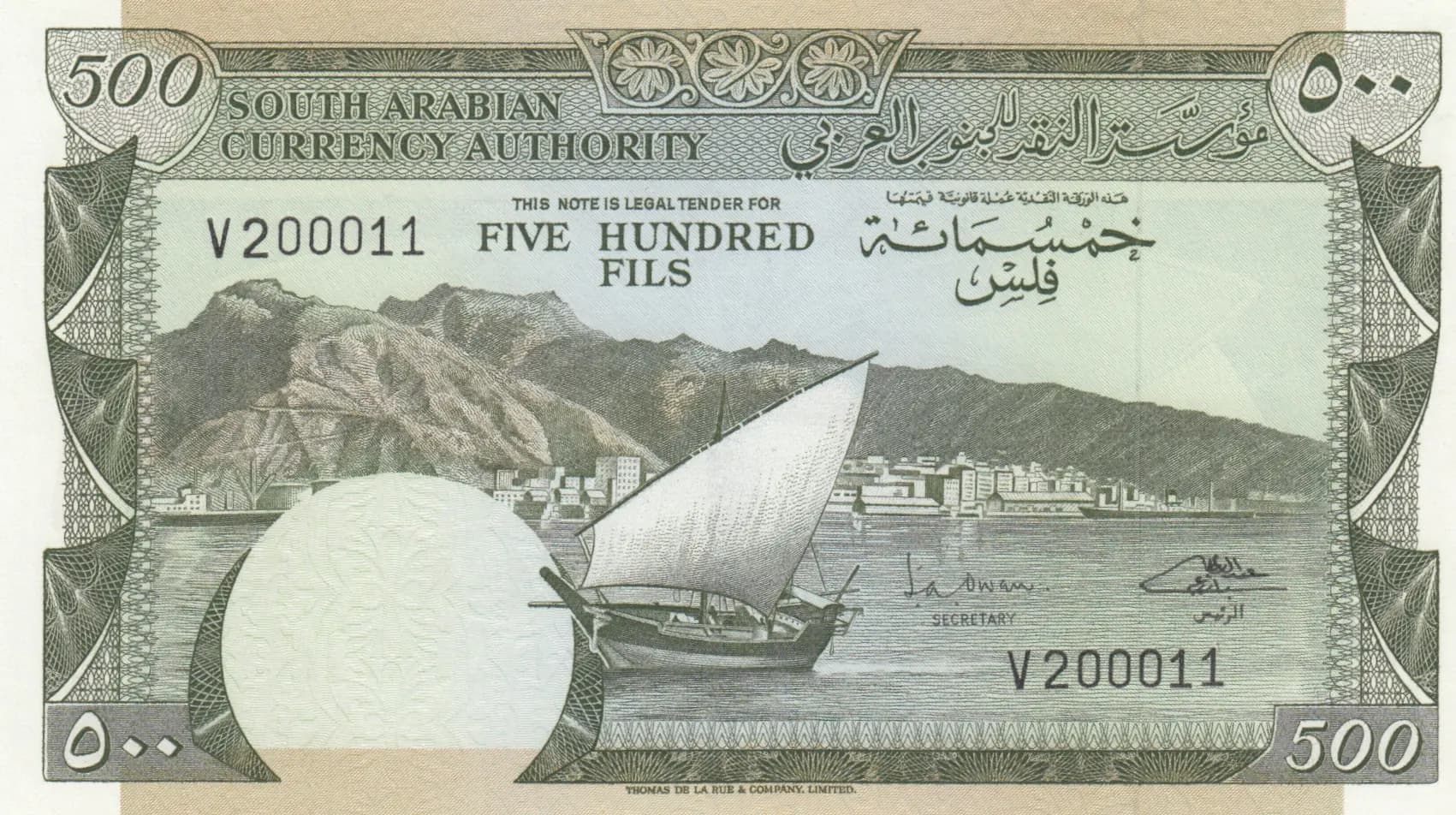
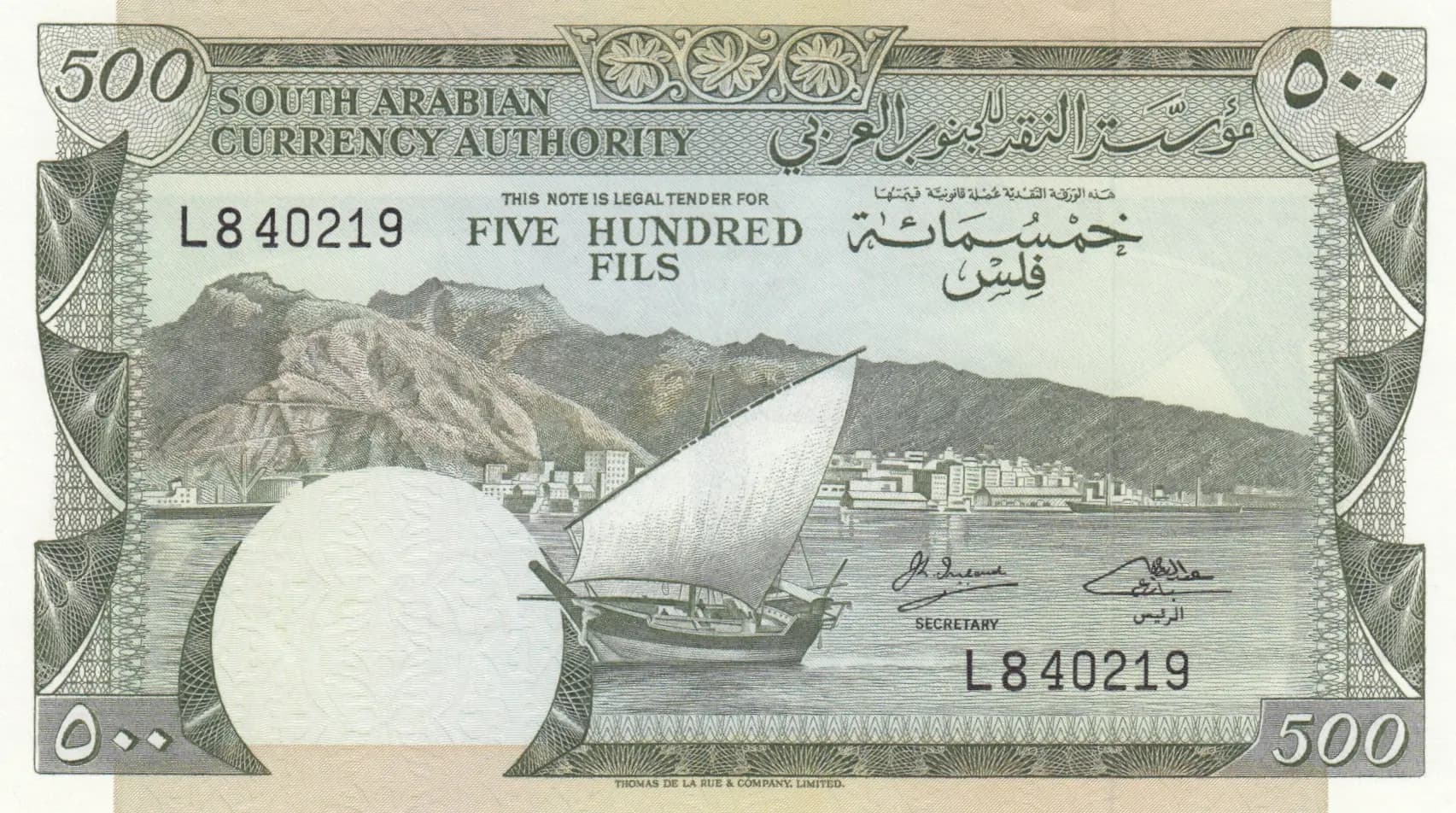
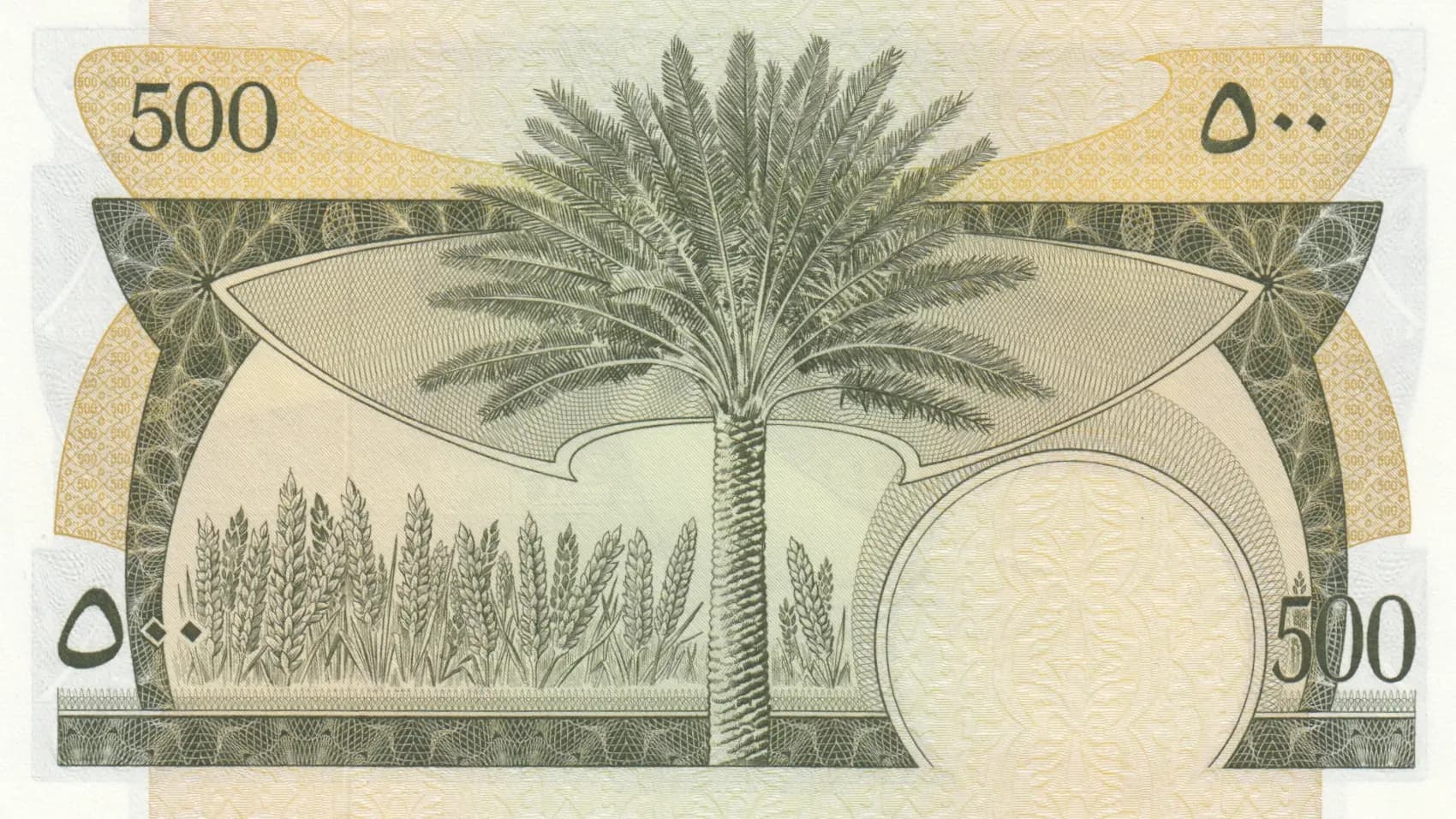
A stunning uncirculated example of the South Arabian Currency Authority's 500 fils note from 1965, featuring a picturesque harbor scene with traditional dhow vessel on the obverse and agricultural imagery centered on a date palm tree on the reverse. The note exhibits pristine condition with sharp, detailed engraving throughout, vibrant multicolored printing on green and tan underprints, and no signs of circulation or wear. This is a significant piece from the brief existence of South Arabian currency, issued during a transitional period in Yemen's political history.
Common. While this note represents a historically significant issuer with a brief operational period (1965-1967), the eBay price history indicates moderate market circulation and availability. Recent sales prices for UNC examples range from $125.50 to $177.50 (with older 2012-2016 sales at the higher end), while VF and lower grades consistently sell for $7-$75, demonstrating steady but not exceptional demand. The catalog value of $300 for UNC examples and the regular appearance of this note at auction suggest it was issued in sufficient quantities to remain accessible to collectors, despite its historical interest.
The South Arabian Currency Authority was established to serve the Federation of South Arabia during the final years of British colonial administration in the region (1965-1967). The note's imagery reflects the economic and cultural identity of South Arabia—the harbor scene represents the strategic importance of coastal trade and maritime commerce (likely depicting Aden), while the date palm and wheat motifs emphasize the agricultural foundations and natural resources of the Arabian Peninsula. This denomination and issuer ceased operations following South Arabia's independence and unification with North Yemen in 1990.
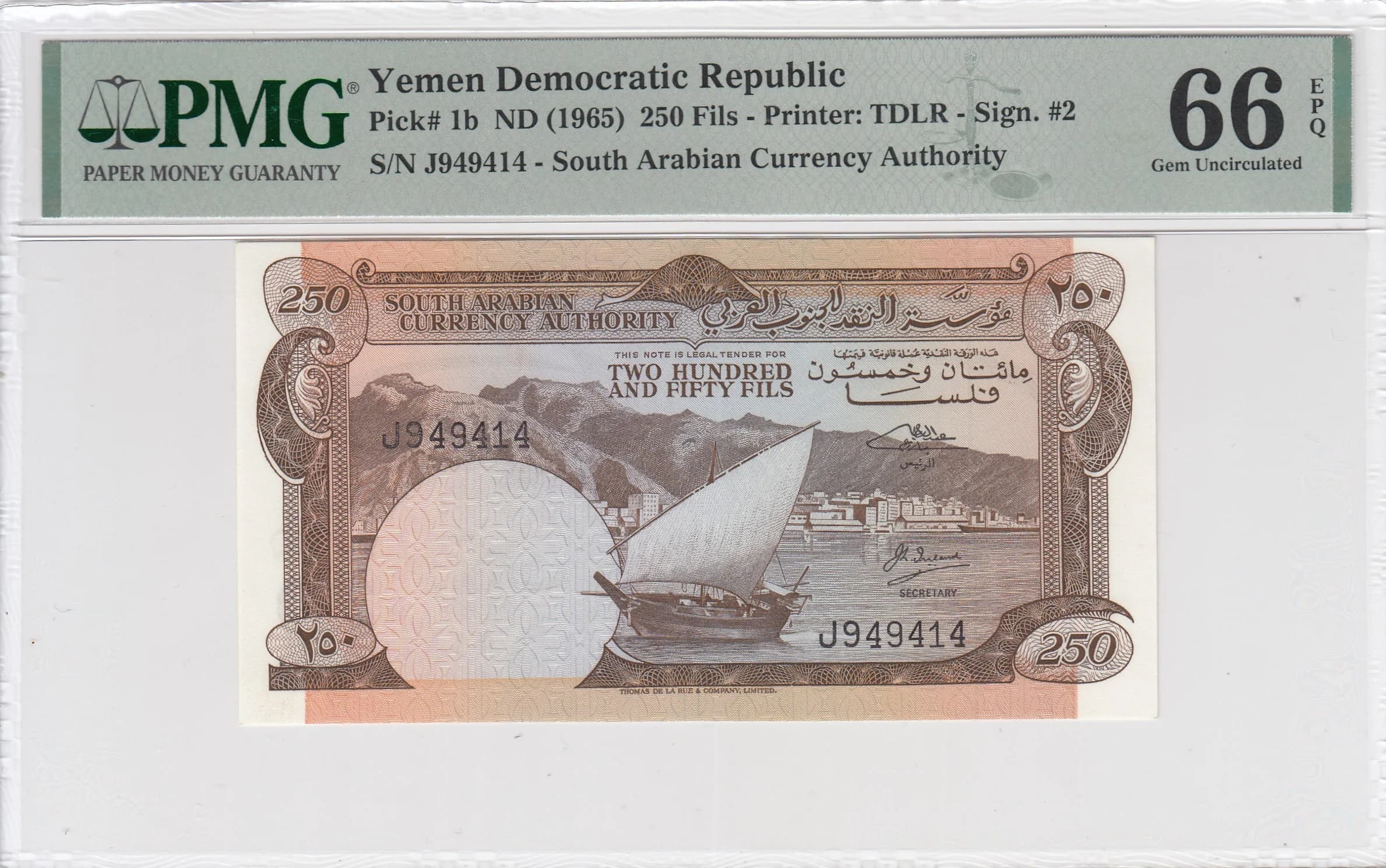
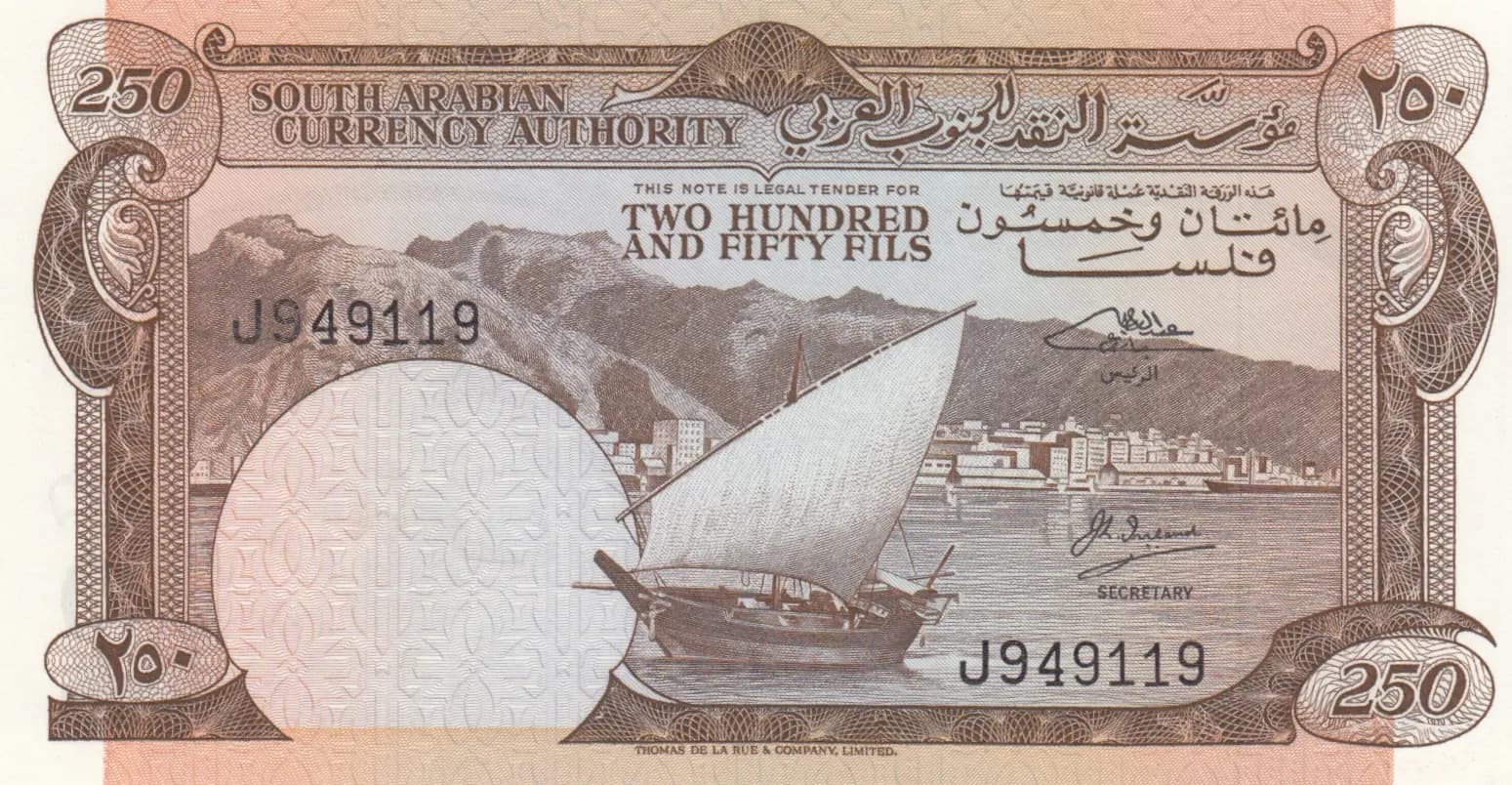
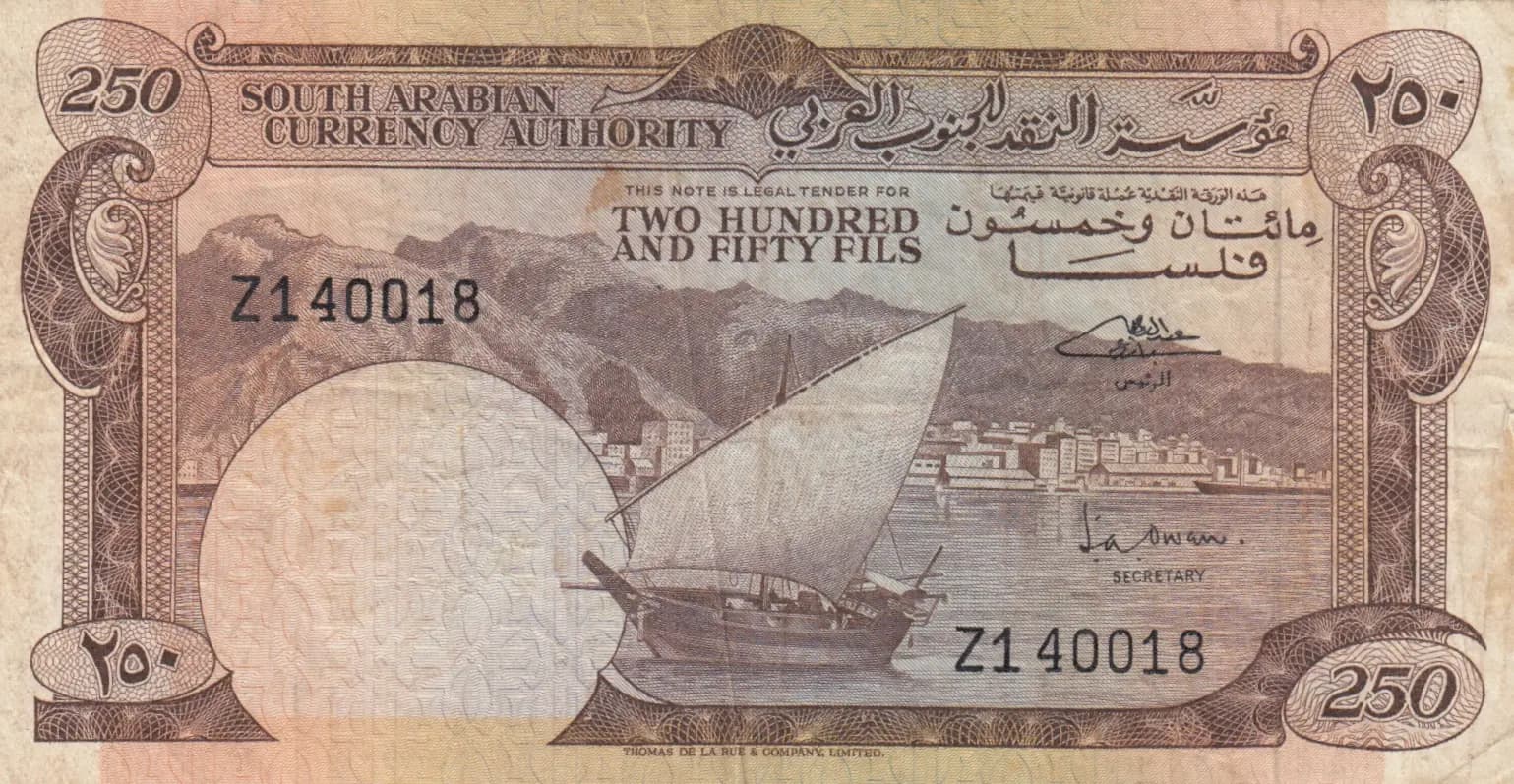
The obverse presents a bustling harbor scene centered on a traditional Arab sailing dhow with a single sail, the vessel positioned in shallow coastal waters with a mountain range in the background and multi-story waterfront buildings representing the urban development of Aden or another major South Arabian port city. Decorative floral ornamental designs frame the top center, while geometric corner ornaments occupy all four corners, with a circular watermark area visible on the left side. The reverse features a prominent date palm tree as the focal point, flanked by sheaves of wheat or grain on the left, symbolizing agricultural prosperity. Both sides incorporate intricate guilloche patterns, fine-line engraving, and geometric borders with wavy decorative elements, emphasizing the note's security features and artistic quality.
Front: 'SOUTH ARABIAN CURRENCY AUTHORITY' (English), 'سلطة النقد بجنوب اليمن' (Arabic: South Arabian Currency Authority), '500' and 'خمسماية فلس' (Arabic: Five Hundred Fils), 'THIS NOTE IS LEGAL TENDER FOR FIVE HUNDRED FILS' (English), 'SECRETARY' (English signature line), Serial number 'L840219' (printed twice). Back: '500' and '٥٠٠' (Arabic numerals: 500, printed in multiple locations). Printer credit: 'THOMAS DE LA RUE & COMPANY, LIMITED.'
Intaglio engraving and letterpress, executed by Thomas de la Rue & Company Limited, a renowned British security printer. The fine line work, detailed botanical and architectural illustrations, complex background hatching, and decorative guilloche patterns visible throughout are characteristic of high-security intaglio production. The multicolored printing technique employed (green and tan underprints with black and additional colors) demonstrates the advanced security printing capabilities of the period.
The observed specimen displays serial number L840219, with the 'L' prefix indicating a specific print run or series designation. Pick catalog P-2b indicates this is the 'b' variety of Pick 2, likely distinguished by signature variants, date variations, or printer information changes. The note's 1965 date aligns with the catalog designation, though external references note ND (No Date) issues from 1964 and 1967, suggesting this dated example may represent a specific variety within the series. Collectors should note the specific signature block, serial prefix, and any watermark variations when cataloging individual examples.