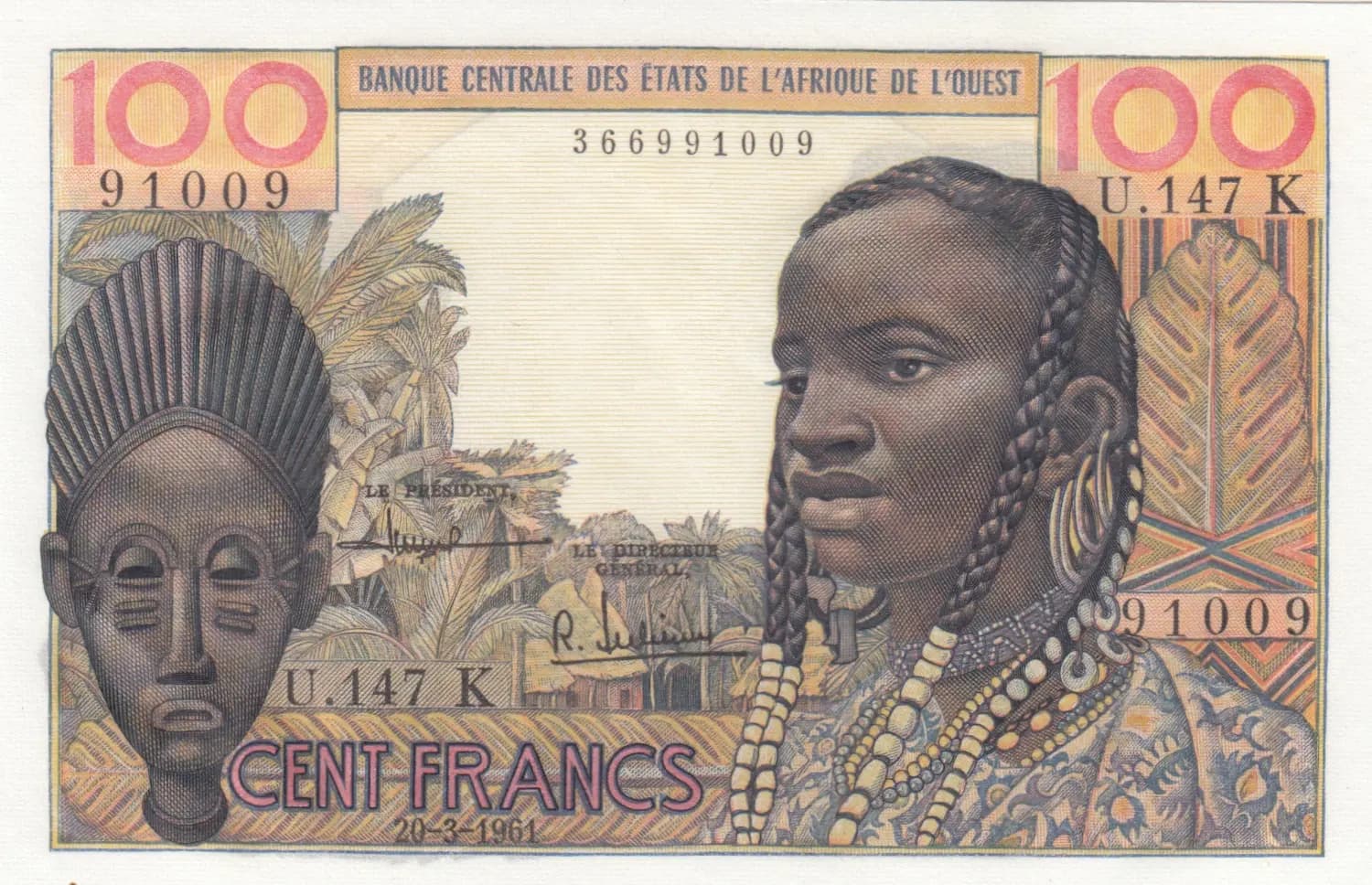
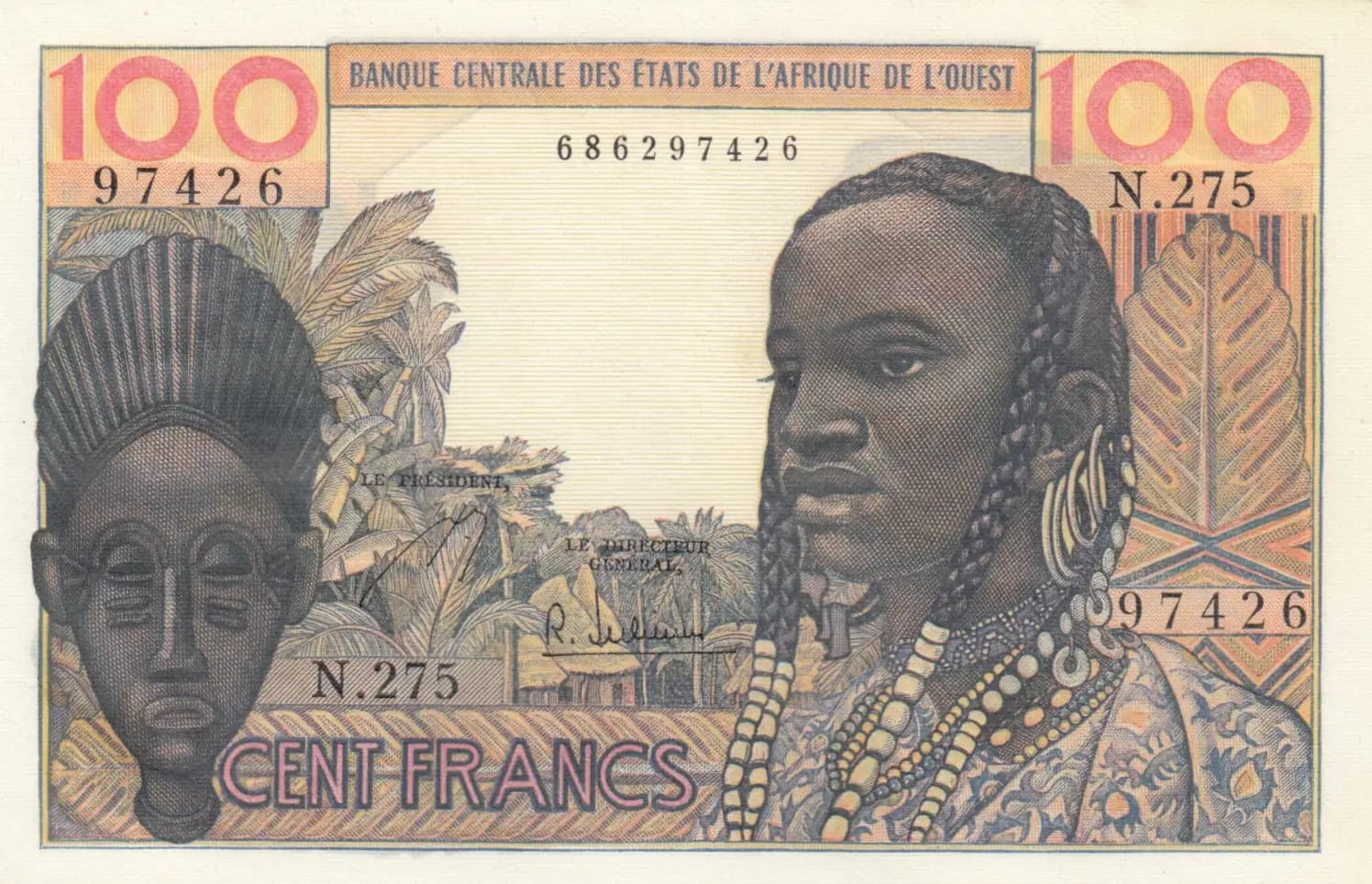
100 francs 1964
“Senegal”
About This Note
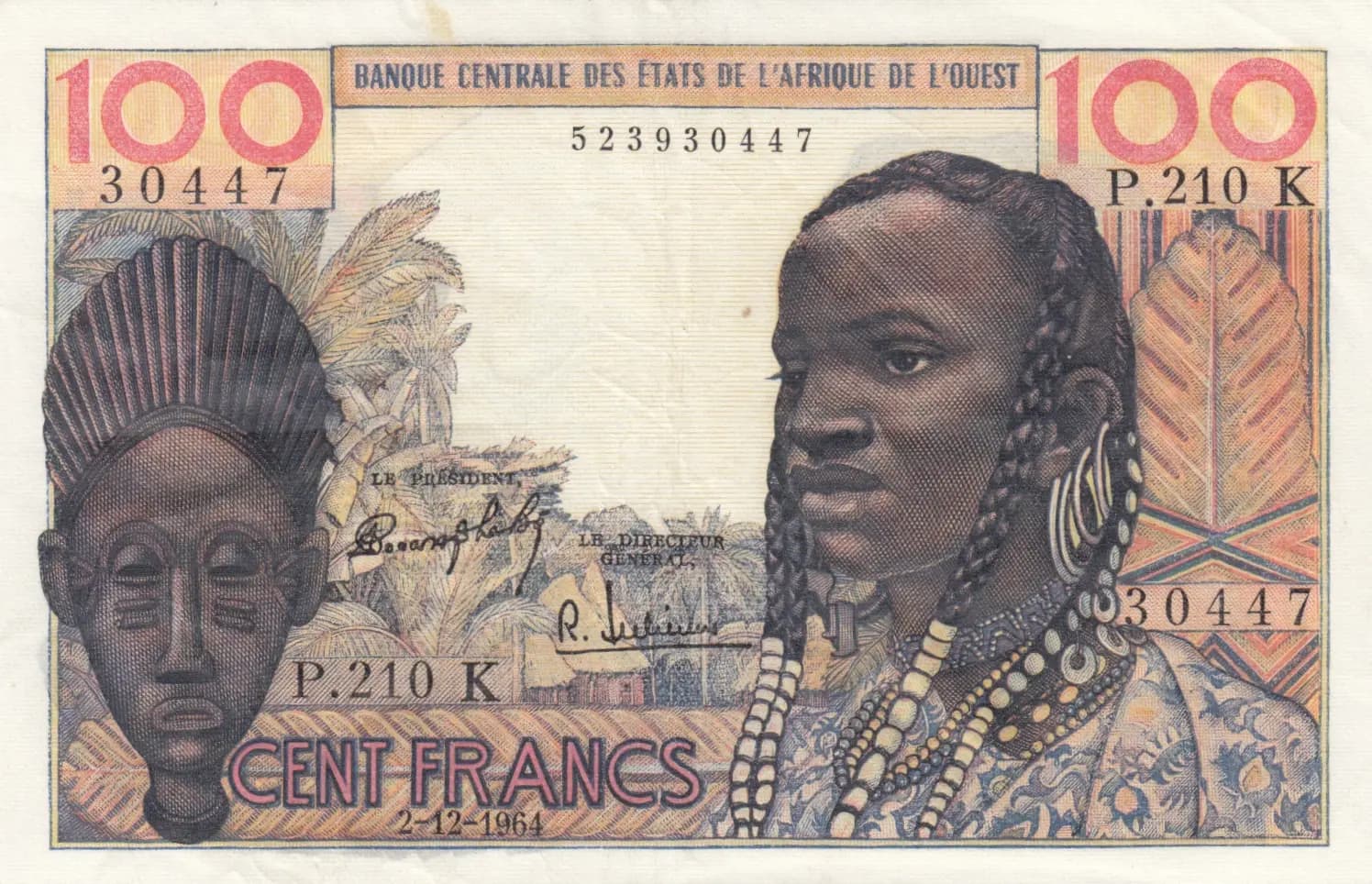
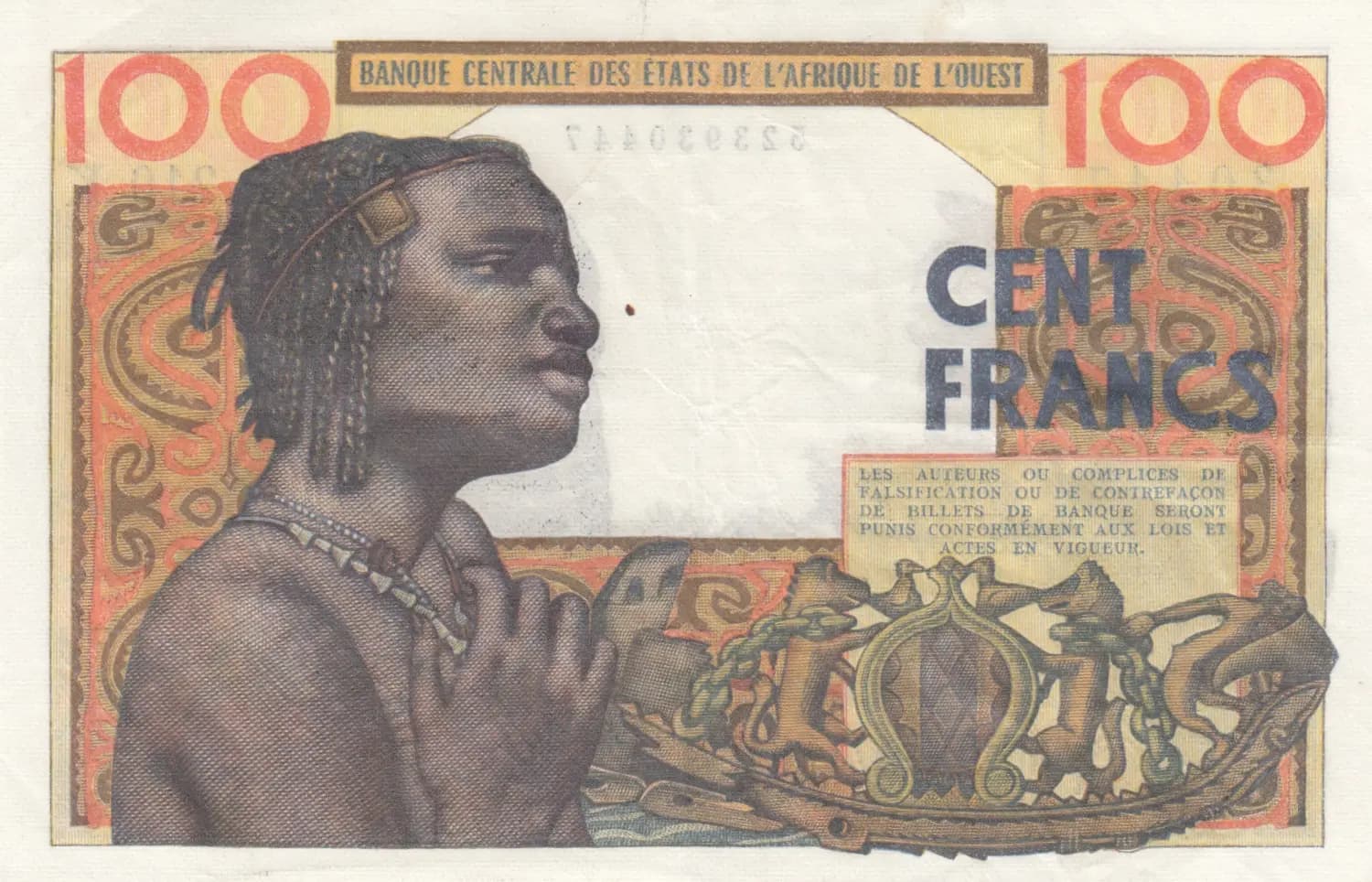
This is a VF-graded 100 Francs banknote from the West African States (Senegal), issued December 2, 1964 by the Banque Centrale des Etats de l'Afrique de l'Ouest. The note displays characteristic mid-20th century engraving with dual African portrait busts on the obverse and a profile portrait on the reverse, rendered in fine linework typical of the period. Age-appropriate foxing and creasing are visible throughout, consistent with genuine circulation history from this vintage.
Common. The 100 Francs denomination from the 1964 issue of the West African States (Pick 701) was produced in substantial quantities for general circulation across member states including Senegal. No evidence of limited mintage, recall, or short-lived production exists. The catalog data shows multiple variants (701Kc and 701Kg) have been professionally graded by PMG, indicating these notes circulated widely enough to attract collector interest but not so scarcely as to command premium valuations. Notes of this type and denomination typically trade at modest prices reflective of their common circulation status.
This note was issued during the early post-independence era of West African states, specifically reflecting Senegal's monetary integration within the newly-formed Central Bank of West African States. The prominent African portrait imagery on both sides celebrates indigenous cultural heritage and leadership, featuring elaborately adorned figures with traditional headdresses, braided hair, and beaded necklaces that represent the region's rich artistic traditions. The 1964 date places this issue at a critical moment of African decolonization and nation-building, when these newly sovereign states were establishing their own central banking institutions and currency systems.
The obverse features two African male portrait busts rendered in classical engraving style: the left figure displays an elaborate tall feathered or ridged headdress suggesting ceremonial or royal status, while the right figure features cornrowed/braided hair with elaborate beaded necklaces. Both portraits are set against a cream-colored background adorned with stylized vegetation including palm fronds, ornamental leaf designs, and geometric cross-hatch patterns. Large red denomination numerals '100' appear in all four corners with decorative medallions. The reverse displays a single profile portrait of an African male (likely the same figure from the right side of the obverse) shown from the shoulders up, facing left with braided hair and beaded necklace. A pastoral or ceremonial landscape scene appears in the background, accompanied by ornate scrollwork patterns and decorative borders. Prominent blue text reading 'Cent Francs' dominates the right side, with the warning text regarding counterfeiting legislation positioned in a text block on the right.
FRONT SIDE: 'Banque Centrale des États de l'Afrique de l'Ouest' (Central Bank of the West African States); '100' and 'Cent Francs' (One Hundred Francs); 'LE PRÉSIDENT' (The President); 'LE DIRECTEUR GÉNÉRAL' (The General Director); 'P.210 K' (catalog/printer reference); Serial number '5239304447'; Issue date '2-12-1964' (December 2, 1964). BACK SIDE: 'Banque Centrale des États de l'Afrique de l'Ouest' (Central Bank of the West African States); '100' and 'Cent Francs' (One Hundred Francs); 'Les auteurs ou complices de falsification ou de contrefaçon de billets de banque seront punis conformément aux lois et actes en vigueur' (The authors or accomplices of counterfeiting or falsification of banknotes shall be punished in accordance with the laws and acts in force).
Intaglio engraving (recess printing), characteristic of high-security banknote production in the mid-20th century. The fine linework, cross-hatching, and intricate ornamental details visible throughout the note are hallmarks of this technique. The note was produced by professional security printers specializing in currency production, with multiple signature spaces hand-signed by authorized officials (LE PRÉSIDENT and LE DIRECTEUR GÉNÉRAL). No specific printer attribution is evident from the catalog data, though such notes were typically produced by established European or American currency security printers contracted by the Central Bank.
This example is cataloged as Pick 701Kd, representing a specific code letter 'K' variant of the 1964 100 Francs issue. The serial number format '5239304447' and reference marking 'P.210 K' are consistent with this variant designation. The PMG population report indicates at least two other 'K' code variants exist (701Kc and 701Kg), suggesting the 'K' series represents a printing batch or production block. The specific date of December 2, 1964, and the serial number prefix provide additional identification markers for this particular note within its variety classification.