100 francs 1959
About This Note
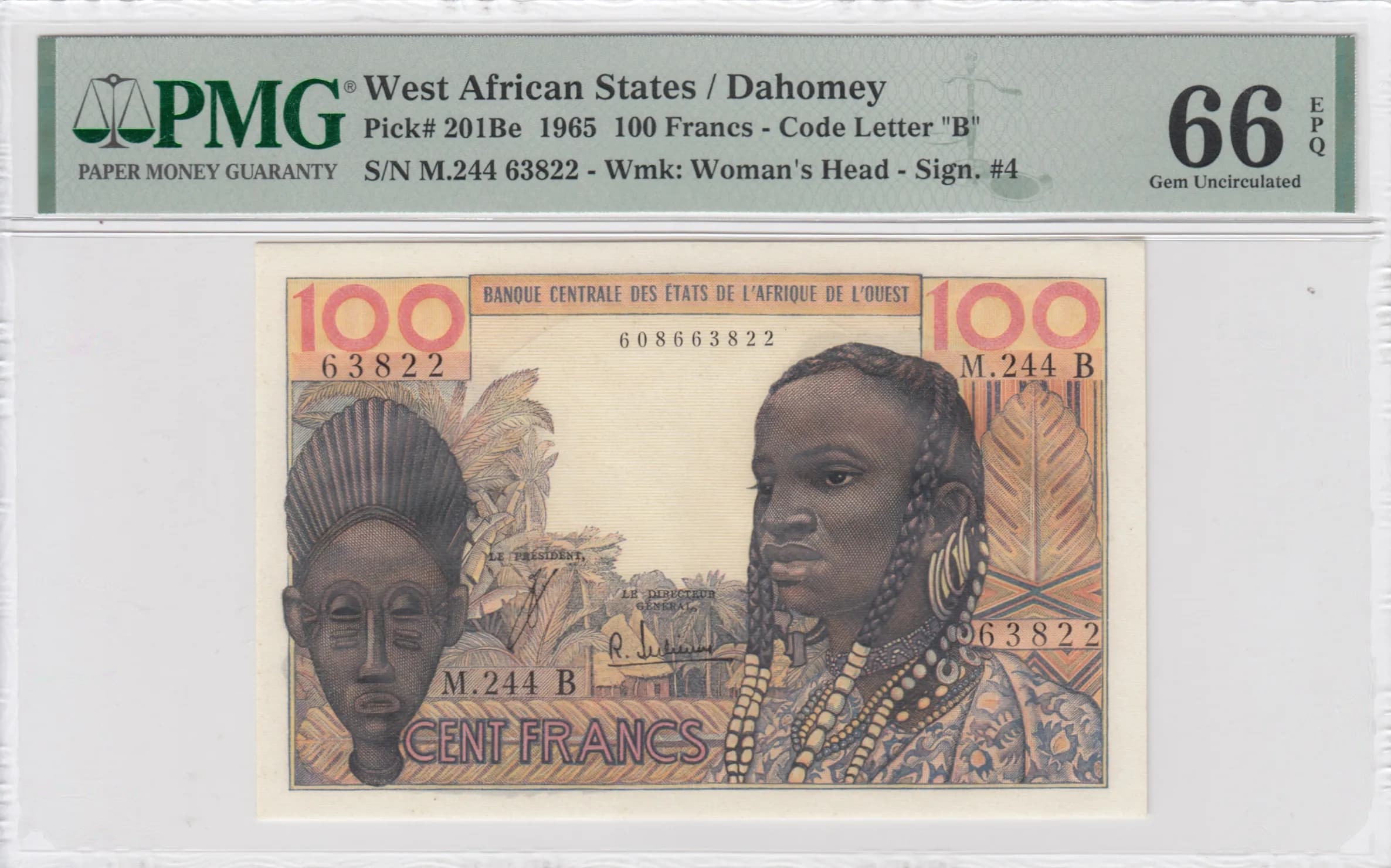
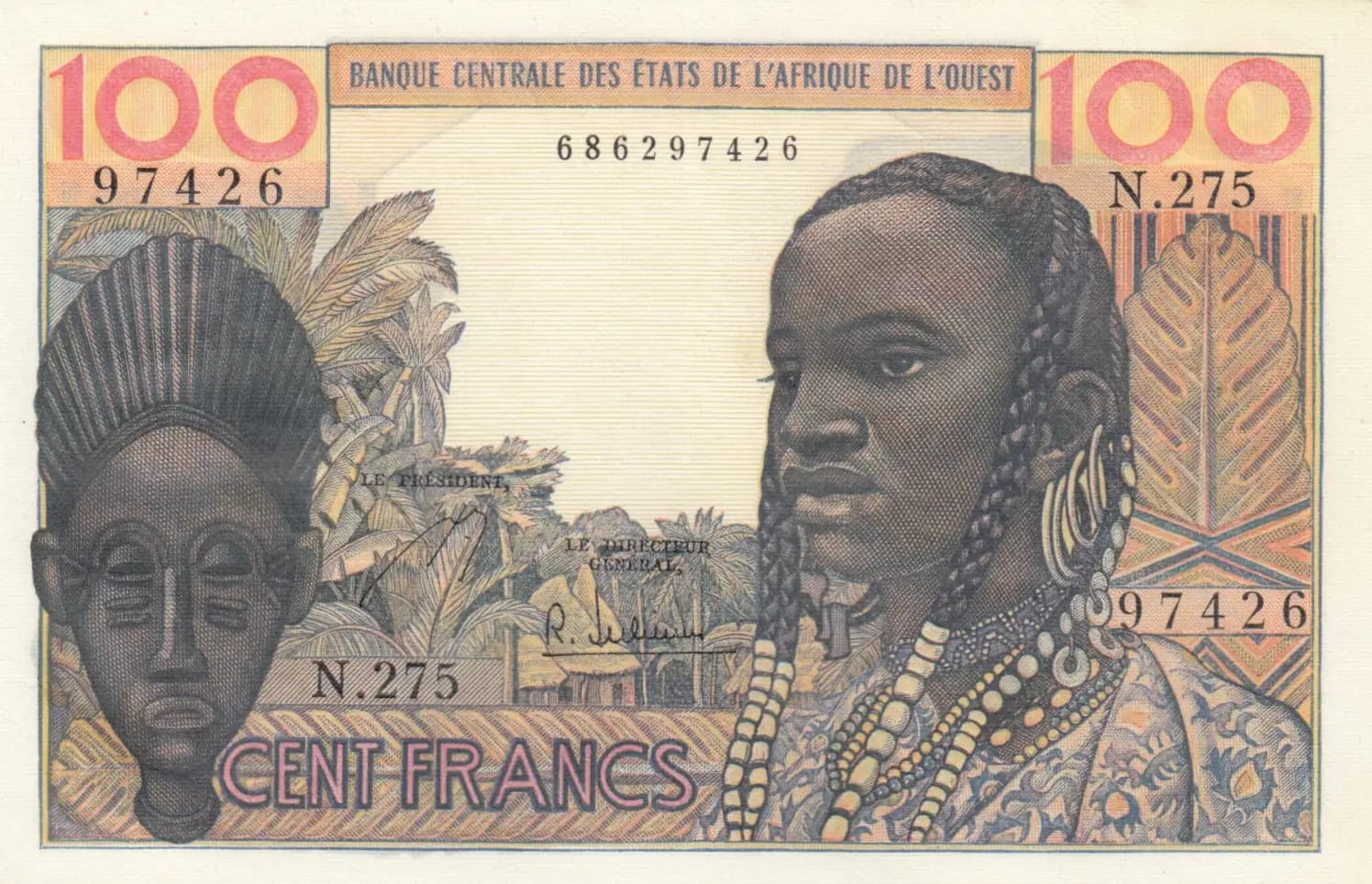
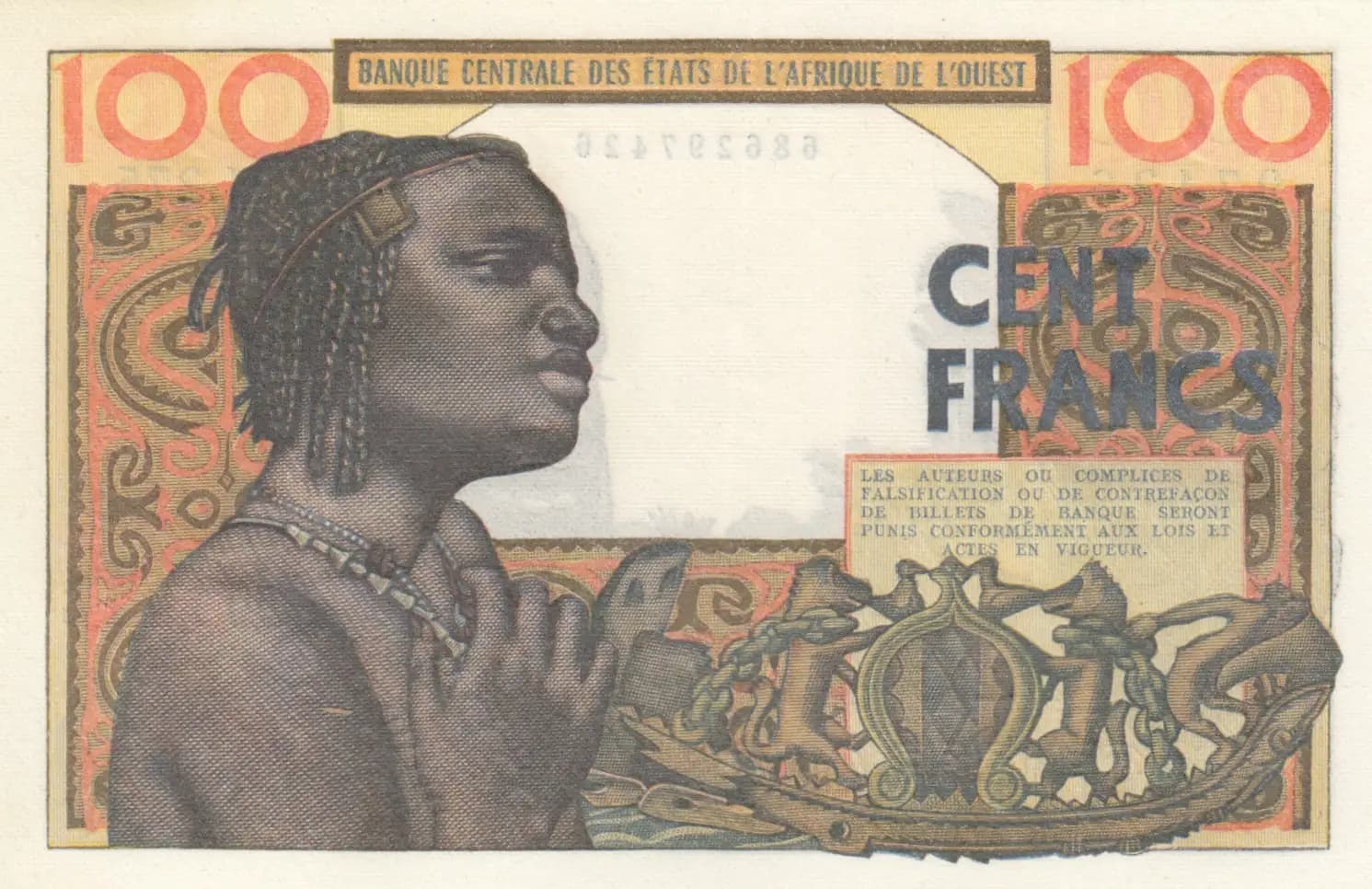
This is an exceptionally well-preserved example of the 1959 West African States 100 Francs (Pick-2), displaying the hallmark imagery of early BCEAO currency: a Baule wooden mask on the obverse and a Benin carving on the reverse. The note exhibits sharp, clear printing throughout with no signs of circulation, creasing, or wear—a true uncirculated specimen that showcases the elegant Art Deco-influenced design with its cream background, red denomination numerals, and fine-line engraving security patterns. The serial number 68629742 and signature block are crisply rendered, making this an attractive example for West African currency collectors.
Common. This is a foundational early issue from the BCEAO during 1959-1962, with large print runs supporting the newly formed monetary union of eight West African states. The Pick-2 100 Francs is a standard denomination from this series and regularly appears in numismatic circulation and dealer inventory. No collector premiums are attached to standard signatures or serial number ranges. While uncirculated examples command higher prices than circulated notes, they are neither scarce nor rare—they were produced in substantial quantities and survive in moderate numbers today.
Issued during the early years of the Banque Centrale des États de l'Afrique de l'Ouest, this 1959 note represents the transition from colonial-era French West African currency to independent West African States currency. The deliberate choice to feature African artistic traditions—the Baule woman's mask from Ivory Coast and the Benin carving—reflects the newly independent nations' emphasis on cultural identity and Pan-African unity during the post-colonial period. The colonial-style architecture visible in the central vignette suggests the architectural legacy of European settlement alongside the reassertion of indigenous artistic heritage.
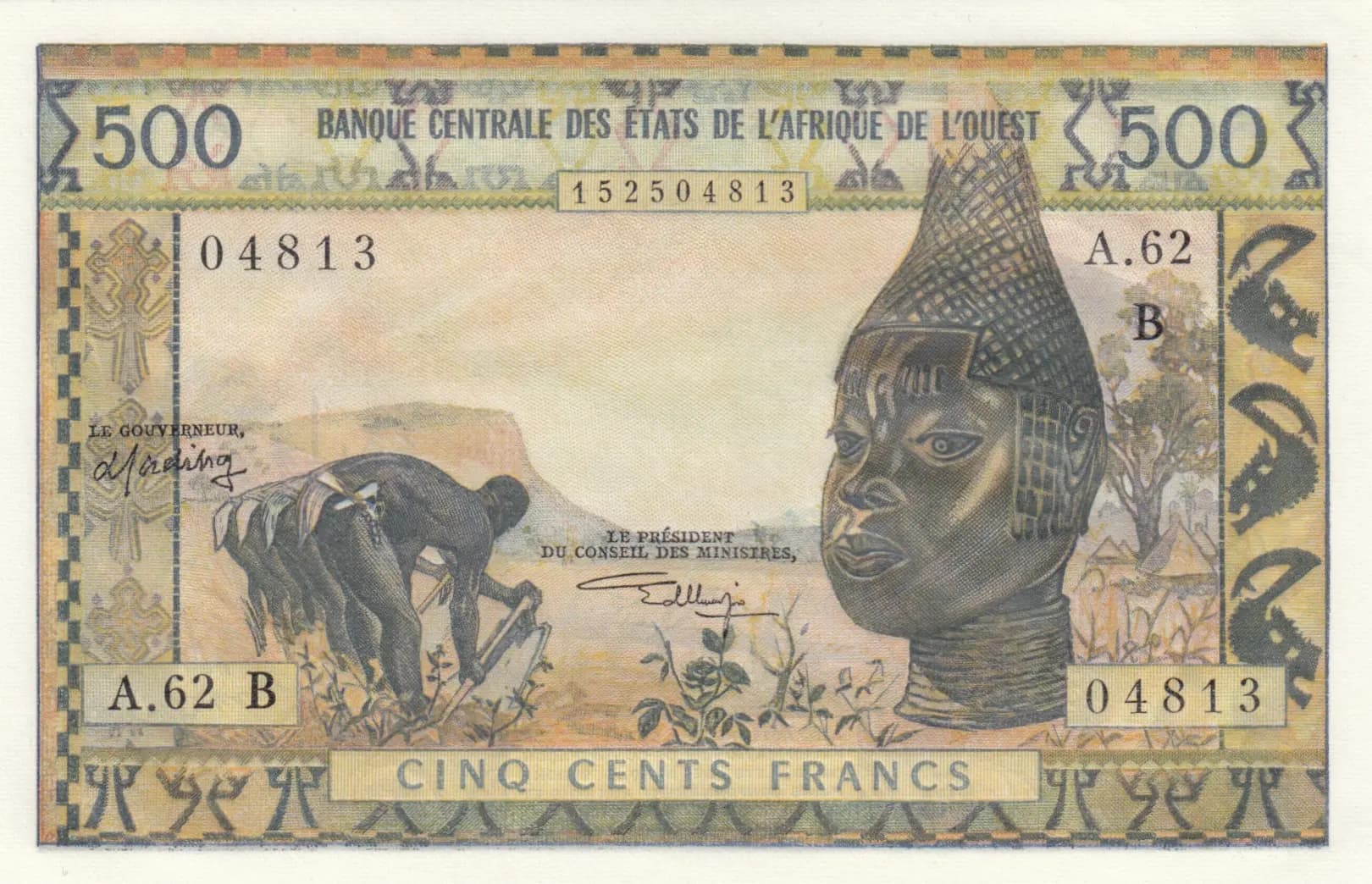
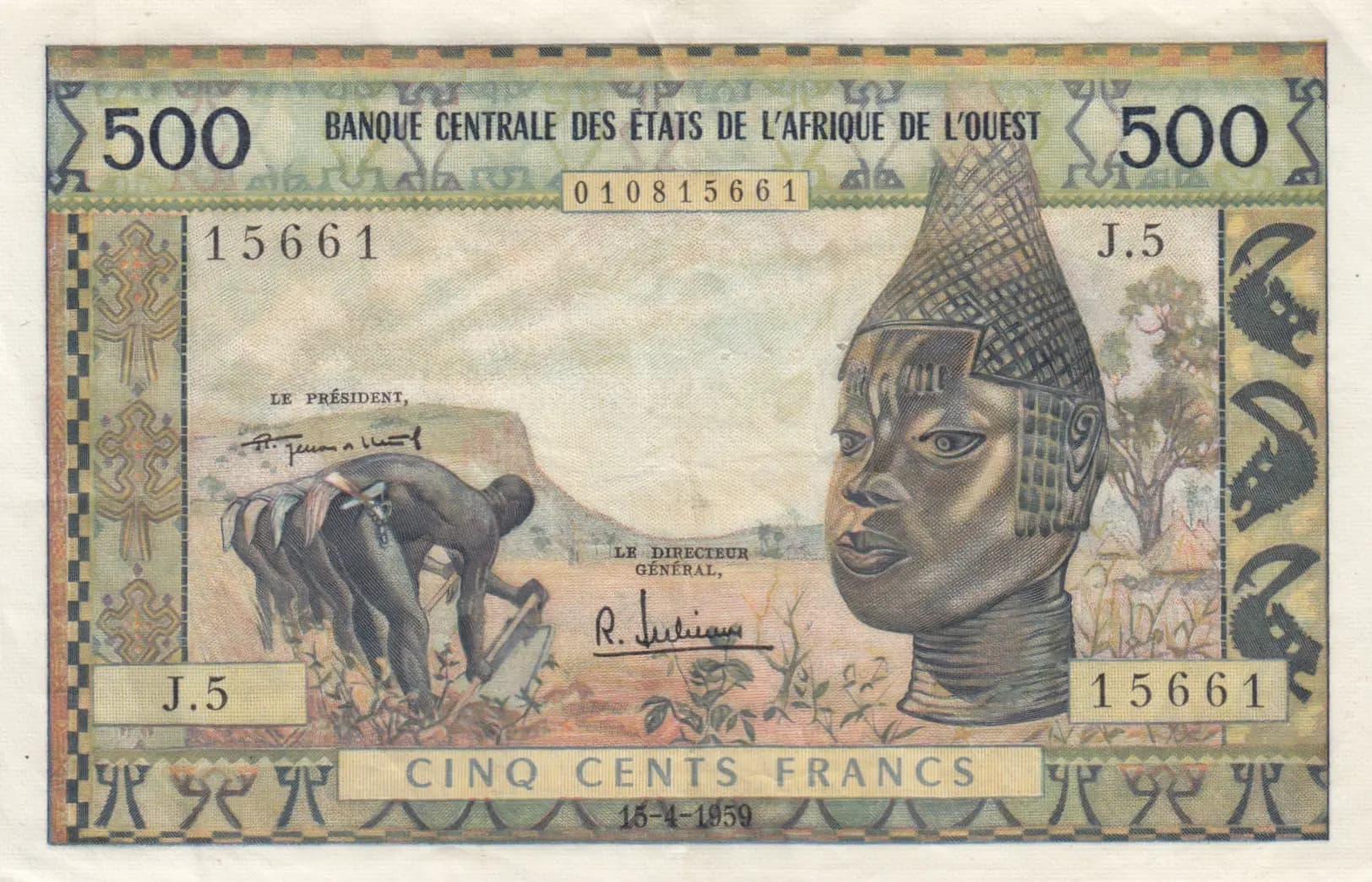
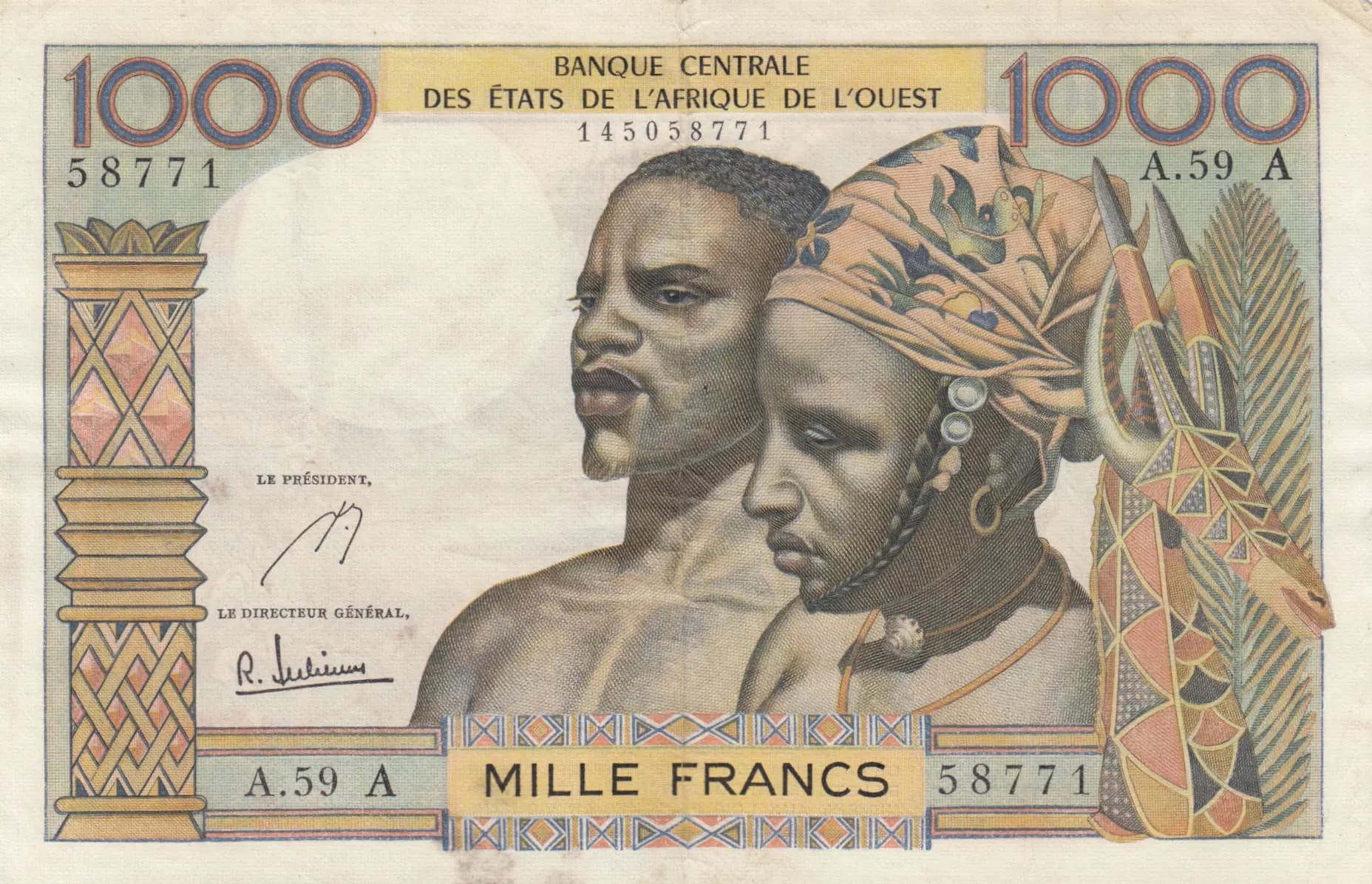
The obverse features two complementary portraits representing West African artistic traditions: on the left, a stylized Baule wooden mask from Ivory Coast with an elaborate crown-like headdress, rendered in black engraving with careful shading; on the right, a profile portrait of an African woman with intricately braided hair, beaded necklaces, and ornamental ear pieces. The center vignette depicts colonial-era architecture with stone buildings surrounded by tropical vegetation, symbolizing the region's historical development. The reverse showcases a single profile portrait of the same woman in finer detail, accompanied by an ornamental classical urn or vessel with decorative handles and foliage—a symbol often used on currency to represent cultural heritage and artistic refinement. Decorative geometric patterns, leaf motifs, and scrollwork frame the denomination throughout. The color palette employs cream/beige backgrounds with black engraving, coral-red accents for denomination numerals and decorative elements, and olive-green ornamental details, creating visual hierarchy and security differentiation.
{"front":{"institution":"BANQUE CENTRALE DES ETATS DE L'AFRIQUE DE L'OUEST (Central Bank of West African States)","denomination_text":"CENT FRANCS (One Hundred Francs)","denomination_numeral":"100","signatures":"LE PRESIDENT (The President) / LE DIRECTEUR GENERAL (The General Director)","reference":"N.275"},"back":{"institution":"BANQUE CENTRALE DES ETATS DE L'AFRIQUE DE L'OUEST (Central Bank of West African States)","denomination_text":"CENT FRANCS (One Hundred Francs)","denomination_numeral":"100","legal_warning":"LES AUTEURS OU COMPLICES DE FALSIFICATION OU DE CONTREFACON DE BILLETS DE BANQUE SERONT PUNIS CONFORMEMENT AUX LOIS ET ACTES EN VIGUEUR (The authors or accomplices of falsification or counterfeiting of banknotes will be punished in accordance with laws and acts in force)"}}
Intaglio (engraved) printing with multicolor capability, employing fine-line engraving security patterns visible throughout the background and text areas. Micro-line geometric patterns in decorative zones provide anti-counterfeiting protection. The complexity of the portrait rendering, the intricate background patterns, and the precision of the denomination numerals and legal text all indicate professional security printing consistent with Banque de France printing operations (the BCEAO notes of this era were typically printed by the Banque de France's security printing division in Paris). The layered color application and sharp registration visible in the visual analysis confirm high-quality intaglio production.
Based on the visual evidence, this note displays standard characteristics for the P-2 base Pick number (100 Francs denomination). The PMG population report indicates variants exist with watermark differences (noted as 'Wmk: Woman's Head'), suggesting this variety should be examined for watermark type if viewing an actual specimen. The serial number 68629742 and signature block (showing LE PRESIDENT and LE DIRECTEUR GENERAL designations) appear standard for the 1959-1962 circulation issue. Without examining the physical note for security features like watermarks or specific signature variants, a precise variety designation (such as P-2a vs. P-2b) cannot be confirmed from visual analysis alone, though standard circulation varieties are likely.